
The White City: Arequipa, Peru's Volcanic Heartbeat
Introduction: A City Carved from Fire and Faith
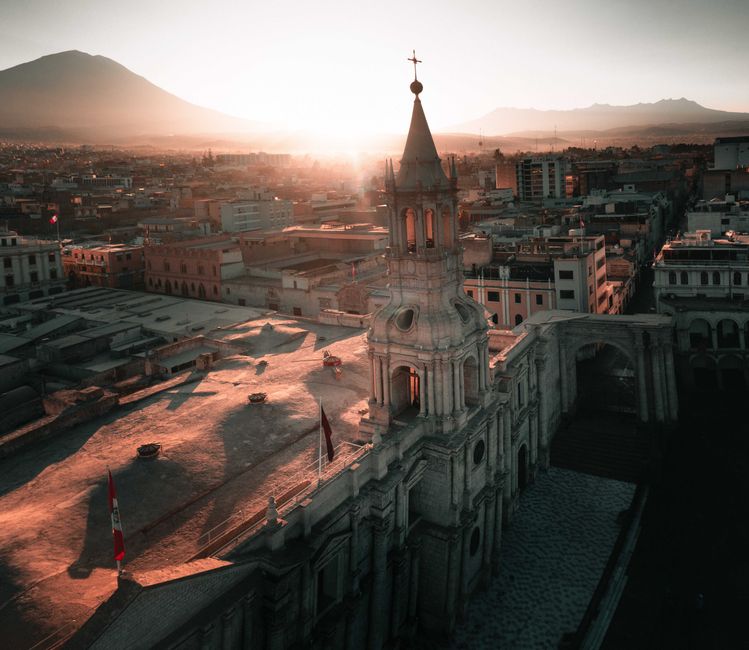
The first sight steals your breath, not from the altitude—though at 2,335 meters you feel it—but from the sheer, staggering drama of it all. Arequipa, Peru, rises from the high desert like a mirage of luminous stone, a white-stone town framed by volcano peaks. To the north, the perfect, snow-dusted cone of El Misti stands sentinel, a dormant giant whose volcanic ash gave this city its soul. To the east, the jagged silhouette of Chachani cuts the impossibly blue sky. This is a landscape of epic, cinematic scale, where the earth itself feels alive, whispering stories of eruptions and resilience.
You step into the Plaza de Armas, and the soundscape envelops you: the gentle splash of the central fountain, the murmur of couples on wrought-iron benches, the distant clip-clop of a horse-drawn carriage on cobblestones. The air is crisp, thin, and carries the faint, clean scent of sun-warmed sillar—the pearlescent volcanic rock that gives Arequipa its nickname, La Ciudad Blanca, the White City. The colonial facades glow with a soft, honeyed light as the sun begins its descent, their baroque filigrees carved not from wood, but from the very stone of the mountains. This isn't just architecture; it's alchemy, the transformation of volcanic fury into breathtaking beauty.
But Arequipa is more than a pretty plaza. It's a city of profound contrasts. Behind the ornate portals of its monasteries, you'll find cloistered worlds of tranquil courtyards and shocking histories. In the bustling Mercado San Camilo, the air thickens with the earthy smell of ripe fruit, the sharp tang of fresh herbs, and the sizzle of anticuchos on a grill. Quechua-speaking women in vibrant polleras (skirts) haggle with chefs in crisp whites, a daily ballet of commerce that has played out for centuries. The city thrums with a fierce, proud identity; Arequipeños are not just Peruvians, they are Arequipeños first, known for their independent spirit and fiery passion, a character they say comes from living in the shadow of volcanoes.
To wander its streets is to feel layers of time pressing in. You trace your fingers over sillar walls pockmarked by centuries of sun and seismic tremors. You hear the echo of Spanish conquistadors, the silent prayers of cloistered nuns, the revolutionary fervor of independence leaders who plotted here. This is a city that has been destroyed by earthquakes and rebuilt, time and again, its spirit unbroken, its white stone rising once more. It is a gateway—to the depths of the Colca Canyon, to the high-altitude plains where vicuñas run, to an understanding of a Peru that is both fiercely colonial and deeply indigenous. Arequipa doesn't just welcome you; it imprints itself upon you, a stark, beautiful, and unforgettable contrast of fire and ice, stone and sky.
Why Visit Arequipa: More Than a Stopover
Many travelers treat Arequipa as a mere launching pad for the Colca Canyon, a quick overnight stop to acclimatize. To do so is to commit a travel travesty. Arequipa is a profound destination in its own right, a city that offers a dense, rich tapestry of experiences you won't find in Cusco or Lima. Its magic lies in its authenticity and its astounding cohesion. Unlike cities that feel assembled, Arequipa feels born—born from the volcano, shaped by its stone, and animated by a culture that is both elegant and earthy.
First, there is the unparalleled architectural unity. The extensive use of sillar creates a visual harmony that is breathtaking. The historic center, a UNESCO World Heritage site, isn't just a collection of notable buildings; it's an entire environment of glowing white. Walking from the Plaza de Armas down the pedestrian calle San Francisco as the evening light sets the buildings ablaze in shades of cream, gold, and rose is a transportive experience. It feels like stepping into a living, breathing colonial painting. Then there's Santa Catalina Monastery, a city within a city. For nearly 400 years, it was a secret world of cobbled streets, vivid blue and red walls, and cloistered lives. Wandering its silent, sun-drenched corridors today, you don't just see history; you feel its weight, its solitude, its strange, colorful peace.
Beyond the stone, Arequipa offers a culinary identity that stands as a proud rival to Lima's. This is the home of the picantería, traditional family-run restaurants where the food is robust, flavorful, and tied to the land. Eating here is a social, hearty affair. It's also the birthplace of rocoto relleno, a dish that embodies the Arequipeño spirit: a seemingly innocent stuffed pepper that delivers a volcanic kick of its own. The city's culture is one of fiery debate, poetic tradition, and a tangible sense of place. You visit Cusco for the Inca legacy, Lima for the gastronomic fusion, but you come to Arequipa for the soul of the Andes—proud, resilient, beautiful, and flavored with a hint of danger, all under the eternal gaze of El Misti.
When to Visit: Chasing the Perfect Light
Timing your visit to Arequipa is about chasing the perfect balance of crystalline skies, comfortable temperatures, and avoiding the peak of the rainy season. The city enjoys over 300 days of sunshine a year, but the seasons paint the surrounding landscape in dramatically different hues.
The absolute prime window is during the dry season, from April to November. These months gift you with endless days of brilliant blue skies, where the volcanoes stand out in razor-sharp detail against the firmament. Daytime temperatures are mild and utterly pleasant, hovering around 20-22°C (68-72°F), perfect for long days of walking exploration. Nights, however, are crisp and can drop near freezing, especially in June and July, demanding a warm layer. This is the ideal time for trekking in Colca Canyon or climbing the volcanoes, as trails are dry and visibility is limitless. The trade-off? This is peak tourist season, particularly July and August, so the plaza will be busier and accommodations should be booked well in advance.
December to March marks the rainy season. This is when the high desert briefly greens, and the skies can deliver dramatic, sweeping storms that roll down from the mountains. Afternoons often see short, heavy showers, but mornings can still be clear and beautiful. The air is slightly warmer, and the tourist crowds thin significantly, offering a more solitary experience. However, trekking can be muddy and less reliable, and the iconic view of El Misti might be shrouded in clouds for days. The shoulder months of March/April and November/December are often the sweet spot—you might catch the tail end of the rains or the beginning of the dry clarity, with fewer people and dynamic, changing skies that make for spectacular photography. Whenever you come, pack for all seasons in a single day.
How to Get There: Journey to the White City
The journey to Arequipa is part of its allure, a transition from Peru's coastal haze or the deep Andean valleys into this luminous, high-altitude basin. The most common gateway is through Rodríguez Ballón International Airport (AQP). It receives daily direct flights from Lima (a quick 1.5 hours) and Cusco (just under an hour), making it easily accessible. The airport is small and efficient; as you step off the plane, the first thing you'll notice is the dry, thin air and the stunning, looming presence of the mountains. A taxi ride into the city center takes about 30 minutes and offers your first, thrilling views of the white-stone sprawl against the brown foothills.
For those with time and a love for overland drama, the bus journeys to Arequipa are legendary. Coming from Lima, it's a long but spectacular 16-18 hour ride down the Pan-American Highway, then cutting inland and climbing through desert and mountain passes. From Cusco, the 10-hour journey is one of the world's great bus rides, traversing the high altiplano, passing herds of alpaca, lonely lakes, and tiny villages, before descending into Arequipa's valley. Companies like Cruz del Sur offer first-class sleeper services with fully reclining seats. Waking up as the bus rolls into the terminal, with the first rays of sun illuminating El Misti, is an arrival you won't forget. Once in the city, everything in the compact historic center is walkable. For trips to the outskirts or viewpoints, inexpensive taxis are plentiful.
Accommodation: From Cloistered Luxury to Bohemian Charm
Where you stay in Arequipa can deeply shape your experience. The city excels in converting its historic sillar mansions and convents into breathtaking hotels, allowing you to sleep within a piece of living history. For the ultimate splurge, seek out a luxury boutique hotel within a restored colonial casona. These properties often feature serene interior courtyards with singing fountains and fragrant orange trees, vaulted ceilings, original stone archways, and rooftop terraces with knockout volcano views. Sipping a pisco sour on a terrace as the sun sets behind Chachani, the city's white domes and spires laid out before you, is worth the price of admission.
For a more intimate, bohemian feel, the neighborhood of San Lázaro is a maze of narrow, flower-bedecked lanes, believed to be the city's original foundation. Here, you'll find charming, family-run guesthouses and hostels set in beautiful old homes. The atmosphere is quiet, local, and wonderfully atmospheric. Budget travelers will find a plethora of excellent hostels near the Plaza de Armas and Calle San Francisco, many with social rooftops and tour-booking services. A unique option is the hotels and lodges in the countryside of Yanahuara or Cayma, just a short taxi ride from the center. These offer pastoral peace, sprawling gardens, and perhaps the most unobstructed volcano vistas of all, a reminder that you are, indeed, in a fertile oasis cradled by giants. Wherever you choose, ensure your room has a good heater for those chilly Andean nights.
Things to Do: The Soul of Sillar
To experience Arequipa is to engage all your senses in its unique narrative. Start at the Plaza de Armas, the city's living room. Sit on a bench, absorb the symmetry: the majestic, twin-towered Basilica Cathedral made of sillar, granite, and brick, standing resilient after fires and quakes; the arcaded buildings glowing in the sun. As evening falls, the plaza transforms. The buildings are softly lit, couples stroll, and the atmosphere is pure romance. Just off the plaza, lose yourself in the Claustros de la Compañía, a Jesuit complex with a breathtakingly ornate baroque chapel, its facade a dizzying tapestry of vines, flowers, and figures all carved from sillar. Run your fingers over it; feel the artistry born of volcanic stone.
Then, surrender to the spell of the Monasterio de Santa Catalina. Allow at least three hours. This 20,000-square-meter convent, opened in 1580 and secluded from the world until 1970, is a labyrinth of color and quiet. You pass through the main gate and the noise of the city vanishes. You're in a silent world of narrow streets named Córdoba, Sevilla, or Burgos, lined with walls painted in intense ochers, blues, and terracottas. You peek into tiny cells where nuns lived, see their kitchens with soot-blackened pots, and emerge into sunlit plazas with fragrant lemon trees and fountains. In the Silence Patio, you hear only the wind. It's haunting, beautiful, and utterly unique.
For a different perspective, cross the stone bridge to the Yanahuara district. Its mirador (viewpoint), a sillar archway inscribed with poetic verses from Arequipeño writers, frames the perfect postcard view of the city with El Misti rising majestically behind it. The neighborhood itself is quieter, with lovely streets and the beautiful Church of San Juan Bautista. Back in the center, dive into the sensory overload of the Mercado San Camilo, a cast-iron market hall from the 19th century. Here, the colors are a riot of purple potatoes, yellow chilies, and rainbow heaps of fruit. The sounds are a symphony of vendors' calls, butcher's chops, and blenders whirring for fresh juices. Smell the herbs, the cheese, the raw earth of the produce. Try a juice—cherimoya, tuna (cactus fruit)—for an instant energy boost.
No visit is complete without paying respects to Juanita, the Ice Maiden, at the Museo Santuarios Andinos. This Incan mummy, sacrificed on Mount Ampato over 500 years ago and preserved in ice, was discovered in 1995. The museum's respectful presentation builds the story before you finally stand before her frozen, poignant form—a powerful, humbling connection to the region's pre-Columbian past. Finally, for the adventurous, the volcanoes themselves call. You can take a guided tour to the base of El Misti, hike into the Salinas and Aguada Blanca National Reserve to see graceful vicuñas, or prepare for the multi-day trek into the Colca Canyon, one of the world's deepest, where condors soar on thermal updrafts from the river far below. In Arequipa, the adventure is both cultural and profoundly physical.
Food and Drink: A Picantería Pilgrimage
Arequipa's cuisine is a volcanic eruption of flavor, a testament to the fertile valley and the bold spirit of its people. To eat here is to embark on a pilgrimage to a picantería. These are not fancy restaurants; they are sprawling, often rustic, family-owned establishments where the day's menu is written on a chalkboard, and the food is cooked over wood fires. The ritual is sacred: start with a chicha de guiñapo, a fermented drink made from purple corn, slightly sour and earthy. Then, share. Food is communal.
You must try the legendary rocoto relleno. The rocoto pepper, fierier than a bell pepper, is carefully deseeded and blanched to tame its heat, then stuffed with a savory mix of ground beef, onions, raisins, and melted cheese, and baked with a pastry crust. It's a masterpiece of balance—sweet, savory, spicy, and creamy. Follow it with adobo arequipeño, a hearty, tangy pork stew marinated in chicha and spices, traditionally eaten on Monday mornings to cure the weekend. Or savor solterito, a refreshing salad of broad beans, corn, tomato, onion, and fresh cheese, dressed with lime and herbs. For the brave, there's cuy chactado—guinea pig fried under a stone until impossibly crisp.
Wash it all down with a cerveza Arequipeña or, for dessert, a queso helado. Despite its name ("cheese ice cream"), it contains no cheese. It's a sublime, cinnamon-dusted custard ice cream, sold by white-coated vendors from portable freezers. And of course, this being Peru, the pisco sours are impeccable. But in Arequipa, ask for a Algarrobina sour, made with carob syrup, adding a rich, malty sweetness. Dining here is slow, convivial, and deeply satisfying—a direct line to the heart of Arequipeño culture.
Practical Tips: Navigating the White City
Altitude: At 2,335m, Arequipa is lower than Cusco but can still cause mild soroche (altitude sickness). Take it easy the first day, stay hydrated (avoid alcohol initially), and drink coca tea. Many hotels offer it for free.
Money: Peruvian Soles (PEN) are king. While cards are accepted in hotels and nicer restaurants, cash is essential for markets, picanterías, and taxis. ATMs are plentiful around the Plaza de Armas.
Safety: Arequipa's historic center feels very safe, even at night. Standard precautions apply: be aware of your belongings in crowded markets, use registered taxis (your hotel can call them), and avoid isolated areas after dark.
Bargaining: Acceptable in markets for souvenirs, but not in shops or with taxi drivers who use meters. Do it with a smile.
What to Pack: The sun is intense and the air is dry. Pack a wide-brimmed hat, high-SPF sunscreen, and lip balm. Layers are non-negotiable—a t-shirt for the day, a fleece for the evening, and a light jacket for the cold nights. Sturdy, comfortable walking shoes are a must for the cobblestones.
Language: Basic Spanish goes a long way. While tourist areas have English speakers, learning phrases like "gracias," "por favor," and "la cuenta, por favor" (the check, please) is appreciated.
Suggested Itinerary: Three Days in the Shadow of El Misti
Day 1: The Heart of Sillar. Morning: Acclimatize with a leisurely coffee on the Plaza de Armas, then tour the magnificent Basilica Cathedral. Afternoon: Immerse yourself in the silent, colorful world of the Santa Catalina Monastery. Late Afternoon: Walk across the bridge to the Yanahuara Mirador for sunset photos with El Misti. Evening: Your first picantería experience. Try La Nueva Palomino or one of the classics in the traditional neighborhood of San Antonio.
Day 2: Culture, Markets, and Juanita. Morning: Visit the Museo Santuarios Andinos for the poignant story of the Ice Maiden, Juanita. Late Morning: Dive into the sensory overload of Mercado San Camilo; have a fresh juice and maybe a cheeky lunch of local street food. Afternoon: Explore the stunning baroque facade of the Claustros de la Compañía and the nearby Church of San Francisco. Late Afternoon: Relax in the peaceful Selva Alegre Park. Evening: Fine dine in a courtyard restaurant or take a food-focused walking tour.
Day 3: Volcanoes and Valleys. Choose your adventure: Option A (Most Popular): Take a full-day tour to the Colca Canyon, departing very early to see the condors soar at Cruz del Cóndor. It's a long day but unforgettable. Option B (Closer): Explore the Salinas and Aguada Blanca National Reserve on a half-day tour, spotting vicuñas and getting up close to the volcanic landscapes, perhaps hiking partway up El Misti. Option C (Relaxed): Discover the Sabandía district with its historic mill and the peaceful Founder's Mansion (Mansión del Fundador). Enjoy a final evening with a pisco sour on a rooftop bar, toasting the white city and its guardians.
Conclusion: The Eternal City of Stone
Leaving Arequipa, Peru, you don't just carry souvenirs; you carry a sensation. The memory of that first, breathtaking view of white stone against a piercing blue sky. The feel of cool, porous sillar under your fingertips. The taste of a rocoto relleno—fiery, complex, and satisfying. The profound silence of Santa Catalina, broken only by your own footsteps. The sight of an Andean condor, wings outstretched, riding the thermals of a canyon older than time.
This is a city that gets under your skin. It's not the manic energy of Lima or the mystical Inca weight of Cusco. It's something quieter, prouder, more self-possessed. It's the resilience of a people who build beauty from volcanic rock, knowing the earth may shake it down again. It's the contrast of cloistered silence and bustling market chaos, of glacial mountain peaks and spicy, warm food. Arequipa teaches you that true strength is not just about enduring, but about creating art from the very materials of your challenges. As your plane lifts off or your bus winds back up into the altiplano, you take one last look at the white-stone town framed by volcano peaks. It's no longer just a destination on a map. It's a feeling—a stark, beautiful, and enduring heartbeat in the high desert of Peru.
Frequently Asked Questions About Arequipa, Peru
Is Arequipa safe for tourists?
Arequipa is generally considered one of Peru's safest cities for travelers. The historic center is well-patrolled and feels secure day and night. As with any destination, practice common sense: keep valuables discreet, use official taxi services (especially at night), and be aware of your surroundings in crowded markets.
How many days do I need in Arequipa?
We recommend a minimum of two full days to experience the city's core highlights: the Plaza de Armas, Santa Catalina Monastery, Yanahuara, and a picantería meal. Ideally, spend three to four days to include a day trip to the Colca Canyon, explore the market and museums at a relaxed pace, and truly soak in the atmosphere.
Do I need to worry about altitude sickness in Arequipa?
At 2,335 meters (7,661 feet), Arequipa is high, but it's significantly lower than Cusco. Most travelers experience only mild or no symptoms. It's still wise to take it easy on your first day, drink plenty of water, avoid heavy meals and alcohol initially, and sip coca tea, which is widely available and helps with acclimatization.
What is the must-try food in Arequipa?
Without a doubt, you must try rocoto relleno (stuffed spicy pepper) and adobo arequipeño (hearty pork stew). The best place to try these is in a traditional picantería. Also, don't miss queso helado for dessert—it's a unique and delicious cinnamon-flavored ice cream.
Can I visit the Colca Canyon as a day trip from Arequipa?
Yes, it's possible, but be prepared for a very long day. Most tours depart around 3:00 AM to make the 3-4 hour drive to the Cruz del Cóndor viewpoint for the best chance of seeing condors in the morning. You'll return to Arequipa in the late afternoon. For a more immersive experience, consider an overnight stay in the canyon town of Chivay or Cabanaconde.
What makes Arequipa's architecture unique?
Arequipa's architecture is defined by the extensive use of sillar, a white volcanic rock from the surrounding mountains. This gives the entire historic center a luminous, harmonious glow. The baroque style here, known as "Mestizo Baroque," features intricate carvings of flora, fauna, and religious figures directly into the soft sillar stone, creating facades that are breathtakingly detailed.
Is Arequipa a good destination for solo travelers?
Absolutely. Arequipa is welcoming, easy to navigate, and has a well-established tourist infrastructure with many hostels, group tours, and social spaces. The compact historic center makes it simple to explore on foot, and the locals are generally friendly and helpful. It's a fantastic place to meet other travelers while also enjoying moments of profound solitude.


No comments:
Post a Comment