
Beijing: A Thousand Years in a Single Glance
Introduction
The first thing that hits you is the sheer, staggering scale of it. Not just the physical breadth of the city, which unfurls across the North China Plain in a seemingly endless grid of ring roads, but the weight of history, thick and palpable in the air. You step out of a sleek, silent subway car and are immediately confronted by the vermilion walls of the Forbidden City, their color so intense it seems to vibrate against the muted grey of the ancient stone guardians. The scent of coal dust from a distant hutong mingles with the sweet, buttery aroma of chestnuts roasting on a street vendor's cart. A low, resonant hum—the sound of twenty-one million lives in motion—is punctuated by the tinny melody of an ice cream truck and the sudden, sharp cry of a Beijing opera singer practicing in a courtyard you cannot see. This is Beijing, a city where time does not flow in a linear stream but exists in layers, each one pressing down upon the next, creating a rich, complex, and utterly intoxicating palimpsest.
To walk through Beijing is to navigate a living timeline. One moment, your fingers trace the cool, pitted surface of a stone dragon on a Ming Dynasty bridge. The next, you are craning your neck inside the crystalline, futuristic dome of the National Centre for the Performing Arts, its titanium and glass shell floating like a spaceship on a placid artificial lake. You can lose yourself in the labyrinthine alleyways of a hutong, where life spills out of single-story homes, the air filled with the sizzle of woks and the chatter of neighbors playing mahjong. Then, you turn a corner and are dwarfed by the soaring, geometric forms of the CCTV Headquarters, a building that defies gravity and logic, a bold statement of a nation racing toward tomorrow. This constant dialogue between the ancient and the avant-garde is the city's heartbeat.
Beijing is not a city that reveals itself easily. It demands your attention, your patience. It asks you to look beyond the obvious monuments and listen to its quieter stories. It is in the steam rising from a bowl of hand-pulled noodles in a tiny, family-run restaurant. It is in the determined, synchronized movements of elderly residents practicing Tai Chi at dawn in Temple of Heaven Park, their silhouettes cutting graceful arcs against the rising sun. It is in the profound, echoing silence at the very heart of the Forbidden City's central axis, a silence that seems to hold the whispers of emperors and eunuchs. The city's magic lies in these contrasts—the sacred and the profane, the monumental and the mundane, the eternal and the ephemeral. To visit Beijing is to engage in a conversation with history itself, a conversation that will leave you forever changed.
Why Visit Beijing?
You visit Beijing not merely to see sights, but to stand at the crossroads of human civilization. This is a city that has been the political and cultural nucleus of China for the better part of a millennium. It is the stage upon which dynasties rose and fell, where emperors commanded the heavens from the Hall of Supreme Harmony, and where the very concept of "the Middle Kingdom" was cultivated. To walk its streets is to walk through the pages of a living history book, one written in stone, silk, and spirit. The sense of continuity is overwhelming; you are treading the same paths as Kublai Khan, the Yongle Emperor, and countless scholars, soldiers, and artisans who shaped the narrative of one of the world's oldest continuous cultures.
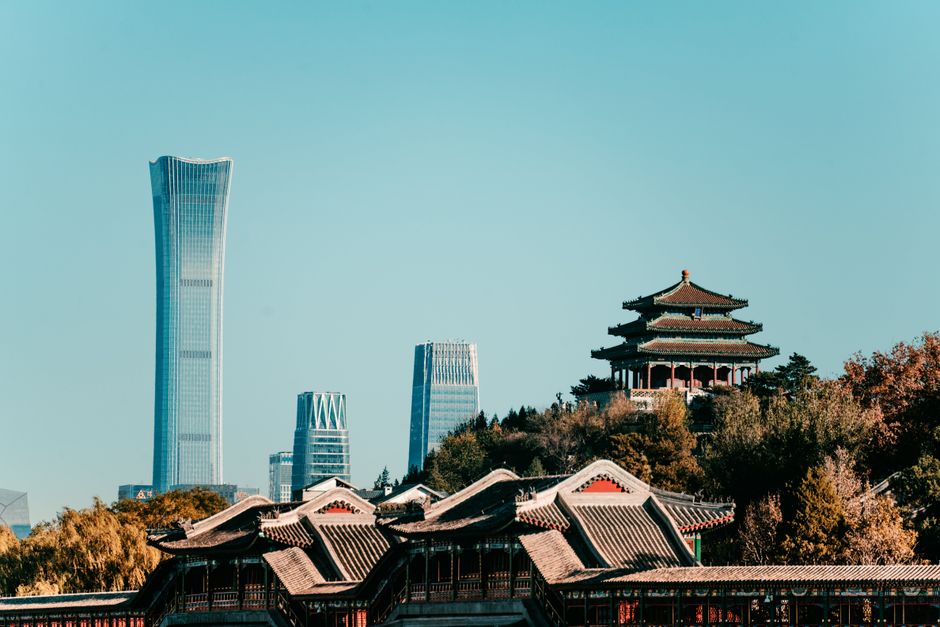
Beyond the profound historical pull, Beijing offers a masterclass in architectural audacity. It is a canvas for humanity's most ambitious constructions. The Great Wall, snaking like a stone dragon over the crumpled velvet of the northern mountains, is a testament to sheer human will. The Forbidden City, with its 9,999 rooms and strict cosmological layout, is a physical manifestation of imperial power and celestial order. Contrast this with the breathtaking modernity of the Bird's Nest stadium, a nest of tangled steel that hosted the world, or the sleek, sinuous curves of the Galaxy SOHO complex, which looks less like a building and more like a scene from a sci-fi epic. Beijing allows you to witness the entire arc of human design ambition, from defensive fortifications to declarations of soft power, all within a day's journey.
Finally, you come for the raw, unfiltered energy. Beijing is a city of relentless momentum. It thrums with the ambition of dreamers from every corner of the country, drawn to the capital's magnetic promise. You feel it in the bustling art districts of 798, where galleries inhabit decommissioned factory halls. You hear it in the passionate debates in university cafes and the lively bargaining in the Silk Market. You taste it in the explosive flavors of its cuisine, from the imperial delicacy of Peking Duck to the humble, satisfying bite of a jianbing crepe from a street stall. Visiting Beijing is an immersion into a culture that is simultaneously deeply rooted and dynamically evolving. It challenges your perceptions, expands your understanding, and leaves you with a sense of having witnessed something truly monumental, not just in scale, but in spirit.
When to Visit
Choosing your moment to encounter Beijing is crucial, as the city wears dramatically different faces with each turn of the season. The undisputed champion for comfort and beauty is autumn, particularly from mid-September to early November. The city sheds its humid summer blanket and dons a cloak of crisp, golden light. The skies often achieve a startling, ceramic blue—a phenomenon locals call "Beijing blue"—and the air is dry and invigorating. The maple and ginkgo trees in the old imperial gardens transform into flames of yellow and red, creating scenes of breathtaking poetry. This is the perfect time for long walks along the Wall or through the palace courtyards, with temperatures ideal for exploration.
Spring (April to early June) is a close second, a season of reawakening. The notorious winter winds subside, and the city begins to bloom. The peach and magnolia trees in the parks burst into delicate pink and white blossoms, and the willows along the lakes of the Summer Palace drape themselves in tender green. While occasional sandstorms can sweep in from the Gobi Desert, painting the sky an eerie orange, they are often followed by brilliantly clear days. Summer, from June to August, is for the intrepid. The heat and humidity can be oppressive, clinging to you like a second skin. Yet, this is when the city's parks are lush and vibrant, and the lakes are dotted with lotus flowers. Summer evenings are lively, with night markets in full swing and the city pulsing with a sultry, nocturnal energy. Winter (December to February) is harsh, cold, and starkly beautiful. Biting winds sweep down from Siberia, but they also scour the sky clear. Seeing the Forbidden City's golden roofs dusted with snow, under a sharp winter sun, is an unforgettable, almost mystical sight, and the tourist crowds are at their thinnest.
How to Get There
Your journey to the heart of the Middle Kingdom will almost certainly begin with Beijing Daxing International Airport (PKX) or Beijing Capital International Airport (PEK). Daxing, a colossal starfish-shaped marvel of modern architecture, is a destination in itself, handling an increasing number of international flights. Touching down here feels like arriving in the future. Capital Airport, older but equally efficient, remains a major hub. From either, you can seamlessly transition into the city via the Airport Express train, a clean, swift, and affordable option that connects to the vast Beijing subway network. A taxi or ride-hailing app like Didi is a convenient alternative, especially with luggage, though be prepared for a journey that can take over an hour depending on the legendary Beijing traffic.
For a truly immersive approach, consider arriving by China's incredible high-speed rail network. Gliding into Beijing South Railway Station from Shanghai or Xi'an at 350 km/h is an experience that perfectly encapsulates China's blend of ancient heritage and hyper-modernity. You watch the countryside blur into urban sprawl, and then you're deposited into a cavernous, futuristic train station, mere minutes from the city center by subway. Within the city itself, the Beijing Subway is your lifeline. It's extensive, inexpensive, and signs are in both Chinese and English. For shorter trips, or for the authentic experience, hail a regular taxi (ensure they use the meter) or navigate the city's bicycle-sharing system, which lets you pedal through hutongs like a local, the wind carrying the sounds and smells of everyday life directly to you.
Accommodation
Where you lay your head in Beijing will define your experience of the city. For sheer imperial grandeur, the legendary hotels around Wangfujing offer a taste of bygone opulence. Staying here, you might find yourself in a historic building where diplomats and dignitaries have lingered, with the Forbidden City just a short stroll away. The service is impeccable, and the sense of history is woven into the very tapestries. For a more contemporary, pulsating experience, base yourself in the Sanlitun or Guomao areas. Here, glass-and-steel towers house sleek international hotels with infinity pools overlooking the skyline, and you're surrounded by trendy boutiques, cocktail bars, and a vibrant, cosmopolitan nightlife.
However, the soul of Beijing is often best accessed through its traditional courtyard hotels, known as *siheyuan* inns. Tucked away in the surviving hutongs, particularly near the Bell and Drum Towers or the Lama Temple, these accommodations are hidden oases. You enter through an unassuming wooden door to find a private world arranged around a central courtyard, often with a persimmon tree, a rock garden, and the comforting sound of a trickling water feature. Rooms may feature traditional heated brick beds (*kang*) and wooden latticework. Waking up here, to the soft morning light filtering into the courtyard and the distant call of a street vendor, is an immersion into old Beijing that no modern hotel can replicate. It's a quieter, more intimate way to connect with the city's architectural and social heritage.
Things to Do
Your pilgrimage begins at the axis of the universe: the Forbidden City. Enter through the Meridian Gate, and let the sheer sequential majesty of it wash over you. Cross the vast courtyards of white marble, each one leading you deeper into the heart of imperial power, toward the Hall of Supreme Harmony. Stand before it and feel the silence, a silence that seems to hold the weight of five centuries of absolute rule. The intricate details are mesmerizing—the mythical beasts lining the golden roofs, the dragon motifs on every stairway, the colossal bronze vats that once held water for fires. Spend hours here, getting lost in the side galleries of clocks and ceramics, and ascend to the hill in Jingshan Park opposite for that iconic, postcard view of the palace's sea of golden tiles, a sight that etches itself permanently into your memory.
No visit is complete without a journey to the Great Wall. Skip the crowded Badaling section and head to Mutianyu or Jinshanling. The drive itself is a transition, from urban sprawl to rugged, mountainous terrain. Then you see it: a seemingly impossible line of stone stitching its way across the ridgelines. The climb is steep, your muscles burn, but reaching a watchtower and gazing out at the wall winding into infinity is a moment of pure, humbling awe. You are touching the spine of history. Back in the city, seek balance. Join the locals at the Temple of Heaven at dawn, where the circular Hall of Prayer for Good Harvests stands against the morning sky, and people practice ballroom dancing, water calligraphy, and Tai Chi with serene focus. Explore the Summer Palace, a masterpiece of landscape design, where you can boat on Kunming Lake and marvel at the Marble Boat and the Long Corridor painted with thousands of scenes.
Dive into the city's contrasting veins. Wander the 798 Art District, where Bauhaus-style factory buildings from the 1950s now host cutting-edge galleries, surreal sculptures, and hip cafes—a powerful symbol of cultural transformation. Then, plunge into the sensory overload of the Silk Market or Panjiayuan Antique Market, a cacophony of bargaining, colors, and curios. As dusk falls, make your way to the Houhai Lake area. The ancient Bell and Drum Towers stand sentinel as the water shimmers with the reflected lights of bars and restaurants housed in traditional buildings. You can take a rickshaw ride through the labyrinthine hutongs here, the driver's bell ringing as you glimpse fragments of courtyard life, a fleeting, intimate portrait of a vanishing Beijing.
Food and Drink
Eating in Beijing is a journey through flavor, status, and street-level soul. At the pinnacle sits the imperial dish: Peking Duck. The ceremony is part of the feast. You watch as the master carver, with theatrical precision, shaves the mahogany-crisp skin and succulent meat from the bird, which has been air-dried and roasted in a special fruitwood oven. You take a thin pancake, smear it with sweet bean sauce, add scallions and cucumber, and wrap it around a piece of that glorious skin. The first bite is a symphony of textures and tastes—crackling, fatty, sweet, and fresh—a dish fit for an emperor, and now, for you. For the quintessential Beijing breakfast, join the queue at a street stall for a *jianbing*. Watch the vendor spread batter on a hot griddle, crack an egg, scatter herbs and pickles, add a crispy wonton cracker, and fold it into a savory, satisfying parcel. It's hot, messy, and utterly delicious.
Venture beyond the duck. In a lively *malatang* joint, you select skewers of vegetables, meats, and tofu, which are then boiled in a numbing, spicy Sichuan broth—a communal, fiery experience. Seek out a local noodle shop for a bowl of *zhajiangmian*, thick wheat noodles topped with a rich, salty minced pork sauce. For a unique snack, try *wandouhuang*, a delicate, sweet yellow pea cake. To drink, sample the local Yanjing beer, a light lager perfect with spicy food, or warm your hands around a cup of *erguotou*, a potent sorghum-based spirit that locals swear by. End an evening in a hidden hutong bar, where mixologists craft innovative cocktails with Chinese ingredients like baijiu and hawthorn, a perfect metaphor for Beijing itself: tradition shaken, not stirred, into something new and exciting.
Practical Tips
Navigating Beijing smoothly requires a few key preparations. First, connectivity: download a VPN *before* you arrive if you wish to access common Western social media and news sites. Essential apps include Didi (the Chinese Uber), a reliable translation app like Pleco or Google Translate (with offline packs downloaded), and WeChat, which is used for everything from payments to communication. While major hotels and restaurants accept international credit cards, cash is king in smaller establishments and markets. Have some Chinese Yuan (RMB) on hand, and set up Alipay or WeChat Pay if you can—they are ubiquitous. The Beijing Subway is your best friend for beating traffic; purchase a rechargeable transportation card at any station for seamless travel.
Embrace the local etiquette. When presenting or receiving a business card (or anything, really), use both hands as a sign of respect. Haggling is expected in markets, but do it with a smile—it's a social transaction, not a confrontation. Be prepared for crowds and a certain level of pushing in queues; it's not personal, just a different approach to personal space. Carry tissues and hand sanitizer, as public restrooms, especially at major tourist sites, may not provide toilet paper or soap. Most importantly, pack comfortable, sturdy walking shoes. Beijing is a city best explored on foot, and you will be logging miles on ancient stone and modern pavement alike. The blisters will be worth it.
Suggested Itinerary
Day 1: The Imperial Heart. Morning at Tiananmen Square, feeling the vastness. Enter the Forbidden City, spending 4-5 hours exploring its central axis and quieter galleries. Climb Jingshan Park for the iconic view. Evening Peking Duck feast at a time-honored restaurant like Quanjude or Da Dong.
Day 2: Wall & Wonder. Full-day trip to the Mutianyu section of the Great Wall. Take the cable car up, hike between watchtowers, and toboggan down for a thrill. Return to the city exhausted but elated. Casual dinner of noodles or hotpot near your accommodation.
Day 3: Parks, Temples & Hutongs. Dawn visit to the Temple of Heaven to see local life in action. Afternoon exploring the Summer Palace, taking a boat on the lake. As evening falls, take a rickshaw tour through the hutongs around Houhai and Nanluoguxiang, ending with drinks by the lake.
Day 4: Modernity & Markets. Morning at the 798 Art District, immersing yourself in contemporary Chinese art. Afternoon bargaining at the Panjiayuan Antique Market (weekends only) or the Silk Market. Catch a sunset view of the Olympic structures (Bird's Nest and Water Cube). Final dinner exploring the street food stalls at Wangfujing Snack Street or a meal in trendy Sanlitun.
Day 5: Spiritual & Sentimental. Visit the serene Lama Temple, a working Tibetan Buddhist monastery filled with the scent of sandalwood incense. Walk to the nearby Confucius Temple for a dose of scholarly calm. Spend your last afternoon picking up final souvenirs, strolling through a remaining hutong, or visiting the National Museum if time allows. Depart with a head and heart full of memories.
Conclusion
Leaving Beijing, you carry with you more than photographs and souvenirs. You carry the echo of temple bells and subway announcements. The taste of plum sauce and smoky duck. The feel of ancient stone under your palm and the sleek glass of a skyscraper. The city imprints itself on you in a thousand subtle ways. It is a place of profound contradictions that somehow, miraculously, coalesce into a coherent, thrilling whole. It is both intimidating and welcoming, chaotic and serene, anchored in the deep past and rocketing toward the future. You came to see the historic capital, home to the Forbidden City and modern architectural wonders, but you leave having felt the living pulse of a civilization. Beijing doesn't just show you history; it lets you walk around inside of it, while simultaneously showing you the blueprint for what comes next. It is, quite simply, unforgettable.
FAQ
Is Beijing safe for tourists?
Beijing is generally a very safe city for tourists, with a low rate of violent crime. Petty theft like pickpocketing can occur in crowded tourist areas and markets, so it's wise to keep valuables secure and be aware of your surroundings. The biggest safety concerns are typically related to traffic and air quality, so exercise caution when crossing streets and check pollution indexes if you have respiratory issues.
Do I need to speak Mandarin to visit Beijing?
While knowing basic Mandarin phrases (hello, thank you, numbers) is immensely appreciated and helpful, it is not a requirement. In major tourist areas, hotels, and subway stations, you will find signs in English. Translation apps are incredibly effective for menus and conversations. With patience, gestures, and a smile, you can navigate the city successfully.
What should I pack for a trip to Beijing?
Pack for the season, but always include comfortable walking shoes—you will be on your feet constantly. Bring layers, as temperatures can fluctuate. Essentials include a power adapter (Type A, C, or I), a reusable water bottle (you can boil tap water), any personal medications, and tissues/hand sanitizer. In winter, pack serious thermal wear; in summer, light clothing, sunscreen, and a hat.
Can I visit the Great Wall independently, or do I need a tour?
You can absolutely visit independently. For sections like Mutianyu, you can take a public bus from Dongzhimen Transport Hub or book a private car via Didi. This offers more flexibility than a fixed tour. However, a reputable tour can provide convenience, historical context, and handle all logistics, which is a good option for first-time visitors or those short on time.
What is the etiquette for visiting temples and sacred sites?
Dress modestly, covering shoulders and knees. Speak quietly. It is respectful to walk around statues and religious objects in a clockwise direction. Do not touch or point your feet at Buddha statues. Photography is often allowed in courtyards but may be prohibited inside shrine halls—always look for signs or ask. If you see worshippers making offerings or prostrating, observe quietly without interrupting.
How do I handle the street food without getting sick?
Use common sense: choose stalls with high turnover where the food is cooked fresh in front of you. Avoid pre-cut fruit or items sitting out unrefrigerated. Look for places popular with locals—a queue is often a good sign. It's also wise to carry digestive aids and start with milder items to let your stomach adjust. Drinking only bottled or boiled water is crucial.


No comments:
Post a Comment