
Kyiv: A Symphony of Sunlight, Spirit, and Unbreakable Will
Introduction: The City That Rises
The first thing you feel is the light. It's a particular quality of light in Kyiv, a golden, honeyed glow that seems to emanate from the very cupolas of its ancient cathedrals, spilling over the wide boulevards and dancing on the surface of the mighty Dnipro River. You arrive not just in a city, but in a living, breathing chronicle etched in stone and spirit. This is Kyiv, the capital of Ukraine, a metropolis that has withstood the tumults of empires and invasions, only to emerge each time with its soul reforged, more resilient, more beautiful. To walk its streets is to feel history not as a distant echo, but as a palpable pulse underfoot, a rhythm of survival and renaissance that thrums in the chest of every local you meet.
Imagine standing on the cobblestones of Andriyivskyi Descent, the city's historic artery that cascades down a hill like a scene from a sepia-toned film. The air smells of warm, freshly baked *korovai* bread from a nearby bakery, mingling with the faint, metallic scent of rain on old stone. Your fingers trace the rough, sun-warmed plaster of a centuries-old building, painted in faded blues and yellows. From a courtyard, you hear the melancholic strain of a bandura, the national instrument, its strings telling stories older than the city itself. Then, you turn a corner and are met with the sleek glass of a modern café, where the hiss of an espresso machine provides a percussive beat to the city's ever-evolving soundtrack. This is the Kyiv paradox: profoundly ancient and vibrantly, defiantly contemporary, existing in a single, breathtaking frame.
The Dnipro River is the city's silver spine, dividing the historic right bank from the forested, sprawling left. From the heights of Pechersk or the viewing platforms near the Motherland Monument, you see the city unfold—a sea of green, punctuated by the brilliant gold and azure of orthodox domes, the stark, powerful lines of Soviet-era monuments, and the glittering new bridges stitching the urban fabric together. But the true cinematic magic happens at street level. It's in the smile of a babushka selling bunches of fragrant *mimosa* flowers at a metro entrance, her eyes holding a thousand stories. It's in the determined stride of a young professional, a modern warrior in their own right, heading to a tech hub that has earned Kyiv the nickname "Silicon Valley of Eastern Europe." The city doesn't just show you its sights; it immerses you in its narrative—one of faith, art, tragedy, and an indomitable love for freedom that is as essential as the air.
Why Visit Kyiv: The Soul of a Nation
You visit Paris for romance, Rome for antiquity, New York for energy. You come to Kyiv to understand the human spirit's capacity for endurance and beauty. This is not a destination for passive checklist tourism; it is a place for immersive, emotional travel. You come to witness a capital that is the very heart of a nation defining its destiny in real-time. The resilience here is not a abstract concept; it's in the meticulously repaired cracks on a museum facade, in the vibrant street art celebrating national heroes, in the quiet dignity with which life is lived and cherished. To visit Kyiv is to engage with a story still being written, and to leave with a piece of its fierce, golden heart forever intertwined with your own.
Beyond the profound historical moment, Kyiv offers a staggering depth of cultural and aesthetic riches. It is one of the oldest cities in Eastern Europe, the cradle of Kyivan Rus' and the birthplace of Orthodox Christianity for the Slavic world. This legacy is enshrined in UNESCO World Heritage Sites like the Kyiv-Pechersk Lavra, an awe-inspiring monastery complex of caves, cathedrals, and museums where monks' mummies rest in labyrinthine tunnels, and the air is thick with the smell of incense and damp earth. Then there is Saint Sophia's Cathedral, a masterpiece of the 11th century, where you can stand beneath mosaics of such divine, shimmering brilliance that they seem to hold the very light of heaven, watching over the city for a millennium.
Yet, Kyiv is not a museum frozen in time. It is a city of dynamic contrasts. You can spend a morning in the hallowed silence of a cathedral and an afternoon in the hipster enclave of Podil, browsing concept stores in renovated warehouses and sipping craft beer in hidden courtyards. You can marvel at the stark, monumental architecture of the Soviet era, like the colossal Motherland Monument, and then lose yourself in the whimsical, pastel-colored houses of the historic Lypky district. The city's energy is creative, intellectual, and deeply passionate—expressed in its thriving IT scene, its avant-garde theater productions, and its music, which ranges from classical opera to electrifying electronic beats in post-industrial spaces. Kyiv doesn't just invite you to look; it demands that you feel, think, and connect.
When to Visit: The City in Four Acts
Kyiv performs a spectacular seasonal drama, each act offering a distinct cinematic backdrop for your journey.
Spring (May to June): This is perhaps Kyiv's most glorious season. The city, after the long thaw, explodes in a riot of color. Chestnut trees—the city's symbol—burst into bloom, their white and pink candles lining the streets and filling the air with a sweet, delicate perfume. The parks, especially the vast Mariinskyi Park and the botanical gardens, become carpets of green. The sunlight is gentle, the days are long, and the outdoor café culture comes alive. It's a season of renewal, perfect for long, aimless walks and feeling the city's optimistic pulse.
Summer (July to August): The city basks in warm, often hot, sunshine. The Dnipro River becomes a playground for boat trips, beaches, and waterfront strolls. Festivals fill the calendar, from open-air concerts to food fairs. While it can be busy, the energy is infectious. The evenings are magical, with a lingering twilight that turns the golden domes into fiery beacons. For the full, lush, vibrant experience of Kyiv's outdoor life, summer is a compelling choice.
Autumn (September to October): A painter's palette descends upon Kyiv. The greens transform into blazing golds, ambers, and scarlets. The air turns crisp, carrying the scent of fallen leaves and woodsmoke. This is a season for poetic contemplation—wandering through the cobbled streets of the Upper City with a light jacket, watching the mist rise from the Dnipro in the early morning. The tourist crowds thin, allowing for a more intimate experience of the city's historic sites. It's a time of profound beauty and melancholy charm.
Winter (December to February): Kyiv in winter is a scene from a fairy tale, especially if snow falls. The city is hushed under a blanket of white, the golden domes and church spires creating a stark, stunning contrast against the grey sky. The Christmas markets (following the Orthodox calendar in early January) fill Maidan Nezalezhnosti with the smells of mulled wine, roasted nuts, and gingerbread. It's a time for cozying up in atmospheric cellar restaurants with hearty food, and experiencing the deep, spiritual solemnity of the city's cathedrals. Be prepared for cold temperatures, but the reward is a Kyiv of quiet, crystalline beauty.
How to Get There: Gateways to a Capital
Reaching Kyiv is your first step into its narrative. The city is served by two major international airports, with Boryspil International Airport (KBP) being the primary gateway for most long-haul flights. The journey from the plane to the city center is a transition in itself. As your taxi or the modern SkyBus speeds along the highway, the Soviet-era apartment blocks on the outskirts give way to the verdant hills and monumental architecture of the center. The alternative, Igor Sikorsky Kyiv International Airport (Zhuliany) (IEV), is closer to the city and handles many regional and budget flights.
For a truly immersive, ground-level approach, consider the night train. Arriving from neighboring European capitals like Warsaw or Krakow, you'll experience a travel ritual steeped in old-world charm. You fall asleep to the rhythmic clatter of the tracks and wake as dawn breaks over the Ukrainian countryside, with its fields of sunflowers or snow. The train glides slowly into Kyiv's grand, often ornate, central station, and you disembark directly into the heart of the city, your adventure beginning the moment you step onto the platform amidst the bustling, evocative chaos of arrivals and departures.
Once in the city, Kyiv's metro system is an attraction in itself. It's not just efficient and deep (the Arsenalna station is among the deepest in the world), but its central stations are palatial underground temples of Soviet art—adorned with mosaics, chandeliers, and marble. Riding the escalator down into the earth feels like descending into a secret, glittering world. Trams, buses, and ubiquitous ride-sharing apps make navigating the city straightforward. But to truly capture Kyiv's soul, walk. Let yourself get lost in its winding streets, stumble upon hidden courtyards, and feel the city's topography—the steep climbs, the river views, the sudden, breathtaking vistas that appear when you least expect them.
Accommodation: Where to Lay Your Head
Your choice of accommodation in Kyiv can frame your entire experience, from historic opulence to creative modernity.
For a taste of Old World grandeur, seek out the historic hotels in the city center. These establishments, often housed in beautifully restored 19th-century buildings, offer high ceilings, antique furniture, and a sense of timeless elegance. Imagine waking up in a room with tall windows overlooking a quiet, tree-lined street, the morning light filtering through lace curtains. The service is formal and impeccable, often including a lavish breakfast spread that feels like a scene from a period drama. These hotels place you within walking distance of major landmarks like St. Sophia's and the Golden Gate, allowing you to step out your door and directly into the city's historic core.
The Podil district, with its post-industrial charm and creative energy, is the epicenter of Kyiv's boutique hotel and design-led apartment scene. Here, you can stay in a loft-style room within a converted factory, with exposed brick walls, sleek minimalist furniture, and huge windows looking out over the bustling Kontraktova Square. The vibe here is youthful, artistic, and connected. You'll find rooftop bars with panoramic views, hotel cafes that double as co-working spaces, and a sense of being embedded in the city's most dynamic and innovative neighborhood. It's the perfect base for explorers who want to be at the heart of Kyiv's contemporary cultural pulse.
For a more residential, immersive feel, consider renting an apartment in neighborhoods like Lypky or Pechersk. These are quieter, leafy districts filled with beautiful pre-revolutionary architecture. Renting a flat gives you the chance to live like a local—shopping at the neighborhood market (*rynok*), brewing coffee in your own kitchen, and observing the daily rhythms of Kyiv life from your balcony. It offers a sense of authenticity and space, ideal for longer stays or travelers seeking a deeper, more personal connection with the city's everyday fabric.
Things to Do: The Cinematic Itinerary
To experience Kyiv is to move through a series of powerful, sensory tableaux. Begin your pilgrimage at the Kyiv-Pechersk Lavra. The approach is breathtaking: a complex of golden-domed churches and bell towers rising from wooded bluffs overlooking the Dnipro. Enter the hallowed space of the Dormition Cathedral, where the air is cool and the choir's harmonies seem to vibrate in your bones. Then, with a trembling candle in hand, descend into the Near Caves. The world narrows to a low, narrow tunnel, the smell of damp clay and beeswax thick in the air. In glass-sided coffins lie the mummified monks, their hands covered in cloth, a silent, profound testament to faith across centuries. Emerging back into the sunlight is a visceral, unforgettable experience of contrast.
From sacred awe to regal splendor, step into the Saint Sophia's Cathedral. Its exterior is a Baroque confection of blue and white, but inside, time stands still. Gaze up at the 11th-century mosaic of the *Orans*—the Virgin Mary with hands raised in prayer—her golden tesserae glowing with an otherworldly light. Climb the bell tower for a panoramic view of the city's sea of green and gold, a perspective that ties the ancient city to the modern metropolis sprawling beyond.
For a different kind of power, confront the monumental scale of the Motherland Monument (Rodina-Mat). This 62-meter titanium statue, a sword and shield in her hands, is a stark reminder of the Soviet past. The museum at its base, the Museum of the History of Ukraine in World War II, is a vast, sobering collection that tells a story of immense sacrifice. The scale is overwhelming, designed to humble the individual before the narrative of the state. It's a crucial, if heavy, piece of the Kyiv puzzle.
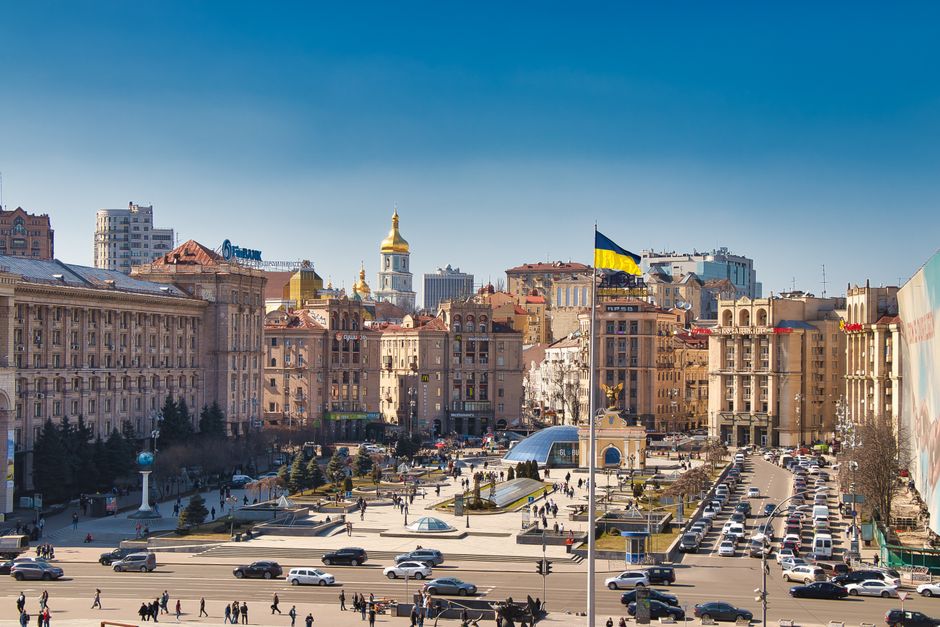
Then, shift gears entirely. Wander down Andriyivskyi Descent, the city's Montmartre. This winding, cobbled street is lined with art galleries, souvenir stalls selling traditional *rushnyky* (embroidered towels) and *pysanky* (decorated eggs), and charming cafés. Pop into the Mikhail Bulgakov Museum, dedicated to the author of *The Master and Margarita*, which feels like stepping into one of his surreal novels. As evening falls, make your way to Maidan Nezalezhnosti (Independence Square). Stand on this vast, symbolic space, the heart of modern Ukrainian identity. Feel the weight of history here—the site of the Orange Revolution and the Revolution of Dignity. It's now a crossroads of everyday life, but its stones seem to remember.
Escape the urban buzz in Mariinskyi Park. Stroll past the elegant, azure-and-white Mariinskyi Palace, and find a bench overlooking the Dnipro. Watch the riverboats glide by, and listen to the city's hum soften to a whisper. For a final, transcendent view, take the funicular from Podil up to the Upper City. As you ascend, the rooftops of Podil fall away, and the golden domes of St. Michael's Golden-Domed Monastery rise to meet you, a perfect, cinematic reveal of Kyiv's layered beauty.
Food and Drink: A Feast for the Senses
Ukrainian cuisine is a hearty, honest expression of the land—a symphony of earthy flavors, comforting textures, and generous hospitality. Your culinary journey must begin with borscht. But forget the simple beet soup you might know. In Kyiv, borscht is a rich, deep crimson broth, often served in a clay pot, with a dollop of cool sour cream melting into a swirl on top. It's tangy, savory, and slightly sweet, with chunks of beef, cabbage, and potato—a bowl of warmth that feels like a nourishing embrace.
Then, there are varenyky. These delicate dumplings are parcels of joy. You might find them stuffed with mashed potato and fried onion (*varenyky z kartopleyu*), sweet farmer's cheese, tangy sauerkraut, or even sour cherries for a dessert version. Served with more sour cream and crispy fried bits of salo (cured pork fat), they are a textural delight. For meat lovers, chicken Kyiv is a must—a butter-filled, breaded cutlet that releases a herb-infused river of flavor with the first cut. And of course, you must try salo. This cured pork fatback is a national icon, sliced thinly and eaten on dark rye bread with a clove of garlic and a shot of *horilka* (Ukrainian vodka). It's a robust, unapologetic flavor that connects you directly to the country's agrarian roots.
Kyiv's dining scene, however, is not stuck in the past. A wave of modern Ukrainian cuisine is reinterpreting these classics with contemporary flair. In stylish restaurants in Podil or the center, you might find deconstructed borscht, varenyky with unexpected fillings like duck confit, and locally foraged ingredients presented as edible art. Pair your meal with a glass of Ukrainian wine from the southern regions, which is gaining international acclaim, or a craft beer from one of Kyiv's many microbreweries. End your evening in a hidden cocktail bar, where mixologists use homemade infusions of horseradish, honey, and forest berries to create drinks that taste like the Ukrainian landscape in a glass.
Practical Tips: Navigating the Golden City
The local currency is the Ukrainian hryvnia (UAH). While credit cards are widely accepted in hotels, restaurants, and larger stores in the center, always carry some cash for markets, small cafes, taxis, and tips. ATMs are plentiful. A little Ukrainian goes a long way. Learn the basics: *Добрий день* (Dobryi den - Good day), *Дякую* (Diakuiu - Thank you), and *Будь ласка* (Bud' laska - Please/You're welcome). Most young people and those in the service industry in central areas speak good English, but an attempt at the local language is always met with appreciation.
Kyiv is generally a very safe city for travelers, with a low crime rate. Standard urban precautions apply: be aware of your belongings in crowded places like the metro or markets. The city's infrastructure is well-developed. The metro is fast, cheap, and the best way to cover long distances. For shorter trips, ride-sharing apps like Uber and its local equivalent, Bolt, are inexpensive and reliable. Download the *Kyiv Digital* app or use Google Maps for real-time public transport routing. Remember that many pedestrian crossings are via underpasses (*perekhidy*), which are often lined with small kiosks selling everything from books to flowers—an experience in themselves.
Dress respectfully when visiting active churches and monasteries. For women, this typically means covering your head with a scarf (often provided at the entrance) and wearing a skirt or dress that covers the knees (wrap-around skirts are sometimes available to borrow). Men should avoid shorts and remove hats. Photography is often prohibited inside the main cathedral halls and always forbidden in the Lavra caves. Always ask for permission before taking photos of individuals, especially in more traditional settings.
Suggested Itinerary: Four Days in Kyiv
Day 1: The Sacred & The Historic. Start your journey at the very beginning. Visit the Golden Gate, a reconstruction of the 11th-century main gate to the city. Then, immerse yourself in the spiritual heart at Saint Sophia's Cathedral. Spend the afternoon exploring the labyrinthine complex of the Kyiv-Pechersk Lavra. Allow yourself to get lost among its churches and museums. As dusk approaches, take a moment of quiet reflection in the Lavra's gardens overlooking the Dnipro. For dinner, seek out a traditional restaurant for your first bowl of borscht and plate of varenyky.
Day 2: Art, Soul & The Maidan. Begin in the charming Podil district. Wander through Kontraktova Square and explore the side streets. Visit the Mikhail Bulgakov Museum or the One Street Museum on Andriyivskyi Descent. Spend a few hours meandering down the descent itself, browsing art and picking up souvenirs. Have lunch in a cozy Podil café. In the afternoon, walk up to the St. Michael's Golden-Domed Monastery, its domes a brilliant blue. From there, descend to Maidan Nezalezhnosti. Feel the weight and significance of the square. Enjoy an evening at a modern Ukrainian restaurant, tasting reimagined classics.
Day 3: Monuments, Parks & Panoramas. Engage with the 20th century at the Museum of the History of Ukraine in World War II and the towering Motherland Monument. The scale is immense and sobering. Afterwards, find balance in the tranquility of Mariinskyi Park next door. Walk to the Mariinskyi Palace and enjoy the river views. Take the funicular from Podil back up for a different perspective. In the late afternoon, consider a boat trip on the Dnipro to see the city from the water. Dine at a restaurant with a panoramic view, watching the city lights begin to twinkle.
Day 4: Deep Dive & Departure. Choose your own adventure based on your interests. Art lovers might head to the National Art Museum of Ukraine or the PinchukArtCentre for contemporary works. History buffs could explore the National History Museum or the Chornobyl Museum for a powerful, moving experience. For a final local experience, visit a traditional market like the Bessarabsky Market in the center—a feast of sights and smells with stalls of caviar, cheese, honey, and spices. Enjoy a last coffee at a streetside table, absorbing the rhythm of Kyiv life before you depart.
Conclusion: The Golden Light Within
You will leave Kyiv changed. The souvenirs you take home will be more than a *pysanka* or a *rushnyk*; they will be sensory memories imprinted on your soul. The taste of hot borscht on a cool evening. The scent of incense and damp earth in the Lavra caves. The feel of sun-warmed cobblestones under your feet on Andriyivskyi Descent. The sound of a cathedral bell echoing across the river at sunset. And above all, the sight of that golden light—the light that gilds the domes, filters through the chestnut leaves, and seems to shine from within the people themselves.
Kyiv does not simply offer a holiday; it offers a profound conversation. It is a city that has stared down the abyss of history and responded not with despair, but with an ever-stronger commitment to beauty, faith, and freedom. It teaches resilience not as a theory, but as a daily practice etched in the repaired facades and determined smiles. You come as a visitor, but you leave feeling like a witness to something extraordinary—the enduring, unbreakable spirit of a capital that is, and always will be, the heart of a nation. You carry a piece of its golden light within you, a reminder that even in the deepest winter, spring always returns to the hills above the Dnipro.
Frequently Asked Questions (FAQ)
Is Kyiv safe for tourists to visit?
Safety conditions can change rapidly. It is absolutely critical for any prospective traveler to consult their home country's government travel advisories for the most current, official information and warnings regarding security, entry requirements, and safety conditions in Kyiv and Ukraine before making any travel plans. Always prioritize verified, up-to-date sources for such decisions.
What is the best way to get around Kyiv?
The Kyiv metro is incredibly efficient, affordable, and an experience in itself, with stunningly ornate central stations. For above-ground travel, ride-sharing apps like Uber and Bolt are widely used, reliable, and inexpensive. For shorter distances in the historic center, walking is often the best way to discover the city's hidden charms and sudden, beautiful vistas.
Do I need to speak Ukrainian or Russian to visit Kyiv?
While not necessary, it is appreciated. English is commonly spoken by younger generations and within the tourism, hospitality, and tech sectors in central areas. Learning a few basic Ukrainian phrases like "hello," "thank you," and "please" will greatly enhance your interactions and is seen as a respectful gesture towards the local culture and language.
What should I wear when visiting Kyiv's churches and monasteries?
Modest dress is required. For women, this means covering your head with a scarf (often provided at the entrance), wearing skirts or dresses that cover the knees, and covering shoulders. Men should wear long trousers and remove hats. Many active sites offer wrap-around skirts or scarves for visitors who are not dressed appropriately.
What is a must-try local dish I shouldn't miss?
You cannot leave without trying authentic Ukrainian borscht. This is not just a beet soup; it's a rich, savory, slightly sweet broth with meat and vegetables, served with sour cream and pampushky (garlic bread). Also, make sure to sample varenyky (dumplings) with various fillings like potato, cheese, or cherries.
How many days should I spend in Kyiv to see the main sights?
A minimum of three to four full days is recommended to experience Kyiv without rushing. This allows time to explore the major historical and religious sites like the Lavra and St. Sophia's, wander the atmospheric neighborhoods like Podil, visit key museums, and enjoy the local cuisine and parks at a relaxed pace.
Is Kyiv an expensive city to visit?
Compared to Western European capitals, Kyiv is generally very affordable for travelers. Accommodation, dining out, public transportation, and museum entry fees are often significantly less expensive. You can enjoy a high-quality experience, from fine dining to comfortable hotels, without the price tag of many other major European cities.


No comments:
Post a Comment