
Nafplio: The First Capital's Cinematic Dream
Introduction: A First Glimpse of a Timeless Stage
The scent hits you first. A complex perfume of salt-licked stone, blooming jasmine spilling over Venetian balconies, and the faint, sweet promise of loukoumades frying in distant kitchens. You step out of the modern world and into a frame. Before you, Nafplio unfolds not just as a town, but as a living cinema screen, a masterpiece of layered history painted in the golden light of the Peloponnese. The soundtrack is a gentle symphony: the rhythmic slap of water against the hulls of fishing boats in the old port, the clatter of spoons on tiny coffee cups in Syntagma Square, the distant, mournful cry of a seagull circling the Palamidi fortress high above.
This is not merely a seaside Greek town with old walls, scenic squares, and ocean views. This is a feeling. Wandering its cobblestone arteries, you are treading a stage where empires have performed their grand, often tragic, operas. The Venetians laid the stones you walk on, their lion of St. Mark still gazing sternly from fortress walls. The Ottomans left the echo of a minaret. And for a brief, glorious moment after the War of Independence, this became the first capital of a modern Greece, its parliament echoing in the very squares where you now sip a freddo cappuccino.
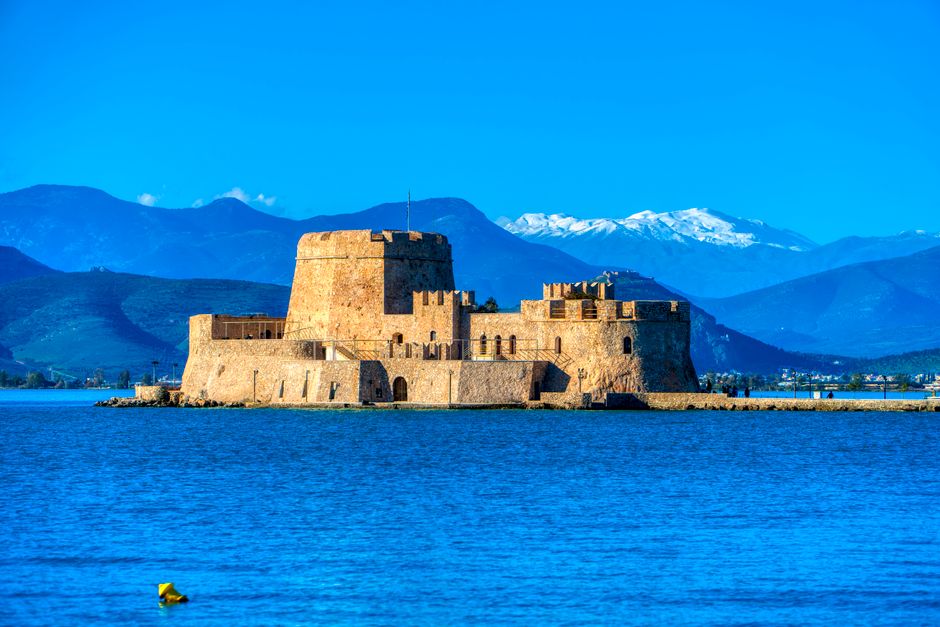
Every corner is a composed shot. You turn from a narrow, shadowed lane, its walls draped in bougainvillea, and are suddenly presented with a breathtaking vista of the sapphire Argolic Gulf, framed perfectly by terracotta rooftops. You climb, and the town drops away below you like a diorama, the island fortress of Bourtzi sitting in the bay like a stone jewel. The light here is a character in itself—the fierce, clarifying noon sun that turns the whitewashed steps of the Old Town into blinding geometry, and the honeyed, forgiving glow of dusk that gilds every balcony and bathes the fortresses in amber.
To visit Nafplio is to be both spectator and participant. You feel the texture of history under your fingertips—the smooth, sun-warmed stone of a Byzantine wall, the intricate ironwork of a neoclassical mansion gate. You taste it in the almonds dusting your pastry. You hear it in the polyglot murmur of visitors who have, like you, been drawn to this magnetic place. It's a town that asks you to slow down, to get lost on purpose, to let its cinematic rhythm replace your own. This is not a destination you check off a list; it's a mood you absorb, a story you step into, and a memory that lingers long after the final reel has ended.
Why Visit Nafplio: The Soul of the Peloponnese
Greece is a land of iconic postcards, but Nafplio offers something different: intimacy on an epic scale. While Athens thrums with ancient grandeur and the islands dazzle with Cycladic purity, Nafplio weaves a more nuanced, romantic narrative. It is the perfect synthesis of everything that makes Greece captivating, distilled into a walkable, soulful package. You come here not just to see, but to feel.
First, there is the sheer, staggering beauty. The town is a masterclass in harmonious architecture, where Venetian, Ottoman, and Neoclassical elements don't clash but converse. Crimson bougainvillea cascades over ochre walls; elegant mansions with painted shutters stand beside stone arches heavy with history. The setting is a dramatic cove, guarded by not one, but three fortresses—a triumvirate of stone sentinels (Palamidi, Akronafplia, and Bourtzi) that offer perspectives so breathtaking they feel stolen from a dream. Every vista is composed, every alleyway leads to a revelation, making it a paradise for the senses and the camera lens.
Beyond the aesthetics, Nafplio offers a profound and tangible connection to the birth of modern Greece. Walking the same flagstones where heroes like Kolokotronis and Capodistrias once walked infuses the air with a palpable sense of pride and struggle. You can stand in the very room where the first government convened, a humbling reminder of the nation's hard-won identity. This historical weight is balanced by a vibrant, contemporary pulse. The town is a cultural hub, home to sophisticated boutiques, art galleries tucked into basements, and a culinary scene that rivals Athens'. It's a place where you can discuss Byzantine history in the morning and enjoy a craft cocktail on a rooftop bar as the stars emerge over Palamidi in the evening.
Ultimately, you visit for the atmosphere—an elusive, enchanting blend of aristocratic grace and seaside relaxation. There are no roaring nightclubs here, but there is the profound joy of an evening volta (stroll) along the waterfront promenade, the thrill of discovering a hidden courtyard taverna, and the deep peace of watching fishing boats bob in the harbor as the last light fades from the fortress walls. Nafplio doesn't shout; it whispers, and in that whisper, you find the true soul of Greece.
When to Visit: Chasing the Perfect Light
Choosing when to visit Nafplio is like selecting the filter for your experience; each season paints the town in a distinctly beautiful light. The cinematic quality of the place is ever-present, but the supporting cast of weather, crowds, and local life changes the mood dramatically.
For the ultimate blend of pleasant weather and vibrant energy, aim for the shoulder seasons. Late April through June is pure magic. The hills are emerald green, wildflowers blanket the approaches to Palamidi, and the air is scented with orange blossom. The sun is warm but not oppressive, perfect for climbing the 999 steps to the fortress. The town is alive but not overwhelmed, and you can still secure a prime table in the square without a reservation. September and October are equally sublime. The sea has retained its summer warmth, ideal for swimming at Karathona Beach, and the light takes on a softer, golden quality. The grape harvest in the surrounding Nemea region infuses the air with a festive, rustic energy.
July and August bring the high-season crescendo. Nafplio buzzes with an international crowd. The heat can be intense, especially at midday, turning the stone lanes into sun-traps. This is the time for early morning explorations, long, lazy lunches in the shade, and late nights by the water. While it's the busiest period, the atmosphere is electric, with open-air events and a palpable holiday joy. Be prepared for higher prices and the need to plan ahead.
Winter (November to March) reveals a different, deeply authentic Nafplio. The tourist veneer recedes, and you see the town as its residents do. Stormy skies over the Argolic Gulf create dramatic, Turner-esque seascapes. You might have the echoing halls of Palamidi virtually to yourself. Cafes fill with locals debating politics over steaming Greek coffee. While some smaller hotels and shops may close, you'll experience a quieter, more contemplative, and incredibly rewarding side of the town, often at a fraction of the cost. Just pack for rain and chill.
How to Get There: The Journey to the Frame
Your arrival in Nafplio is part of its story. There's no airport in the town itself, which preserves its secluded charm. The journey is a scenic transition from the modern world into the historical.
The most common gateway is Athens International Airport (ATH). From here, you have several options to complete the final, beautiful leg. The most flexible is to rent a car. The drive is approximately 1.5 to 2 hours, mostly on excellent highways. As you cross the Corinth Canal—a breathtaking geological slash—you leave mainland Greece and enter the Peloponnese. The final approach, with the Argolic mountains unfolding before you, is a stunning prelude. Having a car also liberates you to explore the surrounding wonders: ancient Epidaurus, Mycenae, and the vineyards of Nemea.
For those preferring not to drive, regular KTEL buses depart from Athens' Kifissos Bus Station. The journey takes about 2.5 hours and is remarkably comfortable and inexpensive, dropping you at the Nafplio bus station, a short walk from the old town. It's a hassle-free way to travel, allowing you to simply gaze out the window at the changing landscape.
A more niche but spectacular option is to arrive by sea. While there are no major ferry lines, private yacht charters from nearby islands or Athens (Piraeus) can make for a truly grand entrance, sailing directly into the view that has captivated visitors for centuries, with Bourtzi island welcoming you to the harbor. Within the town itself, you will abandon wheels for feet. Nafplio's heart is a labyrinth of pedestrianized lanes, stairs, and squares. Exploring is done at a stroll—the only pace that does justice to the details hidden in every doorway and balcony.
Accommodation: Sleeping Within the Story
Where you stay in Nafplio isn't just about a bed; it's about choosing your character's setting. The town offers a rich portfolio of lodgings, from grand dames to intimate guesthouses, each promising immersion.
For the full, romantic Nafplio experience, seek out a boutique hotel in a restored Neoclassical mansion or Ottoman-era house within the Old Town. Imagine waking up in a room with exposed stone walls, wooden ceilings, and a balcony overlooking a jasmine-filled courtyard. These places are rich with character—antique furniture, four-poster beds, and breakfasts served in vaulted cellars or on rooftop terraces with fortress views. You pay for history and atmosphere, stepping directly from your doorstep onto the cinematic set.
A more budget-conscious yet equally atmospheric option is one of the many family-run guesthouses (pensions). Often tucked away on quieter lanes, they offer spotless rooms, heartfelt hospitality from owners who might share stories over a glass of homemade lemon liqueur, and a fantastic sense of being a temporary local. The sound of church bells and the chatter from a nearby kafeneio will be your alarm clock.
For those craving sea views and modern amenities, look to the larger hotels along the Arvanitia promenade or on the road to Karathona Beach. These offer swimming pools, spacious balconies facing the sapphire gulf, and easy access to seaside walks. You'll trade some of the old-world charm for panoramic vistas and resort-style comfort, still only a 10-15 minute stroll from the heart of the action. Wherever you lay your head, book well in advance for peak seasons—the best rooms are leading roles in high demand.
Things to Do: Directing Your Own Adventure
In Nafplio, doing is synonymous with being. The activities are not mere checklists; they are scenes in your personal film.
Conquer the Citadels: Your first act must be ascending to the fortresses. For the epic, sweat-and-reward journey, climb the 999 steps to Palamidi at sunrise. The number is mythical, the count debatable, but the ascent is real. As you climb, the town shrinks below, and the Argolic Gulf expands into an endless blue. At the top, standing on walls built by the Venetians, you are monarch of all you survey—a 360-degree panorama that steals your breath. For a different perspective, take the short, stunning Arvanitia footpath carved into the cliffs beneath Palamidi. This seaside walk, with the turquoise water crashing below, leads to a secluded swimming spot and offers postcard views back to the town. Don't miss the short boat taxi from the port to the Bourtzi islet fortress. Sitting on its tiny pier, you get the iconic shot of Nafplio's waterfront, a picture of perfect harmony between town, sea, and mountain.
Wander and Get Lost: Put away the map in the Old Town. Let your feet guide you through the maze of cobbled streets with names like "Pottery" and "Sigh." Discover hidden squares where cats doze in the sun, stumble upon the "God of War" sculpture in a quiet corner, and peek into courtyards bursting with color. Find the old Turkish mosque in Syntagma Square, now housing the Archaeological Museum, and the elegant Vouleftikon, the first parliament of modern Greece.
Embrace the Water: The sea is Nafplio's constant companion. Spend an afternoon at Karathona Beach, a long, sandy crescent just a 30-minute walk or short drive from town, where tavernas serve fresh fish right on the sand. For a more dramatic swim, seek out the tiny pebble coves along the Arvanitia path, where you can plunge into crystalline waters with a view of the fortress towering above.
Venture Beyond the Walls: Nafplio is the perfect base for Peloponnesian odysseys. A 30-minute drive brings you to the Theatre of Epidaurus. Stand in the center of that acoustic marvel and whisper—the experience is spine-tingling. Another short drive away lies Ancient Mycenae, the kingdom of Agamemnon, where you pass through the Lion Gate into a realm of Cyclopean walls and royal tombs heavy with ancient myth. Pair this with a tasting tour of the Nemea wine region, where the rich, red Agiorgitiko wine will be a highlight of your culinary journey.
Food and Drink: A Feast for the Senses
Dining in Nafplio is a central plot point. This is a town that takes its pleasures seriously, offering a gastronomic journey that mirrors its cultural layers—rooted in tradition yet touched by contemporary flair.
Start your day like a local: a strong Greek coffee or a frothy freddo cappuccino at a kafeneio in Syntagma Square, accompanied by a flaky, syrup-soaked bougatsa (custard pie) dusted with cinnamon and sugar. As you watch the world pass, you're participating in a ritual centuries old.
For lunch, follow the scent of grilled seafood to the waterfront tavernas or find a traditional mezedopoleio in the backstreets. Here, the philosophy is one of shared joy. Order a carafe of crisp local white wine and let the small plates flow: creamy tzatziki, salty feta drizzled with olive oil and oregano, succulent octopus tentacles charred to perfection, sizzling shrimp saganaki in tomato and feta sauce, and the unmissable gourounopoulo (suckling pig), a Peloponnesian specialty. The old market building now houses several excellent eateries, their tables spilling onto the street in a lively, communal atmosphere.
As evening falls, the dining scene shifts. Rooftop restaurants offer sophisticated twists on classic dishes with fortress views as your backdrop. Later, join the volta and indulge in the town's famous dessert: loukoumades. These hot, golden doughnut balls, drenched in honey and sprinkled with walnuts and cinnamon, are pure, sweet bliss, best enjoyed from a humble street-side stall. End your night with a digestif of tentura, a local spiced liqueur that warms you from within. In Nafplio, every meal is a scene to be savored.
Practical Tips: Your On-the-Ground Script
A smooth production requires a few behind-the-scenes notes. Currency: Greece uses the Euro (€). Cards are widely accepted, but always carry some cash for small tavernas, markets, and taxi boats. Language: Greek is the official language, but English is very widely spoken in tourist areas. Learning a few basic phrases like "Efharistó" (Thank you) will be warmly appreciated.
Getting Around: Your primary mode of transport will be your feet. Wear sturdy, comfortable shoes—the cobblestones are beautiful but uneven, and the hills are steep. For trips to the beaches or ancient sites, local taxis are readily available and reasonably priced. The boat taxi to Bourtzi runs frequently from the port.
Safety: Nafplio is an exceptionally safe town, day or night. Normal precautions apply, but the greatest hazard is likely tripping on a cobblestone while gazing at a balcony. Shopping: Look for quality local products: Komboloi (worry beads) from artisan workshops, olive wood utensils, ceramics from nearby villages, and exceptional local olive oil and wine. Avoid the generic souvenir shops on the main drag for the more unique boutiques on side streets.
Finally, embrace the pace. Service can be relaxed—this is not inefficiency, but a different rhythm. Meals are for lingering. A coffee is for watching the world go by. Let the town's tempo become yours.
Suggested Itinerary: A Three-Day Director's Cut
Day 1: The Grand Introduction. Arrive and settle into your accommodation. Lose yourself in the Old Town's labyrinth. Find Syntagma Square for a late lunch of meze. In the late afternoon, when the heat relents, climb the 999 steps to Palamidi for sunset—the golden hour here is transcendent. Descend and enjoy a well-earned seafood dinner at a taverna on the waterfront, the lights of Bourtzi twinkling in the distance.
Day 2: Sea, Stone, and Stage. Morning boat taxi to Bourtzi. Explore the islet, then swim at Karathona Beach, lunching on the sand. In the afternoon, drive or take a tour to the Theatre of Epidaurus. Test the acoustics, feel the history. Return to Nafplio for a more refined dinner at a rooftop restaurant, enjoying the night view of the illuminated Palamidi fortress.
Day 3: Myths and Vines. Venture to the Bronze Age citadel of Mycenae. Walk through the Lion Gate, descend into the Treasury of Atreus, and feel the weight of Homeric epic. On your return, stop in the Nemea region for a wine tasting at a family-owned vineyard, sampling the famed Agiorgitiko. Back in Nafplio, take the romantic Arvanitia cliff walk before a final, memorable farewell dinner in a hidden courtyard taverna in the Old Town.
If you have more time: Add a day trip to the charming mountain village of Astros or the ancient city of Tiryns. Dedicate a day purely to beach-hopping along the coast, or simply grant yourself the luxury of doing nothing but reading a book in a different beautiful café each hour.
Conclusion: The Fade Out
Leaving Nafplio feels like waking from a vivid dream. The sensory impressions linger—the cool touch of morning stone, the taste of honey and walnut, the specific shade of magenta the bougainvillea turns against a white wall at dusk. It's a town that doesn't just occupy space on a map; it occupies a corner of your imagination.
More than a collection of sights, Nafplio, Greece, is a masterfully composed experience. It proves that history is not a dry textbook chapter but a texture underfoot, a flavor on the tongue, a view that stops you in your tracks. It demonstrates that a destination can be both profoundly significant and effortlessly charming, both a monument to national identity and a sanctuary for personal reverie.
You will carry pieces of it with you: the resilience in its fortress stones, the romance in its flower-draped alleys, the serenity of its sea views. It is the Greece of poets and warriors, of artists and lovers, all condensed into one unforgettable, cinematic town. When the world feels too loud and too fast, you will find yourself longing for the gentle rhythm of its squares, the whisper of its history, and the perfect, golden light of Nafplio.
Frequently Asked Questions
Is Nafplio suitable for families with young children?
Absolutely. Nafplio is a fantastic family destination. It's safe, walkable, and full of ice cream shops and easy-going tavernas. Kids will love the boat ride to Bourtzi, exploring the castle-like fortresses (though watch them on the high walls), and the shallow, sandy Karathona Beach is perfect for little ones. Just be prepared for some steep hills and steps with a stroller.
How many days should I spend in Nafplio?
To truly appreciate Nafplio itself and relax into its pace, a minimum of two full days is recommended. However, three to four days is ideal. This allows you to explore the town thoroughly, take a day trip to Epidaurus and Mycenae, enjoy the beach, and still have time for leisurely meals and spontaneous wandering without feeling rushed.
Is Nafplio expensive compared to other Greek destinations?
Nafplio is generally considered a bit more upscale than typical Greek island villages but is on par with or slightly less expensive than popular Cycladic islands like Mykonos or Santorini. You can find budget-friendly guesthouses and tavernas, but the boutique hotels and fine-dining restaurants cater to a discerning crowd. Overall, it offers good value for the unique experience it provides.
Can I visit the ancient sites without a car?
Yes, it is very possible. Nafplio has an excellent tourist infrastructure. Numerous local tour companies offer half-day and full-day guided bus tours to Epidaurus, Mycenae, and Nemea, which include transportation and an informative guide. Taxis can also be hired for a private trip, though this is more expensive. For the independent traveler, local KTEL buses also run to these sites, though schedules may be less frequent.
What is the one thing I shouldn't miss in Nafplio?
While it's hard to choose one, the single most iconic and rewarding experience is witnessing the view from the Palamidi Fortress. Whether you conquer the 999 steps at dawn or drive up for sunset, that panoramic vista of the town, the sea, and the surrounding mountains is the defining image of Nafplio and a memory that will stay with you forever.
Is Nafplio very crowded with tourists?
Nafplio is popular and can be busy, especially on weekends and during July and August. However, it rarely feels overwhelmingly crowded like some European hotspots. The labyrinthine old town absorbs people well, and it's easy to find a quiet lane or a secluded cafe perch. Visiting in the shoulder seasons (May-June, September-October) offers the best balance of good weather and manageable numbers.


No comments:
Post a Comment