
The Concrete Symphony: An Immersive Journey Through New York City
Introduction
You hear it before you see it. A low, constant hum that vibrates up through the soles of your shoes, a percussive rhythm of car horns, distant sirens, and a million overlapping conversations in a hundred different languages. You smell it on the wind that whips down the canyons of steel and glass—a potent cocktail of roasting nuts, diesel exhaust, and the faint, sweet promise of rain on hot pavement. Then, you turn the corner, and there it is, laid out before you in a staggering, impossible panorama. This is New York City. Not just a place on a map, but a living, breathing organism, a relentless dream machine that has captivated the world's imagination for centuries. To visit is to step onto the most elaborate set ever built, where every passerby is both an extra and the star of their own epic, and the narrative shifts with every block.
My first encounter was from the back of a yellow cab, jet-lagged and wide-eyed, pressing my forehead against the cool glass as we emerged from the Queens Midtown Tunnel. The city didn't just appear; it erupted. The sheer verticality of it is a physical shock, a man-made mountain range glittering against the night sky. Light doesn't just illuminate here; it performs. It bleeds from towering office windows, dances across marquees, and paints the undersides of clouds in a perpetual, rosy glow. This is a city that operates in cinemascope, where ordinary moments feel framed by an invisible director. A saxophonist's lonely riff in a subway corridor becomes a soulful score. The steam rising from a grate transforms a businessman into a phantom emerging from the underworld. The synchronized chaos of a Manhattan intersection is a meticulously choreographed ballet of humanity and machinery.
But New York's true magic lies not in its postcard vistas, breathtaking as they are, but in its intimate, unexpected corners. It's in the sudden, profound silence of the reading room at the New York Public Library, a cathedral of thought. It's in the damp, earthy smell of the flower markets at dawn in the Meatpacking District. It's in the feel of worn, wooden pews in a century-old jazz club in the Village, where the history is soaked into the walls. This city is a master of contrast. You can stand in the serene, curated wildness of Central Park, listening to the gentle lap of water at Bethesda Terrace, and yet the iconic skyline looms just over the treetops, a constant reminder of the metropolis encircling this green sanctuary. You can feast on a dollar slice of pizza, grease dripping onto a paper plate, while gazing up at a billion-dollar tower sheathed in gold-toned glass. New York doesn't ask you to choose between grandeur and grit; it demands you appreciate both, simultaneously.
To travel here is to willingly submit to sensory overload, to have your pace quickened, your opinions challenged, and your sense of what's possible expanded. It is exhausting and exhilarating in equal measure. It is, as the saying goes, a place where you can be anything, or nothing at all, and no one will bat an eye. This guide is not just a list of destinations; it's an invitation to lean into the chaos, to find your own rhythm in the symphony, and to discover the particular version of New York City that exists only for you.
Why Visit New York City?
Why climb a mountain? Why sail an ocean? New York City is a human-made wonder of the world, a pinnacle of cultural aspiration and urban density that exists nowhere else on Earth. You visit to feel the pulse of the present moment, to stand at the crossroads of global finance, fashion, art, and food. But beyond the clichés of Broadway and the Empire State Building, you come for the palpable energy—a tangible, electric current that seems to flow through the grid of streets and into the people. There's a reason artists, writers, and dreamers have pilgrimaged here for generations: the city itself is a muse. It offers a relentless stimulus of ideas, a crushing and inspiring density of human experience that forces you to define who you are against its mighty backdrop.
You visit for the culture, in its most expansive definition. Yes, it's the hallowed halls of the Metropolitan Museum of Art, where you can travel from ancient Egypt to a modern American rooftop garden in an afternoon. It's the cutting-edge installations in a Chelsea gallery, where the air smells of white paint and profound intention. But it's also the culture of a stoop-sale in Brooklyn, of a fierce chess match in Washington Square Park, of the gospel choir that turns a subway car into a revival tent. New York is a living archive of human creativity. You can walk the same streets as the Beat poets, stand where the Stonewall riots ignited a movement, or gaze at the skyline that F. Scott Fitzgerald described as "a promise of all the mystery and the beauty in the world."
Ultimately, you visit for the transformation. New York City has a way of reflecting back to you not who you are, but who you could be. It asks more of you: to walk faster, to think bigger, to be braver. It strips away pretense with its blunt, no-nonsense attitude. You will get lost. You will be overwhelmed. You might even get a little jostled. But in navigating its complexities, in finding your favorite coffee cart, your preferred shortcut through a park, or that tiny, perfect restaurant hidden down a flight of stairs, you claim a tiny piece of the city for yourself. You leave not just with photographs, but with a new layer of resilience, a broader perspective, and stories that will feel like scenes from a film you somehow starred in.
When to Visit
New York City is a four-season drama, each act with its own distinct mood, costume, and soundtrack. Choosing when to visit is about selecting the backdrop for your personal New York story.
Spring (April to June): This is the city's grand awakening, arguably its most glorious season. After the gray slumber of winter, Central Park becomes a pointillist painting of cherry blossoms, tulips, and daffodils. The air is soft, carrying the scent of blooming magnolias and the sound of outdoor café chatter. Days are long and gentle, perfect for aimless wandering. This cinematic beauty comes with a price: crowds swell, and hotel rates climb toward their summer peak. It's a time of infectious optimism, but you must book everything far in advance.
Summer (July to August): New York in summer is a steamy, vibrant beast. The heat rises in visible waves from the asphalt, and the air grows thick and languid. This is the season of outdoor festivals, free Shakespeare in the Park, and movies under the stars. The city's energy moves outdoors to rooftop bars, Hudson River piers, and the suddenly essential fire escapes. While the humidity can be oppressive, there's a certain camaraderie in the shared sweat. Just be prepared for slower movement and the occasional desire to dive into the nearest air-conditioned refuge.
Fall (September to November): My personal favorite. As the summer crowds recede, a crisp, intellectual energy returns. The light turns golden, slanting dramatically down the avenues. Central Park is set ablaze in a breathtaking display of crimson, orange, and gold—a spectacle that must be seen to be believed. The weather is ideal for walking, and the cultural calendar kicks into high gear with new Broadway seasons, gallery openings, and Fashion Week. It's a sophisticated, brisk, and visually stunning time to experience the city.
Winter (December to February): New York transforms into a snow-globe fantasy in winter, particularly in December. The holiday magic is undeniable: the radiant tree at Rockefeller Center, the animated windows on Fifth Avenue, the smell of roasted chestnuts and mulled wine at Christmas markets. It's a cozy, festive time. Post-holidays, January and February are cold, often bitterly so, with skeletal trees and a wind that whips between buildings with a vengeance. But this is when you find the city's true rhythm, with shorter museum lines and a more local vibe. Pack your warmest coat and embrace the stark, beautiful melancholy of a New York winter.
How to Get There
Your approach to New York City is part of the narrative. Flying into John F. Kennedy International (JFK) or Newark Liberty International (EWR) offers that iconic, slow-motion reveal as your plane banks over the boroughs, the skyline emerging like a jagged crystal forest. LaGuardia (LGA), after a massive renovation, is now a surprisingly pleasant and efficient gateway, especially for domestic flights. From any airport, you have options. The yellow cab is a rite of passage—a slightly battered throne from which to watch the world blur by. Agree on the fare or ensure the meter is running. For a more budget-friendly and authentic plunge into city life, take the AirTrain from JFK or Newark to connect with the subway. It's faster during peak traffic and drops you directly into the city's pulsating circulatory system.
Arriving by train is a uniquely romantic and civilized entry. Pulling into the majestic, celestial-vaulted main hall of Grand Central Terminal is an arrival fit for a 1940s film noir hero. Penn Station, while less grand, delivers you right into the heart of Midtown's chaos. If you're driving, be prepared: parking is a costly nightmare, and navigating the streets is an extreme sport best left to professionals. My strongest advice? Ditch the car. New York is a city to be walked and subway-ed. The moment you surrender to public transit, you cease being a spectator and start being a participant. You'll learn the city's true geography, feel its democratic pulse, and witness a cross-section of humanity you'd never see from behind a windshield.
Accommodation
Where you lay your head in New York City is more than just a bed; it's your base camp, your sanctuary, and your lens on a particular neighborhood's soul. The classic choice is Midtown Manhattan. Here, you're in the heart of the action, surrounded by skyscrapers, Broadway theaters, and iconic shops. Waking up to a view of the Empire State Building never gets old. But Midtown can feel anonymous, crowded, and relentless. For a more residential, village-like feel, look downtown. Neighborhoods like the West Village, with its cobblestone streets and hidden gardens, or the Lower East Side, buzzing with hip bars and historic tenement buildings, offer a sense of local life. You'll trade convenience for character, finding quirky boutique hotels and converted loft spaces.
Across the East River, Brooklyn has cemented its status as a destination unto itself. Williamsburg offers a curated, hipster paradise with stunning Manhattan views from its waterfront parks. Brooklyn Heights and Park Slope provide tree-lined streets, historic brownstones, and a quieter, family-friendly pace, all just a short subway ride from the frenzy. For the budget-conscious, hostels have evolved, offering not just dorm beds but private rooms and vibrant social scenes. Alternatively, a well-located vacation rental can give you the priceless feeling of "living" in New York, even if just for a few days—a kitchen for morning coffee, a local bodega for supplies. Remember, in New York, real estate is the ultimate commodity. Rooms are often smaller than you're used to, so prioritize location and character over space. Your hotel should be a place to recharge, because the real adventure is waiting right outside your door.
Things to Do
To list the things to do in New York City is to attempt to catalog stars in the sky. The following is not a checklist, but a series of scenes to step into. Start with the anchors. Central Park is the city's green, breathing lung. Don't just walk through it; get lost in it. Rent a rowboat on the Lake, find the secret waterfall behind the Ramble, or simply sprawl on the Great Lawn with a book, surrounded by the surreal silhouette of skyscrapers. It's a masterpiece of democratic design, where billionaires and buskers share the same winding paths.
Then, choose your museum. The Metropolitan Museum of Art is a city within the city. Spend hours wandering from the Temple of Dendur to the American Wing, and finish on the rooftop for a cocktail with a view. The Museum of Modern Art (MoMA) offers a concentrated hit of genius—Van Gogh's *Starry Night* is here, pulsating with its own inner light. For something more intimate, the Frick Collection in a Gilded Age mansion feels like visiting the home of an obscenely wealthy, art-obsessed uncle.
Elevation is key to understanding New York's scale. The observation deck of the Empire State Building is a classic for a reason—the art deco lobby, the slow elevator ascent, and then the sudden, breathtaking exposure to wind and sky. For a newer perspective, Top of the Rock at Rockefeller Center provides the perfect postcard view, with the Empire State Building itself in the frame. For a free, moving panorama, take the Staten Island Ferry. As it pulls away from Manhattan, the entire downtown skyline recedes like a majestic, floating island, best experienced at dusk when windows begin to glow.
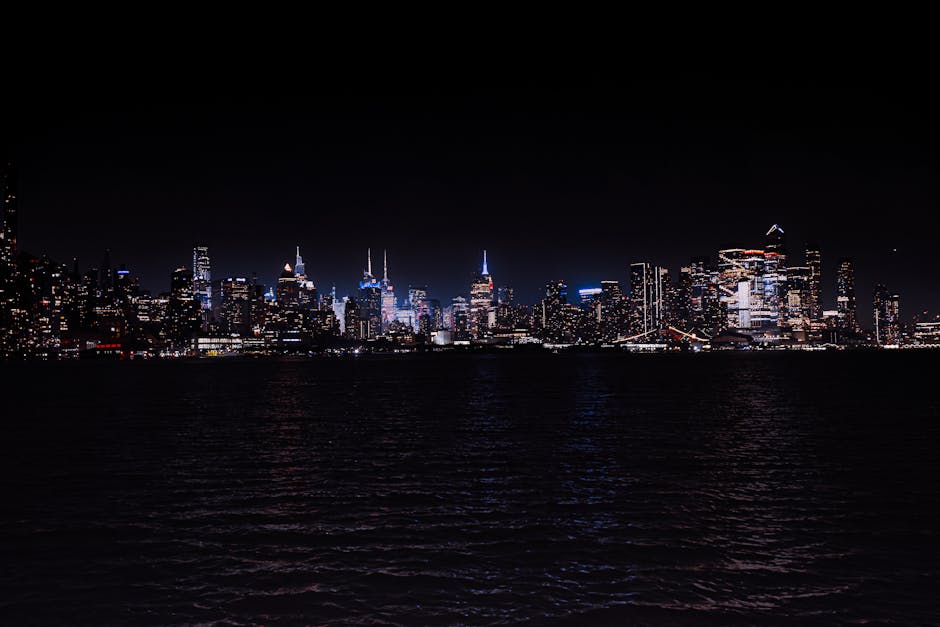
Now, go granular. Walk across the Brooklyn Bridge early in the morning, when the wooden planks are quiet and the sun hits the granite towers. Explore the High Line, an elevated railway turned into a floating garden, a perfect metaphor for the city's ability to reinvent itself. Get a dose of calm at the 9/11 Memorial & Museum, a profoundly moving and essential testament to resilience. In the evening, surrender to the magic of live performance. It doesn't have to be a Broadway mega-musical (though that is a thrilling experience). Seek out an off-Broadway play in a black-box theater, a jazz set in a Greenwich Village basement, or stand-up comedy in a Chelsea club. In New York, world-class talent is performing on a stage somewhere, every single night.
Finally, dedicate time to neighborhoods. Spend an afternoon in Chinatown, following the scent of roast duck into bustling grocery stores and tiny tea shops. Wander the serene, book-lined blocks of the Upper West Side. Get a slice of the old world in Little Italy. Let yourself be pulled by curiosity down side streets and into unmarked doors. The greatest thing to do in New York City is to be present, to watch, and to let the unexpected script of the day unfold.
Food and Drink
New York City is the world's greatest food hall, a 24-hour culinary carnival where you can eat your way across the globe without ever leaving its five boroughs. The experience ranges from the sublime to the sublimely simple. Start with the icons: a New York-style bagel, boiled and baked to a shiny, chewy perfection, schmeared with an inch of scallion cream cheese. Follow it with a foldable slice of cheese pizza, the grease-soaked paper plate a badge of honor. Seek out a classic Jewish deli for a towering pastrami on rye, the meat so tender it practically melts, with a crisp pickle on the side.
But the city's true gastronomic heart beats in its neighborhoods. Take the 7 train to Flushing, Queens, and you'll find a Chinatown that dwarfs Manhattan's, with food courts offering soup dumplings that burst with rich broth. In Jackson Heights, the air is fragrant with cumin and turmeric from Tibetan momo stalls and Colombian arepa vendors. In the East Village, you can hop from a Ukrainian diner to a Japanese izakaya to a vegan soul food joint in three blocks. Don't overlook the humble food cart—the source of the city's best morning coffee (light and sweet, if you please) and the legendary halal platter of chicken and rice, a creamy, spicy, and utterly satisfying meal for a handful of dollars.
As the sun sets, the city's drinking establishments offer their own portals to different eras. Sip a perfectly crafted, ice-cold martini in a dimly lit, wood-paneled cocktail lounge that feels frozen in the 1950s. Join the fashionable crowd on a rooftop bar, the city lights twinkling like a carpet of diamonds below you. Or, find a no-frills dive bar in the West Village, where the beers are cheap, the jukebox is legendary, and the conversations are real. From a dollar oyster happy hour to a multi-course tasting menu that costs as much as a plane ticket, New York caters to every appetite and budget, constantly reminding you that adventure is always on the menu.
Practical Tips
Navigating New York City is an art form. Master the subway. Download a real-time app like Citymapper. Buy a 7-day unlimited MetroCard if you're staying a week—it pays for itself quickly. Walk like a New Yorker: with purpose, eyes forward, and stick to the right on sidewalks and escalators. Don't stop abruptly in the middle of the flow; step to the side. Comfortable shoes are non-negotiable; you will walk miles without realizing it. While much of the city is a grid (avenues run north-south, streets run east-west), downtown is a delightful, confusing maze. Embrace getting a little lost; it's how you make discoveries.
Money-wise, while cards are accepted almost everywhere, always carry some cash for food carts, tips, and smaller establishments. Tipping is customary: 15-20% at restaurants, $1-2 per drink at bars, and a few dollars for hotel housekeeping. Be street-smart: keep your belongings secure and be aware of your surroundings, but don't be paranoid. New York is one of the safest big cities in the world. Finally, pack layers. The weather can shift dramatically, and the temperature difference between a sunny street and the shade of a skyscraper, or between the outside air and a stifling subway platform, can be extreme. The most important tip? Put your phone away sometimes. Look up. Watch the play of light on buildings. Listen to the street musicians. The best moments in New York happen between the destinations on your map.
Suggested Itinerary
Day 1: The Iconic Core. Start with espresso and a pastry in a Midtown café. Head to Top of the Rock for a morning view. Walk down Fifth Avenue, peeking into St. Patrick's Cathedral. Dive into the grandeur of the New York Public Library. Have a classic lunch at a Midtown deli. Spend the afternoon at MoMA. In the evening, see a Broadway show and cap the night with a cocktail in a Times Square bar, embracing the glorious, overwhelming spectacle.
Day 2: Downtown & History. Take the subway to Battery Park. Feel the salt air and gaze at the Statue of Liberty. Walk solemnly through the 9/11 Memorial. Then, walk north, exploring the winding streets of the Financial District. Cross the Brooklyn Bridge on foot, stopping for photos. Explore DUMBO and the Brooklyn Bridge Park, then take the subway to the West Village for dinner in a cozy, candlelit restaurant. Find live music in a tucked-away club.
Day 3: Culture & Green Space. Begin at the Metropolitan Museum of Art (give it at least 3-4 hours). Exit into Central Park, entering near the Obelisk. Wander to Bethesda Terrace, rent a rowboat, or simply find a bench and people-watch. In the late afternoon, take the crosstown bus to the Upper West Side for a pre-theater drink. Catch a performance at Lincoln Center or an off-Broadway show.
Day 4: Neighborhood Immersion. Choose your adventure. Option A: Take the L train to Williamsburg, Brooklyn. Browse independent boutiques, visit a brewery, and walk along the waterfront for stunning Manhattan views. Option B: Subway to Queens. Explore the museums and park in Long Island City, then take the 7 train to Flushing for an incredible, authentic Asian food crawl. Return to Manhattan for a final, memorable dinner, perhaps in the vibrant chaos of the East Village.
Conclusion
Leaving New York City feels like waking from a vivid, relentless dream. The sounds of the city—the constant hum, the shriek of the subway, the snippets of conversation—echo in your mind for days, a phantom soundtrack to your now-quieter reality. You return home slightly different: your stride quicker, your senses heightened, your tolerance for the mundane a little lower. The city imprints itself on you. You miss the anonymity of being surrounded by millions, the freedom it grants. You crave the specific texture of its energy—the feeling that around any corner, something extraordinary might happen.
New York doesn't give up its secrets easily. It can be brusque, expensive, and exhausting. But it rewards the curious, the persistent, and the open-hearted. It's a city that teaches you to find beauty in the grind and grace in the chaos. You may not come owning a piece of the skyline, but you'll leave with something more valuable: a collection of moments, a newfound confidence, and the indelible memory of having danced, however briefly, in the heart of the concrete symphony. It's a place you visit once as a tourist, and return to forever as a pilgrim, always searching for that next scene, that next glimpse of magic in the perpetual motion.
FAQ
What is the best way to get around New York City?
The subway is the fastest, most efficient, and most authentic way to travel. It operates 24/7 and connects all five boroughs. For shorter distances or to see the city, walking is unbeatable. Cabs and ride-shares are useful, especially late at night or with luggage, but can be slow and expensive in traffic. Avoid driving a car at all costs.
Is New York City safe for tourists?
Yes, New York is one of the safest large cities in the United States. Like any major metropolis, it requires common sense: be aware of your surroundings, keep valuables secure, avoid deserted areas late at night, and trust your instincts. The areas frequented by tourists are generally very well-patrolled and bustling with people at all hours.
How much should I budget per day for a trip to New York?
This varies wildly. A budget traveler could manage on $100-150/day by staying in hostels, eating from carts and delis, and using free attractions. A mid-range traveler should plan for $250-400/day for a decent hotel, sit-down meals, paid attractions, and some shows. A luxury experience can easily exceed $700+ per day.
What are some free things to do in New York City?
There are countless free activities: walking across the Brooklyn Bridge, exploring Central Park, visiting the 9/11 Memorial, window-shopping on Fifth Avenue, watching street performers in Washington Square Park, taking the Staten Island Ferry, exploring the Grand Central Terminal, and visiting many museums (like the Met) which have "pay-what-you-wish" admission policies for New York State residents and students, with a suggested price for others.
What should I pack for a trip to New York?
Comfortable, broken-in walking shoes are the absolute top priority. Pack for layers, as weather can change quickly. Include a warm coat in winter, a light jacket and umbrella in spring/fall, and breathable clothing for summer. A crossbody bag or secure backpack is ideal for carrying essentials while keeping your hands free.
Do I need to tip for everything?
Tipping is a standard part of the service economy. Plan to tip 15-20% at sit-down restaurants, $1-2 per drink at bars, a few dollars per day for hotel housekeeping, $2-3 for taxi or ride-share drivers, and a few dollars for coat check or luggage assistance. It's customary, so budget for it accordingly.


No comments:
Post a Comment