
Newcastle upon Tyne: A Cinematic Journey to the Heart of the North
Introduction: The Tyne's Electric Pulse
The first thing you feel is the vibration. It hums up through the soles of your shoes from the granite setts of the Quayside, a low-frequency thrum that is the city's heartbeat. It's the echo of a thousand shipbuilders' hammers, the bassline from a hidden gig, the rumble of the Metro deep underground, and the murmur of the Tyne itself, sliding dark and powerful beneath its iconic bridges. Welcome to Newcastle upon Tyne, a city that doesn't just invite you to visit; it pulls you into its narrative, a story written in industrial grit, Geordie warmth, and breathtaking renaissance.
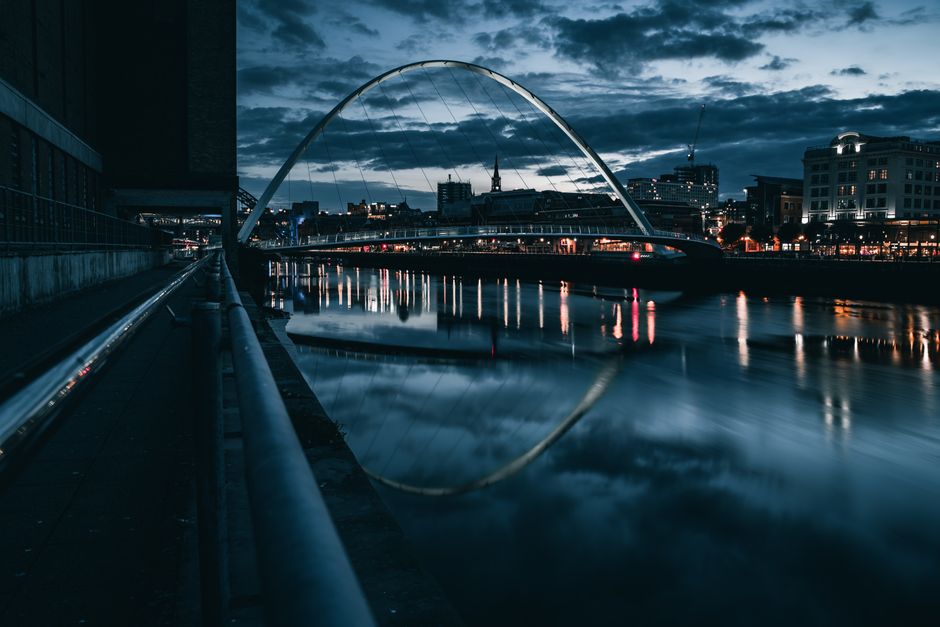
You arrive, perhaps, as the early spring light slants low and golden, catching the impossible geometry of the Gateshead Millennium Bridge—the 'Blinking Eye'—in a moment of serene stillness. The air is sharp, carrying the fresh, mineral scent of the river mixed with the distant, comforting aroma of malt from the breweries. This is a city of dramatic contrasts. Look up: the soaring, elegant arcs of steel and glass. Look around: the robust, handsome Victorian architecture, built from the wealth of coal and shipping. Listen: the melodic, rising-and-falling cadence of the Geordie accent, friendly and direct, cutting through the urban buzz. It's a dialogue between past and present, played out on a spectacular stage.
To walk across the High Level Bridge is to step into a living postcard. To the east, the Sage Gateshead shimmers like a silver chrysalis, promising world-class music within. To the west, the Norman castle keep—the 'new castle' that gave the city its name—stands sentinel on its mound. Below, the Quayside unfolds, a ribbon of bistros and bars that, come evening, will thrum with a legendary energy. But Newcastle upon Tyne is more than its famous nightlife. It's a cultural town with a soul as deep as the coal seams that once fuelled an empire. Its spirit is found in the independent galleries of the Ouseburn Valley, the hallowed silence of St. Nicholas Cathedral, and the defiant, joyful creativity that bursts forth in its lively arts festivals. This is a city that has remade itself without forgetting itself, a place where pride is worn not as a badge, but as a second skin.
I remember my first evening here, standing on the Swing Bridge as dusk bled into navy blue. One by one, the bridges ignited—the Tyne Bridge a majestic green arc, the Millennium Bridge a sweeping curve of electric blue, painting liquid reflections on the inky water. The sound was a symphony of city life: laughter bubbling from a pub doorway, the clink of glasses, the distant wail of a ship's horn heading out to sea. In that moment, Newcastle upon Tyne didn't feel like a destination; it felt like a revelation. It's a city that asks you to feel its history in the stone, embrace its present on the dancefloor, and dream with it of the future on its ever-evolving skyline. This is your cue to step into the frame.
Why Visit Newcastle upon Tyne?
Why Newcastle? The question isn't answered with a list of monuments, but with a feeling. You visit for the palpable sense of authenticity. This isn't a city curated for tourists; it's a city lived in, loved, and fiercely defended by its people. The famed Geordie hospitality isn't a marketing slogan—it's a genuine, no-nonsense warmth. You'll find it in the market trader who throws in an extra apple with a wink, the bartender who remembers your name and your pint after one visit, the stranger who'll give you detailed directions and then offer to walk you there. In a world of polished, homogenous city breaks, Newcastle's character is refreshingly real and unvarnished.
You come for the architectural drama. The cityscape is a thrilling read of different eras. The medieval Black Gate, the elegant Georgian streets of Grainger Town, the magnificent Victorian engineering of the Central Station and the sweeping curve of Grey Street—often voted the finest street in Britain—all speak of a prosperous past. Juxtaposed with this is the bold modernity of the Quayside: the Baltic Centre for Contemporary Art, a transformed flour mill now housing cutting-edge installations, and the Sage, its undulating shells a haven for acoustic perfection. It's a place where you can time-travel simply by turning a corner.
Ultimately, you visit for the transformative energy. Newcastle upon Tyne is a phoenix. It has stared down post-industrial decline and reinvented itself as a powerhouse of culture, education, and innovation. This energy is infectious. It's in the vibrant, student-filled cafes, the tech startups housed in old warehouses, and the world-class festivals that take over its streets and riverside. It's a city that is always in motion, always creating, always celebrating. You leave not just having seen things, but having felt a part of something—a resilient, creative, and overwhelmingly generous spirit of the North.
When to Visit: Chasing the Perfect Light
Newcastle upon Tyne wears every season with distinct character, but to experience its most cinematic and vibrant self, aim for the shoulder seasons. Early spring, as specified, is a revelation. From March to May, the city shakes off the winter chill. The light is soft and luminous, perfect for photography, especially those iconic bridge shots. The air is crisp, but the promise of warmth is there. This is when the city's riverside vibes truly come alive. Cafes spill out onto the Quayside, the paths along the Tyne are busy with joggers and strollers, and the first festival tents begin to pop up. The famous arts festivals start to stir, and the crowds are thinner, allowing for intimate exploration.
Summer (June-August) brings long, lively days and a palpable festival atmosphere. The city is buzzing, green, and full of events. While it's the peak tourist season, the energy is incredible—from outdoor concerts at the Sage to food markets and open-air theatre. Autumn (September-November) paints the Leazes Park and the Town Moor in fiery hues, and the cultural calendar is in full swing, with a more refined, arts-focused pace. Winter, from December onwards, is cold, short on daylight, but magically festive. The Christmas markets, the glittering lights reflecting on the wet streets, and the warm, convivial glow of historic pubs offer a uniquely cozy experience. For that perfect blend of pleasant weather, cultural activity, and manageable crowds, the sweet spot is undoubtedly late spring (May) or early autumn (September).
How to Get There: Gateways to the Geordie Nation
Your journey to Newcastle upon Tyne is part of the adventure. By air, Newcastle International Airport (NCL) is compact and efficient, located just six miles from the city centre. The Metro light rail whisks you from the terminal to the heart of town in under 25 minutes, a smooth ride that offers your first glimpses of the urban landscape. If you're travelling by train, prepare for a grand arrival. Newcastle Central Station is a cathedral of the Victorian railway age, with its vast, arched roof and majestic facade. It's a main stop on the East Coast Main Line, with frequent, fast services from London King's Cross (taking just under 3 hours), Edinburgh (around 1.5 hours), and other major cities. Stepping off the train here feels appropriately dramatic.
For those driving, the city is well-connected via the A1(M) and M1 motorways. Be prepared for a striking entrance as you cross the Tyne Bridge—the iconic view of the Quayside and castle unfolding before you is a genuine thrill. Once in the city, however, your car is best parked for the duration; Newcastle is a fantastically walkable city, with an excellent, integrated public transport system of Metro, buses, and ferries. If you're arriving by coach, the station is centrally located. And for a truly unique approach, consider the DFDS ferry from Amsterdam to North Shields, followed by a short Metro ride, linking your Geordie adventure with a mini-cruise across the North Sea.
Accommodation: From Quayside Lofts to Historic Inns
Where you lay your head in Newcastle upon Tyne can define your experience. For the ultimate cinematic stay, book a room with a Quayside view. Waking up to the sight of the Tyne Bridge framed in your window, watching the Millennium Bridge tilt and blink as the sun sets—these are moments that embed the city's iconography into your memory. Several modern hotels and serviced apartments offer this, often with floor-to-ceiling windows that turn your room into a private cinema box. The hum of the city is your soundtrack.
For historic charm, delve into the Grainger Town area. Here, beautiful Georgian and Victorian buildings have been sensitively converted into boutique hotels and townhouse B&Bs. You might find yourself in a room with high ceilings, cornicing, and a sense of old-world elegance, just steps from the bustling Grey Street. The Ouseburn Valley, the city's creative hub, offers quirky, independent options—converted warehouses, artist-led guesthouses—that put you at the heart of Newcastle's indie scene, surrounded by live music venues and craft breweries.
Budget-conscious travellers and those seeking social interaction will find excellent hostels, some with stunning rooftop terraces. For a local feel, consider a guesthouse in Jesmond or Gosforth, leafy suburbs a short Metro ride away, brimming with cafes and restaurants. My own most memorable stay was in a converted 19th-century warehouse in Ouseburn. The exposed brick walls echoed with the ghosts of industry, but the sound drifting up from the street was a folk band practicing in a pub below—a perfect metaphor for the city itself.
Things to Do: The Director's Cut
Your scene opens on the Quayside. Walk its length, from the Law Courts to the Baltic. Feel the granite beneath your feet. Visit the Castle Keep to touch the Norman stone that started it all, then climb to the roof for a staggering 360-degree panorama. Just next door, the Black Gate adds another layer of medieval intrigue. Now, cross the river. Use the Millennium Bridge—its graceful, pedestrian-only curve—and feel the engineering marvel as it tilts to let ships pass. On the Gateshead side, the Baltic Centre for Contemporary Art is a must. Entry is free. Ride the glass elevator to the viewing box on Level 5 for a heart-stopping view back towards Newcastle, then explore the vast, challenging exhibitions. The building itself, with its raw concrete and industrial lifts, is an artwork.
Head east along the river, and within minutes the urban landscape softens into the Ouseburn Valley. This is Newcastle's creative kidney. Follow the tree-lined path past the converted factories, now studios, microbreweries, and the legendary Cluny music venue. Pop into the Victoria Tunnel for a fascinating, slightly spooky guided tour through a 19th-century wagonway. For a green escape, Leazes Park or the vast Town Moor (home to the famous Hoppings funfair in summer) offer breathing space. Back in the centre, marvel at the elegance of Grey Street, duck into the Grainger Market to browse traditional stalls and seek out the historic 'Mark T.' tea stall, then find tranquility in the Cathedral Church of St. Nicholas with its distinctive lantern tower.
As evening falls, the cultural curtain rises. Check what's on at the Theatre Royal for top-tier West End productions, or at the Northern Stage for groundbreaking new work. If you visit during one of the city's lively arts festivals—like the NewcastleGateshead Festival or the Juice Festival—the entire city becomes a stage, with pop-up performances, installations, and a tangible buzz in the air. End your day where it began: on the Quayside. The bridges are now illuminated, casting shimmering paths on the dark water. The scene is set. Your role is simply to experience it.
Food and Drink: A Taste of the Toon
To dine in Newcastle upon Tyne is to embark on a journey from sturdy tradition to dazzling innovation. The classic Geordie culinary experience is found in a 'pan'—a stottie cake, a dense, doughy bread roll that's the perfect vessel for a filling of pease pudding (a savory paste made from split yellow peas) and ham, or a hearty saveloy dip. Seek one out in a proper local bakery or market stall; it's fuel for the soul. For a taste of history, order a Singin' Hinnie in a traditional tea room—a griddled scone-like cake, so named because it 'sings' (hisses) on the griddle.
But the city's food scene has exploded. The Quayside and the area around the Central Station are hubs for high-end, contemporary dining, where chefs showcase the incredible produce of the North East coast and countryside. For something more eclectic, the Ouseburn Valley and Heaton are dotted with independent, globally-inspired cafes and restaurants housed in characterful buildings. And then, there's the drink. This is a city with brewing in its blood. Beyond the famous macro-breweries, a thriving craft beer scene has taken root. Spend an evening 'hopping' between the micropubs of the 'Diamond Strip' or the Ouseburn taprooms, where you can sample ales made just metres away.
No visit is complete without experiencing a traditional pub. Step into one of the historic, wood-panelled gems in the city centre, like The Crown Posada or The Bacchus. The atmosphere is warm, the beer is perfectly pulled, and the conversation flows as easily as the Tyne. On my first night, a local in a tiny pub near the Cathedral, seeing me ponder the hand pumps, simply said, "Try the Blonde. You'll like it." He was right. That simple act of recommendation, given without expectation, encapsulated the generous spirit of Newcastle upon Tyne—a spirit you can taste in every bite and sip.
Practical Tips for a Seamless Shoot
Getting Around: Your feet are your best transport for the centre. For longer trips, the Metro is fast, cheap, and extensive—get a Pop card for the best fares. Taxis are plentiful and relatively inexpensive. Don't miss the Quayside ferry for a scenic, if short, river crossing. Money: Cards are widely accepted, but carry some cash for markets, smaller cafes, and pub tipping. Language: The Geordie dialect is rich and melodic. Don't be shy to ask someone to repeat themselves; they'll be happy to. Key terms: "Howay" (come on), "Canny" (good/nice), and "Wey aye" (yes, definitely).
What to Pack: Layers are essential, regardless of season. A waterproof jacket is a wise companion. Comfortable walking shoes are non-negotiable—those hills are steeper than they look! For evenings out, while some clubs have dress codes, the general vibe is smart-casual; Geordies have a renowned flair for fashion. Safety: Newcastle is generally a very safe city, but exercise normal urban caution, especially late at night in the bustling nightlife areas. The people are friendly, but as anywhere, stay aware of your surroundings.
Suggested Itinerary: Three Days on the Tyne
Day 1: The Iconic Introduction. Morning: Start at the Castle Keep for history and views. Walk down to the Quayside via the Side, the ancient steep lane. Afternoon: Cross the Millennium Bridge. Explore the Baltic art gallery and its viewing box. Walk back via the Tyne Bridge for the classic photo op. Evening: Dinner on the Quayside, followed by drinks in a historic pub like The Crown Posada.
Day 2: Culture & The Creative Core. Morning: Stroll Grey Street, explore the Grainger Market for lunch. Visit the Laing Art Gallery. Afternoon: Metro or walk to the Ouseburn Valley. Tour the Victoria Tunnel or visit the Seven Stories children's literature centre. Sample local beers at a microbrewery taproom. Evening: Catch a gig at The Cluny or a play at the Northern Stage. Dine in Ouseburn's eclectic eateries.
Day 3: Personal Pursuits & Farewell. Morning: Choose your adventure—shop in the intu Eldon Square, relax in Leazes Park, or take a short Metro to Tynemouth for a bracing coastal walk and a visit to its fantastic weekend market (if timing aligns). Afternoon: Final museum visit (the Great North Museum: Hancock is excellent) or a last wander, picking up souvenirs. Evening: A final, memorable meal overlooking the illuminated bridges, reflecting on your Geordie journey.
Conclusion: The Credits Roll, But the Story Continues
Leaving Newcastle upon Tyne, you don't just carry photographs. You carry sensations. The cool touch of ancient castle stone. The warm glow of a pub window on a damp night. The taste of a perfectly poured ale. The sound of laughter echoing off the Quayside warehouses. The sight of those mighty bridges, standing as eternal symbols of connection and resilience. This city, with its unparalleled blend of industrial heritage and futuristic vision, of rugged history and soft-hearted people, gets under your skin.
It's a place that has mastered the art of reinvention while holding fast to its identity. You came as a visitor, but you leave feeling like you've been let in on a secret—the secret of the North's indefatigable spirit. Newcastle upon Tyne doesn't say goodbye; it says, "Howay back." And as your train pulls out of the majestic Central Station or your plane lifts off over the winding Tyne, you'll know, with absolute certainty, that you will. The director's cut of your own story here is waiting for its sequel.
Frequently Asked Questions
What is the best way to experience Newcastle's famous nightlife?
The best approach is to embrace the variety. Start with a relaxed pint in a historic city-centre pub like The Bacchus or The Bridge Hotel. Then, explore the Ouseburn Valley for live music and craft beer in a more alternative setting. For the legendary club scene, the Bigg Market and the Quayside are the epicentres—dress smart, expect lively crowds, and soak up the incredible energy. Remember, the nightlife is as much about the friendly, social atmosphere as it is about the venues themselves.
Is Newcastle upon Tyne a good destination for families?
Absolutely. Beyond the rich history, the city offers fantastic family-friendly attractions. The Discovery Museum is free and hands-on, the Life Science Centre is interactive and awe-inspiring, and the Great North Museum: Hancock has dinosaurs and a planetarium. The open spaces of the Town Moor, Leazes Park, and the Quayside walks provide room to run. Many restaurants are very welcoming to children, making it a stress-free city break for all ages.
How walkable is the city centre?
Newcastle city centre is extremely compact and walkable. You can easily stroll from the Central Station to the Cathedral, through Grainger Town, down to the Quayside, and across the bridges to Gateshead within 30-45 minutes at a leisurely pace. The main challenge is the series of steep hills leading from the river up to the main shopping and historic districts, but these are part of the city's character and offer fantastic viewpoints.
What unique souvenirs should I look for?
Skip the generic trinkets. Look for local craft beers from Ouseburn breweries, a traditional stottie cake (best eaten fresh, but some places sell kits), or products from the Grainger Market like local cheeses or fudge. For something lasting, seek out artwork or prints from artists in the Ouseburn studios, or a piece of "Geordie Schorl" (Whitby jet) jewellery. A bottle of Newcastle Brown Ale, while brewed elsewhere now, remains an iconic, if kitschy, memento.
Can I take a day trip from Newcastle?
Yes, the transport links make it an excellent hub. In under an hour on the Metro, you can be on the stunning beaches of Tynemouth and Whitley Bay. By train, you can reach the historic walled city of Durham in 15 minutes, or the majestic Northumberland coastline and Alnwick Castle in around 45 minutes. The wild beauty of Hadrian's Wall country is also easily accessible by car or bus for a journey into ancient Roman history.
What's the weather really like?
Be prepared for changeable conditions, regardless of the season. The saying "four seasons in one day" often applies. Summers are mild and pleasant, rarely extremely hot. Winters are cold, damp, and short on daylight. Spring and autumn offer the most dynamic skies and comfortable temperatures for exploring. A waterproof layer and a warm sweater are essential items year-round.


No comments:
Post a Comment