
Prague: A Cinematic Journey Through the City of a Hundred Spires
Introduction: The First Glimpse
The light in Prague has a particular quality, especially in the early morning. It's a soft, golden haze that seems to rise from the Vltava River itself, wrapping the ancient stone bridges and Gothic towers in a painterly glow. You feel it before you see it—the cool, damp air of the riverbank, the faint echo of tram bells in the distance, the scent of wet cobblestones and baking chimney cake. Then, as you ascend the final steps to the castle precinct, the city unveils itself. It's a panorama that has stolen the breath of emperors, artists, and wanderers for a thousand years: a sea of terracotta roofs punctuated by countless spires, the sinuous curve of the river dividing the scene, and the majestic Prague Castle standing sentinel, its silhouette a storybook cutout against the sky.
This is the capital of Czech Republic, but to call it merely a capital feels insufficient. Prague is a living archive, a symphony in stone. Every alley in the Old Town whispers secrets of alchemists and astronomers. Every courtyard in the Lesser Quarter holds the ghost of a composer's melody. The city doesn't just display its history; you walk through it, your footsteps echoing on the same Charles Bridge cobbles trodden by kings and revolutionaries. I remember my first evening there, lost in a maze of streets behind the Old Town Square. The crowds had thinned, and the only sound was my own breath and the distant strains of a violin. Rounding a corner, I was suddenly face-to-face with the towering, intricate facade of the Týn Church, its twin spires black against the indigo night. It wasn't just beautiful; it was profoundly atmospheric, a moment suspended outside of time.
To visit Prague is to step into a film where you are both the audience and a character. The camera pans across grand set pieces—the astronomical clock's hourly performance, the vast castle complex—but it also lingers on intimate details: the worn brass of a door knocker shaped like a hand, the quiet concentration of a puppeteer in a Malá Strana shop window, the steam rising from a bowl of beef and dumplings in a vaulted cellar tavern. The city's narrative is one of resilience, artistry, and a dark, romantic beauty. It survived wars and empires, not with brute force, but with a kind of stubborn, elegant endurance, preserving its soul in its architecture, its music, and the wry, welcoming spirit of its people. This article is your director's cut, a guide to experiencing Prague not as a checklist, but as a deeply immersive, cinematic journey.
Why Visit Prague: The Unmissable Allure
So, why does Prague hold such an irresistible pull? It's more than its postcard-perfect aesthetics. The city offers a uniquely cohesive historical experience. Unlike many European capitals scarred by modern war, Prague's core remains astonishingly intact. You can trace a continuous architectural narrative from the Romanesque rotundas through the soaring Gothic of St. Vitus Cathedral, the whimsical curves of Baroque palaces, the severe lines of Cubist facades, to the dancing geometry of the Frank Gehry building. This isn't a museum; it's a city that has organically grown, layer upon layer, and each era is palpably present.
Then there's the scale. Prague is profoundly walkable. The epic sights are not isolated monuments but part of a dense, human-scale tapestry. You can have a profound cultural morning at the National Gallery, cross a 14th-century bridge for lunch, and spend the afternoon getting whimsically lost in a garden vineyard, all on foot. This intimacy fosters discovery. You'll find your own Prague—perhaps in the quiet, hidden garden of a former monastery, or in a modernist café that feels frozen in the 1930s.
Beyond the stone and mortar, Prague pulses with a vibrant, contemporary energy. It's a city of world-class classical music, with concerts in historic churches every night, but also of cutting-edge electronic music clubs set in former factories. It's a place where you can discuss philosophy in a smoky, centuries-old pub over a pint of the world's best beer, then sip a craft cocktail in a rooftop bar overlooking the illuminated castle. The Czechs have a genius for creating spaces that feel both timeless and utterly of-the-moment. The cost, especially compared to Western Europe, is the final compelling argument. You can indulge in Michelin-starred cuisine, stay in a boutique hotel in a historic building, and attend an opera, often for a fraction of the price you'd pay elsewhere. Prague gives you the grandeur of history and the thrill of modern culture, all wrapped in an astonishingly beautiful, affordable package.
When to Visit: Choosing Your Season
Prague wears each season like a different costume, and your experience will be dramatically shaped by when you choose to arrive.
Spring (April-June) is arguably the most magical time. The city shakes off the winter grey, and chestnut trees burst into blossom, their white candles scenting the air. The light is soft and perfect for photography. The crowds in early April are manageable, but by late May and June, the tourist tide swells. The weather is capricious—a sunny 20°C day can be followed by a chilly drizzle—so layers are essential.
Summer (July-August) is peak season. The days are long and warm, perfect for Vltava river cruises and beer garden evenings under the stars. Festivals fill the calendar. However, this is when Prague is at its most crowded. The Charles Bridge can feel like a slow-moving river of humanity, and queues for major attractions are longest. If you visit then, embrace the lively atmosphere and plan to explore very early in the morning or later in the evening.
Autumn (September-October) is my personal favorite. The summer crowds dissipate, leaving the city feeling more local. The light turns a rich, honeyed gold, and the trees in Petřín Park and the castle gardens blaze with color. The air is crisp, ideal for walking, and it's the perfect season to cozy up in a traditional *hospoda* (pub). September weather is often still summery, while October brings a more atmospheric chill and mist.
Winter (November-February) transforms Prague into a Gothic fairy tale. The Christmas markets in the Old Town Square and Wenceslas Square are legendary, filled with the smells of mulled wine (*svařák*), roasted chestnuts, and trdelník. Snow dusting the spires and castle is a breathtaking sight. It's cold, often dipping below freezing, and daylight is short, but the city feels intimate and festive. Just be aware that some gardens and smaller attractions close for the season. January and February are the quietest months, offering a stark, beautiful, and crowd-free experience for the hardy traveler.
How to Get There: Pathways to the Golden City
Reaching the heart of Europe has never been easier. Václav Havel Airport Prague (PRG) is the main international gateway, located about 17km west of the city center. It's well-connected to major hubs across Europe, North America, and the Middle East. The most convenient and cost-effective way to get downtown is by taking the Airport Express (AE) bus, which runs directly to the main railway station, Hlavní nádraží, in about 35 minutes. From there, you're a short metro or tram ride from your accommodation. Public buses (numbers 100, 119) to metro stations are even cheaper, and taxis or ride-shares like Bolt are readily available—just ensure you use the official taxi stand or app to avoid scams.
Prague is also a major rail hub. Arriving by train, especially from beautiful nearby cities like Vienna, Berlin, or Budapest, is a romantic and scenic option. You'll pull into the grand, art-nouveau Hlavní nádraží or the more modern Praha-Holešovice station, already in the thick of the city. For those on a European road trip, highways connect Prague to Germany, Austria, and Poland. Driving in the historic center, however, is strongly discouraged due to restricted zones, complex parking, and cobblestone streets. It's best to park in a secure garage on the city's periphery and use public transport.
Once you're in Prague, forget about renting a car. The city's public transportation network—metro, trams, and buses—is exceptional. It's efficient, clean, and comprehensible even to non-Czech speakers. Purchase a travel pass for 24, 72 hours, or longer; validate it once, and you're free to explore. But the true joy of Prague is walking. The historic districts are compact, and every turn reveals a new vista, a hidden passage, or a charming café. Your own two feet are the best vehicle for discovering the city's soul.
Accommodation: Finding Your Prague Nest
Your choice of accommodation in Prague is more than just a place to sleep; it's your base camp for exploration and a chance to live, even briefly, within a piece of the city's history.
For first-time visitors who want to be in the epicenter of the action, Staré Město (Old Town) and Josefov (the Jewish Quarter) are ideal. Here, you're steps from the Astronomical Clock, the Charles Bridge, and countless restaurants. The atmosphere is buzzing, but it can be noisy, especially in streets with busy nightlife. Look for boutique hotels set in renovated medieval buildings—expect beamed ceilings, vaulted cellars, and modern amenities seamlessly integrated.
Just across the Charles Bridge lies Malá Strana (Lesser Town). This is my recommended area for those seeking romance and atmosphere. Winding, quieter streets climb the hillside below the castle, lined with Baroque palaces, embassy gardens, and intimate restaurants. It feels more residential, yet you're still wonderfully connected. Waking up here, with the castle looming above you, is an experience in itself.
Vinohrady and Žižkov, east of the center, offer a more local, trendy vibe. These neighborhoods are filled with beautiful Art Nouveau apartments, hip coffee shops, innovative bistros, and sprawling parks. You'll trade immediate proximity to the major sights for a more authentic slice of Prague life, with excellent tram connections that will have you downtown in 15 minutes. It's perfect for travelers who've seen the highlights before or who prefer a neighborhood feel.
From grand five-star hotels in historic palaces to charming family-run pensions, design hostels, and a vast array of Airbnb apartments, Prague has something for every budget. Wherever you stay, prioritize being within a 5-10 minute walk of a metro or frequent tram line. That connection is your golden ticket to effortless exploration.
Things to Do: The Director's Shot List
Prague's narrative unfolds across its districts. Think of your exploration as moving through different cinematic scenes, each with its own mood and climax.
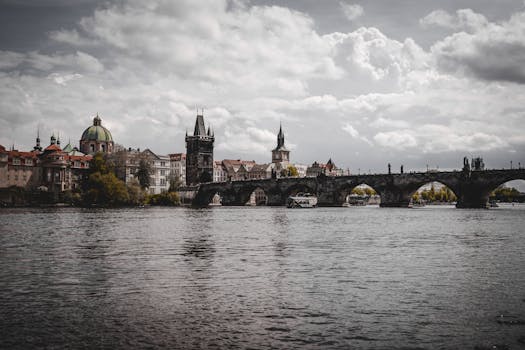
The Castle & Lesser Town: A Regal Climb
Start your day early at Prague Castle. Don't just see it; experience the changing of the guard at noon, with fanfare and ceremony. Inside the sprawling complex, the Gothic magnificence of St. Vitus Cathedral will leave you speechless—wait for a shaft of sunlight to pierce the stained glass. Wander the quiet, manicured Royal Garden and peek into the tiny, storybook Golden Lane. Then, descend through Malá Strana. Get deliberately lost in its labyrinthine streets. Find the Lennon Wall, a vibrant, ever-changing testament to peace and rebellion. Seek out the Church of St. Nicholas, a Baroque masterpiece where the interior is a swirling, heavenly fresco that feels like being inside a cloud.
The Charles Bridge & Old Town: The Heartbeat
Cross the Charles Bridge at sunrise or late evening to avoid the crowds and feel its true power. Touch the statue of St. John of Nepomuk for good luck, and watch the statues cast long shadows. On the Old Town side, lose yourself in the warren of streets leading to the Old Town Square. Be there for the hourly chiming of the Astronomical Clock—the procession of the Apostles is quaint, but the real magic is in the centuries-old engineering of the clock face itself. Climb the Old Town Hall Tower for the definitive view of the square's sea of spires.
Beyond the Center: Hidden Reels
Take the funicular up to Petřín Hill. It's a green oasis with gardens, an observation tower mirroring the Eiffel Tower, and panoramic views. For a dose of modern history and incredible cityscapes, visit the Žižkov Television Tower. Its bizarre, crawling baby sculptures by David Černý are unforgettable, and the viewing platform offers a 360-degree perspective. Art lovers must not miss the Mucha Museum, dedicated to the master of Art Nouveau, Alfons Mucha, or the DOX Centre for Contemporary Art in Holešovice for cutting-edge exhibitions.
Finally, make time for a Vltava River Cruise. Seeing Prague from the water, with the castle rising majestically, provides a completely different, and essential, framing of the city. Opt for an evening cruise to see the monuments spectacularly illuminated.
Food and Drink: A Feast for the Senses
Czech cuisine is hearty, comforting, and deeply satisfying—perfect fuel for a day of exploration. It's built on a foundation of meat, dumplings, and sauce, but to dismiss it as simple is a mistake. Start with the national dish: vepřo-knedlo-zelo (roast pork with bread dumplings and stewed cabbage). The dumplings are not the dense dough balls you might imagine, but light, pillowy slices perfect for soaking up the rich gravy. Svičková is another must-try—tender beef sirloin in a creamy vegetable sauce with cranberries and whipped cream, again served with dumplings. For a lighter, classic lunch, find a place serving kulajda, a creamy dill and mushroom soup with a poached egg.
Street food is part of the experience. The sweet, spiral-shaped trdelník (chimney cake) is everywhere, though it's more a tourist treat than a traditional Czech one. More authentic is a klobása (grilled sausage) from a stand, or a fried cheese sandwich (smažený sýr).
Now, the liquid soul of the nation: beer. The Czech Republic has the highest per capita beer consumption in the world for a reason. Pilsner Urquell and Budvar (the original Budweiser) are the famous exports, but explore the world of local microbreweries and pubs serving unpasteurized, tank beer (*tankové pivo*), which is fresher and more flavorful. A proper pour should have a thick, creamy head. Pair it with a platter of utopenec (pickled sausage) or nakládaný hermelín (pickled cheese). For spirits, sample Becherovka, a herbal bitters from Karlovy Vary, or a glass of slivovice (plum brandy). And don't forget the coffee culture—Prague's historic cafés, like Café Louvre or Slavia, are institutions for cake, conversation, and watching the world go by.
Practical Tips: Your On-the-Ground Crew
Currency: The Czech Republic uses the Czech Crown (CZK/Kč). While many places accept cards, always have some cash for smaller shops, markets, and pubs. ATMs are widespread; avoid independent ones in tourist areas with high fees and use bank-affiliated machines.
Language: Czech is challenging, but learning a few phrases goes a long way. *Dobrý den* (hello), *Děkuji* (thank you), and *Na zdraví* (cheers) are appreciated. English is widely spoken in tourist areas and by younger people, less so in local neighborhoods.
Getting Around: Download the PID Lítačka app to buy mobile public transport tickets. Validate paper tickets once upon first use. Trams and the metro are safe and efficient at all hours.
Safety: Prague is very safe. Standard city precautions apply: be aware of pickpockets in crowded tourist spots (Charles Bridge, Old Town Square, trams 9 and 22) and be wary of taxi drivers not using the meter. In restaurants, check if a service charge is included on the bill; if not, rounding up or leaving 10% is customary for good service.
Tipping: Round up the bill or leave 10-15% in restaurants and for taxi drivers if the service was good. It's not mandatory but is standard practice.
Suggested Itinerary: A Three-Day Epic
Day 1: The Royal Core. Morning at Prague Castle (arrive at 9 AM). Explore St. Vitus, Golden Lane, and the Old Royal Palace. Walk down Nerudova Street to Malá Strana for lunch. Visit the Church of St. Nicholas. Cross the Charles Bridge in the late afternoon light. End at the Old Town Square for the clock chiming and dinner in a historic cellar.
Day 2: History & Hidden Gems. Morning in the Jewish Quarter (Josefov). Visit the Old Jewish Cemetery and synagogues—a moving and profound experience. After lunch, explore the Art Nouveau wonders around the Municipal House. Walk to Wenceslas Square, feeling the modern pulse. Late afternoon, take the funicular to Petřín Hill for sunset views. Evening in the Vinohrady district for a trendy dinner.
Day 3: Beyond the Expected. Morning at the National Museum (the historic building at the top of Wenceslas Square) or the Mucha Museum. Take a tram to the DOX Centre in Holešovice for contemporary art. After lunch, consider a relaxing river cruise. Spend your final evening in a classic Czech *hospoda* (pub) in a less touristy area like Žižkov, soaking in the authentic local atmosphere over perfect pints.
Conclusion: The Final Frame
Prague lingers. Long after you've left, the memories return in flashes: the specific coolness of the stone in St. Vitus Cathedral, the taste of that first perfect Pilsner, the sound of a tram rattling over cobbles in the rain, the view from the bridge at dusk when the lamps flicker on and the castle becomes a constellation of golden lights against a velvet sky. It's a city that doesn't just show you its beauty; it makes you feel it, deeply and personally. It's a place where history is not behind glass but under your feet and in the air you breathe. The capital of Czech Republic is more than a destination; it's a mood, a masterpiece, and a lifelong memory waiting to be captured. Your cinematic journey awaits—just step into the frame.
Frequently Asked Questions (FAQ)
Is Prague a walkable city? Absolutely. The historic center comprising Old Town, Lesser Town, and the Castle District is best explored on foot. The compact layout means you can walk between major sights in 15-30 minutes. For longer distances or trips to neighborhoods like Vinohrady, the excellent and integrated tram and metro system is your best friend.
How many days do I need to see Prague properly? A minimum of three full days is ideal. This allows you one day for the Castle and Lesser Town, one for the Old Town and Jewish Quarter, and a third to explore further afield, visit museums, or take a river cruise without feeling rushed. With four or five days, you can add day trips to places like Český Krumlov or Kutná Hora.
Is English widely spoken in Prague? Yes, especially in tourist areas, hotels, restaurants, and major attractions. Younger generations almost universally speak good English. In local pubs or shops off the beaten path, you might encounter language barriers, but Czechs are generally patient and helpful. Learning a few basic Czech phrases is a respectful gesture that is warmly received.
Is Prague expensive to visit? Compared to other major Western European capitals like Paris, London, or Amsterdam, Prague is very affordable. Dining out, public transport, museum entry fees, and especially beer are significantly cheaper. You can have a fantastic meal in a mid-range restaurant for a fraction of the cost. Luxury options are available, but budget travelers can also thrive here.
What is the best way to get from the airport to the city center? The Airport Express (AE) bus is the most straightforward and reliable public transport option, taking you directly to the main train station (Hlavní nádraží) in about 35 minutes. For a more budget option, take public bus 119 to the Nádraží Veleslavín metro station (Line A) and continue by metro. Official taxis or ride-sharing apps like Bolt are also convenient for door-to-door service.
Do I need to buy tickets in advance for major attractions? It's highly recommended, especially during peak season (summer, Christmas markets) and for popular sites like Prague Castle (the "Circuit" tickets), the Astronomical Clock Tower, and the Jewish Museum. Booking online saves you from long, sometimes hours-long, queues and guarantees your entry.
Is the tap water safe to drink in Prague? Yes, the tap water in Prague is perfectly safe and of high quality. In fact, it's often better than bottled water. Bring a reusable bottle and fill up freely. This is both eco-friendly and saves you money.


No comments:
Post a Comment