
Valletta: A Sun-Drenched Epic Carved in Honey-Colored Stone
Introduction: The City That Rises from the Sea
The first glimpse is always from the water. As the ferry slices through the Grand Harbour's deep blue, a fortress of impossible grandeur materializes from the limestone bedrock. Valletta does not simply sit on the land; it erupts from it, a magnificent, honey-gold crown placed upon the peninsula by giants. The skyline is a serrated silhouette of bastions, church domes, and silent bell towers against a Mediterranean sky so bright it hums. This is your introduction to Europe's smallest capital, a city where every stone tells a story of knights, sieges, and an unyielding spirit. Step ashore at the Barrakka Lift, and the cinematic sweep of it all hits you: the city is a stage, and you have just walked into the wings.
You enter through the City Gate, not so much a door as a deliberate, modern incision into the ancient fortifications. The noise of the outside world falls away, replaced by the echo of your footsteps on polished flagstones. Valletta is a city of stairs and sudden vistas, of streets so straight they frame slivers of dazzling sea at their end. The air smells of sun-warmed stone, diesel from the vintage buses, and the faint, sweet promise of pastizzi from a hidden pastizzeria. Your hand brushes against the rough, porous texture of the walls; this is Globigerina limestone, soft to the quarry but hardening in the sun, giving the entire city its warm, luminous glow, especially at the golden hour when it seems to be lit from within.
Founded in 1566 by Jean de Valette, Grand Master of the Knights of St. John, this was one of the first planned cities in Europe, a grid of streets behind impenetrable walls designed to withstand any Ottoman onslaught. But Valletta is not a museum. It thrums with a quiet, dignified energy. Old men in flat caps converse in Maltese, a language that sounds like the history of the Mediterranean itself. Chic cafes spill onto pedestrianized streets. The sound of a practicing pianist floats from an open window, mingling with the distant clang of a dockyard. You feel the weight of centuries, but also the vibrant pulse of a living community. To explore Valletta is to wander through an open-air palace, where every corner, every hidden garden, every cavernous church is a scene in a grand historical drama, and you are both audience and participant.
Why Visit Valletta: More Than a Fortress
Why come here, to this tiny capital on a small island? You come for the intensity. Valletta condenses the epic narrative of the Mediterranean—faith, war, art, resilience—into less than a square kilometer. It is a masterpiece of Baroque architecture, but one forged in fire and strategy. You don't just see beautiful buildings; you walk along fortress walls where sentries once kept watch for invading fleets. You descend into the Lascaris War Rooms, where the Allied defense of Malta was coordinated, and feel the cool, tense air of the underground command center. You stand in the Co-Cathedral of St. John, a building of deliberately plain exterior that gives way to an interior of staggering, overwhelming opulence, a testament to the Knights' wealth and devotion. The contrast is the point.
You visit for the sheer human scale of its grandeur. Unlike sprawling metropolises, Valletta's wonders are compressed, accessible by foot. In a single morning, you can witness the precision of the Saluting Battery cannon fire at noon, lose yourself in the silent, haunting beauty of the Caravaggio in the Oratory, and then sip a strong Kinnie on a balcony overlooking the Three Cities across the harbour. The city is a series of curated experiences, layered vertically and horizontally. It engages all your senses: the taste of salty air on your lips, the tactile pleasure of smooth wooden balconies (the famous *gallariji*) overhanging the streets, the visual feast of a sunset from the Upper Barrakka Gardens that literally takes your breath away. Valletta doesn't just want to be seen; it demands to be felt.
When to Visit: Chasing the Golden Light
Timing your pilgrimage to Valletta is about chasing the perfect light and the most comfortable atmosphere. The city truly sings in the **shoulder seasons: April to June and September to October**. Imagine wandering the streets in late April, when the Mediterranean sun is warm but not searing, and the cascading bougainvillea draping over the bastions is in violent, passionate bloom. The air is scented with jasmine and sea salt. The crowds are manageable, allowing you a moment of solitude in a quiet courtyard. September offers a similar magic, with the sea still warm for a swim in the nearby rocks, and the city emerging from the summer heat, ready to embrace the cultural calendar.
**Summer (July-August)** is a high-contrast experience. The sun is a brilliant, punishing force, bleaching the limestone to a blinding white and driving the heat into the very stones. The city vibrates with energy during the Malta Arts Festival, with open-air concerts in the majestic ruins of the Royal Opera House, a poignant shell bombed in WWII. But exploration is best done in the early morning and late evening, when the golden light is long and the temperatures merciful. **Winter** is Valletta's secret season. While you may encounter the occasional *gregale* wind bringing dramatic storms, you'll also have the city largely to yourself. The Christmas decorations are tasteful and magical, and the cozy, wood-paneled cafes feel like sanctuaries. Rain, when it comes, turns the streets into glossy mirrors, reflecting the beautiful architecture in a whole new way.
How to Get There: Approaches to the Island Fortress
Your journey to Valletta is part of the adventure. Most will arrive via **Malta International Airport (MLA)**, a modestly-sized hub with direct flights from across Europe. The moment you step off the plane, the distinctive light and arid scent of the island greet you. From the airport, the most dramatic approach is by pre-booked taxi or ride-share, taking you through the typical Maltese towns with their closed-in balconies, before the bastions of Valletta rise suddenly on the horizon. For the budget-conscious, the modern and efficient public bus system (Tallinja) will get you to the City Gate terminus in about 30-40 minutes, dropping you right at the threshold.
But for the truly cinematic entrance, if you are already on the island, take a **traditional *dghajsa* water taxi** from the Three Cities (Senglea, Vittoriosa, or Cospicua) or a larger ferry from Sliema. Gliding across the Grand Harbour, you'll see Valletta as its founders and attackers saw it: a formidable, towering wall rising from the sea. The perspective of the mighty fortifications, the layers of history in the dockyards, and the sheer scale of the natural harbour—one of the finest in the world—is breathtaking. It's an arrival that sets the tone, reminding you that this city was born from and defended by the sea. Once at the Valletta Waterfront, ascend by the panoramic Barrakka Lift and emerge, quite literally, into the garden in the sky.
Accommodation: Sleeping Within the Walls
Choosing where to stay in Valletta is choosing your character in the city's story. For the full immersion, seek out a **boutique hotel in a restored palazzo**. Imagine high, painted ceilings, original flagstone floors, and a internal courtyard where breakfast is served under a lemon tree. These are often family-run, with owners who will share stories over a glass of local wine. Waking up within the silent, car-free streets of the city center, before the day-trippers arrive, is a privilege. You can have a quiet coffee in Republic Square, with only the pigeons and the statue for company, feeling the city slowly come to life.
For a stay soaked in views, look for a guesthouse with a **harbour-view balcony** in the districts near the Upper Barrakka. Your evenings will be spent watching the yachts and cruise ships glide silently below, the Three Cities across the water turning to gold in the setting sun. The sound of the saluting cannon at noon becomes your daily clock. If your budget is tighter, consider the charming, no-frills *pensions* on the side streets off Merchants Street. They are simple but clean, and place you right in the heart of the daily hustle. For a different vibe, staying just outside the gates in **Floriana** offers a more local, residential feel with easy walking access to Valletta's wonders, often at a better value. Wherever you lay your head, ensure you experience at least one night wandering the illuminated bastions after dark, when the golden street lamps cast long shadows and the city feels like a secret shared only with the ghosts of the Knights.
Things to Do: A Symphony of Stone and Sea
Your days in Valletta will be a rich tapestry of high art, military history, and simple, profound pleasures. Start with the **St. John's Co-Cathedral**. Its facade is austere, a fortress of faith. Push open the heavy door, and prepare for sensory overload. The interior is a Baroque explosion of gold leaf, intricate marble inlays covering every inch of the floor (the tombs of knights), and a painted ceiling that swirls with dramatic biblical scenes. The silence is profound, broken only by shuffling feet. In the Oratory, Caravaggio's *The Beheading of St. John the Baptist* hangs, dark and monumental. It is his largest work and only signed piece, a masterpiece of chilling realism that holds you in its grim, powerful grip.
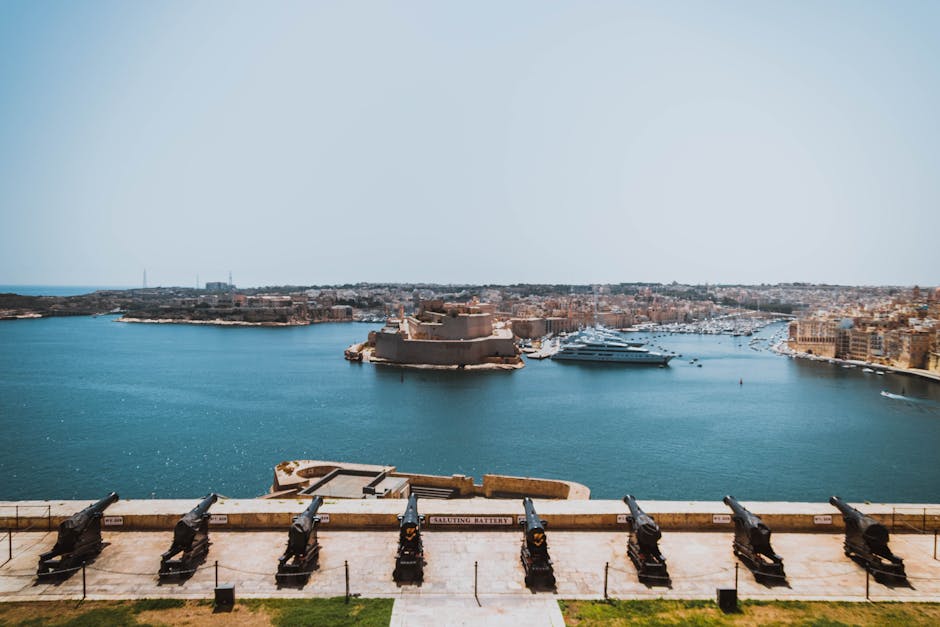
From the sacred, move to the strategic. Walk the **fortification walls**, especially the Saluting Battery in the Lower Barrakka Gardens. At noon sharp, the cannon fires—a tradition maintained for centuries. The boom echoes across the harbour, a daily punctuation of Valletta's martial history. Then, ascend to the **Upper Barrakka Gardens**. This is the city's grand balcony. Here, you will witness what might be the finest urban view in Europe. The panorama of the Grand Harbour, with the Three Cities draped across the opposite promontories like a stage set, is utterly breathtaking. Time your visit for the salute, or simply linger with an ice cream, watching the harbour traffic paint silent lines on the blue canvas below.
Delve underground at the **Lascaris War Rooms**, a labyrinth of tunnels and chambers carved deep beneath the bastions. The map rooms, left exactly as they were in 1945, feel haunted by the decisions that helped win the war in the Mediterranean. The air is cool and still. For a change of pace, get lost in the **side streets**. Discover the **National Library of Malta**, a temple of quiet scholarship, or the **MUŻA**, the national community art museum, which reimagines the museum experience in a beautifully curated palazzo. As evening falls, make your way to the **Valletta Waterfront**. Once a row of gritty warehouses, it's now a vibrant promenade of restaurants and bars set within the original, brightly painted palace gates. It's the perfect place for a sundowner, watching the lights of the city begin to twinkle above you.
Food and Drink: A Taste of the Mediterranean Crossroads
Maltese cuisine is a delicious reflection of its history: Sicilian heart with British and North African accents. In Valletta, you can eat wonderfully. Start your day like a local with a **pastizz** from a hole-in-the-wall shop. This flaky, savory pastry, filled with either ricotta or mushy peas, is a cheap, delicious, and quintessential experience. Eat it quickly, over a napkin, as the warm, buttery crumbs shower down. For lunch, seek out a traditional *ftira*—a Maltese sourdough bread ring topped like an open sandwich with tomatoes, capers, olives, tuna, and local ġbejna (sheep's cheese).
Dinner is where Valletta shines. In elegant, stone-vaulted restaurants, try **stuffat tal-fenek** (rabbit stew, the national dish), a slow-cooked, wine-rich testament to rustic cooking. **Lampuki** (dorado) pie, when in season, is a must. Fresh seafood is, of course, superb. Pair your meal with local wines from Malta's burgeoning vineyards, like a robust Ġellewża or a crisp Girgentina. For drinks, you must try **Kinnie**, a bitter-sweet soft drink made from bitter oranges and herbs. It's an acquired taste that becomes an addiction. Sample a **Cisk lager**, the local beer, perfect on a warm evening. End your night with a glass of **Maltese prickly pear liqueur (Bajtra)** or a strong espresso in one of the many cafes on Republic Street, watching the world, and centuries, stroll by.
Practical Tips for Navigating the Fortress City
**Comfort is Key:** Valletta is built on a grid, but that grid is on a hill. Wear sturdy, comfortable walking shoes with good grip for the ancient, sometimes slippery, stone stairs and inclines. The city is almost entirely pedestrianized within the walls, so be prepared to walk—it's the only way to truly discover its secrets.
**The Malta Card:** Consider the **Heritage Malta Multisite Pass** if you plan to visit several major attractions (St. John's Co-Cathedral, the Archaeology Museum, etc.). It saves money and lets you skip some ticket lines. **Money:** Malta uses the Euro. While cards are widely accepted, keep some cash for small vendors, pastizzi shops, and the dghajsa water taxis. **Language:** Maltese and English are both official languages. Everyone speaks English fluently, so communication is effortless. Learning a few Maltese greetings (*bonġu* for good morning, *grazzi* for thank you) will earn you warm smiles.
**Respectful Exploration:** When visiting churches, modest dress is required (covered shoulders and knees). Carry a light scarf or shawl to drape over yourself. The sun is fierce; a hat, sunglasses, and high-SPF sunscreen are non-negotiable, even in spring and autumn. Finally, embrace the pace. Valletta rewards the slow wanderer, the person who pauses in a doorway, who looks up at the carved stone balconies, who follows a narrow alley just to see where it goes.
Suggested Itinerary: Three Days in the Knight's City
Day 1: The Heart of the Fortress. Enter through the City Gate, feel the scale of Renzo Piano's Parliament building and the ruins of the Royal Opera House. Head straight to St. John's Co-Cathedral; be there early to absorb Caravaggio in relative peace. Emerge, blinking, into the sunlight and stroll down Republic Street for a pastizz lunch. Visit the Grandmaster's Palace to see the opulent State Rooms and the Armoury. As afternoon wanes, walk to the Upper Barrakka Gardens for the 4pm cannon salute (if not at noon) and that iconic harbour view. Descend via the lift for a waterfront stroll and dinner on the Valletta Waterfront.
Day 2: History, Hidden Streets & Panoramic Views. Start at the National War Museum in Fort St. Elmo for the broad sweep of Maltese military history. Then, delve deeper underground at the Lascaris War Rooms. For lunch, find a cafe on a side street like Strait Street, once the infamous "gut" of sailor bars, now revitalized with trendy eateries. Spend the afternoon getting purposely lost in the grid between Old Mint Street and the Sacra Infermeria. Discover tiny chapels, antique shops, and quiet squares. Visit the Casa Rocca Piccola, a lived-in aristocratic home offering a glimpse into private Valletta life. Enjoy a sunset drink from a rooftop bar.
Day 3: Beyond the Walls & Cultural Immersion. Take a morning *dghajsa* across the Grand Harbour to the **Three Cities** (Vittoriosa, Senglea, Cospicua). Explore Vittoriosa's Collachio, the original Knights' quarter, for a sense of pre-Valletta history. Return to Valletta for a final lunch, perhaps a ftira. Spend your last afternoon at MUŻA, the national art museum, or hunting for souvenirs of Maltese glass or filigree jewelry. Attend a cultural event if one is on—perhaps a concert at St. James Cavalier Centre for Creativity. For your final dinner, book a table at a restaurant with a balcony, toasting the illuminated bastions as your unforgettable backdrop.
Conclusion: The City That Stays With You
Leaving Valletta is a gentle wrench. You carry its imprint with you: the golden hue of its stone etched in your mind's eye, the taste of Kinnie on your tongue, the echo of your footsteps in its silent, high-walled streets. It is a city that proves grandeur does not require vast size, but rather depth, intensity, and a story worth telling in every carved stone and every panoramic vista. It is a fortress that opens its arms, a museum that lives and breathes, a labyrinth that always leads you to the sea or the sky. Valletta doesn't just host visitors; it initiates them into a centuries-old saga of resilience and beauty. You depart not just with photographs, but with a feeling—the profound sense of having walked within a living, breathing work of art, a sun-drenched epic forever carved in honey-colored stone.
Frequently Asked Questions About Valletta
Is Valletta worth visiting for more than a day?
Absolutely. While you can see the major sights in a day, Valletta's true magic reveals itself with slower exploration. Spending two to three nights allows you to experience the city in the quiet mornings and atmospheric evenings, delve into its museums, take harbour cruises, and day-trip to the nearby Three Cities without rushing. It's a city to be savored, not sprinted through.
What is the best way to get around Valletta itself?
Your own two feet. The historic core is compact, pedestrianized, and best explored on foot to appreciate the architectural details and hidden nooks. For the steep incline from the harbour to the city center, use the convenient and scenic Barrakka Lift. To reach attractions just outside the gates like Fort St. Elmo, the local buses or a short taxi ride are useful.
Is Valletta expensive to visit?
Valletta can cater to various budgets. Entrance fees for major attractions like St. John's Co-Cathedral are moderately priced, and the Heritage Malta pass offers value. Dining ranges from very cheap pastizzi shops to high-end restaurants. Accommodation in restored palazzos is a premium, but good value can be found in guesthouses and in neighboring Floriana. Overall, it's comparable to many other Southern European capitals.
What should I pack for a trip to Valletta?
Pack for sun and walking: extremely comfortable, broken-in walking shoes, a wide-brimmed hat, high-SPF sunscreen, and sunglasses. Include a light scarf or shawl for covering shoulders in churches. Evenings can be breezy, so a light jacket or sweater is advisable outside of peak summer. A reusable water bottle is essential for staying hydrated while exploring.
How safe is Valletta for tourists?
Valletta is exceptionally safe, even late at night. The streets are well-lit and there is often a gentle buzz of activity in the main areas. As with any tourist city, standard precautions against pickpocketing in crowded spots are wise, but violent crime is extremely rare. You can feel comfortable wandering the atmospheric streets after dark.
Can I use Valletta as a base to explore the rest of Malta?
Yes, it's an excellent base. The central bus terminus is right at the City Gate, with efficient connections to Mdina, the Blue Grotto, the fishing villages of Marsaxlokk, and the beaches of the north. You can enjoy the culture and dining of the capital in the evenings after day trips across the island.
What is the one thing I shouldn't miss in Valletta?
Beyond the obvious Co-Cathedral, do not miss the experience of the **Upper Barrakka Gardens at sunset**. This panoramic viewpoint offers a breathtaking, cinematic perspective of the Grand Harbour and the Three Cities. It encapsulates the city's strategic majesty and beauty in one sweeping, unforgettable vista. It's free, it's stunning, and it's the soul of Valletta.


No comments:
Post a Comment