
Monti Sibillini National Park: The Ultimate Visitor's Guide | Tips, Trails & Things to Know
Introduction
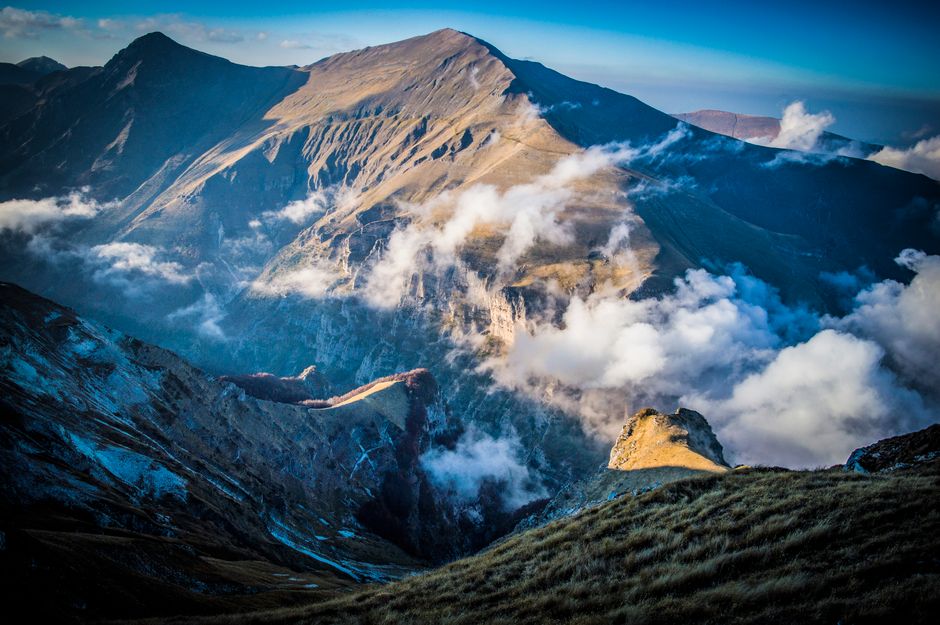
In the very heart of Italy, where the Apennine spine rises in a crescendo of limestone peaks, lies a realm of ancient magic and untamed beauty: Monti Sibillini National Park. Straddling the regions of Marche and Umbria, this 70,000-hectare (173,000-acre) sanctuary is more than a collection of mountains; it is a landscape woven with legend. For centuries, these peaks were believed to be the domain of the mythical Sibyl, a prophetess whose cave promised both enlightenment and peril, setting the tone for a land of dramatic contrasts. Here, the highest summit, Monte Vettore, pierces the sky at 2,476 meters (8,123 feet), while deep below, the pristine waters of Lake Pilato—home to a unique endemic crustacean—rest in a glacial cirque, a sight of profound natural wonder.
The park is a masterpiece of biodiversity, where Apennine wolves roam silently, golden eagles soar on thermal currents, and vast high-altitude plains, known as "piani," erupt in a kaleidoscope of wildflowers each spring. It is a land shaped by millennia of pastoral tradition, where ancient shepherds' trails, or "tratturi," now form part of a hiking network exceeding 450 kilometers. Receiving approximately 800,000 visitors annually, the Sibillini offer an authentic, crowd-free Italian wilderness experience far from the well-trodden tourist paths. This guide is your key to unlocking its secrets. We will cover the best times to visit for wildflowers or autumn hues, reveal the top hiking trails from gentle walks to epic ridge traverses, explain the practicalities of fees and lodging, and share insider tips to help you plan an unforgettable journey into the heart of Italy's magical mountains.
Quick Park Facts
- Year Established: 1993, as part of Italy's network of protected areas.
- Size: Approximately 70,000 hectares (173,000 acres).
- Annual Visitors: Roughly 800,000, with peak visitation in July and August.
- Highest Point: Monte Vettore at 2,476 meters (8,123 ft). Lowest valleys around 500 meters (1,640 ft).
- Entrance Fee: None. The park is free to enter. Some visitor centers or specific guided cave tours may have a nominal fee.
- Lodging & Campsites: Numerous options including 15+ managed campgrounds, "rifugi" (mountain huts), agriturismi (farm stays), and hotels in gateway towns.
- Pets Policy: Dogs are generally allowed but must be kept on a leash at all times, especially due to wildlife and grazing livestock. Some restrictions may apply in specific protected areas.
- Nearest Airports: Ancona Falconara (AOI) - 1.5-2 hours drive; Perugia San Francesco (PEG) - 1.5 hours; Rome Fiumicino (FCO) - 3 hours.
- Gateway Towns: Norcia (Umbria), Visso, Castelluccio di Norcia, Arquata del Tronto, Amandola.
- Accessibility Highlights: Several accessible trails, including paths around the Lago di Fiastra area and the Castelluccio Plain lookout points. Visitor centers in Visso and Norcia are wheelchair accessible.
Best Times to Visit Monti Sibillini National Park
Choosing the right season dramatically shapes your Sibillini experience, from snow-dusted peaks to flower-carpeted plains.
Spring (March-May)
Spring is a season of awakening. March and April can still be chilly at higher elevations, with temperatures ranging from 5°C to 15°C (41°F to 59°F) in the valleys, and snow often lingering on trails above 1,800 meters. This is the time of snowmelt, feeding powerful waterfalls. By late May, the magic begins: the legendary Great Flowering ("Fioritura") of the Castelluccio Plain transforms the Piano Grande into a breathtaking mosaic of red poppies, yellow rapeseed, and blue linflowers, typically peaking in early June. Crowds start to build for this spectacle. Road to the high plains (Forca di Presta) usually opens by late May.
Summer (June-August)
Summer brings warm, sunny days perfect for high-altitude hiking. Valley temperatures are pleasant, 20°C to 28°C (68°F to 82°F), while mountain ridges are cooler. Afternoon thunderstorms are common, so an early start is essential. This is the peak season, especially in July and August, but crowds are concentrated in specific areas like Castelluccio and Lago di Fiastra. Wildlife is active at dawn and dusk. All high mountain passes and rifugi are open, offering superb trekking. The cons are potential afternoon weather hazards and more visitors on popular trails.
Fall (September-November)
Many consider fall the prime time to visit. September offers stable, warm weather perfect for hiking, with thinning crowds. October is spectacular for foliage, as beech forests blaze with gold and crimson against grey limestone. Temperatures drop steadily, from 18°C in September to 5°C in November in the valleys. The autumn deer rut echoes through the woods. By late October, the first snows dust the highest peaks, and some high mountain passes and rifugi begin to close for the season. This is the ideal shoulder season for solitude and stunning photography.
Winter (December-February)
Winter transforms the park into a silent, snowy wilderness. Temperatures often plunge below freezing, with valley averages of -5°C to 5°C (23°F to 41°F) and much colder on the peaks. Snow blankets the mountains, closing most high-altitude roads and trails. The road to Castelluccio is often impassable. This season is for those seeking profound quiet, winter photography, and snowshoeing or ski touring (for experienced individuals only). Most rifugi are closed. Gateway towns like Norcia are cozy and festive. Access is limited to lower valley trails.
Shoulder Season Recommendation: For the best balance of good weather, manageable crowds, and scenic rewards, target late May to mid-June (for flowers) or the entire month of September. These windows offer the quintessential Sibillini experience.
Top Things to Do in Monti Sibillini National Park
From scenic drives to challenging hikes, the Sibillini offer a wealth of activities for every type of adventurer.
Iconic Scenic Drives
Forca di Presta to Castelluccio Loop: This is the park's most famous drive. From the Forca di Presta pass (1,536m), the road descends into the awe-inspiring Piano Grande, the vast karst plain dominated by the hilltop village of Castelluccio. The 25-kilometer loop offers ever-changing perspectives of the plain and the surrounding peaks. Allow at least 1.5 hours with stops for photos and a visit to Castelluccio.
Lago di Fiastra and the Valle del Fiastrone: Starting from the village of Fiastra, this road winds alongside the stunning, turquoise-hued Lago di Fiastra. Continue to the end of the road at the "Lame Rosse" parking area. The drive is about 15 kilometers one-way and offers access to beautiful lakeside picnics, boat rentals, and trailheads for hikes to the otherworldly "Lame Rosse" erosion formations.
Best Hiking Trails
Easy:
Piano Grande Walk: From Castelluccio, simply walk onto the plain. Any direction offers flat, easy walking with epic mountain views. A 4km loop from the village provides a perfect introduction.
Lago di Pilato (Lower Route): From Foce di Montemonaco, a well-graded path leads to the breathtaking glacial lake, home of the endemic Chirocephalus marchesonii fairy shrimp. Distance: 8km round trip. Elevation gain: 450m. Allow 3-4 hours.
Moderate:
Lame Rosse: From the Lago di Fiastra dam, a clear trail leads to these spectacular, reddish pinnacles of eroded sandstone, resembling a miniature Bryce Canyon. Distance: 6km round trip. Elevation gain: 250m. Allow 2.5 hours.
Monte Bove Sud: A spectacular ridge walk offering some of the park's most dramatic views of the sheer Bove walls. Start from the Forca di Presta. Distance: 10km loop. Elevation gain: 550m. Allow 4-5 hours.
Strenuous:
Monte Vettore Summit via Normal Route: The classic ascent of the highest peak. Starting from the Forca di Presta, the trail passes the enchanting Lago di Pilato before a steep final climb to the summit ridge. Distance: 16km round trip. Elevation gain: 1,100m. Allow 7-8 hours. Requires good fitness and preparation.
Gola dell'Infernaccio (Hell's Gorge): A demanding but incredibly rewarding hike through a deep, narrow gorge with a historic hermitage at its heart. Start from the Ponte di Pioltello. Distance: 12km round trip. Elevation gain: 700m. Allow 5-6 hours.
Wildlife Viewing Hotspots
The park is a stronghold for Apennine wildlife. Apennine wolves are elusive but signs can be found in remote areas like the Piani di Castelluccio at dawn. Marsican brown bears, a critically endangered subspecies, are occasionally sighted in the southern, more forested sectors. The Piano Grande is excellent for watching herds of "roe deer" and, with patience, the rare Apennine chamois on the higher slopes. Birdwatchers should head to the cliffs of Monte Bove for golden eagles, peregrine falcons, and the iconic Eurasian eagle-owl. Always use binoculars and observe from a distance.
Ranger-Led Programs (Activities with the Park Authority)
The park organizes a rich calendar of events, especially from spring to autumn. These include guided hikes with environmental guides (Guide del Parco) focusing on geology, flora, and fauna; educational workshops for families; "Wolf Howling" nights to listen for calls; visits to historical sites like ancient abbeys; and stargazing events, as the park has areas with low light pollution. Programs are often free or low-cost but require booking. Check the official park website's "Eventi" section.
Photography Hotspots
1. Castelluccio at Sunrise/Sunset: The long shadows and warm light paint the Piano Grande with incredible depth. Shoot from the village or the roadside lookouts.
2. Lago di Pilato: For dramatic shots of the heart-shaped lake with Monte Vettore's reflection (calm mornings).
3. Lame Rosse at Golden Hour: The late afternoon sun sets the red pinnacles on fire.
4. Gola dell'Infernaccio: Capture the play of light and shadow in the deep gorge, highlighting the hermitage.
5. Monte Vettore Ridge: Panoramic summit shots encompassing the Adriatic Sea to the east and the Umbrian hills to the west.
Where to Stay
Accommodation in and around the Sibillini ranges from rustic mountain huts to charming town hotels.
Rifugi (Mountain Huts) & Cabins
These provide essential shelter for hikers on multi-day treks. They offer dormitory-style lodging and meals. Key rifugi include Rifugio Zilioli (on the Via di Francesco), Rifugio di Monte Bove, and Rifugio del Fargno. Bookings are essential in summer. Prices range from €25-€50 per night for a bunk. Some, like Rifugio Zilioli, can be booked online; others require a phone call.
Campgrounds
Camping is a fantastic way to immerse yourself in the park. Options vary from fully-equipped sites to basic areas. Camping Lago di Fiastra is large and family-friendly with great amenities. Camping Sibilla near Montemonaco is closer to the high mountains. Camping Pian de' Ricci offers stunning plain views. Most operate from May/June to September and accept reservations, which are highly recommended for July/August. Expect to pay €15-€25 per tent pitch.
Gateway Communities
For more comfort, stay in a surrounding town. Norcia is famous for its truffles and cured meats, offering many hotels and B&Bs ($$). Visso, home to the main park visitor center, is picturesque and central ($$). Amandola and Sarnano are beautiful medieval towns on the Marche side with thermal spas ($$-$$$). Agriturismi (farm stays) are scattered throughout the valleys, offering authentic local food and peace ($$). Book months in advance for peak season.
How to Get to Monti Sibillini National Park
The park is best explored with your own vehicle due to its vast, mountainous terrain and limited public transport.
By Car: This is the most practical option. The park is roughly 2.5 hours east of Rome and 1.5 hours south of Ancona.
- From Rome (FCO airport): Take the A1 north, then the A14 towards Ancona. Exit at Civitanova Marche or Loreto-Porto Recanati and head inland on the SS77 towards Tolentino/Macerata, then follow signs for the park (approx. 3 hours).
- From Ancona (AOI airport): Take the SS16 south, then the SS77 inland towards Tolentino/Macerata. Continue towards Sarnano or Fiastra (approx. 1.5 hours).
- From Perugia (PEG airport): Take the SS318 towards Foligno, then the SS209 Valnerina towards Norcia. Norcia is a primary southern gateway (approx. 1.5 hours).
By Public Transport: It is challenging but possible. Trains run to stations like Spoleto (from Rome) or Civitanova Marche (from Ancona). From these hubs, infrequent local bus services (companies like START or Contram) connect to gateway towns like Norcia, Visso, or Sarnano. Schedules are sparse, especially on weekends. Once in a gateway town, having a car or using local taxi services for specific trailheads is almost necessary.
Entrance Fees, Passes & Reservations
Entrance Fee: There is no entrance fee to access Monti Sibillini National Park. It is a public, open territory. You may drive on its roads, park at trailheads (unless specified), and hike its trails free of charge.
Parking Fees: Some popular, managed trailhead parking areas (e.g., for Lame Rosse, Lago di Pilato from Foce) may charge a small daily fee of €3-€5. This helps with maintenance.
Reservations: No timed entry reservations are required for the park itself. However, reservations are absolutely essential for overnight stays in rifugi (mountain huts) and recommended for campgrounds and popular agriturismi during the high season.
Guided Tours: If you wish to join specific park-led activities or guided tours (e.g., to the Grotta della Sibilla), these may have a separate cost and require advance booking through the park's official channels or authorized guides.
Packing Essentials & Gear Recommendations
Proper preparation is key to a safe and enjoyable visit in these mountains.
Clothing (The Layering System): Weather changes rapidly. Always pack a moisture-wicking base layer, an insulating mid-layer (fleece or puffy jacket), and a waterproof/windproof outer shell. Even in summer, a hat and gloves can be needed on high ridges.
Footwear: Sturdy, broken-in hiking boots with ankle support are non-negotiable for all but the easiest valley walks. Trails are often rocky and uneven.
Day Hike Essentials: A comfortable backpack, at least 2 liters of water per person (plus a filtration bottle or tablets for refilling from streams), high-energy snacks, a detailed paper map and compass (don't rely solely on phone GPS), a headlamp, a basic first-aid kit, sun protection (hat, sunglasses, high-SPF sunscreen), and a fully charged power bank.
Safety & Navigation: The park's trails are generally well-marked with red-white-red blazes or CAI (Italian Alpine Club) signs. However, carrying a detailed topographic map (Tabacco or Kompass series) is highly advised. Download offline maps on your phone. Inform someone of your route.
Camping Gear: For backcountry camping (only allowed in designated bivouac areas with a permit), you'll need a lightweight tent, sleeping bag rated for the season, sleeping pad, and a camping stove. In official campgrounds, standard camping gear applies.
Photography Gear: A wide-angle lens for landscapes and a telephoto for wildlife. A sturdy tripod is invaluable for sunrise/sunset and long exposures of waterfalls or stars. Pack extra memory cards and batteries.
Accessibility Information
While the high mountains present challenges, the park offers several accessible opportunities to enjoy its beauty.
Accessible Trails & Viewpoints: The Lago di Fiastra area has flat, paved paths along part of the lake shore suitable for wheelchairs and strollers. The lookout points overlooking the Piano Grande from the road between Forca di Presta and Castelluccio have accessible parking and paved viewing platforms. The "Percorso Vita" (Fitness Trail) near the Visso Visitor Center is another easy, compacted gravel loop.
Visitor Centers: The main Visitor Center in Visso and the Natural History Museum in Norcia are fully wheelchair accessible, with accessible restrooms.
Service Animals: Service animals are welcome throughout the park. It is recommended to carry documentation.
Accessible Accommodation: Some hotels and agriturismi in the gateway towns (Norcia, Sarnano) offer accessible rooms. It is crucial to contact accommodations directly to confirm specific facilities. Most rifugi and campgrounds have significant accessibility barriers due to their rustic, mountainous nature.
Sample 3-Day and 5-Day Itineraries
3-Day Highlights Itinerary
Day 1: The Heart of the Plains. Drive the Forca di Presta to Castelluccio loop. Hike down onto the Piano Grande for a few hours. Visit Castelluccio village. Afternoon drive to and short walk at Lame Rosse. Overnight in Norcia or an agriturismo near Castelluccio.
Day 2: Lakes & Legends. Morning hike to Lago di Pilato from Foce di Montemonaco (moderate effort). Alternatively, for an easier day, explore the Lago di Fiastra shores and visit the nearby village of San Lorenzo al Lago. Afternoon visit to the Visso Visitor Center. Overnight in the Fiastra valley or Sarnano.
Day 3: Gorges & Departure. Morning hike into the Gola dell'Infernaccio (requires good fitness) or a shorter walk in the Gola del Fiastrone near the lake. Enjoy a final lunch in a gateway town before departing.
5-Day In-Depth Itinerary
Days 1 & 2: Follow the 3-day itinerary at a more relaxed pace, spending two nights in the Norcia/Castelluccio area and two nights in the Fiastra/Sarnano area.
Day 3: Ridge Walk. Tackle a classic moderate ridge hike like the Monte Bove Sud loop from Forca di Presta for breathtaking panoramic views.
Day 4: Cultural Immersion. Explore the historic towns. Visit Norcia's historic center and basilica, then drive to Preci to see the ancient Abbey of Sant'Eutizio. Alternatively, visit the medieval villages of Sarnano or Amandola, perhaps enjoying a thermal spa.
Day 5: Off-the-Beaten-Path. Choose a less-traveled valley, like the Valle del Tenna near Montefortino, for a peaceful final hike (e.g., to the Santuario della Madonna dell'Ambro) before your journey home.
Family-Friendly Tips
The Sibillini are a wonderful playground for families who love the outdoors. The park offers a "Junior Ranger" program with activity booklets and badges, often available at visitor centers. For easy walks, the Piano Grande is perfect for kids to run free with epic views. The flat paths around Lago di Fiastra are stroller-friendly and ideal for a picnic, with the option to rent paddle boats. The Lame Rosse hike is engaging for older children, feeling like a discovery of another planet. Choose family-friendly agriturismi with animals and space to play, or campgrounds with facilities. Keep kids engaged by looking for wildlife tracks, identifying wildflowers, or turning a hike into a quest to find a specific landmark like a hermitage or a glacial lake.
Rules, Safety & Leave No Trace
Respecting the park ensures its preservation for future generations.
Wildlife Safety: Never approach, feed, or attempt to touch any animal. Observe from a distance using binoculars. If you encounter wolves or bears (rare), do not run. Back away slowly while facing the animal. Store all food and scented items securely, especially when camping.
Livestock: You will encounter free-grazing sheep, cattle, and horses. Give them wide berth, keep your dog on a short leash, and close all gates behind you.
Weather Hazards: Be prepared for sudden changes. Afternoon thunderstorms are common in summer; descend from ridges and avoid isolated trees. In winter, be aware of avalanche risk in steep terrain. Always check the weather forecast before setting out.
Leave No Trace: Pack out all trash. Do not pick flowers or disturb rocks. Camp only in designated campgrounds or authorized bivouac zones (which require a free permit from the park authority). Bury human waste in a cathole at least 15cm deep and 60m from water sources. Wash yourself and dishes away from streams.
Permits: Free permits are required for overnight backcountry bivouacking in designated zones. They can be obtained online or at park visitor centers. No permit is needed for day hiking.
Nearby Attractions
Extend your journey to discover more of central Italy's gems.
Norcia: More than just a gateway, this stunning town is worth a half-day for its Renaissance walls, Basilica of San Benedetto, and famed norcineria (pork butchery) shops.
The Valnerina: The Nera River valley south of Norcia is dotted with ancient villages, waterfalls (like the Cascata delle Marmore, Italy's tallest man-made waterfall, 1 hour away), and the "borgo dei borghi" winner, Castelluccio di Norcia's namesake but not to be confused with the one on the plain.
Ascoli Piceno: About 1.5 hours east, this elegant city is known for its travertine Piazza del Popolo, perfect for an evening aperitivo.
Grottammare & the Adriatic Coast: In under an hour from the eastern park entrances, you can swap mountains for beaches on the Marche coastline.
Umbrian Towns: Spoleto (1 hour), with its Roman aqueduct and festival, and the ceramic center of Deruta (1.5 hours) make excellent cultural side trips.
FAQ About Visiting Monti Sibillini National Park
How many days do you need in Monti Sibillini?
We recommend a minimum of 3 full days to experience the key highlights: the Piano Grande, a major hike (like Lago di Pilato or Lame Rosse), and a scenic drive. A 5-day trip allows for a more relaxed pace, additional hikes, and cultural exploration.
Can you see Monti Sibillini in one day?
Yes, a day trip is possible if you focus on one area. The most rewarding one-day circuit is driving the Forca di Presta-Castelluccio loop, walking on the Piano Grande, and visiting Lame Rosse or a short gorge walk. Start early.
Are there bears and wolves in the park?
Yes. The park is a core habitat for the Apennine wolf, which is relatively common but very shy. The critically endangered Marsican brown bear has a small, relict population here. Sightings are extremely rare for both; you are more likely to see signs like tracks.
Is Monti Sibillini dog-friendly?
Dogs are welcome but must be kept on a leash at all times. This is crucial for their safety (steep terrain, wildlife), the safety of livestock, and to respect other visitors and wildlife.
What is the closest airport to Monti Sibillini?
Ancona Falconara Airport (AOI) is the closest major airport, about a 1.5-2 hour drive to most park entrances. Perugia San Francesco (PEG) is a similar distance from the southern (Umbrian) side.
Do I need a reservation to enter the park?
No. There are no timed entry reservations or entrance fees for the park itself. You only need reservations for specific accommodations (huts, campgrounds, hotels) and possibly for guided tours.
When is the best time to see the flower bloom in Castelluccio?
The famous "Fioritura" typically peaks from late May to mid-June, but the exact timing varies each year based on winter snowpack and spring temperatures. Follow the park's social media for updates.
Are the roads in the park suitable for all vehicles?
Main roads (SS, SP) are paved and suitable for all cars. However, some smaller access roads to remote trailheads (e.g., for some Lago di Pilato routes) are rough gravel and may require careful driving or a higher-clearance vehicle. Always check conditions locally.
What should I do in an emergency?
Dial the European emergency number 112. For mountain rescue, ask for the Soccorso Alpino (Alpine Rescue). Always inform someone of your hiking plans and expected return time.
Conclusion
Monti Sibillini National Park is an invitation to step into a living legend. It is a place where the power of nature is palpable in the sheer cliff faces, the vast silent plains, and the delicate endemic life of a glacial lake. More than just a destination, it is an experience that reconnects you with the wild heart of Italy. Whether you come for the epic hikes, the breathtaking photography, the rich wildlife, or simply the profound peace found in its high meadows, the Sibillini will leave an indelible mark on your soul. As you plan your visit, remember that this is a fragile landscape. Tread lightly, respect its rhythms, and carry out everything you bring in. Let the mountains work their magic on you, and depart only with memories and photographs, leaving the legend intact for those who follow. Your adventure into the realm of the Sibyl awaits.


No comments:
Post a Comment