
The Dragon's Spine: A Cinematic Guide to the Cao Bang to Ban Gioc Waterfall Motorcycle Route
Introduction: The Call of the Karst
The asphalt begins to breathe beneath your tires the moment you leave Cao Bang city. This is not merely a road; it is a serpentine ribbon of possibility carved through a landscape so dramatic it feels imagined. The route from Cao Bang to Ban Gioc Waterfall is a symphony for the senses, composed of roaring throttle, the scent of wet limestone and mountain herbs, and vistas that pull your heart into your throat. Choosing the right path here isn't about navigation—it's about alchemy. It transforms a simple ride into a pilgrimage, where every hairpin turn reveals a new layer of Vietnam's raw, northern soul. This guide is your map to that transformation. We've dissected the arteries of this region not just by distance, but by feel. We considered the grit of the road under knobby tires versus the slick confidence of sport rubber on a sun-warmed pass. We tracked how morning mist clings to rice terraces in autumn and how summer downpours turn clay tracks into a glorious, challenging slurry. From the suitability of your steed—be it a nimble Honda CRF, a laden BMW GS, or a classic Honda Win—to the ever-shifting moods of the sky, this is a deep dive into crafting your perfect two-wheeled adventure on the ultimate Motorcycle route in Cao Bang to Ban Gioc Waterfall. Prepare to lean in.
Cao Bang to Ban Gioc Waterfall Riding Conditions Overview by Season
Understanding the seasonal rhythm of Cao Bang is key to unlocking its roads. Spring (March-April) is a rebirth. Temperatures range from 15°C to 25°C (59°F-77°F). Occasional drizzle cleans the air, offering sublime road grip on the main QL3, while higher passes like Ma Phuc can be cool and misty. Lush greenery erupts, but minor landslides on scenic backroads are possible. Summer (May-August) is warm and wet. Highs hit 30-33°C (86-91°F) with high humidity. Afternoon thunderstorms are frequent and intense, dramatically affecting road conditions. Tarmac can be slick, and red clay detours become treacherous. This is the season of powerful, verdant scenery and flowing waterfalls. Autumn (September-November) is widely considered the pinnacle. Skies are high and clear, temperatures a perfect 18-28°C (64-82°F). Rainfall drops, granting pristine, grippy asphalt. The landscape turns golden, with harvest colors painting the terraces. Road grip is at its annual best. Winter (December-February) is cool and often damp. Temperatures can drop to 10°C (50°F), lower in the mountains. A persistent, chilling drizzle known as "mua phun" is common, creating perpetually damp roads requiring extreme caution. Fog can shroud high passes, reducing visibility to mere meters. Ideal riding months are unequivocally September, October, and early November.
Month-by-Month Route Breakdown
January
Weather Snapshot: Highs: 15-18°C (59-64°F); Lows: 8-12°C (46-54°F). High probability of persistent, fine "mua phun" drizzle. Roads are perpetually damp, with cold tarmac offering reduced grip. Occasional thicker fog banks.
Traffic & Atmosphere: Minimal tourist traffic. Local traffic is steady. The atmosphere is quiet, introspective, and shrouded in mystery, with valleys often filled with cloud lakes.
Events & Rallies: None. This is a time for solitary rides.
Gear & Service: Full waterproofs are non-negotiable. Heated grips are a luxury that feels essential. Service stations open but fewer mobile mechanics. Costs are standard ($$).
Best Routes: Stick to the main QL3 towards Ban Gioc. The better surface handles moisture best. Avoid the high, exposed DT 211 via Ma Phuc Pass.
Perfect for: The experienced, well-equipped Adventure rider seeking solitude and stark beauty.
February
Weather Snapshot: Similar to January, with slightly less frequent drizzle. Temps begin a tentative climb. Patches of sunlight possible, but roads remain predominantly damp and cool.
Traffic & Atmosphere: Picks up slightly towards Lunar New Year (Tet). Can be busy with local travel just before the holiday, then eerily quiet during Tet itself (shops/mechanics closed).
Events & Rallies: Tet holiday. Not a rally, but the cultural atmosphere is palpable in towns.
Gear & Service: As January. Plan fuel and supplies around Tet closures. Accommodation may be limited during the holiday week.
Best Routes: The direct QL3 route. Good surface, lower altitude less prone to freezing fog. A steady, cautious ride.
Perfect for: Touring couples who plan ahead and embrace the cultural quiet of Tet.
March
Weather Snapshot: A transition month. Highs: 20-24°C (68-75°F); Lows: 12-15°C (54-59°F). Drizzle decreases, sunny days increase. Road surfaces begin to dry more consistently, offering improving grip.
Traffic & Atmosphere: Light tourist traffic returns. The landscape awakens with plum and peach blossoms. A sense of optimism is in the air.
Events & Rallies: Local spring festivals in ethnic minority villages, often spontaneous and found by chance.
Gear & Service: Layer up. Waterproofs still needed, but vented jackets become useful midday. All services fully operational ($).
Best Routes: Begin to explore detours. The road to Thang Hen Lake is sublime as the fog lifts, revealing emerald waters.
Perfect for: The Weekend Warrior looking for their first taste of Cao Bang's beauty without summer crowds.
April
Weather Snapshot: Pleasant and mild. Highs: 25-28°C (77-82°F); Lows: 15-18°C (59-64°F). Occasional brief showers clean the air. Road grip is excellent on dry, warm tarmac.
Traffic & Atmosphere: Steady increase in domestic tourists. Roads feel alive but not crowded. Lush, vibrant green scenery.
Events & Rallies: "Liberation Day" holiday (April 30) can see a surge in local motorcycle travel.
Gear & Service: Light layers, always pack a rain shell. Summer gloves come out. Service stations plentiful and cheap ($).
Best Routes: This is the time for the classic loop: Cao Bang -> QL3 -> DT 211 over Ma Phuc Pass -> Ban Gioc -> back via Nguom Ngao Cave. A perfect blend.
Perfect for: All rider types. Arguably the best balance for Touring Couples and Cruiser riders seeking comfort and views.
May
Weather Snapshot: The heat and humidity arrive. Highs: 30-32°C (86-90°F); Lows: 20-22°C (68-72°F). Afternoon convective thunderstorms become common. Roads can be bone-dry one minute and a river the next.
Traffic & Atmosphere: Still manageable pre-summer peak. The air is thick with the scent of rain on hot earth. Waterfalls begin to gain power.
Events & Rallies: None major.
Gear & Service: Vented gear is key. High-quality, breathable waterproofs for sudden downpours. Hydration packs are invaluable. Services normal ($$).
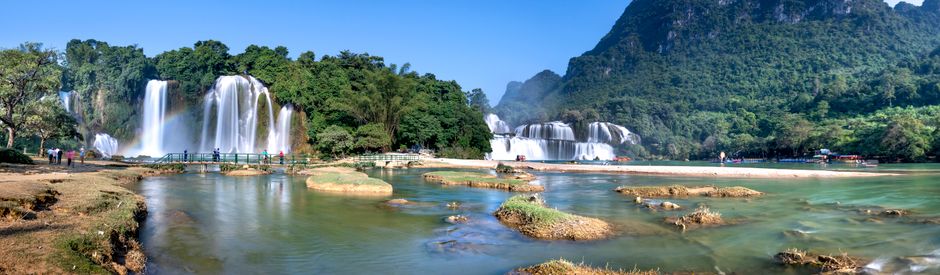
Best Routes: Embrace the water. The Ban Gioc waterfall is becoming spectacular. The ride along the Quay Son River is lush and dramatic under stormy skies.
Perfect for: Adventure Motorcyclists who don't mind getting muddy and love the drama of tropical storms.
June
Weather Snapshot: Peak of summer wetness. Highs: 31-33°C (88-91°F); Lows: 22-24°C (72-75°F). Daily heavy thunderstorms likely. Road conditions are variable: slick tarmac, potential for flash-flood debris, red clay side roads become challenging.
Traffic & Atmosphere: Tourist traffic is high, but mostly concentrated at the waterfall itself. The riding atmosphere is intense, humid, and wildly green.
Events & Rallies: Sporadic local village festivals.
Gear & Service: As May, but with extra emphasis on waterproof luggage and anti-fog visor solutions. Service available ($$).
Best Routes: Stick to primary routes (QL3, DT 211) for better drainage. The destination (Ban Gioc) is the true star this month.
Perfect for: The resilient Adventure rider and photographers chasing the waterfall at its most powerful.
July
Weather Snapshot: Similar to June. Heat, humidity, and afternoon deluges dominate. River levels are high. Road conditions require constant vigilance for washed-out sections on smaller roads.
Traffic & Atmosphere: Peak holiday season for Vietnamese students. Can be busy. The atmosphere is energetic and wet.
Events & Rallies: None.
Gear & Service: Full wet-weather riding setup recommended as a daily norm. Ensure your bike's tires have good wet grip. Services busy but available ($$).
Best Routes: The direct highway is most reliable. Consider exploring less-traveled paths like the road to Pac Bo Cave, but be prepared for mud.
Perfect for: Adventure Motorcyclists with suitable tires and a love for post-storm clarity and empty roads.
August
Weather Snapshot: The tail end of the rainy peak. Patterns begin to break. Still hot (30-32°C) with high humidity, but storm frequency may lessen. Roads start to recover but remain unpredictable.
Traffic & Atmosphere: Still relatively high traffic. Lushness is at its maximum, a wall of green.
Events & Rallies: Potential for informal rider meetups as the weather shows signs of change.
Gear & Service: As July, but you might get lucky with a fully dry day. Services normal ($$).
Best Routes: A good month to attempt the full Cao Bang loop if you're confident in changeable conditions. The rewards are immense.
Perfect for: The all-rounder Adventure/Touring rider comfortable with adaptability.
September
Weather Snapshot: The golden month begins. Highs: 28-30°C (82-86°F); Lows: 18-20°C (64-68°F). Rainfall drops significantly. Clear, sunny days dominate. Road grip is sublime—warm, dry, perfect asphalt.
Traffic & Atmosphere: International tourist traffic returns in force. The roads feel joyous, shared with like-minded explorers. The light is soft and golden.
Events & Rallies: The unofficial start of the prime riding season rallies. Look for small group tours congregating.
Gear & Service: Light touring gear. Maybe a liner for cool mornings. All services open and eager ($-$$).
Best Routes: Everything is open. This is the time for the epic DT 211 via Ma Phuc Pass—endless curves, flawless surface, staggering views. The definitive Motorcycle route in Cao Bang to Ban Gioc Waterfall.
Perfect for: Sportbike Enthusiasts and every rider who lives for perfect corners and clear skies.
October
Weather Snapshot: Perfection. Highs: 25-27°C (77-81°F); Lows: 15-17°C (59-63°F). Minimal rain, low humidity. Crisp mornings, warm days. Road conditions are as good as they get.
Traffic & Atmosphere: Peak season. The routes are popular but the experience is so good it's worth it. A festive, shared camaraderie on the road.
Events & Rallies: Highest chance of organized motorcycle tours and charity rides passing through.
Gear & Service: Perfect for your best-looking touring gear. All services at full capacity ($-$$). Book accommodation ahead.
Best Routes: All of them. Explore the remote road from Ban Gioc to Lung Cu Flag Tower (the northernmost point) for an epic extension.
Perfect for: Touring Couples, Cruiser riders, Weekend Warriors—everyone. This is the month to live for.
November
Weather Snapshot: Late autumn coolness. Highs: 22-24°C (72-75°F); Lows: 12-14°C (54-57°F). Dry and stable, though cooler, especially at higher elevations. Road grip remains excellent.
Traffic & Atmosphere: Traffic thins out beautifully after early November. A serene, mature beauty settles over the landscape as rice terraces turn gold and are harvested.
Events & Rallies: Fewer organized events, more independent riders.
Gear & Service: Add a mid-layer. Heated grips become useful again for morning starts. Services still open ($).
Best Routes: The scenic backroads shine. The route through Trung Khanh district, weaving between karst peaks and golden fields, is breathtaking.
Perfect for: The photographer rider and Touring Couples seeking scenic beauty without the crowds.
December
Weather Snapshot: Winter returns. Highs: 18-20°C (64-68°F); Lows: 8-10°C (46-50°F). "Mua phun" drizzle and valley fog become common again. Roads are often damp and chilly.
Traffic & Atmosphere: Very quiet. A solitary, contemplative experience. The landscape is stark and beautiful in a different way.
Events & Rallies: None.
Gear & Service: Back to full winter/waterproof gear. Services may have reduced hours as low season begins. Ensure your bike is prepared for cold, damp conditions ($$).
Best Routes: The main QL3, ridden slowly and mindfully. The waterfall, while less voluminous, has a graceful, misty beauty.
Perfect for: The solo Adventurer or hardcore rider who finds peace in the quiet, mist-cloaked mountains.
Peak vs. Shoulder vs. Off-Season Riding Analysis
Choosing your season is choosing your adventure. Peak Season (September-November) offers the legendary conditions: flawless asphalt, crystalline skies, and comfortable temperatures. The pros are undeniable—perfect riding, vibrant social atmosphere, and all services readily available. The cons are shared roads and the need for advance booking, which can slightly dilute the sense of raw discovery. Shoulder Seasons (April-May & March, early December) present a compelling gamble. You trade guaranteed perfection for lower costs, fewer riders, and a landscape in transition—either bursting into spring life or settling into winter quiet. Road conditions are generally good but require more weather awareness. The riding experience is more personal, offering a deeper connection with the land's changing moods. Off-Season (January-February, June-August) is for the purist and the adventurer. The challenges are real: demanding weather, potentially difficult road conditions, and limited services. Yet, the rewards are profound. You'll have iconic viewpoints like Ma Phuc Pass utterly to yourself, witness the waterfall at its thunderous peak, or see the karst peaks wreathed in ethereal fog. It's a raw, unfiltered, and deeply immersive version of the Motorcycle route in Cao Bang to Ban Gioc Waterfall, where the journey truly tests and rewards the rider in equal measure.
Best Routes for Specific Rider Types
Best for Sportbike Enthusiasts: The DT 211 between Cao Bang and Trung Khanh, culminating in the Ma Phuc Pass. This is your playground. A recently surfaced ribbon of asphalt with endless, predictable sweepers and tight hairpins carved into the mountainside. The grip in dry autumn conditions is sublime, allowing you to flow from lean to lean with the precision of a scalpel, the Quay Son River glittering far below. This is the reason you own a sportbike.
Best for Cruiser Riders: The direct QL3/AH3 highway route. Wider, well-maintained, and with a more gradual elevation change, this road caters to the laid-back, mile-eating philosophy. You can settle into a comfortable cruising rhythm, enjoying the majestic karst scenery as it unfolds around you rather than demanding constant technical input. Plenty of scenic pull-offs for photos and stretches where you can just open the throttle and feel the wind.
Best for Adventure Motorcyclists: The network of small concrete paths and dirt tracks that spiderweb off the DT 211 near Ban Gioc. Seek out the paths leading to ethnic Tay and Nung villages like Phong Nam or Dam Thuy. Here, the pavement gives way to packed earth, riverstone fords, and steep, rocky inclines. It's a test of bike control and nerve, rewarding you with untouched villages, hidden waterfalls, and the genuine thrill of exploration far from the tourist track.
Best for Touring Couples: The classic 2-3 day loop: Cao Bang -> Ma Phuc Pass (DT 211) -> overnight in Trung Khanh -> Ban Gioc Waterfall & Nguom Ngao Cave -> return via the smoother QL3. This balances thrilling riding for the pilot with breathtaking, accessible scenery for the passenger. The distances are manageable, accommodation options are good, and the route showcases the full diversity of the region—mountain passes, cultural sites, and natural wonders—without being overly arduous.
Best for Weekend Warriors: The focused out-and-back to Ban Gioc via the most scenic road: DT 211. If time is limited, this is the essence of the Cao Bang experience. Leave early, carve through the pass, feel the mist from the waterfall on your face by midday, explore the cave, and enjoy a hearty lunch. The return ride offers a different perspective on the same glorious curves, making a compact weekend feel like a truly epic escape.
Money-Saving Riding Strategies
Experiencing the Motorcycle route in Cao Bang to Ban Gioc Waterfall needn't break the bank. Trip Timing: Avoid October holidays. Target late April, May, or November for a sweet spot of good weather and lower prices. Mid-week travel always yields cheaper homestays. Fuel Hacks: Fuel in Cao Bang city before departure; prices rise slightly in remote areas. Use a fuel canister for extreme backroad exploration, but generally, stations are frequent enough on main routes. Accommodation: Embrace homestays in ethnic minority villages (Tay stilt houses are incredible). They're cheaper (often $10-15/night), include hearty meals, and offer authentic cultural immersion. In towns, small "nha nghi" (guesthouses) are rider-friendly and have secure parking. Bike Maintenance: Get a major service done in Hanoi or a major city before arriving. Cao Bang has capable mechanics, but parts for exotic bikes may be scarce. Learning basic chain adjustment and puncture repair saves on roadside call-outs. Group Riding: Joining a small group (3-4 bikes) can split costs for guide services (useful for backroads), and some homestays offer discounts for group bookings. Food & Drink: Eat where locals eat—small com pho stalls. Carry a reusable water bottle and purification tablets to avoid buying endless plastic bottles.
Motorcycle Events & Rallies Calendar
While Cao Bang isn't a traditional rally hub, its beauty draws riders organically. April 30 - May 1 Holiday: Not a formal event, but a surge of Vietnamese riders hits the roads. Expect a lively atmosphere, full guesthouses, and a shared sense of celebration on two wheels. Autumn Pilgrimage (September-October): This is the unofficial window for organized international motorcycle tours to pass through. You might encounter groups from Saigon Moto Tours, Offroad Vietnam, or Explore Indochina. It's a great time for impromptu camaraderie at roadside cafes. Local Village Festivals: These are unpredictable gems. The "Long Tong" (Going to the Field) festival of the Tay people occurs in spring (Jan-Mar), varying by village. You might ride into a celebration of traditional games, music, and food—a priceless cultural bonus. Charity Rides: Occasionally, Hanoi-based rider clubs organize charity runs to deliver supplies to remote schools in Cao Bang province. These are usually in the dry season and are heartwarming encounters. Effect on Route Timing: During national holidays, book everything in advance. During tour group season (Autumn), popular mid-point stops like Trung Khanh can be busy at lunch. Otherwise, the riding culture here is more about personal journey than mass events, preserving the road's pristine feel.
Practical Monthly Gear Guides
Packing for Cao Bang is about preparing for microclimates. All-Season Base: A moisture-wicking base layer, a quality armored riding jacket (with removable thermal and waterproof liners), armored pants, sturdy boots, full-finger gloves, and a helmet with a Pinlock visor are non-negotiable. Spring/Autumn (Mar-May, Sep-Nov): Focus on layers. The liner goes in at dawn, comes out by 10 a.m. Pack a lightweight, packable down jacket for evenings. A mid-weight, versatile glove is perfect. Summer (Jun-Aug): Maximum ventilation. A mesh riding jacket, vented pants, and summer gloves are essential. However, a separate set of high-quality, breathable rain gear is your most important item—you will live in it. Hydration bladder is critical. Winter (Dec-Feb): The cold is damp and pervasive. A heated vest or jacket is a game-changer. Merino wool base layers, a neck gaiter, waterproof outer shell, and insulated, waterproof gloves are mandatory. Pack chemical hand warmers. Tool Kit Essentials: Beyond bike-specific tools, carry: a heavy-duty tire repair kit (and know how to use it), a compact air pump, a multi-tool, spare clutch/brake levers, zip-ties, duct tape, a headlamp, and a basic first-aid kit. A satellite messenger (like a Garmin inReach) is wise for remote backroad exploration.
Sample 7-Day Route Itineraries by Season
Spring (Awakening): Day 1-2: Hanoi to Cao Bang via Ba Be Lake. Day 3: Cao Bang to Bao Lac via backroads, focusing on valley routes. Day 4: Bao Lac to Trung Khanh via scenic DT 211, capturing spring blossoms. Day 5: Explore Ban Gioc and Nguom Ngao Cave. Day 6: Trung Khanh to Cao Bang via Ma Phuc Pass (hopefully clear). Day 7: Return to Hanoi via Thac Ban Gioc. Highlights: Blossoms, reflective lakes, emerging greenery.
Summer (Water & Power): Day 1: Hanoi to Cao Bang. Day 2: Cao Bang to Ban Gioc via QL3 (fast, in case of rain). Day 3: Base at Ban Gioc; explore the waterfall at peak flow and nearby villages. Day 4: Ban Gioc to Pac Bo Cave (historical site, sheltered ride). Day 5: Pac Bo to Nguyen Binh for highland scenery. Day 6: Nguyen Binh back to Cao Bang via backroads if dry. Day 7: Return to Hanoi. Highlights: Thunderous waterfalls, dramatic storm-light photography, lushness.
Autumn (Classic Perfection): Day 1: Hanoi to Cao Bang. Day 2: Cao Bang to Trung Khanh via Ma Phuc Pass (savor every curve). Day 3: Trung Khanh to Ban Gioc, explore cave. Day 4: Detour north to Lung Cu Flag Tower (epic extension). Day 5: Lung Cu back to Bao Lac via remote mountain roads. Day 6: Bao Lac to Ba Be Lake (boat trip). Day 7: Ba Be to Hanoi. Highlights: Perfect riding conditions, golden harvest scenes, clear skies.
Winter (Mystical Journey): Day 1: Hanoi to Cao Bang. Day 2: Rest day in Cao Bang, explore the city market, prep bike. Day 3: Cao Bang to Ban Gioc via QL3, cautious ride. Day 4: Local exploration near Ban Gioc if weather permits. Day 5: Ban Gioc back to Cao Bang, alternative route via small villages if roads are safe. Day 6: Cao Bang to Ba Be Lake (winter-mist atmosphere). Day 7: Return to Hanoi. Highlights: Solitude, ethereal fog-filled valleys, cultural immersion in quiet villages.
Conclusion: Your Line Through the Landscape
The road from Cao Bang to Ban Gioc Waterfall is more than a destination; it's a living entity that changes with the sun, the rain, and the season. Your optimal strategy is not a fixed GPS track, but a philosophy: match your machine and your mindset to the time of year. For the sport rider chasing the ultimate lean, September on the Ma Phuc Pass is your nirvana. For the adventure seeker craving raw challenge, the summer mud of a backroad to a Tay village will define your year. For the touring couple, the crisp air and golden light of October provide a canvas for shared, unforgettable memories. Our final recommendation? If you can choose, aim for the shoulder of autumn—late September or November. You'll capture much of the perfection with a touch more solitude. But whatever month you find yourself on these roads, remember to look up from the tarmac. Breathe in the cool mountain air, feel the sun on your shoulders after a tunnel of fog, and listen to the roar of the falls mingling with the rumble of your engine. This is why we ride. This is the Cao Bang to Ban Gioc Waterfall motorcycle route—a journey that etches itself not just on your map, but on your soul.
FAQ - Best Motorcycle Routes in Cao Bang to Ban Gioc Waterfall
Q: What is the best month for a first-time rider on this route?
A: April or late October. These months offer a high probability of stable, dry weather with good road conditions, making the technical aspects of riding (like navigating the Ma Phuc Pass) less daunting. The scenery is spectacular, and services are readily available, allowing you to focus on the experience rather than battling the elements.
Q: Can I do this route on a semi-automatic scooter like a Honda Vision?
A: Yes, but with major caveats. Stick strictly to the main QL3 highway, which is well-paved. Avoid the DT 211 over Ma Phuc Pass and any unpaved backroads, as the scooter's lower power, small wheels, and lack of suspension travel will struggle severely. Exercise extreme caution in wet conditions. For the full experience, a manual motorcycle (110cc+) is strongly recommended.
Q: Are there any dangerous sections of road I should be aware of?
A: The Ma Phuc Pass (DT 211) itself, while stunning, demands respect. It has many blind corners and sheer drop-offs with minimal barriers. During and after summer rains, watch for landslides and slick clay on the road. On all roads, be vigilant for livestock (buffalo, chickens) and children, especially near villages. Damp, shaded sections of tarmac in winter can be deceptively slick.
Q: Do I need an international driving permit and how do I handle police checkpoints?
A: Yes, you legally need an International Driving Permit accompanied by your home country license. At checkpoints (common on QL3), be polite, have your documents ready (license, IDP, bike papers if you own it, rental contract if not). They are typically looking for proper documentation and sober riding. Fines for no IDP can be levied, though not always.
Q: Is it safe to ride this route solo?
A: Generally, yes. The local people are incredibly hospitable. However, solo riding in remote areas always carries inherent risk. Inform someone of your daily route, carry a local SIM card for emergency calls (Viettel has best coverage), and consider a satellite communicator for extreme backroads. Mechanical issues in remote areas can lead to long waits for help.
Q: Where are the best, lesser-known photo spots along the way?
A: Beyond the classic pass viewpoints, detour to Thang Hen Lake (a series of interconnected lakes in a valley). The road from Quang Uyen to Trung Khanh (alternate to DT 211) has stunning karst field vistas. Just before Ban Gioc, find the small roads that run parallel to the Quay Son River for perfect reflections. At dawn, the fog over the rice terraces near Trung Khanh is magical.
Q: How do I responsibly interact with local ethnic minority communities?
A: Always ask for permission before taking portraits of people. A smile and a simple "Xin Chao" (hello) go a long way. Support them directly by staying in homestays, buying local handicrafts, and eating at village eateries. Dress modestly when visiting villages. Be respectful of ceremonies and private property. You are a guest in their homeland.


No comments:
Post a Comment