
Night Riding: What You Can't See Will Hurt You
Introduction
Remember the first time you saw a motorcycle and felt that pull? The promise of freedom, the wind, the connection to the road—it's a powerful call. But if you're like most new riders, that excitement is tightly braided with a thread of healthy fear. You're not just learning to operate a machine; you're learning to navigate a world that suddenly feels more vivid, more demanding, and yes, more dangerous. I remember my first solo ride after the MSF course. My heart hammered against my ribs louder than the engine. Every car was a potential threat, every intersection a puzzle. I stalled twice at a light, my face burning under the helmet. The voice in my head whispered, "Maybe this isn't for you."
If that voice sounds familiar, I'm here to tell you two things. First, you are absolutely right to be cautious. That respect for the risk is what will make you a good rider. Second, that overwhelming feeling is temporary. This article is your roadmap through it. We're going to move past the abstract fear and into the realm of practical, actionable skills. We'll cover the non-negotiable safety basics, break down the learning process into manageable chunks, and provide you with specific drills to build your confidence in a parking lot before you ever hit traffic. We'll tackle common beginner struggles head-on with clear solutions and give you a realistic timeline so you know what to expect. My goal is not just to give you information, but to build your competence. The transformation from a nervous novice to a confident, capable rider is not only possible—it's one of the most rewarding journeys you'll ever take. Let's begin.
The Reality Check
Let's set aside the romanticized version of motorcycling for a moment. Learning to ride is a serious, demanding, and profoundly rewarding undertaking. The common misconception is that if you can ride a bicycle or drive a car, hopping on a motorcycle is a natural next step. The reality is that motorcycling is a unique skill set that engages your mind and body in entirely new ways. It requires a high degree of physical coordination—managing throttle, clutch, front brake, rear brake, gear shift, balance, and steering, often simultaneously. Your core and leg strength are crucial for control, not just your arms.
Mentally, it's even more intensive. You must develop hyper-awareness, constantly scanning for hazards, predicting other drivers' mistakes, and making split-second risk assessments. There's no "autopilot." The timeline is also a reality check. You won't master it in a weekend. Competence comes with consistent, deliberate practice over months. Financially, the bike is just the start. Quality protective gear, insurance, maintenance, and training courses are significant, necessary investments. If you're asking, "Is riding right for me?" that's a smart question. It's right for you if you are willing to embrace the learning curve, prioritize safety over ego, and commit to continuous improvement. The doubt is normal; letting it paralyze you is the only real barrier.
Safety First: Non-Negotiable Basics
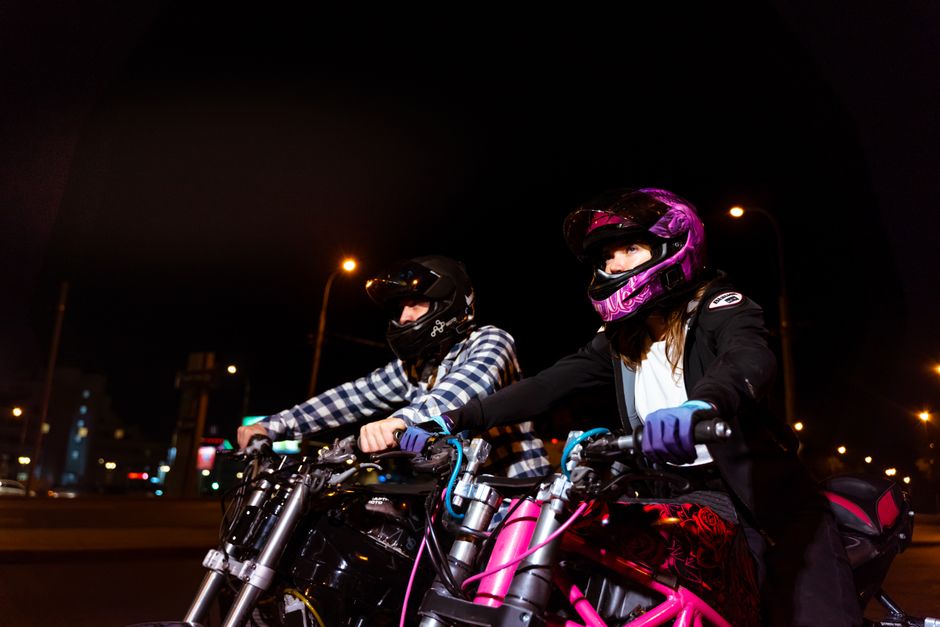
Before you even think about twisting the throttle, your first investment is in gear. This isn't about fashion; it's about survivability. Studies consistently show that proper gear dramatically reduces the severity of injuries in a crash. Your helmet is the most critical piece. Look for one that meets at least DOT standards, with ECE 22.06 or Snell certifications being even better indicators of quality. Fit is paramount—it should be snug without pressure points. A full-face helmet provides the best protection for your head, face, and jaw.
Next is the protective suit: jacket, pants, gloves, and boots. Seek out abrasion-resistant materials like leather or high-denier textile (e.g., Cordura). Look for built-in armor at the shoulders, elbows, knees, and back. Gloves should have palm sliders and reinforced knuckles. Boots must cover your ankles and provide support and protection; no sneakers. Visibility is your other layer of defense. Incorporate high-visibility colors (fluorescent yellow/orange) and reflective elements into your gear. Position yourself in the lane to be seen in car mirrors, and always use your headlight.
A realistic budget for quality starter gear is between $800 and $1,500. This gets you reputable, safe equipment from known brands. Beginners often try to cut corners on gloves, boots, or pants, thinking "I'm just practicing in a lot." This is the most dangerous time to be under-protected! A simple tip-over at 10 mph can grind through jeans and skin in seconds. Your gear is the one thing you buy hoping you never need it. Don't compromise.
The Learning Process Explained
Skill development on a motorcycle follows a natural, phased progression. Understanding these phases helps you track your progress and manage frustration.
Phase 1: Foundation (Hours 0-5)
This is pure familiarization. You're learning the basic controls: where everything is without looking. The focus is on finding the friction zone of the clutch, managing throttle control for smooth starts, and mastering walking-speed balance. The goal here is simply to make the bike go, stop, and turn without stalling or panicking.
Phase 2: Control (Hours 5-15)
Now you start to refine. Practice low-speed maneuvers like tight turns, figure-eights, and U-turns. Learn proper braking technique—using both brakes smoothly, with progressive pressure on the front. This is where you build the fundamental muscle memory for starting, stopping, and turning confidently at parking-lot speeds.
Phase 3: Application (Hours 15-30)
You graduate to quiet residential streets. Here, you'll consciously practice countersteering (push left to go left) for confident cornering. Your hazard perception expands—you're now scanning for parked cars, pets, and intersections. This phase is about linking basic skills together to navigate a real, but low-risk, environment.
Phase 4: Refinement (Hours 30+)
This is where you prepare for higher-speed environments. You'll practice emergency braking from higher speeds, swerving around obstacles, and eventually, short highway trips. Your visual skills advance to maintaining a 12-second lead time, constantly scanning for escape paths.
Throughout this journey, you'll hit plateaus where progress feels slow. This is completely normal. Muscle memory takes repetition. If you feel stuck, that's the perfect time to seek professional instruction. A certified coach can spot tiny errors and provide corrections that self-practice cannot. Investing in a few hours of professional training can accelerate your learning more than weeks of solo struggle.
Practical Skill Building
Knowledge is useless without practice. Here are specific drills to build your skills safely in an empty parking lot. Always wear full gear.
Parking Lot Fundamentals:
Slow-Speed Control: Ride in a straight line as slowly as possible without putting your feet down. Use the friction zone and rear brake to modulate speed. This builds balance.
Figure-Eights: Set up two cones or markers 20-30 feet apart. Practice making smooth, continuous figure-eights, turning your head to look through each turn. Start wide and gradually tighten them.
Emergency Braking: From 20 mph, practice smooth, firm application of both brakes, squeezing the front progressively. Focus on keeping the bike upright and straight. Measure your stopping distance.
Obstacle Swerve: Set two markers 10 feet apart to simulate an obstacle. Approach at 15-20 mph, look and press in the direction you want to swerve (push left to swerve left, then immediately right to straighten), then continue. Practice both directions.
Body Positioning & Vision:
Where you look is where you go. In turns, turn your head to look through the turn to the exit. Keep your knees against the tank for stability. Relax your arms; don't fight the handlebars.
Practice Routines:
15-Minute Tune-Up: 5 min of slow-speed straight lines, 5 min of figure-eights, 5 min of emergency stops.
30-Minute Session: 10 min of combined slow-speed drills, 10 min of swerving and braking drills, 10 min of mock road course (simulating stops, turns, and lane changes).
60-Minute Comprehensive: Warm up with 15 min of basics. Spend 30 min focusing on your weakest skill. Finish with 15 min of free riding, applying all skills together.
Common Beginner Challenges & Solutions
Every rider faces these hurdles. Here's how to overcome them.
Challenge 1: Stalling at Stops. This is almost always due to releasing the clutch too quickly. Solution: Practice finding the friction zone in a safe space. Add a tiny bit more throttle as you smoothly release the clutch. Mindset: Stalling is a learning signal, not a failure. Everyone does it.
Challenge 2: Wobbly Slow-Speed Riding. This stems from tense arms and looking down. Solution: Look ahead where you want to go, not at the ground. Keep your arms relaxed, use your core, and control speed with the rear brake and clutch. Mindset: The bike wants to stay upright. You're just guiding it.
Challenge 3: Fear of Leaning. Our bodies instinctively want to stay upright. Solution: Start with wide, gentle turns at slow speed. Consciously turn your head to look through the turn. The bike will follow. Increase lean angle gradually. Mindset: Leaning is how a motorcycle turns. It's designed to do this.
Challenge 4: Panic Braking. The instinct is to grab the front brake hard, which can lock the wheel. Solution: Drill, drill, drill. In a parking lot, practice progressive squeezing of the front brake while applying steady pressure to the rear. Build the muscle memory so the correct action becomes automatic. Mindset: Smooth is safe. Practice makes perfect reactions.
Challenge 5: Highway Anxiety. The speed and wind can be intimidating. Solution: Use a gradual exposure protocol. First, ride on fast multi-lane roads (50 mph). Then, take a short highway trip at an off-peak time, focusing on staying in the right lane. Get used to the sensation of wind and passing trucks. Mindset: The highway is often statistically safer than city streets—fewer intersections, predictable traffic flow.
Challenge 6: Group Riding Pressure. Friends may invite you on rides beyond your skill level. Solution: Have a graceful decline script ready: "Thanks, but I'm sticking to my practice plan for now. I'll join you when I'm more confident." Never ride outside your comfort zone to keep up. Mindset: A true riding friend will respect your limits. Your safety is non-negotiable.
Challenge 7: Dropping the Bike. It happens to almost everyone. Solution: Learn the proper lifting technique (turn your back to the bike, squat down, grip the handlebar and a solid frame point, and walk backwards using your legs). To prevent drops, practice slow-speed control and always be mindful of the slope of the ground when parking. Mindset: It's a rite of passage. Assess what happened, learn from it, and move on.
Decision-Making Framework
As a beginner, every choice matters. Use this framework to make smart decisions.
Bike Selection: Your first bike is a learning tool, not a dream machine. Key criteria: Displacement: 300-500cc is ideal for most adults. It's forgiving but has enough power for highways. Weight: Look for something under 400 lbs wet weight. Seat Height: You should be able to flat-foot or near flat-foot with both feet for confidence at stops. Riding Position: Standard or upright seating is best for learning. Consider a used bike from a reputable brand—it's cheaper, less heartbreaking if dropped, and holds value.
Training Decisions: A Motorcycle Safety Foundation (MSF) Basic Rider Course is the single best investment a new rider can make. It provides professional instruction, a bike to learn on, and insurance/licensing benefits. Private instruction is valuable after the MSF for specific skills. Be cautious of learning solely from a friend—they may have bad habits and the dynamic can add pressure.
Practice & Riding Decisions: Start in a vast, empty parking lot. Progress to quiet residential streets with minimal traffic. Only ride solo when you can consistently execute all basic controls without conscious thought. Ride with others only when you are confident in your own pace. Red flags that you're not ready: consistent stalling in traffic, inability to make a U-turn within two parking spaces, panic in simple situations. Normal nervousness is feeling alert; abnormal fear is feeling paralyzed.
Timeline & Milestones
Here's a realistic roadmap for your first year. Your mileage may vary based on practice frequency.
Week 1: Focus is 100% on parking lot mastery. You should achieve consistent control of the friction zone, smooth starts and stops, and basic turning.
Weeks 2-3: Graduate to practicing on very quiet local streets, preferably early on a weekend morning. Practice stopping at signs, navigating gentle curves, and basic traffic awareness.
Month 1: You're comfortable with solo short trips (under 30 minutes) to familiar locations. You begin to adapt to different weather (light wind, mild temperatures).
Months 2-3: You intentionally introduce highway riding with a short, planned trip. You start venturing on longer rides (1-2 hours) on country or suburban roads.
Month 6: You feel comfortable using the motorcycle for commuting in familiar traffic. You may feel ready for a structured, beginner-friendly group ride.
Year 1: You have thousands of miles of varied experience. You consider taking an advanced riding course (like the MSF Advanced RiderCourse) to refine skills. Multi-day touring becomes a realistic goal.
Variables: Prior experience with bicycles or manual transmission cars can accelerate early learning. High anxiety levels may slow the initial pace—that's okay. Warning signs of rushing: Skipping foundational drills, moving to busy roads because you're "bored," or immediately modifying your bike for performance. A healthy challenge feels slightly outside your comfort zone; rushing feels overwhelming.
The Mental Game
Riding is as much a mental discipline as a physical one. Managing fear is crucial—you want enough to keep you sharp, but not so much it causes paralysis. Acknowledge the fear, then focus on the specific skill needed in the moment ("I'm nervous about this left turn, so I will turn my head, smooth on the throttle, and press on the left bar"). Build situational awareness into a habit. Constantly scan your environment, identify potential hazards (that car at the cross street, the gravel on the corner), and plan your escape path.
Develop "what-if" scenario planning. "What if that car pulls out?" (Cover the brakes, prepare to swerve). This proactive thinking turns panic into prepared action. Beware the shift from confidence to complacency. The most dangerous period is often after 3-6 months, when the basics feel easy but experience is still limited. Use visualization: before a ride, mentally rehearse smooth controls and hazard responses. If you have a close call, debrief calmly. What did you do well? What could you improve? Don't let it shatter your confidence; let it reinforce your learning. Finally, embrace the rider community. Connecting with other safety-focused riders provides support, advice, and camaraderie that fuels the journey.
Insider Tips From Experienced Riders
We asked seasoned motorcyclists what they wish they'd known at the start. Here's their collective wisdom:
"I wish I'd taken a professional course sooner instead of trying to teach myself. It would have saved me years of unlearning bad habits."
"The most underrated skill is smoothness. Smooth throttle, smooth brakes, smooth steering. Speed comes later, and smooth is fast."
"My early regret was buying a bike that was too heavy and powerful because it looked cool. I was intimidated by it for a year."
"Start maintenance habits immediately. Checking tire pressure, chain tension, and fluid levels before every ride isn't just about the bike—it connects you to its condition and builds respect."
"Your attitude determines your safety more than any gadget. The riders who think they're invincible or 'too cool for gear' are the ones we read about."
"There's a perspective shift that happens around the 10,000-mile mark. You stop thinking about controlling the bike and start feeling like you're having a conversation with the road. It's worth the grind to get there."
"The early phase is the hardest. You're absorbing so much. Be patient with yourself. Every expert rider was once a beginner who stalled in an intersection."
FAQ for Beginners
How do I overcome the fear of dropping my bike?
First, accept that it might happen—to almost everyone. This removes the paralyzing fear of a single mistake. Second, invest in frame sliders and engine guards; they're inexpensive and can save you hundreds in repairs. Third, practice slow-speed control religiously in a parking lot. The more confident you are at slow speeds, the less likely you are to drop it. Finally, if it happens, use proper technique to lift it, assess why (grabbed front brake while turning? Uneven ground?), learn, and move on.
What's the minimum gear I need to start practicing?
Absolute minimum: A DOT-certified full-face helmet, motorcycle-specific gloves with palm protection, a sturdy jacket (leather or abrasion-resistant textile), over-the-ankle boots (motorcycle boots are best), and durable pants (riding jeans or pants with armor). Do not practice in sneakers, shorts, or a t-shirt. The parking lot is where drops are most likely, and asphalt is unforgiving at any speed.
How do I know when I'm ready for the highway?
You are ready when you can: execute smooth, confident shifts up and down through all gears; perform an emergency stop from 40 mph in a controlled, straight line; maintain a steady lane position without wobbling in wind buffeting; and consistently check your mirrors and blind spots without losing forward focus. Start with a short, planned highway trip at a low-traffic time of day.
Is it normal to feel overwhelmed at first?
Absolutely. It is 100% normal. You are learning a complex psychomotor skill in a high-consequence environment. The feeling of having to think about every single action (clutch, throttle, turn signal, brake, look, lean) is exhausting. This overload decreases with practice as actions become automatic. If you feel overwhelmed, scale back to a simpler environment (empty lot) and focus on just one or two skills.
How much should I spend on my first motorcycle?
Plan to spend between $3,000 and $5,000 for a good-quality used beginner motorcycle from a major brand (Honda, Kawasaki, Yamaha, Suzuki). This price range typically gets you a recent, low-mileage, fuel-injected bike in the 300-500cc class that is reliable and has a strong resale value. Remember to budget for gear, insurance, taxes, and registration on top of the bike price.
Can I learn to ride if I'm not mechanically inclined?
Yes. Modern motorcycles are very reliable. You don't need to be a mechanic. However, you do need to be willing to learn and perform basic pre-ride checks and maintenance: checking tire pressure and tread, checking and lubricating the chain, checking fluid levels, and ensuring lights and signals work. These are simple tasks that ensure your safety and are part of the responsibility of riding. Your owner's manual and online tutorials make them easy.
What if I have a close call or minor drop—should I quit?
No. A close call or drop is a powerful learning opportunity, not a sign to quit. Safely stop, calm yourself, and analyze what happened. What was the cause? What did you do correctly? What could you have done differently? Then, go back to a controlled environment and practice the specific skill that was lacking (e.g., emergency braking, slow-speed turns). Every experienced rider has had these moments; the difference is they used them as fuel for improvement.
Conclusion
The path from curious beginner to competent rider is a journey of incremental victories. It starts with the courage to acknowledge what you don't know and the commitment to learn it the right way. You have the power to transform that initial mix of excitement and anxiety into genuine confidence—the kind built on skill, knowledge, and respect for the ride. Your next step is not to buy the flashiest bike or plan a cross-country trip. It's to take one single, concrete action today. That might be researching MSF courses in your area, measuring your head for a helmet, or simply spending 30 minutes watching a professional training video on basic controls. Embrace the process with patience. Celebrate the small wins: your first smooth start, your first successful U-turn, your first ride home without stalling. Remember, the rider you see gliding effortlessly down the road started exactly where you are now: at the beginning, full of doubt and determination. The road is waiting. See you out there—safely.


No comments:
Post a Comment