
Throttle Control: Smooth is Fast, Fast is Safe
Introduction
You're sitting on the motorcycle for the first time, the engine humming beneath you. There's a cocktail of emotions swirling in your chest: pure, unadulterated excitement at the freedom you've dreamed of, and a sharp, cold spike of anxiety. Your hand grips the throttle, and it feels less like a control and more like a loaded spring. What if you twist too hard? What if the bike lurches out from under you? What if you just… can't do this? Let me tell you something: every single rider who has ever thrown a leg over a bike has felt that exact same mix of thrill and terror. It's not a sign of weakness; it's a sign of intelligence. You understand that this is serious, and that respect is the foundation of everything good that comes from riding.
This article is for you—the new or aspiring rider searching for a path through the noise. You're not looking for reckless adrenaline stories; you're looking for practical skills, confidence-building advice, and clear safety knowledge that will help you make smart decisions. We're going to demystify the learning process, from that first shaky parking lot session to the day you confidently navigate a winding road. We'll talk about gear, skills, mindset, and the often-overlooked reality of what it takes to become not just a rider, but a competent and safe one. The journey from novice to capable rider is a transformation, and it begins with understanding one fundamental truth: on a motorcycle, control is everything, and smooth control is the secret to both speed and safety. Your adventure starts here, with knowledge as your first piece of essential gear.
The Reality Check
Let's have an honest conversation. Learning to ride a motorcycle is not like learning to drive a car. It's more akin to learning a sport or a musical instrument—it demands the integration of fine motor skills, balance, and acute mental focus, all while managing a machine that offers no inherent stability. The common misconception is that if you can ride a bicycle, you can hop on a motorcycle. While balance translates, the addition of significant weight, a powerful engine, and a manual transmission creates a vastly more complex equation. The reality is a physically and mentally engaging challenge that rewards patience and punishes haste.
Physically, you'll use muscles you didn't know you had. Your hands, wrists, and forearms will learn delicate tasks like modulating the clutch and throttle. Your core and legs will constantly work to stabilize the bike, especially at low speeds. Mentally, the demand is immense. You must process a continuous stream of information—road surface, traffic, speed, lean angle—and make constant micro-adjustments. The timeline is also a reality check. Proficiency isn't measured in days, but in hours of quality practice. Expect the first 15-20 hours to be purely about basic control, not scenic tours. Financially, the bike's purchase price is just the entry fee. Quality gear, insurance, maintenance, and formal training are significant, necessary investments. If you're asking, "Is riding right for me?" that's smart. The answer lies in your willingness to embrace the process, respect the risks, and commit to the long, incredibly rewarding journey of skill acquisition.
Safety First: Non-Negotiable Basics
Before you even start the engine, your safety strategy begins with gear. This isn't about fashion or toughness; it's about physics and biology. In a crash, asphalt acts like coarse sandpaper on skin. The statistics are clear: proper gear dramatically reduces the severity of injuries. A DOT-approved helmet is the absolute minimum, but aim for ECE or Snell certification for better protection. Fit is critical—it should be snug without pressure points. Full-face helmets offer the best protection for your head and jaw. For clothing, think "abrasion resistance and impact protection." A motorcycle-specific jacket and pants made of leather or durable textiles (like Cordura) with built-in armor at the shoulders, elbows, knees, and back are essential. Gloves protect your hands (a common first point of contact), and over-the-ankle boots with oil-resistant soles protect your feet and ankles.
Visibility is your other primary defense. You are small and easily overlooked. Incorporate high-visibility colors (neon yellow, orange) or reflective elements into your gear, especially on your torso and helmet. Always position yourself in the lane where you are most visible to other drivers—typically the left or right tire track, not the center where oil accumulates. A realistic budget for quality starter gear is $800 to $1,500. This covers a good helmet ($200-$500), jacket ($150-$300), pants ($150-$300), gloves ($50-$150), and boots ($100-$250). Beginners often cut corners on pants and boots, opting for jeans and sneakers. This is a grave mistake. Denim disintegrates instantly on pavement, and sneakers offer zero ankle support or crush protection. Your gear is your primary safety system. Invest in it with the same seriousness as you do the motorcycle itself.
The Learning Process Explained
Skill development on a motorcycle follows a natural, phased progression. Understanding these phases helps manage frustration and set realistic goals. Phase 1 (Hours 0-5): Foundation. This is all about intimate familiarity with the controls in a safe, empty parking lot. You'll practice starting and stopping, walking the bike with the clutch (the "friction zone"), and making tiny, smooth throttle inputs. The goal is to make the controls an extension of your body.
Phase 2 (Hours 5-15): Low-Speed Competence. Here, you graduate to maneuvers like tight turns, figure-eights, and controlled stops. You'll learn to use both brakes smoothly and begin to understand counterweighting—shifting your body to help the bike turn at slow speeds. This phase builds the coordination needed for real-world traffic.
Phase 3 (Hours 15-30): Street Integration. Now you venture onto quiet residential streets. The focus shifts to higher-speed turning (learning to countersteer—pushing the handlebar to lean), basic hazard scanning, and managing intersections. Cornering confidence grows as you learn to look through the turn and apply smooth, steady throttle.
Phase 4 (Hours 30+): Skill Refinement. This includes highway entry/exit, higher-speed emergency braking, swerving, and night riding. Muscle memory is now developing, but plateaus are normal. You'll have days where you feel you've gone backward. This is part of the process. Professional instruction, like an MSF Basic RiderCourse, is invaluable, especially in Phases 1-3. It provides a structured, safe environment with expert feedback. Self-practice is crucial for reinforcement, but a certified coach can correct fundamental errors before they become bad habits.
Practical Skill Building
Knowledge is useless without practice. Here are specific drills to build muscle memory. In a large, empty parking lot, start with the fundamentals. Figure-Eights: Set cones or markers 30-40 feet apart. Practice smooth, continuous circles, using your clutch friction zone and rear brake to control speed. Look where you want to go, not at the ground. Slow-Speed Straight Line: Ride as slowly as possible for 100 feet without putting a foot down. This teaches incredible clutch and throttle control. Emergency Stops from 20mph: Accelerate to 20mph, then practice quick, progressive braking, squeezing the front and pressing the rear, coming to a straight, controlled stop. Measure your distance—it will shrink with practice. Obstacle Swerve: Set two markers 10 feet apart. Approach at 15-20mph, and practice swerving around them without braking, using countersteering (push left to go left).
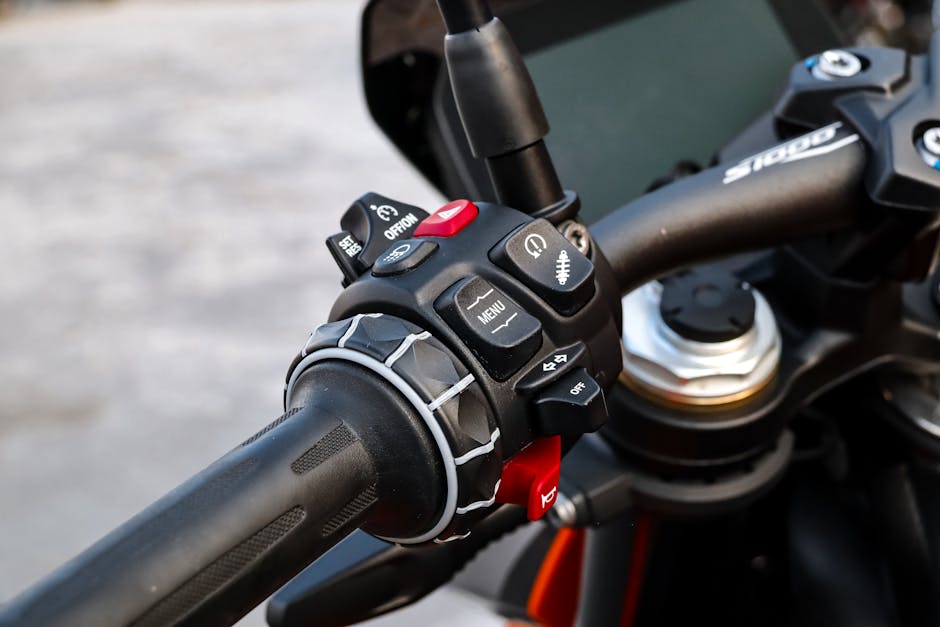
Body positioning is key: look far ahead, not at your front wheel. Grip the tank with your knees to stabilize your upper body. Keep your arms relaxed and elbows slightly bent. For throttle control, practice "rolling on" and "rolling off" with the smoothness of turning a dial, not flicking a switch. Find a straight line and practice maintaining a steady 25mph, watching the tachometer to see how tiny movements affect speed.
Practice Routines:
15-Minute Tune-Up: 5 mins of slow-speed straight lines, 5 mins of figure-eights, 5 mins of emergency stops.
30-Minute Session: 10 mins of low-speed drills, 10 mins of swerving practice, 10 mins of combined braking and cornering (brake, then turn).
60-Minute Comprehensive: 15 mins of fundamentals, 15 mins of emergency maneuvers, 30 mins of street practice on quiet roads (stop signs, turns, scanning).
Common Beginner Challenges & Solutions
Challenge 1: Stalling at Stops. This is the universal beginner experience. Solution: Drill the friction zone. With the bike off, practice slowly releasing the clutch until you feel the engine engage (the bike will want to move), then pull it back in. Do this for five minutes before every ride. When starting, give a little more throttle than you think you need.
Challenge 2: Wobbly Slow-Speed Riding. The bike feels unstable during U-turns or parking. Solution: Your vision is likely dropping to the ground right in front of you. Force your head up and look where you want to go—the horizon or the exit point of the turn. Combine this with steady, slight rear brake pressure to stabilize the chassis.
Challenge 3: Fear of Leaning. The bike feels like it will fall over in a turn. Solution: Practice progressive lean. On a safe, sweeping curve, enter at a comfortable speed. Look through the turn and gently increase your lean angle by pressing forward on the inside handlebar (countersteering). Feel how the bike wants to stay upright; it's more stable in a turn than standing straight up at speed.
Challenge 4: Panic Braking. Grabbing a handful of front brake, locking the rear. Solution: Deliberate, repeated practice. In the parking lot, from 20mph, practice squeezing the front brake lever progressively, as if you're squeezing an orange, while applying firm, steady pressure to the rear. Build the muscle memory so it becomes automatic.
Challenge 5: Highway Anxiety. The speed and wind blast are intimidating. Solution: Gradual exposure. First, practice on wide, fast-moving boulevards. Then, enter the highway at a non-peak time, for just one exit. Focus on relaxing your grip, scanning far ahead, and maintaining a steady lane position. Each trip, add one more exit.
Challenge 6: Group Riding Pressure. Feeling rushed to keep up. Solution: Your mantra: "Ride your own ride." Communicate this to the group leader beforehand. Position yourself near the back. If the pace is too fast, drop back or pull over. A true riding group will wait for you.
Challenge 7: Dropping the Bike. It happens to almost everyone. Solution: Learn the pickup technique (turn your back to the bike, squat, grab the handlebar and a solid frame point, and walk backwards lifting with your legs). To prevent drops, master slow-speed control and always pay attention to footing when stopping (avoid gravel, slopes, and deep pavement grooves).
Decision-Making Framework
As a beginner, every choice should prioritize manageability and safety. For your first bike, ignore horsepower and focus on weight, seat height, and riding position. A 300cc to 500cc standard, cruiser, or dual-sport is ideal. It's light enough to handle easily (under 400 lbs wet weight) and has manageable power. Sit on it—can you flat-foot both feet comfortably? This builds immense low-speed confidence. New vs. used: a used bike from a reputable brand is often the smartest choice, as minor drops are less heartbreaking and depreciation is less severe.
For training, a formal course like the MSF's is the single best investment you can make. It provides a curriculum, a loaner bike to drop, and insurance discounts. Friend mentorship has value but can instill bad habits; use it as a supplement, not a replacement. Choose practice locations that match your skill: empty parking lots, then quiet residential streets with minimal traffic, then busier arterials, and finally highways. Ride solo until you are utterly comfortable with the controls; adding a passenger or riding in a group too early divides your attention dangerously. Red flags that you're not ready for the next step include consistent stalling in traffic, inability to make a U-turn within two parking spaces, or feeling mentally overwhelmed on simple rides. Normal nervousness is feeling alert and respectful; incapacitating fear is a sign to step back and drill basics.
Timeline & Milestones
Setting realistic expectations prevents discouragement. Here's a typical progression for a rider practicing several times a week. Week 1: Total focus on parking lot mastery. You should leave feeling confident with starting, stopping, and basic turning without stalling. Weeks 2-3: Short forays onto local streets. Goal: navigate a few blocks with stop signs and gentle turns, returning to the lot for more drills. Month 1: Ability to take solo, short trips (to a store, a friend's house) in daylight, good weather. You're thinking less about controls and more about traffic.
Months 2-3: Introduction to multi-lane roads and short highway stints. Comfort with speeds up to 55-60 mph. Month 6: Comfortable commuting in light traffic. May be ready for a small, organized group ride with an experienced leader. Year 1: Considered an "experienced beginner." Ready to think about advanced skill courses (like the MSF Advanced RiderCourse) or weekend touring. Variables that speed up progression: prior bicycle/ dirt bike experience, frequent practice, low anxiety levels. Variables that slow it: infrequent riding, high fear response, choosing a bike that's too heavy or tall. Rushing is skipping foundational skills to get to the "fun" stuff. A healthy challenge is practicing a skill at the edge of your ability in a controlled environment.
The Mental Game
Riding is as much a mental discipline as a physical one. Managing fear is paramount. Don't try to eliminate it; harness it. A healthy dose of fear keeps you alert and respectful. When it becomes paralyzing, it's usually because you've encountered a situation beyond your current skill set. The solution is to retreat to a manageable environment and drill the relevant skill. Build situational awareness through deliberate habit: practice the "12-second scan"—look as far ahead as you'll travel in 12 seconds to identify potential hazards early.
Develop "what-if" planning: "What if that car door opens? What if that pedestrian steps out? What if there's gravel in that turn?" This pre-plans your escape routes. Balance confidence and complacency. Confidence is knowing you can execute a controlled stop; complacency is assuming you'll never need to. Use visualization: before a ride, mentally rehearse smooth throttle control, braking, and scanning. After a close call, analyze it calmly—what did you do well? What could you improve? This builds resilience. Finally, connect with the community. Find other safety-focused beginners or mentors. Sharing the journey makes the challenges easier and the victories sweeter. The "click" moment, when the controls fade into the background and you become one with the bike, is a mental shift as much as a physical one.
Insider Tips From Experienced Riders
We asked seasoned motorcyclists what they wish they'd known. The consensus was overwhelming: "Invest in professional training from day one." Many regretted being self-taught or relying on a friend, which ingrained habits they spent years unlearning. The most underrated skill? Smooth throttle control. As one rider put it, "Smooth is fast, and fast is safe. Jerky inputs upset the bike's stability, especially mid-corner." Common early regrets centered on gear ("I wore jeans for too long") and bike choice ("I bought a 600cc sportbike because it looked cool; I was terrified of it for a year").
Maintenance habits to start immediately: learn to perform the "T-CLOCS" pre-ride inspection (Tires, Controls, Lights, Oil, Chassis, Stands). Checking tire pressure and chain tension weekly builds a connection with your machine and prevents failures. The relationship between attitude and safety is direct. Riders who approach motorcycling as a skill to be mastered have better outcomes than those who see it purely as a thrill. The "10,000-mile" perspective is real—around that mileage, things truly become second nature. But every veteran remembers the early phase. Their universal encouragement: "Stick with it. The learning curve is steep, but the view from the top is worth every moment of frustration. You're building not just a skill, but a lifetime of freedom."
FAQ for Beginners
How do I overcome the fear of dropping my bike?
First, accept that it's a very common part of the learning process, not a mark of failure. To mitigate it, practice slow-speed maneuvers (like the friction zone drill) in a soft, grassy field or a parking lot with plenty of open space. Install frame sliders or engine guards on your bike—they're designed to take the impact and prevent costly damage. Mentally, reframe it: a controlled, zero-mph tip-over in a practice lot is a cheap lesson that teaches you the limits of balance, preventing a more dangerous drop later on the street.
What's the minimum gear I need to start practicing?
Absolute minimum for a parking lot session: A DOT-certified full-face helmet, sturdy over-the-ankle boots (like work boots), motorcycle-specific gloves with palm sliders, a long-sleeve jacket (denim or leather), and durable pants (heavy denim or riding pants). Do not practice in sneakers, shorts, or t-shirts. Remember, this is the *minimum* for controlled practice; for any street riding, you need the full complement of armored motorcycle gear as discussed earlier.
How do I know when I'm ready for the highway?
You are likely ready when you can consistently and comfortably do the following on surface streets: accelerate smoothly and decisively to 50 mph, use your mirrors and head checks to change lanes without swerving, perform an emergency stop from 40 mph in a controlled, straight line, and maintain a steady lane position without being buffeted by wind or passing vehicles. Your first highway trip should be short, in daylight, with light traffic, and with a clear plan for your exit.
Is it normal to feel overwhelmed at first?
Absolutely. It is 100% normal. You are processing a massive amount of new sensory information and physical coordination. Feeling mentally exhausted after a 30-minute practice session is common. This overload decreases with each ride as actions become more automatic. Break your learning into tiny, achievable goals (e.g., "Today I will master starting without stalling"). Celebrate those small wins. The feeling of being overwhelmed is a sign your brain is building new neural pathways—it's the feeling of growth.
How much should I spend on my first motorcycle?
For a used, beginner-appropriate motorcycle (300-500cc), plan on spending between $3,000 and $5,000 from a private seller or dealership. This price range should get you a reliable, well-maintained machine from a major brand (Honda, Kawasaki, Yamaha, Suzuki) that's 5-10 years old. Factor in another $500-$1,000 for immediate needs like tax, title, registration, and a professional safety inspection. Avoid stretching your budget on the bike itself, as you'll need funds for quality gear, insurance, and maintenance.
Can I learn to ride if I'm not mechanically inclined?
Yes, you can. Riding skill and mechanical skill are separate. However, as a motorcycle owner, you must commit to basic operational awareness. This means learning how to check tire pressure, oil level, chain tension (if applicable), and brake pad wear. You don't need to rebuild an engine, but you are responsible for knowing when something looks or sounds wrong. Taking a basic maintenance class or watching tutorial videos specific to your bike model is highly recommended for all riders.
What if I have a close call or minor drop—should I quit?
No. A close call or drop is critical feedback, not a verdict. It's data. Analyze it calmly: What was the cause? Was I going too fast for conditions? Was my attention divided? Did I target fixate? Use it as a powerful motivator to drill that specific skill in a safe environment. Every experienced rider has a collection of these "learning moments." The difference between a lasting rider and one who quits is the willingness to learn from the scare rather than be defeated by it. If you're shaken, take a few days off, then return to a parking lot to rebuild confidence slowly.
Conclusion
The path from your first wobbly parking lot ride to confident, competent motorcycling is one of the most rewarding journeys you can undertake. It's a path built not on bravado, but on patience, practice, and a profound respect for the machine and the road. You have the power to transform your anxiety into awareness, your hesitation into smooth control, and your dream into a sustainable, lifelong passion. The road awaits, but it will still be there tomorrow. Your next step isn't to buy a bike or hit the highway. It's to take one single, actionable step today: Sign up for a Motorcycle Safety Foundation Basic RiderCourse. That one decision sets your entire journey on the right track—the safe track. Embrace the process. Be patient with yourself. Remember, the expert riders you see gliding effortlessly down the road all started exactly where you are now: heart pounding, hand on the throttle, taking a deep breath and choosing to begin. Your ride starts now.
No comments:
Post a Comment