Why Chasing Dark Skies Is the Most Soul-Stirring Journey You Can Take
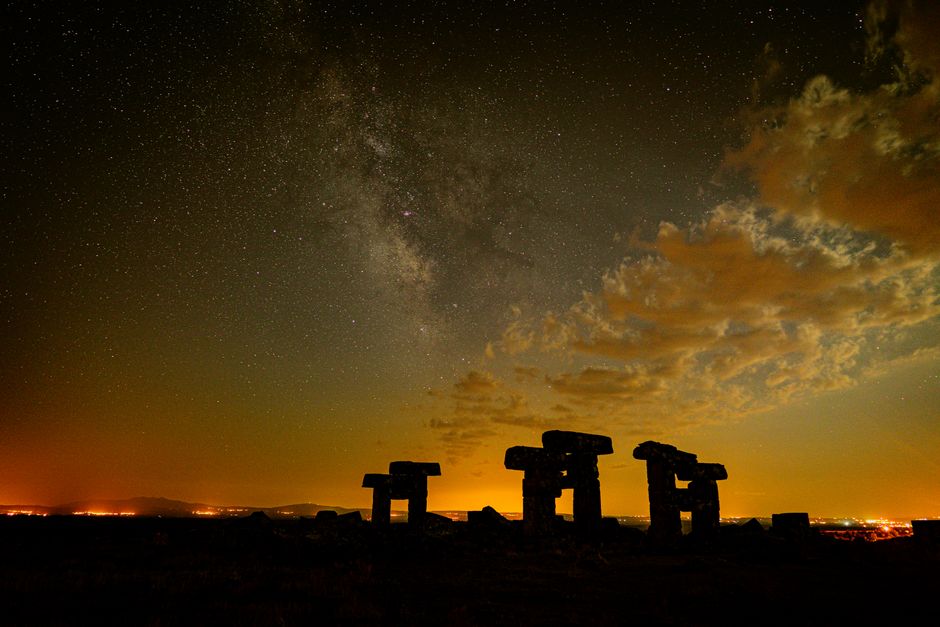
The Milky Way arches over a remote peak in a certified Dark Sky Reserve. Photo: Pexels.
💰 Estimated budget: $80–$250 per day (mid-range), $30–$50 (budget camping)
⏱️ How long to spend: 3–5 nights per destination
🎯 Difficulty level: Easy to moderate (some sites require short hikes)
📍 Recommended season: Winter or new moon weeks
👥 Best for: Solo travelers, couples, families with older kids, astrophotographers
I remember the first time I saw the Milky Way with my naked eye. It was 2 a.m. on the edge of the Atacama Desert in Chile, and I was shivering in a down jacket I’d bought at a Santiago thrift store. The sky wasn’t just dark—it was cracked open, spilling light across the horizon in a way no photograph had prepared me for. That night, I stood next to a Chilean astronomer who pointed out the Magellanic Clouds with a laser pointer, and I realized: this is what travel should feel like. Not just seeing a new place, but feeling small and connected at the same time.
I’ve since visited twelve Dark Sky Reserves on four continents, from New Zealand’s Aoraki Mackenzie to the rugged highlands of Scotland. I’ve learned that the best stargazing isn’t just about clear skies—it’s about being somewhere that protects the night as fiercely as other places protect their beaches. In this guide, I’ll share the destinations that truly deliver, how to plan your trip without breaking the bank, and the mistakes I made so you don’t have to. Whether you’re an amateur astronomer or just someone who wants to see stars without light pollution, you’ll find everything you need here.
The Essentials at a Glance
- 🌌 Dark Sky Reserves are your best bet—certified areas with strict light control, like the one around Lake Tekapo, New Zealand.
- 📅 New moon phase is non-negotiable—a full moon washes out faint stars. Check lunar calendars before booking.
- 🔭 A good star map app beats a cheap telescope—I use Stellarium Mobile; it’s free and works offline.
- 🧥 Dress for desert cold—many dark-sky sites are high-altitude or arid; temperatures drop sharply after sunset, even in summer.
The Complete Guide
Why This Matters / Why You Should Go
We live in a world drowning in artificial blue light. Most people in developed countries have never seen the Milky Way. I didn’t until I was 32, and that feels like a tragedy. Places designated as Dark Sky Reserves (over 200 worldwide, certified by the International Dark-Sky Association) are sanctuaries where local governments enforce lighting ordinances to keep the sky black. That means you can see nebulas, star clusters, and even the Andromeda Galaxy with binoculars.
What makes these places special isn’t just the stars—it’s the silence that comes with them. In Namibia’s NamibRand Nature Reserve, I heard jackals yipping in the distance while the Southern Cross hung overhead. In the Exmoor National Park in England, I lay on a dew-covered hill and watched Perseid meteors streak by while a barn owl ghosted past. This is travel that makes you want to turn off your phone and just look up.
When to Visit (Seasonal Guide)
Timing is everything. For Northern Hemisphere sites, the best window is April to September, when the Milky Way core is visible after midnight. Winter months (November–February) offer longer nights but bitter cold and cloudy skies in many regions. In the Southern Hemisphere, the Milky Way peaks between March and October, with winter nights delivering stunning views of the Large and Small Magellanic Clouds.
Be warned: even in a reserve, a bright full moon ruins everything. I spent three nights in the Atacama during a near-full moon and left disappointed—a rookie mistake. Always plan around the new moon phase, or at least when the moon sets before midnight. Check timeanddate.com for moonrise times. Crowds are also thinner in shoulder seasons (May and September), which means fewer headlights and less ambient light.
Budget Breakdown
Stargazing can be surprisingly affordable if you’re flexible. Here are real numbers from my trips:
- Accommodation: Camping near the reserve costs $10–$30 per night. Mid-range lodges with dark-sky friendly windows run $80–$150. Luxury eco-lodges (like those in Namibia’s NamibRand) are $250–$500 per night but include private telescopes and guides.
- Food: Cooking your own meals saves big. I survived on $12/day in New Zealand by buying bread, cheese, and fruit. Eating out averages $20–$40 per meal in tourist areas.
- Activities: Many reserves offer free public star parties. Guided astronomy tours cost $30–$60 for 2 hours. Telescope rental is $20–$50 per night.
- Transport: Rent a car if possible—public transport rarely runs at night. Daily rental rates: $40–$80. Gas extra.
Total weekly estimate (mid-range): $700–$1,200 per person. Money-saving tip: Stay in a hostel or campground inside the reserve—you’ll save transit time and get dark skies right outside your door.
Getting There & Getting Around
Most Dark Sky Reserves are remote by design. For Aoraki Mackenzie in New Zealand, fly into Christchurch, then drive 3 hours to Lake Tekapo. The road is well-paved but winding—avoid driving after dark to prevent hitting possums. In Scotland’s Galloway Forest Park, the nearest train station is Dumfries (30 minutes by taxi). I took a bus from Glasgow to Newton Stewart, then hitchhiked the last 10 km—possible with advance planning, but a rental car is easier.
Once you’re in a reserve, navigation is straightforward. Footpaths are marked, and most reserves have small visitor centers with star charts. Download offline maps (I use Maps.me) because cell service is virtually nonexistent. At NamibRand, the only navigation tool is the stars themselves—a humbling but rewarding experience.
Top Recommendations / Must-Do Activities
Aoraki Mackenzie Dark Sky Reserve, New Zealand: This was my first, and it remains my favorite. The Mount John Observatory offers nightly tours with massive telescopes. I spent an hour looking at Saturn’s rings—the planet looked like a tiny Christmas ornament. Insider tip: book the 9 p.m. tour to catch the Milky Way rising low on the horizon. Downside: it’s popular, so book weeks ahead.
NamibRand Nature Reserve, Namibia: Absolute silence. I joined a “dune stargazing” session where we lay on sand that still held the day’s heat. The viewing platform at the Wolwedans Lodge offers 360-degree horizons. Bring red light to preserve night vision—white headlamps ruin it for everyone.
Exmoor National Park, UK: Europe’s first International Dark Sky Reserve. The best spot is Holdstone Down, a short hike from the car park. I visited in August during the Perseid shower and saw 40 meteors in an hour. The downside: weather is fickle—check Met Office cloud forecasts hourly.
Atacama Desert, Chile: Not a formal reserve, but the driest non-polar desert on Earth offers skies that rival any. The ALMA Observatory does free Saturday tours (book months in advance). I skipped my tour due to a road closure, but I still saw the Southern Cross from my hostel courtyard. A must-do: visit during the new moon of June for the clearest views.
Traveler’s Pro Tips
Red light everything: Buy a red headlamp (Black Diamond makes a good one for $25). White light destroys your night vision for 30+ minutes. I learned this the hard way when I flashed my phone at a star party and got scolded by an eight-year-old astronomer.
Acclimate your eyes: Turn off all screens 20 minutes before you start observing. If you must use your phone, set the screen to the dimmest red filter mode. I once spent 45 minutes waiting for my eyes to adjust after checking a text—don’t do that.
Join a star party: Many reserves host free or low-cost public events. In Galloway Forest Park, volunteers set up telescopes and share stories. You’ll learn more in one evening than from a month of YouTube tutorials.
Bring a zero-degree sleeping bag: Even in the Sahara, the ground cools dramatically at night. I slept in a 3-season bag in Namibia and shivered until dawn. A good insulated pad is just as important.
Check the cloud cover forecast: Use ClearDarkSky.com for hourly predictions of transparency and seeing conditions. It saved me from two wasted nights in Scotland.
Common Mistakes to Avoid
Mistake 1: Not checking the moon phase. I booked a trip to the Atacama during a full moon—what a waste. The sky looked like a cheap velvet backdrop. Solution: use a lunar calendar and book only during the new moon or crescent phases.
Mistake 2: Relying on a cheap telescope. A $50 department-store telescope is frustrating—you’ll see only blurry blobs. I broke mine in two days. Instead, borrow a pair of binoculars (7x50 or 10x50) from a friend. They’re lighter, cheaper, and show the Milky Way beautifully.
Mistake 3: Forgetting warm clothes. Even in Death Valley in July, temperatures drop to 50°F (10°C) after midnight. I was shivering in shorts and ruined my experience. Pack a windproof jacket, thermal layers, and a hat.
Mistake 4: Not making reservations. Telescope tours at popular reserves sell out weeks in advance. In Lake Tekapo, I showed up without a booking and got turned away. The consequence: I missed the best views because I assumed I could walk in. Plan ahead.
Your Travel Checklist
Documents: Passport, driver’s license (for rental cars), printed reservations for tours, travel insurance details.
Packing: Red headlamp, binoculars, zero-degree sleeping bag, camping pad, warm layers (including gloves and hat), star map or app, a small journal, snacks and a thermos for hot drinks.
Research: Download offline star maps (Stellarium), check moon phase and cloud forecast, read reserve-specific rules (some prohibit white lights after dark).
Bookings: Reserve telescope tours 2–3 weeks ahead, book accommodation inside the reserve if possible, and confirm park entry hours (some close gates at dusk).
Health/Safety: Altitude sickness meds if going to high-altitude sites (Atacama sits at 2,400m), first aid kit, extra food in case of road closures.
Local Currency: Cash for entrance fees and small shops—many reserves have no ATMs. In Namibia, I used South African rand; in New Zealand, New Zealand dollars.
Apps: Stellarium Mobile (offline), ClearDarkSky.com, Google Maps (offline), WhatsApp for communication.
Traveler FAQ
Q: Can I see the Milky Way with just my eyes, or do I need a telescope?A: Absolutely with your eyes! In a truly dark site, the Milky Way appears as a shimmering band stretching from horizon to horizon. Binoculars help, but a telescope is not needed for that awe-inspiring first look. I’ve guided friends who cried just lying on the ground staring up.
Q: Are Dark Sky Reserves safe to visit alone at night?A: Generally yes—reserves are patrolled by park rangers and other stargazers are usually nearby. I’ve solo-stargazed in Scotland and New Zealand without fear. That said, tell someone where you’re going, carry a charged phone, and avoid remote spots after midnight unless you know the terrain.
Q: What if the weather is cloudy the whole time I’m there?A: It happens to everyone. I had three cloudy nights in Exmoor. My advice: choose a destination with spare days (5 nights minimum) so you can adjust. Also, many reserves have indoor planetariums or virtual tours as backup. Don’t get discouraged—try again the next night.
Q: Can I take good astrophotography with a smartphone?A: Yes, but only with newer phones in “night mode” or “pro mode.” I shot a decent Milky Way image on a Google Pixel 7 at Lake Tekapo using a tripod and a 15-second exposure. For serious shots, you need a DSLR or mirrorless camera with a fast lens, but a smartphone is fine for memories.
Q: Are children welcome at star parties?A: Most are family-friendly, and kids often love them. At Galloway Forest, I saw a six-year-old identify Jupiter’s moons through a telescope. Check age recommendations—some tours run late and young children may get restless. Bring a blanket for them to lie on and keep them warm.
Ready for Your Adventure?
Looking up at a truly dark sky is one of the few experiences that leaves you both speechless and full of questions. It reminds us that we’re part of something vast—and that travel doesn’t have to be about checking boxes. It can be about lying on cold ground with a friend or a stranger, watching light that has traveled for thousands of years end its journey in your eye.
If you’ve been hesitating—worrying about the cost, the planning, or whether you’ll even see anything—let me say this: the stars will still be there. But you might not be. Pick a destination from this guide, check the moon phase, pack a warm coat and some binoculars, and go. The universe is waiting, and it’s far more magnificent than you remember.


No comments:
Post a Comment