Camino de Santiago Guide: Why the Pilgrimage Will Reshape Your Soul
Walk the ancient path, find your modern self.
✈️ Best time to visit: April–June & September–October
💰 Estimated budget: €35–€60 per day (mid-range)
⏱️ How long to spend: 7–35 days (depends on route)
🎯 Difficulty level: Moderate (French Route); Hard (Primitivo)
📍 Recommended season: Late spring or early autumn
👥 Best for: Solo travelers, spiritual seekers, moderate hikers
Introduction
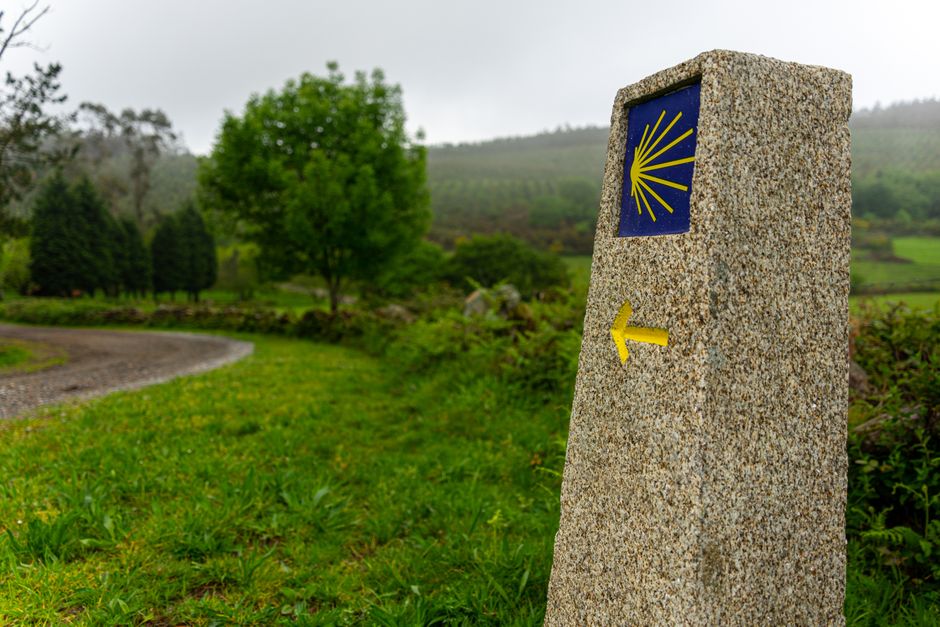
I remember the morning I left Saint-Jean-Pied-de-Port. The mist hung over the Pyrenees like a secret, and my backpack felt heavier than it should have. I was 44, not a seasoned hiker, and I had no idea what I was doing. But as I crested the first hill and saw the scallop shell marker pointing east, something shifted. I wasn't just walking—I was joining a current of humanity that has flowed for over a thousand years.
Two months and 800 kilometers later, I hobbled into Santiago de Compostela with blisters that had become badges of honor. I've since walked three different routes across Spain and Portugal, and I've learned the Camino's rhythms intimately: the way the sun hits the wheat fields in Navarra, the clink of pilgrim shells at dawn, and the silence in the Galician forests that speaks louder than any conversation.
This isn't a generic guidebook. This is the advice I wish I had—honest, practical, and seasoned with mistakes I made so you don't have to. Whether you're seeking spiritual clarity, physical challenge, or just a truly different kind of vacation, the Camino de Santiago delivers. Let me show you how to make it unforgettable.
The Essentials at a Glance
- 🥾 Walk your own pace: The Camino isn't a race. My fastest day was 32 km; my slowest was a blissful 12 km with three coffee stops.
- 🎒 Pack light or pay heavy: Your backpack should never exceed 10% of your body weight. I carried 7 kg and still sent two items home.
- 🏠 Municipal albergues are the soul: They cost €8–€12 and are where you'll make lifelong friends. Private hostels cost more but offer quiet when you need it.
- 🥘 Eat the pilgrim menu: Three courses for €10–€15. The pulpo a la gallega in Melide is mandatory.
- 🌍 No Spanish necessary (but helpful): "Buen Camino" and a smile get you everywhere. I survived with 20 words, but learning ten more transformed my experience.
The Complete Guide
Why This Matters / Why You Should Go
In a world of curated Instagram tours and packaged adventures, the Camino de Santiago is gloriously analog. There are no bucket-list checkpoints you must hit, no luxury lodges, no "curated experiences." Instead, you get rough albergue dormitories, unpredictable weather, and the profound freedom of having only one job: to walk forward each day.
This is not a hiking trip for elite athletes. It's a pilgrimage for regular humans. I met a 73-year-old grandmother from Denmark who walked every day with a bad knee. I met a teenager from Brazil walking to figure out his future. I met a CEO who hadn't spoken to his father in a decade and was using the Camino to build courage.
The Camino strips away the noise. Without Wi-Fi, email, or the pressure to be productive, you're left with your feet, your thoughts, and the rhythmic crunch of gravel. Some people find God; others find themselves. I found both, but it was the simple act of putting one foot in front of the other that healed something I didn't know was broken.
Compared to other long-distance hikes, the Camino Francés is gentle: moderate climbs, well-marked paths, and consistent infrastructure. If you want wilderness solitude, try the Camino del Norte. If you want a shorter challenge, the Camino Português from Porto is a gorgeous 10-day option. But for the quintessential pilgrimage experience—the shell-laden path through medieval villages, the communal dinners, the feeling of walking in the footsteps of millions—start on the French Route.
When to Visit (Seasonal Guide)
I walked my first Camino in May, and by the time I reached Burgos, the fields of poppies were so vivid they looked painted. The weather was perfect: cool mornings, warm afternoons, and rain only three days out of 35. That's the golden window.
Spring (April–June): Crowds are manageable, wildflowers are stunning, and temperatures range from 10°C–25°C. The downside? More rain in April and some albergues still closed. I'd recommend starting in late April or early May for the best balance.
Summer (July–August): This is when the Meseta (the high central plain) becomes a punishing 35°C+ oven. I made the mistake of walking through it in July once. Never again. The albergues are packed, and you'll need to reserve beds. If summer is your only option, walk the Camino del Norte along the coast, where temperatures are milder.
Autumn (September–October): My favorite season. The crowds thin after the Santiago Festival (July 25), the harvests bring incredible local food, and the golden light on the vineyards of La Rioja is worth the entire journey. Temperatures are 15°C–28°C. October can bring rain, but nothing unbearable.
Winter (November–March): Only for the hardy. Many albergues close, snow blocks the Pyrenees pass, and you'll face sub-zero mornings. I met a German pilgrim who walked in January and said it was "the most beautiful silence I've ever known." But you need serious gear and flexibility.
Budget Breakdown
The Camino can be astonishingly affordable if you're flexible, or moderately expensive if you prefer comfort. Here's what I've spent across three trips:
Accommodation: Municipal albergues: €8–€15 per night. Private albergues: €15–€25. Small hotels or guesthouses (pensiones): €40–€70. I averaged €15 per night by mixing dorm beds with occasional private rooms when I needed laundry and silence. My cheapest night was €5 at a donativo albergue; my most expensive was €65 in Pamplona during a festival.
Food: Pilgrim menu (menu del peregrino) at lunch: €10–€15 for three courses including wine. Breakfast: €3–€5 (coffee, toast, juice). Groceries: €5–€8 per day if you make your own sandwiches. I ate at grocery stores for two weeks and saved €200. Total daily food: €15–€25.
Other costs: Boots (€100–€200, buy two months early and break them in), backpack (€80–€150), walking poles (€20–€40), shower shoes (€10), pilgrim credential and shell (€5–€10), medical kit (€15). I also spent €50 on blister care supplies—you will need them.
Daily total: €35–€60 for a mid-range experience. Over 30 days: roughly €1,200–€1,800, excluding flights. My full 35-day Camino Francés cost €1,450 total including gear.
Money-saving tips: Stay in municipal or donativo albergues first. Cook your dinner at albergue kitchens. Carry a reusable water bottle—every town has potable fountains. And avoid the tourist-crowded last 100 km (Sarria to Santiago) where prices spike by 30%.
Getting There & Getting Around
Most pilgrims start the Camino Francés in Saint-Jean-Pied-de-Port (France) or Pamplona (Spain). I started in Saint-Jean because crossing the Pyrenees on day two is an unforgettable rite of passage. Fly into Biarritz (France) or Pamplona (Spain), then take a regional bus or train. From Biarritz, a local train to Bayonne connects to a bus that heads directly to Saint-Jean. Cost: around €15–€25.
If you start from Sarria (the popular last 100 km), fly into Santiago de Compostela and take a 90-minute bus southeast for €12. But I urge you: don't shortcut. The magic of the Camino is the journey, not just the destination.
Once on the path, navigation is blissfully simple. Yellow arrows, scallop shells, and stone markers guide you everywhere. You cannot get lost for more than 10 minutes—I tested this twice. For backup, I used the Buen Camino app (€5) on airplane mode, which shows distances, albergues, water fountains, and elevation profiles without data. It saved me twice during foggy days in Galicia.
Getting back is easy. From Santiago de Compostela, there's an airport with flights to most European hubs, and a bus station. I took a six-hour bus to Madrid for €35 and flew home from there.
Top Recommendations / Must-Do Activities
Cross the Pyrenees from Saint-Jean-Pied-de-Port to Roncesvalles: This 26-km day is the hardest and most rewarding. The ascent is steep, the weather can shift from warm to freezing in an hour, and the fog can be eerie. But when you emerge above the clouds and see the valley of Roncesvalles below, you'll weep. I did. Start at dawn—earlier if you can—to avoid afternoon winds and finish by 3 pm. The albergue in Roncesvalles is a converted 12th-century monastery with a stunning stone refectory. Dinner there, served by volunteers, is €10 and includes stories you'll remember forever.
Stop in the Rioja wine region (around Logroño to Nájera): The Camino cuts right through this world-famous wine country. I spent an extra day in Logroño just to visit Bodega Franco-Españolas for a €20 tour and tasting. The wine flows freely at pilgrim meals, but the real joy is walking between vineyards in the morning mist. Insider tip: The church of Santa María de Palacio in Logroño has a free pilgrim blessing on Sundays.
Experience the cultural highlight of Burgos Cathedral: This UNESCO World Heritage Site is not cheap (€10 entry) and it's packed with tour groups by noon. I went at 8 am when it opened and had the Papamoscas clock and the golden staircase almost to myself. Walk around the cloisters and find the small chapel of the Condestable—its ceiling will make your neck ache in the best way.
The final approach to Santiago de Compostela: The last 100 km from Sarria is crowded with school groups and tourist pilgrims, which can feel jarring after weeks of solitude. Don't let it ruin your experience. Wake up at 5 am and walk before the crowds. The section from Monte do Gozo (the "Hill of Joy") is anticlimactic because you see the cathedral spires from 5 km away and then spend hours walking through suburbia. My advice: stop at the small park with a pilgrim statue, sit for 20 minutes, and let the reality wash over you. Then walk into the plaza.
And don't skip Finisterre: Many pilgrims end in Santiago, but I continued three days west to Finisterre, the Roman "end of the world." There's a lighthouse, a cliff, and a tradition of burning your socks or boots at sunset. I didn't burn mine (I was attached to them), but I watched others do it, and the quiet ceremonial silence was sacred. The bus from Santiago to Finisterre costs €14 and takes 2.5 hours if you're short on time.
Traveler's Pro Tips
Don't plan beyond three days: The Camino teaches you flexibility. Your body will rebel, weather will shift, and you'll meet people who change your plans. I booked only my first two nights; the rest unfolded. Albergues rarely fill up outside July–August, and if they do, there's always another village 3 km away. Trust the path.
Train your feet like athletes, not just your legs: Everyone focuses on cardio and leg strength. I did too—and still got blisters. The real secret is foot conditioning: walk 5 km barefoot on grass or sand daily for a month before you go. It toughens the soles and prevents the hotspots that turn into agony. I learned this from a podiatrist in León after my third blister popped.
Carry a basic Spanish phrasebook—but only paper: Phones die, and chargers fail. I used a tiny Lonely Planet Spanish Phrasebook (€8, 120 pages) that I bought at a hostel. "¿Dónde está la farmacia?" saved my friend's infected blister. "Un café con leche, por favor" earned me a free churro from an old woman in Castrojeriz.
Send your 'just in case' items home after three days: On day three in Pamplona, I mailed back my extra sweater, a book I wasn't reading, and a portable speaker. Cost: €15 at the post office. My backpack immediately felt 2 kg lighter, and I never missed a single item. The Camino is about subtraction, not addition. You'll thank me.
Embrace the siesta: Spain shuts down from 2–5 pm. Most shops, churches, and even some albergue check-ins close. Instead of fighting it, walk early (6 am start), arrive by 1 pm, shower, eat your pilgrim lunch, and nap or journal. Those empty afternoon hours in a sun-drenched plaza became my favorite part of the day.
Common Mistakes to Avoid
Mistake #1: Overpacking gear. The single biggest mistake I see (and made myself). People bring camping stoves they never use, multiple outfits, hiking boots AND sandals. I walked with a woman who carried a hairdryer. Her blisters were legendary. Why it happens: We're conditioned to "be prepared." How to avoid: Start with a 40-liter pack max. Wear everything you bring on the plane. If you haven't used an item by day two, mail it home. The consequence: unnecessary weight causes knee pain, slower pace, and less enjoyment.
Mistake #2: Walking too far, too fast. The first week, I saw pilgrims limping into albergues at 6 pm, having walked 30 km. They were miserable. Why it happens: Ego and fear of not reaching Santiago in time. How to avoid: Walk 18–22 km per day for the first week. Your body needs to adapt. I walked 15 km on day one and 18 on day two. By week three, I could comfortably do 28 km. The consequence: injury, burnout, or quitting. Half of all pilgrims drop out long before Santiago; most because of avoidable injuries.
Mistake #3: Skipping the Mesa. The Meseta—the high, flat central plain between Burgos and León—is often described as "boring." Pilgrims bus or skip it. Don't. Why it happens: It's flat, hot, and monotonous. How to avoid: Walk it in the early morning (depart by 5 am) and accept its meditative quality. I walked 20 km without seeing a single building, just endless wheat under a dome of sky. That quiet emptiness is where the Camino does its deepest work. The consequence: you miss the Camino's spiritual core. The beauty isn't dramatic; it's the still, small voice that speaks in silence.
Mistake #4: Not booking accommodation in the last 100 km. From Sarria to Santiago, the path explodes with pilgrims—many of whom have no hiking experience and all of whom want a bed. Why it happens: You assume, like the rest of the Camino, you'll find a bed. You won't. How to avoid: Book private albergues or cheap hotels 2–3 days in advance after you finish in Sarria. I used Booking.com and called ahead. The consequence: walking an extra 8 km to find a bed, sleeping on a floor, or paying €80 for a hotel you didn't want.
Your Travel Checklist
Documents: Passport (with at least 6 months validity), pilgrim credential (buy at first albergue or online), travel insurance card (covers hiking, ideally), photocopies of all documents stored separately.
Packing (max 7 kg): 2 pairs of merino wool hiking socks, 1 pair of broken-in hiking boots, 1 pair of shower shoes, 2 quick-dry shirts, 1 long-sleeve mid-layer, 1 waterproof jacket, 1 pair of hiking pants, 1 pair of sleep shorts, lightweight 40°F sleeping bag (or liner in summer), buff or hat, headlamp (essential for dawn walks), blister kit (moleskin, zinc oxide tape, antiseptic).
Research: Download Buen Camino app, read a 20-page history of St. James, learn 20 Spanish phrases (especially medical ones and food ordering).
Bookings: Flight to departure city (don't book return until you know your pace—I changed mine twice), first 2 nights' accommodation.
Health & safety: Tetanus shot (check it's current), blister prevention research, basic medical kit, sunscreen, lip balm with SPF.
Local currency: €50–€100 in cash (many albergues and rural bars are cash-only), plus a debit card with low international fees (Revolut or Starling).
Apps to download: Buen Camino (offline maps, €5), Google Translate (Spanish set to offline), WhatsApp (for Albergue groups).
Traveler FAQ
Q: Do I need to be religious to walk the Camino?
A: Absolutely not. About 60% of pilgrims walk for non-religious reasons—personal growth, physical challenge, or simply wanting to walk through Spain. The path has space for everyone. I'm not Catholic, but I found the blessings and church concerts deeply moving. You choose your own meaning.
Q: Is it safe for solo women?
A: Yes, overwhelmingly. I've walked alone as a woman and felt safe every minute. You're rarely alone on the path—there are always other pilgrims nearby. Use common sense: stay in well-reviewed albergues, lock your valuables (there are thefts, rarely violent), and trust your instincts. The Camino sisterhood is real; women look out for each other.
Q: How fit do I need to be?
A: You need basic fitness and strong feet, not elite athleticism. If you can walk 15 km on flat ground without collapsing, you can do the Camino Francés. The Pyrenees crossing is an exception—I trained with stair climbs and steep hills for a month before my first trip. Most people underestimate the cumulative fatigue: day 20 is harder than day one, even if the terrain is easier. Start slowly, rest often, and you'll finish.
Q: Do I need to speak Spanish?
A: You can survive with "Buen Camino," "agua," and "gracias." But I strongly recommend learning 20–30 phrases before you go. It transforms the experience. When I learned how to say "My feet hurt, but my heart is full" in Spanish (Me duelen los pies, pero el corazón está lleno), the old woman in the bar gave me a free tortilla and a hug. Language opens doors the path alone cannot.
Q: Can I walk with a child or dog?
A: Yes, but choose carefully. For children aged 8–14, walk the last 100 km from Sarria, which is gentle and has plenty of amenities. For dogs, the Camino Francés is manageable, but you'll need to carry water and check albergue pet policies (most municipal albergues don't allow dogs). I saw a man walking with a golden retriever named Santiago; the dog carried his own pack and had boots for hot pavement. Plan every detail: not all paths are dog-friendly.
Ready for Your Adventure?
I've stood at the foot of the Pyrenees, looked up at the cloud-wrapped peaks, and felt my stomach drop with both fear and excitement. I've wept in a tiny stone church in Astorga because the silence was too beautiful. I've held the hands of strangers who became family over glasses of red wine in Galicia. The Camino de Santiago is not a vacation—it's a transformation, and it waits for no one.
You don't need to be fit, or religious, or have it all figured out. You just need to start. Book the flight to Biarritz or Madrid. Buy the boots. Pack lighter than you think you can. And on the first morning, when the alarm goes off at 5:30 am and your body begs you to stay in the sleeping bag, get up anyway. Walk into the dark. The sun always rises over the Camino, and when it does, you'll realize you've been walking toward yourself your whole life.
Buen Camino, peregrino. I'll see you on the path.


No comments:
Post a Comment