Mastering the Lean: How to Get Over the Fear of Leaning Your Bike on Sharp Turns
Introduction
You know the feeling. You approach a sharp curve, your heart rate spikes, your hands tighten on the grips, and your body instinctively tries to stay upright. Instead of trusting the bike and leaning into the turn, you fight it—and that moment of tension is exactly what makes the motorcycle feel unstable. This fear of leaning is one of the most common psychological hurdles for riders, from beginners to seasoned veterans. It is a primal survival instinct: your brain interprets the lean as a fall, triggering a panic response that overrides your training. But here is the truth you need to hear: that fear is a liar. Modern motorcycles are engineered to lean far deeper than you will ever likely need on public roads, and the physics of cornering demand that you lean the bike to turn safely. In this comprehensive guide, we are going to dismantle that fear piece by piece. You will learn exactly why leaning is not just safe but necessary, how countersteering works to control your bike at speed, how tire grip creates a safety margin you have not yet tapped, and most importantly, how to build trust incrementally so that your brain finally gets out of the way. By the end of this article, you will have a concrete, actionable plan to transform your cornering from a source of anxiety into one of the most rewarding parts of riding.
The Short Answer
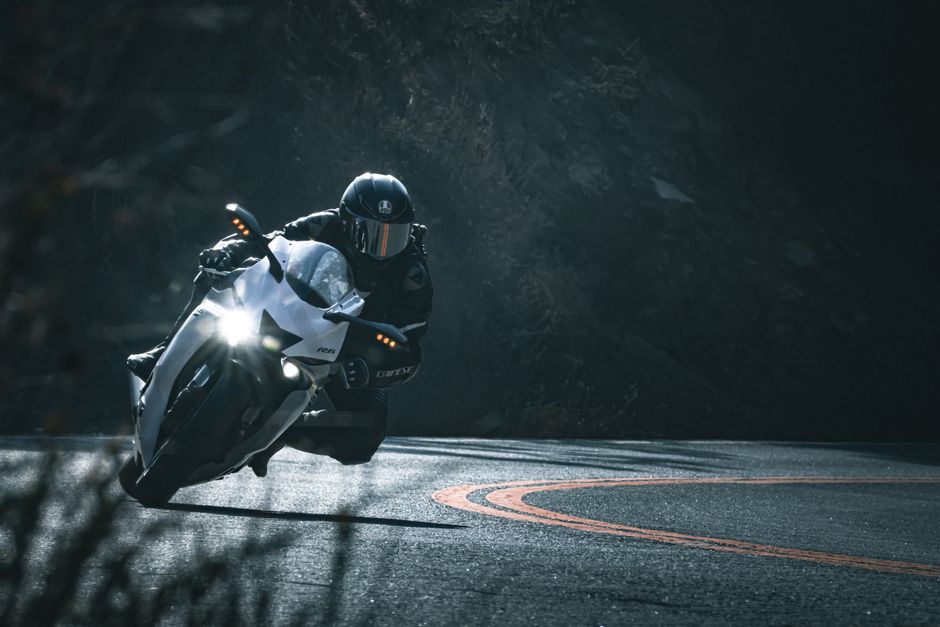
To get over the fear of leaning your bike on sharp turns, you need to understand and trust two fundamental truths: the physics of countersteering, and the enormous traction limits of modern tires. Countersteering is the only way to make a motorcycle turn at speed above about 10 mph—you push the handlebar in the direction you want to go, which initiates the lean. Your tires have far more grip than your fear tells you, and the bike wants to stay upright. Start in a large, empty parking lot. Practice slow, progressive leans at moderate speed. Focus on looking through the turn, relax your grip, and trust the machine. Over time, your brain will recalibrate its danger estimate and the fear will fade.
The Full Explanation
The Physics of Countersteering: Your Secret Weapon
The number one reason riders are afraid to lean is that they misunderstand how a motorcycle turns. Many riders believe they simply shift their body weight to initiate a lean, and that the handlebars are used only for minor adjustments. This is categorically false. At any speed above a slow walk, a motorcycle turns via countersteering. When you push forward on the left handlebar, the front wheel briefly steers to the right, causing the bike to fall into a left lean. This is not a trick—it is the only way the gyroscopic forces and geometry of a motorcycle allow it to corner. Once you truly internalize this, the fear of leaning lessens because you realize you are not just hoping the bike will turn; you are commanding it with a precise input. Practice countersteering at moderate speeds in a straight line by gently pushing one bar and feeling the bike tip instantly. This builds the muscle memory that your fearful brain needs to see: I push, the bike leans, I stay safe.
Understanding Tire Grip Limits and the Traction Budget
Your fear of leaning is often rooted in the subconscious belief that the tires will slip out from under you. But here is the data: a modern sport-touring tire can generate up to 1.2 Gs of lateral acceleration before losing grip. To put that in perspective, most riders use only about 0.5 to 0.7 Gs when cornering on the street. You are using less than half of the available traction. The fear lives in the gap between what you feel (danger) and what the bike can actually do (safe stability). This gap is bridged through incremental exposure. Find a safe, large, paved area. Mark a circle and ride in it repeatedly, gradually increasing your lean angle by 5 degrees at a time. As your speed rises and the pegs do not scrape (or when they do and nothing bad happens), your brain updates its risk map. Cold tires, worn pavement, or rain do lower traction, but on a warm, dry road, the rubber is astonishingly sticky. Trust the engineers—they designed the contact patch to handle forces far beyond what your panic will allow you to reach.
Building Trust Incrementally: The 10 Percent Rule
Fear is not defeated in a single heroic moment; it is eroded by repeated, small successes. Use what I call the 10 Percent Rule: on a familiar corner that frightens you, aim to increase your lean angle by just 10 percent of what you think is possible. That tiny increase—maybe a few degrees—will show you that the bike is rock solid. Do that same corner ten times, slowly increasing your entry speed or lean angle by tiny increments. Your amygdala, the fear center of your brain, will slowly realize that the anticipated disaster (low-side crash) never materializes. This neural rewiring is the core of getting over the fear. Pair this with proper vision: look all the way through the turn, not at the pavement directly in front of you. Your bike goes where your eyes go. If you stare at the edge of the road, you will ride straight into it. If you look through the apex and toward the exit, your body and the bike will follow naturally. Combine incremental lean practice with target fixation elimination, and the fear dissolves systematically.
Key Factors & What You Need to Know
Body Position: The Invisible Anchor
Your upper body position dramatically influences your perception of lean. When you sit bolt upright, the bike has to lean more to compensate for your upright mass, which feels scarier. Instead, drop your head and shoulders toward the inside of the turn. This single action does two things: it lowers the combined center of gravity, making the bike more stable, and it reduces the actual lean angle required from the bike itself. Practice hanging off the bike on a gentle curve—your knee does not need to touch the ground, just move your head and upper torso a few inches to the inside. This creates a massive psychological buffer because the bike stays more upright than you expect.
Entry Speed: The Master of Cornering Confidence
Nothing increases cornering fear faster than entering a turn too fast. Your brain knows it is in trouble, and it will lock up your arms. The single most effective technique to reduce fear is to slow down before the turn. Trail brake (gently apply the front brake while turning) to scrub speed and compress the front suspension, increasing front tire contact patch area. A slower entry gives you time to execute the lean smoothly rather than snapping it over. You cannot lean confidently if you are panicking about the speed. Set your entry speed 5-10 mph slower than you think you need, then roll on the throttle gently through the apex. This turns a fearful corner into a controlled arc.
Smooth Inputs: The Antidote to Instability
Abrupt inputs are the enemy of trust. Jerking the handlebars, snapping the throttle closed, or tensing your arms all send destabilizing forces through the chassis. Instead, practice smooth, deliberate actions. Initiate your lean with a firm but gradual push on the inside bar. Roll off the throttle gently before the turn, and roll it on smoothly as you pass the apex. When your inputs are smooth, the bike feels planted and predictable, which directly reduces your fear. Think of yourself as a dancer leading a partner—abrupt movements cause stumbles; smooth movements create grace and control.
Common Myths & Misconceptions
Myth: You Should Try to Keep the Bike as Upright as Possible in Turns
This is the most dangerous myth in motorcycling. Keeping the bike upright forces you to turn the handlebars excessively at low speed or to run wide at higher speed. You cannot make a sharp turn at speed without leaning. Attempting to stay upright actually increases the risk of running off the road or crossing the centerline. The lean is not a failure of control; it is the correct execution of a turn. Embrace it as a sign that you are riding properly, not as a danger to be avoided.
Myth: Only Expert Racers Need to Lean
This myth stems from watching MotoGP riders scrape their knees. In reality, every motorcycle turn at speeds above 20 mph requires lean. The difference is that racers use extreme lean angles to maximize speed, while street riders use moderate lean for comfort and safety. Even a gentle curve at 35 mph involves noticeable lean. You do not need to be an expert to lean—you need to be a competent rider. The lean angle you need is dictated by the radius of the turn and your speed, not by your skill level. If you are turning, you are leaning. Period.
Myth: Dragging a Foot or Knee Gives You More Control
Some riders believe that putting a foot down or dangling a knee will help them feel the lean limits. This is false and dangerous. Your feet belong on the pegs to control the rear brake and to keep weight on the bike. Your knee may eventually drag at extreme angles on a racetrack, but deliberately sticking it out on the street can catch on pavement and unbalance you. The only way to feel the lean is through your butt, your arms, and your eyes. Trust those, not a contrived body part placement.
What This Means for You: Practical Implications
Understanding the physics and psychology of leaning transforms your riding experience. Here is what you need to do starting tomorrow. First, commit to one parking lot practice session per week for the next month. Lay out a cone or a water bottle and circle it repeatedly at increasing speed. Focus on smooth countersteering inputs and looking through the turn. Second, choose one specific corner on a familiar road that you dread. Do not avoid it—approach it with a plan. Enter slower, commit to a gentle push, and relax your inside arm. Third, get professional training. A track school or an advanced street riding course will put you in a controlled environment with instructors who can watch your body language and give real-time feedback. This alone is worth more than a year of guessing on your own. Fourth, check your tire pressure. Low pressure reduces grip dramatically and creates a vague, scary feel. Keep it at the manufacturer’s recommendation. Finally, be patient. The fear took years to build; it will take weeks or months to unlearn, not days. Each ride is a chance to prove to your brain that the lean is safe. Celebrate small victories—a smoother turn, a lower lean, a faster exit. Over time, those victories accumulate into unshakeable confidence.
Expert Tips
Tip 1: Use Your Peripheral Vision
When you are scared, you tend to tunnel-vision on the road directly in front of the tire. Instead, consciously widen your gaze to include the far exit of the curve. Your peripheral vision helps with balance and reduces the sensation of speed. Practice this on a straight road first by looking at a distant object while still seeing the edges of your vision.
Tip 2: Relax Your Grip Like Holding a Bird
Death-gripping the handlebars transmits every bump and vibration into your body, making you feel unstable and amplifying fear. Your grip should be light enough that someone could slide a piece of paper between your fingers and the bar. Relax your arms and let the bike move independently underneath you.
Tip 3: Trail Brake to Build Confidence
Enter a turn with gentle front brake pressure still applied. This loads the front tire, increasing traction and making the bike more stable. As you lean, gradually release the brake and roll on the throttle. This technique gives you a feeling of control and reduces the sudden "falling in" sensation that triggers fear.
Tip 4: Practice Emergency Swerves
In a parking lot, lay down a line and practice swerving around it at 25-30 mph. Use aggressive countersteering to change direction quickly. Once you feel how responsive the bike is, your fear of lean in normal corners will diminish because you know the bike can handle a sudden change in angle instantly.
Tip 5: Breathe
It sounds silly, but riders often hold their breath when scared. Holding your breath increases tension in your whole body. Before every turn, take a slow, deep breath. Exhale as you initiate the lean. This simple physiological reset lowers your heart rate and relaxes your arms, making the turn feel easier.
Conclusion: Your Next Corner Awaits
The fear of leaning is not a sign of weakness; it is a sign of a healthy survival instinct that has not yet been updated with new information. Modern motorcycle engineering, tire technology, and the fundamental physics of countersteering all work in your favor. You now know that the lean is not a fall—it is a controlled, precise maneuver guided by your hands. You know that your tires will hold you securely if you give them a chance. And you know that incremental practice rewires your brain for confidence. The next time you approach a sharp turn, take a breath, push that handlebar, look through the curve, and trust the machine. The road is not your enemy; it is the canvas for your skill. Go carve that turn with the certainty that you have earned.
Frequently Asked Questions
Is it normal to feel scared when leaning the bike even after riding for years?Yes, absolutely. Many experienced riders experience a resurgence of fear when they push into new lean angles or ride unfamiliar roads. This is not regression; it is your brain’s healthy protective system re-evaluating risk. The key is to recognize it and apply the incremental exposure techniques—do not back down, but do not rush either. Even professional racers feel a flutter of apprehension before a high-speed corner. The difference is that they acknowledge it and then execute the technique anyway.
Can I get over this fear without taking a class, just by practicing alone?You can make significant progress alone, especially by using parking lots and familiar roads with low traffic. However, a structured class—even a one-day course—can accelerate your progress dramatically. An instructor can spot subtle mistakes like gripping too tightly or looking down, which you might not notice on your own. That said, if classes are not available, you can still succeed by being methodical, patient, and brutally honest with yourself about your progress.
What if I lean too much and the bike touches a peg or the exhaust?Touching a peg or hard part is a signal that you have reached a substantial lean angle—often around 45 degrees on a sport-touring bike. While it can be startling, it is usually not dangerous if it is a smooth contact. The danger comes if you panic and snap the bike upright or chop the throttle. If you feel something touch, maintain your line and gently roll on the throttle. The bike will lift slightly as you accelerate, and the contact will stop. Use it as a data point: you now know the limit exists, and you can back off slightly next time.
Does the type of motorcycle affect how easy it is to lean?Yes, significantly. A sportbike with a lower center of gravity, sticky tires, and a stiff chassis will feel more planted and encourage lean. A tall adventure bike or a heavy cruiser will require more deliberate effort and will have lower ground clearance. If you are struggling with fear on a tall or heavy bike, understand that its physics are different. You may need to practice more and accept a lower maximum lean angle. Consider a bike that suits your riding style if the fear persists, but the core techniques remain the same.
How do I practice countersteering if I am already scared in turns?Start where there is no pressure: a large, empty parking lot. Ride in a straight line at about 20 mph. Gently but firmly push forward on the left handlebar. The bike will immediately dip to the left. Push the right bar to return upright. Do this in a weaving pattern to build muscle memory. Then, replicate it on a gentle curve. The key is that you are in control—you decide when and how much to push. This removes the unpredictability that fuels fear. After twenty repetitions, your brain will see push equals lean equals turn, and the fear will begin to dissolve.


No comments:
Post a Comment