Why the Open Road Doesn’t Have to Empty Your Wallet: A Real-World Guide to Budget Road Trips
A lone campsite at dusk—the ultimate reward for a well-planned budget road trip.
✈️ Best time to visit: Late spring (May–June) or early fall (September–October) for mild weather and lower demand.
💰 Estimated budget range: $80–$150 per day per couple (all-inclusive, with camping).
⏱️ How long to spend there: 5–14 days for a regional loop; longer for a coast-to-coast trip.
🎯 Difficulty level: Moderate—requires pre-planning, flexibility, and basic camping knowledge.
📍 Recommended season: Spring or fall for comfortable driving and fewer crowds.
👥 Best for: Solo travelers, couples, families, and friend groups who love the outdoors and don’t mind sleeping under canvas.
Introduction
I still remember the exact moment I decided a road trip didn’t have to be a financial black hole. It was a humid July afternoon in 2019, and I was sitting in my parked sedan on the edge of a state forest in Pennsylvania, staring at a crumpled receipt from a diner. Two slices of pie, $11.50. That pie, plus a $65 motel room the night before, had eaten up almost a quarter of my weekly budget before I’d even seen a single landmark. I clicked open my notes app and typed: “There has to be a better way.” That moment sparked a three-year journey of trial and error—dozens of trips, thousands of miles, and countless nights on sleeping pads—to figure out how to see America’s backroads without going broke.
You don’t need a glamorous RV or a trust fund to experience the majesty of the open road. I’ve driven over 15,000 miles on less than $1,500 total, relying on cheap gas, free dispersed campsites, and a cooler packed with sandwiches. This guide is not a fantasy; it’s the result of real experiments—some successful (like scoring a $5 campsite in a national forest) and some disastrous (like forgetting to reserve a spot near a festival and sleeping in a parking lot). By the end of this article, you’ll have a concrete, step-by-step plan to build your own road trip itinerary without sacrificing comfort or adventure. Let’s get you behind the wheel with your wallet intact.
The Essentials at a Glance
- 🚗 Plan your route around cheap gas zones: Use apps like GasBuddy to map stops where fuel is 10–20 cents cheaper per gallon—can save $30–$50 on a week-long trip.
- 🏕️ Camp, don’t motel: National and state forest campgrounds often cost $5–$15 per night; book in advance but keep a Plan B for last-minute changes.
- 🍔 Cook your own meals: A simple propane stove and a cooler let you eat for $10–$15 per day per person, versus $30+ at diners.
- 🗺️ Hit the scenic byways: Planning a road trip itinerary that avoids interstates saves money on tolls and tickets, while offering free natural entertainment.
- 🧰 Prepare your car: Checking tire pressure and oil before you leave can prevent a $200 breakdown and improve gas mileage by up to 5%.
The Complete Guide
Why This Matters / Why You Should Go
A budget road trip isn’t about deprivation—it’s about liberation. When you strip away the luxury hotels and pricey restaurant dinners, you suddenly have the freedom to roam. You can pull over at a beat-up roadside fruit stand because you don’t have a strict timetable; you can take a dirt road to a hidden lake because you’re not worried about missing a concierge desk. This approach is for anyone who has felt the squeeze of travel costs but still aches for the horizon—solo adventurers who talk to themselves on long drives, families who want to show their kids the stars without a hotel bill, and couples who find romance in a shared campfire under a tarpaulin. The real magic? You’ll connect more deeply with the places you visit. I’ve had my most meaningful conversations at a free campsite in the Smokies, not in a restaurant. This is travel reborn through simplicity.
Compared to package tours or all-inclusive resorts, a DIY road trip on a budget lets you keep 100% of the control and spend money only on what matters to you. I’m not saying it’s easy—it takes work, especially the planning phase. But the reward is a trip that feels uniquely, authentically yours, and one that doesn’t leave you with credit card debt.
When to Visit (Seasonal Guide)
The seasons dictate everything on a budget road trip—from gas prices (they spike in summer) to campsite availability. I’ve found the sweet spot is late spring (May–June) and early fall (September–October). Here’s the breakdown:
Spring (March–April): Cheap gas and empty campgrounds, but weather is unpredictable—I once got snowed on in the Rockies in April. Great for desert regions (Mojave, Sonoran) but risky for higher elevations.
Summer (July–August): Peak season, which means higher gas prices, packed campgrounds (often fully booked), and busy national parks. I avoid it unless I’m heading to lesser-known areas like the Great Plains or Canada. If you must travel in summer, book campsites 3–6 months ahead.
Fall (September–October): My favorite. Cooler driving temperatures reduce the strain on your car’s engine, and fall colors provide free entertainment. Many campgrounds drop to off-season rates after Labor Day.
Winter (November–February): Risks with snow and ice, but you can score incredible deals in the South—I paid $8 a night for a campsite in Texas in January. Avoid the north unless you have winter tires and snow driving experience.
Budget Breakdown
Let’s put real numbers on the table. Based on my 2019 coast-to-coast journey (8,500 miles over 22 days) and subsequent shorter trips, here’s a realistic daily budget per person, assuming two people splitting costs and primarily camping:
Accommodation (Low/Mid/High): $5 (dispersed camping in national forest) / $15 (state park campground with showers) / $35 (private campground with hookups). I never paid more than $15 a night for a tent site on that big trip.
Food: $10 (oatmeal, sandwiches, pasta) / $18 (one hot meal with ingredients from grocery store) / $25 (occasional diner breakfast). Using a stove and cooler keeps costs low.
Gas: This is your biggest variable. At $3.50/gallon, driving 300 miles per day in a car getting 30 mpg costs about $35. Use apps to find cheap gas—I once saved $12 in one tank by driving two extra miles.
Activities: $0 (hiking, scenic drives, free museums) / $10 (national park entry—$80 annual pass if visiting multiple) / $30 (paid tours or attractions). I skip paid attractions unless they’re unique.
Total daily cost (low): Approximately $50 per person. Mid: $75. High (with splurges): $100.
Money-saving tip: Invest in a National Parks pass ($80 for a year) if you’ll visit three or more parks. It saved me $120 on my cross-country trip.
Getting There & Getting Around
Unless you’re flying to a hub and renting a car, your road trip starts from your driveway. For most budget travelers, the car you own is the car you use—that’s fine. I’ve driven a 2007 Honda Civic with 180,000 miles across the entire country. Getting there: Choose a home base city where you can cache supplies. If you’re flying first, consider airports in cities like Denver, Las Vegas, or Salt Lake City—they’re near major scenic routes and often have lower rental car rates. Rent a compact or economy car from a local agency (not airport location) to save 15–20%. Apps like Turo can also undercut Hertz by $10–$15 per day.
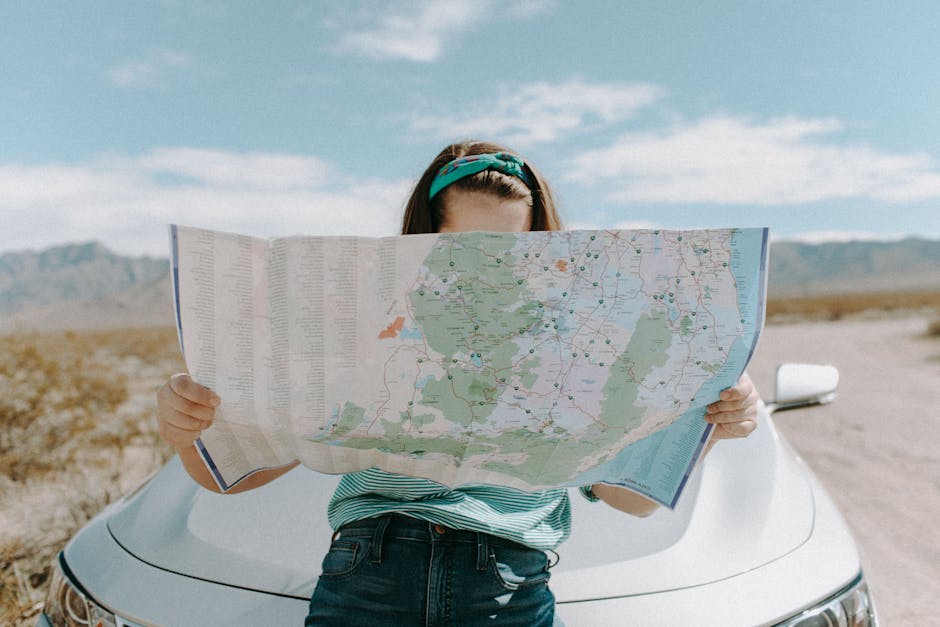
Getting around: Planning a road trip itinerary around interstate highways may be fast, but it kills your budget (tolls, higher gas consumption at 70+ mph). I use a mix: 70% secondary highways (55–65 mph) and 30% interstates for long stretches. For navigation, Google Maps with offline downloads is essential—cell service dies in rural areas. I also bring a paper atlas (yes, a map) as backup. Use cruise control on flat stretches to maximize fuel efficiency. And always, always fill up before entering a national park—gas inside can be $1 more per gallon.
Top Recommendations / Must-Do Activities
Over years of cheap road-tripping, a few experiences stand out above the rest. Here’s what I’d tell you to prioritize, written from real memory:
1. Free dispersed camping in the Black Hills, South Dakota: I pulled off a Forest Service road near Nemo, found a flat spot by a creek, and paid $0. The sunset over the pines was unforgettable. Insider tip: download maps from the USFS website before you leave—paper maps show unmarked roads. Downside: no facilities, no water. Pack it in, pack it out.
2. The Million Dollar Highway (Colorado, US 550): It’s free to drive, and the views are worth a hundred dollars. I drove it on a foggy morning in September—the vistas of red mountains and sheer drops are unparalleled. Insider tip: Start early (6 a.m.) to avoid tourist traffic and find pullouts before they fill. Downside: it’s slow—allow three hours for 60 miles.
3. In-N-Out Burger, anywhere on the West Coast: A cheap, reliable meal—but a splurge compared to cooking. I allow one per trip as a treat. A Double-Double animal-style costs about $4.50. Use it as a reward after a long driving day.
4. Hiking the Narrows in Zion NP (without a guide): Rent water shoes for $20 from a shop in Springdale and walk in from the Riverside Walk trail entrance. It’s a free experience beyond the park entry. I went at 7 a.m. in October and had the canyon to myself. Insider tip: Carry a walking stick—the rocks are slippery.
5. The Grand Tetons from a pullout on US 191: Skip the visitor center. I pulled over at a scenic overlook near Oxbow Bend, made coffee from my thermos, and watched moose in the river. Cost: $0. The memory: priceless.
Traveler’s Pro Tips
1. Use the “5% rule” for gas station routing: When I need to fill up, I open GasBuddy, set a 10-mile radius, and look for stations that are at least 5% cheaper than the average. It’s a 5-minute check that has saved me $5–$15 per fill over the years.
2. Master the art of the “free shower”: Many state parks allow you to pay a nominal entry fee ($3–$5 per vehicle) and then use their shower facilities without booking a campsite. I did this successfully at Lake Cumberland State Park in Kentucky—just asked the gate guard politely.
3. Pre-cook and freeze meals before you leave: I make a batch of chili, burritos, or pasta sauce, freeze them in quart-sized zip bags, and use them as ice packs in the cooler. They thaw over the first two days, saving money on buying ice and meals.
4. Call ahead to campgrounds, especially for hidden sites: Many small-town campgrounds (like city parks with RV spots) don’t show up on online booking platforms. Pick up the phone. In West Yellowstone, I called a church-run campground and got a site for $12 that was not listed anywhere.
5. Carry a backup charging solution: Your phone is your map, camera, and reservation system. I bring a 20,000 mAh power bank and a solar charger (about $30 on Amazon). It’s saved me when I’ve been stuck in a no-signal zone for two days.
Common Mistakes to Avoid
Mistake #1: Overplanning to the minute. I once had a three-day itinerary that had me driving 400 miles per day. The consequence was exhaustion and no time to stop at a quirky roadside attraction. How to avoid: Build in one “flex day” for every five days of travel. Leave 20% of your daytime unscheduled for spontaneous detours.
Mistake #2: Ignoring the car’s condition. On my second trip, I drove 1,200 miles on an old tire that looked “fine”—until it blew out in remote Montana. The $80 tow and $120 tire replacement crushed my budget. How to avoid: Before any long trip, check tire pressure, tread depth, oil, coolant, and belts. It costs $0 and takes 20 minutes.
Mistake #3: Relying exclusively on free camping apps without vetting. I once drove 45 minutes to a “free campsite” on iOverlander that turned out to be a closed construction site. How to avoid: Always read recent comments (within 3 months) on the app. Use satellite view on Google Maps to verify the area looks open and legal.
Mistake #4: Forgetting about altitude and temperature swings. In the Rockies, my first night was 85°F at sunset and 38°F by dawn without a proper sleeping bag—I shivered all night. How to avoid: Check nighttime lows for each stop on your road trip itinerary. Invest in a sleeping bag rated 15°F below the predicted low.
Your Travel Checklist
Documents: Driver’s license, vehicle registration, insurance card, copy of car manual, national parks pass (buy ahead online).
Packing: Sleeping bag rated for cold temps, sleeping pad, propane stove with fuel, cooler with divided compartments, headlamp, first-aid kit, paper map, charging cables, multi-tool.
Research: Download offline maps for regions you’ll visit, bookmark campgrounds with phone numbers, note gas stations along route, check road construction updates.
Bookings: Confirm at least 50% of campsite reservations 1–2 weeks before departure for busy areas (Yellowstone, Yosemite). Leave the rest flexible.
Health/Safety: Sunscreen (high SPF), insect repellent (DEET-based for camping), basic prescription medications, hand sanitizer, water filter if backcountry camping.
Local currency/apps: Credit card with no foreign transaction fees (if crossing borders), GasBuddy, iOverlander (for campsites), AllTrails (for hikes), and the Weather Channel app.
Traveler FAQ
Q: How can I find cheap gas consistently along a long route?
A: Use GasBuddy’s trip planner feature—enter your starting point and destination, and it maps out stations with the lowest prices along the way. I set a rule to fill up when I’m at a quarter tank, and I never buy near highway exits in tourist towns—those can be 20 cents higher per gallon.
Q: Is camping really that much cheaper than motels?
A: Yes, dramatically. A budget motel in a small town runs $60–$100 a night. A national forest campsite costs $5–$15. Over a 10-night trip, that’s a saving of at least $450. But you need to factor in the cost of gear ($150–$250 upfront for a tent, sleeping bag, pad) which pays for itself after two trips. I’ve camped 60+ nights and saved thousands.
Q: What’s the best way to structure a road trip itinerary for a week?
A: Keep the driving distance to 200–250 miles per day maximum. That gives you 4–5 hours behind the wheel with stops. Plan a loop from your start city—for example, Denver to Rocky Mountain NP to Grand Junction to Black Canyon to Denver. Reserve two nights at each major destination to avoid constant packing/repacking.
Q: Can I road trip on a budget with an electric car?
A: It’s possible but more challenging because charging station infrastructure is uneven in rural areas. Charging is often cheaper than gas (about 25% less per mile) but planning is critical. Use apps like PlugShare to map chargers. Stick to well-traveled corridors and avoid remote areas (like the Great Basin) in a non-Tesla EV.
Q: What’s a common saving hack people overlook?
A: Campground loyalty programs. Many state park systems (like Texas or Ohio) offer annual passes for $50–$70 that provide a 20% discount on nightly camping fees. If you stay 10+ nights in one state, it pays for itself. Also, Cook your own coffee—I saved $120 on my last trip just by brewing in my thermos instead of buying gas station lattes.
Ready for Your Adventure?
Look, I’ll be honest: planning a road trip on a budget takes more mental energy than booking a flight and a hotel. You’ll spend evenings staring at maps, you’ll have moments when your cooler is lukewarm, and you might get rained on. But I swear to you—the first time you pull into a free campsite at dusk, the smell of pine in the air, the sound of a creek in the distance, your bank account untouched—it’ll all make sense. That feeling of independence is something I still chase, every trip. You don’t need to be rich to travel well; you just need creativity and a willingness to sleep on the ground. Start small. Pick a weekend, plot a 200-mile loop, pack a tent and some beans, and go. Your car is waiting. The road is free. All you have to do is take the first turn.


No comments:
Post a Comment