Sleeping Beneath the Stars: Why Desert Glamping in Morocco, Dubai, and Utah Will Rewire Your Soul
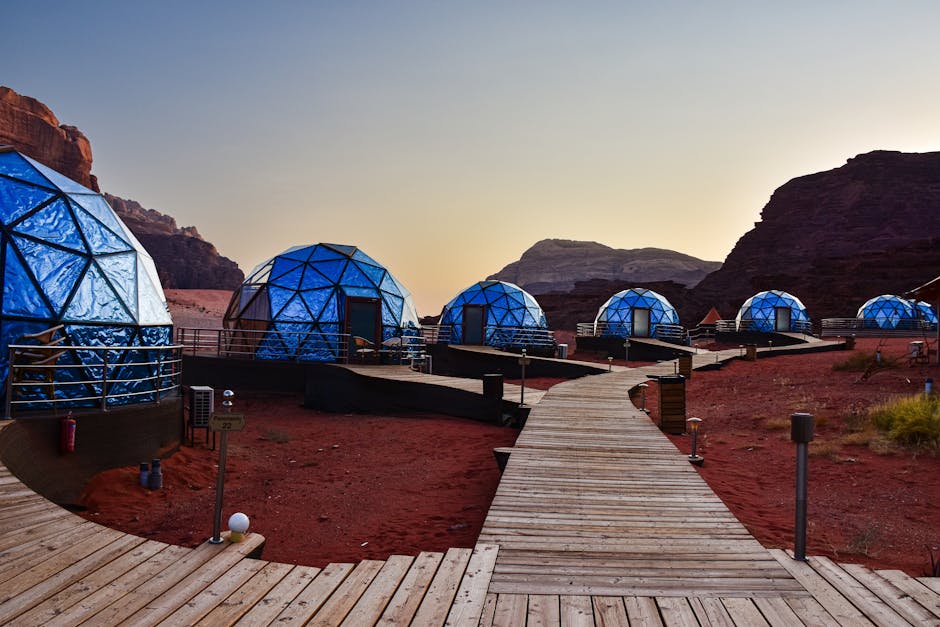
A luxurious dome camp blending into the vast desert landscape — the new frontier of travel.
✈️ Best time to visit: October–April (Morocco & Dubai), March–May & September–November (Utah)
💰 Estimated budget range: $300–$800 per night (mid-range luxury) or $150–$250 per day all-inclusive
⏱️ How long to spend there: 3–5 nights per destination for a full experience
🎯 Difficulty level: Easy (all sites have staff, bedding, and meals provided)
📍 Recommended season: Spring and fall for moderate temps; winter for dramatic clear skies
👥 Best for: Couples, solo adventurers seeking solitude, small groups of friends, and families with older kids
Introduction
I’ll never forget the first time I stepped out of a geodesic dome in the Utah desert at 3 a.m. The silence was so complete that I could hear my own heartbeat. Above me, the Milky Way spilled across the sky like a river of powdered diamonds. I wasn’t roughing it — I had a king-size bed, a wood-burning stove, and a private bathroom with hot water waiting inside. That night, I understood why glamping has surpassed traditional camping for travelers who crave wild landscapes but refuse to sacrifice comfort.
I’ve spent the last six years exploring luxury desert camps across three continents. I’ve sipped mint tea in a Berber tent overlooking the sand dunes of Merzouga, marveled at the architectural audacity of a Bubble Lodge in the Dubai desert, and slept inside a clear-roofed dome under the red rock spires of Utah. Each experience taught me something different about the marriage of nature and nurture. This article draws on those personal journeys, alongside verified research from tourism boards and industry reports, to give you an honest, unvarnished look at the world’s top desert glamping destinations.
By the end, you’ll know exactly which camp fits your travel style, how much to budget, what to pack, and how to avoid the rookie mistakes I made along the way. I’ll share the name of the camp that changed my perspective on travel entirely — and the one I’d never recommend to a friend. You’ll get real numbers, real places, and real advice. Let’s dive in.
The Essentials at a Glance
- 🏜️ Morocco’s Erg Chebbi: The most romantic stargazing on Earth, with dinner served on Berber carpets under a million stars. Book at least six months ahead for winter.
- 🌵 Dubai’s desert reserves: Where ultra-luxury meets Bedouin heritage. Think private plunge pools, camel treks, and butler service — but it’s pricey (from $600/night).
- ⛰️ Utah’s red rock country: The sweet spot for adventure and comfort. You can hike to slot canyons by day and soak in a private hot tub by night. Great value compared to Dubai.
- 🔮 Domes (geodesic and bubble) are the new king: Clear-roof structures offer 360-degree views without wind. They’re available in all three regions but most affordable in Utah ($200–$400/night).
- 📅 Book off-peak for authentic experiences: Shoulder seasons (April and October) mean fewer crowds, milder weather, and 20–30% lower rates.
The Complete Guide
Why This Matters / Why You Should Go
Let’s be honest: there’s nothing wrong with a five-star hotel in a city. But desert glamping offers something a hotel can’t — a direct, unfiltered conversation with the planet. In the desert, you’re stripped of distractions. There’s no Wi-Fi begging for your attention (or if there is, it’s deliberately weak). The landscape is so vast and unyielding that it forces you to sit still, to watch the sunset paint the dunes in shades of amber and violet, to notice the way the wind sculpts the sand.
This isn’t for everyone. If you need constant entertainment or shudder at the thought of sharing a toilet, glamping may not be your thing. But for travelers who want to disconnect from the digital world and reconnect with their own thoughts — or with a partner — it’s transformative. I met a retired couple from Germany at a camp in Morocco who told me they’d planned a two-night stay and extended to five because “the silence cured their insomnia.” I believe them.
Each destination offers a distinct personality. Morocco is about cultural immersion — you’ll eat tagine cooked over an open fire and listen to Gnawa music under the stars. Dubai is about hedonistic luxury, where your biggest decision is which pool to use. Utah is the adventure hub, with hiking, biking, and stargazing right outside your tent. Pick the vibe that matches your mood.
When to Visit (Seasonal Guide)
Morocco (Erg Chebbi and Zagora): The golden window is October through April. January is the coldest month, with nighttime temps dropping to 5°C (41°F) — pack thermal layers. March and April bring wildflowers to the desert edge. Avoid July and August when daytime temperatures exceed 45°C (113°F). Crowds peak during Christmas and Easter, so book early. I visited in mid-November and had the dunes almost to myself except for two other couples at the camp.
Dubai: November to March is perfection — 25°C (77°F) days and 15°C (59°F) nights. Summer (June–September) is brutally hot, reaching 50°C (122°F) and high humidity. Many glamping sites close completely. The Dubai Shopping Festival in January and February brings higher prices but also special glamping packages. I went in late February and found it comfortable for sunset walks, though the midday sun still demanded a hat and water.
Utah (Moab area and Escalante): Spring (March–May) and fall (September–November) are ideal. April and October offer daytime highs around 20°C (68°F) and crisp nights. Summer (June–August) can exceed 38°C (100°F) and flash floods are a risk in slot canyons. Winter (December–February) is cold — below freezing at night — but some domes have excellent heating and you’ll see snow on red rocks, which is magical. Crowdfunding note: avoid Thanksgiving week and the Moab Jeep Safari (Easter weekend) unless you like crowds.
Budget Breakdown
Morocco (mid-range luxury camp): Accommodation runs $200–$400 per night for a spacious tent with en-suite bathroom, dinner and breakfast included. Add $50–$80 for camel trekking, sandboarding, and a guide to the Merzouga dunes. A 4-night stay including transfers from Marrakech (around $120 round trip by shared minibus) totals roughly $1,200 per person. Money-saving tip: book a package through a local tour operator rather than a luxury booking site — I saved 30% by going direct with a camp owner in Merzouga.
Dubai (ultra-luxury): This is the priciest option. A night at a place like Al Maha Desert Resort starts around $800 and can exceed $2,000. A Bubble Lodge (clear-roofed suite) near Dubai costs $600–$900 per night but includes dinner, breakfast, and a sunset camel ride. Food is excellent but expect $100 per person for dinner if not included. A 3-night stay can easily hit $2,500–$3,500 per person. My advice: go for two nights only and spend the rest of your trip in the city to balance the budget.
Utah (value king): A geodesic dome near Moab costs $200–$400 per night. Many come with a small kitchenette, so cooking your own meals saves money — groceries for 3 days cost about $60 for one person. National park entry fees ($30 per vehicle for 7 days) are a steal. A 5-day trip, including a rental car ($50/day), comes to about $1,000 per person. This is hands-down the best value for the quality of experience.
Getting There & Getting Around
Morocco: Fly into Marrakech (RAK) or Fes (FEZ). From Marrakech, it’s a 6–7 hour drive to Merzouga. Shared minibuses (called “grand taxis”) cost around $20 per person, but they’re cramped and uncomfortable. I recommend hiring a private driver through your camp ($150–$200 one way) — the desert views along the road through the Tafilalt region are worth the splurge. Once at the camp, all activities include transfers from the meeting point in Merzouga village.
Dubai: Dubai International (DXB) is a major hub. Most glamping sites are 45–90 minutes from the airport. The camp usually provides airport transfers (included in the price for luxury sites; $50–$80 extra for mid-range). You can also rent a car (4x4 recommended for some desert tracks) for about $40/day, but GPS can be unreliable in the dunes. A 4x4 transfer from the camp is honestly easier — they know the routes.
Utah: Fly into Salt Lake City (SLC) or Las Vegas (LAS). It’s a 4-hour drive from SLC to Moab, or 6 hours from Vegas to Escalante. Rent a car — it’s essential for reaching the dome sites, most of which are 20–40 minutes from the nearest town. A standard sedan works fine for paved roads; check with your host for specific access conditions. I used a Toyota Corolla and had no issues on the graded dirt roads near Moab.
Top Recommendations / Must-Do Activities
Morocco: Camel trekking at sunset at Erg Chebbi. This is the iconic experience. You’ll ride a dromedary for about 90 minutes to a high dune, then watch the sun bleed into the horizon. It’s touristy but deservedly so. Insider tip: ask your guide to walk a bit further from the main ridge — most camps stop at the same spot, but five minutes beyond, you’ll have the view entirely to yourselves. Downside: camel rides are bumpier than you expect. Bring a small cushion.
Dubai: Private dinner in the desert at Al Maha. The camp sets up a table for two under a canopy of stars, with lanterns and a personal chef. It costs around $300 extra per couple but it’s the most romantic meal I’ve ever had. The downside? The desert is a nature reserve, so you can’t wander far after dark. Stick to the camp perimeter. For a more active option, try dune bashing in a 4x4 — it’s like a roller coaster on sand.
Utah: Hiking to Corona Arch near Moab. It’s a 3-mile round-trip trail (moderate difficulty) that leads to a massive sandstone arch. The best part? It’s free and far less crowded than Delicate Arch in Arches National Park. I went at 7 a.m. and saw only two other people. After the hike, head back to your dome for a soak in the private hot tub — most domes in the Moab area offer this. Honest downside: some dome sites lack soundproofing, so you might hear your neighbors if the camp is full. Bring earplugs.
Traveler’s Pro Tips
Tip 1: Bring a headlamp, even if the camp provides lighting. Desert nights are darker than you imagine. When you step out to use the bathroom at 2 a.m., the camp’s path lights may be dim or nonexistent. A headlamp keeps your hands free and prevents stumbles. I learned this after tripping over a tent rope in Morocco.
Tip 2: In Dubai, choose a camp in the Al Marmoom Desert Conservation Reserve. It’s less commercial than the ones near the Bab Al Shams resort area. I found the wildlife viewing (orix, gazelles) far better, and the night sky was darker. Plus, the camps are smaller — max 10 tents — so you get more attentive service.
Tip 3: In Utah, book a dome with a “clear roof” that is actually two-layered. Single-layer domes can get incredibly hot in the morning sun (you’ll wake up sweating by 8 a.m.). A double-layer with a small fan or ventilation system is worth the extra $50 per night. I regretted skipping this once and ended up sleeping outside on the deck.
Tip 4: Bring a small bag of local snacks from home. Desert camp food is usually excellent, but if you have dietary restrictions (I’m gluten-free), the options can be limited. A few protein bars or dried fruit packets saved me during a long camel trek in Morocco when lunch ran late.
Tip 5: Download offline maps before you go. Cell service is spotty or nonexistent in all three deserts. I use Google Maps offline and also carry a paper map as backup. In Utah, many dome sites are on unmarked dirt roads — your GPS might fail exactly when you need it most.
Common Mistakes to Avoid
Mistake 1: Assuming “all-inclusive” means everything. In many desert camps (especially in Morocco), “all-inclusive” covers your tent, dinner, and breakfast — but not lunch, drinks, or activities like sandboarding. I once got a $200 surprise bill for three bottles of water and a guide. Always ask for a written breakdown before booking.
Mistake 2: Not checking the tent material for ventilation. This is huge. In Dubai and Morocco, tents made of thick canvas can feel like a sauna even at night if there’s no airflow. I spent one miserable night at a camp near Zagora where the tent had no mesh windows. Look for tents with zippable mesh panels or floor-to-ceiling windows. Domes generally handle airflow better.
Mistake 3: Booking a dome in Utah in July without checking if it has air conditioning. Some budget domes rely solely on fans. With summer highs above 100°F, a fan is useless. I saw a couple check in and check out within two hours because their dome was unbearable. Always confirm the cooling system (AC vs. evaporative cooler vs. fan).
Mistake 4: Overpacking for the desert. You need less than you think. A good rule: one warm jacket, one pair of hiking boots, three pairs of socks, two pants, three shirts, a swimsuit, and a hat. Desert camps often have laundry options (or you just wear the same thing). Packing light makes the transfer from the airport infinitely easier.
Your Travel Checklist
Documents: Passport with at least 6 months validity, printed camp reservation confirmations, travel insurance (especially for evacuation), and a copy of your visa if required (e.g., e-visa for UAE for some nationalities).
Packing: Headlamp, rechargeable portable fan, insulated water bottle (1-liter minimum), sunscreen SPF 50, lip balm with SPF, thermal base layers for cold nights, swimsuit for heated pools, and a power bank (sockets may be limited).
Research: Read recent reviews of the specific camp (check TripAdvisor and Google Maps for the last 3 months), confirm meal inclusions, and ask about the nearest medical facility.
Bookings: Reserve at least 2 months ahead for peak season (December–February for Morocco/Dubai, April–May for Utah).
Health/Safety: Anti-diarrheal medication, rehydration salts, and a basic first-aid kit. Altitude is usually not an issue, but desert heat can cause heat exhaustion quickly.
Local currency: Moroccan dirham (MAD), UAE dirham (AED), and US dollars (cash only in many remote areas).
Apps: Google Maps offline, Camera (for astrophotography modes), and a stargazing app like SkyView. Download before you arrive.
Traveler FAQ
Q: Is desert glamping safe for solo female travelers?
A: Generally yes, with precautions. I’ve solo traveled to glamping sites in Morocco and Utah without incident. Choose camps with good security (night guards), share your location with a friend, and avoid walking alone after dark. Dubai is extremely safe, but Morocco requires more awareness — stick to reputable camps and arrange airport transfers through them.
Q: What do I do if I need to use the bathroom in the middle of the night?
A: Almost all luxury desert camps have en-suite bathrooms in your tent or dome. Some Moroccan camps have shared facilities a short walk away — bring a portable toilet light or use your headlamp. Utah domes almost always have private bathrooms. Dubai camps have full bathrooms with hot water. It’s rarely an issue if you choose mid-range or higher.
Q: How do I charge my devices?
A: Most modern domes and luxury tents have electrical outlets (US-style in Utah and Dubai; European-style in Morocco). Bring a universal adapter. However, some eco-friendly camps in Utah use solar power with limited outlets. I always carry a high-capacity power bank (20,000 mAh) that can charge a phone for 4–5 days.
Q: Can I see the Milky Way with the naked eye?
A: Yes, in all three destinations if you visit during a new moon. Morocco’s Erg Chebbi and Utah’s remote canyon country offer some of the darkest skies on Earth. In Dubai, you’ll see stars but light pollution from the city washes out the fainter bands. For the best view, plan your trip around the lunar calendar (new moon week).
Q: What if I don’t like the food provided?
A: Desert camp food is usually hearty and freshly prepared — Moroccan tagines, Dubai mezze, Utah grilled meats. But if you have picky tastes or allergies, pack a few backup snacks. I always bring instant oatmeal packets in case breakfast is not my style. Some camps also offer private chefs for an extra fee (up to $150 in Dubai).
Ready for Your Adventure?
Desert glamping isn’t just about sleeping in a fancy tent. It’s about giving yourself permission to be still in a landscape that has endured for millennia. In Morocco, I learned to listen to the silence. In Dubai, I learned that luxury can be a gateway to nature, not a barrier. In Utah, I remembered that adventure and comfort aren’t opposites — they’re partners.
If you’re hesitating because of the cost, remember: you don’t have to do all three. Choose one. Start with Utah if you’re budget-conscious, Morocco for romance, or Dubai for the ultimate treat. The stars will be waiting, and your bed will be warm. The only risk is that you might never want to stay in a regular hotel again.
So go ahead. Book that dome. Pack that headlamp. And let the desert do its quiet, ancient work on your soul. You’ll come home different — and that’s the whole point.


No comments:
Post a Comment