Why Learning to Surf in Your 30s, 40s, or 50s Is the Best Health Decision You’ll Make (and the Top Four Places to Do It)
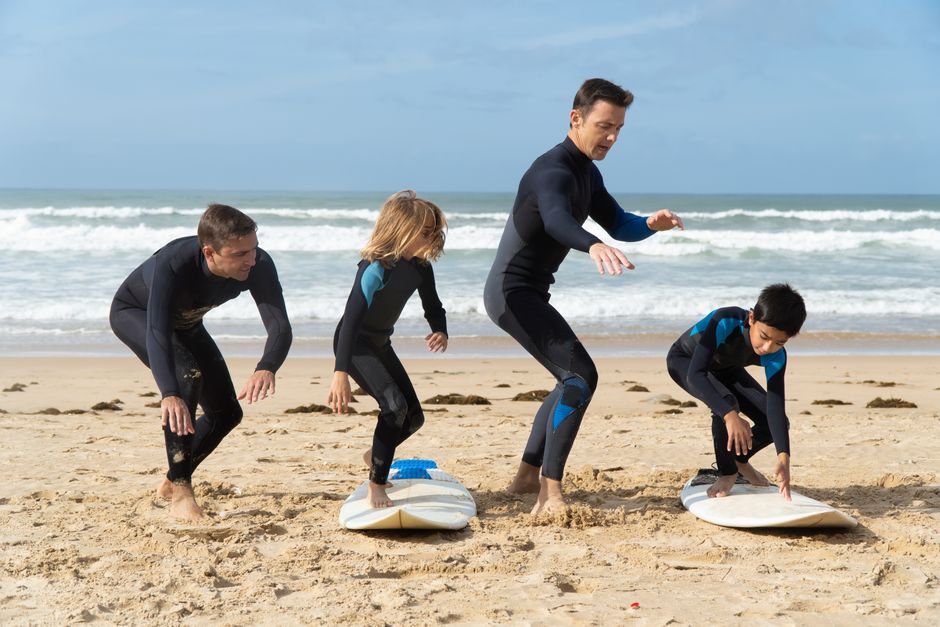
✈️ Best time to visit: Year-round for warm-water spots; late spring for California. 💰 Estimated budget: $1,500–$3,500 for a one-week surf holiday (flights, lessons, accommodation, food). ⏱️ How long to spend: 5–7 days for solid progress. 🎯 Difficulty level: Easy to moderate (with the right beach). 📍 Recommended season: Dry season (Costa Rica: Dec–Apr; Portugal: May–Oct; California: Aug–Oct). 👥 Best for: Solo travelers, couples, and adventurous mid-life friends.
I remember the exact moment I popped up on a foam board for the first time. I was forty-two, winded, covered in salt, and laughing so hard I nearly swallowed half the Pacific. For twenty years I’d watched surfers from the shore, convinced I’d missed the window. That morning in Costa Rica, a patient instructor named Diego placed his hands on my hips and said, “You are not too old. You are just out of practice. The ocean does not care about your age.” He was right. I went on to surf four more times that week, and by the last day I was gliding for nearly fifteen seconds. That feeling—the sudden silence when a wave catches you—is available at any age. I’ve since traveled to Portugal, California, and back to Costa Rica, researching the best beginner surf schools for adults. I’ve fallen, wiped out, been humbled, and learned that adult beginners actually have advantages: better patience, better body awareness, and a deeper appreciation for the small wins. This guide is based on real lessons, real schools, and real wave-counting. You will learn exactly where to go, when, how much it costs, and what mistakes to avoid. If you are over thirty and have ever wondered “Can I learn to surf?”—the answer is yes. Here is exactly how.
The Essentials at a Glance
Before you start packing board shorts, here are the three most important takeaways from my journeys:
- 🏄♂️ Choose a beach with consistent, small waves. Look for “sandy bottom” breaks and schools that use foam longboards. Not all beaches in a surf town are beginner-friendly—ask about the “soup” (white water) before you book.
- 🌊 Book a multi-day surf camp, not a single lesson. Muscle memory builds over three to five sessions. A single lesson will leave you frustrated; a four-day camp transforms you.
- 🧘 Prepare your body beforehand. Do push-ups, planks, and hip flexor stretches for two weeks before you go. It makes the paddling less brutal and the pop-up more natural.
The Complete Guide
Why This Matters / Why You Should Go
Learning to surf as an adult is not about becoming a pro or shredding a ten-foot barrel. It is about reconnecting with play, with your body, and with something bigger than your email inbox. At forty-plus, your knees might creak and your back might complain, but the ocean is the great equalizer. In Portugal, I met a fifty-eight-year-old accountant from Manchester who had just caught his first wave. In California, a grandmother of six was laughing in the foam. These are not anomalies. The real reason to go is that surfing forces you to be present. You cannot think about work while a wave is approaching. You cannot worry about your mortgage while you are holding your breath under a cascade of white water. The best beginner destinations—Portugal, Costa Rica, California—offer warm water, gentle waves, and schools that specialize in nervous adults. They have instructors who know how to calm your fears, guide your hips, and celebrate every tiny victory. This is not a bucket-list checkbox; it is a lifestyle reset.
When to Visit (Seasonal Guide)
Portugal (Ericeira, Peniche, and Algarve): The best window is May through October. Water temps hover around 18–20°C (64–68°F) in summer, so a 3/2 wetsuit is comfortable. July and August are crowded and expensive. November through February bring bigger, less forgiving swells—not ideal for beginners. I visited Ericeira in early June and had almost empty lineups at São Lourenço beach by 8 a.m.
Costa Rica (Guanacaste and Nosara): Dry season (December to April) offers consistent offshore winds, smaller waves, and zero rain. Green season (May to November) has fewer tourists but stronger swells and afternoon downpours. I went in February. The water was bath-warm (28°C/82°F), the sunsets were insane, and the waves at Guiones Beach were perfect for my wobbly pop-up.
California (San Diego, Santa Cruz, and Ventura): August through October is the sweet spot: warm water (if you call 18°C warm), smaller summer swells, and crowd levels manageable before winter. I surfed at Bolsa Chica near Huntington Beach in September. The fog burned off by 10 a.m., and the waves were waist-high for hours. Winter brings bigger groundswells—more power than a beginner wants.
Budget Breakdown
Accommodation: Expect $40–$80/night for a hostel or budget guesthouse near the beach (Portugal’s Ericeira; Costa Rica’s Samara). Mid-range hotels or Airbnb apartments run $100–$200/night. Splurge surf lodges with included meals and daily lessons cost $250–$400/night.
Surf Lessons: Group lessons are $40–$70 for two hours. Private lessons $80–$150. A four-day camp (five lessons, board rental, often video analysis) averages $350–$600. In Costa Rica, I paid $450 for five group sessions at Witch’s Rock Surf Camp in Nosara—including all equipment and airport transfers.
Food: $15–$25/day if you cook or eat local sodas (Costa Rica), €20–€30/day in Portugal, $25–$40/day in California.
Transport: Rental car $30–$60/day in Portugal or California. In Costa Rica, a 4x4 is recommended for unpaved roads. Airport transfers and shuttles run $30–$60 each way.
Total for one week (flights not included): Budget $1,000–$1,500. Mid-range $1,800–$2,500. Luxury $3,500+. Money-saving tip: Stay a 15-minute walk from the surf break instead of oceanfront—saves $400+.
Getting There & Getting Around
Portugal: Fly into Lisbon (LIS). Ericeira is a 45-minute bus or car ride north. Peniche is about 1.5 hours. Use the Rede Expressos bus network or rent a car. In Ericeira, most surf camps pick you up from Lisbon. The town is walkable once you arrive. Taxis (Uber works) cost €10–€15 within the area.
Costa Rica: Fly into Daniel Oduber Quirós International Airport (LIR) in Liberia for quick access to Tamarindo, Nosara, and Samara. A shared shuttle to Nosara costs about $50 and takes 2.5 hours—much of it on dirt roads. Once there, an ATV rental ($50/day) is fun but not essential; most surf beaches are a short walk or bike ride.
California: Fly into San Diego (SAN) or Los Angeles (LAX). For South Orange County, rent a car from John Wayne Airport (SNA) in Santa Ana. Parking is $10–$20 at popular beaches. A cheaper option: take the Metrolink train to Oceanside and use local buses or ride-shares. I drove; having a car meant I could chase the best wave conditions each morning.
Top Recommendations / Must-Do Activities
Portugal – Jardim do Mar / Ribeira d’Ilhas (Ericeira): Ribeira d’Ilhas is a World Surfing Reserve. For beginners, the inside section has gentle waves. Go early (7–9 a.m.) before the crowd arrives. I loved the clifftop café where you can watch more experienced surfers while sipping a pastel de nata. The downside: the beach is pebbly in parts, not soft sand.
Costa Rica – Playa Guiones (Nosara): This is arguably the best beginner wave on the planet. It is a long, slow, sand-bottom left that peels for 100+ meters. No rocks, no rips, no sharks. I spent three straight mornings there and never had a bad wave. The downside: Nosara is pricey and remote (no street lights). Bring cash—ATMs run out.
California – Doheny State Beach (Dana Point): Doheny is famous for its gentle longboard waves. The water is relatively warm (for California) in late summer. The wave breaks slowly over a sandy bottom. The downside: weekend crowds are intense. Go on a weekday or at dawn. I paid $15 for parking, then walked right onto the sand. The wave pushed me all the way in—a perfect beginner experience.
Wild card – La Saladita, Mexico (Ixtapa): Not in the main three but worth mentioning. It is a long left point break with constant, learner-friendly waves. Cheap ($25/night palapa), warm water, and almost no crowds. Bring your own board if you can.
Traveler’s Pro Tips
Tip 1 – Book two surf sessions per day for fast progress: One lesson at dawn (calm winds, empty lineup) and a second in the late afternoon (smaller crowd, warmer water). Your body will adapt faster—the second session builds on the first. I did this in Nosara and progressed from falling every time to catching 70% of waves by day four.
Tip 2 – Rent a slightly larger board than you think you need: Adult beginners often request a “cool” shortboard. Don’t. A 9-foot foam longboard is your best friend. The extra volume makes paddling easier, catches waves earlier, and gives you more glide time to practice your pop-up. I watched a 50-year-old man struggle on a 7’6” board for three days. He switched to a 9’2” and caught his first wave in ten minutes.
Tip 3 – Apply reef-safe sunscreen 20 minutes before you paddle out: You will be lying on the board with your face in the water. Cream-based, zinc-based sunscreen won’t wash off and sting your eyes. I forgot this on day one in Costa Rica and spent half the lesson blinking through a blur.
Tip 4 – Bring a rash guard and board shorts, not a bikini or trunks: The wax grip on a foam board will chafe your chest and inner thighs. A long-sleeve rash guard protects you from sun and friction. Board shorts with a drawstring stay put when you wipe out. Bikinis shift—I learned this the hard way.
Tip 5 – Record yourself on the third day: Have a friend film a short clip of you paddling and popping up. You will see what your instructor means by “push through your chest” or “look where you want to go.” Video analysis is humbling but transformative. Many surf camps include it.
Common Mistakes to Avoid
Mistake: Choosing a surf town based on reputation, not on your skill level. I once booked a trip to a famous big-wave spot in Portugal without checking the beginner beaches. The waves were chest-high on the inside and broke over a rocky reef. I spent two days terrified and frustrated. How to avoid: Email the surf school ahead of time. Ask: “What is the typical wave height in August? Is it a sand or reef bottom? Do you have a specific beginner break?” A good school will be honest. A bad one will take your money anyway.
Mistake: Not respecting the paddle-out. You cannot surf if you cannot get past the breaking waves. I tried to sprint through a set in California and got slammed repeatedly. How to avoid: Learn the “duck dive” (for shortboards) or “turtle roll” (for longboards) before you go. Watch a YouTube tutorial. Practicing in a pool helps. If the waves are too big to paddle past, walk down the beach to a channel or smaller section.
Mistake: Overtraining on day one. You will be excited. You will paddle for four hours. You will be unable to lift your arms the next day. I made this mistake in Costa Rica and spent day two in a hammock. How to avoid: Limit yourself to two hours per session for the first two days. Your shoulders, back, and neck need to adapt. Surfing uses muscles you forgot existed.
Mistake: Forgetting a change of clothes and a towel in your car. No one told me that after a surf session, you are cold, sandy, and miserable without a dry sweatshirt. I drove home in wet shorts once. Never again. How to avoid: Pack a large dry bag with a towel, a fleece, flip-flops, and a plastic bag for wet clothes.
Your Travel Checklist
Before you go, check these off:
- 📄 Documents: Valid passport (min 6 months validity). Print your surf camp confirmation, travel insurance details, and emergency contacts.
- 🧴 Packing: Long-sleeve rash guard (2), board shorts (2), reef-safe sunscreen (SPF 50+), wide-brimmed hat, polarized sunglasses with strap, waterproof phone pouch.
- 📚 Research: Watch one 15-minute beginner surf lesson video on YouTube. Know how to turtle roll. Check tide charts for your location—low tide often creates steeper waves.
- 💳 Bookings: Surf camp or lessons (book at least 2 weeks ahead for high season), airport transfer, accommodation with kitchen (to save on food).
- 🏥 Health/Safety: Travel insurance covering surf-related injuries (seriously, you will bruise). Pack ibuprofen, antihistamine for jellyfish stings, and a small first-aid kit with blister plasters.
- 💵 Local Currency: Euros for Portugal (€); US dollars and colones in Costa Rica (CRC); US dollars for California. ATMs are reliable but have fees.
- 📱 Apps: Magicseaweed or Surfline for wave forecasts (look for “waist high” and “long period”, 12+ seconds). Google Maps offline for remote beach access. WhatsApp for instructor communication.
Traveler FAQ
Q: I am 47 and not very fit. Can I still learn to surf?
A: Absolutely. You do not need to be an athlete—you need patience and a good instructor. Many adult beginners in my camps were 45–60 years old. The key is using a large foam board, taking breaks, and listening to your body. You will paddle, but you will also laugh a lot. The fitness comes with practice, not before.
Q: How long does it take to stand up on a wave for the first time?
A: Most adults stand up (even briefly) on their first or second lesson, especially in Costa Rica or Portugal with perfect beginner waves. The real magic—riding the face of a wave for 10+ seconds—usually happens by day three or four. It varies hugely. I took two full days of frustration before a wave lined up perfectly.
Q: Is it safe for a solo woman in her 40s to travel alone to these places?
A: Yes, with good sense. Ericeira (Portugal) is very safe, walkable, and full of other solo surf travelers. Nosara (Costa Rica) is small and quiet—I felt safe walking alone at dawn. In California, San Diego and Santa Cruz are fine. Stay near the surf beach, keep valuables in a hotel safe, and meet friends at the surf camp. I met several solo women in their 50s doing exactly this.
Q: Do I need my own wetsuit and board?
A: No. Every reputable surf school provides high-quality boards and wetsuits (or rash guards in warm water). For Portugal, a wetsuit is included; for Costa Rica, you only need a rash guard. If you fall in love with surfing, buy your own wetsuit after a few trips—it fits better and saves rental fees.
Q: What if I’m scared of getting hurt?
A: That is completely normal. Beginner waves are small (about waist-high or lower) and foam boards are soft. The most common injury is a minor bruise or getting tumbled in whitewash—not a broken bone. Your instructor will teach you how to fall safely (flat, arms in, exhale). I was terrified on day one. By day three, I was laughing at every wipeout. Fear fades fast with good guidance.
Ready for Your Adventure?
The hardest part is not the pop-up, the paddle, or the price tag. The hardest part is deciding that you are allowed to start something new at your age. I have seen accountants, teachers, and retired nurses discover a kind of joy they had not felt since childhood—the pure thrill of being carried by the ocean. The waves will still be there tomorrow, but you will not be. So book that camp. Pack that rash guard. Let the salt water rinse away the notion that you are too old, too busy, or too uncoordinated. The best surfers in the world are not the ones on the cover of magazines—they are the ones who finally stood up at forty-five and felt the wind in their face. Go find your wave.


No comments:
Post a Comment