Beyond the Mirage: Why the Middle East is the Most Underrated Journey of Your Life
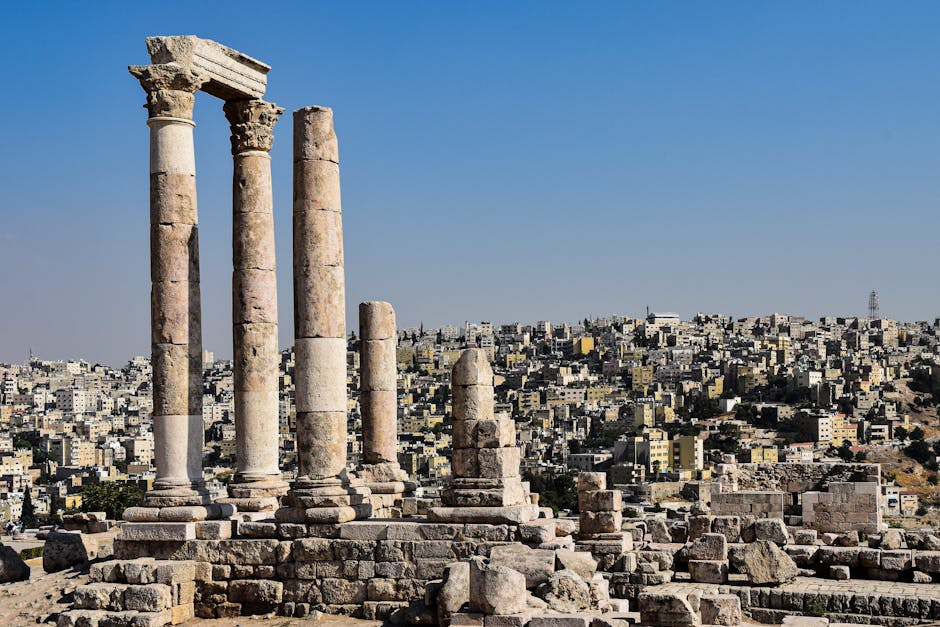
Sunset over the Treasury at Petra, Jordan – a moment that stops time.
✈️ Best time to visit: March–May & September–November (spring/fall) for comfortable sightseeing.
💰 Estimated budget: $100–$250 per day (mid-range, including accommodation, food, transport, and entry fees).
⏱️ How long to spend: 14–18 days to cover Dubai, Jordan, and a third country (e.g., Oman or Egypt).
🎯 Difficulty level: Moderate – some walking over rough terrain in Petra and desert heat.
📍 Recommended season: Spring (March–April) for wildflowers in Jordan; Fall for Dubai’s outdoor events.
👥 Best for: Couples, solo travelers with moderate fitness, history and archaeology lovers, and photographers.
Introduction
I remember the exact moment the Middle East shifted from a distant idea to a vivid, sun-warmed memory. I was standing in the Siq, the narrow canyon leading to Petra, with my hand pressed against the cool, striated rock. The slot canyon was quiet except for the echo of a distant camel’s bell. Then I turned a corner, and through the gap, the Treasury appeared – not as a photograph, but as a three-dimensional, rose-red reality. I actually gasped. That gasp is why I’ve spent the last decade traveling across the Middle East, not as a tourist, but as a curious wanderer who wants to peel back the layers of history, hospitality, and humanity.
I’ve been a travel writer for eight years, and the Middle East remains my most transformative region. From the gleaming steel and glass of Dubai’s future-facing skyline to the ancient, dust-stained stone of Jordan’s desert castles, these lands offer something no other part of the world can: a direct, unmediated conversation with 10,000 years of civilization. You’ll taste coffee that changes how you think about breakfast, hear the call to prayer weave through modern traffic, and stand on ground where prophets and pharaohs walked. This guide is not a listicle of places. It’s a manual for a traveler who wants to go deeper.
The Essentials at a Glance
- 🏛️ Petra, Jordan – Not just the Treasury. Hike to the Monastery at sunrise for a crowd-free, soul-stirring view.
- 🌆 Dubai, UAE – Skip the mega-malls for a dhow dinner on Dubai Creek and the Al Fahidi Historical District.
- 🏜️ Wadi Rum, Jordan – Overnight in a Bedouin camp under the Milky Way. The silence is deafening (in the best way).
- 🕌 Jerash, Jordan – One of the best-preserved Roman cities outside Italy. Go on a weekday – you’ll have it almost to yourself.
- 🛶 Musandam Fjords, Oman – A day-trip from Dubai that feels like a Norwegian fjord crossed with Arabian desert.
The Complete Guide
Why This Matters / Why You Should Go
Let’s be honest: the Middle East has a PR problem. Media images of conflict and desert emptiness dominate, but the reality is vastly more nuanced – and far more beautiful. This is where writing was invented, where astronomy and mathematics were born, and where a Bedouin host might insist you stay for three cups of cardamom-laced coffee before you even mention your name. But the real reason to go is the juxtaposition. You can dine in a Michelin-starred restaurant in Dubai overlooking a man-made archipelago, then drive five hours north into Jordan and sleep in a tent where the only light comes from stars and a small fire. The region teaches you complexity.
This is for the traveler who is tired of sanitized Europe and wants to be challenged. It’s for the solo female traveler (I’ve done it – it’s safe if you’re aware and covered). It’s for the history buff who wants to touch a column built in 106 AD. And it’s for the foodie who wants a falafel so fresh it’s still warm in your hand. If you’re open and respectful, the Middle East will give you a welcome that feels like coming home to a family you didn’t know you had.
When to Visit (Seasonal Guide)
The Middle East is hot. Really hot. I made the mistake of visiting Petra in late July once, and I honestly thought I might become the next archaeological find. Spring (March–May) is the absolute sweet spot. Jordan is carpeted with wildflowers – red poppies, yellow chamomile – and the air is still fresh. Dubai’s outdoor markets and rooftop bars are perfect. Fall (September–November) is equally good, with October being the month for the Dubai Food Festival and the Al Maha Desert Run.
Summer (June–August) is punishing. In Dubai, you’ll dash from air-conditioned car to air-conditioned mall, and outdoor sightseeing can be dangerous after 10 a.m. In Jordan, the Dead Sea can hit 40°C (104°F). If you must go in summer, start your days at sunrise and rest from 12–4 p.m. Winter (December–February) is pleasant in Dubai (25°C) but can be surprisingly cold in Jordan’s desert (near freezing at night). I’ve shivered in Wadi Rum in January – bring layers.
Crowd levels: Petra gets 3,000–5,000 daily in spring, but that’s nothing compared to European attractions. Dubai’s crowds are year-round, but peak in December–January when Europeans flee cold weather. Avoid major holidays like Ramadan if you prefer easy daytime dining options (though evening meals are spectacular and festive).
Budget Breakdown
Here’s what I actually spent on my last 16-day trip covering Dubai (5 days) and Jordan (10 days), plus a day trip to Oman. All prices are in US dollars (as of 2024).
- Accommodation: Low: $30–$60/night (hostel in Dubai, guesthouse in Amman). Mid: $80–$150/night (Business hotel in Dubai, 3-star with breakfast in Jordan). High: $200–$400/night (Beach resort in Dubai, Marriott in Amman, wild camping with full glamping setup in Wadi Rum).
- Food: Budget: $15–$25/day (street food – shawarma, falafel, manakeesh). Mid: $40–$60/day (local restaurants, one nicer meal). High: $80–$120/day (fine dining, seafront restaurants). Pro tip: the best food in Jordan is at Al Quds in Amman – incredible hummus for $3.
- Activities: Petra day ticket: $70 (Jordan Pass includes it). Wadi Rum jeep tour + overnight: $80–$120. Dubai Burj Khalifa “At the Top” ticket: $40 (book online 2 weeks early for cheaper slots).
- Transport: Rental car in Jordan: $35/day (highly recommended for flexibility). Dubai Metro: $2/ride. Taxi between Amman and Petra: $80–100.
- Daily total (mid-range): Approximately $150–$180 per day for a comfortable, experience-rich trip. Weekly total: $1,050–$1,260. Money-saving tips: Buy the Jordan Pass before you go (includes visa fee). In Dubai, eat at food courts in older neighborhoods (Deira, Bur Dubai) not the malls.
Getting There & Getting Around
Your gateway for most Middle East itineraries is Dubai International Airport (DXB) – it’s the world’s busiest international hub. From the US, Emirates, Etihad, and Qatar Airways fly direct from many cities (8–14 hours from East Coast). From Europe, it’s a 5–6 hour flight with budget carriers like Wizz Air and FlyDubai. I flew Emirates from New York JFK to Dubai for $850 round-trip (booked 4 months in advance).
Getting around Dubai: The Dubai Metro is clean, air-conditioned, and reaches all major areas (Gold Souk, Mall of the Emirates, Burj Khalifa). Buy a Nol Card at any station – load 50 AED ($14) and it’ll last 3 days. Taxis are cheap ($1 start + $1.3/mile). Avoid renting a car in Dubai – traffic is aggressive and parking is expensive.
Jordan transfer: From Dubai, fly to Amman (3 hours) on Royal Jordanian for about $250 round-trip. Once in Jordan, rent a car from Amman Airport – I used Sixt and paid $38/day for a small SUV. Driving in Jordan is manageable; roads are good (highway from Amman to Petra is smooth), but be alert for goats and sudden speed bumps in villages. For Wadi Rum and Petra, you don’t need 4x4 – a regular car works for the main sites (a jeep tour handles the desert).
Alternatively, you can take a shared bus (JETT Bus) from Amman to Petra for $15, but it’s less flexible. If you’re doing this route, I recommend a private driver for at least two days – it costs about $100/day but saves hours of waiting.
Top Recommendations / Must‑Do Activities
1. Petra’s Monastery Hike at Dawn (Jordan)
Everyone does the Treasury. I say skip the crowds at 8 a.m. and go straight for the Monastery (Ad Deir). It’s a 900-step climb (about 45 minutes if you’re fit, 1.5 hours if you stop for photos). I did it at 5:45 a.m. with a headlamp. The reward: I was the only person there for 20 minutes. The Monastery is actually larger than the Treasury (47m wide) and far less restored. The light hitting the rock face at 7 a.m. is a shade of amber I’ve never seen elsewhere. Insider tip: bring 2 liters of water and a small snack. The donkeys at the stairs are tempting but are often poorly treated – avoid them.
2. Wadi Rum Night Desert Camp (Jordan)
I’ve camped in the Sahara, the Gobi, and the Arctic. Wadi Rum is the most beautiful desert I’ve ever seen – the red sand glows like embers at sunset. Book an overnight tent with a Bedouin family (through sites like “Rum Stars” or “Captain’s Desert Camp”). Dinner is cooked underground – zarb – a slow-roasted meat and vegetable stew. After dinner, the guide will lay out mats, and you’ll lie back and watch the Milky Way. There are zero artificial lights for 100 miles. The silence is so deep you can hear your own heartbeat. Downside: The toilets are basic (pit toilets). Go in with an open mind. It’s worth it.
3. Dubai Creek and Al Fahidi District
Forget the Burj Khalifa view (it’s nice, but it’s just a view). Spend an afternoon in Al Fahidi Historical District, the old part of Dubai. Wander the narrow, wind-tower-lined lanes, then cross Dubai Creek on an abra (wooden boat) for 2 AED ($0.50). On the Deira side, the Spice Souk is an assault on the senses in the best way – saffron, rose petals, dried lemons. I bought a bag of cardamom coffee beans for $4 that lasted months. Insider tip: Go at 4 p.m. when the light is golden, then stay for the evening call to prayer from the Grand Mosque across the water.
4. Jerash Roman Ruins (Jordan)
One hour north of Amman, Jerash is a Roman city that survived almost intact because it was buried under sand for centuries. Walk through Hadrian’s Arch (built for his visit in 129 AD), then the Hippodrome where chariot races were held. I was there on a Wednesday at 10 a.m. – I saw maybe 50 people. The Oval Plaza is 80 columns in an ellipse, and you can sit on a marble step and imagine the Roman citizens discussing trade routes. Downside: No shade. Bring a hat and sunscreen. Entry is 10 JD ($14) – worth every dinar.
5. Musandam Fjords Sea Safari (Oman – from Dubai)
A 2-hour drive from Dubai to the Omani border (visa on arrival for most nationalities, $15). Join a dhow boat tour from Khasab – they take you into the fjords where you can swim in emerald water surrounded by limestone cliffs. Dolphins often swim next to the boat. I saw a pod of 30 bottle-nosed dolphins jumping in the wake. It’s a long day (7 a.m. to 7 p.m.) but it’s the only place where you get the Arabian desert meets Norwegian fjord scenery. Book through “Khasab Travel & Tourism” directly – $55 per person includes lunch.
Traveler’s Pro Tips
1. Cover up, but don’t wrap in a sheet: In Jordan and Oman, modest dress (shoulders and knees covered) is appreciated but not legally enforced (except at mosques). I wore linen trousers and a lightweight long-sleeve shirt every day. In Dubai’s malls, wear whatever you like. On the street, cover your shoulders as a sign of respect – locals will smile at you more.
2. Download “Maps.me” offline maps before you arrive: Google Maps works in cities, but in Wadi Rum and the King’s Highway (Jordan) you’ll lose signal. Maps.me saved me three times when I missed a turnoff to a remote hot spring (Ma’in Hot Springs). Download the entire countries of Jordan and UAE.
3. Bring a reusable water bottle with a filter: Tap water isn’t safe drinkable in either country (high mineral content in Jordan, desalinated but pipe aged in parts of Dubai). But I drank from a Lifestraw bottle everywhere and never got sick. It saved me buying dozens of plastic bottles.
4. Learn to haggle – but smile while you do it: In almost every souk, the first price is 3x the real price. I bought a Bedouin scarf (shemagh) in Petra for 5 JD after starting from 15 JD. The trick is to stay friendly – if you walk away politely, they’ll often call you back. Don’t haggle if you don’t intend to buy.
5. Friday is the holy day – plan around it: In both Jordan and Dubai, Fridays are like Sundays in the West. Many shops and restaurants open only after noon. Government buildings are closed. Plan your museum and site visits for Saturday–Thursday. On Fridays, do the long drives or relax by a pool.
Common Mistakes to Avoid
Mistake 1: Visiting Petra for just one day. I see people rush from the Visitor Center to the Treasury, then back out in 3 hours. They miss the Monastery, the High Place of Sacrifice, and the Royal Tombs. Why it happens: The Jordan Pass only includes one entry, and people think it’s enough. How to avoid: Book two nights in Wadi Musa (the town outside Petra). Enter on Day 1 at 3 p.m. to see the Treasury in late light (fewer crowds). Day 2, hike the Monastery and the back trail. Consequence: You’ll leave feeling you missed the real Petra – the one that takes 12 hours to explore.
Mistake 2: Not booking the Burj Khalifa tickets in advance. I’ve seen people pay $100+ for same-day entry. Online, the 12:30 p.m. slot is $40. Why it happens: People assume they can just show up. How to avoid: Book on the official Burj Khalifa website at least 2 weeks ahead. Choose the “Sky View” level (125+126) – the top level (148) isn’t worth double the price. Consequence: You’ll either wait 2 hours or pay triple.
Mistake 3: Assuming all Middle Eastern food is the same. I ate Jordanian mansaf (lamb in fermented yogurt sauce with rice) and realized it’s nothing like Lebanese food or Emirati food. Why it happens: Visitors think “Arabic food” is a monolith. How to avoid: Order regionally: in Jordan, mansaf and mutabbaq. In Dubai, try Iranian influences (beriani, kebab) and Emirati dishes like harees (slow-cooked wheat and meat). Consequence: You miss the whole point of culinary geography.
Mistake 4: Overpacking for the desert. I once brought a suitcase full of heavy jeans and sweaters for a Jordan trip. I only wore the jeans twice. Why it happens: People prepare for “desert cold” but forget it’s 35°C by day. How to avoid: Bring 2 pairs of lightweight, breathable pants (linen or quick-dry), a fleece for evenings, and a wide-brimmed hat. Consequence: Lugging a 23kg bag through pebble paths – painful and unnecessary.
Your Travel Checklist
- Documents: Passport (valid 6+ months), Jordan Pass printout (if doing Jordan), UAE and Jordan visa (most nationalities get visa on arrival in UAE; for Jordan, the pass includes visa), travel insurance (global, with evacuation coverage).
- Packing: Lightweight long-sleeve tops (3–4), linen trousers (2), walking shoes (closed-toe, sturdy), sandals (for city), a fleece or light jacket (for desert nights), swimwear (for Dead Sea and hotel pools), power adapter (Type G – British plug).
- Research: Download Maps.me offline, save emergency numbers (UAE: 999; Jordan: 911), check Ramadan dates (affects opening hours).
- Bookings: Flight (at least 3 months early), Jordan Pass (official site), Wadi Rum camp (via WhatsApp), Burj Khalifa tickets (2 weeks early).
- Health & Safety: Sunscreen SPF 50+, insect repellent (for Dead Sea area mosquitoes), anti-diarrhoea medicine (you will eat street food – it’s fine but prepare), hand sanitizer, basic first aid.
- Local Currency: Jordanian Dinar (JOD) – bring cash (ATMs are common but charge fees). UAE Dirham (AED) – cards accepted everywhere, but have 200 AED cash for small souks and taxis.
- Apps: Careem (Uber-like for Dubai), Maps.me, XE Currency, WhatsApp (everyone uses it for communication, even restaurants).
Traveler FAQ
Q: Is the Middle East safe for solo female travelers?
A: Yes, with normal precautions. I traveled solo through Jordan and Dubai and never felt threatened. In Amman, I received polite looks but no harassment. Dress modestly (cover shoulders and knees), avoid walking alone after midnight in older neighborhoods, and trust your instincts. Jordan is ranked one of the safest countries in the region for women. Solo female travel here is very doable.
Q: Do I need a visa for Jordan and the UAE (US/UK/EU citizens)?
A: For the UAE: US, UK, and EU passport holders get a free 30-day visa on arrival. For Jordan: You can get a visa on arrival for 40 JOD ($56), but it’s cheaper to buy the Jordan Pass ($70), which waives the visa fee and includes entry to 40+ sites (including Petra). Apply online at jordanpass.jo before you go – it takes 5 minutes.
Q: Can I drink alcohol in the Middle East?
A: Yes, in Jordan and the UAE (including Dubai), alcohol is widely available in hotels, bars, and licensed restaurants. Jordan’s local beer (Amstel brewed under license) is good. In Dubai, expect to pay $12–$15 for a pint in a hotel bar. Do not drink in public (streets, parks) – it’s illegal and can lead to arrest. In rural Jordan, discretion is key, but it’s accepted in tourist areas.
Q: Is the heat really that bad in summer?
A: It’s physically punishing. In July in Dubai, it’s 44°C (111°F) with high humidity – walking for more than 15 minutes can cause heat exhaustion. In Jordan’s inland desert (Petra, Wadi Rum), it’s dry heat, 40°C, but you lose water fast through sweat. I fainted once in Petra in August after underestimating the sun. If you must go in summer, start your outdoor activities by 6 a.m., rest 11 a.m.–4 p.m., and resume at sunset. Drink 4+ liters of water daily.
Q: What’s the best way to cross from Jordan to Israel/West Bank?
A: The most common border crossing is the King Hussein Bridge (Allenby) near Amman. It’s open 8 a.m.–8 p.m. Expect 1–2 hours of processing, with a $60 departure tax from Jordan. It’s straightforward but requires a bit of patience. If you’re doing a combined Jordan-Israel trip, I recommend 7 days in Jordan, then cross to Jerusalem for 3–4 days. If you’re visiting only the Middle East, skip Israel – you have more than enough to see in Jordan and Dubai alone.
Ready for Your Adventure?
I’ve spent weeks walking the same paths that Nabatean traders, Roman legions, and Bedouin shepherds walked, and I still can’t fully explain the feeling of standing in a slot canyon 2,000 years deep. The Middle East isn’t a holiday – it’s a pilgrimage. You’ll return with your skin dusty, your camera full, and your understanding of the world permanently shifted. You’ll have eaten bread baked in desert sand, floated in the Dead Sea, and watched a falcon soar over a city that didn’t exist 30 years ago.
Don’t let the headlines stop you. The real story is told in the warmth of people who invite you for tea, in the ancient stones that hold the light of a thousand sunsets, and in the quiet moments when you realize this isn’t a foreign land – it’s the cradle of everything we share. Pack your walking shoes, leave your expectations at home, and go. The Middle East is waiting, and it’s more beautiful than you can imagine.


No comments:
Post a Comment