How to Interrail Across Europe: The Ultimate Train Travel Guide for First-Timers
Quick Stats
✈️ Best time to visit: May–June or September–October
💰 Estimated budget: €80–€150/day (midrange), including pass
⏱️ How long to spend: 2–4 weeks for a solid first trip
🎯 Difficulty level: Moderate (requires planning but rewarding)
📍 Recommended season: Late spring or early autumn
👥 Best for: Solo travelers, adventurous couples, small groups of friends
Introduction
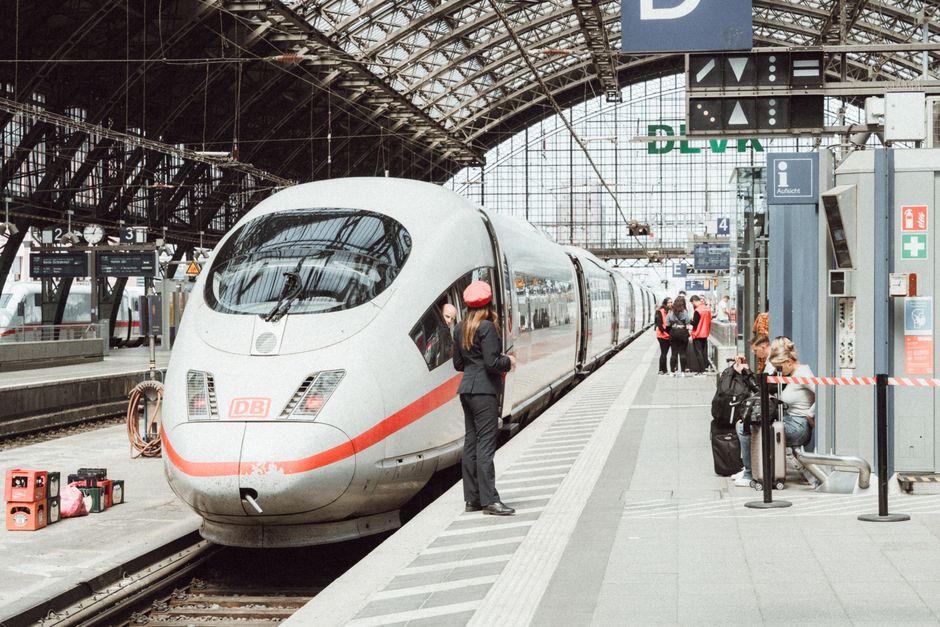
I remember the exact moment it clicked. I was sitting in a rattling German ICE train, watching the Rhine valley blur past my window—vineyards clinging to steep hillsides, medieval castles perched like forgotten crowns, and the river shimmering under a low October sun. I had boarded in Paris that morning, and by evening I’d be in Munich. A week earlier I’d been in Amsterdam. In two days I’d cross into Austria. The train itself had become my home, my time machine, my passport to a dozen cultures without a single security line or luggage fee.
I’ve now Interrailed through Europe four times, covering more than 15 countries and countless smaller towns. I’ve made every mistake—booked the wrong pass, missed a reservation deadline, packed way too much—and I’ve learned the tricks that turn a chaotic itinerary into a seamless adventure. This guide is built on that experience: real numbers, real routes, and honest advice for anyone dreaming of hopping aboard the European rail network.
By the end, you’ll know exactly which pass to buy, when to travel, how to budget, and what to avoid. Let’s get you on that train.
The Essentials at a Glance
Here are the five things I wish someone had told me before my first Interrail trip:
- 🚆 Buy a Global Pass, not a One-Country Pass—unless you’re staying put. The Interrail Global Pass (or Eurail for non-Europeans) lets you hop between up to 33 countries. I used a 15-day continuous pass for €478 and visited 8 countries.
- 📅 Reserve your high-speed trains early—especially for France, Italy, and Spain. Reservations cost €10–€30 extra, and they sell out weeks ahead in summer. I learned this the hard way when I had to take a regional train that added four hours to my journey.
- 🎒 Pack light, pack smart—a 40–50 liter backpack is perfect. You’ll be hauling your bag up stairs in old stations without elevators. I’ve seen people struggle with suitcases. Don’t be that person.
- 🍝 Eat like a local, not at the station—train station food is overpriced and bland. Walk 10 minutes into any city and you’ll find better, cheaper options. I had an amazing €7 pasta in Bologna that beat anything I could’ve bought at the platform.
- 🗺️ Don’t overplan—leave at least one or two unscheduled days. Some of my best memories came from spontaneous stops: a small Swiss village I stumbled upon, a festival I didn’t know existed.
The Complete Guide
Why This Matters / Why You Should Go
Interrailing isn’t just a cheap way to see Europe—it’s a fundamentally different way to travel. You’re not tied to airports or bus schedules. You arrive at the heart of each city, not at some distant terminal. You get to watch the landscape shift from mountains to coastlines to farmland from a window seat.
What makes it truly special is the freedom. You can wake up in Budapest, decide you want to see Vienna, and be there by lunchtime. You can skip a city if it doesn’t feel right, or stay longer if you fall in love with it. The train becomes your guide, not your constraint. It’s for solo travelers who want autonomy, couples who want flexibility, and friends who want shared experiences without the stress of coordinating flights.
I’ve also found it’s the most sustainable way to cover distance in Europe. Trains emit around one-tenth the CO2 of flights per passenger. So you can explore guilt-free, knowing your adventure isn’t costing the planet.
When to Visit (Seasonal Guide)
Timing can make or break your Interrail experience. Here’s what I’ve learned from traveling in different seasons:
May–June (Best for most people): Weather is warm but not scorching, crowds are manageable, and daylight stretches late into the evening. I did a trip in late May and had sunny days in Prague, Vienna, and Ljubljana without the crush of July tourists. Train reservations are easier to get, and prices are lower than peak season.
July–August (Peak but vibrant): Everything is open, including smaller attractions and festivals. The downside: packed trains, higher accommodation prices, and reservations that book out weeks in advance. If you go in August, especially in southern Europe, expect heatwaves. I once spent a 40°C day in Rome’s train station because my reservation was for a train two hours later—not fun.
September–October (The sweet spot): Autumn colors are stunning, especially in the Alps and the Rhine Valley. Crowds thin out after summer, and prices drop. I love October for the wine harvest season (hello, Austrian Heurigen). Just pack layers, as evenings get chilly.
November–February (Budget but challenging): The cheapest time, but days are short, some tourist spots close, and outdoor activities are limited. I tried a winter Interrail once—Zurich was magical in snow, but I spent more time waiting in stations than I liked. Still, if you’re on a tight budget, it’s doable.
Budget Breakdown
Let’s talk real numbers from my last 3-week trip (15 travel days, 8 countries, May 2024). Prices are in euros and reflect midrange travel for one person.
Interrail Pass: €478 for a 15-day continuous Global Pass (1st class, but 2nd class is about €350).
Reservations: €120 total (average €15 per high-speed train, especially in France, Spain, and Italy).
Accommodation: €45–€70/night. Hostels: €25–€40; budget hotels: €60–€90; I mixed hostels and budget hotels, averaging €55/night for 21 nights = €1,155.
Food: €30–€45/day. Breakfast at hostel (€3–€8), lunch from a bakery or market (€8–€12), dinner at a local restaurant (€12–€20). I averaged €35/day = €735.
Transport within cities: €50 (metro tickets, buses, one or two taxis when lost).
Activities & entrance fees: €150 (museums, walking tours, a boat ride in Venice).
Miscellaneous: €100 (SIM card, washing machine at hostel, snacks).
Total for 21 days: approximately €2,800. That’s about €133/day. To save more: use 2nd class (saves €128 on pass), cook in hostel kitchens, stay in dorms, and limit high-speed trains. On a shoestring, you could get by on €70–€90/day.
Getting There & Getting Around
Start your journey from a major hub where you can buy your pass or pick it up. For most travelers, the best starting points are Paris, Amsterdam, Berlin, or Milan—all have excellent rail connections. I prefer starting from a city I know well so I can get my bearings before hopping on the first train.
Once you’re in Europe, the Interrail app (available on iOS/Android) is your best friend. You can search timetables, manage reservations, and even store your pass digitally. But be warned: the app’s GPS sometimes fails in tunnels. Download offline maps of stations before you leave.
Navigation tip: When changing trains, allow at least 30 minutes for connections, even if the app says 10. Stations like Paris Gare du Nord and Berlin Hauptbahnhof are huge, and you might need to walk 15 minutes between platforms. I once missed a connection by 3 minutes—never again.
For local transport, buy a city travel card (like the Vienna City Card or Rotterdam Welcome Card) if you plan to use public transit heavily. They often include museum discounts.
Top Recommendations / Must-Do Activities
Here are the specific experiences I’d repeat in a heartbeat:
- The Centovalli Railway (Italy–Switzerland): This route from Domodossola to Locarno is a hidden gem. The train snakes through 85 tunnels and crosses 90 bridges over dramatic valleys. I sat on the right side of the train (direction Locarno) and saw waterfalls cascading into turquoise pools. No reservation needed, but at €25 for a local ticket (not covered by pass), it’s worth the extra cost.
- Prague to Vienna via the Danube: Take the regional train (not the high-speed) and sit on the left side. For about three hours, you’ll follow the Danube River past vineyards, ruined castles, and the Wachau Valley—a UNESCO World Heritage site. I packed a picnic of bread, cheese, and a bottle of local wine from a shop in Prague’s Naplavka. Train travel at its most romantic.
- Interlaken to Lucerne, Switzerland: This is one of the most scenic routes in Europe. The train passes Lake Brienz, then climbs through the Brünig Pass with views of alpine meadows and snowy peaks. Book a window seat on the right side for the best lake views. I also recommend stopping at Meiringen (where Sherlock Holmes “died” at Reichenbach Falls) for a quick hike.
- Barcelona to the South of France: The high-speed train to Montpellier is fast and comfortable, but I prefer the slower regional service that hugs the coast. You’ll pass through seaside towns like Cadaqués (Dalí’s home) and Cerbère. The downside: it adds 2 hours to the trip. Decide based on whether you value views over speed. I chose views and never regretted it.
Traveler’s Pro Tips
These are the tricks that saved me time, money, and frustration:
Master the “City Drop” strategy: When arriving in a new city, don’t head straight to your accommodation. Drop your bag at the station’s left luggage (€3–€8 for 24 hours) and explore for a few hours. Stations in most European cities are central, so you can see major sights without the weight. I did this in Brussels and saw the Grand Place, Manneken Pis, and had a waffle before my hostel was ready to check in.
Use night trains to save on accommodation: Many Interrail passes include sleeper trains at no extra cost (except reservation fee). I took the Nightjet from Vienna to Venice (€19 reservation for a couchette) and woke up as the train rolled into the lagoon. It’s a moving hotel room—just bring earplugs.
Learn to read platform boards: In German-speaking countries, a “Gleis” is platform; in France, it’s “voie.” Italy uses “binario.” Know these words, especially when trains are announced just 10 minutes before departure. I’ve seen tourists miss trains because they couldn’t find the right platform in time.
Pack a reusable water bottle: Tap water in most European countries is safe and excellent (especially in Germany, Austria, and Switzerland). Fill up at station fountains or hostel sinks. I saved about €50 over three weeks by not buying bottled water.
Common Mistakes to Avoid
Here are the pitfalls I’ve fallen into—so you don’t have to.
Mistake 1: Not reserving high-speed trains early. I thought “Interrail” meant I could just show up. In Italy, France, and Spain, high-speed trains require reservations that cost extra and have limited seats per pass holder. In July, they sell out weeks ahead. Consequence: you’re stuck on a regional train that takes twice as long. How to avoid: Make reservations at least 2 weeks in advance, especially for popular routes like Paris-Barcelona or Milan-Rome.
Mistake 2: Overpacking. I brought a 70-liter backpack on my first trip. Big mistake. I struggled on stairs, had to pay for luggage storage, and couldn’t navigate crowded trains. How to avoid: Limit yourself to a 40-liter pack. I now fit three shirts, two pants, a sweater, toiletries, and electronics. Do laundry every 5–6 days at a hostel or laundromat.
Mistake 3: Assuming free Wi-Fi everywhere. Train stations in rural Europe often have no signal or very slow internet. I once lost my reservation confirmation and had to argue with a conductor. How to avoid: Download your tickets and pass offline before you leave. Also, buy a local SIM card at the first station (or an EU-wide eSIM from Airalo for about €20 for 10 GB).
Mistake 4: Not checking train delays in real-time. Deutsche Bahn is notorious for delays. I missed a connection in Frankfurt because I trusted the printed timetable. How to avoid: Use the Bahn.de app or Interrail app for live updates. Also, always have a backup plan: check the next possible connection before you board.
Your Travel Checklist
Before you step on that first train, make sure you’ve got these covered:
Documents: Passport (with at least 6 months validity), printed or digital Interrail pass, reservation confirmations, travel insurance document.
Packing: 40L backpack, power bank (10,000 mAh minimum), universal adapter (EU type C/F), earplugs, eye mask, quick-dry towel, lock for hostel lockers.
Research: Download the Interrail app, offline maps of your first three cities, and a list of train stations with luggage storage.
Bookings: Reserve high-speed trains for your first 3–4 days. Book accommodation for the first two nights—winging it after that is fine, but start with a solid base.
Health/Safety: Pack a small first-aid kit (bandages, painkillers, antidiarrheals), and know that European pharmacies are excellent. Keep valuables in a money belt or under your clothes—pickpockets operate on crowded trains.
Local currency: Download Wise or Revolut card for fee-free withdrawals. Carry €80–€100 in cash for small purchases (many German bakeries don’t take cards).
Apps: Interrail app, Google Maps, Railplanner (for timetables), Deutsche Bahn app (for Germany-specific delays), and a translation app (DeepL works offline).
Traveler FAQ
Q: Is the Interrail pass worth it compared to buying individual tickets?
A: It depends. For a trip of 3+ countries and 10+ train days, yes—you’ll typically save 30–50%. For short trips or only 2 countries, individual tickets can be cheaper (especially with advance discounts). I track costs using the Interrail calculator app before buying.
Q: How do I avoid tourist traps on the train?
A: Don’t buy snacks or drinks from the onboard trolley—they’re 2–3x the price of station shops. Also, avoid the “tourist” trains that run directly between major cities. The regional trains are slower but cheaper and often have better views. In Italy, a regional ticket costs half what the high-speed freight charges for a reservation.
Q: What is the best way to meet other travelers on the trip?
A: Book hostel beds in social common rooms, not private rooms. Choose hostels that host free walking tours or pub crawls. The train itself is also a social space—I’ve met wonderful people in the dining car or while waiting on platforms. Strike up a conversation about where they’re going.
Q: Can I use the Interrail pass for local transport like metros or trams?
A: No. The pass covers only long-distance and regional trains (and some ferries). For city transport, you’ll need to buy separate tickets or a daily pass. A notable exception: some countries like Switzerland include local trains in the pass, but always check the app.
Q: What happens if I miss my train because of a delay?
A: If your train is delayed more than 30 minutes, the Interrail pass often allows you to board the next available train of the same category without extra charge. In many cases, you can also request compensation (EU regulation gives you rights for delays over 60 minutes). I once got €15 back from Deutsche Bahn for a 90-minute delay—just file a claim online.
Ready for Your Adventure?
Interrailing changed the way I see travel. It’s not about ticking off cities—it’s about the rhythm of movement, the kindness of strangers in a shared compartment, the discovery that a 4-hour journey can feel like a meditation. You’ll step off the train in a new place, tired but exhilarated, ready to find a café and watch the city move around you.
If you’re nervous about planning, I get it. The first trip feels overwhelming. But remember: every station has a ticket counter, every country has a help desk, and every delay is just part of the story. Start with one region—say, Central Europe: Prague, Vienna, Budapest, Ljubljana. It’s compact, affordable, and forgiving for beginners.
The rails are waiting. All you need is a pass, a backpack, and a sense of curiosity. Buy your Interrail pass, book your first train, and let yourself be carried into the heart of Europe. I promise you: the moment you hear the whistle blow and feel the wheels start to roll, you’ll know exactly why you came.


No comments:
Post a Comment