Why Hiking Petra on a Budget Unlocks the Real Jordanian Treasure
✈️ Best time to visit: March–May or September–November
💰 Estimated daily budget (budget traveler): $50–70 USD (including entry fee spread over multiple days)
⏱️ How long to spend: 2–3 full days (hikers stay 3)
🎯 Difficulty level: Moderate (long walks on uneven stone; High Place of Sacrifice climb is hard)
📍 Recommended season: Spring and autumn
👥 Best for: Solo hikers, adventurous couples, culture-focused friends
Introduction
The first time I rounded that final, dim corner of the Siq—the narrow, winding gorge that leads into Petra—and saw the Treasury erupting in front of me, I was breathing hard. Not from the walk (though that was part of it), but from the sheer, unfair beauty of the place. My guidebook had warned me: “Visiting Petra on a budget is tough. Jordan is expensive.” But there I was, standing in front of one of the New Seven Wonders of the World with a daypack full of flatbread, hummus from a roadside shop in Wadi Musa, and not a single tour group in sight. I had spent less on my entire three-day visit than most travelers drop on one night at a Petra hotel. And I had hiked trails—the Monastery from the back side, the High Place of Sacrifice at dawn—that the bus-tour crowds never see. This article is not about luxury. It’s about how you can experience Petra with your own two feet, a smart plan, and a modest wallet. I’ve been to Petra four times in the last decade, and each time I find a cheaper, wilder way to see it. Here’s how you can do the same.
The Essentials at a Glance
- 🥾 Hike the back door to the Monastery: Skip the donkey fee. The 45-minute free trail from Little Petra gives you epic views and zero crowds.
- 🏨 Sleep in Wadi Musa, not inside Petra: $15–20 private rooms in guesthouses get you clean beds, local breakfast, and free advice from Jordanian hosts.
- 🍞 Eat like a local, not a tourist: A $3 falafel wrap from a street cart beats any overpriced “Bedouin buffet” inside the site.
- 🎫 Buy the Jordan Pass before you fly: It covers the $140 entry fee and your tourist visa. You save $70–100 instantly.
- ⛰️ Hike early, hike alone: Enter at 6:00 a.m. (first entry time). You’ll have the Siq to yourself for at least ninety minutes.
The Complete Guide
Why This Matters / Why You Should Go
Petra is not just a museum piece. It’s a living, breathing landscape carved by Nabataeans two thousand years ago—traders who built a city that still hums with purpose. The Treasury is iconic, yes, but the real magic is the scale: a 2,640-acre archaeological park with tombs, temples, water channels, and more than 800 individual facades. Most people visit Petra as a day trip from Amman, see the Treasury, snap a photo, and leave. They miss the Monastery, the high altars, the caves where Bedouin families still live. Visiting on a budget forces you to slow down. Without a driver or a guide, you walk everything. And walking is the only way to feel the ancient footsteps under your boots. This matters because Petra is not a checklist—it’s a pilgrimage. For hikers, it’s one of the world’s great free-range archaeological experiences. For budget travelers, it’s proof that you do not need a five-star hotel to unlock a Wonder of the World. I went with $500 in my pocket for a week in Jordan. I came home with memories richer than any money could buy.
When to Visit (Seasonal Guide)
Best months: April, May, October, November. Daytime temperatures hover at 68–77°F (20–25°C). Hiking is comfortable, and the wadi light is golden. Avoid July and August: the heat hits 100°F (38°C) by 10 a.m. You will be miserable walking the exposed trail to the Monastery. Winter (December–February) is cold and rainy, but cheap—you can find guesthouse rooms for $10 a night. The downside? Rain can close trails, and the sky stays gray. Ramadan (dates shift yearly) is a wildcard: sites close earlier, but entry fees drop slightly, and you experience Iftar meals with locals. Pro tip: I visited in mid-November and had the Monastery to myself at 7:30 a.m. The autumn light hit the pink stone like a fire. Don’t come in spring break weeks (mid-March to mid-April) if you hate crowds—the Siq turns into a conga line.
Budget Breakdown
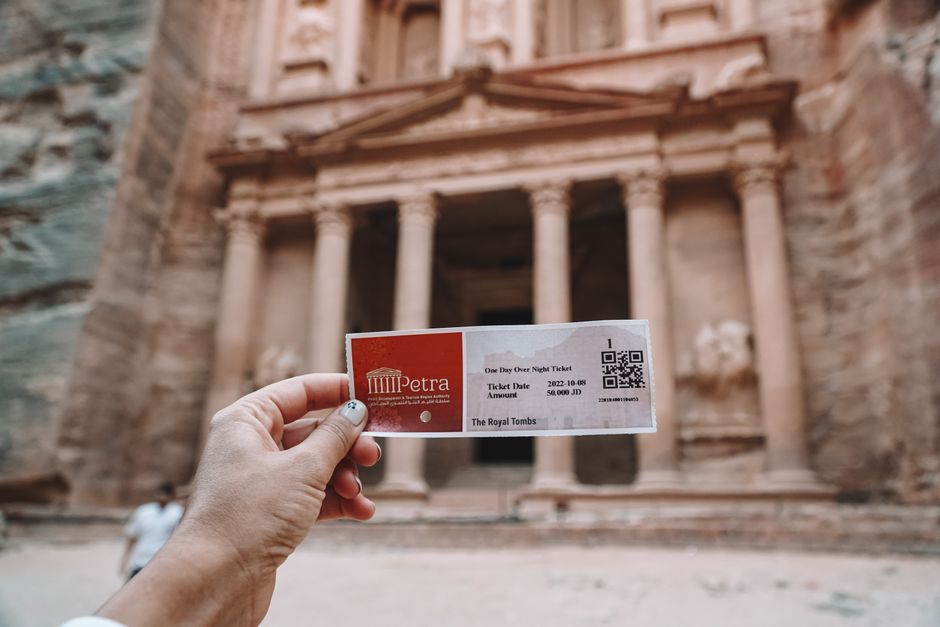
Entry fee: Without the Jordan Pass, a one-day visit costs 50 JD ($70 USD). Two days is 55 JD ($77), three days is 60 JD ($84). The Jordan Pass (purchased online before arrival for 70 JD / $99) includes the one-day Petra entry plus your visa fee (40 JD / $56 normally). Do the math: you save $27 on a day trip, more if you stay longer. Accommodation: Budget guesthouses in Wadi Musa (the town outside Petra) cost 10–15 JD ($14–21) per night for a private room with shared bathroom. I stayed at Petra Gate Hotel on my last trip: clean sheets, hot water, and a rooftop view of the mountains. Dorm beds start at 5 JD ($7). Mid-range hotels like Petra Boutique Hotel run 40–60 JD ($56–84). Food: Breakfast at your guesthouse is usually included (bread, hummus, eggs, yogurt). Lunch: buy falafel or shawarma from a street stall in Wadi Musa for 1–2 JD ($1.40–2.80). Dinner: a simple meal at a local restaurant (mansaf, Jordan’s national dish of lamb and rice) costs 5–7 JD ($7–10). Avoid restaurants inside Petra—they charge 10 JD for a sad plate of rice. Transport: A bus from Amman to Petra (JETT bus, 6:30 a.m. departure) costs 10 JD ($14) each way. Shared taxis from the bus station to your hotel in Wadi Musa are 2 JD ($2.80). Total daily budget (budget traveler): $50–70 including entry fee spread over three days. Money-saving tip I swear by: fill a 1.5-liter water bottle at your guesthouse every morning. Bottled water inside Petra costs 3 JD ($4.20) per liter.
Getting There & Getting Around
From Amman: The JETT bus (www.jett.com.jo) leaves from Abdali station daily at 6:30 a.m. and arrives in Wadi Musa around 10:30 a.m. Cost: 10 JD one way. Book the day before—seats fill quickly. From Aqaba (Red Sea): Shared taxi service runs 4–5 hours; expect 15–20 JD per person. Minibuses also go from Wadi Rum to Petra—hitchhikers and budget travelers often share these for 5 JD per ride. Once in Wadi Musa: You can walk to the Petra visitor center (20 minutes from most guesthouses). The town is hilly, but manageable. Inside Petra: No cars, no buses. The main trail from the entrance to the Treasury is 1.2 km (0.75 miles) of graded gravel. From Treasury to Monastery: 2.5 km (1.5 miles) uphill on uneven stone steps (about 900 steps). Budget travelers walk everything—there’s no shuttle, and horse carriages cost 20 JD per ride (worth it only if you have mobility issues). My hack: Buy a Petra map (1 JD at the visitor center) and use the “back route” from Little Petra (Beidha) to the Monastery. It’s free, takes 45 minutes, and drops you at the Monastery without climbing the main steps. The route is easy to follow: walk from Little Petra through Wadi Siyagh, following cairns. You’ll see a small sign at the base of the Monastery trail. This path saved me 800 steps and 99% of the crowds.
Top Recommendations / Must-Do Activities
1. The Siq at Dawn (Free with entry): Be at the gate at 6:00 a.m. (opening time). Walk fast for the first ten minutes—you want to be alone in the Siq. The colors shift from gray to pink to gold. You will hear only drip of water from the ancient channels. I stood there for fifteen minutes, no other soul. 2. The Monastery at Golden Hour (Free): Hike up at 5:00 p.m. The sun hits the facade at an angle that makes the stone glow. Crowds thin after 4:30 p.m. Bring a flashlight for the walk back down (the path is dark by 6:30 p.m.). 3. High Place of Sacrifice Trail (Free): This 2-hour round-trip climb starts behind the old Petra Church. It’s steep (500+ steps), but the view from the top—over the entire valley—is the best photo I’ve ever taken. Seriously. Go before 8:00 a.m. to avoid heat and tour groups. 4. Little Petra (Beidha) (Free with Petra entry): A 15-minute drive from the main site (shared taxi: 3 JD). It’s a smaller, quieter version of Petra with frescoes in a cave. I spent an hour there and saw three other people. 5. Night at Petra (Paid extra: 17 JD / $24): Held Monday, Wednesday, and Thursday evenings. Candlelit path to the Treasury. It’s touristy, yes, but the atmosphere—250 candles reflecting off the facade—is genuinely moving. Go on a Thursday to avoid the largest crowds. Skip if you’re on the tightest budget (the 17 JD adds up). But if you can swing it, do it once.
Traveler’s Pro Tips
Tip 1: Buy a “Petra by Night” ticket at the visitor center before 6:00 p.m. They sell only 300 tickets per night. I arrived at 7:30 p.m. once and they were sold out. Purchase first thing in the afternoon.
Tip 2: Carry a reusable water filter bottle. Petra has ancient water channels everywhere. Many of them still carry clean spring water from the mountains. My LifeStraw bottle saved me $12 in water costs over three days. Fill up from the spigots near the Treasury.
Tip 3: Negotiate donkey rides with the Bedouins, but do it with respect. If you need a ride up the Monastery steps, the starting price is 30 JD. Offer 10 JD. They’ll likely settle at 15 JD (still expensive, but you’re paying for their animal’s labor, not a taxi). I don’t take donkey rides personally—I’ve seen the animals treated well by most operators—but it’s your call.
Tip 4: Download Maps.me offline map of Wadi Musa before you leave Wi-Fi. The cell signal drops in parts of Petra. Maps.me has all the trails marked. Use the “Petra Archaeological Park” layer to find the free trails.
Tip 5: Pack a small Turkish towel and wear sturdy hiking sandals. The stone gets slippery from sweat in the afternoon. Turkish towels dry fast, weigh nothing, and double as a picnic blanket. I sat on mine eating olives under the Monastery facade.
Common Mistakes to Avoid
Mistake 1: Entering Petra without a map or route plan. The site is huge. I watched a couple walk two hours in the wrong direction toward the “Snake Monument Trail” because they didn’t realize the turn-off for the Monastery was to the right. How to avoid: Grab a 1-JD map at the visitor center. Study it for five minutes before you enter. Highlight the Monastery and High Place of Sacrifice trails.
Mistake 2: Paying for the “camel ride” from the Treasury to the Siq exit. It costs 15 JD for five minutes. Don’t. The walk is flat, takes eight minutes, and you’ll miss the details on the walls if you’re bouncing on an animal.
Mistake 3: Eating at the overpriced buffet inside the site. The “Bedouin restaurant” near the Treasury charges 12 JD for a plate of rice and chicken. Consequence: $17 wasted. Fix: Bring your own lunch—falafel, pita, hummus, and an apple from a market in Wadi Musa costs 3 JD.
Mistake 4: Visiting only one day. I met a couple who flew home after a 4-hour Petra visit. They saw the Treasury, walked 200 meters down the main street, then turned back because they were exhausted. They missed 90% of the site. The consequence: Regret. Spend at least two days—you cannot do Petra justice in a day.
Your Travel Checklist
- Documents: Valid passport (6 months remaining), Jordan Pass printed or downloaded on phone, travel insurance, photocopy of passport kept separate.
- Packing: Sturdy hiking shoes or sandals (with grip), wide-brimmed hat, sunscreen (SPF 50), lightweight long-sleeve shirt for sun protection, small backpack (20 liters max), reusable water bottle, flashlight/headlamp, small Turkish towel.
- Research: Download Maps.me offline maps, study the Jordan Pass website (visitjordan.com), read two recent trip reports on TripAdvisor (dated within 6 months) for current prices, watch a YouTube video of the Monastery trail to know the step count.
- Bookings: JETT bus ticket (reserve 1–2 days ahead), guesthouse in Wadi Musa (free cancellation options on Booking.com), Jordan Pass (must buy 24 hours before arrival).
- Health & Safety: Bring a basic first aid kit (blister pads, antiseptic wipes, paracetamol). Drink only filtered or bottled water. Sunstroke is real—take shade breaks every hour.
- Local Currency: Jordanian Dinar (JD). Bring some cash ($200 in small bills). ATMs exist in Wadi Musa but sometimes run out of cash on weekends. Exchange at a bank in Amman for a better rate than the airport.
- Apps: Maps.me (offline), Google Translate (download Arabic offline pack), Uber (works in Amman but not in Petra), XE Currency Converter.
Traveler FAQ
Q: Is it safe to hike alone in Petra?
A: Yes, absolutely. The trails are well-marked (except the Little Petra back route—bring a map). I hiked solo as a female traveler for three days and never felt unsafe. Bedouins are friendly, but keep your distance from persistent souvenir sellers. Always tell your guesthouse host which trail you’re taking and when you expect to return.
Q: Can I use the Jordan Pass for multiple days at Petra?
A: The standard Jordan Pass includes one day entry only. If you want to stay two or three days, you need to upgrade to the “Jordan Pass + 2 nights” option (additional 10 JD) or pay the difference at the ticket counter. I did this—paid 5 JD extra for a second day at the gate. It’s cheaper to upgrade online beforehand.
Q: Do I need a guide for hiking trails?
A: Not for the main trails (Treasury, Monastery, High Place of Sacrifice). They’re signed. For the Little Petra back route, I recommend a guide (20 JD for half a day) because the trail is unmarked in sections. I hired a local Bedouin teenager named Mohammed for 10 JD—he showed me hidden caves and told me family stories. Worth every dinar.
Q: What’s the cheapest way to get from Amman airport to Petra?
A: Take the Sariya bus from the airport to the Amman bus station (3 JD), then the JETT bus from Abdali to Petra (10 JD). Total: 13 JD ($18). A direct taxi costs 80–100 JD. The bus ride takes 5 hours total with the transfer. Do not take a private driver unless you’re sharing with three people.
Q: Is the Petra Museum worth visiting?
A: Yes, and it’s free with your entry ticket. The museum is near the visitor center, air-conditioned, and has stunning artifacts (Nabataean pottery, a preserved tomb inscription). It adds context to what you see. Allow 45 minutes before or after your site visit.
Ready for Your Adventure?
Petra will not disappear if you arrive with a small budget. It will, however, reveal itself differently to those who walk it with sore feet, a sunburned nose, and a pack full of stale pita. The Treasury at dawn is free. The silence in the Siq after the tour buses leave is priceless. And the moment you stand at the top of the High Place of Sacrifice, looking down at a city that survived empires, you will realize that the best things in travel are not things you buy—they’re things you earn with your own two legs. The money you save on this trip can go toward your next adventure, toward a donation to Jordan’s cultural preservation fund, or simply toward that extra cup of sweet mint tea with a Bedouin elder who tells you stories older than the tombs. Stop waiting for the “right” time or the “right” budget. Start packing. Petra is waiting, and it doesn’t care how much you spent on your flight. It only cares that you came.


No comments:
Post a Comment