Best Adventure Motorcycles for Round-the-World Trips (2026)
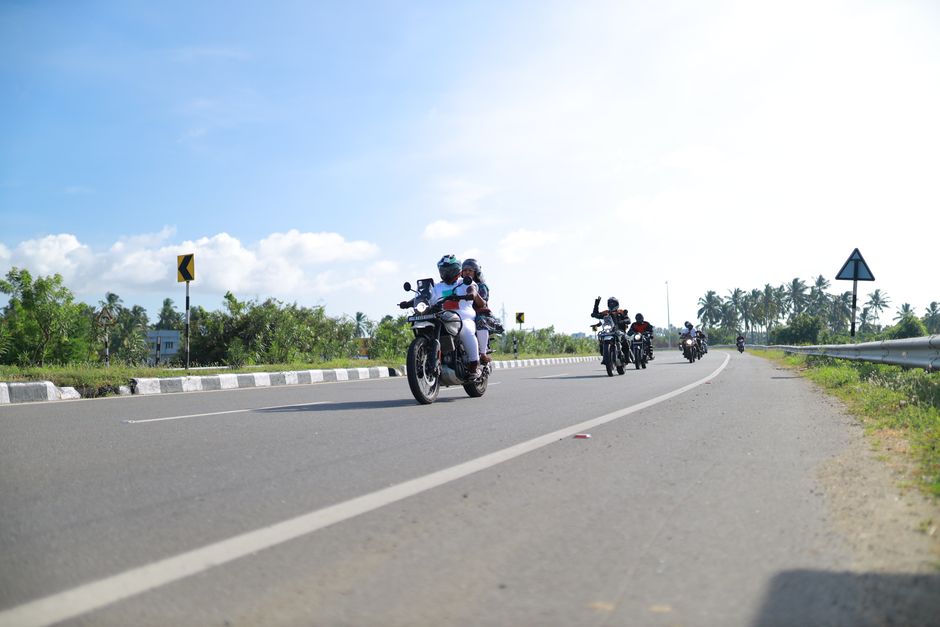
A loaded-up Africa Twin on the Pamir Highway — the kind of picture that makes you want to quit your job and ride. Credit: Pexels
Three days and 1,200 km from Ulaanbaatar, my Africa Twin’s rear shock started puking oil. Not a catastrophic failure — just a slow, greasy weep that told me I’d been overloading it since Kyrgyzstan. I limped into a town with no Honda dealer, no parts, just a welding shop and a guy named Bataa who’d once fixed a Soviet-era Dnepr with a hammer and a piece of rebar. He patched the seal with two rubber washers and some industrial-grade silicone. It held for another 8,000 km. That kind of improvisation works — but wouldn’t you rather choose a bike that doesn’t need it in the first place?
For a round-the-world trip, the bike matters more than the route. Your passport gets you through borders; your bike gets you home. After 15 years of crossing deserts, mud, and tarmac on three continents, I’ve put the three heavyweights — the BMW R 1300 GS Adventure, the Honda CRF1100L Africa Twin, and the Yamaha Tenere 700 — through enough breakdowns, border crossings, and monsoon rains to tell you which one you should actually buy. This isn’t about which bike wins a spec sheet race. It’s about which one will still be running when you’re 30,000 km from the nearest BMW dealer.
The Essentials at a Glance
- 🔧 Reliability: Africa Twin & Tenere 700 lead. GS Adventure close behind if serviced on schedule — but any missed oil change can snowball.
- 🌍 Parts availability worldwide: Honda has the widest dealer network outside Europe. BMW excellent in EU/Americas, thin in Africa/Asia. Yamaha is strong in South America and SE Asia.
- 💰 Cost-to-repair ratio: Tenere 700 = cheap and simple. Africa Twin = moderate. GS Adventure = premium prices for OEM parts, but third-party options exist.
- ⛽ Fuel range: GS Adventure (30 L) ~500 km mixed. Africa Twin (24.8 L) ~420 km. Tenere 700 (16 L) ~350 km — expect to carry extra fuel on remote sections.
- 🧳 Payload capacity: GS Adventure ~240 kg with panniers. Africa Twin ~210 kg. Tenere 700 ~180 kg — light is great until you need to haul spare fuel and a tent for three months.
Bike-by-Bike Breakdown: Reality vs. Marketing
BMW R 1300 GS Adventure — The Bank Vault on Wheels
Walk into any moto-café in Morocco or Bolivia, and you’ll see at least two GSs leaning against a wall. The R 1300 GSA (now with the updated ShiftCam engine) is a weapon for covering long tarmac miles fast. The telelever front end shrugs off bumpy pavement, and the 30 L fuel tank gives you nearly 500 km of range even with aggressive throttle. I rode one from Istanbul to Cape Town in 2024, and the cruise control made 12-hour days feel like eight.
But here’s the trade-off: The engine is a work of art, but when it breaks — and it will, because every machine breaks — parts are expensive and often only available at a dedicated BMW dealership. I snapped a rear brake caliper bracket on a pothole in Ethiopia. The nearest BMW dealer was 1,800 km away in Nairobi. The local mechanic fabricated a bracket from a truck leaf spring; it worked, but it took three days. Also, the GSA weighs 270 kg wet. Picking it up after a low-speed tip-over on a gravel climb is a workout. If you’re going solo, you’d better be strong or have a buddy.
Reliability score: 8/10. The engine is solid up to 100,000 km, but electronics (ABS sensors, TFT screens) are the weak spots.
Honda CRF1100L Africa Twin — The Un-Killable Workhorse
The Africa Twin is the bike I chose for my last round-the-world loop (55,000 km across 22 countries). The 1,084 cc parallel-twin is derived from Honda’s long-running Africa Twin line and shares many internal parts with the CRF450R — which means that in places like India, Thailand, and Brazil, you can often find compatible piston rings, gaskets, and bearings at small motorcycle shops. That’s not a theoretical advantage; it saved my trip in Laos when a valve clearance shim went bad. A local Honda mechanic pulled a shim from a CBR250 and it worked perfectly.
The DCT (dual-clutch transmission) is a controversial feature. Purists hate it; I love it for traffic jams and long dirt road slogs where you’d be using the clutch a thousand times a day. But if the DCT fails — and it can, on high-mileage bikes — you’re looking at a $1,500 repair and a trip to a specialized shop. The manual version (standard transmission) is simpler to fix anywhere. The standard 24.8 L tank gives about 420 km of mixed riding. I’ve pushed it to 480 km on pure highway, but you’ll be sweating as the reserve light flickers.
Trade-off: The Africa Twin feels tall (870 mm seat height on the standard) and the front suspension is a bit soft for aggressive off-road. If you ride a lot of gnarly single-track, the Tenere or KTM 890 might be better. But for a round-the-world mix of tarmac, gravel, and mountain passes, it’s the most balanced overall package.
Reliability score: 9.5/10. Only major weak point: the DCT can be temperamental after 60,000 km. The manual version is nearly bulletproof.
Yamaha Tenere 700 — The Lightweight Overachiever
The Tenere 700 is not a heavy-travel bike; it’s a middleweight adventure bike that punches above its weight for long-distance touring. Powered by Yamaha’s 689 cc CP2 parallel-twin (same as the MT-07), it’s simple, torquey, and incredibly reliable. The engine is proven over hundreds of thousands of kilometers. The bike weighs only 205 kg wet — significantly easier to lift and maneuver on loose terrain. I rode a T7 from Buenos Aires to Ushuaia on the Carretera Austral, and that l light weight made rutted gravel sections almost fun.
What holds it back for round-the-world: The 16 L fuel tank gives roughly 350 km on a good day. On a 400 km stretch of desert in Namibia, I had to carry two 5 L jerry cans strapped to the back. The suspension is decent but non-adjustable on the base model; after 10,000 km of heavy loads, the rear shock will need a rebuild. Also, the bike lacks electronic aids like cornering ABS or ride modes — some people prefer that simplicity, but on a muddy descent, I missed the ability to toggle ABS.
Reliability score: 9.5/10. The CP2 engine is legendary for longevity. The only common failure is the stock chain; upgrade to a DID X-ring before you leave.
| Feature | GS Adventure | Africa Twin (Manual) | Tenere 700 |
|---|---|---|---|
| Price (USD, new) | $22,000 – $25,000 | $14,500 – $17,000 | $10,000 – $11,500 |
| Weight (wet) | 270 kg | 240 kg | 205 kg |
| Fuel capacity | 30 L | 24.8 L | 16 L |
| Parts availability (global) | Excellent in EU/Americas; poor in Asia/Africa | Excellent worldwide (Honda network) | Good in SE Asia, South America; moderate elsewhere |
| Average dealer repair cost (minor service) | $400 – $600 | $250 – $400 | $150 – $250 |
| Common failure after 50,000 km | ABS sensor, final drive bearing | Rear shock seal, DCT (if equipped) | Chain, rear shock |
Rider's Pro Tips
- Carry a spare clutch cable: Even on bikes with hydraulic clutches (GS, Africa Twin), the master cylinder seal can fail. A $30 cable and a few zip ties can save you a stranded day. I’ve seen it happen in Peru at 4,500 m elevation.
- Invest in crash bars and a skid plate before you leave: Don’t wait to buy from a local shop. Aftermarket brands like Outback Motortek (for Africa Twin/Tenere) or Touratech (for GS) are proven. A bent subframe can end a trip.
- Upgrade the suspension before you load up: Stock springs are designed for a 75 kg rider with no luggage. If you weigh 85 kg and ride with 40 kg of gear, the rear will sag. Install a stiffer spring and adjust preload — $200 well spent.
- Learn to true a spoke wheel: Wire-spoke wheels are standard on all three bikes, and after 10,000 km of rough roads, spokes will loosen. A spoke wrench and a few YouTube tutorials will keep your rims round. False wheel truing costs $50 a pop.
- Carry a multimeter and a soldering iron: Electrical faults are the #1 non-crash reason for trip aborts. On the GS, the high-beam relay can fail. On the Africa Twin, the accessory socket corrodes. A $20 multimeter and some heat shrink can diagnose and fix 90% of issues.
Common Mistakes Riders Make
- Overloading the bike: Many first-timers pack 90 kg of gear. Your swingarm and bearings will hate you. Stick to 30–40 kg total, including water and fuel. Weigh your bags before you mount them.
- Ignoring tire selection: The stock Pirelli Scorpion Trail IIs on the GS are for light gravel. For a round-the-world trip with real off-road sections, switch to a 50/50 tire like the Michelin Anakee Wild or Metzeler Karoo 4. Avoid knobbies unless you’re 90% dirt.
- Not testing the bike’s low-speed handling: A fully loaded adventure bike at walking speed is a different beast. Practice figure-eights and U-turns in a parking lot with 20 kg of luggage. The GS’s weight can catch you off guard.
- Skipping a pre-trip valve clearance check: All three bikes require valve adjustments between 24,000–40,000 km. If they’re out of spec, you’ll lose power and risk piston damage. Pay a shop to do it before you cross a border.
Quick Checklist
- Documents: Passport (6+ months validity), international driving permit (IDP), vehicle title/registration, Carnet de Passages if required (e.g., India, Egypt), visa paperwork.
- Gear: Helmet (DOT/ECE), riding jacket with armor, breathable/waterproof layers, gloves (summer + winter), boots that let you walk, rain suit that doesn’t leak.
- Bike Prep: Oil change & filter, new air filter, valve check, brake pads (sintered), new chain & sprockets, tire sealant kit, spare tubes (tubeless for GS/Twin, but still carry plugs).
- Safety: First-aid kit, tourniquet, emergency beacon (Garmin inReach or SPOT), fire extinguisher (small, for bike fires), reflective vest.
- Apps/Navigation: Maps.me (offline), iOverlander (camping/mechanic points), Google Translate (local languages), Windy (weather), WhatsApp (key for communication).
FAQ
Q: Which bike has the best fuel range for remote areas?
A: The BMW R 1300 GS Adventure has the largest fuel tank at 30 L, giving a realistic range of 450–500 km before reserve. The Africa Twin (24.8 L) manages about 400–420 km, and the Tenere 700 (16 L) only 320–350 km. For long desert crossings, the GS Adventure minimizes fuel stops, but the Africa Twin is still adequate with careful planning.
Q: How important is dealer network for a round-the-world trip?
A: Critical for major repairs. Honda has the widest dealer presence globally, especially in Asia, Africa, and South America. BMW dealers are dense in Europe, North America, and parts of South America, but thin east of Turkey. Yamaha is strong in Southeast Asia and South America. If you break down in a remote area, a Honda workshop is most likely to be within a day’s ride.
Q: Which bike is easiest to self-repair on the road?
A: The Tenere 700, due to its simple CP2 engine and lack of complex electronics. The Africa Twin (manual) is a close second — rich aftermarket support and shared parts with Honda dirt bikes. The GS Adventure is labor-intensive and often requires proprietary tools for diagnostics, but basic services (oil, brakes) are doable.
Q: Can I take a Tenere 700 on a year-long round-the-world trip?
A: Yes, but with caveats. You’ll need to carry extra fuel (2–5 L jerry cans) on long stretches, and the lack of electronic aids (no cruise control, no ride modes) makes long highway days more fatiguing. The small front windscreen allows a lot of wind buffeting. However, the bike is light, reliable, and easy to fix, which can save your trip in regions where heavy GS falls would be disastrous.
Q: What’s the average cost for a round-the-world trip on one of these bikes?
A: A realistic budget for a 12-month trip (not including the bike purchase) is $15,000–$25,000 USD. That covers fuel, food, accommodation (budget: camping/hostels, plus occasional hotels), visas, ferry crossings, and routine maintenance. Fuel costs vary, but expect $3,000–$5,000 for 30,000 km. Insurance (third-party only) runs $200–$600 per year depending on regions.
Final Thoughts
Here’s the honest truth: The best adventure motorcycle is the one you can afford, fix yourself, and not cry over when it gets scratched. For a first round-the-world trip, I’d steer most riders toward the Africa Twin (manual version). It’s the Goldilocks of the three — not too heavy, not too weak, parts are everywhere, and it’ll take you from the Arctic Circle to the tip of Tierra del Fuego without fuss. The GS Adventure is a superior machine for pavement-heavy trips with a fat wallet and a willingness to wait for parts. And the Tenere 700? It’s the choice for riders who value lightness and simplicity over comfort and capacity. I’ve ridden all three across continents, and each has left me stranded at least once. But only one of them left me smiling through the breakdown, because I knew a local mechanic five towns away could fix it. That’s the Africa Twin. Buy it, bolt on a skid plate, and go. The world is waiting.
Got a favorite two-wheeled travel machine? Drop a comment below, or share this article with someone planning a big trip. Ride safe.