Best Budget Adventure Motorcycles Under $8,000
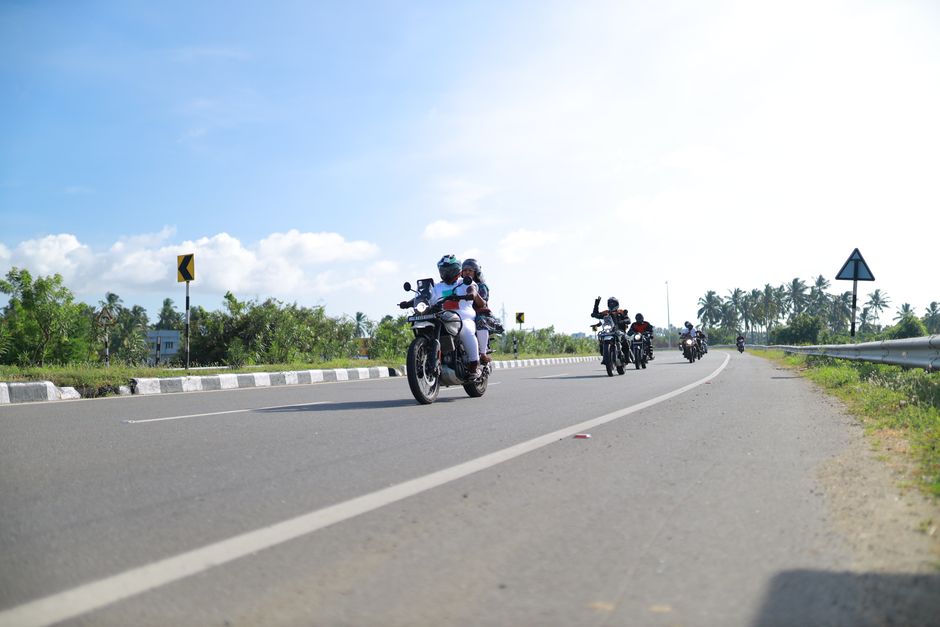
Somewhere near the border of Chihuahua, a KLR 650 sits after 400 miles of dirt, dust, and one questionable river crossing. It didn't complain. I did.
📋 Quick Stats: Budget ADV Buyer's Guide
💰 Price range: $3,500 – $7,800 (used, good condition)
🛣️ Typical mileage on candidates: 18,000 – 45,000 miles
🔧 Tools you'll want on day one: JIS screwdriver, feeler gauges, zip ties, a multimeter, and patience
⚠️ Hidden costs to budget for: Tires ($300-500), valve adjustment ($200-400 if you don't DIY), and a new seat ($150-600 because the stock ones are torture)
I was three days into a run from Denver to the Copper Canyon when my riding buddy's KTM 790 started throwing electrical codes like confetti at a parade. Meanwhile, my beat-up 2008 KLR 650—bought for three grand with 32,000 miles and a dented exhaust—just sat there, idling like a fat tractor, not a single blink from the check engine light. Because there wasn't one. That's the thing about cheap adventure bikes. They're not pretty. They're not fast. But they'll get you home when the fancy stuff folds.
I've crossed borders in Central America on a DR650 with a cracked subframe held together by baling wire. I've frozen my hands stupid on a Versys 650 at 4 AM in Montana. I've watched guys on $25,000 BMWs get their bikes shipped home while I fixed a flat on a V-Strom with a shoe sole and a prayer. So when people ask me what to buy for under eight grand, I don't send them to a dealership. I send them to a classifieds page and a honest look at what they're actually willing to fix on the side of the road.
Here's the real deal. These bikes aren't perfect. They're heavy. They vibrate. The seats feel like park benches. But if you're serious about covering real distance—the kind where you wake up in a different climate than you fell asleep in—one of these four machines will do it without draining your savings or your will to live.
The Essentials at a Glance
- Set a real budget, not a fake one. If you have $8,000, spend $5,000 on the bike and keep the rest for gear, tires, and the first three breakdowns.
- Mileage matters less than maintenance. A 40,000-mile bike with valve adjustments every 6,000 miles is worth more than a 15,000-mile bike that's been sitting in a garage for eight years.
- Carburetors vs. fuel injection. Carbs are simpler to fix with a paperclip and a can of carb cleaner. FI works better at altitude. Pick your poison.
- ABS is nice until it breaks. On a budget bike, non-ABS models are cheaper to buy and easier to work on. Learn to brake without it.
- Aftermarket support is survival. If you can't find a rear brake pedal for a 2003 KLR 650 on Amazon at 2 AM, don't buy that bike.
The Contenders: Four Bikes That Won't Leave You Stranded
1. Kawasaki KLR 650 (2008–2018 models, $2,500–$5,500)
The KLR 650 is the Toyota Hilux of motorcycles. It's ugly. It's slow. It burns oil if you look at it wrong. And it will outlive you if you feed it basic maintenance and the occasional quart of 10W-40.
I bought my first KLR from a guy in Tucson who'd used it to commute 90 miles each way for seven years. The odometer said 74,000 miles. The engine had never been opened. He handed me the keys and said, "It leaks a little from the countershaft seal. Just top it off every other gas stop." That bike took me to Panama and back.
What's good: Massive 6.1-gallon tank on the gen-2 models (2008–2018). A do-it-all platform with a 40-year parts pipeline. You can drop it in a river, pick it up, kick it five times, and ride away. The aftermarket is so deep you can build a completely different bike from catalog parts.
What's bad: The stock suspension is made of wet pasta. The seat is a wooden plank designed by someone who hates sitting. It vibrates at highway speeds until your hands go numb. And the doohickey—the balancer chain tensioner—needs to be replaced immediately unless you want to hear your engine eat itself. That's not a joke. Do it before you ride.
Budget rule of thumb: If you find a 2008–2018 KLR with clean oil, a doohickey fix, and a better seat, buy it before someone else does. Offer $3,500 and walk away happy at $4,200.
2. Suzuki V-Strom 650 (2004–2019 models, $3,000–$6,500)
The V-Strom 650 is what happens when engineers decide to build a motorcycle that just works. The 645cc V-twin is the same basic design Suzuki has been refining since 2004. It's smooth. It's reliable. It sounds like a sewing machine having a mid-life crisis, but it will chug along at 80 mph all day with the cruise control on (if you add cruise control, because Suzuki didn't bother).
I rode a 2012 Wee-Strom from Seattle to Prudhoe Bay. The bike was bone-stock except for hand guards and a taller windshield. It handled the Dalton Highway gravel like a champ—until I hit a frost heave at 50 mph and the rear subframe bolts loosened. I tightened them with a Leatherman and kept going. That's the bike in a nutshell: it'll shake something loose, but it won't break.
What's good: Fuel injection means no carb fiddling at altitude. The engine is bulletproof—I've seen examples with 100,000 miles on the original clutch. The chassis is stable enough for two-up touring with luggage. And the V-twin torque makes highway passes actually possible, unlike the KLR's single-cylinder wheeze.
What's bad: The stock suspension is soft and wallowy. The chain adjuster design is idiotic—you'll curse it every time. And the bike is top-heavy with a full tank. Dropping it in a parking lot feels inevitable. Also, finding one under $5,000 that hasn't been crashed is getting harder every year.
Budget rule of thumb: Look for 2012–2016 models. They have ABS as an option, better fueling maps, and the price has dropped below $6,000 for clean examples. Ignore mileage under 30,000 miles—these bikes don't care.
3. Suzuki DR650 (1996–current models, $2,500–$5,000)
The DR650 hasn't changed since I was in high school. The same air-cooled 644cc thumper. The same carburetor. The same frame that flexes when you stand up on the pegs. It's a dinosaur. And it's the best bike for a certain kind of rider who values simplicity over everything.
I met a German guy in Colombia who'd ridden a DR650 from Ushuaia to Cartagena. His bike had 55,000 miles on it. The paint was gone. The exhaust was patched with JB Weld. He'd replaced the piston rings twice with aftermarket kits shipped to hostels. "It's like a bicycle," he told me over bad coffee. "When something breaks, I see the problem. I fix it. I continue." That's the DR650 experience.
What's good: It weighs 366 pounds wet—light by ADV standards. You can pick it up by yourself after dropping it for the third time in a sand wash. The engine makes decent torque from idle to redline. And the bike is so simple you can diagnose most problems with your eyes and ears, no computer needed.
What's bad: The stock suspension is undersprung for anyone over 160 pounds. The seat is a torture device. The fuel tank is only 3.4 gallons (good luck getting 150 miles between gas stations). The carburetor needs rejetting for altitude, which means you'll be carrying jets and a screwdriver if you cross mountain passes. And the bike vibrates like a paint mixer at 70 mph.
Budget rule of thumb: Find a post-2006 model (better suspension and electrics). Budget $500 for a larger tank (Acerbis makes a 5.3-gallon) and $300 for a seat from Seat Concepts. Total cost under $5,500 for a bike that will cross continents.
4. Kawasaki Versys 650 (2007–2017 models, $3,500–$6,000)
The Versys 650 is the weird uncle of adventure bikes. It's based on the Ninja 650 parallel-twin, which means it revs higher, handles better on pavement, and feels like a sportbike that ate too many burritos. But slap on some dual-sport tires and a set of soft panniers, and it'll go places most people don't expect.
I did a 2,000-mile loop through Utah and Colorado on a 2009 Versys. The bike had 38,000 miles, a cracked fairing, and a fuel gauge that lied about how much gas was left. Somewhere on the White Rim Trail, I passed a guy on a fully loaded Africa Twin who looked at me like I was insane. Maybe I was. But the Versys didn't skip a beat. The parallel-twin engine is smooth at high RPM, and the chassis is genuinely fun in the twisties.
What's good: The engine is the most refined of this group—no vibration, smooth throttle response, and enough power to carry a passenger up a mountain pass. The bike handles better than any of the others on paved roads. And the price for a clean used example is shockingly low because nobody thinks of it as an adventure bike.
What's bad: The ground clearance is poor. The suspension has no adjustability in the front. The stock tires are pavement-oriented. And the bike feels cramped for tall riders—the peg-to-seat distance is short, and the handlebars are low. Also, there's almost no aftermarket for true off-road parts. If you want to go hardcore dirt, buy something else.
Budget rule of thumb: Look for 2015–2017 models with ABS. They're the most refined. Budget $400 for a set of TKC-80 tires and $200 for handlebar risers. This bike is for the rider who does 70% pavement, 30% gravel, and wants to have fun on all of it.
| Bike | Used Price | Weight (wet) | Fuel Range | Best For |
|---|---|---|---|---|
| KLR 650 (gen-2) | $3,500–$5,500 | 432 lb | ~250 mi (6.1 gal) | Remote travel, cheap repairs |
| V-Strom 650 | $3,000–$6,500 | 470 lb | ~220 mi (5.0 gal) | Highway touring, reliability |
| DR650 | $2,500–$5,000 | 366 lb | ~150 mi (3.4 gal) | Off-road, simplicity |
| Versys 650 | $3,500–$6,000 | 475 lb | ~200 mi (5.0 gal) | Pavement twisties, commuting |
Rider's Pro Tips
I've made every mistake you can make on a budget ADV bike. Here are the lessons I paid for with time, money, and skin.
Replace the tires before you leave. I don't care how much tread is left on the stock Trail Wings. They're dangerous on gravel. Spend $400 on Shinko 705s or Heidenau K60s. Your bike will handle better, and you won't low-side in a corner because the rear tire decided to act like a hockey puck. I did that. It hurt.
Learn to adjust your valves. Every bike on this list needs a valve check every 6,000–8,000 miles. A shop will charge you $300–500. A set of feeler gauges costs $12. I taught myself in a hostel parking lot in Nicaragua with a YouTube video and a beer. It's not rocket science. It's just scary the first time.
Budget for a real seat. I rode a KLR from Denver to Prudhoe Bay on the stock seat. I had bruises on my ass that lasted a week after I got home. A Seat Concepts foam and cover kit is $200 and transforms the bike. Do it before you do any trip longer than a weekend.
Carry a spare clutch cable and know how to install it. Clutch cables break at the worst possible time—usually when you're in the middle of nowhere with no cell service. I've snapped two in my life. Both times I was grateful for the zip ties and the pre-routed spare I'd taped to the frame. Thirty minutes of roadside work beats a $400 tow.
Don't trust the fuel gauge. On the KLR, it's optimistic. On the DR650, it doesn't exist. On the V-Strom, it gives up below a quarter tank and just flashes at you. Reset your trip meter every time you fill up. Know your range. I've pushed a DR650 exactly 2.3 miles to a gas station in the Atacama Desert. I will never forget that number.
"The difference between a $5,000 adventure bike and a $20,000 one isn't how far you can go. It's how much it hurts when you drop it. Pick your pain."
Common Mistakes to Avoid
Buying the wrong bike for the terrain. I watched a guy buy a V-Strom 650 for a single-track expedition through Baja. The bike weighed 470 pounds. He sold it after three days. Be honest about where you'll actually ride. If you want BDR trails, get a DR650. If you want to cross the country on pavement, get a V-Strom. Don't mix them up.
Skipping a pre-purchase inspection. A $150 mechanic's inspection can save you $2,000 in repairs. I bought a KLR once that looked clean but had a bent frame from a front-end collision. I didn't notice until I tried to install a new steering head bearing. The bike was never right. Learn from my stupidity.
Overloading the bike. Budget ADV bikes have weak subframes and soft suspension. If you bolt on 80 pounds of aluminum panniers, a top case, and a tent, you'll exceed the bike's design limits. I've cracked a KLR subframe twice. Keep your gear under 50 pounds total. Pack lighter. You don't need four pairs of jeans.
Ignoring the electrical system. Old budget bikes have tired stator outputs. If you add heated grips, auxiliary lights, and a phone charger, you'll drain the battery faster than the alternator can fill it. Check your charging voltage at idle and at 4,000 rpm. If it's below 13.5 volts at speed, you need a stator or a regulator. I learned this at -10°F in Wyoming with dead heated gloves.
Quick Checklist
Before you buy:
- Check for oil leaks at the countershaft seal (KLR) and valve cover gasket (all)
- Spin the rear wheel and listen for bearing noise
- Test the charging system with a multimeter
- Check the chain and sprockets for wear
- Look for cracks in the subframe near the welds
- Ask for maintenance records. If they don't exist, budget for a full service
Before you leave on a long trip:
- Replace tires if they're older than 5 years or have less than 50% tread
- Adjust valves (or pay someone to do it)
- Replace spark plugs
- Install a new air filter
- Check all lights and switches
- Pack a tool roll with: 10-14-17mm sockets, JIS screwdriver, zip ties, duct tape, tire plugs, a mini pump, and a spare clutch cable
- Do a 100-mile shakedown ride with full luggage to find the rattles before they become problems
FAQ
Q: Can I find a reliable adventure motorcycle under $8,000 that can handle off-road trails?A: Yes, the Suzuki DR650 and Kawasaki KLR 650 are the two most proven budget adventure motorcycles for off-road use under $8,000, but they require immediate mods to the suspension and seat for comfort on rough terrain. The DR650 is lighter and more capable on singletrack. The KLR is better for long-distance dirt roads where fuel range matters.
Q: Is it better to buy a used KLR 650 with high mileage or a cheap Chinese ADV bike new?A: A used KLR 650 with 30,000–50,000 miles and documented maintenance is infinitely more reliable than any new Chinese adventure bike under $8,000. I've seen too many friends stranded by electrical failures on low-cost imports. The KLR's parts availability alone makes it the better choice when you're 500 miles from the nearest dealer.
Q: How much should I spend on a used V-Strom 650 for long-distance travel?A: A clean Suzuki V-Strom 650 with 20,000–35,000 miles, no crash damage, and service records should cost between $4,500 and $5,500. Factor in another $800–1,200 for tires, a taller windshield, hand guards, and a seat upgrade before your first long trip.
Q: What are the most common mechanical problems on budget adventure bikes under $8,000?A: The most common issues across all four bikes are stator/regulator failures (especially on KLRs and DRs), carburetor clogging from ethanol fuel, loose spokes, and subframe cracks from overloading. On the KLR specifically, the balancer chain tensioner (doohickey) must be replaced. On the V-Strom, the rear brake master cylinder can leak at the pushrod seal.
Q: Should I choose carbureted or fuel-injected for a multi-country trip?A: For trips crossing high mountain passes over 10,000 feet, fuel injection is less hassle because it self-adjusts for altitude. But for trips through remote areas in developing countries where you might need to fix the bike with basic tools, a carbureted bike like the DR650 or KLR is easier to repair and source parts for. Pick based on your route, not your ego.
Final Thoughts
Look, I'm not going to sit here and tell you that a $5,000 used adventure bike is as good as a $15,000 Africa Twin. It's not. The suspension is worse. The brakes are weaker. The electronics are from 2008. You'll spend more time wrenching and less time riding. But here's the thing nobody tells you about the expensive bikes: when they break—and they will break—the repair costs will make you cry. A new TFT screen for a modern ADV bike costs more than my entire KLR. A valve adjustment at a dealer costs more than a month of groceries.
The bikes I listed here? You can fix them with basic tools and a stubborn attitude. You can buy parts in a village hardware store. You can drop them in a river and laugh instead of crying. They're not the best adventure bikes ever made. They're the best adventure bikes for people who want to actually go on an adventure without going broke.
I've ridden all four across deserts, mountains, and jungles. They all have warts. But they all got me home. That's what matters.
Save this guide. Bookmark it. Print it out and stuff it in your tank bag. And when you finally buy one of these bikes, take it somewhere that scares you a little. That's the whole point.
What's your budget ADV bike story? Did I miss a bike that belongs on this list? Drop a comment below. I read every one, and I'll argue with you in the replies if I think you're wrong. That's half the fun.


No comments:
Post a Comment