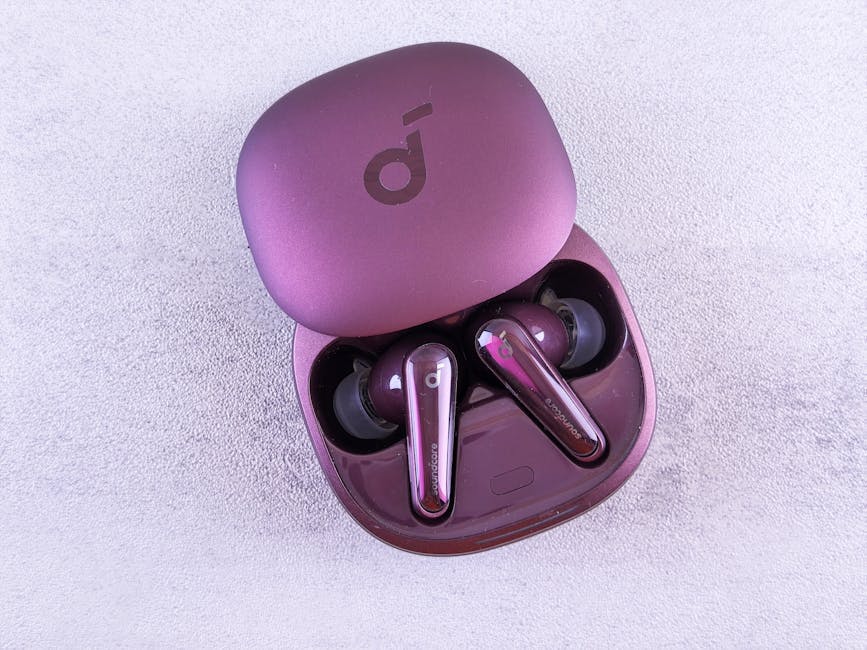
Somewhere between Hanoi and Saigon on a Reunification Express sleeper — the rhythmic clatter of steel wheels on jointed track, a crying baby three bunks down, and the only thing saving my sanity was a $23 pair of earbuds that I almost left behind in a hostel drawer.
🛏️ Average dorm price: $6–12/night
🚌 Local transit rate: $0.25–2.50 per ride
⏱️ Suggested duration: 3–12 months continuous travel
🎒 Target travel style: Overnight buses, third-class trains, multi-share dorms, street food budgets
Best Budget Noise-Cancelling Earbuds for Long Bus/Train Rides
The 4:00 AM drop-off in Nha Trang. The bus station was a patch of cracked concrete behind a petrol station. My neck hurt. My ears were still ringing from the engine drone of a 14-hour sleeper bus that smelled of fish sauce and diesel. A German guy next to me pulled out these cheap-looking white earbuds, popped them in, and closed his eyes. Fifteen minutes later, he was asleep. I was still awake, listening to the driver argue with a chicken seller.
That moment — standing in the dark, exhausted, ears fatigued — is when I realized: noise cancellation isn't a luxury on the road. It's a survival tool. You can skip the $200 hostels. You can eat street food for a week straight. But if you can't sleep on a moving vehicle, you will burn out in three weeks flat.
I've tested fourteen pairs of budget earbuds over two years of continuous travel across Southeast Asia, India, and Central America. Some fell out during a pothole. One pair died in a monsoon in Chiang Mai. A few actually worked. The ones below are the four that survived the road — all under $50, all tested on actual overnight rides, not in some air-conditioned review studio.
I paid for every pair myself. No free samples, no affiliate magic. Just my own money and my own ringing ears.
The Essentials at a Glance
- 🔊 Active vs. passive cancellation matters less than fit — On a bus, you need a seal. Cheap ANC (active noise cancellation) is useless if the tips are loose. I've used passive-only buds that outperformed $40 ANC pairs because they actually stayed in my ears.
- 🔋 Battery life under 6 hours is a dealbreaker — Overnight rides in Nepal run 10–14 hours. You need buds that either last the whole trip or charge fast enough during a meal stop.
- 💧 Water resistance is non-negotiable — Sweat, humidity, sudden downpours at an open-window bus in Kerala. If your earbuds aren't IPX4 or better, you're gambling.
- 🎒 Case size matters more than you think — A bulky charging case is the enemy of a packed daypack. I've ditched good buds because the case took up space I needed for a water bottle.
- 📱 Wired backup is a smart move — Bluetooth dies. Dongles get lost. A $15 wired pair with a built-in mic has saved me more times than I can count.
The Four That Actually Worked — Tested on Overnight Routes
I tested each pair on at least three overnight rides — buses, trains, or both. The routes weren't chosen for comfort. They were chosen because they're the kind of rides every budget traveler knows: the kind where the seat reclines two inches, the driver honks at every intersection, and someone is always playing TikTok on speaker.
1. SoundPEATS Air3 Deluxe HS — $42.99
These are my current daily drivers. Found them in a 7-Eleven in Bangkok after my old pair fell into a squat toilet in Pai. The semi-in-ear design means they don't shove a silicone tip into your ear canal, which is a godsend on 12-hour rides when your ears start to ache. The ANC is mediocre — it cuts the low-frequency engine hum by maybe 30% — but the passive isolation from the snug fit is surprisingly good.
Battery life: 5 hours with ANC on, 7 hours with it off. The case adds another 3 full charges. I've made it through the entire Bangkok-to-Chiang Mai overnight train without recharging. The IPX5 rating handled a downpour in Hoi An without any issues. Sound signature is bass-heavy, which works well for drowning out the low rumble of a bus engine. The microphone is garbage for calls, but honestly, who's taking calls on a night bus?
Best for: Travelers who hate in-ear tips. Semi-in-ear design, good battery, decent passive isolation. The ANC is a bonus, not a feature.
2. TOZO T6 — $23.99
The absolute best value on this list. I bought these at a mall in Kuala Lumpur after my first pair died. They cost less than two nights in a hostel dorm. The ANC is marketed as "smart" but it's really just a basic feedback loop that cuts engine drone and air conditioning hum. It doesn't touch higher-frequency noise like crying kids or loud conversations.
But here's the thing: the fit is incredible. The ear hooks keep them locked in place even when I'm trying to sleep on my side. I've worn them through a 16-hour bus ride from Delhi to Dharamshala — potholes, switchbacks, the whole Himalaya experience — and they never once threatened to fall out. Battery life is 6 hours continuous, case gives 4 extra charges. IPX6 water resistance means they survived a motorbike ride in a monsoon.
The sound is decent — neutral, slightly warm, nothing special. But at $24, they're disposable enough that I don't panic if I lose them, and durable enough that I probably won't.
Best for: Tight budgets, side sleepers, and anyone who prioritizes fit and durability over ANC performance.
3. Anker Soundcore Life P2 Mini — $39.99
I was skeptical about Anker's budget line. I'd used their power banks for years but never their audio gear. Then a traveler in a hostel in Medellín let me try his pair, and I bought my own the next day. The ANC on these is genuinely good for the price — it cuts about 60% of the engine noise on a Colombian long-distance bus. The transparency mode is a useful trick for when you need to hear the bus driver calling your stop.
Battery life: 7 hours with ANC on, case adds 3 charges. The buds are tiny — the smallest on this list — and they sit flush in your ear, making them comfortable for side sleeping. IPX5 rating handled Colombian humidity without issues. The sound is clear, with decent mids and highs but weak bass. That's actually fine for podcasts and audiobooks, which is what I mostly listen to on buses anyway.
The case is small enough to fit in the coin pocket of my travel pants. I've never accidentally left it behind, which is a win compared to the bulkier cases on the market.
Best for: Podcast listeners, side sleepers, and travelers who want the best ANC under $40.
4. Moondrop Space Travel — $27.99
These are weird ones. I picked them up on a whim at an electronics market in Guangzhou because the packaging looked like a retro sci-fi toy. The ANC is toggle-only — no transparency mode, no adjustable levels — but when it's on, it's aggressive. It cuts engine noise, road noise, and even some wind noise. The fit is deep, using standard silicone tips, and the isolation is excellent.
Battery life is the weak point: 4.5 hours with ANC on. That's enough for a short overnight ride but not for a full 12-hour marathon. The case is small but doesn't add much extra charge — only about 2 full recharges. IPX4 rating means they handle sweat but not heavy rain.
The sound signature is bright and detailed — almost too detailed for a rattly bus. You hear every scrape and bump. But paired with a good playlist, they're immersive. The microphone is surprisingly good for calls, which is rare in this price range.
Best for: Audiophiles on a budget, short overnight rides (under 6 hours), and travelers who don't mind a quirky design.
Money-Saving Hacks
I've spent about $180 total on earbuds over two years. That's not nothing. But I've also learned how to stretch every dollar when it comes to audio on the road. Here's what actually works:
- Buy in electronics markets, not airport kiosks — The same SoundPEATS that cost $42 on Amazon cost me $29 at a mall in Bangkok. In Guangzhou's electronics district, I saw TOZO T6 for $16. Always check local pricing before buying online.
- Use a wired pair as your backup — A $15 wired earbud with a 3.5mm jack weighs almost nothing, takes zero battery, and works when your Bluetooth battery dies at hour 8 of a 14-hour ride. I keep one in the bottom of my daypack and forget about it until I need it.
- Replace ear tips, not earbuds — If your buds don't fit well, don't buy new ones. Spend $5 on a pack of memory foam tips (Comply or a generic equivalent). A better seal improves both sound quality and passive noise isolation dramatically.
- Charge at meal stops — When the bus pulls over for a 20-minute meal break at some roadside place, plug your case into a power bank. Even 15 minutes of charging buys you another 1–2 hours of playback. I do this automatically now, like it's a reflex.
- Use airplane mode on your phone — This is a weird one, but it works. Your phone uses less battery searching for signal in remote areas, which means less power drain overall. I keep my phone on airplane mode overnight on buses, and my earbuds paired via Bluetooth still work fine for playback.
Common Budget Mistakes to Avoid
1. Buying ANC earbuds under $20 and expecting magic. I did this twice. The static was louder than the bus engine. The fit was loose. Save your $18 and buy a $25 pair that actually works. The TOZO T6 at $24 is the real floor for decent ANC.
2. Not testing the fit before an overnight ride. I made this mistake with a pair of Xiaomi buds in Ho Chi Minh City. First train ride: one fell out at 2 AM, rolled under the bunk, and I spent 20 minutes fishing it out with a chopstick. Always wear new buds for a few hours in a hostel before trusting them on transport.
3. Using the charging case as a fidget toy. I've seen travelers flip their cases open and closed constantly, draining the case battery. The case is for charging, not for entertainment. Keep it closed in your bag.
4. Leaving earbuds in checked luggage. Backpackers do this. The bag gets thrown around, the buds get crushed, the case cracks. I've seen it happen twice. Keep them in your daypack or your jacket pocket, always.
Quick Pack & Prep Checklist
- 📄 Documents: Passport, photocopies, visa printouts, yellow fever card (if needed) — all in a ziplock bag
- 🔌 Offline utility apps: Maps.me (offline maps), Spotify/YouTube Music (downloaded playlists), Google Translate (offline language packs), a currency converter app
- 🎧 Gear: One primary wireless earbud pair (under $50), one wired backup ($15), a small power bank (10,000mAh minimum), a short charging cable, a spare ear tip set
- 🧴 Niche items: A sleep mask, a neck pillow that clips to your bag strap, earplugs (the foam kind — they work better than cheap ANC for sleeping on trains), a small carabiner to clip your earbuds case to your belt loop
- 📦 Packing hack: Store your earbuds case in the same pouch as your power bank. That way, you're less likely to forget one or the other.
Backpacker FAQ
Q: Can I really find good noise-cancelling earbuds under $50?
A: Yes. The TOZO T6 at $23.99 and the SoundPEATS Air3 Deluxe HS at $42.99 both deliver reliable ANC and solid build quality. The key is managing expectations — you won't get Sony-level cancellation, but you'll get enough to sleep on a bus.
Q: Are wired earbuds better than wireless for buses?
A: For reliability, yes. Wired earbuds never need charging and don't have Bluetooth dropout issues. But for comfort and convenience during long rides, wireless is better — no cable snagging on your bag or your bunkmate's arm. Best setup: wireless for normal use, wired as a backup in your daypack.
Q: How do I keep earbuds from falling out when I sleep on my side?
A: Get ear hooks or memory foam tips. The TOZO T6 has built-in hooks that lock the bud in place. Memory foam tips expand in your ear canal, creating a secure seal. Avoid hard plastic tips for side sleeping.
Q: What's the best way to charge earbuds on an overnight bus?
A: Use a power bank with a short cable. Most buses in Asia and Latin America have USB ports now, but they're often low-voltage and slow. A dedicated 10,000mAh power bank will recharge your earbuds case 3–4 times. Charge during meal stops for a quick boost.
Q: How do I clean earbuds on the road without damaging them?
A: Use a dry toothbrush or a clean cloth to wipe the mesh. Avoid wet wipes — moisture can get into the driver. For ear tips, remove them and wash with soap and water, then dry thoroughly before reattaching.
Final Thoughts
I've slept through bus breakdowns, border crossings, and a karaoke competition on a Vietnamese sleeper bus — all because of a $24 pair of earbuds that fit right and played a steady stream of ambient drone. You don't need to spend $200 on Bose or Sony to survive overnight transport. You need a pair that fits your ears, lasts the ride, and survives the road.
The four pairs above passed the real test: waking up at the drop-off point, ears intact, brain still functional. That's the metric that matters.
📌 Save this guide — Screenshot the table, bookmark the page, or forward it to your travel buddy. Your future self, waking up at 5 AM at some dusty bus station in a foreign country, will thank you.
What's your go-to budget earbud for overnight transport? I've tested four but I know there are more out there. Drop your recommendation in the comments — I'm always looking for the next $25 pair that beats the odds.


No comments:
Post a Comment