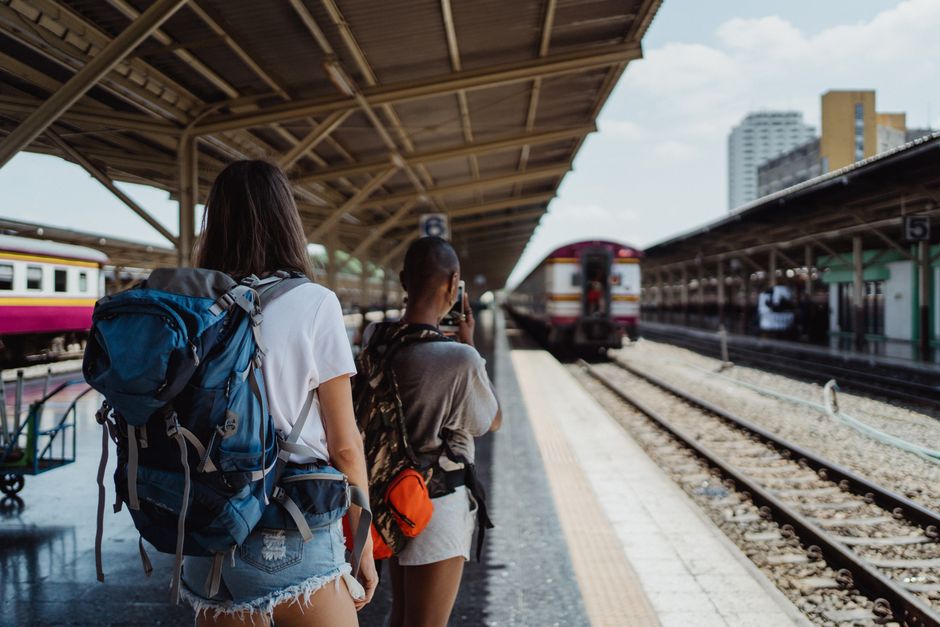
Somewhere between Bangkok and Chiang Mai — the upper bunk, a missing curtain, and a coffee that was mostly condensed milk. I loved every rough minute of it.
💰 Daily target: $22–28/day (all-in)
🛏️ Average dorm bed: $5–8/night
🚌 Local transit rate: $0.30–1.50 per trip
⏱️ Suggested duration: 3–6 months for Southeast Asia loop
🎒 Target travel style: Overnight transport as lodging — sleep moving, save a night's rent
Best Cheap Sleeper Trains and Buses for Backpackers in Asia
The air-con on the overnight train from Bangkok to Chiang Mai kicked on at full blast around 10 PM. I was in an upper bunk — the narrow one where you can't sit up without smacking your skull. My towel, still damp from a hostel shower that morning, was draped over the foot railing. It never fully dried. Somewhere around Phitsanulok, the vendor came through with a tray of fried rice wrapped in banana leaf. It cost 30 baht. It was the best thing I ate that week.
The toilet by morning was a biohazard. The coffee was instant mixed with sweetened condensed milk — the same stuff they use for street-side iced coffee at 7-Eleven. I loved it. Not because it was good, but because it was real. That's the thing about budget travel in Asia: you trade comfort for texture. You trade space for stories. And if you're reading this, you probably want both — without burning through your savings by day three.
I've taken overnight sleeper trains and buses across Thailand, Vietnam, India, Malaysia, and Cambodia — mostly because I was too cheap to pay for a hostel that night. But also because there's something about waking up in a new city, groggy and stiff-necked, that makes the whole thing feel like an adventure. This guide breaks down which routes are worth the sore back, which ones are outright scams, and how to book them without losing your mind — or your money.
The Essentials at a Glance
- 🚆 Best value sleeper train: Bangkok → Chiang Mai (upper bunk ~800 baht / $22) — book 7 days ahead online or 3 days at the station
- 🚌 Best budget bus: Kuala Lumpur → Penang (Butterfly bus, ~35 ringgit / $7.50) — book at Pudu Sentral day before
- 🚆 Most scenic sleeper: Hanoi → Saigon via Reunification Express (hard sleeper ~700,000 VND / $29) — bring your own pillow and a padlock
- 🚌 Biggest scam risk: Ho Chi Minh → Phnom Penh bus (fake "VIP" tickets sold on the street) — only buy at the official station or online via Baolau
- 🚆 Best for solo backpackers: Delhi → Varanasi overnight sleeper (3AC ~800 INR / $9.50) — book on IRCTC at least 2 weeks ahead
Route by Route: What Actually Works
Bangkok → Chiang Mai: The Gold Standard of Budget Sleeper Trains
This is the one everyone talks about — and for once, the hype is accurate. State Railway of Thailand runs two daily departures: the #9 (express) and the #51 (ordinary). Take the #9 if you can. It leaves at 6:10 PM, arrives around 6:45 AM. The #51 is slower, stops at every tiny station, and you'll be woken up at 3 AM by vendors yelling "Khao tom! Khao tom!" at each stop.
Cost breakdown: Upper bunk fan class is 791 baht ($22). Lower bunk is 881 baht ($24.50). Second-class AC sleeper (the one with the curtain and slightly less terrifying toilet) runs about 1,200 baht ($33). If you're on a strict budget, go fan class. Bring a sleep sheet. The AC cars freeze you out; the fan cars let you actually breathe.
Booking: You can book online via the D-Ticket system (though it requires a Thai phone number and some patience) or at the station up to 30 days ahead. I recommend going to Krung Thep Aphiwat Central Terminal (Bang Sue) 2–3 days before — the counters are efficient, and the agents speak enough English to handle basic bookings. Avoid third-party sites that charge 300% markup. I've seen 3,000 baht tickets listed as "sold out" on one site, then walked into the station and paid 800 baht for the same train.
Honest feedback: The food cart is fine — fried rice, instant noodles, questionable spring rolls. Bring a water bottle. The upper bunk has no storage net, so keep your daypack on the bunk with you. The curtain in second class AC gives you privacy. In fan class, you get a metal bar and a prayer.
"The upper bunk on the Bangkok–Chiang Mai train is 60 centimeters wide. I'm 5'10". My feet hung off the edge. I slept better than I do in most hostels."
Hanoi → Saigon: The Reunification Express (Hard Truths Edition)
Everyone wants to do the full Hanoi to Saigon route. It's romanticized in a dozen travel blogs. The reality: it's a 30+ hour ride on a hard sleeper bunk that was designed for someone shorter and lighter than the average Western backpacker. The train shakes. The AC drips. At 3 AM in Da Nang, someone will board with a cardboard box of live chickens.
Cost breakdown: Hard sleeper (6-berth compartment) is about 700,000–900,000 VND ($29–37). Soft sleeper (4-berth) is 1,100,000–1,400,000 VND ($45–58). If you can, pay the extra for soft sleeper. The difference is a door that closes properly and a mattress that's 2 cm thicker. Worth every dong.
Booking: Use Baolau or 12Go — both charge a small markup (around $2–4) but save you the headache of navigating the Vietnamese rail system in person. If you're booking at the station, go to Ga Hà Nội (Hanoi station) on Lê Duẩn street. The agents there are used to foreigners. Bring your passport.
Honest feedback: The food on board is bad. Like, really bad. Instant noodles and a hard-boiled egg that's been sitting in a basket for 8 hours. Stock up at a convenience store before boarding — I grabbed two packs of Mi Goreng, a bag of oranges, and a liter of water. Cost: 45,000 VND ($1.85). Also: bring earplugs. The train horn at 2 AM in rural Vietnam is loud enough to wake the dead.
Delhi → Varanasi: The Chaos Special
This is not a comfortable ride. But it's an experience. The overnight train from Delhi to Varanasi is 10 hours of pure Indian rail chaos — chai wallahs walking the aisles at 5 AM, families eating curry off banana leaves, and a toilet situation that I will not describe in detail. You take this train because it costs $9 and drops you in the spiritual capital of India with 800 rupees still in your pocket.
Cost breakdown: Sleeper class (no AC) is about 400 INR ($4.80). 3AC (air-con, 3-tier) is 800 INR ($9.50). 2AC is 1,200 INR ($14.30). For the love of god, do not take sleeper class in summer. The heat is brutal. Go 3AC — it's still cheap, and the berths are padded. You'll actually sleep.
Booking: Indian Railways uses IRCTC — a website that feels like it was designed in 2003 and never updated. You need an IRCTC account to book, which requires an Indian phone number for verification. Workaround: use 12Go or ixigo (app-based, accepts foreign cards). Or go to New Delhi Railway Station (Paharganj side) and queue at the foreign tourist counter. Bring your passport and a lot of patience. I waited 45 minutes. The guy in front of me was booking tickets for a family of six. It took him 20 minutes.
Honest feedback: The food on Indian trains is actually decent — veg thali for 100 INR ($1.20), or you can order via the IRCTC food app (yes, they deliver to your seat). The station at Varanasi (Varanasi Junction) is chaos. Have your guesthouse arrange a pickup. I didn't, and paid 400 INR for a tuk-tuk that should have been 150. Live and learn.
Ho Chi Minh City → Phnom Penh: The Bus Gauntlet
This is the route that separates budget travelers from the rest. The bus from Ho Chi Minh City to Phnom Penh is cheap — around $10–12 — but the border crossing at Moc Bai / Bavet is a known scam hub. Fake visa fees, fake "health checks", and fake "booking fees" are standard. I watched a guy pay $40 for a visa that cost $30, plus an extra $5 "processing fee" that went straight into the agent's pocket.
Cost breakdown: Bus ticket is 250,000–350,000 VND ($10–14). Add $30 for the Cambodian visa on arrival (e-visa is $36, but saves you the hassle). Total: about $40–45 for the full crossing.
Booking: Use Baolau or Vexere for online booking. Don't buy from street touts in Phạm Ngũ Lão (the backpacker district) — they'll sell you a "VIP bus" that turns out to be a decrepit minibus with no AC. Book with Mekong Express or Giant Ibis — both are reputable, have AC that actually works, and include a bottle of water and a snack. The ride takes 6–7 hours including the border stop.
Honest feedback: The border crossing is slow and chaotic. You'll get off the bus twice — once at Vietnamese exit, once at Cambodian entry. Keep your passport, visa photo (bring two passport photos — they always ask for one), and $35 in crisp USD for the visa fee. Torn or wrinkled bills get rejected. I saw a girl cry because her $50 bill had a tiny tear. Bring new bills. It matters.
Kuala Lumpur → Penang: The Budget Bus Benchmark
This is the easiest, cheapest, and most comfortable long-distance bus in Southeast Asia. The route from KL to George Town (Penang) takes about 4.5 hours, costs $7.50, and the buses are genuinely clean — AC that's not arctic, reclining seats that aren't broken, and a toilet that doesn't make you question your life choices.
Cost breakdown: Bus ticket is 35–45 ringgit ($7.50–9.50). Ferry from Butterworth to George Town is 1.20 ringgit ($0.28). Total: under $10 for a door-to-door journey.
Booking: Go to Pudu Sentral (KL's main bus terminal) at least one day ahead. The counters are clearly marked, and the agents speak English. You can also book on BusOnlineTicket.com or EasyBook. I recommend Butterfly Bus or Konsortium — both have newer fleets. Avoid the 4 AM departure unless you enjoy arriving in a sleeping city with nowhere open to eat.
Honest feedback: The Butterworth ferry terminal is a bit sketchy at night. If you arrive after 8 PM, consider the bus direct to George Town (Konsortium runs a direct Penang route). Also: the bus from KL drops you at the main bus terminal, not the ferry terminal. You'll need to take a Rapid Penang bus (free shuttle) or a Grab (about $2) to get to the ferry. Not a big deal, but good to know.
Money-Saving Hacks
- Book overnight transport and skip the hostel. If you're taking a 10-hour overnight train, that's a night you don't pay for a bed. I've done Bangkok–Chiang Mai, Hanoi–Saigon, and Delhi–Varanasi this way. Saves $5–12 per night. Do it 2–3 times a week and you're saving $15–36 per week — enough for an extra day's food and a decent massage.
- Use 12Go only as a reference, not a booking tool. 12Go is great for checking schedules. Their markup on trains is usually 10–20%, which is fine. Their markup on buses can reach 50–100%. Cross-check on Baolau (for Vietnam/Cambodia) or the local operator's site. I saved $14 on a Hanoi–Sapa bus by booking directly with Sapa Express instead of 12Go.
- Pack a sleep sheet and a sarong. The sleep sheet goes between you and the bunk. It blocks whatever mystery stains exist. The sarong doubles as a curtain (clip it with a binder clip to the bunk frame), a towel, a pillow cover, and a blanket. I bought mine in Chiang Mai for 150 baht ($4.20). Best travel investment I've made.
- Buy snacks at the station, not on the train. The markups on board are 100–300%. A bottle of water that costs 10 baht at the 7-Eleven outside the station costs 30 baht on the train. A pack of biscuits that's 15 baht in the store is 40 baht on the cart. Stock up before boarding. I carry a reusable water bottle and fill it at the station (most Asian stations have drinking water dispensers).
- Use a VPN to book Indian trains. IRCTC sometimes blocks foreign IPs or keeps crashing. A VPN set to India makes the site work 80% better. I used ProtonVPN (free tier) connected to Mumbai. The booking process went from "this is impossible" to "annoying but doable."
Common Budget Mistakes to Avoid
- Buying "VIP" tickets from street touts. In HCMC's backpacker district, you'll see signs touting "VIP Bus to Phnom Penh — $12!" The reality is a minibus with no AC, a driver who chain-smokes, and a "break" at a roadside restaurant where the food costs 3x what it should. Only buy at the official station or verified online platforms.
- Assuming all overnight buses have working AC. I learned this the hard way. Boarded a night bus in Da Nang at 10 PM. Temp outside was 33°C (91°F). The AC was "broken." The driver said it would be fixed at the next stop. It was not. I spent 8 hours in a moving oven. Pay the extra $2 for a reputable operator. Check recent Google Reviews (last 3 months, not 3 years).
- Booking too early for flexible routes. For popular routes like Bangkok–Chiang Mai, you need to book a week ahead. For less popular routes (like KL–Penang or HCMC–Phnom Penh), booking 1–2 days in advance is fine. I've seen travelers lock themselves into a schedule by booking 3 weeks of transport in advance, then they miss a bus because they want to stay an extra day in a city they love. Stay flexible. Book as you go.
- Not checking the departure station. In Hanoi, there are two main bus stations: Gia Lâm (north routes) and Mỹ Đình (west/south routes). Showing up at the wrong one means a 40-minute taxi ride through traffic. I did this. Missed the bus to Sapa. Had to wait 4 hours for the next one. Check your ticket. Confirm the station. Use Google Maps to pin it.
Quick Pack & Prep Checklist
📄 Documents & Money
- Passport + 2 photocopies (keep separate from original)
- Visa photos (2–4, passport-size) — required for Cambodia, Vietnam, Laos borders
- ATM card with no foreign transaction fees (Charles Schwab, Revolut, or Wise)
- $50–100 in crisp USD for visa-on-arrival fees (torn bills = rejected)
📱 Apps to Download Before You Go
- 12Go — schedules and booking for trains/buses across Southeast Asia
- Baolau — Vietnam/Cambodia/Laos train and bus booking (lower markup than 12Go)
- IRCTC or ixigo — Indian train booking (create account before leaving)
- Grab — ride-hailing for Thailand, Vietnam, Malaysia, Cambodia
- Google Maps offline maps — download city maps for every stop
🎒 Niche Gear That Actually Matters
- Sleep sheet (lightweight, packable) — $15 on Amazon or 150 baht at MBK in Bangkok
- Binder clips (4-pack) — clip a sarong to bunk frame for privacy
- Earplugs + eye mask — the 3 AM chai wallah in India is loud
- Carabiner (small) — clip your daypack to the bunk rail while you sleep
- Reusable water bottle with filter (e.g., Grayl or LifeStraw) — saves $1–2/day on water
Cost Comparison Table: Sleeper Trains vs. Buses
| Route | Type | Cost (USD) | Duration | Comfort (1-5) | Booking Difficulty |
|---|---|---|---|---|---|
| Bangkok → Chiang Mai | Train (fan upper) | $22 | 12 hrs | 3/5 | Medium |
| Hanoi → Saigon | Train (hard sleeper) | $29 | 30 hrs | 2/5 | Easy (online) |
| Delhi → Varanasi | Train (3AC) | $9.50 | 10 hrs | 3/5 | Hard (IRCTC) |
| HCMC → Phnom Penh | Bus (Mekong Express) | $12 | 6 hrs | 3/5 | Easy |
| KL → Penang | Bus (Butterfly) | $7.50 | 4.5 hrs | 4/5 | Easy |
Backpacker FAQ
Q: Which is safer — overnight buses or trains in Asia?A: Trains are generally safer due to fewer accidents, less driver fatigue, and staff oversight. However, buses are more direct and cheaper. I take trains overnight and buses during daylight hours.
Q: Can I book sleeper trains at the station the same day?A: For most routes, you can book 1–3 days before. Same-day bookings are possible on quieter routes (like KL–Penang) or off-peak seasons. For popular routes like Bangkok–Chiang Mai or Delhi–Varanasi, book at least 3–7 days in advance.
Q: What's the best way to store my big backpack on an overnight bus?A: The luggage hold is fine for valuables if you use a padlock. Keep your daypack with you: passport, wallet, phone, kindle, headphones. I strap my big pack with a zip tie through the zipper pulls — simple, cheap, and effective.
Q: Are sleeper buses worth the extra cost over regular buses?A: For journeys over 6 hours, yes. The reclining seats (140–160 degrees) make a difference. For shorter routes, save your money — you won't sleep enough to justify the markup.
Q: Is it safe to book online or only in person?A: Both are fine. Online costs a small markup (5–15%) but saves time and guarantees a seat. In-person saves money but risks sold-out trains. I book online for popular routes, in person for quiet ones.
Final Thoughts
I've spent over a year of my life moving across Asia by overnight transport. Some of it was awful — the 3 AM border crossing, the broken AC, the cold rice. But most of it was worth it. Because every time I woke up in a new place — stiff, tired, smelling faintly of instant noodles — I was exactly where I wanted to be. On the road. On a budget. Seeing the world not through the window of a tour bus, but from the upper bunk of a 40-year-old train car with a sheet that's seen better days.
You don't need a lot of money to travel Asia. You need a sense of humor, a willingness to sleep in strange places, and the common sense to avoid the scams this guide just mapped out for you. The rest is just packing light and showing up.
📌 Save This Guide for the Road
Screenshot the table. Save the apps. Pack the sleep sheet. Then get out there — the train won't wait.
Got a route I missed? A bus or train that blew your mind — or ruined your day? Drop it in the comments. I'm always looking for the next cheap ride.


No comments:
Post a Comment