Hostel vs Guesthouse: Which Is Cheaper in Southeast Asia?
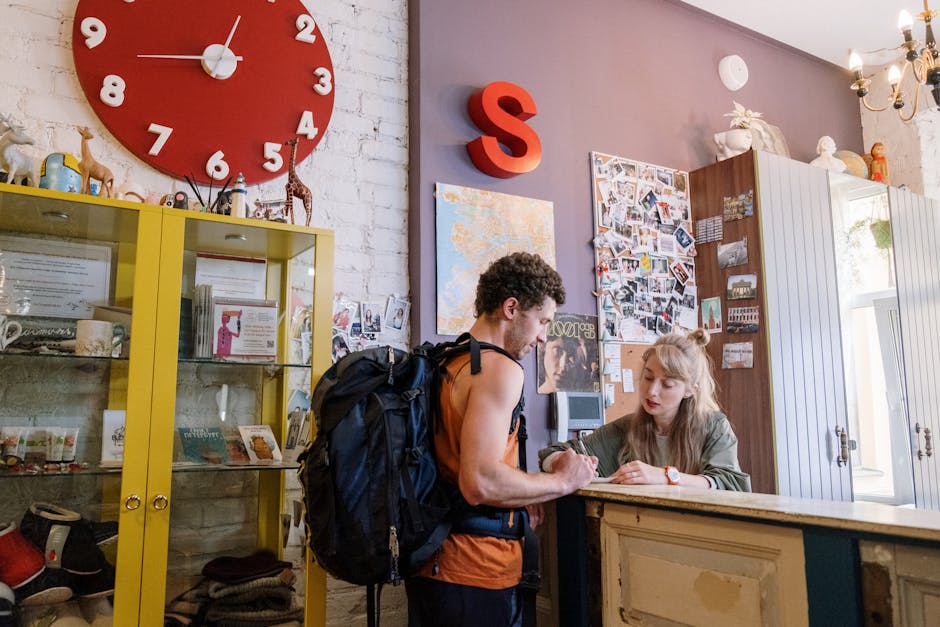
A row of guesthouse balconies and a hostel rooftop in Luang Prabang, Laos — two different budgets, two different vibes.
I remember the exact moment I started questioning the hostel orthodoxy. I was sitting on the curb outside a guesthouse in Chiang Mai's Old City, eating a 30-baht pad thai from a metal plate, watching motorbikes rumble past. My dorm bed at the backpacker hostel down the soi had cost me 180 baht a night. But here, at this guesthouse run by a retired schoolteacher, a private room with its own bathroom was 250 baht. For 70 baht more — about two dollars — I got a locked door, zero snoring, and a fan that actually pointed at the bed. That math sat with me for the rest of the trip.
In Southeast Asia, the line between a hostel and a guesthouse isn't always clear. Some guesthouses operate like mini-hotels. Some hostels now offer private rooms with en-suite bathrooms. The real question — which is actually cheaper — isn't just about the nightly rate. It's about what you get for your money, how you travel, and whether your sanity can survive another night of a guy named Dave snoring four feet from your face.
This article breaks down the real costs, the hidden fees, and the trade-offs that nobody tells you in the booking app. I've slept in 30-bed dorms in Bangkok, paid $3 for a mattress in rural Vietnam, and spent a blissful week in a family-run guesthouse in Hoi An where the owner taught me how to make cà phê sữa đá. Here's the unvarnished comparison.
The Essentials at a Glance
- 🏠 Hostels: Shared dorms from $4–$8 a night; social, loud, often includes breakfast (toast + jam). Best for solo travelers who want to meet people.
- 🚪 Guesthouses: Private rooms from $7–$15 a night; quieter, more local, often have a kitchen you can use. Best for couples, friends, or anyone who values sleep.
- 🍜 Daily food costs: Street food is the equalizer — $2 noodles fill you up regardless of where you sleep.
- 📱 Hidden fees: Hostels charge for lockers, towel rentals, and late check-ins. Guesthouses might ask for a deposit or charge for air-con after midnight.
- 🗺️ Location math: Guesthouses are often 10–15 minutes outside the main tourist zone, which means cheaper rooms but more time and money on transport.
Breaking Down the Real Costs: Hostel vs Guesthouse Head-to-Head
I tracked every expense across six weeks in Thailand, Vietnam, Laos, and Cambodia — rotating between hostels and guesthouses, always trying to match the same level of comfort. Here's what the numbers actually look like.
1. The Nightly Rate — Obvious, But Not Everything
On paper, hostels win. A dorm bed in a popular hostel in Bangkok's Khao San Road runs 200–300 baht ($6–$9). A basic private room at a guesthouse a 15-minute walk away in Banglamphu? 350–500 baht ($10–$15). That's nearly double. But that comparison is a trap. Most backpackers don't stay in the Khao San dorms for more than a night or two — they're loud, the air-con runs from 10 p.m. to 6 a.m., and you'll wake up smelling like cheap whiskey and regret. The guesthouse in Banglamphu, meanwhile, comes with a quiet courtyard, a shared fridge, and a ceiling fan that doesn't sound like a dying lawnmower.
In Vietnam, the gap narrows even more. In Hanoi's Old Quarter, a dorm bed at the Hanoi Central Hostel costs $5. A private room with a balcony at the Little Hanoi Guesthouse on Hang Buom Street is $9. For $4 more, you get a double bed, your own bathroom, and a window that opens. If you're traveling as a pair, the guesthouse is actually cheaper per person.
2. Food: The Hidden Cost Multiplier
Hostels often include a free breakfast — usually instant coffee, white bread toast, and jam. It's fine. It fills a hole. But guesthouses in Southeast Asia frequently offer a different deal. Many family-run guesthouses in Cambodia, for example, will cook you a proper breakfast of rice, eggs, and fresh fruit for $1.50. In hostels, you're either eating the free toast or walking to a café where a full breakfast costs $3–$4.
I stayed at a guesthouse in Luang Prabang, Laos, where the owner, a woman named Noi, made khao soi every morning for guests. She charged 20,000 kip ($1). The hostel across the street charged $2.50 for a baguette with eggs. Over a week, that difference adds up to $10.50 — more than the cost of one extra night's accommodation.
🎒 Backpacker Tip: Always ask the guesthouse owner if they cook meals. Family-run places in Vietnam, Cambodia, and Laos often serve homemade dinners for $1–$2 — cheaper, healthier, and tastier than the tourist restaurants. I ate bò né (Vietnamese sizzling steak) at a guesthouse in Da Lat for 35,000 dong. A hostel café 200 meters away wanted 80,000.
3. Transport: The Location Tax
Hostels cluster in tourist centers — Khao San Road in Bangkok, Beer Street in Hanoi, Pub Street in Siem Reap. Guesthouses are often scattered in residential neighborhoods 10–30 minutes away. That location difference costs you time and money.
I stayed at a guesthouse in Siem Reap called the Villa of Whispers (not its real name, but close enough). It was in a quiet lane off National Road 6, about 3 kilometers from Pub Street. My room cost $8 a night. A comparable hostel dorm near the night market was $6. But I had to take a tuk-tuk into town every evening — $1.50 each way. That's $3 a day, or $21 a week. Suddenly, the hostel dorm is actually cheaper when you factor in transport. Unless you rent a bicycle. Most guesthouses in Cambodia will lend you a bike for free or for $1 a day. I started biking into town. Took 12 minutes. Saved $18 over the week.
The rule: if you're staying longer than three nights in one place, choose a guesthouse within walking or biking distance of the main area. If you're only passing through for one night, a centrally located hostel dorm wins on cost and convenience.
4. Amenities and Hidden Fees
Hostels nickel-and-dime you. It's just a fact. Need a locker? That's $1–$2 per day. Towel rental? $1. Laundry? $3 per kilo. Earplugs? $1.50 from reception. I once paid $2 at a hostel in Bangkok just to charge my phone in the common area because the sockets in my dorm were broken. Guesthouses, especially family-run ones, are less transactional. Towels are free. You can use the kitchen. The owner will let you store your bag after checkout for a few hours without charging you.
But guesthouses have their own quirks. Many don't have 24-hour reception. Some lock the front door at 11 p.m. — you'll need to call the owner to let you back in. Air-con might be on a timer from 8 p.m. to 7 a.m. And if the guesthouse is a converted home, the walls can be thin as paper. I once heard a French couple arguing about a lost passport through two closed doors in a guesthouse in Ninh Binh.
5. The Social Factor — Priceless or Overrated?
Here's where hostels have an undeniable edge. You walk into the common room, someone offers you a beer, and you've got a dinner crew within 20 minutes. For solo travelers, especially nervous first-timers, that's gold. But the social scene comes with a cost — literally. Hostels often have a bar that's designed to keep you drinking on-site. Beer at the hostel bar in Vietnam: $1.50–$2. Beer at the corner shop or street stall: $0.30–$0.60. Over a three-week trip, drinking in the hostel bar can easily add $30–$50 to your budget.
Guesthouses are quieter. You might make friends with the owner's nephew or the German couple on the floor above. But if you want to meet people, you'll need to walk to a bar, join a pub crawl, or use the hostel common room at a different hostel. I've done this many times — booked a guesthouse for the quiet room, then walked five minutes to the nearest hostel to meet travelers. It works. You get the best of both worlds.
| Expense | Hostel (Dorm) | Guesthouse (Private Room) |
|---|---|---|
| Accommodation (7 nights) | $42 | $63 |
| Breakfast | $0 (included) | $7 (cooked by guesthouse) |
| Evening drinks (6 nights) | $12 (hostel bar) | $3.60 (7-Eleven) |
| Towel + locker (7 days) | $14 | $0 |
| Laundry (twice) | $6 | $4 |
| Transport to center (7 days) | $0 | $3.50 (bike rental) |
| Total (7 days) | $82 | $81.10 |
Note: The guesthouse total includes a cooked breakfast and bike rental. The hostel total includes hostel-bar drinks and paid amenities. When you track every line item, the difference often disappears — or reverses.
Money-Saving Tips
After 18 months of bouncing between dorms and private rooms across Southeast Asia, these are the strategies that actually saved me cash, not just cents.
- 💡 Tip 1: Book direct, not through apps. Hostelworld and Booking.com take a 12–18% commission. If you call a guesthouse directly or walk in, the owner will often knock $2–$3 off the price. I got a room at a guesthouse in Hoi An for 180,000 dong ($7.50) by walking in. The same room on Agoda was 230,000 dong. That's $2.10 saved per night — over a month, $63.
- 💡 Tip 2: Use the guesthouse kitchen for one meal a day. Buy fresh noodles, vegetables, and eggs at a local market for $1.50. Cook a huge bowl of stir-fry. That's dinner for a third of what you'd pay at a street stall. Even if you're not a cook, ask the owner if they'll make you a simple meal for a fee — many will do it for $1.
- 💡 Tip 3: Negotiate for weekly rates. Most guesthouse owners are open to bargaining if you stay a week or more. In Chiang Mai, I offered to pay 1,600 baht for a week at a guesthouse that listed rooms at 280 baht per night. The owner agreed immediately. That's about 15% off. Hostels rarely offer this — their pricing is usually fixed via the booking system.
- 💡 Tip 4: Bring your own earplugs, towel, and padlock. This is the most boring tip in the history of travel advice, but it saves you $1–$2 every time you check in. Over a month, that's $30–$60. A microfiber towel costs $15 upfront and pays for itself within a week and a half.
- 💡 Tip 5: Use the guesthouse as a base, not a destination. If you're staying in a guesthouse on the outskirts, treat it as your launchpad. Rent a scooter or bicycle for $3–$5 a day and explore. You'll save on accommodation and eat at local markets instead of tourist-trap restaurants. The guesthouse in rural Pai, Thailand cost me $7 a night. A hostel in the center was $9. But the scooter rental was $3 a day either way. The guesthouse won.
Common Mistakes to Avoid
- ❌ Mistake 1: Assuming "hostel" is always cheaper. I've seen budget guesthouses in Chiang Mai, Luang Prabang, and Hoi An that are $5–$7 a night — the same price as a hostel dorm. Always compare the actual rates, not the category labels. A guesthouse private room for $7 is objectively cheaper than a hostel dorm for $6 if you value sleep and don't need a social scene.
- ❌ Mistake 2: Not checking for hidden charges. A $4 dorm in Cambodia might add $1 for a fan, $1.50 for a towel, and $1 for lockers. That's $7.50 effective cost. The $6 guesthouse room down the street includes it all. Read the fine print on the booking site. Better yet, message the property directly and ask, "What's the total I'll pay at checkout?"
- ❌ Mistake 3: Choosing a guesthouse too far from everything. A $5 room in a village 8 km from the main town is a false economy if you're paying $2 per tuk-tuk ride each way. That's $4 daily — suddenly you're paying $9 for the night. Use Google Maps and measure walking/biking distance. Fifteen minutes on foot or by bike is your max before the transport costs cancel out the savings.
- ❌ Mistake 4: Overlooking the guesthouse's power situation. Many budget guesthouses in rural Cambodia and Laos rely on solar panels or generators. Power might be shut off from midnight to 6 a.m. That means no fan, no charging, and a very sweaty night. Ask about electricity hours before you book. A fan-only dorm in a hostel typically runs all night.
Quick Checklist
- Passport + 2 photocopies
- Print of hostel/guesthouse booking
- Travel insurance details
- Digital offline map (Maps.me)
- Microfiber towel (saves $)
- Earplugs + sleep mask
- Padlock (for lockers)
- Reusable water bottle
- Hostelworld / Agoda
- Booking.com (free cancellation)
- Grab / Gojek (transport)
- XE Currency Converter
- Cash in local currency
- Hidden money belt (for overnight buses)
- Padlock for dorm locker
- Emergency photocopy of passport
FAQ
Q: Is a guesthouse always cheaper than a hostel in Southeast Asia?A: No. A private room in a guesthouse is often $2–$5 more per night than a hostel dorm, but when you factor in free amenities like towels, kitchen access, and breakfast, the total cost can be lower. For solo travelers, a dorm is cheaper. For couples or friends sharing, the guesthouse room is usually the better deal per person.
Q: Should I book a hostel or guesthouse if I'm traveling alone?A: If you want to meet people and you're comfortable with shared sleeping spaces, book a hostel for your first few nights in a new city. But if you're sleep-sensitive or you need quiet to work (many backpackers are remote workers now), book a private room at a guesthouse and walk to a hostel common room to socialize. I did this across Vietnam and saved money while still making friends.
Q: Can I negotiate the price of a guesthouse room?A: Yes, especially if you're staying for a week or more. Show up in person, ask for the price, and then say, "I'd like to stay for a week — can you do 20% off?" Many owners prefer long-stay guests and will cut the rate. In Luang Prabang, I got a room for 50,000 kip less per night just by asking. Negotiation is expected, not rude, in most of Southeast Asia.
Q: Which is safer: a hostel or a guesthouse?A: Generally, hostels have better security features — lockers, night staff, keycards. Guesthouses, especially family-run ones, might have simpler locks and no 24-hour front desk. But the trade-off is that guesthouses feel more personal. The owner lives on-site and notices everything. I felt safer in a small guesthouse in Hoi An than I did in a 40-bed hostel in Bangkok. Use common sense in both: lock your valuables, keep your room door closed, and trust your gut.
Q: What's the best way to find a cheap guesthouse in Southeast Asia?A: Don't rely only on booking sites. Walk around the neighborhood you want to stay in and look for "Guesthouse" or "Nha Tro" (Vietnamese) signs. Often, the cheapest rooms aren't listed online. In Da Lat, I found a guesthouse for $5 a night by walking up a hill and asking. It had a view of the valley and no website. Offline discovery is still the best way to find hidden bargains.
Final Thoughts
After more than a year bouncing between 30-bed dorms and family-run guesthouses, I've stopped caring about the label. The question isn't really "hostel vs guesthouse." It's "what do you need right now?" If you're solo, tired of being alone, and want to find a group for a beer on Pub Street, book the hostel dorm. If you're exhausted, sick of noise, and craving a room where you can close the door and breathe, book the guesthouse.
Financially, the difference is often smaller than people think. A guesthouse private room for $8 with a free bicycle and access to a kitchen can actually be cheaper than a $6 dorm with paid amenities and the pressure to buy overpriced hostel beer. The real savings come from being honest with yourself about how you travel.
I still sleep in hostels. I also book guesthouses. The best trip I had — two weeks in northern Vietnam — was a mix of both: a hostel in Hanoi for the energy, then a guesthouse in Sapa for the quiet mornings with a view of the rice terraces. The math worked. The experience was better.
Got your own hostel vs guesthouse story? Drop it in the comments below. What's the best value room you've found in Southeast Asia — and was it a dorm or a private room? I want to hear where the math surprised you.


No comments:
Post a Comment