Hostel vs Guesthouse: Which Is Cheaper in Southeast Asia?
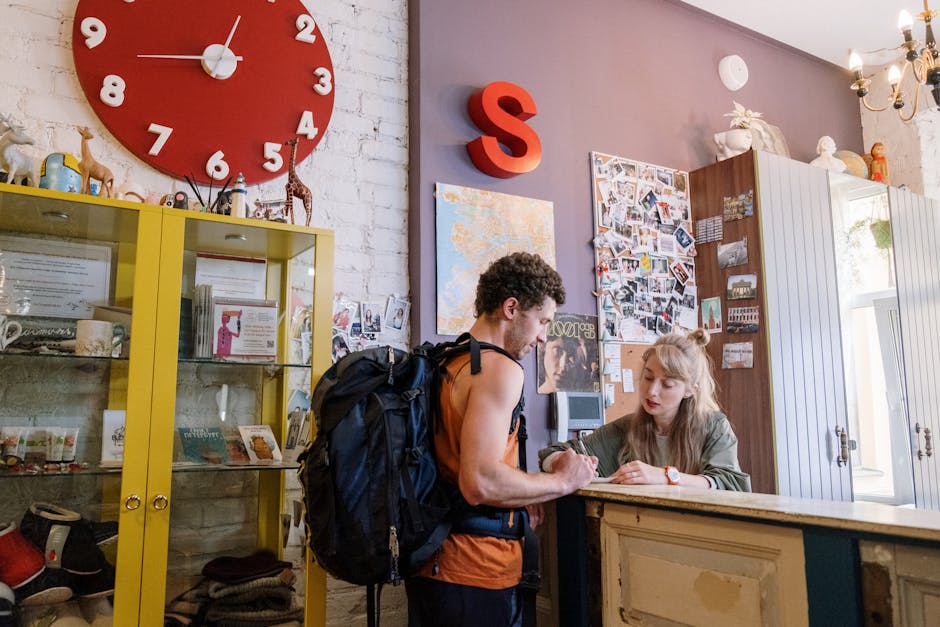
A guesthouse in Luang Prabang, Laos — the kind of place where your $8 buys a private room and a balcony overlooking the Mekong.
💰 Daily budget: $20–35 per day solo / 🛏️ Cheapest hostel price: $4–8 dorm bed / 🏠 Cheapest guesthouse price: $8–15 private room / 🚌 Transport cost: $1–10 per bus ride / ⏱️ Ideal trip length: 3–6 weeks per country / 🎒 Best for: Budget travellers who value sleep, privacy, and local character over bar crawls.
I landed in Bangkok’s Khao San Road at 11 p.m. with a 40-liter backpack, a fully charged phone, and exactly $87 to my name for the week. The first guesthouse I walked into wanted 600 baht for a fan room. The hostel two doors down offered a dorm bed for 180 baht. Easy choice, right? Not so fast. I spent the next two hours sweating in a top bunk with no air-con, three drunk Germans arguing about the best full moon party, and a ceiling fan that sounded like a dying lawnmower. That night cost me about five bucks. I’d have paid ten just for silence.
That moment cracked open a question I’ve been testing on the ground ever since: Which is actually cheaper — the hostel or the guesthouse? On paper, hostel dorms win. But total trip cost isn’t just the bed price. It’s the four extra iced coffees you buy because you didn’t sleep. It’s the pad thai you splurge on because the hostel kitchen closed at 8 p.m. It’s the Grab ride you take to a quiet café so you can actually get online. In this article, I’m breaking down both options with real prices from Thailand, Vietnam, Cambodia, and Laos, plus the hidden costs nobody talks about.
The Essentials at a Glance
- 🛏️ Hostels = shared dorm beds. Guesthouses = private rooms, often family-run, often with an actual door that locks.
- 💵 Dorm beds run $4–10/night. Guesthouse private rooms start around $8–12 in rural spots and $12–20 in cities.
- 🍜 Guesthouses usually include free drinking water and sometimes breakfast. Hostels often charge extra for towels and lockers.
- 🌙 Sleep quality is the real budget killer. A cheap dorm that keeps you awake can silently add $5–10/day to your spending via caffeine, taxis, and bad decisions.
- 🤝 Guesthouses connect you with local transport and tour operators at genuinely lower prices than hostel reception desks.
The Real Cost Breakdown: Numbers From the Road
I tracked every dollar for a month across four countries, alternating between hostels and guesthouses. Here’s what the raw data says — and where it lies.
Accommodation Price: Dorm vs Private
In Chiang Mai, Thailand, a bed at Stamps Backpackers (a popular hostel) costs 220 baht (about $6). A guesthouse like Green Tiger House charges 450 baht ($12.50) for a fan private with shared bathroom. That’s a 230-baht gap. In Hoi An, Vietnam, a dorm at Tribee BOHO runs $5. An equivalent guesthouse private, like Phuoc An, is $10. In Phnom Penh, Cambodia, a dorm at Mad Monkey costs $6. A guesthouse like Okay Boutique was $9 for a double room with air-con. The pattern seems clear: guesthouses cost roughly double. But the gap shrinks fast when you factor in everything else.
Food & Drink: The Hidden Hostel Tax
Hostel common rooms are designed to keep you there. That means a bar, a pool table, and a menu of mediocre but convenient food. At the Mad Monkey in Phnom Penh, a basic fried rice costs $3.50. Walk 300 meters down the street, and a bowl of kuy teav at a local shop costs $1. A guesthouse with no restaurant forces you outside, into the local economy. Over a week, I saved roughly $12–18 just by eating in town instead of the hostel bar. And the food was better.
Transport & Logistics: Where Guesthouses Win
In Luang Prabang, Laos, my guesthouse owner arranged a minibus to Vang Vieng for 120,000 kip ($6). The hostel around the corner quoted 150,000. More importantly, she walked me to the pickup point and told the driver exactly where I was staying at the other end. Guesthouse owners — especially in smaller towns — are local. Their transport contacts are relationships, not a booking commission. In Vietnam, a guesthouse in Ninh Binh sorted a two-day Ha Giang loop tour for $50 with a reputable operator. The hostel in Hanoi initially quoted $70 for the same route.
Activities & Tours: Commissions vs Connections
Hostel tour desks operate on thin margins but high volume. They push the same half-day cooking class and the same sunset cruise. A guesthouse owner in Hoi An pointed me to a fishing trip on the Thu Bon River with his cousin — $12 for four hours, including a meal of the fish we caught. The hostel in town offered a “fishing village tour” for $18 with a group of twenty people. I don’t need to tell you which one felt real.
The Sleep Cost Multiplier
This is the big one. A $6 dorm in a party hostel in Koh Phangan, Thailand seemed like a steal. Then the pre-full moon party music went until 3 a.m. Earplugs didn’t block bass. I woke up groggy, bought a $4 iced latte I didn’t need, and grabbed a $1.50 bottle of water because the refill station was out. That added $5.50 to my daily spend, just from one bad night. A $12 guesthouse room with a fan and solid walls would have cost an extra $6 upfront but saved me from the exhaustion tax. Over seven nights in party-heavy towns, the guesthouse worked out cheaper by about $15.
🎒 Backpacker Tip: Always ask a guesthouse owner for their WhatsApp or local number. They often negotiate a better rate if you stay three nights or more — especially mid-week. I got a $15 room in Chiang Mai down to $10 just by asking to pay cash directly.
Money-Saving Tips
Tip 1: Swap every third or fourth hostel night for a guesthouse. Your body needs a real mattress and quiet night every few days. Spending $10 on a guesthouse for one night can reset your energy and stop you from impulse-buying expensive sleep aids (eye masks, melatonin, grab rides to cafés).
Tip 2: Eat street food — but near a guesthouse. Guesthouse owners will tell you which stalls they eat at. In Penang, Malaysia, my guesthouse landlady pointed me to a char kway teow stall operating out of a garage. $1.50 for a plate that would cost $6 in a hostel food court. She even sent me with a container so I could bring it back to eat on the rooftop.
Tip 3: Use booking apps for research, then call the guesthouse directly. In Kampot, Cambodia, a guesthouse listed on Booking.com at $13 had a sign outside advertising $10 walk-in rate. I asked the receptionist, and she gave me $9 for paying in cash for three nights. Booking platforms take 15–20% commission — you can split that saving.
Tip 4: Choose a guesthouse near a local market, not the tourist strip. In Luang Prabang, Laos, guesthouses on the main backpacker road (Sisavangvong) cost $15–20. The same quality rooms two streets east, near the morning market, cost $8–12. The walk to the night market is four minutes extra, and your breakfast options become local noodle stalls instead of baguette-and-Nutella cafés.
Tip 5: Negotiate laundry and transport as a bundle. Guesthouse owners often run side businesses — laundry, scooter rental, bus tickets. Paying for all three through one person gives you leverage. In Hoi An, Vietnam, I asked my guesthouse host to throw in free laundry (normally $2) when I booked a $20 private room for three nights and rented a bicycle through her for $2 a day. She agreed immediately.
Common Mistakes to Avoid
Mistake 1: Assuming hostel = social, guesthouse = isolated. Not true. I’ve had deeper conversations with a guesthouse owner over morning tea than I ever had in a hostel common room. The best travel intel — where to eat, which bus company is reliable, who runs scam tours — comes from locals who own guesthouses, not other backpackers.
Mistake 2: Booking a guesthouse without checking the hot water situation. In tropical lowlands, cold showers are fine. In Dalat, Vietnam (elevation 1,500 meters), it gets genuinely cold at night. I learned this at 9 p.m. in a $7 guesthouse in Dalat with no hot water. Check the listing photos for a water heater.
Mistake 3: Not reading the cancellation policy. Some cheap hostels on booking platforms are non-refundable. If your bus is delayed twelve hours (happened to me in Vang Vieng) or you get sick, you lose the money. Guesthouses with flexible policies are more common than you think — ask directly via message before booking.
Mistake 4: Believing the photos. That guesthouse with the infinity pool overlooking rice fields might cost $25 and be beautiful. But in Ubud, Bali, the actual location was down a road too dark to walk at night, forcing me into $4 Grab rides. The cheaper guesthouse near the market had no pool but saved me $20 in transport over five days.
Quick Checklist
📄 Documents & Money: Passport with at least 6 blank pages · printed copies of visas and insurance · cash USD for Cambodia/Laos border crossings · a wallet you can hide under your insole · a backup debit card (keep it separate).
🎒 Packing: Earplugs (not the foam kind — silicone works better) · sleep mask · padlock (small enough for dorm lockers) · quick-dry towel (guesthouses usually don’t provide one) · a reusable water bottle with a built-in filter.
📱 Bookings & Apps: Grab (for bike taxis in Vietnam/Thailand) · 12Go.asia (for bus/ferry tickets) · Agoda (often has better guesthouse listings than Booking.com in Southeast Asia) · WhatsApp or Telegram (every guesthouse owner uses at least one) · a maps app with offline downloads.
💰 Currency & Safety: Download the XE currency converter app · carry small USD bills ($1, $5, $10) for rural guesthouses · never put all your money in one pouch · check if the guesthouse door has a proper deadbolt, not just a keycard lock.
🛡️ Safety: Guesthouse owners live on site — that alone deters many common hostel scams (fake staff charging for tours, stolen belongings from dorms) · ask for a room on the first floor if you have back problems or a heavy pack · note the nearest 24-hour pharmacy and clinic.
FAQ
Q: Are guesthouses cheaper than hostels in Southeast Asia overall?
A: Yes, for solo travellers staying a week or longer, guesthouses often work out cheaper when you factor in food, transport, and sleep-related costs. A hostel dorm may cost $6, but a $10 guesthouse private room in the same city frequently saves you $2–4 per day on food and coffee alone, plus the intangible benefit of good sleep.
Q: Can I book a guesthouse for just one night?
A: Yes, most guesthouses in Southeast Asia accept walk-in bookings for single nights. However, the best rates come when you stay three or more nights. Expect to pay a $2–5 premium for a single night — still usually cheaper than a hostel dorm in tourist-heavy areas.
Q: Do guesthouses have Wi-Fi good enough for remote work?
A: It varies wildly. Guesthouses in Chiang Mai or Hoi An often have excellent fibre internet (many cater to digital nomads). In rural Laos or Cambodia, the Wi-Fi can be slower than hostel common room connections. Ask the owner directly for a speed test screenshot before you book if you need to upload large files.
Q: How do I find a good guesthouse without using booking.com or Agoda?
A: Use Google Maps in satellite view to look for guesthouses with a courtyard or garden (sign of family ownership). Then cross-check with reviews on Hostelworld, which now lists many guesthouses. Finally, message the guesthouse on Facebook or WhatsApp — owners are more responsive there than on email.
Q: Are guesthouses safe for solo female travellers?
A: Generally, yes — safer than many party hostels, because guesthouse owners live on the property and monitor comings and goings. Choose a guesthouse with positive recent reviews specifically from solo women travellers. Avoid guesthouses where the owner is absent during the night — that’s a red flag for security.
Final Thoughts
I never found a single answer to the hostel-versus-guesthouse question. Some nights I need a $4 dorm bed and a beer to meet people. Other nights I need a locked door, a fan, and a place to spread out my map and figure out what the hell I’m doing next. The real budget hack isn’t picking one — it’s knowing when to use each.
If you’re a solo traveller on a hard $25/day budget, start your trip with five hostel nights to meet people and learn the local prices. Then switch to a guesthouse for every third or fourth night. Your body, your wallet, and your sanity will all thank you. And if you find a guesthouse owner who calls you by name and makes you tea on your first morning, treasure that person. They just saved you more money than any budgeting app ever could.
📌 Save this guide for the road
Bookmark this page or share it with a friend planning their first trip to Southeast Asia. Got your own tip for splitting between hostels and guesthouses? Drop it in the comments — I read every single one.


No comments:
Post a Comment