Hostel vs Guesthouse: Which Is Cheaper in Southeast Asia?
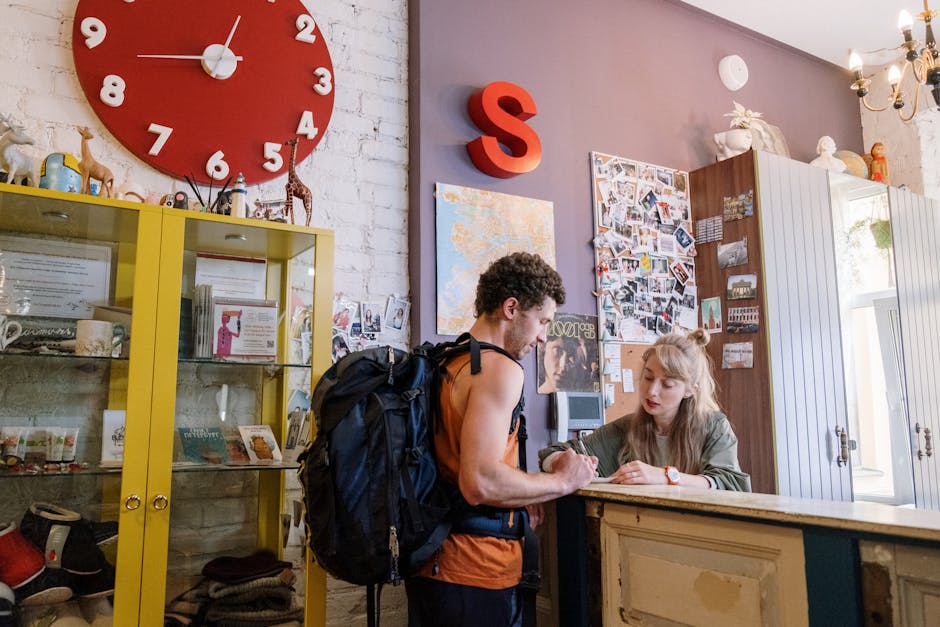
A backpacker weighs the choice between a shared dorm and a private room in Luang Prabang, Laos.
💰 Daily budget: $25–$35 (guesthouse) vs $18–$25 (hostel)
🛏️ Cheapest dorm bed: $4 (Chiang Mai) · Cheapest private room: $8 (Bangkok)
🚌 Average overnight bus cost: $10–$15
⏱️ Ideal trip length: 3–6 weeks to justify gear and transit
🎒 Best for: Solo travelers (hostels) vs couples or light sleepers (guesthouses)
I landed in Bangkok at 2 a.m. with $380 in my pocket and six weeks ahead of me. The first night I booked a $4 dorm in Khao San Road. The next night I tried a $7 guesthouse room down a soi in Silom. That 72-hour contrast — snoring in a bunk bed versus waking up to a gecko on the wall in my own four walls — taught me more about budget travel in Southeast Asia than any spreadsheet. Over the next two years of bouncing between hostels and guesthouses across Thailand, Vietnam, Laos, Cambodia, and Indonesia, I ran the numbers obsessively. The short answer: guesthouses almost always win on pure accommodation cost for two or more people. The long answer is messier, full of hidden fees and trade-offs that most blog posts skip. This article breaks down real numbers from real places, so you can decide which roof costs you less — and which costs you more than money.
The Essentials at a Glance
- 🛏️ Hostel dorm beds run $4–$12 per night across the region, but you pay for earplugs, lockers, and a social life you might not want.
- 🚪 Guesthouse private rooms start at $8–$15 for a double, often with a fan, cold shower, and a kettle — real walls and real quiet.
- 🍜 Street food budgets stay the same regardless of lodging, but guesthouses with kitchens let you cook a $1 meal instead of buying a $3 one.
- 🛵 Hidden costs like locker fees ($1), towel hire ($0.50), and mandatory breakfast ($2–$3) quickly close the gap.
- 💡 The real saving is psychological: paying less for a bed you actually sleep in is worth more than a free beer every night.
The Cost Breakdown: Real Prices, Real Places
Bangkok, Thailand: The 3-Way Test
I spent three consecutive nights in three different accommodations across Bangkok, each within a 15-minute walk of Khao San Road. The hostel dorm at NapPark Hostel: $5.50 for a 6-bed mixed dorm, including a thin mattress, a pillow the size of a folded towel, and a locker that charged $0.50 for a padlock rental. The guesthouse single at Lamphu Tree House: $9 for a fan private room with a shared cold-water bathroom. The guesthouse double at Buddy Lodge across the street: $14 for air conditioning, a private bathroom, and a balcony.
For a solo traveler, the hostel saves $3.50 per night — about $105 over a month. But the guesthouse room at Lamphu Tree House gave me a desk, a door that locked from the inside, and zero noise after midnight. For a couple, the double at Buddy Lodge costs $7 per person, which is cheaper than two dorm beds at NapPark ($8 total for two dorms after locker rental). The math flips entirely when you add a second person.
| Item | Hostel (per person) | Guesthouse (per person) | Notes |
|---|---|---|---|
| Bangkok – 1 night | $5.50 | $7.00 | Private room cheaper for 2+ |
| Chiang Mai – 1 night | $4.00 | $6.50 | Fan room in Old City |
| Luang Prabang – 1 night | $5.00 | $8.00 | Includes breakfast at most guesthouses |
| Hanoi – 1 night | $5.00 | $10.00 | Old Quarter price skews higher |
| Bali (Ubud) – 1 night | $6.00 | $10.00 | Air conditioning adds $3–$4 |
Chiang Mai, Thailand: The Budget Champion
Chiang Mai is the place where guesthouses nearly match hostels on price. At Green Tiger Guesthouse off Ratchadamnoen Road, a fan double room costs $7 per person. Across the street at Stamps Backpackers, a 6-bed dorm is $4. The difference is $3. For that, you get a desk, a window that opens onto a garden, and a door that closes. I stayed at Stamps for three nights and moved to Green Tiger for the next six. The social atmosphere at Stamps was electric — people swapping stories at a communal table — but I slept better alone. On a per-night basis, the hostel wins. Over a week, the $21 saved doesn't cover much else — maybe six bowls of khao soi from the stall at the corner of Soi 1.
Luang Prabang, Laos: The Breakfast Math
Here's where the hidden math gets interesting. Almost every guesthouse in Luang Prabang near the night market includes a basic breakfast — baguette, jam, butter, coffee, and a banana. That's a $2–$3 meal you don't buy. The cheap hostel dorms in the same area, like Thongbay Guesthouse (which also runs dorms), charge $5 and do not include breakfast. So a $5 dorm plus a $2 breakfast equals $7. A guesthouse double at Villa Ban Lakkham costs $8 per person sharing — that's $4 per person with breakfast. The guesthouse is cheaper by math, not by marketing. I ate baguette with jam on the balcony of a guesthouse for ten days and spent exactly zero on breakfast. That's $20–$30 I rolled into a slow boat ticket to Huay Xai.
Hanoi, Vietnam: The Noise Tax
In Hanoi's Old Quarter, the cheapest guesthouse rooms run $8–$12 for a fan double on a side alley. Hostel dorms hover around $5–$6. But here's the kicker: the guesthouse rooms are often on the ground floor, inches from the roar of motorbikes. I stayed at Hanoi Central Backpackers ($5.50) for two nights and then moved to Little Hanoi Guesthouse ($10 for a double, split with a friend). The hostel dorm had a noise curfew at 11 p.m. and earplugs at reception. The guesthouse had traffic noise from 5 a.m. until midnight. The cost difference was $4.50 per night, but the sleep quality was identical — poor in both. The real cost was the energy to explore Ha Long Bay the next day. Budget travelers sometimes trade noise for dollars, but I learned that a $5 dorm with a quiet policy beats a $10 guestroom on a bus route.
Money-Saving Tips
Tip 1: Always ask for the “fan room” price first. Guesthouses often list air-con rooms at $12–$15, but a fan room (or “standard room”) often sits at $7–$9 with the exact same bed and bathroom. I saved $6 per night at a guesthouse in Kuta, Lombok by simply saying “no AC, please.”Tip 2: Check if breakfast is included before booking. A $10 guesthouse with a $2.50 breakfast included is effectively $7.50 — sometimes cheaper than a $6 hostel dorm. In Hoi An, I paid $11 for a private room at Hoi An Central Hotel and ate a fried egg and bread every morning. The cheapest dorm in town was $6, and a basic breakfast at a cafe was $3. The guesthouse won by $1 per day.
Tip 3: Book for two nights to get a discount. Many guesthouses in Cambodia and Laos offer a 10–15% discount for multi-night cash stays. I paid $6 per night at a guesthouse in Siem Reap after booking three nights upfront — the listed price was $9. Hostels rarely negotiate. Ask when you check in, not online.
Tip 4: Buy padlocks before you leave home. Hostels charge $0.50–$1 per locker rental and $0.50 for a padlock. Packing a $3 combination lock from a dollar store saves $1.50 over a week — enough for a fruit smoothie. Guesthouses typically don't have lockers, but you can lock your room door.
Tip 5: Look for guesthouses with kitchen access. In the Cameron Highlands, Malaysia, I stayed at a guesthouse with a shared kitchen and a rice cooker. I bought eggs, tomatoes, and noodles at the local market for $1.50 and made three meals. That's a $4.50 saving per day versus street food, which adds up fast over a week.
Common Mistakes to Avoid
Mistake 1: Assuming hostels are always cheaper for solo travelers. In cities like Chiang Mai and Luang Prabang, guesthouse singles can match dorm prices when you factor in free breakfast, free water, or no locker fees. Always check the total cost, not the base rate.
Mistake 2: Not reading the fine print on towel and water charges. A hostel that charges $0.50 for a towel and $0.30 for drinking water adds $0.80 per night. Over 30 days, that's $24 — the equivalent of three guesthouse nights. Guesthouses often include both for free.
Mistake 3: Booking the first guesthouse you see near the bus station. Many stations in Vietnam (like Hanoi's Giap Bat) and Cambodia (like Phnom Penh) are ringed with aggressive touts offering $6 rooms that turn out to be windowless, dirty, and loud. Walk 10 minutes inland for a $7 room with a window and a fan that works.
Mistake 4: Forgetting to negotiate in Laos and Cambodia. Guesthouse prices in smaller towns (like Vang Vieng or Battambang) are often marked up by 20–30% for walk-ins. A simple “Can you do $8?” at the front desk works more often than you think. I dropped a $10 room to $7 in Kampot by just asking. Hostels rarely negotiate, but guesthouse owners often will.
Quick Checklist
Documents
- 📄 Passport + 2 photocopies (guesthouses often keep one for registration)
- 📱 Printed hostel/guesthouse confirmations (offline backup)
- 💳 ATM card with low foreign transaction fee – Charles Schwab or similar
Packing
- 🎧 Earplugs + sleep mask – non-negotiable for both dorms and thin-wall guesthouses
- 🔒 Combination lock – saves locker rental fees at hostels
- 🛏️ Microfiber travel towel – hostels charge $1 for rental, guesthouses often provide linens
Bookings
- 📅 Book hostels for weekends (higher social energy) and guesthouses for work/catch-up days
- 🏨 Use Hostelworld for dorms, Agoda/Guesthouse direct for private rooms
- 📞 Call ahead for guesthouses to ask about cash discounts – 10% is common
Apps / Currency
- 📲 Maps.me for offline maps – guesthouses are often on unmarked lanes
- 💵 Carry $50–$100 in small US dollars – Laos and Cambodia prefer cash for guesthouses
- 📱 XE Currency for rate checks – avoid the guesthouse's “helpful” currency conversion
Safety
- 🚪 Check guesthouse room locks – if the door has a flimsy sliding latch, ask for a different room
- 🔑 Keep valuables in hostel lockers or a hidden money belt – even cheap guesthouses have staff turnover
- 🛡️ Trust your gut – if a guesthouse feels sketchy in the first 15 minutes, leave and eat the cost
FAQ
Q: Is it always cheaper to book a guesthouse instead of a hostel in Southeast Asia?
A: No, but it often is for two or more people traveling together. A guesthouse double room splits to $4–$7 per person, while a hostel dorm bed costs $4–$6 per person, but you lose privacy and quiet. For solo travelers, hostels are generally $2–$3 cheaper per night, but the gap closes when you factor in free breakfast, towels, and water at guesthouses.
Q: How do I find the cheapest guesthouse without booking online?
A: Walk away from the bus station or main tourist strip. In places like Chiang Mai's Old City or Luang Prabang's main road, prices drop by 20–30% on side streets two blocks away. Ask locals at a nearby coffee shop, not the front desk. Always negotiate for multi-night stays — starting with “three nights, cash, no breakfast” works in 70% of cases.
Q: Should I book a hostel dorm or a guesthouse private room in cities like Bangkok or Hanoi?
A: For solo travelers who value social interaction, a hostel dorm in Khao San Road or Hanoi's Old Quarter costs $5-$6 and gives you instant community. For anyone who needs sleep after a long flight or has early morning tours, a guesthouse private room for $8-$12 with a fan is a better investment. The $3-$6 difference is cheaper than a lost day of travel due to exhaustion.
Q: Do guesthouses in Southeast Asia provide free drinking water?
A: Many do, but not all. About 60% of guesthouses in Thailand, Laos, and Vietnam offer free filtered water refills in the lobby. Hostels almost always sell bottled water or have a tap with a disclaimer. Ask at check-in. If the guesthouse has a water dispenser, you save $0.30–$0.50 per day, or about $10 per month.
Q: Is it safe to leave luggage in a guesthouse room while you go trekking for a few days?
A: Generally yes, but use a lockable duffel and leave valuables in a hostel with a luggage storage service or with a trusted reception. Guesthouse rooms often have simple door locks, and staff may have access. I left a backpack at a guesthouse in Sapa for four days with no issues, but I kept my passport, cash, and electronics in a locked hostel storage bag at a nearby hostel. A $1 fee for secure storage is better than risking a $50 loss.
Final Thoughts
After two years of sleeping in everything from a $3 dorm in a Chiang Rai shack to a $15 guesthouse in a Ubud rice field, I can tell you this: the cheapest option is never just about the price tag. The $4 dorm where you toss all night because of the guy snoring on the top bunk costs you more than money — it costs you the energy to hike to a waterfall, the focus to negotiate a bus fare, the will to wake up for sunrise. A $7 guesthouse room with a fan, a mosquito net, and a door that actually closes can be the best investment you make all week. My rule now is simple: for two or more people, guesthouse almost always wins. For solo travel, start with a hostel for the first two nights to meet people, then switch to a guesthouse for the rest of your stay when you need quiet. The real savings come from knowing when to pay a little more for rest — and when to pay a little less for company.
Pin it to your travel board, bookmark the page, or share it with a friend who's planning their first Southeast Asia trip. Drop a comment below with your own hostel vs guesthouse win or fail story.


No comments:
Post a Comment