How to Avoid ATM Fees While Traveling Long-Term
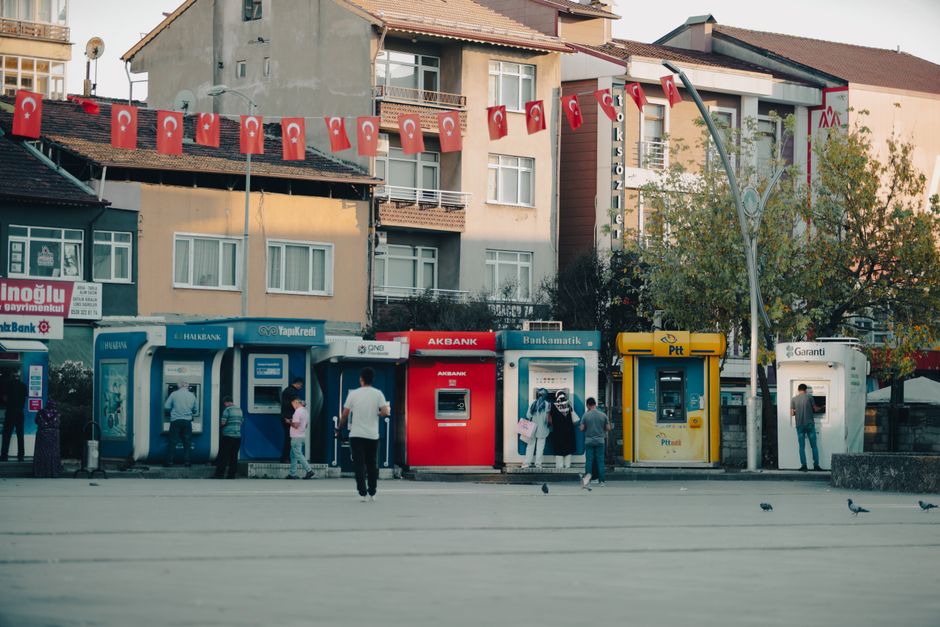
A dusty ATM in a Lao bus station. You punch in your PIN, pray the machine doesn't eat your card, and watch $5.50 vanish in fees. This is the game. Here's how you stop losing it.
💰 Daily target: $28–35 (Southeast Asia) / $45–55 (Latin America)
🛏️ Average dorm price: $6 (Chiang Mai) — $12 (Mexico City)
🚌 Local transit rate: $0.35 (Hanoi bus) / $2.50 (Mexico colectivo)
⏱️ Suggested duration: 6–18 months continuous travel
🎒 Target travel style: Gritty budget nomad — hostels, street food, third-class trains
The first time an overseas ATM ate my card I was standing in a bus station in Vang Vieng, Laos. 6:45 AM. My neck was crammed from sleeping on a minibus floor the night before. The machine made this sick grinding noise — like it was chewing plastic — and then the screen just went blank. My card was gone. I had $14 in my pocket. No backup card. No phone signal. The clerk at the convenience store just shrugged and pointed at a sign in Lao I couldn't read.
That morning cost me three days, a panic wire transfer from my mom, and about $60 in fees and exchange rate garbage. I swore I'd never let it happen again.
Seven years and 40-something countries later, I've learned exactly how banks and ATMs screw long-term travelers. It's not an accident. Those $4.50 flat fees, the garbage dynamic exchange rates, the "we'll lend you cash at 12% interest" offers — they're designed to bleed people who move slow. But if you know the loopholes, you can cut your withdrawal costs to near zero.
This isn't some theoretical "open a Charles Schwab account" advice you read on a blog written by someone who took one two-week trip. This is the street-level, card-eating, fee-dodging reality after years of living out of a backpack. Here's exactly how to pull cash without getting robbed twice.
The Essentials at a Glance
- Open a fee-reimbursement bank account — Charles Schwab High Yield Investor Checking, Chime, or Ally. Schwab refunds every single ATM fee worldwide. No limit. No questions.
- Never accept the ATM's exchange rate. Always decline "dynamic currency conversion." Let your bank do the conversion. The ATM rate is a scam that adds 4–8% every time.
- Withdraw larger amounts less often. A $5 fee on $200 is 2.5%. On $40 it's 12.5%. Do the math.
- Carry two cards from different banks. One gets eaten or skimmed, you don't end up sleeping under a bridge.
- Use local bank ATMs only. Avoid Euronet, Travelex, and any machine in a tourist strip. They charge double fees and set the exchange rate to punish you.
Bank and Card Strategies That Actually Work on the Road
1. The Schwab Card Is Not a Meme — It's a Lifeline
Every budget travel forum parrots the Charles Schwab High Yield Investor Checking account like it's some secret handshake. It's not a secret. It's just the single best product for long-term travelers, period. They refund every ATM fee automatically at the end of each month. I've had months where Schwab reimbursed me $47 in random Thai, Vietnamese, and Cambodian ATM charges. Zero fees. No minimum balance. No foreign transaction fees.
But here's the catch nobody tells you: you need a US mailing address to open it. If you're already on the road, use a family member's address or a mail forwarding service. I use a friend's place in Portland. Also — the ATM refund doesn't apply if you use a teller inside a bank. Use the machine outside. Learned that one the hard way in Kuala Lumpur.
The card itself is metal. It feels ridiculous pulling it out of a grimy hostel locker. But it works.
2. Schwab Isn't the Only Option — Other Cards That Don't Bleed You Dry
Not American? Not a problem.
Canada: Wealthsimple Cash Card. No foreign transaction fees, no ATM fees anywhere. Free. I've met Canadians in Medellín who swear by it. UK: Monzo or Starling. Monzo has a £200 monthly fee-free ATM limit abroad, Starling is unlimited. Both are free to open. Australia: ING Orange Everyday. Refunds ATM fees if you deposit $1,000 a month and make 5 card purchases. Easy to hit on the road. EU: N26 or Revolut. N26 Standard has free withdrawals up to €200/month in the eurozone, €50 outside. Revolut has higher limits on premium plans.
I've used Revolut as a backup for two years. The exchange rates are live mid-market. No markup. It's the closest thing to the Schwab magic for non-Americans.
3. Dynamic Currency Conversion — The Scam You Hit Every Time
You're at an ATM in Bangkok. You put your card in. The screen asks: "Do you want to be charged in Thai Baht or US Dollars?" You pick dollars because it feels safer. Congratulations — you just lost 5%.
This is called dynamic currency conversion. The ATM operator sets their own exchange rate, which is always garbage. Always choose the local currency. Your bank will convert at interbank rates, which are about 4–6% better. I've watched backpackers do this wrong in Hanoi, Bogotá, Marrakech. They don't even know they're bleeding money.
Same rule applies at the register when you pay by card. "Would you like to pay in your home currency?" — No. Always no. Hit the button that says "local currency" or swipe past the screen like it's on fire.
4. The "Withdraw Big" Rule — And When to Break It
Flat fees per withdrawal are the silent killer of the long-term budget. If a local ATM charges $5 (and many do across Africa and Latin America), then:
- Withdraw $50 → you just paid 10% in fees.
- Withdraw $200 → 2.5%.
- Withdraw $400 → 1.25%.
The math is simple. Withdraw larger amounts, less often. I aim for the maximum the machine allows, which is usually $300–400 depending on the country. But here's the exception — if you're in a place with high crime or unstable currency, like parts of Bolivia or Zimbabwe, carry less. The fee is worth the safety of not losing a week's budget in one mugging.
"The ATM machine in a 7-Eleven in Chiang Mai charged me 220 baht. That's $6.20. On a 3,000 baht withdrawal, the fee was over 7%. I walked out and hit a Bangkok Bank machine two blocks away — zero fee. Same street. Same city. Different machine."
5. Local Bank ATMs vs. Tourist Trap Machines — Spot the Difference
In most countries, the bank-owned ATMs (think KBank in Thailand, BCA in Indonesia, BBVA in Mexico) charge either zero or a very small flat fee (typically $1–2). The private operator machines — Euronet, Travelex, or any machine with a flashing screen advertising "24-hour cash" in a night market — charge $5–8 plus garbage exchange rates.
How to tell the difference? Walk past the tourist strip. Find a bank branch with an ATM mounted on the wall outside. That's your machine. In Vietnam, Vietcombank ATMs charge 33,000 VND ($1.35) per withdrawal. The Euronet machine at the backpacker intersection in Pham Ngu Lao charges 66,000 VND plus a 4% currency conversion fee. Same cash, double the cost.
I learned this after paying $9 in fees across three withdrawals in one day in Bangkok. Never again.
Money-Saving Hacks
- Open a second bank account purely for travel. I keep one account with $500 in it that I use only for ATMs. If the card gets skimmed, the exposure is tiny. My main savings sit in a different bank, untouched by the outside world.
- Use a VPN when you do online banking on hostel Wi-Fi. The Wi-Fi at "The Backpacker's Den" in Kuta is not secure. Someone is probably logging keystrokes. A $3/month VPN saves you from waking up to empty accounts.
- Check ATM fee schedules online before you travel to a new country. There's a website called ATM Fee Saver that lists fees for every bank in every country. I check it before crossing a border. Saved me $15 in Argentina alone.
- Carry a small stash of USD as emergency backup. Not for regular spending. For when the ATMs are down, the network is out, or your card gets eaten. I keep $100 in a secret pocket in my daypack. There have been three times it saved my trip.
- Avoid withdrawing cash at airports. Airport ATMs have the highest fees and worst exchange rates I've ever seen. I withdraw enough local currency at a city bank before I fly out, so I land with cash in hand. One time in Jakarta, the airport Euronet machine tried to charge me 150,000 IDR ($10) for a $50 withdrawal. I laughed, canceled, and walked to the train station with no cash. Bad move. Now I plan ahead.
Common Budget Mistakes to Avoid
- Using your home debit card without telling your bank. They flag the first overseas transaction, freeze your card, and you spend an hour on international roaming trying to unlock it. Then you hit an ATM with a $7 fee because it's the only one near the bus station. Call your bank before you leave. Every time.
- Relying on one card. One card gets eaten, skimmed, or blocked — you're stranded. Two cards from two different banks. One in your main bag, one under your clothes. I've used the backup five times in seven years.
- Not checking the ATM for skimmers. In Lima, Peru, I watched a guy attach a skimmer to a bank ATM in broad daylight. Took him 12 seconds. Now I always tug on the card reader and look at the keypad overlay before inserting. If something wobbles, I walk.
- Withdrawing in small amounts because you "don't want to carry cash." That's security theater that costs you money. Carry the cash. Keep it in a money belt or hidden pouch. The fee you pay for four tiny withdrawals instead of one big one adds up to a meal every couple weeks. I've seen backpackers burn $30 a month in unnecessary ATM fees. That's a night in a decent hostel.
Quick Pack & Prep Checklist
- ✅ Schwab/Chime/Monzo/Wealthsimple card (opened and activated before departure)
- ✅ Backup card from a different bank (I use Revolut as secondary)
- ✅ $100 emergency USD in a hidden pocket — not in your wallet
- ✅ Offline currency converter app — I use XE Currency, updated before each trip segment
- ✅ VPN subscription — ProtonVPN free tier works fine or paid Mullvad for $5/month
- ✅ ATM fee database screenshot for your next country — open ATM Fee Saver and save a table photo to your phone
- ✅ Bank app + 2FA setup working on your phone before you leave home
- ✅ Small notepad and pen — seriously, when your phone dies at 3 AM in a bus station, a written note with your bank's international collect number is not nostalgia, it's survival
Backpacker FAQ
Q: Is the Charles Schwab card really free with no foreign transaction fees?
A: Yes. No monthly fees, no minimum balance, no foreign transaction fees. They refund all ATM fees worldwide at end of each month. The only catch is you need a US mailing address to open it.
Q: How do I avoid ATM fees if I'm from the UK?
A: Get a Monzo or Starling account. Starling has unlimited free ATM withdrawals abroad with no fees. Monzo has a £200 monthly free limit then a 3% charge. Both are free to open and use live exchange rates.
Q: Should I use a credit card or debit card for travel?
A: Debit for ATM cash withdrawals, credit for purchases (if no foreign transaction fee). Credit cards offer better fraud protection. But never rely on credit alone — many places in Asia and Latin America are cash-only. I use a Capital One Quicksilver for purchases and Schwab for cash. Both zero foreign transaction fees.
Q: What's the best way to get cash in a country with no ATMs?
A: Carry USD and exchange at local banks or money changers. In Myanmar, Cuba, and parts of West Africa, USD is king. Bring crisp, new bills — no tears, no folds, no stains. Damaged bills get rejected at a higher rate. Learned that in Yangon.
Q: How do I know if an ATM is safe to use?
A: Use bank-owned ATMs attached to a physical bank branch. Avoid standalone machines in tourist areas, night markets, or 7-Elevens in high-crime zones. Tug the card reader. Look at the keypad for extra overlays. If the machine looks old, dirty, or has extra parts taped on, walk away. I've skipped three ATMs that looked suspicious — no regrets.
Final Thoughts
ATM fees are a tax on the unprepared. The banks know you're desperate for cash, tired from a 12-hour bus ride, and not thinking clearly at 2 AM in a train station. That's exactly when they hit you with a $7 fee and a garbage exchange rate. But once you know the game, it's easy to avoid.
Open the right account. Withdraw big. Decline the conversion. Use bank machines. Carry a backup. That's it. Five rules that save you hundreds of dollars a year on the road.
The first time I pulled cash in Bangkok with zero fees — a clean withdrawal, no surcharge, real exchange rate — I almost didn't know what to do with myself. I bought an extra plate of pad see ew and sat on the curb watching the street chaos. It felt like winning.
You don't need to be rich to travel long-term. You just need to stop getting bled dry by machines that don't care if you eat dinner or not.
📌 Save this guide before you hit the road
Screenshot the Quick Pack & Prep Checklist. Bookmark ATM Fee Saver. Share your own ATM nightmare story in the comments — I want to hear about the machine that ate your card in a place you never expected. We've all been there.