How to Handle Lost Keys or Lockouts
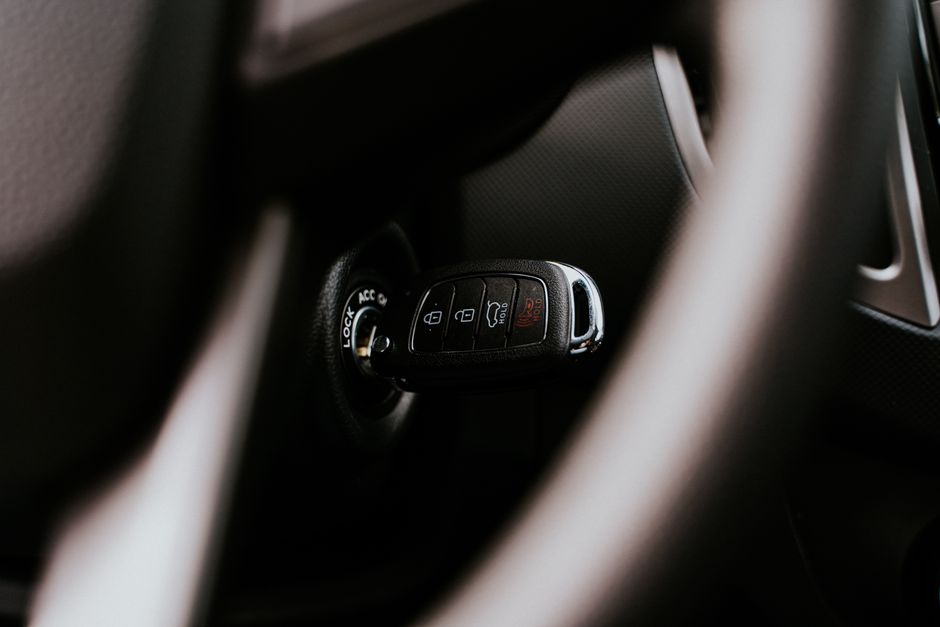
That hollow feeling when your hand pats an empty pocket — and you're on the wrong side of a locked door. Barcelona, 2:17 AM, and I was that person.
🔑 Problem-Solver Card
Who this solves for: Solo travelers, couples in rentals, anyone with a keycard, deadbolt, or padlock
When to use this advice: Right now — or better, before you leave home
Estimated effort: 2/5 (if you prep) → 5/5 (if you don't)
Cost range: $0 (spare key trick) → $350 (emergency locksmith at 3 AM)
Risk level: Low-to-medium — unless you panic, then high
Time saved: 2–6 hours of stress, one ruined travel day
My jeans were damp from sitting on a park bench in the Ciutat Vella. The August heat hadn't let up even at 2 AM, and the only sound was the hum of a street cleaner three blocks away. I patted my left pocket. Then my right. Then the tiny zipper pocket on my backpack where I always kept my Airbnb keys.
Empty. All of them.
The key to my rental — a heavy iron skeleton key attached to a ceramic tile painted with a smiling sun — was gone. Somewhere between the crowded tapas bar on Carrer de Mercè and that bench, it had slipped out. I was locked out of a fourth-floor walkup with no Wi‑Fi, no phone signal that worked for calls (roaming data was spotty), and a host who lived three hours away in Girona.
I sat there for a solid minute, not moving, just breathing. The street cleaner passed. A cat watched me from a doorstep. I'd been a travel journalist for eleven years, and somehow I'd never bothered to solve this problem properly — the universal, gut-punch moment when you realize you're locked out in an unfamiliar city.
That night cost me $187, two hours of sleep, and a chunk of dignity. But it also taught me the exact system I now use on every trip. Here's what I wish someone had told me before I ever touched that smiling ceramic sun.
Why This Problem Ruins Trips (And Why Most Advice Fails)
Every travel blog will tell you to "keep a spare key in your suitcase." Great. What if your suitcase is inside the locked room? Or "leave a key with the front desk." Works great until you're in a beachside villa with no front desk, just a lockbox with a code you've suddenly forgotten.
The advice fails because it assumes you'll have foresight, backup, and a clear head. But lockouts happen when you're tired, jet-lagged, distracted, or drunk. They happen at 2 AM in Barcelona, or in a rainstorm in Reykjavik, or when you've just checked out and your rental car keys are dangling from the ignition — inside the locked car, outside the locked apartment.
The real problem isn't the missing key. It's the panic cascade. You start by patting pockets, escalate to calling your mom at 3 AM in her time zone, and end up googling "how to break into my own Airbnb" with the desperation of a character in a thriller. Your judgment evaporates. And that's when you make decisions that cost more than money.
Let me show you a different way — one that's built on real-world scenarios, not boilerplate advice.
The Step-by-Step Solution
Phase 1: The First 60 Seconds (Don't Do What I Did)
That first minute is the most dangerous. Your brain floods with adrenaline, and your default instinct is to push, jiggle, rattle, kick, or otherwise assault the door. Stop. You will not will that lock open through sheer frustration. I've seen someone snap a key off inside a deadbolt by twisting too hard. That turns a $50 problem into a $300 problem.
What to actually do: Stand still. Take three slow, deep breaths. Then pull out your phone and start documenting. Take a photo of the door, the lock, the building number, and the street. This serves two purposes: first, it forces your brain into problem-solving mode instead of panic mode. Second, if you need to contact the host, a locksmith, or emergency services, you'll have exact visual proof.
Next, check every single pocket, bag compartment, and fold of clothing. Run your hands along the ground near where you've been standing, sitting, or walking. I once found a keycard wedged into the seam of a taxi seat cushion — it had fallen out of my wallet during the ride. If you took a ride-share, check the app: drivers have found keys and returned them within 20 minutes.
If you're at a rental with a lockbox, don't assume the code is lost forever. Check your email, your booking app, your messages, your notes app, even your trash folder. I've seen travelers panic for 45 minutes only to realize the code was in a welcome message they'd read but not memorized.
Phase 2: Contact Protocols (Who to Call First and Why)
The order matters. Most people call a locksmith first. That's a mistake.
First call: Your host or hotel front desk. For a hotel, this is usually a five-minute fix. For a rental, it's more complex. Send a message through the booking platform (Airbnb, Vrbo, Booking.com) and a text or WhatsApp to the number they gave you. Why the platform? Because if the host doesn't respond, the platform's support team can see your message and escalate. I've had an Airbnb support agent call a local emergency locksmith for me in Tokyo because my host was on a flight.
Second call: The emergency contact listed in your booking. Not every rental has one, but many do. Check the house manual, the welcome email, or the physical binder in the room. Wait — you can't check the physical binder because you're outside. That's why I now screenshot the emergency contact page on day one.
Third call: A local locksmith — but only from a verified source. Never google "emergency locksmith [city name]" and call the first number. Those results are often aggregators who charge triple. Instead, ask your host or hotel for a recommendation. If you can't reach them, use Google Maps to find a locksmith with a physical address and real reviews (at least 4.3 stars, minimum 50 reviews).
I once called a "24-hour locksmith" from a Google ad in Lisbon. The guy showed up in an unmarked van, quoted €80 over the phone, then demanded €220 cash once he'd popped the lock (took him 12 seconds). I paid it because I was exhausted. That's the scam I mentioned. Don't be me.
Phase 3: The Workarounds (Before You Pay Anyone)
While you're waiting for help, try these low-cost moves. They work more often than you'd think.
🔹 The second exit. Hotel rooms often have a balcony or patio door. If you're on the ground floor, or if there's a fire escape, check it. I once spent 20 minutes waiting for a locksmith in Portland, Oregon, only to realize the sliding glass door to the patio had been unlocked the entire time. I felt brilliant and stupid in equal measure.
🔹 The neighbor trick. In apartment buildings or guesthouses, knock on neighboring doors. Explain the situation. In many countries, hosts leave a spare key with a neighbor. In Rome, my neighbor had a spare key to my Airbnb because the host had told her, "If anyone gets locked out, you're the backup." I didn't know that until I knocked.
🔹 The lockbox override. If your rental uses a combination lockbox, and you've forgotten the code, try the last four digits of the host's phone number, the address number, or a common default like 0000 or 1234. Yes, those are terrible security practices. They also sometimes work.
🔹 The hotel front desk bypass. If you're in a hotel and your keycard won't work, don't assume it's a battery issue. Walk to the front desk, smile, and say, "I think my keycard demagnetized." They'll swipe a new one in 30 seconds. This happens constantly — hotel keycards die around phones, magnets, and even credit cards. You don't need a locksmith: you need a re-swipe.
Phase 4: The Nuclear Options (When Everything Else Fails)
If you've exhausted every option above, it's time for the expensive, inconvenient, but sometimes necessary last resorts.
🔹 Professional locksmith with verification. Before they start work, ask for a written or texted quote including the call-out fee, labor per 15 minutes, and any weekend/after-hours surcharge. Get it in writing. Locksmiths who operate ethically will provide this without pushback. If they hesitate, find another.
🔹 Cutting the lock. If it's a padlock and you have bolt cutters (unlikely), or if the host gives you permission to cut it (possible if they can see you're the guest and have no other option), this can be cheaper than a locksmith. A decent pair of bolt cutters costs $20–30 at a hardware store. Use a ride-share to get there and back. Total cost: $30–50, plus the cost of a replacement lock for the host.
🔹 Breaking a window — only as a last resort. I've done this exactly once, in a rental in Morocco where the gas stove was left on and I couldn't get in. That's a legitimate emergency. For a standard lockout, breaking a window should be your absolute last option — it costs hundreds, creates safety hazards, and will almost certainly trigger a damage deposit claim. But if you have a child, a pet, or a medical issue inside the room, a window is cheaper than a life.
🔹 Sleeping elsewhere. Sometimes the smartest move is to accept the situation and find a cheap hotel for the night. Process the lockout in the morning when you're rested and rational. I've done this twice now — once in Barcelona after that terrible night, and once in Prague when the host simply didn't respond for six hours. A $60 hostel bed saved me $180 in locksmith fees and a ruined travel day.
Pro Tips From Someone Who's Been There
💡 Pro Tips
- Photograph your key — the moment you check in, take a photo of your key next to a unique object (like a coffee cup or book). If you lose it, you have visual proof to show the host or a locksmith exactly what type of key it is. This saved me in Kyoto when my host needed to identify the key type before couriering a replacement.
- Hide a spare in your car — if you have a rental car, hide a second key or keycard in the vehicle's tire well or magnetic box. I use a $7 magnetic key holder from an auto shop. It's survived rain, heat, and border crossings.
- Email yourself the lockbox code — before you leave home, email yourself the lockbox code with the subject line "LOCKBOX CODE — [property name]." Search your email later. Or use WhatsApp's "Message Yourself" feature. It's searchable even with no signal if you've already loaded the chat.
- Ask for a physical key backup — if your rental uses a keypad, ask the host, "Is there a physical key anywhere in case the battery dies?" Many hosts have a hidden key in a fake rock, under a mat, or with a neighbor. They don't always offer this information unprompted.
- Use a Tile or AirTag on your keyring — I know, it's obvious. But most travelers don't do it because they think "it won't happen to me." It will. A $25 Tile has saved me three times in two years. Set it up before you leave home.
Common Mistakes Travelers Make With This Issue
⚠️ Real Traveler Mistakes
- Calling the first google result for a locksmith. As I learned in Lisbon, these are often middlemen who add a 100–200% markup. Use Google Maps with real reviews, or better, ask a local. One traveler in Bangkok called a "24-hour locksmith" and was charged $400 for a 30-second job. The hotel's maintenance guy fixed it for free.
- Forgetting to check the deadbolt. I once watched a woman in Edinburgh try her keycard 30 times before a staff member pointed out she'd left the deadbolt engaged from the inside. The card worked fine — she just couldn't open the door because the deadbolt was locked. Check the door mechanics before calling anyone.
- Locking yourself out while checking out. This is so common it deserves its own warning. You do a final sweep of the room, step into the hallway, and the door clicks shut behind you. Your bags are inside. Your phone is inside. Your shoes are inside. I've done this in three different countries. Now I prop the door open with a shoe while I do the final check.
- Assuming the host will answer immediately. They won't. They're at work, on a plane, in a different time zone, or sleep with their phone on silent. Never assume a host is available within 10 minutes. Plan for a 30-minute to 2-hour wait. That expectation alone will save you from frantic, expensive decisions.
Your Quick-Action Checklist
Tape this to your phone's notes app. Or print it. Or just memorize it. It's the difference between 15 minutes of inconvenience and three hours of chaos.
- ✅ Take three slow breaths — no rash moves
- ✅ Photograph the door, lock, and building number
- ✅ Check all pockets, bags, and ground within 20 feet
- ✅ Check your phone messages, email, and booking app for codes/contacts
- ✅ Message host through the booking platform + text/WhatsApp
- ✅ Look for the emergency contact in your booking details or welcome email
- ✅ Check neighboring doors, balconies, or unlocked windows
- ✅ If no response after 20 minutes, call a verified local locksmith (use Google Maps, not Google search)
- ✅ Get a written quote before work begins
- ✅ If the cost is too high or the wait is too long, find a cheap hotel for the night
- ✅ Once you're back in: save the backup key somewhere outside the room
Frequently Asked Questions
Q: What's the first thing I should do if I'm locked out of my hotel room?A: Walk straight to the front desk — don't call, don't panic, don't try to force the door. Most hotel keycards demagnetize from phones or credit cards, and the front desk can re-swipe a new one in under 60 seconds at no cost. This is by far the fastest and cheapest fix.
Q: How do I find a legitimate locksmith in a foreign country?A: Never use a google ad or the first organic result — those are often aggregators that add huge markups. Use Google Maps to find a locksmith with a physical storefront, at least 50 reviews, and a rating of 4.3 stars or above. Better yet, ask a local: your host, a hotel concierge, or even a restaurant server can often recommend someone they trust.
Q: Can I break into my own Airbnb if I'm locked out?A: Only if you have explicit permission from the host — otherwise you risk being charged for damage, evicted, or even reported to local authorities. If the host is unreachable and you're in a genuine emergency (child, pet, medical issue inside), document everything with photos and video before taking any action. Breaking a window is a last resort that should cost you less than an emergency locksmith only if there's no other option.
Q: How much does an emergency locksmith typically cost?A: Expect $100–$350 depending on location, time of day, and the type of lock. Late-night calls (after 10 PM) and weekends can double the price. Always get a written or texted quote before they start — if they refuse to provide one, find another locksmith. The scam artists won't give you a fixed price because they plan to inflate it once they've started work.
Q: What should I put in my phone right now to prevent this?A: Save three things: (1) the lockbox code or keycard details in your phone's notes app with a clear title, (2) a screenshot of the emergency contact page from your booking, and (3) a photo of your key taken next to a common object (so you can show a locksmith exactly what type of key you need duplicated). Do this within the first hour of checking in, before you've had a drink or gone anywhere.
Final Word: You've Got This
I still remember the sound of that door clicking shut in Barcelona — the finality of it. But I also remember the feeling of walking back into that apartment at 4:37 AM after a locksmith (a real one, recommended by a nearby hotel) had popped the lock in twelve seconds. The relief was enormous. The lesson was permanent.
Lockouts are one of those travel problems that feel like the end of the world in the moment, but they're almost always solvable with a clear head, a few smart contacts, and a system you've already practiced. You don't need to be paranoid — just prepared. Keep a photo of your key. Know who to call. And for the love of good travel, don't keep your only key in the same pocket as your loose change.
I still carry that ceramic tile key with the smiling sun. It sits on my desk now, a reminder that even the worst travel moments become stories — if you survive them smart enough to laugh about it later.
📌 Save this guide — bookmark it, screenshot it, or forward it to your travel buddy. And if you've got your own lockout story or a fix I didn't mention, drop it in the comments below. The best travel advice comes from people who've been locked out in a foreign city at 2 AM, and lived to write about it.


No comments:
Post a Comment