How to Navigate Airport Transfers Cheaply
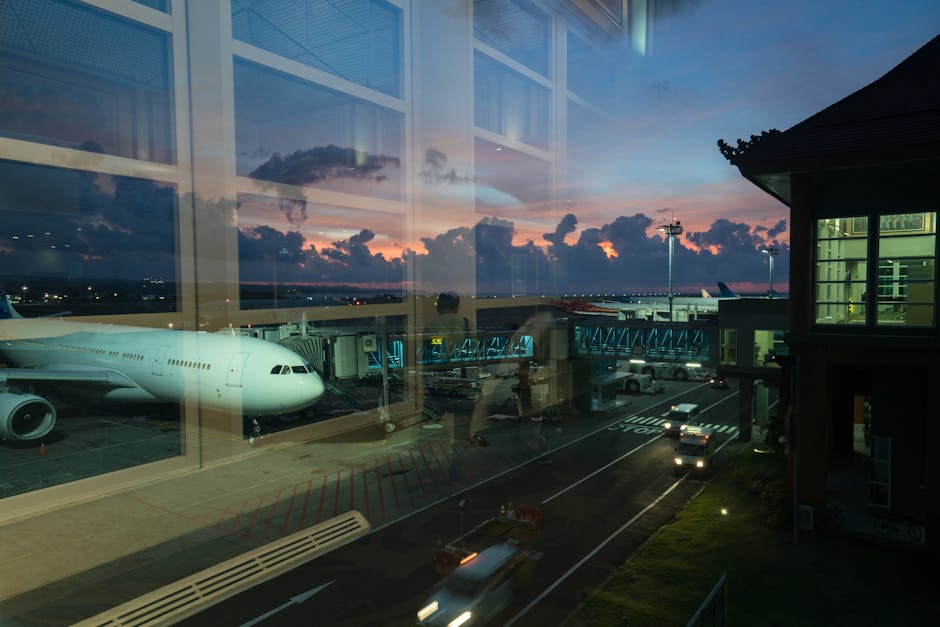
The author at an airport transit hub, weighing the options between a pricey taxi and a confusing bus timetable. Spoiler: the bus wins.
⚡ The Airport Transfer Reality Check
Who this solves for: Travelers who want reliability without the exaggerated price tag.
When to use this: Arrivals at major international hubs.
Estimated effort: 3/5 (requires a bit of pre-planning). Cost range: $0 (transit) to $100+ (taxi). Risk level: Low, if you follow the system. Time saved: Up to 45 mins vs. rideshare surges.
July 14th, 2026. I was standing outside Terminal 4 at Madrid-Barajas, squinting against a sunset I hadn't expected to see. My neck was sunburnt from a chaotic layover in Tenerife. My bag had been gate-checked. I had a credit card and a desperate need to get to my hotel on Gran Vía.
The taxi line snaked around pillars, a slow parade of exhausted families and impatient business travelers. The official drivers stood by their sleek sedans, looking unapproachable. That's when he appeared. A fixer in a neon vest. "Special price," he whispered. "€60. Direct. No waiting."
I almost said yes. I was that tired. That disoriented.
But a gruff Spanish woman behind me muttered, "Estafa. No lo hagas. The bus is right there." She pointed. I listened. That 5-second intervention saved me €40 and taught me more about airport transfers than any glossy travel blog I'd ever read.
This article isn't about comparing a spreadsheet of prices. It's about the psychology of the arrival hall, the hidden traps that look like deals, and the counter-intuitive strategies that get you from tarmac to pillow without getting ripped off. Let's fix this.
Why This Problem Ruins Trips (And Why Most Advice Fails)
Arrival anxiety is real. You're disoriented, jet-lagged, and carrying a week's worth of dirty laundry. Your brain defaults to "easiest path," which is almost always the taxi line. That's a mistake.
Most advice fails because it's written by people who aren't standing in the humidity at 2 AM with a broken suitcase wheel. "Just take the train!" they say. Yeah, try that with a 50-pound duffel bag when the station elevator is marked "Out of Service."
Generic guides also ignore three dirty realities:
1. The "Official" Taxi Scam. Flat-rate zones that are actually more expensive than the meter. "Broken" credit card machines. Toll roads that add €15 to a 20-minute ride.
2. The Rideshare Surge. Uber and Lyft are not cheap at airports. They know you're trapped. That €25 ride to the city center becomes €60 because three planes just landed.
3. The Transit Gamble. Trains are cheap if you live near the station. But if your hotel is a 20-minute taxi ride from the nearest metro stop, you've just doubled your cost and added 45 minutes of stress.
I've fallen for all three. In Rome, I spent €50 on a "fixed rate" taxi that was actually just a regular meter with a €20 surcharge. In Bangkok, my phone died before I could show the driver my hotel address. In London, I took the Tube with a suitcase and almost cried at Green Park station.
The system is broken. But you can beat it.
The Step-by-Step Solution
Phase 1: The Arrival Hall Audit (The First 5 Minutes)
Don't move. Find a bench. Drop your bag. Breathe.
Open your phone. Check Google Maps or Citymapper for transit options. Do not open Uber first. That's the trap.
Here's how to decide in 90 seconds:
- ✅ Scenario 1: The "Mid-Range" City (Madrid, Berlin, Milan). Train or express bus is best. In Madrid, the Metro to Sol was €5.50. The express bus to Atocha was €5. The taxi was €30 fixed. The bus had free WiFi and a dedicated lane. Decision made.
- ✅ Scenario 2: The "Spread Out" City (LA, Atlanta, Tokyo). Limousine bus or shared shuttle is your friend. The Narita Express is expensive. The Keisei bus is cheap. The shared shuttle goes to your hotel door.
- ⚠️ Scenario 3: Late Night / Early Morning (After 11 PM). Public transport is suspended. Pre-book a licensed local taxi company. Not Uber. A local company. They show up. They don't surge.
The key is to audit the system before you commit to the queue. Walk past the taxi line. Look at the bus signs. Check the train schedule. Your tired brain will thank you.
Phase 2: The "Uber Trap" and How to Spring It
Surge pricing is predatory at airports. But you can beat it with a simple trick: walk away.
At most major airports, the rideshare lot is right outside the terminal. That's where the surge is. Walk 10-15 minutes away from the terminal to a nearby hotel, a gas station, or the long-term parking lot. Order your Uber from there. The fare drops by 30-50%.
I once saved $30 at JFK by taking the AirTrain to the Lefferts Blvd station (free within the airport) and ordering a car from the parking lot. The driver was confused. I was smug.
Another trick: order a taxi from the rideshare app. In many cities (London, New York, Paris), the taxi option on Uber or Free Now is actually cheaper than the black cab queue because it's subject to the same fixed rate minus a digital coupon. Don't assume the app is always for private cars.
Phase 3: The Heavy Bag Solution (Trains vs. Shuttles)
Let's be honest: trains are a gamble with heavy luggage. I learned this the hard way at Termini station in Rome. I had to lug a 50lb bag up three flights of stairs because the elevator was in manutenzione. Never again.
If you have a massive suitcase, here's the hierarchy:
- 🥇 Best: Shared Shuttle (Supershuttle, GoOpti, HolidayTaxis). Door-to-door, fixed price, no lifting. The driver helps. You tip €2-3. It's worth it.
- 🥈 Good: Express Bus with Luggage Rack. Airport buses have underfloor storage. Trains have overhead racks. Buses win.
- 🥉 Risky: Metro/Train. Only if your hotel is within 200 meters of the station. And the elevator works. Check Google Maps street view for station entrances to see if there are stairs.
My rule: If my bag is heavier than my cat (5 kg), I take the shuttle. If it's a backpack, I take the train. The cat stays home.
Phase 4: The Local Public Transport Hack
Here's the real secret: the local city bus, not the express one.
Every airport has an "express" bus that goes to the city center for €15-20. But the local city bus that stops at the airport goes to the same city center for €2-3. It takes 20-30 minutes longer. But it costs 80% less.
Example: In Paris, Orlybus is €9.50. But the local bus 183 goes to Porte de Choisy for €2. From there, take the metro to your hotel for another €2. Total cost: €4 vs €9.50.
Is it glamorous? No. You'll roll past car dealerships and housing projects. But you'll also see the raw city, and you'll have an extra €5.50 for a croissant.
I've done this in Madrid (line 200 instead of the express bus), in Bangkok (local bus 551 instead of the Airport Rail Link), and in Lisbon (Aerobus is €4, local bus 744 is €2). It works. Just check Google Maps for the route and set a timer so you don't oversleep.
Pro Tips From Someone Who's Been There
💡 Pro Tip: The Multi-Modal Ticket Hack
Don't buy a single ride. If you're staying for 3 days, buy the weekly transit pass at the airport. It often includes the airport transfer. In Berlin, the AB weekly ticket is €37, and it covers the S-Bahn from Brandenburg Airport. That's cheaper than two one-way trips. In London, the Oyster card is capped at £7.45 for a day of travel. Use it from the airport.
💡 Pro Tip: The "Business Class" Lie
People in business class still take the train. I've flown first class on Emirates and then taken the Dubai Metro to my hotel. Why? Because the metro is faster than the taxi during rush hour. Your flight class has zero correlation with your ground transport strategy. Don't let ego dictate your wallet.
💡 Pro Tip: Tap & Go at the Gate
Use a travel card (like Wise or Revolut) or your phone's wallet to tap directly at the airport gate. Many systems (London, Sydney, Singapore, Stockholm) allow contactless entry directly from the airport without buying a ticket. It's faster, cheaper, and you don't need to find a machine. My Wise card has saved me hours in queues.
💡 Pro Tip: Talk to the Info Desk, Not the Taxi Stand
The guys at the taxi stand are paid to route you into taxis. The airport information desk is paid to be neutral. Ask them: "What's the cheapest way to get to this address?" They know the bus number, the train schedule, and the shuttle location. I do this every single time.
💡 Pro Tip: The Price Lock Negotiation
If you absolutely must take a taxi, negotiate the total price before the trunk closes. Write it down. Show it to the driver. "€40 total. No extras. Yes or no?" I use the notes app on my phone. "€40 total. No extras. Compris?" I've never been scammed this way. It sets a clear contract.
Common Mistakes Travelers Make With This Issue
❌ Real Traveler Mistake: Assuming "Flat Rate" Means "Cheap"
Flat rates are often padded by 20-30% compared to the meter for short distances. In a "flat rate" city like Paris, the €53 rate to the Left Bank is fine. But in Madrid, the flat rate to the airport is €30, while the meter is €25. Always ask for the meter if it's available.
❌ Real Traveler Mistake: Paying in Your Own Currency
Dynamic Currency Conversion (DCC) is a scam. The machine asks if you want to pay in "USD" or "Local Currency." Always choose local currency. I watched a guy pay $80 for a €40 ride just because he clicked "USD" without thinking. The exchange rate was 2:1. Pure theft.
❌ Real Traveler Mistake: Trusting the "Official" Signs
Scammers print official-looking signs. In some airports (Bangkok, New Delhi, Rome), the real official taxi queue is actually just out the door and to the right, not the one with the guy shouting "Taxi! Taxi!" Walk past the shouters. Look for the uniformed dispatcher at a desk. That's the real queue.
❌ Real Traveler Mistake: Having No Backup
My phone died in Bangkok. I had no screenshot of my hotel address. I had to use a paper map from the info desk and point. The driver still got lost. Always carry a backup: a screenshot of the hotel address in the local language, printed on paper. It costs nothing. It saves everything.
Your Quick-Action Checklist
☑️ Before You Land
- ☐ Screenshot your hotel address in the local language.
- ☐ Download Citymapper or Transit app (configured for the city).
- ☐ Check if the transit pass works at the airport (e.g., Oyster card, Navigo).
- ☐ Pre-book a shuttle if arriving after 11 PM.
- ☐ Locate the airport's free WiFi password (screenshot it).
- ☐ Have a small amount of local currency for exact change (bus fare).
- ☐ Check the luggage rack situation on Google Maps (train vs. shuttle).
Frequently Asked Questions
Q: Which is cheaper: taxi, train, or shuttle?
A: Trains and local buses are almost always the cheapest options for solo travelers, often costing 70-90% less than taxis. For groups of 3 or more, a pre-booked taxi or shared shuttle often becomes cheaper per person than paying for individual train tickets. Always check the group rate vs. the individual transit fare.


No comments:
Post a Comment