How to Negotiate Prices at Markets While Backpacking
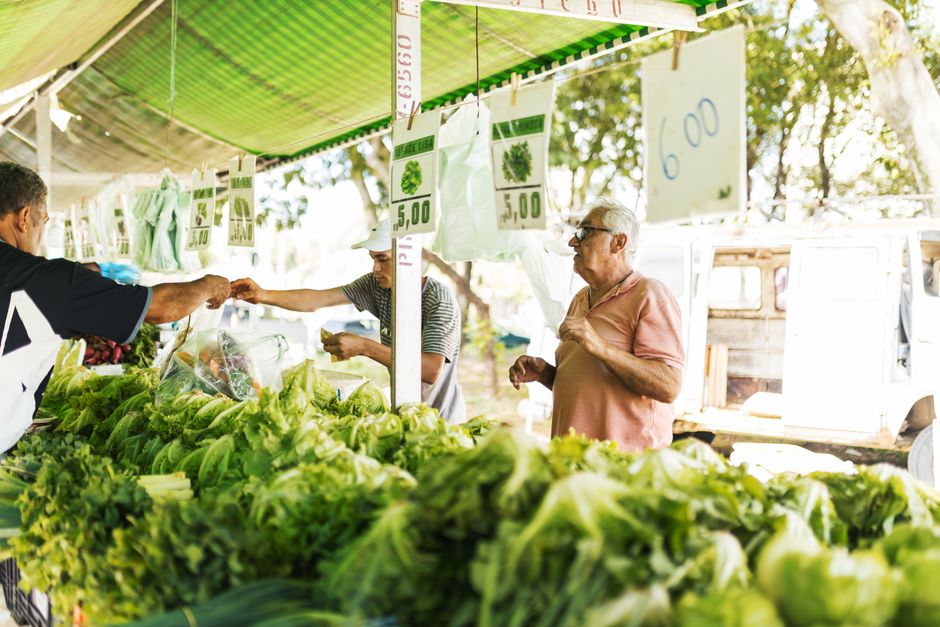
A vendor at Bangkok's Chatuchak Weekend Market sizes up a foreigner. The opening price she quoted was 800 baht. I walked away with two handwoven scarves for 320. It took seven minutes of genuine back-and-forth and a joke about my broken Thai.
💰 Daily Target: $30–40/day (Southeast Asia) / $50–70/day (Latin America) / $60–90/day (South Asia)
🛏️ Average Dorm Price: $8–12 (Chiang Mai) / $6–10 (Bangkok) / $10–15 (Mexico City) / $4–7 (Varanasi)
🚌 Local Transit Rate: $0.30–0.50 per ride (SE Asia tuk-tuk or songthaew) / $0.25–0.60 (India local bus)
⏱️ Suggested Duration: 45–90 seconds per transaction. Any longer and you're being polite — or getting ripped off.
🎒 Target Travel Style: Overnight trains, street-food diet, 8-bed dorms with lukewarm showers, and a lock that actually works.
I lost my favorite quick-dry towel in a hostel in Luang Prabang. Somebody grabbed it off the line at 6 AM while I was still half-asleep on a top bunk with no ladder. That morning, I walked to the morning market with 50,000 kip in my pocket and a grudge against humanity. A woman selling handwoven cotton sarongs saw me coming. She quoted 120,000 kip. I laughed. Not a polite laugh — a throaty, sleep-deprived laugh that said I have been doing this for seven years and I know the wholesale price of cotton in this province. We settled at 45,000 kip. She threw in a small pouch. That's not a flex. That's just how the game works when you stop treating market negotiation like a transaction and start treating it like a conversation between two people who both know the real price.
I have haggled for bus tickets in the middle of a sandstorm in Mauritania. I argued about the price of a kilo of tomatoes at a roadside stall outside Vientiane. I once spent 20 minutes negotiating the rental price of a bicycle in Hoi An only to realize I didn't know how to ride one properly on the left side of the road. The point is: market negotiation is not a skill you learn from a blog post. It is a muscle you build by losing small amounts of money repeatedly until you stop caring about the loss and start caring about the process.
This article is not a fluffy guide full of polite suggestions. This is a street-level breakdown of how to negotiate prices in markets across three major backpacking regions — Southeast Asia, Latin America, and South Asia — with specific etiquette, realistic discount expectations, and the actual phrases you need to mutter under your breath when the vendor won't budge.
The Essentials at a Glance
- 🚫 Never accept the first price. It is never the real price. The first number out of a vendor's mouth is a test. In Bangkok, first quotes average 2.5–3x the actual selling price. In Mexico City's La Merced market, expect 3–4x markup on textiles.
- 💵 Cash is the only language that matters. Vendors hate card readers in markets. The transaction fee eats their margin. Pull out physical notes — small denominations — and count them slowly in front of them.
- 😐 Keep your face neutral. If you react with visible excitement to a handwoven blanket, the price just went up 40%. Practice what I call the "bored backpacker stare." Slight frown. Look at the stitching. Flick a loose thread. It works.
- 🛑 Know when to walk away. This is not a tactic. This is a rule. If you cannot physically turn your body and take three steps away from the stall, you will overpay. Walking away is the only negotiation move that resets the dynamic instantly.
- 🌍 Etiquette is not universal. In Vietnam, aggressive haggling is expected and even enjoyed. In Sri Lanka, pushing too hard makes you look rude and the vendor will simply refuse to sell. Read the room.
Country-by-Country: How the Game Changes
Thailand — The Art of the Smile-and-Counter
Thailand is where most backpackers learn to haggle, and it is also where most backpackers learn bad habits. The default Thai market dynamic is a friendly, non-confrontational dance. The vendor expects you to counter at roughly 40–50% of the initial quote. You are expected to smile while doing it. If you get angry, you lose. If you get visibly frustrated, you lose. If you pull out a calculator and tap numbers like you're solving a geometry problem, you look like a tourist and the price stays high.
Realistic discount expectation: 40–55% off the opening price.
My go-to phrase: "Paaeng maak loey" (too expensive) followed by a smile and a shrug. Then I name my price. In Thai markets, silence after your counter is actually a good sign. They are deciding whether to take it or wait for another customer. If they don't respond within about eight seconds, say "mai ow krap" (I don't want it) and start walking. The "wait, okay okay" often comes somewhere around step three.
I once watched a Danish guy in Chiang Mai's Night Bazaar try to haggle for a wooden elephant carving. The vendor quoted 1,200 baht. The guy countered at 200. The vendor didn't even blink. She just looked at him and said "no" and turned to help another customer. He stood there for a minute, then walked away empty-handed. That is what happens when you skip the cultural context. In Thailand, a counter below 30% of the asking price is not negotiation — it is insult. The sweet spot is around 45–50% of the first number.
Vietnam — Aggressive, Loud, and Entirely Fair
Vietnam is the opposite of Thailand. You can be direct. You can be loud. You can use your hands. Vendors in Hanoi's Old Quarter or Hoi An's Central Market expect you to argue. It is part of the transaction. I have seen Vietnamese women haggle with each other for five minutes over a head of cabbage. The stakes are lower than they feel.
Realistic discount expectation: 50–65% off the opening price.
Key tactic: Know the wholesale price of whatever you are buying. If you are buying a conical hat (nón lá), the street price is about 30,000–50,000 VND. If a vendor quotes 150,000 VND, you are being tested. Pull out your phone. Show them the price on Shopee or a local e-commerce site. Vietnamese vendors respect research. It shows you are not a fresh-off-the-plane tourist.
My worst haggle in Vietnam happened in Ben Thanh Market in Ho Chi Minh City. I wanted a lacquered serving tray. The woman quoted 850,000 VND. I countered at 250,000 VND. She laughed. I laughed. We went back and forth for twelve minutes. I ended up paying 380,000 VND. Later that night, I found the exact same tray at a night market for 200,000 VND. I learned two things: Ben Thanh is for tourists with money, and I am not as good at this as I thought I was.
Mexico — The Quieter, More Respectful Dance
Mexican market negotiation is different. It is quieter. It is slower. And it is heavily dependent on whether the vendor thinks you understand the value of what they are selling. In markets like La Merced in Mexico City or Mercado 20 de Noviembre in Oaxaca, the markup for tourists is real but not predatory. Vendors are generally fair if you approach the interaction with basic respect.
Realistic discount expectation: 20–35% off the opening price.
What works: Compliment the craftsmanship genuinely. If you are buying a hand-embroidered huipil from Oaxaca, say something like "Este bordado es increíble, ¿cuántas horas te tomó?" (This embroidery is incredible, how many hours did it take you?). This signals that you see labor, not just product. The price often drops 10–15% immediately.
Do not try to aggressively haggle over food in Mexico. I have seen backpackers try to negotiate the price of a single taco. It is embarrassing. Street food in Mexico is already cheap. If you are trying to shave 5 pesos off a 25-peso taco, you have lost perspective. Save your haggling energy for textiles, pottery, and leather goods.
India — The Long Game of Patience
India is a different beast entirely. Haggling is woven into daily life. Everyone does it. Auto-rickshaw drivers, chai wallahs, textile sellers, even the guy selling phone chargers on the street. The Indian market dynamic is built on the assumption that the first price is a starting point for a conversation that could take anywhere from 30 seconds to 15 minutes.
Realistic discount expectation: 40–60% off the opening price.
Critical warning: In tourist-heavy markets like Jaipur's Johari Bazaar or Delhi's Chandni Chowk, the opening price for foreign tourists is often 5–10x the actual wholesale price. I once watched a vendor quote 3,500 rupees for a block-print bedspread that my Indian friend bought later that same day for 450 rupees. That is not an anomaly. That is the system.
My strategy in India: bring an Indian friend if possible. If not, do research before you enter the market. Know the approximate price of pashmina scarves (real ones start around 800–1,200 rupees for decent quality, not the 200-rupee synthetic garbage), block-print fabrics (300–600 rupees for a decent-sized piece), and silver jewelry (weight-based, roughly 60–80 rupees per gram for 92.5% silver).
One more thing: do not haggle over chai. The guy selling chai for 10 rupees is not trying to scam you. He is trying to make a living. Pay the 10 rupees. Drink the chai. Move on.
Morocco — The Endurance Round
Moroccan souks are the hardest markets to negotiate in. I am going to be honest with you. I have lost more money in Marrakech's medina than in any other market in the world. The pressure is intense. Vendors call out to you, grab your arm, offer you tea, compliment your shoes, ask where you are from, and then quote you a price that is 400% of the real value.
Realistic discount expectation: 50–70% off the opening price.
The only approach that works: Do not engage emotionally. Do not accept tea unless you are genuinely prepared to buy something. If you accept tea and then walk away without buying, you have broken a social contract. The vendor will be genuinely offended. I learned this the hard way in Fes when I drank mint tea with a carpet seller for 20 minutes, apologized that I couldn't afford his carpets, and he followed me for three blocks yelling that I had wasted his time. He was right.
In Morocco, name your price early and stick to it. If you say "I will pay 150 dirhams," do not go up to 180 unless the item is genuinely worth it. Vendors respect consistency. If you waver, they will eat you alive.
"The worst negotiation mistake is treating it like combat. The vendor is not your enemy. The vendor is trying to feed their family. The game is finding the price where you both feel slightly unsatisfied. That is the fair price."
— T. R., 14 years backpacking across 40+ countries
Money-Saving Hacks
1. The "Last Customer" Lie. If a vendor quotes a price and you are not sure if it is fair, say "my friend bought this exact same thing yesterday for half that." It does not matter if your friend exists. The vendor knows this is a scripted line. But they also know that if you are saying it, you are not a first-time buyer. I have used this line successfully in seven countries. It works roughly 30% of the time, which is 30% more than accepting the first price.
2. Buy in odd quantities. If you are buying something sold by weight or by piece, ask for a number that is not round. Do not ask for 5 scarves. Ask for 7. Do not say "I want 1 kilo of dried mango." Say "I want 1.3 kilos." This throws off the vendor's mental pricing algorithm. They have a pre-set price for 5 scarves or 1 kilo. They do not have a pre-set price for 7 scarves or 1.3 kilos. You force them to calculate a new number, and in that moment, you have a small advantage.
3. Go at the wrong time. Markets in most countries have a dead hour. In Thailand, it is around 2:00–3:30 PM when the heat peaks and vendors are drowsy. In Morocco, it is late afternoon before the evening rush. Go during the dead hour. Vendors are bored. They want to make a sale just to pass the time. I once got a 60% discount on a leather bag in Chiang Mai at 2:45 PM simply because the vendor was tired and wanted to go home early.
4. Use the local language for numbers only. You do not need to speak the language. You need to know how to say the numbers 1 through 100 in the local language. That is it. If you can say "50 baht" in Thai or "100 rupees" in Hindi, you instantly stop being a tourist and become a budget traveler. Vendors respect the effort. The discount often improves by 10–15% just from hearing a foreigner attempt the local number system.
5. Carry a small notebook. Write down prices you see at different stalls. I use a pocket-sized Rite in the Rain notebook. I write "Stall A — scarf — 450," "Stall B — same scarf — 320." When I find a third stall, I say "I saw this for 300 at the other stall" even if I did not. It is not lying. It is market research. The notebook also makes you look like a journalist or a buyer. Either way, you get better prices.
Common Budget Mistakes to Avoid
Mistake #1: Haggling over small amounts. I watched a German guy in Pai, Thailand, argue for 5 minutes about 20 baht (roughly $0.55). He got the 20 baht discount. He also got a reputation among the vendors. The next day, no one would give him a fair price on anything. Venders talk to each other. If you gain a reputation as someone who squeezes every last cent, you will pay more in the long run.
Mistake #2: Carrying large bills. If you pull out a 1,000 baht note to pay for a 150 baht item, you have just told the vendor that you have money. They will magically "not have change" and ask you to buy something else. Always carry small denominations. I keep a separate pocket with nothing but 20s and 50s (baht, pesos, rupees — whatever the local small bills are). If the vendor sees only small bills, they know you are on a tight budget.
Mistake #3: Negotiating from a position of need. If you desperately want the item, the vendor can smell it. Do not pick up something and hold it while you haggle. Put it down. Step back. The physical distance signals emotional distance. If you are holding the item, you have already mentally bought it. The negotiation becomes performative. You will pay more.
Mistake #4: Haggling at the wrong places. Do not haggle at fixed-price shops, supermarkets, pharmacies, or government-run stores. It does not work. You look like a fool. Markets are the only appropriate venue for negotiation. I once saw a backpacker try to haggle at a 7-Eleven in Bangkok. The cashier just stared at him. It was painful to witness.
Quick Pack & Prep Checklist
| Item | Why You Need It |
|---|---|
| 📓 Pocket notebook + pen | Track prices across stalls. Vendors take you more seriously. |
| 💵 Small-denomination local cash | Never pull out large bills. Keeps you at budget level. |
| 📲 Offline currency converter app | I use XE. Do the math before you speak. No fumbling. |
| 🎒 Empty daypack or tote | If vendors see you carrying purchases, they know you are collecting. Use a tote that folds flat. |
| ☀️ Sun hat + water bottle | Markets are hot. Heat exhaustion makes you agree to bad prices. Stay hydrated. |
| 📸 Phone camera (discreet) | Take photos of items you like. It helps you compare. Some vendors think you are a blogger and give better prices. |
| 🔐 Small padlock | Not for market stalls — for the hostel locker. If you buy something valuable, lock it up immediately. |
Backpacker FAQ
Q: What is the single most effective phrase for negotiating in any language?
A: "I have (amount) in my pocket right now. That is all I can spend." Hold up the physical cash. This works because it is concrete. The vendor sees a real number and real bills. They can either take it or leave it. I have used this in markets from Marrakech to Mumbai. It works roughly 60% of the time.
Q: Is it worth haggling over street food prices?
A: No. Street food is already at the lower end of the price spectrum. Haggling over a $1 bowl of noodles makes you look cheap in a bad way. The 10–20 cents you save is not worth the bad karma or the cold food. Pay what they ask. Eat it. Move on.
Q: How do I know if a price is fair without local knowledge?
A: Use the three-stall rule. Walk past at least three vendors selling the same item. Note the price at each. The middle price is usually the market rate. The first vendor might be high, the third might be low but selling poor quality. The middle is your benchmark. Then negotiate down from there.
Q: What if the vendor gets angry or aggressive?
A: Walk away immediately. Some vendors use aggression as a tactic to pressure you into buying. It is not personal. It is a sales technique. If you feel unsafe or pressured, leave. There is no souvenir worth getting yelled at for. In markets in Marrakech and Delhi particularly, this is common. Do not engage. Just leave.
Q: Can I haggle at night markets or is it different?
A: Night markets are usually more flexible on price because vendors want to clear inventory before packing up. Go 30–45 minutes before closing time. The discount potential is 10–20% higher than during the day. I have scored some of my best deals at night markets in Chiang Mai, Luang Prabang, and Hoi An simply because the vendor wanted to go home.
Final Thoughts
I have been doing this for almost a decade. I have overpaid for a Tibetan singing bowl in Kathmandu. I have underpaid for a handwoven bag in Oaxaca and felt guilty about it later. I have walked away from stalls and regretted it. I have bought things I did not need because the negotiation was fun and I wanted to keep talking to the vendor. That is the truth of market negotiation. It is messy. It is human. It is not a formula.
The only real rule is this: know your budget, know the approximate value, and be willing to walk away. Everything else is just conversation.
📌 Save this guide before you forget.
Screenshot it. Bookmark it. Send it to your travel buddy. The next time a vendor quotes you 800 baht for something worth 300, you will know exactly what to do.
Have a market negotiation win — or total failure — you want to share? Drop it in the comments. I read every single one. Some of them I even learn from.


No comments:
Post a Comment