How to Use Ride-Sharing Apps Like Uber and Lyft Abroad
Availability, pricing, and safety features in foreign cities — solved from the curb.
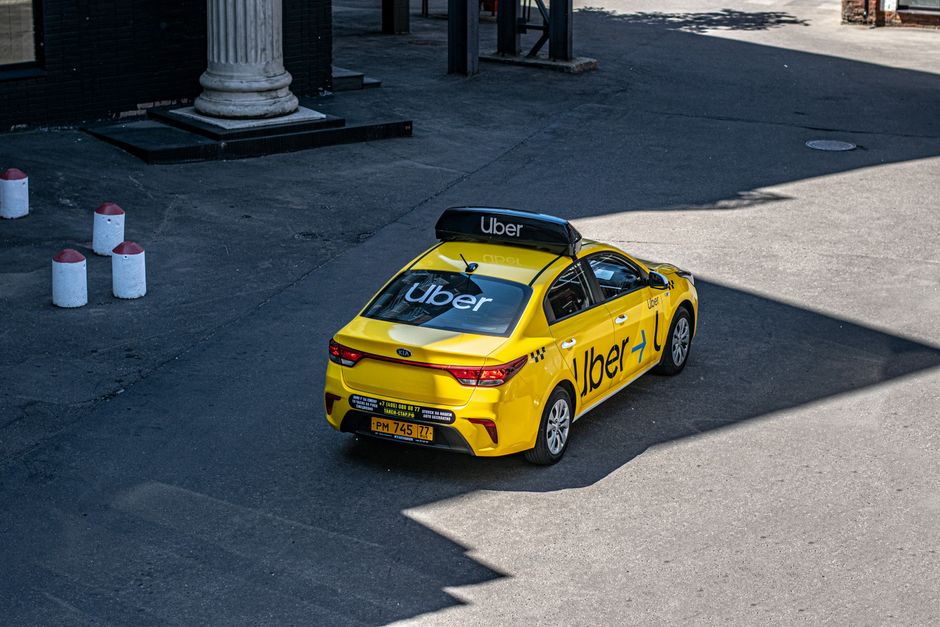
That moment of pure, unfiltered confusion when the app map lies and the driver is circling a roundabout you can’t even see.
⚡ The Problem-Solver Card
- Who this solves for: Solo travelers, digital nomads, nervous first-timers
- When to use this advice: Airport arrival + late-night exits + unfamiliar neighborhoods
- Estimated effort: 3 / 5 (takes pre-trip setup)
- Cost range: $0 setup — saves you $40+ on surge scams
- Risk level: Medium if ignored / Low if followed
- Time saved: 30–90 minutes per ride fiasco avoided
My phone buzzed, bright and confident: “Your ride is on its way.” It wasn’t. The airport exit in Naples smelled like diesel, cigarette ash, and the specific sweat of a hundred travelers who’d just been lied to by an algorithm. I stood there, luggage handle digging into my palm, watching a little car icon on the screen orbit a roundabout a kilometer away. It circled for ten minutes. Then fifteen. Then the app asked if I wanted to wait longer.
I did the dumbest thing possible. I cancelled. Paid a cancellation fee. Rebooked a “Uber Black” — which turned out to be a dented Fiat Multipla with a rosary on the rearview mirror and a driver named Enzo who didn't speak English and charged me $40 for a 5-minute ride because the app defaulted to its premium tier. I was angry. I was late. And I was broke for the rest of the day.
That was my welcome to the global ride-sharing lie: that the app you use at home works exactly the same everywhere. It doesn’t. Not even close. I’ve been stranded by Uber in Tokyo, ghost-ridden by Lyft in Los Angeles, and overcharged by Grab in Bangkok. The real solution isn’t just “download the app.” It’s a messy, street-level strategy that involves backup apps, local currency, offline maps, and one very specific trick I learned from a driver in São Paulo.
This guide is that strategy. It’s built from two decades of bad rides, good rides, and one truly terrifying ride in Marrakech where the license plate didn’t match. I’ll show you how to avoid my mistakes — and how to never, ever be the person standing on a curb at 2 AM refreshing an empty screen.
Why This Problem Ruins Trips (And Why Most Advice Fails)
The root cause isn’t your phone. It’s not your credit card. It’s a perfect storm of three things: local licensing wars, data blind spots, and map inaccuracy that borders on sabotage.
In Rome, Uber is essentially a taxi-hailing app with black-car rates because the city sued them into irrelevance. In Mexico City, Uber is cheap and everywhere — but drivers are striking constantly against low fares. In Jakarta, Uber doesn’t exist, but Gojek and Grab own the streets with a fleet of scooters and cars that the American apps can’t touch.
Most advice fails because it’s written by people who took one trip to London, used the Uber app successfully from Heathrow to Soho, and decided the whole world works that way. It doesn’t. Generic tips like “just use Uber” or “hail a taxi instead” ignore the fact that in some cities, taxis are a predatory pyramid scheme, and Uber is a phantom.
The real advice is uglier. It involves screenshots, multiple apps, small bills, and the willingness to walk a block away from a crowded plaza to avoid a surge multiplier that’s effectively highway robbery with a digital smile.
The Step-by-Step Solution
Phase 1: The Pre-Trip Triage (Before You Leave Home)
You don’t pack one pair of shoes for a trip. Don’t pack one ride app either.
First, check the app store for the country you’re visiting. Search “ride share” and see what the locals use. I use the app store trick where I switch my region to the destination country — it shows the top charts. In Eastern Europe, it’s Bolt. In Spain and Latin America, Cabify. In the Middle East, Careem (which Uber actually owns, but operates differently). In Asia, it’s Grab, Gojek, and DiDi. In Africa, Little and InDrive.
Install at least two. Install three if you’re going somewhere sketchy.
Second, fix your payment. Your home credit card will get flagged by your bank the first time you request a ride in a foreign country. I promise. The solution? Add a PayPal account as a backup (it processes differently and bypasses many bank blocks). Also add a virtual card from Wise or Revolut with a low balance — $50 tops. That way, if a scam or a double-charge happens, your real account isn’t drained.
Third, download an offline Google Maps area of the city. Taxis and ride-share drivers in developing countries often use their own GPS, which is terrible. If you can hand them your phone with the route loaded, you’re the boss of the ride.
📌 Pro Tip
Before you leave the airport Wi-Fi, open every ride app and “set a destination” to your hotel. Don’t confirm the ride. Just see the price estimate. If the app shows “No Cars Available,” you have time to switch to Plan B while still connected to free internet.
Phase 2: The Airport Arrival Gambit
You’ve landed. You’ve cleared customs. Your phone is roaming or struggling to find local Wi-Fi. This is the most vulnerable moment of your entire trip.
First, connect to airport Wi-Fi. Do not rely on your cellular data yet. Open the ride app. If it shows cars, great. But don’t just accept the default pickup point. Every airport in the world has a designated ride-share pickup zone. Look for signs that say “Ride & Drop” or “App Pickup.” Don’t try to get picked up at departures unless you want to walk against traffic.
Here’s the hack: If the app says “No Cars Available” at arrivals, switch your pickup point to the departures level. Drivers hate the arrivals traffic, but they love a quick departure-lane pick-up. Walk up the escalator. You’ll save 15 minutes and find a driver instantly.
If you’re still getting nothing, switch to a different car tier. Ask for “Uber Comfort” or “Uber XL.” Sometimes the basic tier is saturated with requests, but the premium tier has drivers sitting idle.
Phase 3: Pricing & The Surge Swindle
Surge pricing abroad isn’t about supply and demand. It’s a tourist tax. The app knows you’re at the airport, tired, and willing to pay. The 2.3x multiplier you see at 2 AM isn’t a market reality — it’s a psychological trap.
Walk. Seriously. Walk 200 meters away from the exit of the club, the stadium, the train station. The surge zone is a geofence. I walked one block away from a festival exit in Medellín, and my fare dropped from 4x to 1.5x. The walk took 3 minutes. Saved me $12.
Cash vs. Card: In the US, we tap and go. In many other countries, drivers want cash. In Egypt, India, and Colombia, drivers often refuse card payments because they don’t want to wait a week for the bank to clear. The app says “card only” and the driver asks “cash only?” at the window. Keep a stash of small bills in the local currency. It solves 90% of conflicts.
Always pay in the local currency when the app asks. The dynamic currency conversion rate is always worse than your bank’s rate. It’s a hidden 4-7% markup for the privilege of seeing the price in dollars.
🛑 Real Traveler Mistake
My first night in Bangkok, I booked a Grab ride from Khao San Road. The app showed the driver’s car approaching, but it never arrived. The pin just sat a block away. I waited 15 minutes. When I canceled, I got charged a fee. I later learned this is called “ghosting” — drivers hoping you’ll cancel so they collect the fee without driving. The fix? Call the driver via the app immediately. If they don’t answer, report them and get the fee refunded. Don’t be polite. Be savvy.
Phase 4: Safety in an Unfamiliar Cab
I once got into a car in Marrakech with the wrong license plate. The driver was fine — a nice guy named Hassan who just borrowed his friend’s car. But my heart rate didn’t drop for 20 minutes. I made a mental vow: never again.
Here’s the safety protocol that works globally:
✔ Check the plate. Walk around the car and look at the plate. If it doesn’t match the app, do not get in. Say “sorry, wrong car” and walk away. The driver might be nice. They might also be a predator. Don’t risk it.
✔ Share your trip. Every app has a “Share Trip” button. Use it. Send it to a friend or partner back home. Say “I’m in a white Toyota with plate XYZ.” It’s a deterrent. Drivers know they’re tracked.
✔ Sit in the back. In many cultures, sitting in the front is normal. Don’t do it on the first ride. It gives you space and an exit.
✔ The “Wrong Address” defense. If you feel uncomfortable, ask to be dropped at a nearby hotel or landmark, not your exact Airbnb. It costs you a two-minute walk but gives you complete privacy.
Pro Tips From Someone Who's Been There
These are the tips that don’t make it into the glossy blog posts — the ones I learned from sweating in the back of a taxi that smelled like incense and regret.
1. The “Departures” Trick: I mentioned it earlier, but it’s worth repeating. If you’re stuck at an airport with no cars, take the elevator up one floor to departures. Drivers love it. The traffic is smoother, and they don’t have to fight the taxi mafia that patrols arrivals.
2. The “Silent Ride” Shield: If a driver is too chatty, or the music is too loud, or you can’t hear your directions, just point at your phone and say “Sorry, work call.” Then put in earbuds. It’s a universal escape hatch that doesn’t offend anyone.
3. The “Tourist Trap” Pin: In Barcelona, don’t put your pin directly on Las Ramblas. Put it one street over. The app detects high-traffic tourist zones and applies a “congestion fee” that has nothing to do with actual traffic. One block saves you €3.
4. The “Rental Car” Backup: In cities where rideshares are scarce (Caribbean islands, rural Greece, most of Africa), find a driver on day one and get their WhatsApp. I found a guy named Carlos in San Juan who I message directly. He charges less than Uber, brings me coffee, and meets me at the airport with a sign. It’s the old-school version, and it works.
5. The “Trip Screenshot”: Before you get in the car, screenshot the trip details: driver name, license plate, estimated fare. After the ride, screenshot the final receipt. If the app tries to charge you more later, you have proof. I’ve won three disputes with this simple habit.
Common Mistakes Travelers Make With This Issue
1. Relying on a single app. Uber in Japan is nearly invisible. Lyft in Europe is useless. If you only have one app, you’re a passenger in more ways than one. Install a backup before you leave.
2. Ignoring local competitors. DiDi in Latin America is cheaper than Uber and has better availability. Gojek in Indonesia is a lifestyle app — you can order food, a massage, and a ride from the same screen. Don’t be the person who pays 2x because you didn’t look at the App Store.
3. Not checking the license plate. It’s the most basic safety step, and travelers skip it constantly because they’re tired, jet-lagged, or distracted. Don’t be me in Marrakech. Check the plate. Every ride. Every time.
4. Forgetting about data limits. Your roaming plan might include “unlimited data” but then throttle you to 2G speeds after 500MB. An app that won’t load means no ride. Download offline maps. Have a backup Wi-Fi plan. Write the hotel address on a piece of paper like a Victorian explorer.
Your Quick-Action Checklist
Before your next trip, run through this list. Takes 10 minutes. Saves your entire vacation.
- ☐ Install backup apps: Uber + Lyft + (local option: Bolt, Didi, Grab, Careem, Cabify)
- ☐ Add payment diversity: Credit card + PayPal + a low-balance virtual card (Wise/Revolut)
- ☐ Notify your bank


No comments:
Post a Comment