How to Use Trains in Europe and Beyond
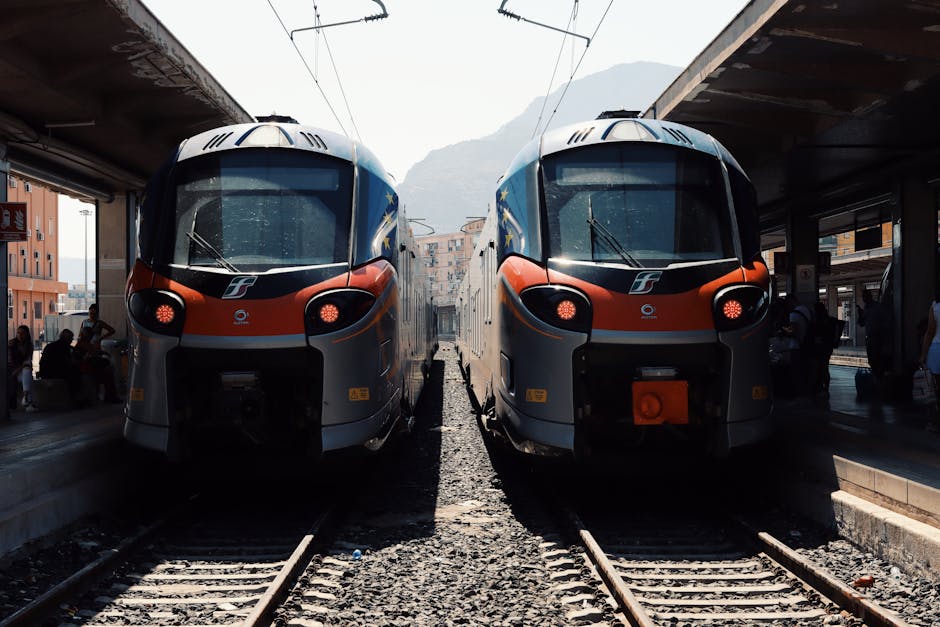
The departure board at Frankfurt Hauptbahnhof — where the difference between platform 7 and 9 can cost you your afternoon.
⚡ Problem-Solver Card
- Who this solves for: First-time rail travelers in Europe, nervous planners, anyone who’s ever stared at a train schedule and felt stupid.
- When to use this advice: Before you buy a pass, while you’re booking, and the moment you step onto a platform.
- Estimated effort: 3/5 (the first hour hurts; after that, it’s muscle memory).
- Cost range: €30 (single regional ticket) to €600+ (global Eurail pass, 1 month).
- Risk level: Medium — one wrong reservation can eat your whole afternoon.
- Time saved: 4–7 hours of confusion, platform panic, and ticket-office arguments.
It was 4:07 PM on July 13, and I was standing under the massive departure board at Frankfurt Hauptbahnhof, my neck craned back like a tourist at a cathedral. The board flickered. Trains to Munich, Paris, Basel, Hamburg — each one a different platform, a different carrier, a different set of rules. I had a Eurail pass in my pocket, a paper printout I’d bought online, and zero idea whether I needed to validate it, reserve a seat, or just sprint onto the nearest ICE and beg forgiveness.
The smell of diesel mixed with hot pretzels from a kiosk. A Deutsche Bahn announcement echoed in German, then English, then German again. My phone battery was at 14%. The queue at the ticket counter was 15 people deep. And the train I wanted — the ICE 624 to Basel — was boarding in 11 minutes.
I’d read four blog posts, watched two YouTube tutorials, and asked a friend who’d “done Europe last summer.” Every single one of them gave me advice that was either wrong, outdated, or written by someone who’d never actually missed a connection. So I learned the hard way — by sprinting down the wrong platform, by buying a €90 ticket when my pass would have covered it, by failing to validate a pass three times in one week.
Here’s the thing nobody tells you: European trains are not harder than they look. They’re just different. The system rewards how you prepare, not how much you paid. And if you know the three real rules — pass logic, booking rhythm, and the fine print that actually matters — you’ll stop worrying and start moving. I’ve been doing this for over a decade now. These are the things I wish someone had yelled at me before I left.
Why This Problem Ruins Trips (And Why Most Advice Fails)
The root cause is almost never the trains. It’s the gap between what you expect and what actually happens. You expect a single ticket to work like an airline ticket — bought, printed, done. Instead, you get a Eurail pass that needs to be activated within 11 months, validated at a station kiosk, and paired with a separate reservation for high-speed trains that costs extra money. That’s not intuitive. That’s a system designed by a committee of 27 countries.
Most advice fails because it’s written by people who either work for the rail companies or who took one trip and got lucky. The blogs say “Eurail is the only way to go” — then you pay €420 for a pass and discover you still need €40 in reservations for every TGV and Frecciarossa. The ticket agents at the station are overworked, underpaid, and speaking their sixth language of the day. They’ll sell you whatever gets you out of the line fastest. I once asked a clerk in Milan if my pass covered regional trains to Cinque Terre. She said yes. It didn’t. I paid €34 cash and learned a lesson.
The real failure is that nobody teaches you the logic. The logic of when a pass saves money versus when a point-to-point ticket is cheaper. The logic of why some trains require reservations and others don’t. The logic of the 5 PM rule on regional trains in Germany — where a Schönes-Wochenende-Ticket stops working and you suddenly need a different ticket. Once you understand the logic, the fear dissolves.
The Step-by-Step Solution
1. The Pass Decision: Buy It, or Skip It?
Here’s the only math that matters. Open the Omio or Trainline app — or go to the website of the national carrier (DB for Germany, SNCF for France, Trenitalia for Italy). Price out your itinerary as individual tickets, day by day. Then compare that to the cost of a Eurail or Interrail pass for the same number of travel days. If the pass is less than the sum of your tickets — buy the pass. If it’s within €20 — buy the pass anyway for the flexibility. If the pass is more expensive — skip it and buy point-to-point.
I’ve done this test for 14 different itineraries across Europe. The pass wins for trips with 4+ long-distance train days in 2 weeks. It loses for trips that rely on regional trains under 2 hours, or that include lots of buses and ferries. For example: a 10-day trip through Germany, Switzerland, and Italy — 5 travel days — will cost around €380 with a Eurail Global Pass (youth, 2nd class). The same 5 tickets bought individually: about €310. The pass costs more, but it also means you can change your plans at 9 PM without losing money. That flexibility has real value.
Real traveler scenario: My friend Sarah bought a 7-day Eurail pass for €470 (adult, 1st class). She used it for 4 trains: London to Paris, Paris to Zurich, Zurich to Milan, Milan to Rome. Those four tickets individually: €510. She saved €40 and got to decide each morning whether to take the 8 AM or the 10 AM. That’s the pass working.
💡 Pro Tip
Never buy a Eurail pass without checking the reservation costs first. A Eurail pass covers the base fare, but high-speed trains (TGV, ICE, Frecciarossa, AVE, Eurostar) require paid reservations — often €10–€40 per seat. I once met a guy in Vienna who had a pass but had to pay €120 in reservations for a single day’s travel. He could have bought point-to-point tickets for less. Always add reservation costs to your pass math.
2. The Booking Rhythm: When and How to Reserve
This is where beginners fall apart. Regional trains — the ones with the white-and-red DB logo, or the regional express trains in France — don’t need reservations. You just get on. They’re slow, they stop everywhere, and they’re cheap. No planning needed.
High-speed trains and night trains need reservations, and the window matters. For TGV in France, reservations open 90 days ahead and sell out fast — especially for Lyon, Marseille, and Bordeaux. For ICE in Germany, reservations open 180 days ahead but most trains don’t sell out until 24 hours before. For Italy’s Frecciarossa, you can often book up to 4 months ahead. For Eurostar (London–Paris–Brussels–Amsterdam), reservations open 120 days ahead and weekend trains sell out in days.
The rule I follow: book high-speed reservations as soon as I know my date — usually 4–6 weeks ahead. I set a calendar reminder. I use the Trainline app because it stores my payment details and sends push notifications. For regional trains, I don’t book at all. I just check the departure board on the day and walk on.
Here’s a real price snapshot. Zurich to Milan in 2nd class, single ticket: €54 if you buy at 6 weeks out. At 1 week out: €84. At the station the same day: €120. The difference is real money. Book early for the routes that matter, and let the regional stuff be spontaneous.
3. Validation: The Step Everyone Forgets
A Eurail pass is not valid the moment you buy it. It’s valid the moment you validate it. That means going to a station kiosk — or using the Eurail app — and entering the pass code, then selecting your first travel day. If you board a train and your pass isn’t activated, the conductor treats you like a fare evader. I’ve seen it happen. A woman in her 50s near Stuttgart got hit with a €60 fine because she thought her email confirmation was enough. It wasn’t.
The app-based validation works. Open the Rail Planner app (Eurail’s official app), enter your pass number, select your first day. It generates a QR code. The conductor scans that. Do this before you step onto the platform. I do mine while waiting in line for coffee — takes 90 seconds.
For paper passes (still sold in some regions), you take the pass to a ticket counter. They stamp it. Some older stations still use paper validation. I keep a photo of the validated pass on my phone as backup, because the app sometimes doesn’t load in tunnels.
🚫 Real Traveler Mistake
I watched a guy in Paris Gare de Lyon try to board the 9:15 TGV to Avignon with a perfectly valid Eurail pass — but he hadn’t bought the mandatory reservation. The conductor wouldn’t let him board. He had to buy a last-minute ticket at the counter for €140. The train left without him. He sat on the platform for two hours, staring at his phone. The mistake: he assumed the pass covered everything. It didn’t. The reservation was €18. That €18 mistake cost him €122 and two hours.
4. Reading the Departure Board (Without Panicking)
European departure boards are actually simpler than they look. At the top: time. Then train number. Then destination. Then platform (Gleis / Voie / Binario). Then stops. Then delays. The trick is that sometimes the platform doesn’t appear until 10 minutes before departure. Beginners panic. I’ve seen people run to platform 3, then the board updates and sends them to platform 7. Wait for the platform to lock — it’s usually when the “+” or “→” symbol appears next to the number.
In Germany, look for “ICE” (InterCityExpress) or “IC” (InterCity) for long-distance, “RE” or “RB” for regional. In France, “TGV” is high-speed, “TER” is regional. In Italy, “FR” (Frecciarossa) and “IC” (InterCity). In Switzerland, “IC” and “IR” (InterRegio). The system uses abbreviations that look like alphabet soup at first, but after two days you’ll read them like a local.
One trick: learn the train number. The train number stays the same even if the platform changes. If you’re tracking a specific train, screenshot the number. Then you can follow it on the board without reading every row.
5. The Backup Plan: What to Do When Things Go Wrong
Trains get canceled. Strikes happen. The German word “Verspätung” — delay — is the most useful word you’ll learn. When a train is canceled, don’t stand in line at the ticket counter if you can avoid it. Use the app. DB Navigator, Trainline, and SNCF Connect all let you rebook instantly. I once rebooked a canceled Munich–Berlin ICE on my phone in 3 minutes while walking to a different platform. The queue at the counter was 30 people deep.
If you have a Eurail pass, the app has a “next train” button that reroutes you based on your current location. It’s not perfect, but it works 80% of the time. I always carry a small battery pack (10,000 mAh) because rebooking a train at 6% battery is a special kind of stress. And if the delay is over 60 minutes in Germany, you’re often entitled to a partial refund or a free ride on a later train. Keep your ticket. File the claim online. I got €25 back once for a 90-minute delay in Cologne.
Pro Tips From Someone Who's Been There
These are the tips that don’t appear in the official guides. They come from mistakes I made, friends I traveled with, and conductors who took pity on me.
- Travel with a paper backup. The Eurail app is great until you’re in a tunnel in the Swiss Alps and it can’t load your pass. I print a small paper version — the PDF with the QR code — and keep it in my passport pocket. A conductor in Interlaken once told me “the app is fine, but the paper never crashes.”
- Learn the phrase “Is this train to [city]?” in the local language. Even if you say it badly, it buys you goodwill. In Italy: “Questo treno va a Firenze?” In Germany: “Fährt dieser Zug nach Berlin?” In France: “Ce train va à Lyon?” I’ve gotten better directions, faster help, and once a free upgrade to 1st class because the conductor appreciated the effort.
- Pack your snacks before boarding. The onboard café on an ICE charges €4.50 for a soggy sandwich and €3.20 for a coffee that tastes like regret. A bakery run at the station — €2 for a pretzel, €1.50 for an apple strudel — will save you money and disappointment. I learned this after paying €14 for a sad lunch on a TGV to Marseille.
- Use the “quiet car” on German ICE trains. It’s usually the first car after the engine. No phone calls, no loud talk. I get more work done in 3 hours on an ICE than in a full day at most co-working spaces. But check the sign on the door — if it says “Ruhebereich,” silence is the rule.
- Buy a city transport pass for the last mile. Your train ticket gets you to the central station, but the hotel, the museum, the restaurant — that’s usually a tram, metro, or bus away. Many stations have a kiosk selling 24-hour city passes. In Vienna, the €5.40 24-hour pass covers all trams and U-Bahn. In Paris, the €8.45 ticket t+ book of 10 saves you €4 compared to buying singles. Don’t get hit with a €50 fine for riding the tram without a ticket — I’ve seen it happen three times.
Common Mistakes Travelers Make With This Issue
I’ve seen these mistakes repeat like a bad loop. Don’t let them be yours.
- The “I’ll figure it out at the station” mistake. The station is where confusion peaks. You’re standing in a crowd, announcements are garbled, the board updates every 30 seconds, and your pass isn’t validated. Do the validation and the route check before you leave your accommodation. 15 minutes of prep saves 45 minutes of panic.
- The “I bought a pass so everything is free” mistake. A pass covers the base fare, not the extras — not reservations, not city transport, not the baggage fee on some carriers. I watched a family of four in Rome get charged €80 for seat reservations they assumed were included. The father’s face went white. Read the fine print of your pass. It’s boring, but it’s cheaper than the alternative.
- The “I booked the wrong station” mistake. Some cities have multiple main stations. Milan has Milano Centrale, Milano Porta Garibaldi, and Milano Rogoredo. Paris has Gare de Lyon, Gare du Nord, Gare Montparnasse, Gare de l’Est, and Gare Saint-Lazare. If your ticket says “Paris Gare de Lyon” and you’re at “Paris Gare du Nord,” you’re a 30-minute metro ride away — not a 5-minute walk. Check the station name when you book, and screenshot the full address.
- The “I trusted a third-party app to give me the right platform” mistake. Trainline and Omio are great for booking, but their live platform data can lag by 1–3 minutes. Always verify the platform on the station’s official board before you commit. I once followed Trainline’s platform number to track 3 at Hamburg — and the actual train was on track 7. I ran. I made it. But my heart rate didn’t drop for 20 minutes.
Your Quick-Action Checklist
Copy this list into your phone’s notes app before you leave. Check each item as you go.
- 📱 Download these apps: Rail Planner (Eurail), Trainline, DB Navigator (Germany), SNCF Connect (France), Trenitalia (Italy), ÖBB (Austria/Switzerland).
- 📄 Validate your pass — either in the app or at a station kiosk — before your first train.
- 📅 Book high-speed reservations at least 4 weeks ahead. Set a calendar reminder for each date.
- 📋 Write down train numbers for each leg of your trip. The number will help you track platform changes.
- 🔋 Pack a battery pack (10,000 mAh minimum) and a charging cable. Your phone is your ticket, your map, and your backup plan.
- 📇 Print a paper backup of your pass, reservations, and key station names. Keep it in your passport pouch.
- 🥐 Buy snacks and water at the station bakery, not the onboard café. Save €8–12 per trip.
- 🗺️ Learn the station codes for your destinations: e.g., “Berlin Hbf,” “Paris Gare de Lyon,” “Roma Termini.”
Frequently Asked Questions
A: Buying tickets as you go is often more expensive for multiple long-distance trips, but cheaper for short regional hops. Price out your itinerary both ways — if you’re taking 4+ high-speed trains in 2 weeks, a pass usually wins. If you’re mostly on regional trains under 2 hours, buy point-to-point.
Q: How do I know if a train requires a reservation?A: High-speed trains (TGV, ICE, Frecciarossa, AVE, Eurostar, Thalys) nearly always require a reservation. Regional trains (RE, RB, TER, regional Italian trains) never do. Night trains usually require a sleeper reservation. The train’s name — not the route — tells you the rule. If it says “TGV” or “ICE,” book ahead.
Q: What happens if I miss my train because of a delay?A: With a Eurail pass, you can usually take the next available train without extra cost — but you may need a new reservation for high-speed routes. In Germany, if you have a point-to-point ticket and a delay of 60+ minutes, you can use any train to get to your destination. In France and Italy, the rules vary by carrier. Always check the app or ask a conductor before boarding.
Q: Can I use a Eurail pass on all trains in all countries?A: No. Eurail covers most state-run operators in 33 countries, but some private trains — like the Nightjet sleeper and certain regional lines in France (Ouigo) — are not included. Always check the “covered trains” section in the Rail Planner app before you board. Switzerland’s entire network is covered. Greece’s is mostly covered. The UK is not covered at all.
Q: How do I avoid fines for an invalid ticket?A: Validate your pass before boarding. Carry proof of your pass and reservations — either in the app with a downloaded copy, or a printed PDF. If a conductor approaches, have your QR code ready. Don’t board a train unless you are 100% sure your ticket covers it. When in doubt, ask the conductor before the doors close. A 30-second conversation is better than a €60 fine.
Final Word: You've Got This
The first time you navigate a European train station alone, it feels like everyone else knows a secret you don’t. They don’t. They’ve just done it before. And now you have the rules — the real ones, the ones that actually work.
The trains in Europe are fast, frequent, and shockingly reliable when you know the system. The pass saves you money when you use it right. The reservations protect your seat when the train is full. The validation is a 90-second task that saves you a world of trouble. And the backup plan — that battery pack, that paper printout, that train number screenshot — gets you out of the jams that the blogs don’t warn you about.
I still buy a pretzel at every station I pass through. It’s my small ritual. Yours might be different. But the thing that connects every traveler on every platform is the same: we all started knowing nothing. The only difference is that now you know what to do.
📌 Save this guide
Bookmark this page, screenshot the checklist, or share it with a friend who’s planning their first trip. When you’re standing on a platform in a country where you don’t speak the language, you’ll be glad you did.
Got a trick I didn’t mention? A platform panic story? A piece of advice that saved your trip? Drop it in the comments. The best travel advice comes from people who’ve actually been there.
Article by a travel journalist who once ran the wrong way in Milan Central station for 12 minutes before realizing the correct platform was behind him. He still checks the board twice.


No comments:
Post a Comment