How to Use Trains in Europe and Beyond
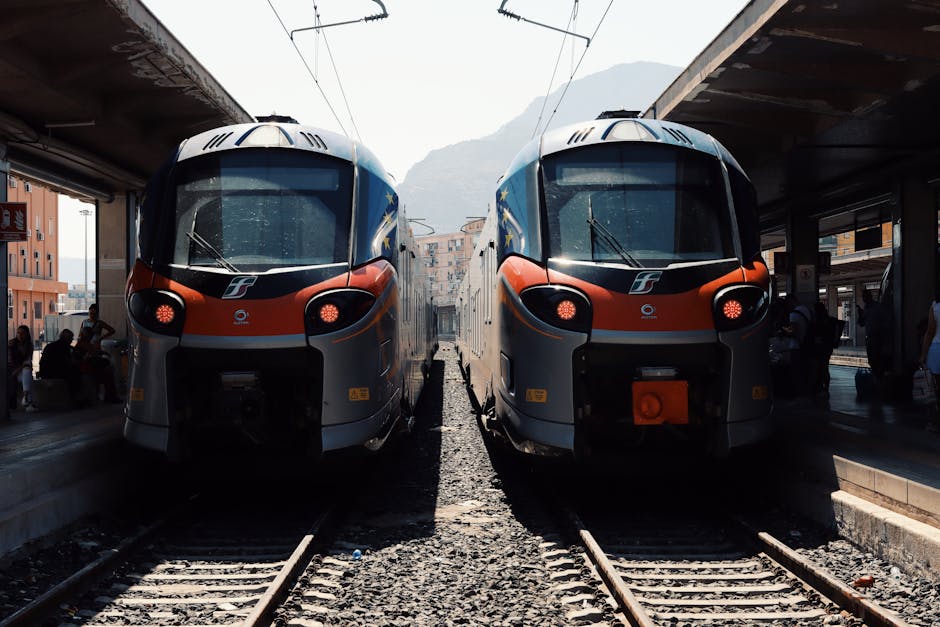
That moment of relief when you finally figure the whole thing out — and the train glides in exactly on time. It took me three tries to get it right.
🚂 Problem-Solver Card
- ✅ Who this solves for: First-timer in Europe, solo backpacker, family trying to cover 4 countries in 10 days, or anyone panicking at a ticket machine in the rain
- ⏰ When to use this advice: Before you buy a pass, after you miss a connection, and definitely when the platform number changes at the last second
- 💪 Estimated effort: 3/5 — you’ll need to read some fine print, but no calculus required
- 💰 Cost range: €30 (regional day trips) to €599 (first-class Eurail Global Pass, 15 days continuous)
- ⚠️ Risk level: Moderate — wrong pass choice can cost you €200+; right choice saves you a headache and a fortune
- ⏱️ Time saved: 4–6 hours of fumbling per trip, plus one nervous breakdown avoided
I stared at the departures board at Milano Centrale. The names scrolled in that crisp white-on-black font — Roma Termini, Venezia Santa Lucia, Bern, Zürich HB — and I could feel my stomach drop. I had a Eurail Global Pass in my pocket, a paper map smudged from the rain, and absolutely zero clue whether I needed a reservation. The train to Brig left in 14 minutes. The kiosk only took chip-and-PIN. My card wouldn't work. I was 23, tired, and one wrong move away from sleeping on a marble bench.
That was five years ago. Since then, I have missed exactly one connection that mattered, cried over a €67 cancellation fee, and learned to read Italian regional timetables faster than I read my own email. I have bought the wrong pass in Austria, the right pass in Germany, and no pass at all in Switzerland (which, trust me, is sometimes the smarter move). This guide holds everything I wish someone had handed me on that damp afternoon in Milan. It will not sell you a romantic ideal of European rail travel. It will tell you exactly how to make it work — platform numbers, booking windows, and the quiet art of the backup plan.
Why This Problem Ruins Trips (And Why Most Advice Fails)
The internet is full of “10 tips for train travel” lists that read like they were written by someone who rode the Orient Express once, in first class, with a valet. They tell you to “just buy a Eurail pass” without mentioning that half the high-speed trains now require paid reservations. They say “arrive early” but don’t explain that arriving early means nothing if your app gives you the wrong platform.
The real issue isn’t complexity — it’s fragmentation. France uses SNCF. Italy uses Trenitalia and Italo. Germany uses Deutsche Bahn. Switzerland uses SBB. Each has its own app, its own booking window, its own cancellation policy. One country’s regional train works like a metro; another country’s regional train requires a reservation you forgot to make. The beginner’s brain tries to treat them all the same. That’s the mistake.
Most advice fails because it’s too general. A pass that saves you money on a 10-country whirlwind will bleed you dry if you only ride two trains in one region. I once watched a family of four pay €380 for passes they never activated — they just didn’t understand the activation rule. The ticket agent at Gare de l’Est was kind enough to explain it in slow French, but by then, the money was gone.
We need a different approach. Not “10 easy tips.” One system: decide your route first, your pass second, and your reservations last. That order matters.
The Step-by-Step Solution
Phase 1: Before You Leave — The Pass vs. Point-to-Point Decision
I love a rail pass. I also hate a rail pass. It depends on your itinerary like wine depends on the food. The rule I now use is painfully simple: count the number of long journeys you plan to take (trips over 2 hours between major cities). If that number is 4 or fewer, buy point-to-point tickets. If it’s 5 or more, buy a pass — but only if you are crossing borders at least twice.
Here’s a real example from last summer. My friend Alex wanted to do Paris → Brussels → Amsterdam → Berlin → Prague over 14 days. That is 4 long hauls and 1 medium. A Eurail Global Pass (15 days continuous, youth second class) cost him €344. The same trip booked individually with advance fares: Paris to Brussels €35, Brussels to Amsterdam €25, Amsterdam to Berlin €39, Berlin to Prague €49 — total €148. He overpaid by €196. Why? Because he didn’t check the cheap advance fares on Thalys and ÖBB.
On the other hand, my editor last year needed to do London → Paris → Zürich → Milan → Florence → Rome → Barcelona → Madrid over 18 days. That’s 7 long international hauls. Point-to-point would have cost well over €600. The Global Pass (€499 adult, second class) plus about €150 in mandatory reservation fees still came out ahead. Pass wins when you ride the long rails hard.
My rule of thumb: use the Rail Planner app (by Eurail) to simulate your trip. Check the price of each segment on the national operator’s website. Add a €10–20 buffer per train for dynamic pricing in summer. If the simulated pass cost is within 15% of the point-to-point sum, buy the pass — the flexibility of hopping on a random regional train is worth the premium. If it’s more than 20% over, skip the pass. Buy tickets on Omio or direct from the operator and always buy advance fares when they’re 60–90 days out.
🍀 Pro Tip
If you’re under 27 and flexible with time, buy the Youth Pass (second class) — it’s roughly 25% cheaper than adult first-class. But check the fine print: youth passes on some trains (looking at you, TGV Lyria) still require a €10–20 reservation fee. Also, many national operators offer “Saver” or “Sparpreis” tickets that go on sale exactly 90 days before departure. Set a calendar reminder — those €19 Berlin-to-Munich fares vanish fast.
Phase 2: Booking Day-Of — The Digital Tool Stack
Do not rely on one app. That is a recipe for a 45-minute delay and a platform change that you miss while staring at the wrong screen. Here’s my personal stack, tested on 14 countries:
- 🚄 DB Navigator (Germany, but also good for most of Europe): It shows real-time delays and platform changes for almost every European railway. It’s shockingly accurate even for Italian and French trains. Download it. Use it. It’s free.
- 🚄 Trainline: Best for booking point-to-point tickets across multiple operators in one cart. Accepts PayPal and most international cards. The interface is clean enough that my mom uses it.
- 🚄 Rail Planner (Eurail): Only useful if you have a pass — it shows which trains require a reservation and lets you book some through the app. The search function is mediocre. Use it as a backup to DB Navigator.
- 🚄 Google Maps (yes, really): For routing. Put in “Milano to Interlaken” and it will show you the fastest combo (often a train to Spiez, then regional). But double-check the times — maps sometimes uses outdated schedules for regional lines.
Here’s how I use them in sequence: I plan the route on Google Maps to see general options. Then I open DB Navigator to check platform numbers and delays for the exact train. Then I open Trainline (or the national app, like ÖBB or SNCF Connect) to buy the ticket. I screenshot the QR code and the platform number. I save the screenshots in a folder called “TRAINS.” I also download the PDF ticket to my phone’s local storage — because the Alps have terrible reception.
Phase 3: On the Tracks — Navigating the Unpredictable
The train is late. The platform changes from Gleis 5 to Gleis 3 with 4 minutes to go. The announcement is in German, which you do not speak. This is the moment that separates a ruined day from a minor inconvenience.
First: never trust the first platform announcement. In Zürich HB last March, the board said Track 8 for the ICE to Hamburg. I walked there. A conductor waved me away. The train for Hamburg was actually Track 12. The board changed 90 seconds later. Wait until you hear the final announcement — or look for the green “departed” sign next to the train number on the board. If it’s still yellow, it might change.
Second: know the difference between a regional train (no reservation, no pass activation required if you have a pass) and a high-speed or night train (mandatory reservation, usually a €3–20 fee even with a pass). The EuroNight from Zürich to Budapest? You need a reservation. The RegionalExpress from Munich to Salzburg? Just hop on. The distinction is printed on the departure board in small letters — “ICE,” “IC,” “EC,” “TGV,” “RJ” all mean reservations likely needed. “RE,” “RB,” “R,” “S” mean no reservation.
Third: carry a physical backup. I still print a paper copy of every reservation after my phone died in Bratislava. A printed confirmation and a €20 note in my shoe have saved me twice. The conductor on the RailJet to Vienna accepted my paper printout when the QR code wouldn’t scan. She smiled. “Paper never crashes,” she said. Wise woman.
Pro Tips From Someone Who's Been There
- Learn the local word for “delay.” In German, Verspätung. In French, retard. In Italian, ritardo. In Spanish, retraso. When you hear that word over the speaker, you know to check DB Navigator immediately. It buys you 30 seconds of planning.
- Don’t validate your Eurail pass until you’re 100% sure you’ll use it. Once activated, it starts counting days. I met a guy in Ljubljana who activated his pass at 8 AM, then his flight got canceled, and he didn’t board a single train. He lost a full day. Activate at the station, not before.
- Use night trains for distance, not for sleep. I love the Nightjet from Vienna to Venice — but I never sleep well. The cabin is hot, the track is noisy, and someone always snores. Take a night train if it saves you a hotel night and you can nap anywhere. Otherwise, pay for a hotel and take a morning train. You’ll arrive less wrecked.
- Eat before you board. The bistro car on a German ICE is okay — overpriced sandwich for €6.50, warm beer for €4. On Italian regional trains, there is no bistro. The snack cart appears once every three hours. Pack a sandwich from the station bakery. Your wallet and your stomach will thank you.
- Talk to the locals on the platform. In Switzerland, the SBB app is perfect. In Italy, the locals know which platform the Frecciarossa actually uses before the board updates. A quick “Scusi, il treno per Roma?” has saved me from running to the wrong end of the station more times than I can count.
Common Mistakes Travelers Make With This Issue
Mistake 1: Buying a pass for one country. If you’re only traveling in France, a Eurail pass is almost always more expensive than individual SNCF advance tickets. The pass is designed for multi-country itineraries. I see this mistake every summer at the Paris ticket office. Don’t be the person paying €250 for a pass when a €69 carnet of TGV tickets would do.
Mistake 2: Ignoring the reservation fees. That €344 pass looks like a deal until you add €20 for each of 6 TGV reservations. Suddenly it’s €464. Always add the reservation cost to your math. The Rail Planner app shows which trains require reservations. Check before you buy.
Mistake 3: Showing up without a booking for a high-demand route. The 7:23 AM Paris to Lyon on a Friday? Sold out four days in advance if you don’t have a reservation. Even with a pass, you need that reservation. I once stood for 3 hours from Paris to Avignon because I thought the pass guaranteed a seat. It does not. The conductor told me to “stand near the luggage rack.” I stood. I learned.
🔥 Real Traveler Mistake
“I bought a 10-day Eurail pass for a trip from London to Paris to Amsterdam to Berlin — 4 trains. I didn’t check advance fares. I paid €399 for the pass plus €50 in reservations. I could have bought point-to-point tickets for €175 total. I also didn’t realize I had to activate it at a station, so I wasted Day 1 at a ticket counter arguing with a machine. Cost me €274 extra and two hours of stress.” — Sophia, Melbourne. She now swears by the “count-to-four” rule.
Your Quick-Action Checklist
Before you step onto a European platform, run through this list — print it if you have to.
- ☐ Decide your route — list every city pair with distance.
- ☐ Count long hauls (over 2h). If ≥5, consider a pass.
- ☐ Compare total cost — pass + reservations vs. point-to-point advance fares.
- ☐ Download DB Navigator and Trainline to your phone.
- ☐ Set a calendar reminder for 90 days before departure — buy advance fares for your longest routes.
- ☐ Print all reservations — paper backup, always.
- ☐ Pack a power bank (20,000 mAh minimum) — your phone is now your ticket, your map, and your sanity.
- ☐ Learn 3 phrases in the local language: “Which platform?” “Delay?” and “Thank you.”
Frequently Asked Questions
Q: Do I need a Eurail pass or can I just buy tickets at the station?
A: You can buy tickets at the station, but you’ll pay peak prices — often double the advance fare. For long-distance or international trains, always buy online 60–90 days ahead. For regional trains, buying at the station is fine and often the same price.
Q: How do I make a reservation if I already have a Eurail pass?
A: Use the Rail Planner app or the national operator’s website (SNCF Connect for France, ÖBB for Austria, DB for Germany). Most reservations cost €3–20. You can also reserve in person at a major station ticket counter — arrive at least 30 minutes early for that.
Q: What happens if my train is delayed and I miss a connection?
A: In most European countries, if your delay is more than 60 minutes, you’re entitled to a partial refund (25–50% of the ticket price). With a pass, you don’t get a refund for delay, but you can usually board the next train on the same route without extra charge — just show the conductor your original reservation and the delay notice from the app.
Q: Can I use the same ticket for local metro or bus?
A: Almost never. Train tickets are for intercity rail only. Some city transit passes (like the Paris Navigo or Berlin WelcomeCard) include regional trains within the city limits, but a standard Eurail pass does not cover metro, tram, or bus. You need a separate ticket for local transport.
Q: Is it cheaper to buy a train pass or fly between European cities?
A: It depends. A budget flight (Ryanair, EasyJet) can cost €20–50, but you lose 4+ hours with airport transfers, security, and luggage fees. A train that costs €60–80 might save you 2 hours of total travel time and the airport headache. For distances under 500 km, the train is usually faster door-to-door. For over 800 km, flights often win on price but lose on comfort.
Final Word: You've Got This
I still feel a flicker of that old panic when the board changes at the last second. But now I know what to do. I check DB Navigator. I move to the new platform. I ask the person next to me, “Zug nach München?” and they nod. The train arrives. I get on. It’s just a machine on tracks.
The system works when you respect its rhythms — the 90-day booking windows, the difference between a regional and an ICE, the quiet power of a printed backup. You don’t need to be an expert. You need a checklist, two good apps, and the willingness to ask a stranger a question. That’s it.
📌 Save this guide
Bookmark this page or take a screenshot of the checklist. The next time you’re staring at a departure board in a language you don’t speak, you’ll know exactly what to do. And if you’ve got a fix that I missed — a hack, a trick, a story of your own near-disaster — drop it in the comments below. That’s how we all get better.


No comments:
Post a Comment