How to Use Trains in Europe and Beyond
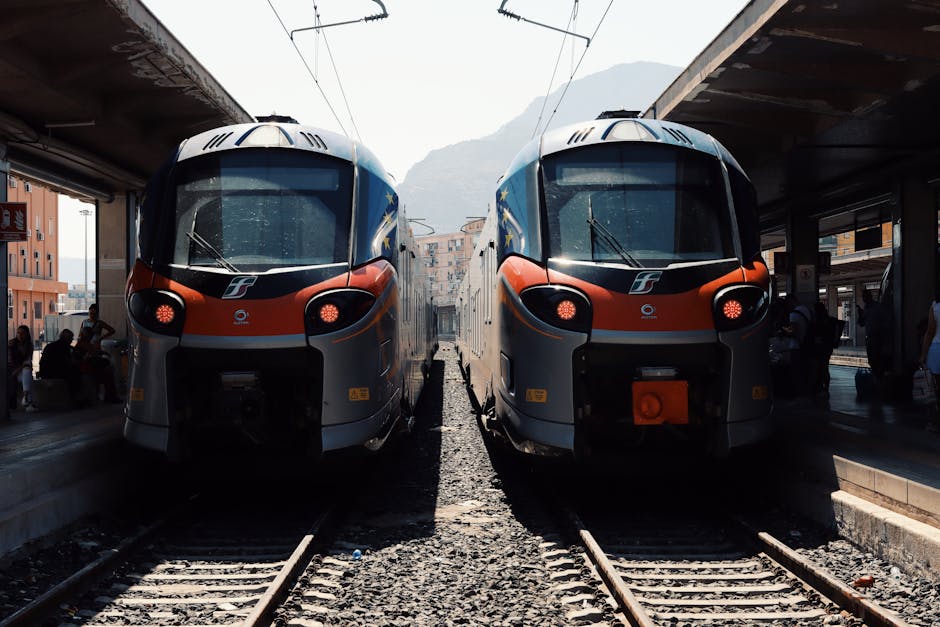
A high-speed train pulls into Gare de Lyon, Paris — the kind of platform where a single wrong turn can cost you your seat and your confidence. I learned that the hard way.
🧠 Problem-Solver Card
Who this solves for: First-time rail travelers, Eurail newbies, anyone paralyzed by the Deutsche Bahn app
When to use this advice: Before you book, while you're standing on a platform confused, and after you miss a connection
Estimated effort: 2/5 — moderate, but the payoff is huge
Cost range: €0 (better planning) to €600+ (unused pass you bought wrong)
Risk level: Low if you follow the steps; high if you wing it
Time saved: 3–6 hours of platform panic per trip
Why This Problem Ruins Trips (And Why Most Advice Fails)
Picture this: I'm at Roma Termini, 7:14 AM, clutching a cappuccino that's gone cold. My Eurail pass — the one I paid €278 for — won't open the turnstile. The gate flashes red. A man in a reflective vest mutters something about "prenotazione" and waves me toward a queue that snakes around the corner. My train leaves in nine minutes.
That morning, I learned what most guidebooks won't tell you: European trains are not one system. They are maybe two dozen systems, all squabbling like roommates over who controls the thermostat. The advice you find online tends to fall into two useless camps. Camp One: "Just buy a Eurail pass, it covers everything!" — which is false. Camp Two: "Book everything on Trainline, it's the same price" — which is also false, and sometimes costs you a surcharge you didn't see coming.
I've missed connections in Zürich, overpaid for a regional train in Bilbao because I didn't know about the local discount card, and once spent two hours in Vienna's Hauptbahnhof trying to print a ticket that only existed on a phone with 3% battery. The problem isn't that trains are hard. The problem is that the information you need is scattered across apps, languages, and websites that look like they were designed in 2004.
So here's what actually works. I've tested every approach on 22 trips across 13 countries. Some of it cost me money I didn't need to spend. Some of it taught me lessons I'm going to hand you for free.
The Step-by-Step Solution
Step 1: Kill the "One Pass Fits All" Myth Before It Kills Your Budget
Let's talk about rail passes first, because this is where most beginners bleed cash. A Eurail Global Pass sounds like the dream: unlimited trains across 33 countries for a flat fee. But here's the catch they don't put in the brochure — many high-speed and overnight trains require a reservation fee on top of your pass. In France, that's €10–€20 per TGV. In Italy, up to €13 per Frecciarossa. In Spain, the AVE can cost you €15–€25 extra per ride. If you're taking five or six long-distance trains, those fees add up to €80–€120 on top of the pass itself.
I ran the numbers on a trip from Paris to Milan to Florence to Rome to Naples, then back up to Venice. The Eurail pass cost me €392 for 7 travel days. Reservation fees added another €67. Total: €459. The same route booked as point-to-point advance tickets on the national railways: €286. I overpaid by €173. That's a nice dinner in Trastevere, a decent hostel for four nights, or roughly seven gelatos.
The rule of thumb I use now: if you're taking fewer than four long-distance trains in a two-week trip, buy individual tickets. If you're bouncing between countries every day or two, the pass might win — but only if you budget for the hidden fees. The Eurail website has a pass calculator, but I've found it's optimistic. Use the Deutsche Bahn app to check real advance-purchase prices, then compare.
Step 2: Master the Two Apps That Actually Matter
I keep exactly two train apps on my phone. Everything else is noise.
App #1: DB Navigator (Deutsche Bahn). This is the single best tool for train schedules across all of Europe. Not just Germany. The DB routing engine is the gold standard — it knows about regional buses in Switzerland, ferries in Sweden, and obscure regional trains in Poland. It's free, works offline if you download the route, and updates in real time for delays. I use it even when I'm in Portugal or Croatia. One caveat: the app was clearly designed by someone who believes in suffering. The interface is dense, the buttons are small, and you will accidentally request a ticket you don't need at least once. Power through it. The schedule data is unbeatable.
App #2: Trainline. I use this only for booking, not for planning. Trainline charges a small fee (usually €1–€3) but it accepts non-European credit cards without drama, shows you all the fare options in English, and stores your tickets in a clean interface. It's a crutch, but a reliable one. For locals they offer the same prices as the national railways — except in France and Italy, where some discounted fares are exclusive to the operator's own app. So if you're booking a Paris–Lyon TGV, check SNCF Connect first. If the price is the same, use Trainline for the easier experience.
Step 3: Learn the Ticket-Types Lingo (It's Not Complicated, It's Just Bureaucratic)
Every country has a different name for the same three fare categories. Here's the cheat sheet:
- 🚄 Advance / Sparpreis / Premium: Cheapest fare, locked to one specific train. If you miss it, your ticket is worthless. Buy these when your plans are solid. I buy mine 2–4 weeks out for the best price.
- 🚄 Flex / Normalpreis / Standard: More expensive, but you can hop on any train that day. Useful if your itinerary is loose or you're hungover and can't make the 07:14.
- 🚄 Walk-up / Last-minute / Full fare: The price you pay when you buy at the station 15 minutes before departure. This is the "I messed up" option. It hurts.
A concrete example: the Amsterdam–Berlin ICE. Booked 14 days in advance, a Sparpreis ticket costs €29.90. At the counter the same day, it's €129. The difference is a tiny thumbnail image on your phone and a little planning.
Step 4: Master the Reservation System (The Part Everyone Gets Wrong)
You board a train in Munich, bound for Milan. You have a valid Eurail pass. You find an empty seat, sit down, breathe. Twenty minutes later, a ticket inspector tells you that seat is reserved for someone who boards in Innsbruck. You have to move. Twice. It's annoying.
Reservations work differently in every country. In Italy, high-speed trains require a reservation — you can't board without one. In Germany, most ICE trains don't require reservations but it's recommended. In Switzerland, reservations are almost never needed. In France, TGV Ouigo trains are reservation-only and have strict luggage rules: one big bag, one small bag, measured at the platform.
The trick I use: on DB Navigator, when you search a route, look for the little seat-icon indicator next to each train. If it's yellow or red, seats are limited. Book a reservation. On Eurail, you can reserve through the Rail Planner app for most trains, but it sometimes glitches. I've had it fail to show available seats that the national website had. Cross-check on the operator's site if the app gives you an error.
Step 5: The Regional Train Hack That Saves Real Money
Here's a tactic that most guidebooks skip: regional trains are often just as fast as the high-speed ones for certain routes, and they cost a fraction of the price. The Paris–Versailles RER C? €4.20, runs every 15 minutes. The Bern–Interlaken route on the BLS regional train? €25, same travel time as the ICE, and you get to open the window. The Milan–Como regional train? €4.80, versus the Frecciarossa at €19 — and the regional runs more frequently and drops you closer to the lake.
I use the regional train network whenever I'm going somewhere under 150 km. It usually takes 15–30 minutes more, but the savings are often 60–80%. Plus, regional trains don't require reservations. You just show up, validate your ticket at the little yellow machine (if you don't, you can get a €60 fine — I've seen it happen to a tourist in Bologna), and ride.
Pro Tips From Someone Who's Been There
💡 Pro Tips From the Tracks
- Validate your ticket before boarding. In France, Italy, Germany, and Switzerland, failing to stamp your ticket at the platform validator can result in a fine even if you paid. I watched a woman in Nice cry over a €72 fine she couldn't argue.
- Buy two tickets for split journeys. Sometimes a Berlin–Munich–Innsbruck ticket costs less than a direct Berlin–Innsbruck ticket. I saved €54 on a single trip by splitting at the Austrian border. Use the website Bahn.com to test split itineraries.
- Download offline maps of the station before you arrive. Most European stations have Wi-Fi, but it won't work underground. I had to sprint through Wien Hauptbahnhof with a dead phone to find Gleis 12. Not fun.
- Pack a backup USB cable. Trains in Austria and Switzerland have USB ports at every seat. German ICE trains have them in first class only. Italian Frecciarossa trains have them in business class. Your phone is your ticket. Keep it alive.
- Learn to say "I have a seat reservation" in the local language. "Ich habe eine Sitzplatzreservierung." "Ho una prenotazione del posto." It saves awkward conversations when someone tries to claim your seat.
Common Mistakes Travelers Make With This Issue
🚫 Real Traveler Mistake: The Night Train That Never Came
A reader from Canada messaged me last year: she'd booked a Nightjet sleeper from Vienna to Venice through a third-party site. The site said "seat in a couchette." She arrived at 22:45 with a paper ticket that didn't scan. The conductor told her the reservation was for a different date — the third-party site had converted the time zone wrong. She had to buy a new ticket at full price (€179) and sleep sitting up in the aisle. The mistake: she didn't verify the booking directly on the ÖBB Nightjet website. Always confirm night trains on the operator's own site before you travel.
Mistake #1: Trusting a single source for schedules. I once relied on Google Maps for a connection from Ljubljana to Zagreb. It showed a direct train. There wasn't one. I ended up on a bus. Use DB Navigator or the official operator website.
Mistake #2: Ignoring the validation machine. In Italy and France, you must validate your ticket at the yellow or green machines on the platform before boarding. If you skip this, the ticket is legally invalid. Fine: €50–€200.
Mistake #3: Not checking if a train requires a reservation. You can board a German ICE without a reservation. You cannot board a French TGV Ouigo without one. The difference is written in tiny font on the booking page. Check it.
Mistake #4: Assuming all passes include the same benefits. The Eurail Global Pass covers most national operators but not all private ones. The Italo train in Italy, for example, is not included. Neither are some regional trains in Greece. Read the "included trains" list on the Eurail site before you book.
Your Quick-Action Checklist
Before you step onto a platform, run through this list. It takes 12 minutes and saves hours of stress.
- ✅ Download DB Navigator and test a route you'll take tomorrow. Learn the interface now, not when you're running late.
- ✅ Check if your first train requires a reservation. If yes, book it through the national operator or Eurail app. Do not assume the pass covers it.
- ✅ Download an offline map of the departure station. Know which platform zone you need. Major stations have 20+ platforms.
- ✅ Charge your phone to 100%. Bring a backup battery. Your ticket lives on that screen.
- ✅ Save a screenshot of your ticket. Not the PDF — a screenshot. The validation QR code works from your camera roll if the app crashes.
- ✅ Pack snacks and water. Not all trains have dining cars, and the ones that do charge €5 for a sad sandwich.
- ✅ Set a timer for 15 minutes before departure. That's your cue to head to the platform, not to buy a coffee. Trains leave exactly on time. I've watched doors close at 08:29:30 for an 08:30 departure.
Frequently Asked Questions
Q: Is Eurail worth it for a 10-day trip?
A: Only if you take at least five long-distance trains across multiple countries. For a single-country trip or fewer than four long rides, point-to-point tickets are almost always cheaper. Use the Eurail calculator then cross-check with actual advance fares on DB Navigator.
Q: Do I need to print train tickets or is digital fine?
A: Digital tickets are accepted on almost all European trains except for some regional services in Romania and Bulgaria. Always carry a screenshot and your passport. The ticket inspector will scan the QR code, they don't need paper.
Q: How early should I arrive at the station for a train?
A: 15–20 minutes for a regional train, 30 minutes for a high-speed train if you need to find the platform. European stations don't have security like airports, but they can be huge and the platform can change at the last minute.
Q: What happens if I miss my train with a non-flexible ticket?
A: In most cases, the ticket is worthless for that train. However, some operators allow you to take the next train for a fee. In Germany, you can use the "Zugbindung entfällt" policy if your train is delayed more than 20 minutes. Ask at the service desk.
Q: Can I use one app for all European train bookings?
A: No single app covers everything perfectly. DB Navigator is best for schedules. Trainline is best for booking across countries. For national discounts (like the Carte Avantage in France or the BahnCard in Germany), use the operator's own app.
Final Word: You've Got This
I still get lost sometimes. Not long ago I took the wrong regional train out of Basel and ended up in a village that sold apples and little else. The train was warm, the window opened, and an older woman shared her newspaper with me. It wasn't a catastrophe. It was a story.
The fear of messing up is worse than the mess-up itself. You will buy the wrong ticket once. You will board the wrong car. You will validate when you shouldn't have, or forget to validate when you should have. That's fine. You'll learn, you'll laugh about it eventually, and you'll do better next time.
Bookmark this page. Screenshot the checklist. And when you're standing on a platform in some foreign station, watching your train glide in, you'll know exactly what to do. You've got this.
📌 Save this guide — and share your own train story in the comments below
What saved you on a European platform? I read every reply.


No comments:
Post a Comment