In This Article
- Why Krakow Should Top Your 2026 Travel Bucket List
- How to Get to Krakow and Navigate the City Like a Pro
- Weather in Krakow 2026: Best Times to Visit and What to Pack
- Where to Stay in Krakow: Neighborhoods and Accommodations for Every Budget
- Top Attractions and Iconic Sights You Can't Miss in 2026
- Hidden Gems and Local Favorites Only Insiders Know
- Krakow Food Guide 2026: Traditional Polish Eats and Modern Flavors
- Day Trips from Krakow: Unforgettable 2026 Excursions
- Your 2026 Krakow Adventure: Final Tips and Lasting Memories
Why Krakow Should Top Your 2026 Travel Bucket List
Krakow is not just a city you visit; it’s a city that stays with you long after you’ve returned home. As one of the few Polish cities to emerge from the 20th century with its medieval soul intact, it offers a rare blend of myth, monument, and modern energy. For first-time visitors planning their trips, this Krakow Poland travel guide 2026 is designed to cut through the noise and deliver a local’s perspective on why this ancient royal capital deserves the top spot on next year’s itinerary.
Unlike many European hotspots that feel overwhelmed by overtourism, Krakow retains an authentic rhythm. You can wander through cobblestone streets at dawn and hear nothing but the clip of your own footsteps and the distant toll of a church bell. By afternoon, those same streets hum with the chatter of students, artists, and entrepreneurs who have transformed former tenement buildings into thriving cafes and galleries. The city balances reverence for its past with a restless creativity that makes every visit feel fresh.
In 2026, Krakow stands at a fascinating crossroads. Major investments in green spaces, digital nomad infrastructure, and cultural programming are elevating the visitor experience without sanitizing the city’s character. Whether you’re a history buff, a foodie, or someone simply seeking beauty on a budget, Krakow delivers with a warmth that feels increasingly rare. This Krakow Poland travel guide 2026 will walk you through exactly why now is the perfect moment to discover it.
A city steeped in history and resilience
Krakow’s history reads like a epic novel, filled with triumph, tragedy, and an unbreakable will to endure. As the former capital of Poland, it was the coronation site of kings and the cradle of Polish culture for centuries. Walking through the Old Town, a UNESCO World Heritage site, you are literally tracing the footsteps of monarchs who processed along the Royal Route to Wawel Castle. The city’s Jagiellonian University, founded in 1364, places Krakow among the oldest academic centers in the world, and its alumni include Nicolaus Copernicus.
Yet the history that defines Krakow’s character most profoundly is its 20th-century resilience. The Nazi occupation during World War II sought to erase the city’s intellectual and cultural elite, and the nearby Auschwitz-Birkenau complex stands as a somber testament to unimaginable horror. Under subsequent communist rule, the forced construction of the Nowa Huta steel district was an ideological attempt to crush Krakow’s bourgeois spirit. The city not only survived both eras but emerged as Poland’s cultural and spiritual heart. Today, that resilience is woven into the city’s fabric, visible in meticulously restored synagogues in Kazimierz, in bunkers turned into art spaces, and in the defiant pride of locals who are eager to share their story.
Affordable luxury in the heart of Europe
One of the most compelling reasons to visit Krakow in 2026 is the extraordinary value it offers. While prices in Western European capitals have soared, Krakow remains a destination where luxury feels accessible. You can dine on Michelin-guide-recommended Polish cuisine with wine pairings for the price of a basic pub meal in London or Paris. Five-star accommodations in meticulously restored historic townhouses often cost less than a standard chain hotel room in Scandinavia.
This affordability extends across the entire experience. A multi-course tasting menu at a top-tier restaurant like Bottiglieria 1881 might set you back significantly less than equivalent dining in Vienna. Cocktails at a rooftop bar overlooking the Main Square are crafted with the same precision as in New York, but without the eye-watering bill. Even everyday pleasures, from a perfectly pulled flat white in a Kazimierz courtyard to a ticket for a Chopin concert in a historic church, feel like indulgences that don’t require a second thought. This Krakow Poland travel guide 2026 confirms that you can treat yourself to a premium, deeply cultural European city break without draining your savings.
2026 events and what's new this year
Krakow’s 2026 cultural calendar is packed with events that provide a compelling reason to book now. The year kicks off with the New Year’s Day concert at the ICE Kraków Congress Centre, a beloved tradition that sets a refined tone for the months ahead. As spring arrives, the Misteria Paschalia Festival, one of Europe’s most prestigious early music events, fills the city’s historic churches with Renaissance and Baroque compositions performed by world-class ensembles. It’s a transcendent experience that draws music lovers from across the continent.
Summer 2026 brings the return of the Jewish Culture Festival in Kazimierz, a week-long celebration that has become the largest and most important festival of its kind in the world. Expect workshops, lectures, and concerts that culminate in the massive open-air “Shalom on Szeroka Street” finale. This year, organizers are promising expanded programming focusing on the culinary traditions of pre-war Jewish Krakow, with reconstructed recipes and storytelling dinners. Simultaneously, the Summer Jazz Festival at Piwnica pod Baranami will feature a special tribute series to Polish jazz legends, with after-hours jam sessions that locals swear are the best nights out in the city.
Autumn belongs to the Conrad Festival, a literary gathering that attracts Nobel laureates and Booker Prize winners to discuss the state of global literature. In 2026, the festival is launching a new “City of Words” initiative, installing interactive poetry installations and pop-up reading rooms in unexpected places across the Old Town and Podgórze. Beyond festivals, 2026 also marks the completion of several major infrastructure projects. The long-awaited expansion of the Błonia Park pedestrian zone will connect green spaces in a continuous loop, and a new panoramic viewing platform is set to open on the Vistula River embankment near Wawel, offering a stunning new perspective on the castle. This Krakow Poland travel guide 2026 points you toward a city that is actively reinventing its public spaces for visitors and locals alike.
How to Get to Krakow and Navigate the City Like a Pro
Arriving in a new city can be disorienting, but Krakow’s compact geography and increasingly modern infrastructure make the journey surprisingly smooth. Whether you’re flying in from another continent, taking a scenic rail route from a neighboring country, or arriving by bus, the city’s transport network is designed to funnel you efficiently toward its historic core. This Krakow Poland travel guide 2026 emphasizes that a little advance knowledge about ticketing and route options will save you time and stress, letting you transition from traveler to explorer within minutes of arrival.
The city’s layout is intuitive. The Old Town forms the central hub, ringed by the green belt of Planty Park. Most neighborhoods of interest to visitors, including the Jewish Quarter of Kazimierz and the revitalized Podgórze district, lie within walking distance of this center. For everything else, a reliable network of trams and buses fills the gaps. The key is understanding the relationship between the airport, the main railway station, and the central transit hub, all of which are positioned to make your entry into Krakow as seamless as possible.
Flying into Krakow John Paul II International Airport
Krakow John Paul II International Airport (KRK) is the city’s primary aerial gateway, located about 11 kilometers west of the city center in the village of Balice. It’s a modern, single-terminal facility that has undergone significant expansion in recent years, meaning you won’t face the chaotic bottlenecks of some larger European hubs. In 2026, the airport serves a wide range of carriers, from budget giants like Ryanair and Wizzair to full-service airlines including LOT Polish Airlines and Lufthansa, with direct connections to most major European cities and growing long-haul links.
Once you’ve collected your luggage, you have three main options for reaching the center. The fastest and most recommended is the SKA1 suburban train line, which runs directly from the airport’s own station to Kraków Główny (the main railway station) in approximately 18 minutes. Trains depart roughly every 30 minutes, and a single ticket costs around 17 PLN, purchasable from the ticket machine on the platform. The train drops you directly adjacent to the Old Town, inside the massive Galeria Krakowska shopping center complex. Alternatively, public bus lines 300 and 902 provide a slower but slightly cheaper connection, terminating near the main station as well. Taxis and ride-hailing services like Uber and Bolt are readily available at a designated rank outside the arrivals hall; a ride to the center should cost between 60 and 90 PLN depending on traffic. For a completely frictionless arrival, consider pre-booking a private transfer, which will have a driver waiting with your name on a board.
Train and bus connections from across Europe
Krakow’s main railway hub, Kraków Główny, is a marvel of 19th-century architecture fused with modern retail convenience, placing you steps from the Old Town’s northern edge. The city is exceptionally well-connected by rail to the rest of Poland and Central Europe. PKP Intercity operates frequent high-speed Pendolino services from Warsaw, covering the distance in just over two hours, making a day trip from the capital entirely feasible. Direct overnight trains link Krakow with cities like Vienna, Budapest, and Prague, offering sleeper cabins that save on both travel time and a night’s accommodation.
The adjacent MDA bus station is the focal point for international and domestic coach travel. FlixBus dominates the routes, offering budget-friendly connections to Berlin, Lviv, Bratislava, and beyond. The bus station is clean, well-signed, and integrated into the same complex as the train station, so transfers between the two are effortless. When booking train tickets for 2026, use the official PKP Intercity website or app to secure the best promotional fares, which are released 30 days in advance.
Mastering Krakow's public transport system
Krakow’s public transport, managed by MPK, is a model of efficiency and punctuality that relies heavily on an extensive tram network supplemented by buses. Trams are the workhorse of the system, and you’ll quickly come to love their frequency and the way they glide through the city. The network radiates from key hubs near the Old Town, making it simple to reach destinations like the Tauron Arena or the distant suburbs. Buses fill in the gaps, particularly useful for reaching areas south of the Vistula River not serviced by tram lines.
The ticketing system in 2026 is fully integrated and digital-first. You can purchase tickets from vending machines at most major stops, but the easiest method is the official “mPay” or “Jakdojade” mobile apps, which allow you to buy and validate time-based tickets with a few taps. A 20-minute single-ride ticket is sufficient for most inner-city hops, while 60-minute and 24-hour passes offer better value for intensive sightseeing. Crucially, tickets must be validated immediately upon boarding; simply scan the QR code inside the vehicle. Plain-clothes inspectors are active, and fines are issued on the spot, so don’t risk riding without a validated ticket. Night buses, designated with a “9” prefix, ensure you can get back to your accommodation after a late evening in Kazimierz.
Walking and cycling: the best ways to explore
Ultimately, the most rewarding way to experience Krakow is on your own two feet. The city’s historic core is a pedestrian paradise, with the entire Royal Route from St. Florian’s Gate to Wawel Castle being closed to most vehicle traffic. Walking allows you to discover hidden courtyards, stumble upon spontaneous Chopin concerts, and navigate the atmospheric alleys of Kazimierz at a pace no vehicle can match. For slightly longer distances, the city’s bike-share system, Wavelo, enters a new phase in 2026 with an expanded fleet of electric-assist bikes. Dedicated cycling paths run along the Vistula Boulevards and through Błonia Meadow, offering scenic, flat routes that connect the Old Town with Podgórze and beyond. The compact layout means you might never need public transport at all once you’ve checked into your hotel.
Weather in Krakow 2026: Best Times to Visit and What to Pack
Krakow’s continental climate delivers four distinct seasons, each painting the city in a dramatically different light. There’s no single “bad” time to visit, but your experience will vary wildly depending on the month. This Krakow Poland travel guide 2026 provides a realistic look at seasonal expectations and packing strategies so you arrive prepared, comfortable, and ready to enjoy the city regardless of the forecast. The key is layering and understanding that Krakow weather can shift quickly, especially during transitional seasons.
Meteorological data suggests that 2026 will continue the trend of warmer-than-average springs and autumns, with occasional heat spikes in summer and shorter, less predictable cold snaps in winter. The city’s position in a river valley can sometimes trap humidity, making summer days feel muggy and winter chill feel penetrating. Locals cope by dressing practically and embracing the season, whether that means seeking shade in a Planty Park beer garden in July or warming up with a hot mulled wine in the Christmas Market in December. Smart packing means you can do the same.
Seasonal breakdown and 2026 climate trends
Spring arrives tentatively in Krakow. March can be raw and damp, with temperatures hovering between 3°C and 10°C, and a persistent wind that cuts through lighter jackets. By mid-April, the transformation is dramatic. The city erupts into green and blossom, particularly in Planty Park and the courtyards of Wawel. Temperatures climb to a pleasant 12°C to 18°C, making it a fantastic period for photography and sightseeing without summer crowds. May is arguably the sweet spot of the year, with long, bright days, temperatures frequently touching 22°C, and the city’s cafe terraces spilling onto the sidewalks. Rainfall is moderate, so an umbrella remains a wise companion.
Summer, from June through August, is peak tourist season for good reason. Days are long and golden, with the sun setting well after 9 PM. Average high temperatures sit comfortably around 24°C to 26°C, but 2026 is expected to bring periodic heatwaves pushing the mercury above 32°C. When this happens, the city’s stone architecture radiates heat, and the air can feel heavy. This is the time for riverside relaxation, open-air concerts, and exploring the cooler interiors of the city’s many churches. Brief, intense thunderstorms are common in July afternoons, clearing the air dramatically. Autumn mirrors spring’s magic in reverse. September is gloriously warm and golden, often an extension of summer. October cools to a crisp 8°C to 15°C, with the foliage in Błonia and along the Vistula turning spectacular shades of amber and red. By November, the skies lower, and a damp chill settles in, with temperatures dropping toward freezing by month’s end.
Winter in Krakow is a moody, beautiful affair, but it requires serious preparation. December temperatures typically range from -2°C to 3°C, often accompanied by snowfall that transforms the Main Square into a Christmas card scene. The annual Christmas Market is in full swing, and the cold feels almost festive. January and February 2026 are projected to be the coldest months, with temperatures occasionally plunging to -10°C or lower overnight. Days are short, with dusk falling by 4 PM. The cold is a dry, biting cold that demands thermal layers, but the reward is a misty, atmospheric city practically empty of tourists, where you can have the royal chambers of Wawel almost to yourself.
Packing essentials for every month
Packing for Krakow in 2026 is all about versatile layering. Regardless of season, comfortable walking shoes are non-negotiable. The city’s cobblestones are charming but punishing on unsupportive soles. A good pair of water-resistant sneakers or ankle boots will serve you in every month except deep winter, when insulated, waterproof boots with good grip become essential for navigating icy patches on the Royal Route.
For spring and autumn, build your outfit around a base layer, a light sweater, and a water-resistant trench coat or packable down jacket. A scarf adds warmth and can be easily removed when the midday sun breaks through. Summer calls for breathable fabrics, sunglasses, and sunscreen, but always pack a compact umbrella and a light cardigan or jacket for evenings when the temperature dips. In winter, the strategy shifts to serious insulation. Thermal underwear, wool socks, a heavy down coat, a lined hat, and insulated gloves are mandatory. The damp cold can seep through denim, so consider fleece-lined trousers. No matter the season, a small power bank for your phone is practical, as cold weather drains batteries faster, and you’ll be using map apps frequently to navigate Kazimierz and Podgórze.

Where to Stay in Krakow: Neighborhoods and Accommodations for Every Budget
Choosing the right base can make or break your trip. This Krakow Poland travel guide 2026 breaks down the city's most vibrant districts so you can match your accommodation to your travel style. From medieval cobblestones to gritty post-industrial chic, there is a perfect pocket of the city waiting for you.
Stare Miasto (Old Town): central charm and convenience
Stare Miasto is the postcard-perfect heart of Krakow, entirely encircled by the leafy Planty Park. Staying here means you roll out of bed and straight onto the Royal Route. It is undeniably the most convenient location for first-timers, placing you steps from Rynek Główny, Wawel Castle, and countless milk bars.
Accommodation here skews toward elegant boutique hotels tucked inside centuries-old tenement houses and a handful of luxury international brands. You will pay a premium for the address, but you save significant time and taxi fares. The streets immediately around the Main Square can get noisy at night, especially on weekends when partygoers spill out of cellar bars. For a quieter sleep in the same district, look for apartments on side streets like Bracka or Golebia rather than directly on the square. In 2026, several historic townhouses here have completed eco-friendly retrofits, adding modern comfort to classic Prussian walls without losing the antique parquet floors.
Kazimierz: the bohemian Jewish Quarter
Kazimierz is the soulful alternative to the Old Town's polish. Once the distinct city of Krakow’s Jewish community, today it hums with a bittersweet energy where centuries-old synagogues sit alongside vintage clothing stores and craft beer pubs. This is the neighborhood for travelers who want atmosphere over sterile hotel perfection.
Staying here means your mornings start with strong espresso at a converted corner bar and your evenings end in a shadowy courtyard listening to live klezmer music. The streets are significantly quieter than Stare Miasto after dark, yet the walk to the Main Square takes barely ten minutes via a scenic footbridge. Accommodation is heavy on charming guesthouses and restored apartments with high ceilings and original tiles. Plac Nowy, famous for its late-night zapiekanki vendors, acts as the neighborhood's gritty, beloved heart. For a longer stay, look around ulica Józefa for the perfect balance of quiet residential life and immediate access to cultural landmarks.
Podgórze: trendy and off-the-beaten-path
Podgórze sits just across the Vistula River, connected by the Bernatka footbridge, and it feels like discovering a secret village within the city. Once overshadowed by its tragic WWII history, the area has blossomed into Krakow’s capital of cool. You stay here for the independent design shops, the sweeping panoramic views of the Old Town from the Krakus Mound, and the absence of tourist crowds.
Accommodation is a mix of minimalist Airbnb lofts and small boutique hotels set in converted industrial buildings. Prices are generally lower than in the center, offering excellent value for longer visits. The neighborhood park around Bednarski Park provides a quiet retreat, and the revitalized Zabłocie strip brings excellent dining right to your doorstep. This is ideal for repeat visitors or first-timers who prefer a local, residential feel over a hotel-heavy district.
Budget hostels, mid-range hotels, and luxury stays
Krakow offers a staggering range of price points, often within the same building. At the budget end, the city hosts some of Europe’s best-rated design hostels, with Greg & Tom Party Hostel and Mosquito Hostel leading the pack for cleanliness and social atmosphere. Private rooms in hostels are a smart hack for privacy without the hotel price tag.
Mid-range travelers will find excellent three-star and four-star hotels, particularly international chains like Ibis Styles or local gems like Hotel Stary, where a classic double room with a view often includes a stellar breakfast spread. For luxury, the five-star Hotel Copernicus and the Stradom House, newly refined for 2026, offer subterranean pools, original frescoes, and Michelin-level dining. A unique local tip: consider renting a full historic apartment through a local agency for a week. You get the high ceilings of a luxury suite without the minibar markup, often in a building more historic than any hotel lobby.
Top Attractions and Iconic Sights You Can't Miss in 2026
No Krakow Poland travel guide 2026 would be complete without a deep dive into the city's heavy hitters. These are the UNESCO-listed treasures, the royal chambers, and the somber memorials that define Poland's cultural capital. Ticketing has moved almost entirely to timed digital entry in 2026, so pre-booking is no longer just a hot tip—it is practically a requirement.
Rynek Główny and the Cloth Hall
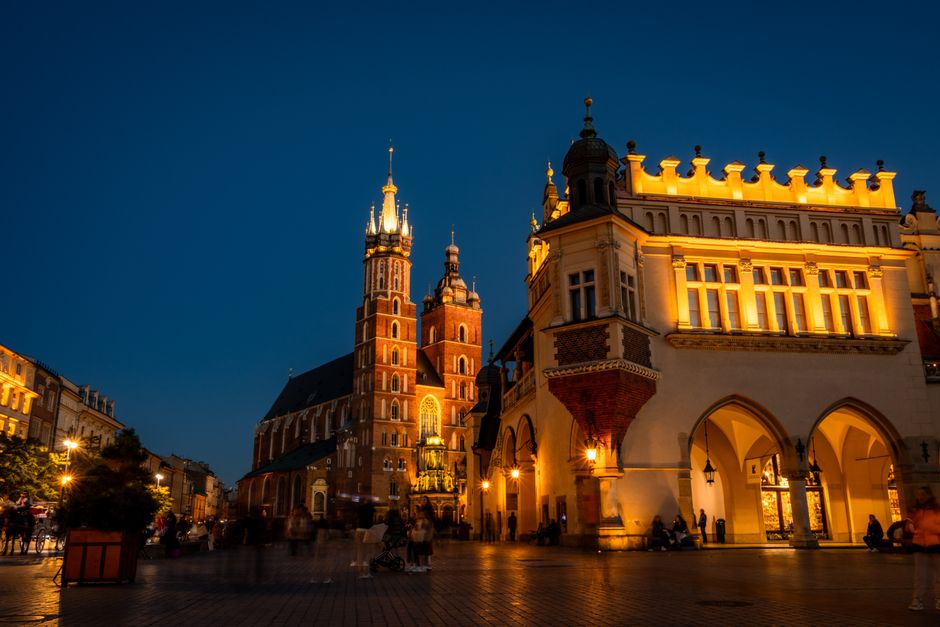
Rynek Główny is the largest medieval town square in Europe and the unmissable center of gravity for your trip. The 200-meter expanse is not just a crossing point but a destination in itself. The Cloth Hall (Sukiennice) dominates the middle, its Renaissance arches stretching like a stone spine. Downstairs, you can haggle for amber jewelry and intricate wooden crafts. Do not skip the stairs at either end: the upper floor houses the 19th-century Polish Art Gallery, a hidden sanctuary of massive canvases by Matejko and Chełmoński that feels a world away from the busy market stalls below.
Beneath the square's surface lies the Rynek Underground Museum, a futuristic archaeological park opened a decade ago and still packing crowds in 2026. You walk on glass over the excavated medieval merchant stalls, watching holographic ghosts of traders and hearing the ambient clatter of ancient commerce. Book a late afternoon slot to escape the midday sun or rain, then emerge back onto the square just as the gas lamps flicker on.
Wawel Royal Castle and Cathedral
Perched on a limestone hill above the Vistula, Wawel is the symbol of Polish identity. The castle complex is a beautiful architectural patchwork of Gothic, Renaissance, and Baroque styles, reflecting centuries of royal ambition. You need a strategic approach here because the grounds are free, but individual exhibitions require separate tickets. The State Rooms and Royal Private Apartments are the headline acts, filled with enormous Flemish tapestries and intricate coffered ceilings.
Equally essential is Wawel Cathedral, a coronation site and necropolis of Polish kings. The interior is a dizzying maze of chapels, but the Sigismund Chapel is the jewel, clad entirely in golden sandstone. Climb the bell tower for a workout and a chance to touch the enormous Sigismund Bell, which requires a strong arm to ring. The Dragon’s Den, a limestone cave exiting at the riverbank, is a quick, kitschy thrill. In 2026, a new conservation project has just finished cleaning the cathedral’s golden dome, making it gleam with startling brightness against the city skyline.
St. Mary's Basilica and the hourly trumpet call
St. Mary’s Basilica dominates one corner of the Main Square with its mismatched towers of red brick. The interior is a blue-and-gold fever dream, dominated by the incredible wooden altarpiece carved by Veit Stoss, the largest Gothic altarpiece in the world. At noon, the carving’s panels swing open to reveal a glittering biblical scene, a ceremony that feels genuinely sacred rather than touristy. Every hour, a bugler plays the Hejnał Mariacki, a five-note melody that cuts off abruptly mid-phrase. This commemorates a 13th-century watchman shot by an arrow while warning of a Mongol invasion. For the best perspective, buy a ticket to climb the higher tower, though be warned the wooden steps are vertigo-inducing and narrow.
Schindler's Factory and the Ghetto Wall
Oskar Schindler’s Enamel Factory in Zabłocie is not a simple biographical museum. It is an immersive, chronological journey through Krakow under Nazi occupation from 1939 to 1945. You walk through reconstructed streets, a railway station, and a hall of photographs that creates a visceral sense of place and loss. It is heavy, essential, and requires at least two hours. The queue for the entrance can be brutal, so book the first morning slot online. A short walk away, a surviving fragment of the Ghetto Wall stands on ulica Lwowska, shaped like a row of Jewish tombstones. It is a quiet, stark memorial in a residential street. Pair these sites with a walk to Plac Bohaterów Getta, where oversized empty bronze chairs memorialize the liquidated ghetto’s victims.
Wieliczka Salt Mine day trip
Just a short commuter train ride from Krakow Główny, the Wieliczka Salt Mine is a subterranean world of salt-carved chapels, saline lakes, and chandeliers made of crystal salt. The Tourist Route takes you down 800 steps and through over two kilometers of tunnels. The highlight is the Chapel of St. Kinga, an entire cathedral carved from salt rock, complete with a salt-carved Last Supper relief on the wall. The air is uniquely beneficial, rich in minerals, and the microclimate feels cool and clean. Tours are guided and mandatory, and in 2026 an expanded miners' route offers a more hands-on, headlamp-wearing experience. Wear comfortable shoes with grip; the floors are compacted salt and can be slick. The town of Wieliczka itself is a pleasant place for a post-tour lunch away from the crowds.
Hidden Gems and Local Favorites Only Insiders Know
Once you have checked off the iconic sights, a deeper, more contemporary Krakow emerges. This Krakow Poland travel guide 2026 pulls back the curtain on the spots locals fiercely protect. These are the places where you trade audio guides for craft cocktails and royal chambers for brutalist concrete.
The tranquil Planty Park loop
The Planty is not a hidden secret on a map, but its function in local life is often misunderstood by tourists who rush through it. This ribbon of greenery wraps around the Old Town where the medieval walls once stood, creating a continuous four-kilometer loop of gardens, benches, and fountains. It is a linear park that changes character with each segment; one moment you pass a quiet chestnut grove, the next a lively chess-table gathering of retired men. In 2026, the city has added more native flowering meadows along the segment near the university, making it a haven for bees and butterflies. Grab a coffee from a window kiosk and walk a full lap at dawn to see the city wake up without the tourist bustle. It is the ultimate free reset button between museum visits.
Nowa Huta: a socialist realist time capsule
Nowa Huta is the architectural antithesis of the Old Town and the most fascinating half-day trip you can take within city limits. Built from scratch in the 1950s as a model communist workers' city centered on the massive Lenin Steelworks, its design is monumental and ideologically loaded. The central Plac Centralny is a vast square radiating wide, tree-lined boulevards designed for tank parades that never happened. You come here to see the stark, imposing realism of the architecture and to visit the original milk bar, Bar Centralny, which still serves cheap, heavy pierogi in a largely unchanged interior. The PRL Museum, tucked into a former cinema, offers a brilliantly interactive look at everyday life under communism, complete with a retro flat you can walk through. Rent a vintage Trabant or a communist-era bicycle for a guided tour to truly grasp the scale and strange idealism of this planned utopia.
Street art hunting in Podgórze and Zabłocie
Across the river, the post-industrial districts of Podgórze and Zabłocie have become an open-air gallery. The closure of factories left enormous blank walls that the city, in a stroke of genius, handed over to muralists. Massive, multi-story works now dominate the skyline here. You can spot a giant sleeping dragon by the Italian artist Blu near the Schindler’s Factory car park, its jaw wrapped around a building. Around ulica Józefińska, portraits by local artists peer down from tenement walls, and abstract geometric pieces brighten forgotten courtyards. The annual street art festival continues to add new commissions in 2026, so a walk through this neighborhood is never the same twice. It pairs perfectly with a visit to the MOCAK Museum of Contemporary Art, whose outdoor sculptures extend the gallery into the street.
Tytano and Dolnych Młynów: hip food and drink hubs
Krakow’s coolest nightlife and dining now thrives in repurposed industrial complexes, and the twin kings of this scene are Tytano and Dolnych Młynów. Tytano occupies a former tobacco factory near the Old Town, a sprawling brick complex of interconnected courtyards. Here you find everything from neon-lit ramen joints and vegan bakeries to speakeasy-style cocktail bars hidden behind unmarked doors. The vibe is effortlessly urban, with communal wooden tables spilling across the cobblestones on warm evenings.
Dolnych Młynów, a converted mill a short walk away, leans even more into the creative and slightly grungy. Its narrow corridors house tiny independent galleries, vintage stores, and coffee shops where you can sit on upcycled furniture. By night, it transforms into a maze of music venues and small bars. Neither place advertises loudly; you find them by following the sound of conversation and clinking glasses down what looks like the wrong alley. In 2026, these hubs represent the authentic, youthful pulse of the city, far removed from the Main Square's tourist menus.

Krakow Food Guide 2026: Traditional Polish Eats and Modern Flavors
Krakow’s culinary scene in 2026 is a thrilling dialogue between grandmother’s kitchen and avant-garde chefs. Forget the stereotype of bland boiled potatoes—this city is a heavyweight in the European food ring, offering everything from medieval street snacks to Michelin-recommended tasting menus. The local philosophy remains rooted in seasonality, with foraged mushrooms dominating autumn menus and fresh asparagus brightening spring plates. As a first-timer, your journey must straddle two worlds: the smoky, cellar-level taverns preserving recipes from the partitions era, and the sun-drenched modernist bistros where Polish wine pairings and deconstructed classics reign. The key is arriving hungry and pacing yourself, because the portions are generous and the hospitality even more so.
Must-try dishes: pierogi, zapiekanka, obwarzanek
The holy trinity of Krakow street and comfort food demands your immediate attention. Pierogi are the undisputed kings—delicate half-moon dumplings boiled and often finished with a sizzle of butter and caramelized onion. While the classic ruskie filling (potato, quark cheese, and onion) is a staple, 2026 sees a surge in seasonal variants like summer strawberry pierogi topped with sour cream and sugar, or autumnal duck and cranberry versions in fine-dining spots. Look for them at dedicated pierogi shops where you can watch the folding process through glass windows.
Zapiekanka, the iconic open-faced baguette, remains the undisputed queen of late-night Kazimierz snacking. Born in Communist-era Poland, this toasted mushroom-and-cheese-covered bread has evolved. The circular Okrąglak building in Plac Nowy is the epicenter, where vendors compete fiercely. In 2026, don’t settle for basic; order a “full house” variant dripping with garlic sauce, chives, and sometimes spicy Hungarian paprika sausage. Finally, the obwarzanek—Krakow’s answer to the bagel but with a chewier, twisted ring texture and a Protected Geographical Indication status—is the grab-and-go breakfast of champions, sold from trademark blue carts on nearly every corner. Freshly baked and sprinkled with salt, poppy seeds, or sesame, it should be eaten within hours of purchase.
Best milk bars for authentic, budget-friendly meals
The bar mleczny (milk bar) is a secular temple of Polish proletarian cuisine, a legacy of the state-subsidized canteens that fed the nation through hardship. In 2026, they’ve been rediscovered by curious foodies, yet they retain their no-frills, grandmotherly soul. The drill is timeless: grab a tray, squint at the handwritten menu board, and shout your order to a stern-faced lady who will heap your plate with comfort. At Bar Mleczny Pod Temidą, long queues form for the naleśniki (crepes with sweet cheese) and a perfectly executed kotlet schabowy (breaded pork cutlet). Bar Grodzki, just off the Planty, offers an expansive selection of soups, including a life-affirming żurek served in a bread bowl. Go early for lunch, bring cash, and don’t expect fancy plating—just honest, restorative food that rarely exceeds 30 PLN per person.
Kazimierz food tour and Jewish cuisine revival
The former Jewish quarter, Kazimierz, is not just a drinking district; it’s the epicenter of a profound culinary revival. The past decade has seen a wave of restaurants digging into pre-war Ashkenazi cookbooks, reintroducing dishes that nearly vanished. A walking food tour here in 2026 is a history lesson on a plate. You’ll find czulent (a slow-cooked Sabbath stew) bubbling at Hamsa, alongside delicate gefilte fish and challah bread. The courtyards around Szeroka Street hum with klezmer music, while modern Israeli-influenced kitchens like Szalom Falafel serve vibrant sabich and hummus that rival Tel Aviv’s best. This isn’t just dining; it’s an act of cultural preservation, blending sweet paprika, goose fat, and memory into every bite.
Vegan and vegetarian Krakow: a surprising hotspot
Don’t let the pork-heavy reputation fool you; Krakow in 2026 is arguably Poland’s most exciting plant-based destination. The city has fully shed its meat-and-potatoes-only image, embracing a vegetable-forward revolution that leverages the country’s superb seasonal produce. No Bones Vegan Bistro in Kazimierz transforms oyster mushrooms into mind-bending “calamari” and jackfruit into pulled “pork” sandwiches. For fine dining, Zielona Kuchnia offers multi-course tasting menus where celeriac steaks and fermented berry sauces take center stage. Even traditional milk bars now offer meatless days, and you’ll find plant-based pączki (doughnuts) at select bakeries. The local attitude has shifted from accommodation to celebration, making a vegan food crawl through the Old Town an absolute joy.
Day Trips from Krakow: Unforgettable 2026 Excursions
While Krakow’s cobblestones could trap you for a week, the surrounding Małopolska region holds some of Central Europe’s most profound landscapes and historical sites. The 2026 transport infrastructure, including upgraded rail links and electric bus routes, makes escaping the urban core effortless. Whether you seek the sobering weight of history, the adrenaline of alpine hiking, or the spiritual calm of a monastery fortress, these carefully curated excursions offer a complete picture of Polish identity. Booking train tickets via the PKP app or opting for a guided minibus with an English-speaking driver are both seamless options this year.
Auschwitz-Birkenau Memorial: a somber must-visit
A visit to the Auschwitz-Birkenau Memorial and Museum is emotionally devastating and essential. It is not a typical tourist attraction but a preserved site of unimaginable atrocity, a grim monument where over 1.1 million people were murdered. In 2026, advance online booking is mandatory for individual entry during peak hours, and it is strongly recommended to secure a guided tour led by a licensed museum educator. These guides navigate the haunting barracks, gas chamber ruins, and personal artifacts—rooms filled with human hair, suitcases, and shoes—with the necessary gravity and historical rigor. The experience is draining; the silence between the barbed-wire fences of Birkenau is louder than any commentary. Wear comfortable, respectful clothing, and prepare mentally for a visit that will linger long after you return to Krakow’s lively streets. Direct buses and trains run frequently from the main station, taking about 90 minutes.
Zakopane and the Tatra Mountains
Just two hours south, Zakopane serves as Poland’s alpine adrenaline capital, nestled at the foot of the jagged Tatra peaks. While the town’s main strip, Krupówki, is a bustling artery of smoked sheep’s cheese (oscypek) stalls and highlander culture, the real magic lies in the trails. In 2026, take the funicular up Gubałówka for panoramic views, but push further into Tatra National Park via the path to Morskie Oko, a glacier-fed emerald lake that reflects the surrounding granite cliffs in perfect symmetry. The hike is a long but gentle ascent on paved paths, suitable for active travelers. After descending, refuel at a rustic bacówka (shepherd’s hut) with grilled trout and a shot of regional plum brandy before catching the evening train back to Krakow.
Ojców National Park and the Eagle's Nest castles
For a bite-sized adventure less than an hour from the city, Ojców National Park delivers dramatic limestone cliffs and a fairy-tale landscape. This pocket-sized park is part of the Trail of the Eagles’ Nests, a chain of medieval fortifications. The crowning jewel is Pieskowa Skała Castle, perched defiantly on a rock spur, its elegant Renaissance courtyard contrasting with the wild terrain. Directly below stands the iconic “Maczuga Herkulesa” (Hercules’ Club), a bizarre 25-meter limestone monolith. In 2026, a network of electric bike rentals allows you to cycle the valley floor, passing ancient water mills and the mysterious Dark Cave. It’s a breath of fresh air and a perfect half-day escape from urban intensity.
Częstochowa and the Jasna Góra Monastery
Spiritually, no site rivals Jasna Góra Monastery in Częstochowa, home to the Black Madonna, a medieval icon credited with miracles and deeply woven into Polish national identity. The atmosphere is charged, especially in August when thousands of pilgrims arrive on foot. The monastery’s fortifications, scarred by the 17th-century Swedish siege, house a treasury of votive offerings and the somber Chapel of the Miraculous Picture. Walking through the dimly lit chapel, where the icon is revealed to the sound of a trumpet fanfare, is a profound cultural experience regardless of faith. Trains connect Krakow directly to the city in under two hours, making it an accessible pilgrimage into the soul of Poland.
Your 2026 Krakow Adventure: Final Tips and Lasting Memories
As your journey draws to a close, you’ll realize Krakow is not a city that reveals itself all at once. It operates on layers—the medieval cellars below the pavement, the Renaissance facades above, and the futuristic 2026 skyline creeping in the distance. You came as a first-timer, lured by cheap flights and the promise of pierogi, but you leave with the echoing sound of the bugle call from St. Mary’s Tower and the smoky scent of a Kazimierz courtyard fire. The city’s magic lies in its contrasts: the solemnity of the Vistula River at dawn versus the electric chaos of a vodka-tasting cellar at midnight, the strict geometry of the communist-era architecture softening into the organic chaos of the Planty’s greenery.
Before you head to the airport, spare one final hour to simply sit on the Main Square and watch the city breathe. Observe the tourists snapping photos, the locals walking their dogs past monuments they’ve seen a thousand times, and the pigeons scattering around the Cloth Hall. A practical tip for your departure: use the modern, fixed-rate Krakow Airport taxi service or the reliable train link, which skips the morning traffic. Keep a few złoty in your pocket for a final obwarzanek on the platform—it tastes different when you know it’s the last one. This city, with its resilient heart and open arms, doesn’t say goodbye; it just waits, unchanged in the places that matter, ready for your return.
Gear for this trip
- Water-Resistant Sneakers
- Insulated Waterproof Boots
- Packable Down Jacket
- Compact Umbrella
- Portable Power Bank
As an Amazon Associate I earn from qualifying purchases.


No comments:
Post a Comment