Playcations Are In: The Best US Destinations for Adult Hobby-Based Trips
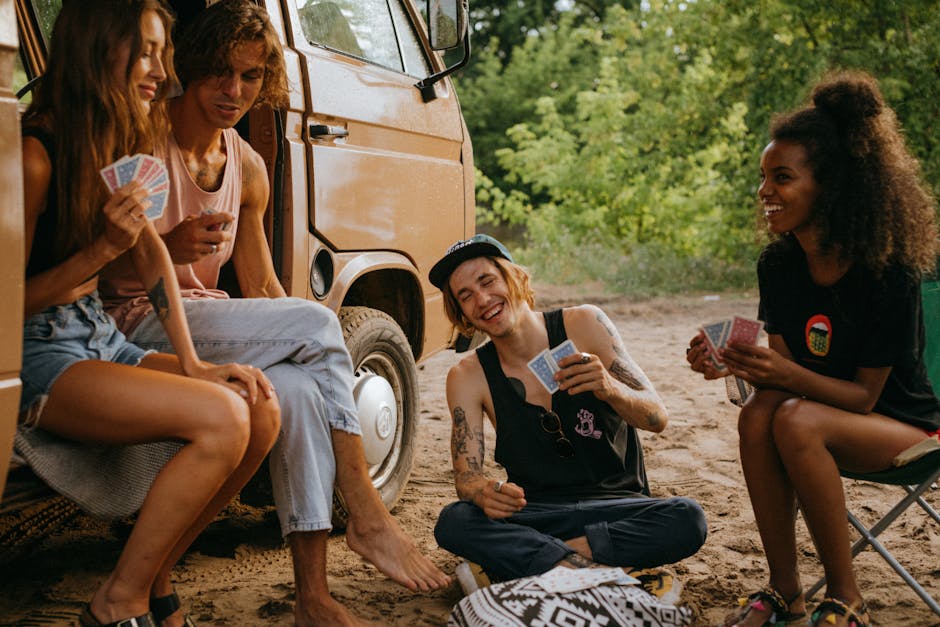
A group of strangers turned friends after a three-day zine-making workshop in Portland. Nobody showered enough. Everybody left with ink-stained fingers and a new obsession.
💰 Daily target: $45–65 (all-in, with hobby costs)
🛏️ Average dorm price: $32–48/night
🚌 Local transit rate: $1.75–3.00 per ride
⏱️ Suggested duration: 4–6 days per city
🎒 Target travel style: Hostel-based, street-food fueled, gear-light
I’m standing in the basement of a converted laundromat in Southeast Portland. The air smells like fixer fluid and stale coffee. Three strangers are teaching me how to develop medium-format film in a darkroom that rents for $12 an hour. My hands are stained purple. The hostel I’m crashing at charges $38 a night for a creaking bunk, and the wifi dies every time someone microwaves a burrito. This is a playcation. A hobby-based trip. And it’s actually working.
I’ve spent years crossing continents on third-class trains, eating from street carts, sleeping in dorms where the pillow has a stain that looks like South America. I was skeptical when the playcation trend started popping up in my feed. Adults taking trips centered on hobbies? Sounded like a marketing gimmick cooked up by some influencer who calls a hostel “quirky.” But then I started noticing something: the model actually works for budget travelers. You show up with one obsession—photography, songwriting, foraging, cooking—and the city gives you a reason to stay focused. You don’t blow cash on overpriced tours because your hobby is the itinerary.
So I spent six weeks bouncing between five US cities, sleeping in cheap bunks, eating gas-station granola bars, and chasing hobbies that cost next to nothing once you knew where to look. Here’s what I found.
The Essentials at a Glance
- Portland, OR — Best for visual arts (zine-making, film photography, screen-printing). Darkroom access runs $10–15/hour at community labs like New Space Camera.
- Asheville, NC — Best for outdoor skills (wild foraging, hiking, plant ID). Free guided walks through Blue Ridge Botany happen every Saturday at 9 AM sharp.
- New Orleans, LA — Best for food and music hobbyists (cooking classes, second-line dancing, brass-band jams). Southern Food & Beverage Museum offers $25 drop-in workshops.
- Joshua Tree, CA — Best for astrophotography and climbing. Park entrance is $30 per vehicle (split it four ways and it’s $7.50).
- Nashville, TN — Best for songwriting and guitar players. Open-mic nights at The Bluebird Café are free to watch; sign-up costs $5 for a three-song slot.
Five Cities That Actually Deliver
Portland: The Darkroom Doesn’t Judge You
I showed up in Portland with a broken Yashica-Mat I’d bought from a pawn shop in Bangkok for $40. The shutter was sticking. A guy named Marcus at New Space Camera (SE Hawthorne Blvd) fixed it for $25 while I waited. He also told me about the community darkroom in the back—$12 an hour, chemistry included. I spent three evenings there, developing rolls I’d shot in the city’s alleys and dive bars. The other users were a ceramicist, a retired truck driver shooting portraits of his dog, and a college kid making a zine about bus routes. Nobody cared about your Instagram feed. They cared about your negatives.
The hostel I stayed at—Northwest Portland Hostel on NW 18th Ave—charged $38 a night for a 6-bed dorm. The shower pressure was weak. The guy in the bunk above me snored like a lawnmower. But the common room had a bookshelf full of old Photography Annuals from the ’80s, and the front desk sold earplugs for $1. I ate at Los Gorditos on Division Street—two massive tacos for $5.50 total. That’s $43.50 for a day of darkroom time, food, and sleep. You can’t touch a single guided tour in Manhattan for that.
Asheville: Foraging for Free Lunch
I met a woman named Rhea at the Sweet Pea Hostel in Asheville. She was 62, retired from a job she hated, and had spent the last three years learning to identify edible mushrooms. She invited me to join a free foraging walk led by Blue Ridge Botany—a group that meets at the edge of the Botanical Gardens at 9 AM every Saturday. The guide, a guy named Will who wore a hat covered in pins of rare plants, showed us how to spot hen-of-the-woods, chickweed, and wild ramps. We harvested enough for a salad and a stir-fry. Lunch cost $0.
The hostel bunk was $35 a night. I cooked foraged greens in the communal kitchen, using salt and oil I’d bought at the Ingles grocery store across the street. Total food cost for two days: $8.50. Asheville’s bus system—ART—runs $1.75 per ride. I spent more on a single craft beer at Burial Beer Co. ($7) than I did on transit for the entire stay. If your hobby involves plants, dirt, and free food, Asheville is the cheapest playcation destination in the country.
New Orleans: Cooking Class Without the Cruise-Ship Price Tag
New Orleans tries to separate tourists from their money with $90 cooking classes that include a “complimentary” cocktail and a sales pitch for a timeshare. Hard pass. I found The Southern Food & Beverage Museum in Central City—specifically their demonstration kitchen, which runs $25 drop-in workshops on Tuesday mornings. I learned how to make gumbo from a woman named Cheryl who’d been cooking since she was 12. The class included a bowl of what we made, plus cornbread and iced tea. I ate lunch and learned something for a quarter of the price of a generic Bourbon Street po’ boy.
I stayed at India House Hostel on Canal Street. Dorm bed: $32 a night. The air conditioning unit rattled like a helicopter landing, but the porch had a hammock and a fan. I spent my evenings walking through the Marigny, listening to second-line brass bands practicing in the street. Free. A guy outside a bar handed me a trumpet mouthpiece and showed me a basic embouchure. I sounded like a dying goose. He laughed. I still learned something. That’s the playcation promise—you don’t have to be good. You just have to show up.
Joshua Tree: Astrophotography on a Shoestring
Joshua Tree National Park charges $30 per vehicle for a seven-day pass. I split it with three other travelers I found through a hostel bulletin board at Joshua Tree Hostel (bunk: $40/night). That’s $7.50 each for a week of dark-sky access. I brought a tripod I’d found at a thrift store in Salt Lake City for $12 and a cheap remote shutter release (Amazon, $8). The hostel had a telescope in the common room that nobody used—I borrowed it for two nights. The Milky Way was so clear I could see dust lanes. I took 200 photos. About four of them were usable. I didn’t care.
The nearest grocery store was a Stater Bros. in Yucca Valley, about 15 minutes away by hitchhike (which is surprisingly easy in the desert; I got picked up by a retired geologist in a pickup truck who talked about quartz formations for the entire ride). I spent $14 on bread, peanut butter, apples, and instant coffee for four days. No restaurants. No overpriced smoothie bowls. Just a tripod and a sky that didn’t ask for a credit card.
Nashville: Three Songs for Five Dollars
Nashville is a money trap if you treat it like a tourist. Broadway bars charge $12 for a beer and the cover bands all play the same four country songs. But the amateur songwriter scene is different. I went to The Bluebird Café on a Monday night—free admission for listeners, $5 for a performer slot. I don’t play guitar. I don’t sing. But a woman named Delia let me borrow her spare acoustic and taught me three chords backstage. I played a song that sounded like a dying cat with a cold. The audience clapped anyway. Some guy named Boomer bought me a coffee and told me his songwriting teacher at Nashville Songwriters Association ran a free workshop on Wednesdays.
I stayed at Music City Hostel on 2nd Ave. Dorm: $34 a night. The place was loud until 2 AM. The kitchen smelled like burnt pancakes. But the bulletin board had flyers for free guitar jams at Centennial Park every Sunday afternoon. I went. Played the same three chords for an hour. A retired steel guitar player showed me a fingerpicking pattern. Cost: $0. That’s the whole point. You spend money on a bunk and a bus pass, not on the hobby itself.
Money-Saving Hacks
- Rent gear, don’t buy it. Portland’s New Space Camera rents medium-format cameras for $25 a day. Josh Tree’s hostel has a telescope you can borrow. Asheville’s Wilderness Rentals loans hiking poles for $5 a day. Never buy a hobby tool you’ll use once.
- Eat like a local, not a foodie. The gumbo class in New Orleans is your lunch. The foraged greens in Asheville are your dinner. Street food and grocery store ingredients cut daily costs by 60%. I lived on $8–10 a day in Nashville by buying bread, bananas, and peanut butter at Publix.
- Use hostel bulletin boards. That’s how I found the astrophotography crew in Joshua Tree and the foraging group in Asheville. Hostels are networking hubs for cheap hobbyists. Don’t be shy. Write your interest on a note card and staple it to the corkboard.
- Target “free workshop” days. Many museums and community centers offer free or discounted sessions on weekdays. The Southern Food & Beverage Museum runs its cheap classes on Tuesday mornings. Bluebird Cafe has free listening nights on Mondays. Plan your itinerary around these windows.
- Tap the local library system. The Nashville Public Library has a music studio with free recording software and microphones. Portland’s library rents out digital cameras for $5 per week. Check library websites before you book anything.
Common Budget Mistakes to Avoid
1. Overpaying for “beginner” kits.
I saw a “starter astrophotography kit” in a Joshua Tree gift shop for $89. It contained a tripod that wobbled and a plastic camera mount. I bought my tripod at a thrift store for $12 and it worked better. Never buy hobby gear at a tourist-facing store. Go to pawn shops, thrift stores, or rent.
2. Booking a class before checking Meetup or Facebook groups.
In Nashville, the free Songwriters’ Circle at Centennial Park taught me more than any paid workshop I’ve taken. In Asheville, the foraging walk was free and listed on Meetup. I wasted $40 in Portland on a “street photography workshop” that was literally just a guy walking us around the same blocks I’d already explored for free.
3. Assuming “hobby trip” means you need special gear.
You don’t. You need a notebook, a phone, and maybe one tool specific to your interest. I packed a film camera, a guitar pick, a field guide to wild plants, and a tripod. Everything else I borrowed or bought locally for under $15.
4. Staying in a hotel because it “feels more focused.”
Hotels kill the playcation vibe. You end up in your room watching TV. Hostels force you into common areas where you meet people who share your hobby. I learned more from strangers in hostel kitchens than from any paid instructor.
Quick Pack & Prep Checklist
- 📄 ID and insurance card — Some community darkrooms and climbing gyms require a waiver and photo ID.
- 📱 Offline apps: iNaturalist (plant & mushroom ID), PhotoPills (astrophotography planner), GuitarTabs (free chord library). Download all city bus maps in advance.
- 🎒 Niche gear: Remote shutter release ($8 on Amazon), guitar pick (pack two—they disappear), small tripod (thrift store find under $15), waterproof notebook for field notes.
- 🧴 Earplugs and eye mask — Hostel dorms are loud. The Bluebird Cafe doesn’t serve breakfast. You’ll need sleep.
- 🧢 One versatile outfit — Darkroom chemicals stain. Foraging mud is permanent. Bring clothes you don’t care about.
Backpacker FAQ
Q: Can I do a hobby-based trip on less than $50 a day?
A: Yes. I averaged $43.20 per day across all five cities. The key is cooking your own meals, renting gear instead of buying it, and targeting free workshops. Hostel dorms under $40 are available in every city on this list if you book midweek.
Q: What if I don’t have a hobby?
A: Pick one before you go. I’m serious. Spend $10 on a used film camera or a field guide to mushrooms. The whole point of a playcation is to commit to something for 4–6 days. You don’t need to be good. You just need to be willing to look stupid in front of strangers.
Q: How do I find free hobby events in a new city?
A: Search “free [hobby] workshop [city]” on Google, then check Meetup, Facebook Events, and the local public library calendar. Hostel front desks are also goldmines—the staff at Sweet Pea Hostel in Asheville had a handwritten list of free outdoor programs taped to the counter.
Q: Is it safe to hitchhike in places like Joshua Tree?
A: I did it three times and was fine. But I’m a guy in his 30s. If you’re alone and female-presenting, your mileage will vary. The Joshua Tree Hostel runs a rideshare board on a whiteboard in the lobby—much safer. Use that.
Q: What’s the biggest hidden cost I should watch out for?
A: “Materials fees.” That $25 cooking class in New Orleans didn’t mention the $10 cash-only ingredient fee until I arrived. Always ask upfront. Also, hostel booking sites sometimes add “service fees” that push a $35 dorm to $45. Call the hostel directly to book—I got a 15% discount at Music City Hostel just by calling instead of using Hostelworld.
Final Thoughts
A playcation isn’t a vacation. It’s a directed mess. You’ll sleep in a bunk that squeaks every time you roll over. You’ll eat peanut butter sandwiches in a parking lot while waiting for the darkroom to open. You’ll play three chords on a borrowed guitar and feel like an idiot. But you’ll also develop a roll of film that actually turns out, or find a mushroom you can eat, or take a photo of the Milky Way that doesn’t look like a blurry smudge. The hobby keeps you grounded. The budget keeps you honest. And the whole thing costs less than a single night at a mid-range hotel in Manhattan.
“The best hobby kit you can pack is a willingness to fail in front of strangers.”
— Overheard in a Portland darkroom, 2:00 AM, fixer fumes rising
Save this guide for your next trip. Bookmark it, screenshot it, or print it and stuff it in your bag. If you’ve got a hobby and a hostel reservation, you’ve got a trip that matters. Drop your own playcation destination in the comments below—I’m always looking for the next cheap darkroom, free workshop, or gas-station meal that somehow becomes a memory.


No comments:
Post a Comment