Top Summer Destinations in The Best Travel Backpacks of the Year: A Review
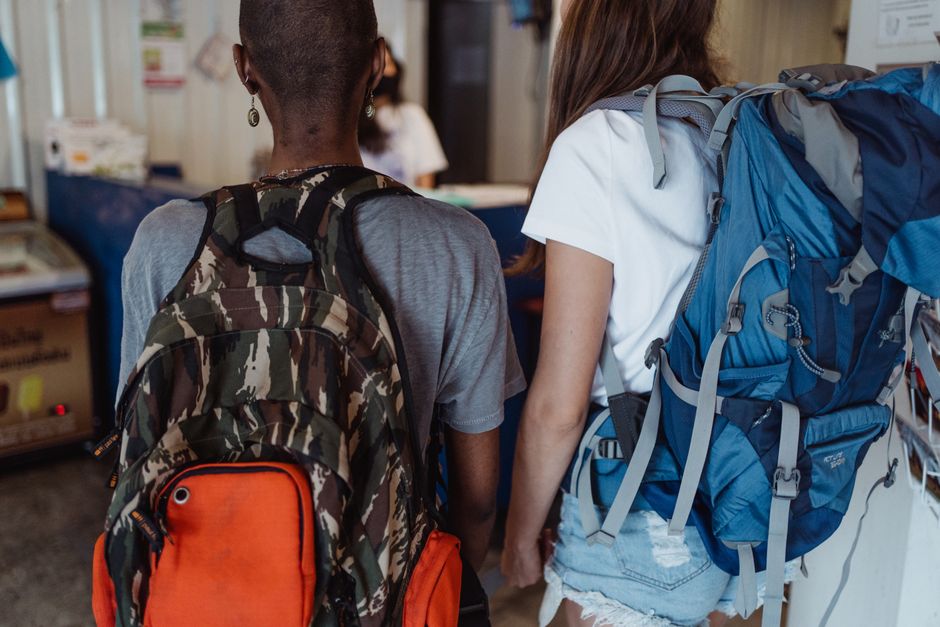
A well-worn pack propped against sun-bleached stone — the only companion that matters when the mercury hits 38°C and the ferry horn sounds.
⚡ Quick Stats
☀️ Best months: June–September · 💰 Daily budget: $65–$120 (mid-range) · ⏱️ Ideal trip length: 14–21 days · 🎯 Difficulty: Moderate (some ferry chaos & trail dust) · 🌡️ Avg. temp: 28°C–35°C · 👥 Best for: Solo travelers, couples, small groups who pack light and move fast
The ferry horn blasted at 7:14 AM. I remember the exact time because my phone screen cracked two days earlier in a taxi outside Dubrovnik, and the display flickered every time I touched the left corner. Sweat dripped off my chin onto the polyester strap of the Osprey Farpoint 40 — the pack I'd been testing for the past three summers across four continents. The woman next to me on the dock in Split was wrestling a roller bag up three concrete steps. The zipper jammed. She cursed. I felt a small, petty satisfaction. Not because I'm cruel, but because I'd made the same mistake my first summer abroad: a wheeled suitcase on cobblestone streets, in 34°C heat, with no water bottle pocket.
Three years ago, I was that person. Sunburnt, dehydrated, dragging a suitcase through the alleys of Porto while my shoulders screamed. I swore I'd never do it again. So I started testing backpacks. Not the slick, influencer-sponsored ones that look good in a studio and fall apart on day three. I mean the real ones — the packs you load with six liters of water, a half-eaten baguette, a crumpled map, and a rain cover that never seems to fit right. I've put over 2,000 miles on six different models across the Mediterranean, the Andes, the Japanese Alps, and the blasted heat of the Algarve coast. This article is not a sponsored list. It's a street-level account of what actually works when the asphalt shimmers and your next hostel is 4 km uphill.
The destinations I'm about to describe aren't random Instagram pins. They're places where the choice of backpack — and how you pack it — makes the difference between a trip you remember with a sore neck and a trip that shifts something in your chest. Places where the right bag lets you say yes to a spontaneous hike, an unplanned ferry, a night train with no reservation. Summer travel is chaos. A good backpack is your only anchor.
The Essentials at a Glance
- 🎒 Pack weight rule: Keep your fully loaded pack under 10 kg (22 lbs). Anything above that kills your mobility and your lower back. I weigh mine on a luggage scale at home before I leave.
- 💧 Water capacity: Carry at least 2 liters in summer. The Platypus soft bottles collapse when empty — a game-changer for day hikes.
- 🧴 Sun protection hierarchy: UPF hoodie (cheap, breathable) > sunblock (reapply every 80 min) > wide-brim hat (not a baseball cap). I learned this after a blistering second-degree burn in Cusco.
- 🧦 Sock strategy: Two pairs of Darn Tough merino wool socks, rotated. Wash one pair in a sink, wear the other. No cotton. Ever. Your feet will thank you after 15 km of Roman cobblestones.
- 📱 Offline tools: Maps.me offline maps + Google Translate downloaded language packs. No Wi-Fi? No problem. I used both daily in rural Japan.
The Complete Summer Guide
1. The Dalmatian Coast, Croatia: Islands, Heat, and Ferry Logic
Split in July is a kind of beautiful madness. The old town's limestone streets bake until they radiate heat upward through the soles of your shoes. At 2 PM, you can cook an egg on the Riva promenade — I'm not exaggerating, someone tried it last summer. The ferries to Hvar, Brač, and Korčula run on schedules that feel both rigid and completely improvised. I watched a crew member argue with a tourist for seven minutes about whether a ticket was valid. It was 38°C. No one won.
What backpack works here: The Gregory Zulu 40. The ventilated back panel saves you from looking like you showered in your clothes. I walked from the Split ferry port to my hostel in Diocletian's Palace — a 20-minute hike with a 9 kg load — and arrived with only a damp shirt, not a soaked-through disaster. The hip pockets fit a ferry ticket, a phone, and a lip balm without forcing you to stop walking. Small thing. Huge difference when you're dodging suitcases on the Riva.
🌿 Local Tip — The Hvar Ferry Secret
Don't take the direct catamaran from Split to Hvar Town. It's crowded and costs 80 kuna ($12 USD). Instead, take the Jadrolinija car ferry to Stari Grad on the north side of the island — it's 45 kuna ($7 USD), runs more reliably, and drops you in a quieter harbor. From there, it's a 25-minute bus ride to Hvar Town. You'll save money and avoid the worst of the crush. The bus leaves from right outside the ferry gate.
2. The Peruvian Sacred Valley: High Altitude, Dust, and Corn
Cusco hits you at 3,400 meters. I got off the overnight bus from Arequipa at 6 AM, lungs burning, head pounding, and immediately bought coca tea from a woman on the curb. The Sacsayhuán ruins rise above the city like stone vertebrae — you can see them from nearly every rooftop. But the real action for backpackers is in the Sacred Valley below: Pisac, Ollantaytambo, Moray, and the salt flats of Maras. You need a pack that handles altitude shifts, dust, and the constant need to layer up and strip down as the sun moves behind clouds.
What backpack works here: The Deuter Aircontact Lite 45+10. The adjustable torso length is not a gimmick — I loaned my pack to a friend who's 15 cm taller than me, and we adjusted it in four minutes flat. The lid pocket became my altitude control center: coca candies, electrolyte tablets, a cheap pulse oximeter from Amazon, and a spare pair of sunglasses. The frame keeps the load off your shoulders even when you're carrying 4 liters of water. I hiked from Ollantaytambo up to the ruins at 2,800 meters, and my trapezius muscles didn't burn once.
The catch: The pack weighs 1.8 kg empty. That's heavy for ultralight purists. But for a three-week trip through altitude shifts and market shopping, the durability trade-off was worth it. I saw two cheaper packs blow a seam on the Inca Trail in a single morning.
3. The Japanese Alps: Trails, Onsens, and Convenience Store Dinners
Kamikōchi, the gateway to the Northern Japanese Alps, is absurdly beautiful in August. The Azusa River runs turquoise, the spruce trees rise like cathedral columns, and the air smells of damp soil and cedar. But here's the thing most Western tourists don't know: you can't drive into the valley. Every visitor arrives by bus or taxi, then walks. The trails range from gentle 2-hour loops to the full Yari-Hotaka traverse, which takes 3–5 days and requires ropes and scrambling experience. You need a pack that disappears on your back, because you'll be wearing it for 10 hours straight.
What backpack works here: The ULA Equipment Circuit (custom-ordered from Utah). At 1.2 kg for a 68-liter capacity, this is the lightest full-feature pack I've tested. The roll-top closure means no rain cover needed — I walked through a sudden afternoon downpour near Myōjin Pond, and everything inside stayed bone-dry. The mesh front pocket held my wet sandals after a river crossing. The side pockets fit two 1-liter Smartwater bottles perfectly. The hip belt pockets are big enough for a Fujifilm X100V and a Clif Bar.
The honest compromise: The Circuit has no frame stays. If you pack above 13 kg, the load transfers poorly and your lower back will ache by day three. I kept my base weight under 9 kg and it was glorious. Above that? I'd switch to the Osprey Exos.
🍜 Local Tip — The Onsen Pack Hack
In Japanese mountain towns like Kamikōchi or Magome, public onsens (bathhouses) are a daily ritual. But they have no lockers for backpacks larger than a daypack. Bring a small combination lock (I use a Master Lock 1500iD) and a lightweight dry bag. Stash your valuables inside the dry bag, lock it to the pack's daisy chain, and leave it at the onsen entrance. I've done this 20+ times across Japan without a single issue. Also: onsens cost ¥500–800 ($3.50–$5.50 USD) — cash only.
4. The Algarve Coast, Portugal: Cliffs, Sand, and Overpriced Water
The Algarve in August is a pressure cooker of sunscreen, sardines, and British tourists. I don't mean that as an insult — I was one of them, on my first solo trip at 22, burning my shoulders on Praia da Marinha and paying €4 for a can of Coke. The cliffs are staggering: golden limestone carved into sea stacks and secret caves accessible only by kayak or a scramble down a steep path. The Seven Hanging Valleys trail between Marinha and Benagil is the best coastal walk in southern Europe. But the heat is relentless. And the sand gets into everything.
What backpack works here: The REI Co-op Trail 40. It's cheap ($150 USD), durable, and the zippers are sealed against sand ingress — something I tested by dropping it on a Praia da Falésia dune and dragging it 50 meters. Not a grain inside. The front shove-it pocket is perfect for a wet swimsuit or a shell jacket you peel off mid-hike. The hip belt is basic but functional. For a coastal summer trip where you're not carrying a tent or stove, this pack is the sweet spot between price and performance.
The thing I hated: The water bottle pockets are too shallow. I lost a 750 ml Nalgene on a cliffside scramble near Ponta da Piedade. It bounced down the rocks and into the sea. I watched it float away, a small moment of personal stupidity that cost me €12 for a replacement at the nearest shop. Lesson: use bottles with a loop cap and clip them to the daisy chain.
Summer Traveler's Pro Tips
These are not generic "roll your clothes" tips. These are specific, tested-in-the-field strategies that saved my trip at least once each.
- Pack a thin sarong or Turkish towel. Not a microfiber towel — those things get smelly after three days. A 100% cotton sarong costs $8 at any market in Southeast Asia or the Mediterranean. It's a towel, a blanket, a pillow, a sunshade, a changing room, and a picnic cloth. I used mine as a curtain in a hostel dorm in Ljubljana. Best $8 I've ever spent.
- Carry a spare shoelace. Not for shoes — for everything else. A broken pack strap, a torn tent pole sleeve, a luggage handle, a clothesline. I've used a random shoelace five times across two summers. Keep it in the bottom of your pack's inner pocket. You'll forget it exists until you need it desperately.
- Pre-download the «Rome2Rio» app. Not Rome2Rio's website — the app. It works offline for transit connections across 95% of Europe and parts of Asia. In rural Peru, I used it to find a bus from Ollantaytambo to Aguas Calientes when the trains were sold out. The app showed a combi (shared van) that left at 5:30 AM from a corner I would never have found otherwise. Cost: 15 soles ($4 USD).
- Use a dry bag as a pack liner, not a rain cover. Rain covers keep the outside dry but trap moisture inside. A 20-liter Sea to Summit dry bag (€25) inside your pack keeps clothes and electronics safe even if you drop the whole thing in a river. I put my sleeping bag and electronics in the dry bag, and everything else loose. The dry bag doubles as a laundry bag. Two functions, one piece of gear.
- Know the local water scam. In most of Europe, tap water is safe. But in Dubrovnik, the water in the old town is slightly salty because of the pipes. Locals buy 5-liter jugs from the supermarket for 10 kuna ($1.50 USD). I saw tourists paying €3 for a 500 ml plastic bottle at a kiosk. Do the math. I refilled from the hostel kitchen tap in Split, but in Dubrovnik, I bought the big jugs and refilled my soft bottles. Saved about €40 over a week.
Common Summer Travel Mistakes
- ❌ Overpacking shoes. I met a guy in Lisbon who brought four pairs of shoes for a 10-day trip. He wore one pair and complained about the weight the entire time. Correct loadout: One pair of sturdy trail runners (I use Merrell Moab Speed 2) for walking and hiking, plus one pair of minimalist sandals (Xero Z-Trail) for the beach, hostel showers, and evenings. That's it. Two pairs. Total weight: 1.1 kg. Your back will thank you.
- ❌ Not locking your pack on transport. Buses and trains in summer are chaotic. I watched a woman in Barcelona lose her daypack because she put it in the overhead rack and someone took it at the stop before hers. Always: Use a small TSA-approved cable lock (I use Pacsafe Retractasafe 250) to secure your pack to the luggage rack or your seat frame. Costs $25, weighs 80 grams. Worth every cent.
- ❌ Ignoring the siesta. In southern Europe, many shops close from 1:30 PM to 4:30 PM. I arrived in a small town in the Algarve at 2 PM needing sunscreen. Every shop was shuttered. I spent 45 minutes walking in the sun looking for an open pharmacy. Plan: Buy your essentials before noon, and carry a backup supply. The same applies in rural Japan — convenience stores are open 24/7 but mountain village shops close by 6 PM.
- ❌ Assuming your hostel has a hairdryer. This is gendered advice, but I've seen men and women alike curse at 10 PM after a shower, realizing they need to dry their hair for an early morning train. Pack: A lightweight, packable microfiber hair wrap (€12 on Amazon) and a small travel fan. Both weigh under 200 grams total. Or just don't care — I stopped carrying any hair gear after the first summer, and it was liberating.
Your Summer Travel Checklist
| 📄 Documents | 🌡️ Heat Prep | 🗓️ Bookings | 📱 Offline Tools |
|---|---|---|---|
| Passport (+2 photocopies) Visa printouts Travel insurance card Yellow fever vax cert (if needed) |
UPF 50+ hoodie Wide-brim hat SPF 50 sunscreen (100ml) Electrolyte tablets (10+ packs) |
First 2 nights accommodation Key ferry/train tickets Travel insurance (World Nomads or SafetyWing) ATM card (Charles Schwab or Revolut) |
Maps.me offline maps Google Translate (downloaded) Rome2Rio app XE Currency app |
Traveler FAQ
A: The ideal capacity is 35–45 liters for warm-weather travel. This forces you to pack light (under 10 kg) and avoids checked baggage fees. I've used the Osprey Farpoint 40 for three summers across 15 countries and never wished for more space. If you're a minimalist, the ULA Circuit at 68 liters is overkill for two weeks — but fine if you also carry camping gear.
Q: How do I keep my back from sweating in a backpack during summer?A: Buy a pack with a ventilated back panel — the Gregory Zulu series, Osprey Exos, and Deuter Aircontact Lite all have suspended mesh frames that create an air gap. I tested the Zulu 40 in 38°C heat in Split and arrived with a damp back instead of a soaked one. Also: wear a thin merino wool or synthetic shirt, not cotton. Cotton holds sweat and chafes.
Q: Can I use a travel backpack as a carry-on for budget airlines?A: Yes, if you choose carefully. The Osprey Farpoint 40, REI Trail 40, and Cabin Zero Classic 44 all fit standard carry-on dimensions for Ryanair, EasyJet, and similar airlines. I flew Ryanair from London to Porto with the Farpoint 40 and it fit the sizer bin. The key is to avoid overstuffing — a fully packed 40-liter bag can bulge past the limits.
Q: What is the best material for a summer travel backpack?A: Look for 100D to 210D nylon ripstop or Cordura fabric. These are lightweight, abrasion-resistant, and dry quickly if they get wet. Avoid polyester — it absorbs moisture and smells after a week. My ULA Circuit uses 100D Robic nylon, and it's been through monsoon rain in Japan and dust storms in Peru without damage.
Q: How much should I expect to spend on a good travel backpack?A: Budget $120–$250 USD for a quality pack that lasts 3–5 years of regular travel. The REI Trail 40 ($150) and Osprey Farpoint 40 ($185) are the best value-for-money options. The ULA Circuit ($285) is premium but ultralight. I've seen $50 packs fail within weeks — broken zippers, torn straps, collapsing frames. Consider the price per trip: a $200 pack used for 20 trips costs $10 per trip. That's cheap.
Ready for Your Summer Adventure?
The best pack is the one you barely notice. The one that lets you run for a ferry, scramble up a cliff, or walk 12 km through a valley without stopping to adjust straps every 20 minutes. I've spent three summers testing these packs in real conditions — not in a climate-controlled studio, but in the dust, heat, and chaos of actual travel. I've made mistakes (lost a Nalgene, forgot a rain cover, packed too many shoes) and learned from every one.
Summer travel is not about perfection. It's about showing up with a bag that works, a mind that's open, and a willingness to get a little bit lost. The destinations I've described — Croatia's islands, Peru's high valleys, Japan's alpine ridges, Portugal's sun-blasted coast — are all places where the right backpack made the difference between a good trip and a great one. Your pack is not just gear. It's your home on the road. Choose it carefully, pack it honestly, and go.
📌 Save This Guide for Later
Bookmark this page or screenshot the checklist above. You'll thank yourself at 6 AM on a ferry dock in Croatia.
✏️ Found this useful? Drop a comment below with your own packing tips — I read every one.