
Introduction: Why Ubud Should Top Your 2026 Travel List
Ubud is not a secret anymore, and honestly, it never really was. But in 2026, this lush inland town in Bali has evolved into something even more magnetic. It is no longer just a pitstop on the way to the beaches of Seminyak or Canggu. It is the main event. The cultural heartbeat of the island now pulses with a refined, conscious energy that draws in digital nomads, spiritual seekers, art collectors, and families all looking for that unmistakable green tranquility. If you are crafting your travel plans for the year, this Ubud travel guide 2026 will show you why the town deserves the top slot on your itinerary.
What has shifted in the last few years is the depth of the experience. The pandemic-era rush to open smoothie bowls and yoga shalas has matured. In 2026, Ubud offers a polished blend of ancient Balinese tradition and forward-thinking luxury. You can spend your morning receiving a water blessing at a 1,000-year-old temple, your afternoon in a zero-waste café that grows its own microgreens on-site, and your evening watching a contemporary dance performance in a bamboo amphitheater nestled above a river gorge. The town has successfully guarded its soul while upgrading its infrastructure.
The wellness scene specifically has transcended the cliché. It is no longer just about Instagrammable swing shots over rice paddies, though those still exist and are still stunning. The 2026 wellness landscape in Ubud is clinical, spiritual, and deeply personalized. You can book chakra-aligning sound baths guided by Balinese high priests, or opt for a full biometric health screening at a luxury jungle clinic that designs a week-long longevity program just for you. This duality—the mystical and the medical—is what makes the wellness offering here uniquely powerful right now.
For the creatively inclined, Ubud in 2026 is a living gallery. The artisan villages surrounding the center, like Mas for wood carving and Batuan for painting, have opened their doors wider than ever. You can now participate in multi-day masterclasses run by families who have passed their craft down for seven generations. The Neka Art Museum and the ARMA have both undergone significant digital curation upgrades, offering augmented reality tours that let you step inside the stories of the classic Balinese paintings. The annual Ubud Writers & Readers Festival has also expanded its footprint, bringing in a more diverse international lineup that turns the whole town into a stage for ideas every October.
The culinary landscape is another reason to mark 2026 as your year to visit. Ubud has fully embraced regenerative dining. Locavore, long a pioneer, has inspired a wave of chef-owned restaurants where menus are dictated not by trends but by what the farmers harvest that morning. You can dine inside a permaculture garden in Sayan, tasting a 12-course tasting menu where every ingredient is foraged within a five-kilometer radius. Even the street food scene along Jalan Goutama has seen a glow-up, with night markets now offering organic, single-origin tempeh skewers and craft arak cocktails. Eating in Ubud is a direct conversation with the soil of Bali.
Digital nomads and remote workers will find 2026 to be the most frictionless year yet for long stays. The new co-living spaces in the Penestanan and Nyuh Kuning areas offer high-speed Starlink internet as standard, alongside community gardens and maker spaces. The visa-on-arrival and dedicated remote worker visa pathways have been streamlined, making a two-month stay administratively painless. You can set up your laptop in a bamboo pod overlooking a jungle ravine, close it at lunch, and be hiking through rice terraces within ten minutes. The work-life balance here is not a concept; it is the geography.
But the truest reason to prioritize Ubud in 2026 is the spirit of the Balinese people. Their daily offerings, the canang sari you see on every doorstep, are not a performance. The ceremonies at the Pura Taman Saraswati and the Pura Dalem Agung Padangtegal continue with profound sincerity, and visitors are welcomed to observe respectfully. The Balinese New Year, Nyepi, falls in March 2026, and it is an unparalleled experience. The entire island shuts down—no lights, no flights, no noise—for a day of absolute stillness. Witnessing this day of silence in Ubud is life-changing. It is a reset button for the soul that no amount of spa treatments can replicate.
Finally, there is a strong sustainability momentum that makes your visit in 2026 feel genuinely responsible. The ban on single-use plastics is now fully normalized and enforced. Many hotels have moved beyond just reducing plastic to actively rewilding their surrounding land. The Ubud Monkey Forest, for example, now runs an extensive habitat restoration project that guests can contribute to. When you walk through the Campuhan Ridge at sunrise, the air feels cleaner. The river clean-up projects along the Wos River have brought back fireflies on certain trails. Choosing Ubud in 2026 means participating in a destination that is actively healing itself, and that is a rare and beautiful thing to witness. This Ubud travel guide 2026 will help you navigate all of it with ease.
Getting to Ubud and Getting Around in 2026: Transport Tips for a Smooth Arrival
Landing in Bali and getting to Ubud in 2026 is a smoother experience than it has ever been, but it still requires a bit of strategic planning. The island’s popularity has led to significant infrastructure upgrades, including a revamped airport arrivals process and new traffic management systems on the main roads. However, Ubud’s location in the central foothills means you are looking at a journey of about 35 to 40 kilometers from the airport, which can take anywhere from 75 minutes to over two hours depending on the time of day. The famous Bali traffic is still a reality, especially around the Sunset Road corridor and the dense urban sprawl of Denpasar, but the routes are now better mapped on real-time apps. Knowing your options before you step off the plane will save you stress and ensure you arrive at your jungle sanctuary with your holiday mood intact.
From Ngurah Rai Airport to Ubud: All Your Options
The most seamless way to reach Ubud from Ngurah Rai Airport in 2026 is via a pre-booked private car. Ride-hailing apps like Grab and Gojek now have a dedicated, well-signed pickup zone just a short walk from the international terminal, in a newly built transport hub that opened to ease curbside congestion. Booking through the app upon arrival will cost you between 250,000 and 400,000 IDR depending on demand and the vehicle class you select. The cars are modern, air-conditioned, and the drivers are rated, which adds a layer of safety. The convenience of paying directly through the app without needing local currency immediately is a major plus if you land late at night.
If you prefer a more traditional approach, the official airport taxi counters inside the arrivals hall offer fixed-price transfers. In 2026, the fixed rate to Ubud is typically around 450,000 IDR. This is slightly more expensive than the apps but eliminates the need for a local SIM card or Wi-Fi connection to book. The drivers at these counters are generally experienced and know the back roads to bypass the worst of the gridlock during peak hours. For a touch of luxury, you can arrange a private driver through your hotel. Many Ubud resorts include complimentary airport pickups in their suite packages, and even if they charge, the service usually includes a cold towel, chilled water, and a driver who knows the exact, often tricky, final approach to your specific villa. This personalized service typically ranges from 500,000 to 700,000 IDR and is worth every rupiah after a long flight.
Shared shuttle buses have also made a comeback in 2026, targeting the budget-conscious and eco-minded traveler. Companies like Klook and Perama Tour run scheduled minibus services from the airport to central Ubud drop-off points for as little as 100,000 IDR per person. The trade-off is time and flexibility. These shuttles run on fixed schedules, usually every two hours, and you may be dropped at a central point like the Ubud Palace, from where you would need a local scooter taxi to your final lodging. This option works wonderfully if you are traveling light and arrive during the daytime, but it is less practical if your flight lands late in the evening or if you are lugging heavy suitcases. For a truly local experience, the public bus system, Trans Metro Dewata, has expanded its corridors and now connects the airport area to the Batubulan terminal, where you can transfer to a local bemo heading to Ubud. It is an adventure and costs pennies, but it demands patience and a solid grasp of your offline map, as the connections are not signed in English.
Navigating Ubud: Scooters, Drivers, and Walking
Once you have settled into Ubud, getting around becomes part of the daily adventure. The town center is compact and intensely walkable in 2026, with several key streets like Jalan Raya Ubud now featuring widened, well-maintained sidewalks that were part of a pedestrian-first initiative completed last year. Walking is genuinely the best way to absorb the details of Ubud. You will catch the scent of frangipani, hear the gamelan practice drifting from a hidden banjar hall, and stumble upon family temples tucked between cafés. The main stretch from the Ubud Palace to the Monkey Forest is a straight shot, but the real magic lies in the side paths and staircases that connect the main roads to the river valleys. Always carry a small flashlight if you plan on walking back to your guesthouse after dinner, as some of the prettiest footpaths through the rice fields are minimally lit.
For longer distances, hiring a private driver for the day remains the gold standard of convenience. In 2026, the going rate for a full-day driver in a clean, air-conditioned car is between 650,000 and 800,000 IDR, inclusive of petrol. This is not just a transport service; it is a cultural key. A good Balinese driver becomes your informal guide, explaining the significance of ceremonies you pass and knowing exactly when to visit the Tegallalang rice terraces to avoid the tour bus crush. You can book them through your accommodation, or increasingly, through specialized local apps that let you select English-speaking drivers who specialize in cultural tours. Having a driver for at least one day is a non-negotiable in this Ubud travel guide 2026, because it allows you to reach the farther-flung temples like Gunung Kawi and Tirta Empul without fatigue.
The scooter is the iconic symbol of Bali mobility, and in Ubud in 2026, it is a practical but serious consideration. Renting a scooter costs around 80,000 to 120,000 IDR per day, and the machines are typically newer automatic models. The freedom a scooter provides to zip up to the Sari Organik walk or over to the cool hills of Kintamani is exhilarating. However, the traffic in central Ubud is dense, and the police presence enforcing international driving permits has become much stricter. You absolutely must carry a valid international motorcycle license, not just a car license, and you must wear a helmet. The roads around the Monkey Forest and the Ubud Market are now one-way in a complex loop, and Google Maps has finally caught up with accurate routing, but a phone mount on your handlebars is essential. If you are not a confident rider, Ubud’s narrow, sloping lanes and sudden tropical downpours can be genuinely dangerous. In that case, Gojek’s scooter taxi service is a lifesaver, providing short rides for pocket change and navigating the jams with a skill only locals possess.
Where to Stay in Ubud in 2026: From Jungle Hideaways to Village Homestays
The accommodation scene in Ubud in 2026 is a beautiful spectrum that caters to every kind of dreamer. Whether you are seeking a cocoon of high-thread-count sheets perched above the Ayung River or a simple room in a local family’s compound where you wake to the smell of coconut oil and incense, the options are richer and more varied than ever. The key to choosing the right place lies in understanding Ubud’s geography. The town center buzzes with energy and is convenient for market-goers, but the surrounding villages like Sayan, Kedewatan, and Sebali offer the profound, green silence that made Ubud famous. Each area offers a distinct flavor of the Balinese highlands, and in 2026, the infrastructure of paths and shuttle services means you are never truly isolated even in the most hidden retreat.
Luxury Resorts and Private Pool Villas
Ubud’s luxury tier in 2026 is defined by architectural audacity and deep nature immersion. Resorts here do not just sit on the landscape; they are sculpted into it. Think infinity pools that dissolve into a horizon of coconut palms, and open-air pavilions where you sleep to the sound of the river below. Properties in the Sayan and Keliki valleys, including stalwarts like Mandapa and Capella, have pushed further into wellness-integrated stays, offering in-villa spa treatments and personal wellness concierges as standard. Private pool villas are the ultimate indulgence here, many featuring glass-walled bathrooms that look out into private walled gardens. The price point is significant, often starting from 5,000,000 IDR per night, but the experience of floating in your own plunge pool while butterflies drift overhead is the definitive Ubud fantasy. In 2026, many of these high-end escapes have also achieved carbon-neutral certifications, so your opulent stay comes with a lighter footprint.
Mid-Range Boutique Hotels and Guesthouses
The mid-range market in Ubud is the sweet spot of creativity and comfort. In 2026, you will find boutique hotels in the Penestanan and Nyuh Kuning areas that feel like art installations, often built from reclaimed wood and decorated by local artisans. These places typically offer beautiful pool areas, on-site cafés serving serious coffee, and rooms with balconies facing working rice fields. The price range of 800,000 to 2,000,000 IDR per night gets you a significant upgrade in aesthetics, often including floating breakfasts and free afternoon tea. Guesthouses, often family-run, offer a slightly more intimate experience, with just a handful of rooms arranged around a temple courtyard. The hospitality at this level is extraordinarily personal. The owner will remember your name and your breakfast preferences by day two, and you will leave with an invitation to a family ceremony. This category offers the best value for travelers who want a curated, beautiful environment without the sealed-off isolation of a mega-resort.
Budget Stays and Authentic Homestays
For the traveler who wants to connect deeply with the local rhythm of life, Ubud’s budget homestays in 2026 are the heart of the experience. Centered largely in the lanes behind Jalan Bisma and up in the rice fields of Subak Sok Wayah, these accommodations are typically rooms within a traditional Balinese family compound. For as little as 200,000 to 400,000 IDR per night, you get a clean, private room with a fan and a shared terrace overlooking the family temple. The real luxury here is cultural immersion. You will wake to the sound of the family preparing the morning offerings, and you might be invited to sit in on a backyard gamelan practice. The facilities are simple—often cold-water showers and a basic breakfast of banana pancakes—but the authenticity is unmatched. In 2026, many of these homestays have upgraded their Wi-Fi to cater to digital nomads, so you can work remotely from a wooden desk while a rooster struts by. It is the most sustainable and direct way to channel your travel money into the local community, and it provides a window into the Balinese way of life that no hotel can replicate. Staying in a homestay transforms you from a tourist into a temporary neighbor, and that is the most profound souvenir Ubud can offer.
Top Temples and Sacred Sites in Ubud: Spiritual Must-Sees for 2026
No Ubud travel guide 2026 would be complete without diving deep into its spiritual core. The temples here aren't just tourist attractions—they're living, breathing centers of Balinese Hindu worship. You'll witness daily offerings, intricate carvings, and a serene atmosphere that invites reflection. Dress respectfully by wearing a sarong and sash, available for rent at most entrances, and remember that women who are menstruating are traditionally prohibited from entering temple grounds.
Arrive early in the morning to beat both the heat and the crowds. The soft light filtering through incense smoke creates an almost mystical ambiance that's perfect for photography and quiet contemplation. Many of these sites are scattered just outside central Ubud, so hiring a private driver for a half-day temple circuit is both practical and affordable. Alternatively, renting a scooter gives you flexibility, but be prepared for narrow roads and occasional traffic. Always carry a small bottle of water and some cash for entrance fees, which typically range from 15,000 to 50,000 IDR.
Pura Taman Saraswati and the Water Temple
Right in the heart of Ubud, on Jalan Kajeng, sits Pura Taman Saraswati, a stunning temple dedicated to the goddess of art, knowledge, and literature. Its defining feature is a front courtyard filled with a rectangular lotus pond, blooming pink flowers creating a postcard-perfect foreground for the traditional carved stone gates. You don't need to venture far to find it—the entrance is tucked behind the Café Lotus restaurant, making it one of the most accessible spiritual stops in this Ubud travel guide 2026.
Visit in the late afternoon when the lotus blossoms open fully and the setting sun casts a warm golden hue across the water. The temple's interior features intricate bas-reliefs depicting mythological figures, all crafted from dark volcanic stone softened by patches of moss. There's no entrance fee, but a small donation is appreciated. In the evenings, the temple transforms into a magical performance venue, hosting traditional Legong dance shows with the illuminated carvings as a dramatic backdrop. The combination of live gamelan music, graceful dancers, and the scent of frangipani floating in the air is genuinely spellbinding.
Goa Gajah (Elephant Cave) and Gunung Kawi
A short drive southeast of central Ubud takes you to Goa Gajah, the Elephant Cave, an archaeological wonder dating back to the 11th century. Despite its name, you won't find any pachyderms here—the moniker likely derives from the nearby Petanu River, which was once called Elephant River. The entrance is a demonic stone mouth, its wide eyes and carved finger-like tendrils framing a dark passage into a T-shaped meditation chamber. Inside, you'll find remnants of a lingam and yoni, symbols of the Hindu god Shiva, along with a faint, earthy coolness that feels worlds away from Bali's tropical heat.
Descend the stairs past the cave to discover a sprawling complex of ancient bathing pools, excavated as recently as the 1950s. Six female figures stand holding water urns, feeding a series of fountains that were once used for ritual purification. Further north, the Gunung Kawi temple complex offers an even more dramatic spectacle. Here, ten towering rock-cut shrines, known as candi, are carved directly into a sheer cliff face, standing sentinel in a lush river valley. Reached by descending over 300 stone steps through terraced rice fields, these 11th-century monuments are believed to be dedicated to King Anak Wungsu and his queens. The scale is humbling, and the walk through the verdant gorge is as rewarding as the destination itself.
Tirta Empul: The Holy Water Temple Experience
Tirta Empul, located near the town of Tampaksiring, is Bali's most important water temple and a must-include in any Ubud travel guide 2026 for those seeking a hands-on cultural encounter. Founded in 962 AD around a sacred spring, the temple's name translates to "holy water," and Balinese Hindus have journeyed here for purification rituals for over a thousand years. The spring feeds a series of rectangular stone pools, each lined with sculpted water spouts that channel the crystal-clear, cold groundwater.
To participate in the melukat ritual, you'll need to rent a traditional green sarong and sash, then follow a specific sequence. Start at the leftmost spout, moving methodically down the line, plunging your head under each gushing stream with hands pressed together in prayer. The initial shock of the cold water is part of the cleansing process, washing away negative energy and worldly worries. Notice that the final two spouts at the end are strictly for funerary rites—do not use these. The entire experience is deeply meditative, surrounded by the sound of splashing water, murmured prayers, and the sight of scattered flower petals drifting across the surface.
Beyond the purification pools, explore the inner courtyard where the sacred spring bubbles up inside a walled enclosure, visible through a carved stone gate. The water here is astonishingly clear, with dark volcanic sand visibly swirling at the bottom. The temple's jaba tengah, or middle courtyard, features ornate shrines and pavilions where locals leave towering offerings of fruit, flowers, and incense. If you visit during a full moon or a temple anniversary ceremony, the atmosphere intensifies with crowds of devotees dressed in white, creating a powerful, collective energy that's palpable even to outside observers. Remember that this is an active site of worship—maintain a quiet, respectful demeanor, and never point the soles of your feet toward the shrines.
Ubud's Natural Wonders: Rice Terraces, Waterfalls, and the Campuhan Ridge Walk
Ubud's lush landscapes are the green heart of Bali, offering a dramatic contrast to the island's coastal beaches. The natural wonders here are sculpted by generations of farmers and sacred river gorges, creating views that seem almost too perfect to be real. This section of our Ubud travel guide 2026 covers the essential outdoor experiences, from iconic emerald terraces to hidden waterfalls and easy ridge walks. Timing is everything—most of these spots are best visited at sunrise or early morning before the tropical sun climbs too high and the tour buses roll in.
Wear sturdy sandals or sneakers with good grip, as paths can be muddy and uneven, especially near waterfalls. Bring insect repellent, sunscreen, and a reusable water bottle to stay hydrated responsibly. A lightweight rain jacket is also wise, as sudden tropical downpours are common even during the dry season. If you're hiring a scooter, it's the most convenient way to hop between these natural attractions, but always drive cautiously on winding, narrow roads. Hiring a local guide at the rice terraces can enrich your visit tremendously, offering insights into the subak irrigation system, a UNESCO-recognized cooperative water management tradition that dates back to the 9th century.
Tegallalang Rice Terrace: Best Times and Photo Tips
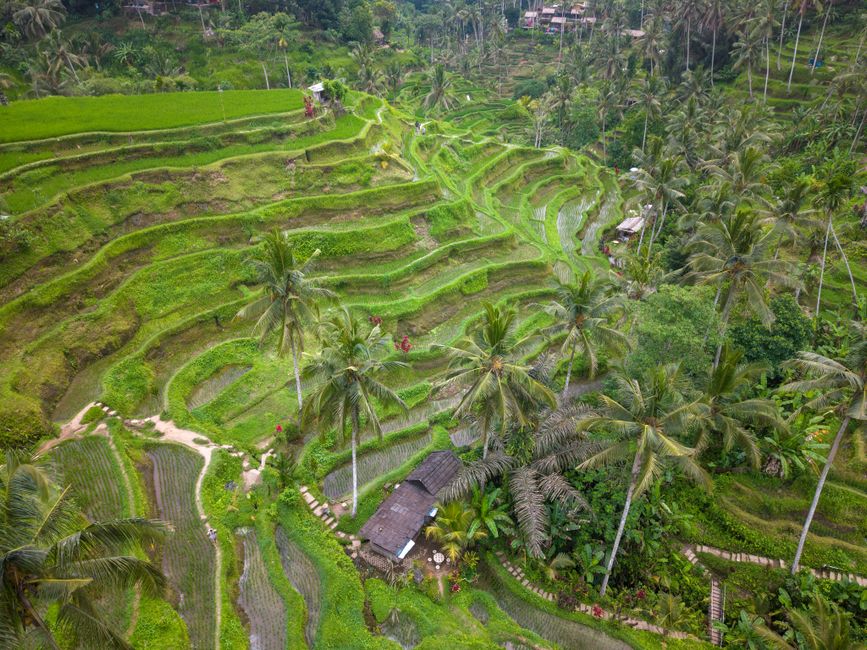
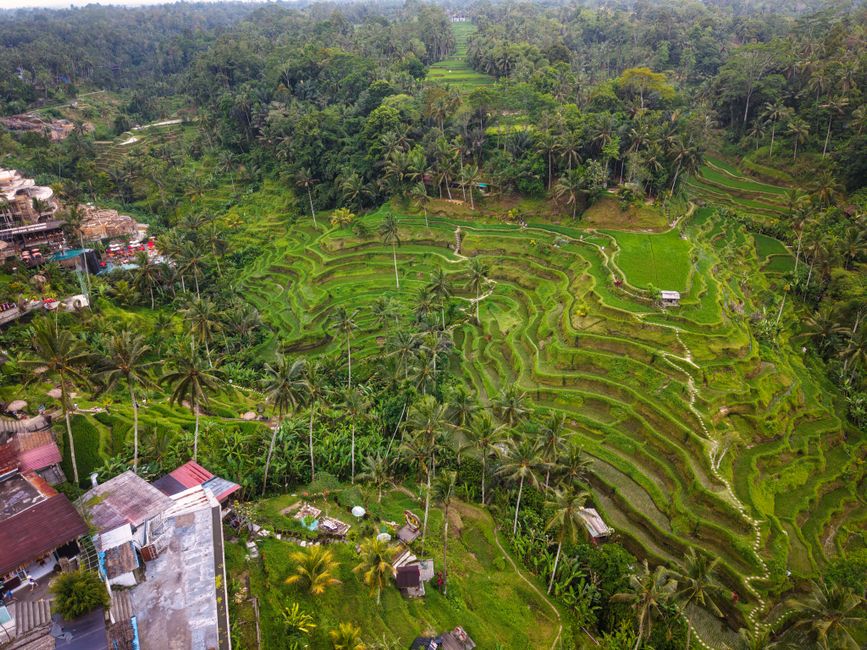
Tegallalang Rice Terrace is the poster child of Ubud's agricultural beauty, its cascading layers of green forming a hypnotic pattern along a steep valley just 20 minutes north of town. For the best experience, arrive no later than 7:00 AM. At this hour, the morning mist still clings to the valley, the light is soft and diffused, and you'll share the paths with only a handful of other early risers and local farmers heading to work. By 9:30 AM, the sun becomes harsh and the main viewpoints fill up quickly with crowds, transforming the tranquil scene into a busy thoroughfare.
There are multiple entry points along the main road, each with a small donation box. Walk the narrow dirt paths that snake between the paddies, but be respectful—don't trample the rice plants or block farmers who are actively working. For that iconic wide-angle shot, head to one of the elevated wooden platforms at the southern end, where you can capture the full sweep of the terraces with coconut palms framing the edges. The famous "Bali Swing" installations are scattered throughout the valley, offering dramatic photo ops soaring over the fields, but expect to pay around 150,000 to 350,000 IDR depending on the height and dress rental. For a more grounded alternative, simple bamboo nests and heart-shaped frames are positioned for a small tip, giving you the terraced backdrop without the adrenaline rush. After your walk, stop at one of the small warungs overlooking the valley for a fresh coconut and a plate of nasi goreng—the view from a shady bamboo hut is as good as any fine-dining restaurant.
Chasing Waterfalls: Tegenungan, Kanto Lampo, and Tibumana
Ubud's waterfall circuit offers a refreshing escape from the tropical humidity, with each cascade possessing a distinct character. Tegenungan is the largest and most accessible, located just a 20-minute drive south of central Ubud. A well-paved path leads down to a powerful curtain of water plunging into a wide, shallow pool where you can swim. It's the busiest of the three, but the energy is lively, with cliffside cafes offering cold Bintang beers and panoramic views. The climb back up is steep, but the stairs are solid and shaded.
Kanto Lampo, near the village of Beng, is a hidden gem that's gained Instagram fame for its unique cascading formation. Water tumbles down a staggered wall of dark, jagged rocks, creating dozens of small, chattering streams rather than a single dramatic drop. You can carefully climb the rocks with the help of local guides who will show you the best positions for photos—they know exactly where the light hits and will even manage your phone camera to capture the perfect shot. A small tip of 20,000 to 50,000 IDR is a kind gesture for their assistance. Visit mid-morning when sunlight filters through the canopy, illuminating the water streaks against the dark stone.
Tibumana feels like a secret Eden. Accessed via a flat, palm-lined path through a quiet village, the waterfall emerges from a curved rock overhang into a serene, emerald pool. It's less powerful but infinitely more peaceful, perfect for a quiet swim surrounded by lush jungle foliage. The shallow, sandy entry makes it ideal for a gentle dip rather than a vigorous swim. A small bamboo bridge crosses the stream just before the falls, offering a lovely vantage point. Arrive before 10:00 AM to have the pool almost entirely to yourself, accompanied only by the sound of falling water and distant birdsong. The entrance fee for all three waterfalls is modest, typically 15,000 to 20,000 IDR, with scooter parking an additional 2,000 to 5,000 IDR.
Campuhan Ridge Walk: A Scenic Morning Trek
The Campuhan Ridge Walk is Ubud's easiest and most rewarding nature escape, right on the edge of town. Starting near the Ibah Hotel, a signed path leads you away from traffic and onto a paved track that rises between two lush river valleys. The walk is best tackled at sunrise, between 6:00 and 7:30 AM, when the air is cool and the golden light paints the waving elephant grass. The main section stretches for about two kilometers, a gentle uphill slope with panoramic views of dense jungle on one side and a deep gorge on the other.
You'll pass local artists sketching, joggers, and small kiosks selling young coconuts. There's very little shade, so an early start is essential to avoid the scorching midday sun. At the end of the paved path, you can continue down into the village of Bangkiang Sidem for a loop walk, or simply turn back and enjoy the same stunning views in reverse. The entire round trip takes about an hour at a leisurely pace, leaving you plenty of time to enjoy a post-walk breakfast at one of Ubud's excellent cafes.
Balinese Culture and Art: Workshops, Markets, and Traditional Performances in 2026
Ubud is the undisputed creative capital of Bali, a place where artistry isn't confined to galleries but woven into the fabric of daily life. The local saying goes that every Balinese is an artist, and after a few days here, you'll understand why. From the intricate stone carvings guarding family compounds to the colorful offerings crafted each morning, creativity is a form of devotion. This Ubud travel guide 2026 encourages you to move beyond passive observation and dive into hands-on workshops, vibrant market haggling, and mesmerizing evening performances that connect you directly to the island's soul.
Many workshops are family-run operations passed down through generations, located in the craft villages surrounding Ubud, such as Celuk for silver, Mas for woodcarving, and Batuan for painting. Booking directly with these families, often through your guesthouse or a quick online search, ensures your money goes straight into the local community. Prices are consistently reasonable, materials are included, and you'll leave with a self-made souvenir far more meaningful than anything off a shelf. Pair your creative mornings with cultural evenings—Ubud's performance calendar is packed nightly, offering a window into the epic Hindu narratives that shape Balinese identity.
Ubud Art Market and Local Crafts
The Ubud Art Market, located at the junction of Jalan Raya Ubud and Jalan Monkey Forest, is a sensory explosion of color, texture, and friendly bargaining. The market is split into two distinct sections: the western block facing the Puri Saren Royal Palace, which is the traditional market, and the eastern block, which houses the tourist-focused art stalls. For the best selection and a calmer experience, arrive right at opening time, around 8:00 AM. The morning light filtering through the stalls creates a beautiful atmosphere, and vendors are generally more open to offering a "morning price," a symbolic good-luck discount on the first sale of the day.
You'll find everything from hand-woven ikat textiles and batik fabrics to wooden Buddha statues, beaded bags, woven rattan hats, and silver jewelry. The key to a successful visit is polite, persistent bargaining. Start by offering about half the initial asking price, then meet somewhere in the middle with a smile—it's a social dance, not a confrontation. Having small bills in Indonesian Rupiah makes transactions smoother. Look closely for quality: hand-painted batik will have slight imperfections and dye bleed on the reverse side, while printed imitations look perfect and flat. Genuine silver from Celuk village should be stamped with a 925 hallmark. For a more curated, fixed-price shopping experience, explore the boutiques along Jalan Dewi Sita and Jalan Hanoman, where local designers showcase contemporary takes on traditional crafts, from minimalist linen clothing to modern rattan homeware. Don't overlook the small offerings baskets made of woven palm leaf—they're inexpensive, biodegradable, and make for a charming, authentic souvenir.
Silver-Making, Batik, and Cooking Classes
Hands-on workshops are one of the most rewarding ways to engage with Balinese culture. In the village of Celuk, a 15-minute drive south, family compounds open their doors for silver-smithing classes. Under patient guidance, you'll learn to shape, solder, and polish your own ring or pendant from sterling silver. The process takes about three hours, and you'll leave with a wearable, personalized piece that carries the energy of its creation. No prior experience is needed, and the artisans are wonderfully encouraging, often sharing stories of how they learned the craft from their grandparents.
Batik workshops offer a meditative creative session. Using a canting, a small copper tool filled with hot wax, you'll draw intricate patterns onto white cotton, then layer on vibrant dyes. The wax-resist technique means the areas covered in wax remain the original color, gradually revealing a complex design. Choose a simple motif like a frangipani flower or a traditional geometric pattern for your first attempt. The process is slow and deliberate, a perfect antidote to fast-paced travel. Finally, a Balinese cooking class is an essential sensory journey. Mornings typically begin with a guided tour of a local market to identify aromatic roots, spices, and unfamiliar tropical produce. Back in an open-air kitchen overlooking rice fields, you'll pound spices in a mortar, grate fresh coconut, and learn the alchemy of a proper bumbu Bali spice paste. Dishes usually include classics like sate lilit, pepes ikan, and black rice pudding, all of which you'll enjoy as a communal feast at the end.
Evening Dance Performances and Gamelan Music
As dusk settles over Ubud, the town transforms into an open-air theater. Nightly traditional dance performances are held at various temple courtyards and dedicated stages, with the most popular venues being the Ubud Palace and Pura Taman Saraswati. The shows typically begin at 7:30 PM and last around 90 minutes, with tickets sold at the entrance for roughly 100,000 IDR. Arrive 30 minutes early to secure a seat with a clear view, as the best spots fill up fast.
The Legong dance, characterized by precise finger movements, expressive eye glances, and elaborate gold costumes, is the most iconic. Dancers move with an otherworldly grace, their bodies bending in ways that seem to defy human anatomy, their faces shifting from serene to fierce in a heartbeat. The accompanying gamelan orchestra—a percussive ensemble of bronze gongs, metallophones, and drums—creates a shimmering, layered sound that rises and falls in dramatic waves. For a truly special experience, check the schedule for a Kecak fire dance, performed by a circle of shirtless men chanting "cak-cak-cak" in rhythmic unison, reenacting scenes from the Ramayana epic culminating in a dramatic fire-kicking finale. The hypnotic chanting, the swirling smoke, and the flickering torchlight create a primal, unforgettable atmosphere that connects you to centuries of storytelling tradition.
Ubud Food Scene 2026: Warungs, Vegan Cafes, and Fine Dining with a View
Ubud in 2026 continues to solidify its reputation as one of Southeast Asia’s most exciting food destinations. The culinary landscape has evolved beautifully, blending deeply traditional Balinese flavors with boundary-pushing plant-based innovation and world-class dining experiences that make the most of the surrounding jungle and rice terrace vistas. Whether you’re eating off a banana leaf in a family-run warung or sipping a turmeric-infused cocktail at a rooftop bar overlooking the Campuhan Ridge, the food scene here is now more diverse and refined than ever. This Ubud travel guide 2026 section takes you through the unmissable eats, from humble street food stalls to high-concept tasting menus.
Must-Try Local Dishes and Best Warungs
No visit to Ubud is complete without diving headfirst into Balinese cuisine at its source. The soul of the island’s food culture lives in its warungs—small, often family-owned eateries where recipes have been passed down through generations. In 2026, many of these spots have received subtle upgrades in ambiance, but the flavors remain stubbornly, gloriously authentic.
Start your culinary journey with Babi Guling, Bali’s famous spit-roasted suckling pig, stuffed with a fragrant paste of turmeric, lemongrass, coriander, and galangal. The skin is crackled to perfection, and the meat is impossibly tender. For the definitive experience, head to Warung Babi Guling Ibu Oka, which has expanded its seating area to accommodate growing crowds but still serves that iconic plate of pork, blood sausage, and crispy crackling. Arrive before noon to avoid missing out.
Equally essential is Bebek Betutu, a ceremonial dish of duck slow-cooked in a complex spice blend, wrapped in banana leaves, and buried in smoldering rice husks for hours. Bebek Tepi Sawah remains the go-to spot, now with an enhanced open-air dining pavilion overlooking rice fields. The duck arrives falling off the bone, accompanied by plecing kangkung (water spinach with chili sambal) and steamed rice.
For a truly local breakfast or lunch, seek out Nasi Campur at Warung Sari Bamboo, a humble spot just off Jalan Bisma. Their mixed rice plate changes daily but typically features shredded chicken, tempeh manis, sambal matah, and a hard-boiled egg with a runny yolk. The flavors are punchy, the price is astonishingly low, and the welcome from the elderly couple who run it feels like visiting grandparents.
Don’t overlook Sate Lilit, minced fish or chicken satay wrapped around lemongrass stalks and grilled over coconut husk charcoal. The smoky, aromatic result is best sampled at the night market near Ubud Palace, where stalls set up after sunset with billowing smoke and sizzling sounds. Grab a stick for a few thousand rupiah and eat it standing among locals.
A final unmissable dish is Lawar, a traditional mix of finely chopped vegetables, grated coconut, and minced meat, bound with rich spices and fresh blood in its most authentic form. The white version (without blood) is more accessible for first-timers. Warung Lawar Kuwir in the Gianyar area, a short scooter ride from central Ubud, specializes in this dish and remains one of the best-kept secrets in this Ubud travel guide 2026.
Ubud’s Vegan and Health Food Revolution
Ubud’s plant-based scene has matured significantly by 2026, moving beyond Instagram-friendly smoothie bowls into genuinely inventive culinary territory. The town now attracts vegan chefs from around the world who come to experiment with Indonesia’s extraordinary produce, from young coconut and jackfruit to lesser-known leaves and roots used in traditional healing.
Alchemy remains the anchor of the movement, but its new 2026 location has doubled in size, featuring a dedicated fermentation lab and a zero-waste market. Their build-your-own salad bar is still the draw, but don’t skip the live cashew cheese platter—it rivals dairy versions in complexity. Their raw pad thai, made with kelp noodles, tamarind sauce, and activated nuts, is a standout dish that even dedicated carnivores rave about.
A newer addition shaking up the scene is Rooted, a tiny cafe tucked down a lane in Penestanan. Their entirely plastic-free kitchen turns out jackfruit rendang that simmers for eight hours until it achieves the same rich, caramelized depth as the beef original. The tempeh reuben sandwich on house-baked rye is another revelation, proving that vegan comfort food has reached new heights in this Ubud travel guide 2026.
Zest, perched on the Penestanan hill with sweeping jungle views, continues to impress with its vibrant, mostly raw menu. The young coconut ceviche and the cashew-based tiramisu are essentials. They’ve also introduced a series of chef residencies, so the menu evolves seasonally with visiting talent from places like Copenhagen and Mexico City.
For a quick, affordable fix, the smoothie bowl carts that line Jalan Gootama have upped their game considerably. Look for the one painted turquoise, where the owner blends dragon fruit, mangosteen, and a secret mix of local greens into a thick, icy bowl topped with toasted coconut and bee pollen, all for under 30,000 rupiah. It’s a perfect post-yoga refresher that epitomizes Ubud’s health-conscious spirit.
Rooftop Bars and Romantic Dinner Spots
As dusk falls and the geckos begin their nightly chorus, Ubud’s elevated dining and drinking venues come alive. In 2026, several new rooftop concepts have joined the established favorites, offering crafted cocktails and candlelit dinners with views that stretch across the Tjampuhan Valley and beyond.
Kubu at Mandapa remains the pinnacle of romantic dining. These private bamboo cocoons perched over the Ayung River now feature a nine-course seasonal tasting menu by a chef who trained in San Sebastián. The sound of the river below, the flicker of hundreds of candles, and dishes like butter-poached lobster with Balinese vanilla beurre blanc make this the ultimate proposal spot. Reservations are essential weeks in advance.
For a more accessible but equally atmospheric evening, Arcadia opened in early 2026 on the rooftop of a new boutique hotel near the Blanco Museum. The infinity-edge bar overlooks dense tropical canopy, and their gin program is the best in town, featuring Indonesian craft distilleries and house-made tonics infused with torch ginger and kaffir lime. The small plates menu—think pork belly bao with sambal caramel and crispy soft-shell crab—is designed for sharing as the sun sets.
The Sayan House continues to draw crowds for its Japanese-Latin American fusion and that iconic valley-view terrace. Their rooftop bar extension, added this year, is adults-only after 7 PM and serves cocktails like the “Sayan Sunset,” blending arak, fresh passionfruit, and a chili-salt rim. The DJ sets on Friday nights lean toward deep house and Balearic beats, creating an unexpectedly sophisticated scene that this Ubud travel guide 2026 highly recommends for a date night.
If you prefer a quieter, more bohemian vibe, seek out the small rooftop at Lazy Cats Cafe. String lights, mismatched vintage furniture, and a view of the Campuhan Ridge make it an ideal spot for a low-key evening with organic wines and a mezze platter. It feels like a secret, even as Ubud grows around it.
Day Trips from Ubud: Exploring Beyond the Town in 2026
While Ubud itself could easily fill weeks of exploration, the surrounding regency offers some of Bali’s most profound experiences. In 2026, improved roads and a new fleet of electric shuttle services make day trips more comfortable and sustainable than ever. Whether you’re chasing sunrise above the clouds or walking through a village that feels frozen in time, these excursions add essential depth to your understanding of Balinese culture and landscape. This section of the Ubud travel guide 2026 covers two standout journeys that should be on every itinerary.
Mount Batur Sunrise Trek: Is It Worth It?
The Mount Batur sunrise trek remains one of Bali’s most iconic adventures, but in 2026 the experience has been refined and regulated to address overcrowding and environmental concerns. A new permit system caps daily climbers, and all guides must now be certified through a community cooperative that ensures fair wages and safety standards. So, is it still worth the 2 AM wake-up call?
Absolutely—if you know what to expect. The trek begins in complete darkness from the Toya Bungkah trailhead. The path is well-trodden but steep in sections, with loose volcanic scree near the summit. A decent fitness level is required, but the guides set a steady, manageable pace. The 2026 regulations mean smaller groups, so you’re no longer climbing in a conga line of hundreds. The quiet of the pre-dawn mountain, broken only by your footsteps and breathing, is now genuinely peaceful.
Reaching the summit just as the sky begins to pale over the caldera lake is a moment of pure magic. To the east, Mount Rinjani on Lombok is often visible as a distant silhouette. Your guide will prepare a simple breakfast of eggs steamed in volcanic vents, bananas, and hot tea—a gimmick that never gets old. The warmth of the steam against the cool mountain air, combined with the unfolding panorama, makes the early start feel like a bargain.
Honest advice from this Ubud travel guide 2026: the descent can be tough on knees, and the volcanic dust will coat everything you’re wearing. Don’t bring your best sneakers. The new hot springs facility at the base, Toya Devasya, has expanded significantly and now includes infinity pools overlooking the lake. A post-trek soak here, with a cold Bintang and the mountain you just climbed reflected in the water, is the perfect recovery ritual.
The trek is not for everyone. If you have knee issues or aren’t comfortable with steep, uneven terrain in low light, consider instead driving to the Kintamani viewpoint cafes, which have upped their game considerably. Several now offer glass-fronted terraces where you can watch the sunrise over the volcano with a proper latte in hand, no hiking required. But for those willing to put in the effort, the Mount Batur sunrise trek delivers an experience that lingers long after the muscle soreness fades.
Hidden Gems: Sidemen Valley and Penglipuran Village
East of Ubud lies a Bali that feels decades removed from the bustling center. The Sidemen Valley, a lush tapestry of rice terraces, weaving villages, and gentle hills, has been called “Ubud thirty years ago,” and in 2026 it still holds that magic. The drive itself, winding through increasingly verdant countryside, is part of the reward.
Sidemen’s beauty lies in its scale and stillness. The terraces here are narrower and more intimate than the famous Tegallalang fields, and you can walk through them for hours without encountering another traveler. Start at the village center and follow the small paths that branch out between the rice paddies. Local farmers will smile and greet you; some might invite you to watch the intricate process of songket weaving in their homes. This is not a performance for tourists—it is daily life, carried out as it has been for generations.
For lunch, Warung Maha Neka offers a simple but perfect nasi campur on a terrace that overlooks a valley so green it almost hurts your eyes. The owner grows most of the vegetables himself and will happily explain the medicinal properties of the jamu tonic he serves with every meal. After eating, consider a gentle rafting trip on the Unda River, which is far calmer than the Ayung and offers a serene perspective on the valley’s hidden corners.
About an hour’s drive from Sidemen, Penglipuran Village provides a completely different but equally enriching experience. This highland village in the Bangli regency is renowned as one of the cleanest and most beautifully preserved traditional settlements in Bali. Its single main street stretches uphill, lined with identical traditional gateways that lead into family compounds. The uniformity is intentional and reflects centuries-old spatial planning based on the Tri Hita Karana philosophy of balance.
In 2026, Penglipuran has introduced a thoughtful visitor management system. Entry tickets include a local guide who explains the architecture, the bamboo forest at the top of the village, and the community rules that keep the village immaculate. The bamboo forest walk is particularly lovely in the late afternoon when slanted light filters through the green. Cars are banned from the village center, so the air is clean and the only sounds are roosters, gamelan practice drifting from a pavilion, and the rustle of bamboo.
Combining Sidemen and Penglipuran in a single day trip works well if you leave Ubud by 7 AM. Drive first to Sidemen, spend the morning and early afternoon walking through the terraces and having lunch, then head to Penglipuran in the mid-afternoon. You’ll return to Ubud by early evening with a deeper appreciation for the rural soul that pulses beneath Bali’s surface. This Ubud travel guide 2026 considers this day trip the most culturally rewarding excursion available from town.
Packing for Paradise: A Final Wrap-Up for Your 2026 Ubud Journey
As your departure date approaches and the anticipation builds, packing thoughtfully for Ubud in 2026 means balancing the practical with the spiritual—much like the town itself. The climate remains reliably tropical year-round, with temperatures hovering between 24 and 30 degrees Celsius and humidity that makes lightweight, breathable fabrics your best friend. But Ubud is not just a beach destination, and your suitcase should reflect the unique rhythm of a place where mornings might involve a temple ceremony, afternoons a rice terrace trek, and evenings a candlelit dinner overlooking a jungle ravine.
Start with the essentials: loose linen trousers and cotton shirts that cover your shoulders and knees, not just for sun protection but for temple visits where modest dress is mandatory. A lightweight sarong can be purchased anywhere in Ubud for a few dollars and is indispensable for impromptu temple stops, but bringing your own saves the scramble. Footwear should prioritize comfort and versatility—a sturdy pair of sandals that can handle uneven sidewalks and muddy paths, plus one pair of closed-toe shoes for the Mount Batur trek if that adventure made it onto your itinerary.
Pack a reusable water bottle immediately. In 2026, Ubud has made significant strides in reducing single-use plastic, and most cafes and accommodations offer free filtered water refills. A compact umbrella or lightweight rain jacket is non-negotiable, as tropical downpours can arrive suddenly even during the dry season. Beyond the physical items, leave a little extra room in your luggage—the art markets and artisan boutiques of Ubud create a gravitational pull toward hand-carved wooden pieces, handwoven textiles, and ceramic ware that you will want to bring home.
Perhaps the most important thing to pack is an open mind. Ubud in 2026 is a place of layered contradictions—ancient and modern, serene and buzzing, deeply traditional and boldly innovative. It rewards travelers who arrive without rigid expectations, who are willing to wake before dawn for a volcano sunrise, who say yes to a cooking class invitation from a local family, who sit quietly in a temple courtyard and simply breathe. The cultural heart of Bali beats strongly here, and this Ubud travel guide 2026 has only scratched the surface of what awaits you. The rest is yours to discover, one step, one taste, and one sunrise at a time.
Gear for this trip
As an Amazon Associate I earn from qualifying purchases.


No comments:
Post a Comment