Chasing the Eternal Day: Why Norway's Midnight Sun is the Most Surreal Journey of Your Life
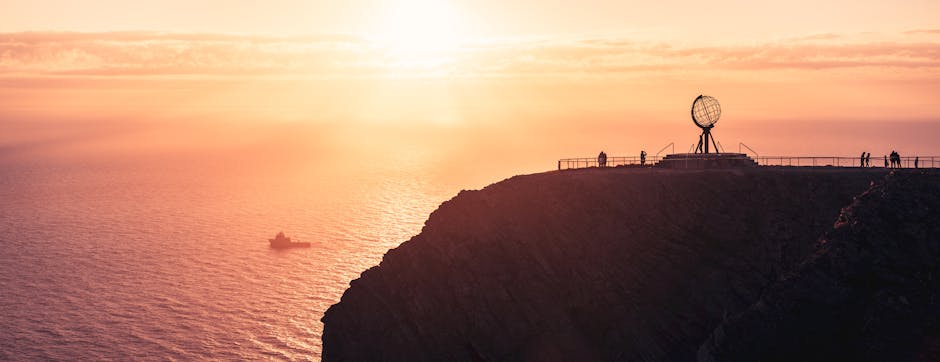
The sun dips to the horizon and then rises again — a phenomenon that defies logic and rewires your sense of time.
✈️ Best time to visit: Late May to mid-July (peak sun: June 12–July 1 at North Cape)
💰 Estimated budget: $250–$450 per day (mid-range: accommodation $150, food $80, transport/activities $120)
⏱️ How long to spend: Minimum 10 days to see Svalbard, North Cape, and Lofoten properly
🎯 Difficulty level: Moderate (remote logistics, weather variability, but no technical skill required)
📍 Recommended season: Summer only (June–August for travel ease; May–July for true midnight sun)
👥 Best for: Solos seeking solitude, adventurous couples, photographers, and families with older kids who love nature
Introduction
I remember the exact moment my internal clock broke. It was 1:47 AM in late June, and I was standing on a pebbled beach in the Lofoten Islands, squinting at a sun that hung stubbornly above the horizon like a golden dinner plate someone forgot to put away. A group of teenagers was playing volleyball nearby — at two in the morning. A man fly-fished in the shallows. The local bakery had just reopened after a two-hour "night" closure. I looked at my watch, then at the fiery sky, then back at my watch. Nothing computed.
This is the illusion of the midnight sun: a world where day never concedes to night, where your body learns to sleep by curtain and instinct, and where the word "bedtime" becomes a suggestion rather than a rule. I've traveled to over forty countries, but nothing — not the deserts of Namibia, not the temples of Kyoto — prepared me for the disorienting beauty of perpetual daylight.
I'm not a professional astronomer or a Norwegian native, but I've spent three consecutive summers chasing the midnight sun across Norway's most iconic latitudes: from the Arctic wilderness of Svalbard to the dramatic cliff of North Cape, and down through the wild, jagged spine of the Lofoten Islands. This article draws on those trips — plus dozens of conversations with local guides, fishermen, and hotel owners — to give you an honest, practical, and deeply personal guide. You'll learn not just where to go, but how to feel the eternal day, what it costs, and why it might just change how you think about time itself.
The Essentials at a Glance
- 🌞 The sun doesn't set for weeks on end — above the Arctic Circle, you get 24-hour daylight from mid-May to late July. It's not a gimmick; it's a disorienting, magical reality.
- 🗺️ Three unique destinations, three different experiences — Svalbard is raw polar wilderness, North Cape is dramatic and symbolic, Lofoten offers dramatic mountains and fishing villages. Don't try to do all three in a week.
- ☁️ Weather is the wild card — even in peak season, clouds can hide the sun. Choose locations with lower cloud cover probability (eastern Finnmark and Lofoten's inner fjords are better bets).
- 💤 Bring a quality sleep mask and blackout curtains — locals use heavy-duty curtains for a reason. Your hotel might not have them. I learned this the hard way after three sleepless nights.
The Complete Guide
Why This Matters / Why You Should Go
The midnight sun isn't just a photo op. It's an assault on your circadian rhythm in the best possible way. Most travel destinations offer you sights; this one offers you a fundamentally different relationship with time. I've hiked at midnight without a headlamp, read a book outdoors at 2 AM, and eaten a picnic dinner while the sun traced a lazy circle overhead. It changes how you plan your day: you'll find yourself napping at 4 PM and kayaking at 11 PM.
This journey is for anyone who has ever felt trapped by the 9-to-5 schedule, who wants to feel small in a big landscape, or who is fascinated by the extremes of our planet. It's not for anyone who needs rigid schedules, who dislikes cold weather (even summer can be chilly), or who expects five-star luxury in remote areas. The Arctic demands flexibility, but rewards it with moments you cannot replicate elsewhere — like watching a pod of orcas glide past under a sun that never sets, or feeling the strange peace of a truly silent 3 AM.
When to Visit (Seasonal Guide)
Best months for midnight sun: May 20 to July 20 is the golden window. The sun is above the horizon 24/7 north of the Arctic Circle, with peak intensity around the summer solstice (June 20–22).
Weather & crowds: June is the sweet spot: longer days (obviously), temperatures around 8–15°C (46–59°F), and crowds that are present but manageable. July is warmer but rainier in Lofoten, and North Cape gets foggy. August has more crowds but full daylight fades by mid-month in mainland Norway.
Pros/Cons per season:
- Late May–early June: Fewer tourists, snow still on peaks in Lofoten, Svalbard has best wildlife viewing (polar bears hunting on sea ice). But some mountain hikes are inaccessible.
- Late June–mid-July: Highest sun, longest days, all routes open. But accommodation is expensive and books months ahead. Bring patience for crowds at North Cape.
- Late July–August: Warmer weather (up to 20°C in Lofoten), berries ripen, lighter crowds after mid-August. But midnight sun weakens — by August 10, the sun sets briefly in southern Lofoten.
Budget Breakdown
Accommodation: In Lofoten, a basic cabin (Rorbu) in June runs $180–$250/night mid-range. Budget options (hostels or camping) start at $50–$80. High-end hotels in Svolvær cost $350+. In Svalbard, options are limited: a mid-range guesthouse in Longyearbyen is $200–$300/night. North Cape area (Honningsvåg) is slightly cheaper: $120–$200 for a decent hotel room. Pro: book six months ahead for Lofoten; three months for Svalbard.
Food: Groceries are expensive (a loaf of bread: $5–$7). A café lunch costs $18–$25; dinner at a mid-range restaurant, $40–$60 with a drink. I saved $30/day by buying makrel i tomat (tinned mackerel in tomato sauce) and flatbread from supermarkets — a classic Norwegian hiker's meal.
Activities & transport: Car rental in Lofoten: $80–$130/day. Svalbard tours (boat, glacier walking): $100–$250 per activity. North Cape entrance: $35. Ferry between Bodø and Lofoten: $60 per person. Daily total for a mid-range traveler: $250–$450. Budget tip: camp (free or $15 in designated sites) and cook all meals — get daily costs down to $100–$150.
Getting There & Getting Around
Svalbard: Fly from Oslo to Longyearbyen (3 hours, direct April–September). SAS and Norwegian operate year-round. From the airport, everything is walkable or a short taxi ($15–$20). To see the midnight sun away from town, book a guided boat tour (prices: $120–$250 for 4–6 hours). Important: Svalbard has polar bears — you cannot walk outside the settlement without a guide and rifle. This is not a suggestion; it's the law.
North Cape: Fly from Oslo to Alta or Lakselv, then drive 2–3 hours north. Alternatively, fly to Honningsvåg (direct from Tromsø in summer). From Honningsvåg, it's a 35 km bus or drive to the North Cape plateau. Parking is free at the visitor center. Pro tip: arrive after 10 PM to see the sun at its lowest — and bring a thermos of hot chocolate; it's windy even in July.
Lofoten: Fly into Leknes or Svolvær (from Oslo via Bodø), or take the ferry from Bodø (3.5 hours, $60–$90 per person with vehicle). Renting a car is by far the best way to explore — the islands are long and narrow, and buses are infrequent. I used Enterprise in Svolvær and paid $105/day in June for a small SUV. Road conditions are good on main roads; expect occasional sheep crossings and single-lane tunnels.
Top Recommendations / Must-Do Activities
1. Kayak at midnight in Lofoten (Reinefjorden): I joined a guided midnight sun kayak tour with NordNorsk Rent from Reine. We launched at 10:30 PM under a clear sky. The water was glassy, reflecting the granite peaks like a mirror. Our guide, a local fisherman's daughter, pointed out sea eagles and told stories of the old cod fishing days. The sun traced a golden arc just above the mountains. Total time: 3 hours. Cost: $95 per person. Booking essential — only 8 spots per tour. Insider tip: the first week of July has the highest sun angle; kayaking feels surreal.
2. Watch the sun circle from North Cape plateau: The sheer cliff of North Cape (Magerøya) is the most famous spot, and yes, it's touristy (large parking lot, souvenir shop, cafe). But standing on that 307-meter precipice, watching the sun skim the Arctic Ocean without ever touching it, is genuinely moving. I went on June 21, arriving at 11:30 PM. The crowds had thinned (most day-trippers left by 6 PM). I stayed until 2 AM as the sun completed its lazy circle. Downside: fog can obscure the view — check the live webcam before driving up.
3. Hike to a glacier in Svalbard under the midnight sun: On my third day in Longyearbyen, I booked a half-day glacier walk with Better Moment. We drove 20 minutes from town, then hiked across moraine to the edge of the Larsbreen glacier. Our guide, armed with a flare gun, taught us how to wear crampons. At 11 PM, we stood on ancient ice under a sun that seemed frozen in place. The silence was absolute except for the occasional crack of the glacier. Cost: $180. Warning: you must join a guided group — solo hiking is banned due to polar bears.
4. Drive the E10 through Lofoten at "night": The 230 km road from Fiskebøl to Å is one of the world's most scenic stretches. I left my cabin in Hamnøy at 1 AM and drove with zero traffic, the sun casting long shadows on snow-capped peaks. I stopped at Ramberg Beach (white sand, turquoise water — looks like the Caribbean in June) and the fishing village of Å. Insider tip: bring a tripod for long-exposure photos; the low-angle light is golden and lasts for hours.
5. Take a rib boat safari from Tromsø (bonus stop): Though not strictly a midnight sun destination (Tromsø has 24-hour daylight June–July), a high-speed boat tour through the fjords is unforgettable. I went with Tromsø Outdoor — they offer midnight sun tours from late May to July. Cost: $120 for 3 hours. We saw seals, porpoises, and a white-tailed eagle. The boat has heated cabins for when the wind bites. Why include this? Many travelers miss Tromsø as a stopover, but it's the gateway to the region and has excellent infrastructure.
Traveler's Pro Tips
1. Sleep mask is non-negotiable: Even with blackout curtains, early morning light seeps through. I use the Manty Sleep Mask — shaped like a dome so it doesn't touch your eyelids. Without it, I woke up at 3 AM thinking it was noon. Locals use foil-backed curtains; ask your hotel if they have them.
2. Shift your schedule to match the sun: Locals might eat dinner at 9 PM and hike at 11. I found my natural rhythm settled into a 4 AM–12 PM sleep window, then I was awake for the "golden" low-angle light (11 PM–2 AM). Don't fight the sun; let it reshape your day.
3. Book everything early — especially Lofoten accommodation: I made the mistake of trying to book a cabin in Reine in April for July — only one room was left, at $350/night. By February, many mid-range options are gone. Use Airbnb and Norway Excursions for guided tours.
4. Pack for four seasons in one day: I wore thermal layers, a fleece, a windproof jacket, and had a hat/gloves in my daypack even in June. In Svalbard, the temperature dropped to 2°C with a biting wind during a boat tour. Sunscreen is also essential — the sun's UV rays are strong when it's low for hours.
5. Download offline maps and apps: Cell coverage is good in towns but spotty on mountain roads. I used Norgeskart (offline topographic maps) and the Yr.no weather app (hyperlocal forecasts, accurate to the hour).
Common Mistakes to Avoid
1. Assuming the sun will be visible every night: My first trip to Lofoten, I was devastated when clouds blocked the sun on my "midnight sun kayak" tour. We saw a faint glow behind cloud cover, but no visible disk. How to avoid: check the cloud cover forecast on Yr.no. If it's overcast, consider an inland location like the mountains behind Svolvær (which can be above the clouds). Alternatively, have a backup indoor activity (museums, saunas) for cloudy nights.
2. Underestimating the need for a car in Lofoten: I met travelers relying on public buses who spent hours waiting. Bus services are limited to main routes and don't run frequently on weekends. Fix: rent a car from Bodø or Svolvær. If you can't drive, join a multi-day minibus tour (e.g., Lofoten.info has 3-day packages).
3. Forgetting that the sun stays low in Svalbard: In late June in Longyearbyen, the sun circles about 12 degrees above the horizon — it never gets high like in Lofoten. This means long, golden shadows but also colder temperatures. Consequence: I mistakenly packed only summer clothes. Bring a heavy jacket and thermal layers even in July.
4. Not planning for polar bear safety in Svalbard: A solo hiker I met thought he could "just stay on the road" outside Longyearbyen. He was stopped by the Governor's office and fined $500. Rule: you need a licensed guide with a large-caliber rifle outside the settlement limits. Tours are mandatory, and guides are wonderful — they're better than your own instincts.
Your Travel Checklist
Documents: Valid passport (6 months+), travel insurance (covers emergency evacuation — essential for Svalbard), driver's license with international permit for Norway.
Packing (summer): Thermal base layers, fleece jacket, windproof/waterproof shell, warm hat and gloves, sturdy hiking boots, sleep mask (vital), high-SPF sunscreen, sunglasses (polarized), reusable water bottle, power bank for phone/camera.
Research: Read the Visit Norway midnight sun page for opening dates of attractions. Check local bus schedules via Fram MR for Lofoten. Monitor Septentrio for North Cape road conditions.
Bookings: Flights (Oslo–Longyearbyen, Oslo–Leknes), accommodation (book by February for July travel), guided tours (kayak, glacier walk, rib boat), car rental (reserve with free cancellation).
Health & safety: Pack motion sickness pills for boat tours (waves can be rough). Bring first aid kit with blister plasters (hiking socks aren't enough). Ensure travel insurance covers polar bear territory (most standard policies exclude Svalbard).
Local currency & apps: Norwegian krone (NOK); cards are accepted everywhere (Apple Pay common). Download: Yr.no (weather), Norgeskart (offline maps), Entur (public transport), and Ticketmaster for ferry tickets.
Traveler FAQ
Q: Can I see the midnight sun from Oslo or Bergen?
A: No — those cities are well south of the Arctic Circle and never experience 24-hour daylight. In Oslo, the sun sets around 10:30 PM in June and rises at 4 AM, so you get long twilight but not the true midnight sun. You need to be at 66.5° N or higher. The easiest accessible spot in mainland Norway is the North Cape at 71° N.
Q: Do I need a special camera to photograph the midnight sun?
A: Not at all! I used a standard mirrorless camera (Sony A6000) with a wide-angle lens (16-35mm). For phone users, use the manual mode, set ISO to 100–200, and adjust exposure compensation down by 0.7–1.0 stops to avoid blown-out highlights. The real secret is a tripod — even at midnight, the low light requires a 1/30 to 1/125 shutter speed depending on clouds.
Q: Is it dangerous to be outdoors at night with polar bears in Svalbard?
A: Only if you're outside the settlement without a guide. Within Longyearbyen, it's perfectly safe — guards patrol the perimeter, and the bears stay away from the town. I walked around the harbor at midnight without worry. For tours, guides carry rifles and flares. The risk is real but managed professionally.
Q: What happens if the sun is hidden by clouds — do I get a refund for tours?
A: Most reputable tour operators (like Better Moment and NordNorsk Rent) will still run the tour, as the experience of being on the water or glacier is worth it regardless. A few companies offer a partial refund if the tour is "sun-dependent," but most do not guarantee visibility. I asked about this: the policy is usually "tours run rain or shine." To maximize your chance, book early in your trip and be flexible — I waited two days for clear skies in Lofoten.
Q: Can I sleep well with 24-hour daylight?
A: It's challenging at first, but manageable with preparation. Your body will naturally feel tired after being awake for 16+ hours. Use a sleep mask (I recommend one that blocks all light — test yours at home first). Blackout curtains in hotels are common but not universal — I asked at check-in and was given a roll of aluminum foil to tape over the window. Also, melatonin supplements worked for me (10 mg, taken 30 minutes before desired bedtime).
Ready for Your Adventure?
I still think about that volleyball game at 2 AM in Lofoten. Those teenagers — both Norwegian and tourists — weren't doing anything remarkable. They were just living, laughing, and moving their bodies under a sun that refused to quit. That's the quiet miracle of the midnight sun: it gives you permission to exist outside the usual constraints of time. You don't have to hike every trail or spend every waking hour seeing sights. You can just be — reading a book on a midnight beach, eating a late snack on a cliff, or lying in the grass watching the light change.
Yes, it costs money. Yes, the weather can be fickle. Yes, you'll need to pack for cold and adjust your sleep. But I promise you this: standing under the Arctic sky at 12:12 AM, feeling warmth on your face while the world sleeps, you will understand why the ancient Sami people believed the sun was a spirit that never abandoned them. It's a feeling no photograph can capture and no word can fully convey. So book the flight, rent the car, and let the eternal sun pull you into its orbit. You'll never look at a clock the same way again.


No comments:
Post a Comment