
In This Article
- Why Spain Is a Motorcycle Paradise
- Essential Planning for Your Spanish Motorcycle Trip
- The Picos de Europa: Northern Spain's Crown Jewel
- Pyrenees Passes: Border-to-Border Thrills
- Andalusia: Sun, Curves, and White Villages
- The Mediterranean Coast: From Valencia to Alicante
- The Basque Country: Green Hills and Coastal Roads
- Final Thoughts: Your Spanish Motorcycle Adventure Awaits
Why Spain Is a Motorcycle Paradise
Spain consistently ranks among the top destinations for riders worldwide, and for good reason. The country offers an intoxicating mix of empty mountain switchbacks, sun-baked coastal highways, and medieval villages that seem designed specifically for two-wheeled exploration. Whether you are chasing alpine-style hairpins in the north or sweeping desert curves in the south, the best motorcycle roads in Spain deliver variety that is hard to match anywhere else in Europe.
The sheer scale of the country means you can spend weeks riding and still only scratch the surface. From the Pyrenees to Andalusia, the landscape shifts dramatically every few hundred kilometers, keeping every day on the saddle fresh and exciting. Add in affordable fuel, outstanding food, and a calendar packed with motorcycle events, and you have a recipe for the perfect riding holiday.
What truly sets Spain apart is the sense of freedom. Traffic density outside major cities is remarkably low, especially once you leave the coastal tourist strips. You can ride for hours through dramatic gorges and over high mountain passes without seeing more than a handful of cars. For riders who crave solitude and uninterrupted flow, this is pure gold.
Below, we break down exactly why Spain deserves its reputation as a two-wheeled utopia.
Diverse Landscapes and Climates
Spain is essentially several countries stitched into one. In the north, the Picos de Europa and Pyrenees offer lush green valleys, limestone peaks, and cool temperatures even in midsummer. These ranges feel almost Alpine, with tight hairpins and misty mornings that demand respect.
Head south to Andalusia and the scene transforms completely. Whitewashed villages cling to dry, ochre hillsides while the roads bake under intense sun. The Sierra Nevada provides high-altitude riding with snow-capped peaks visible in the distance, often while you are sweating in summer gear at lower elevations.
The Mediterranean coast adds yet another flavor, with cliff-hugging roads that dip and weave above turquoise water. Inland, the vast central plateau known as the Meseta offers endless horizons and fast, sweeping curves through golden wheat fields. This diversity means you can tailor a trip to match your preferred riding style and temperature tolerance.
Excellent Road Infrastructure
Spain's road network is among the best maintained in Europe. Even remote mountain routes typically feature smooth, well-engineered asphalt with clear signage and reliable guardrails. Potholes are rare, and roadworks are usually well marked well in advance.
The secondary road system, designated with prefixes like A, N, and C, is where the magic happens. These roads are built to modern standards but carry very little traffic, giving riders long stretches of pristine tarmac to enjoy. Many of the best motorcycle roads in Spain are these secondary routes rather than famous highways.
Fuel stations are reasonably frequent, though in the emptiest regions you should plan ahead and top up when you can. Mobile coverage is generally good, but carrying a paper map or offline GPS is wise for the deepest mountain valleys.
Motorcycle-Friendly Culture
Spaniards have a genuine affection for motorcycling. You will see riders everywhere, from commuters on scooters in Madrid to groups of adventure bikes in mountain towns. Drivers are generally aware of motorcycles and will often pull aside to let faster riders pass on twisty roads.
The country hosts numerous motorcycle events, including the MotoGP round at Jerez and countless local rallies. Bars and restaurants in riding hotspots are accustomed to bikers, and many hotels offer secure parking, tools, and even washing facilities specifically for motorcycles.
You will never feel like an outsider. Pull into any mountain village café and you are likely to find local riders eager to share route tips over a coffee. That welcoming atmosphere makes a Spanish motorcycle trip feel less like tourism and more like joining a community.
Essential Planning for Your Spanish Motorcycle Trip
A successful ride through Spain starts long before you twist the throttle. The country is large, the climate varies enormously by region and season, and the logistics of getting yourself and your bike there require some thought. Planning ahead ensures you spend your time enjoying the best motorcycle roads in Spain rather than dealing with avoidable headaches.
The good news is that Spain is a very accessible destination. International flights land in Madrid, Barcelona, Málaga, Bilbao, and Valencia, among others. From any of these hubs you can be on a stunning riding route within an hour. Ferries from the UK also arrive in Santander and Bilbao, making northern Spain particularly convenient for British riders.
Accommodation is plentiful and reasonably priced, especially outside peak summer beach season. Booking ahead is recommended in popular riding regions like the Picos de Europa and the Pyrenees, where small rural hotels fill up quickly in July and August. For the rest of the year, you can often book as you go.
Below are the key planning considerations to lock in before you depart.
Best Time to Ride
The ideal riding season depends heavily on which part of Spain you plan to explore. For northern regions like the Picos de Europa and the Pyrenees, late May through early October offers the most reliable weather. July and August are warm and mostly dry, but mountain passes can still surprise you with sudden fog or rain.
Southern Spain is best ridden in spring and autumn. From March to May and September to November, Andalusia enjoys pleasant temperatures in the low to mid 20s Celsius, perfect for full gear. Summer in the south is brutally hot, often exceeding 40°C, which becomes dangerous on exposed roads with no shade.
For a cross-country trip covering both north and south, aim for late May, June, or September. These shoulder months balance comfortable riding temperatures with fewer crowds and lower accommodation prices. Avoid August if you dislike heavy tourist traffic along the coasts.
Renting vs. Bringing Your Own Bike
Renting a motorcycle in Spain is straightforward and increasingly popular. Major rental companies operate from Madrid, Barcelona, Málaga, and Bilbao, offering everything from sport-tourers to full-dress adventure bikes. Renting eliminates ferry costs, tire wear on your own machine, and the stress of long transit days.
The downside is cost. A quality rental bike with full insurance can run from €100 to €180 per day, which adds up quickly on a two-week trip. Availability of specific models can also be limited during peak season, so book well in advance if you have your heart set on a particular bike.
Bringing your own bike makes sense for longer trips or if you are already based in Europe. Ferries from the UK to Santander or Bilbao take around 24 hours and can be surprisingly affordable when booked early. You get the comfort of riding a machine you know, set up exactly how you like it.
Documents and Legal Requirements
For EU riders, a valid passport or national ID card is sufficient for entry. Non-EU riders should check visa requirements for Spain well in advance. Your driving licence must include full motorcycle entitlement, and an International Driving Permit is recommended for non-EU licences.
You must carry your bike's registration document and proof of insurance at all times. A European Health Insurance Card or comprehensive travel insurance is strongly recommended, as medical care for accidents can be expensive without coverage. Some travel policies specifically exclude motorcycling above a certain engine size, so read the fine print.
Spanish law requires riders to wear a helmet at all times, and daytime running lights are mandatory. Carrying a reflective vest is required if you need to stop on the road. Blood alcohol limits are strict, and penalties for speeding can include on-the-spot fines, so ride responsibly.
The Picos de Europa: Northern Spain's Crown Jewel
The Picos de Europa is a limestone massif that rises abruptly from the Cantabrian coast, creating some of the most dramatic riding terrain in Europe. This compact national park straddles Asturias, Cantabria, and Castilla y León, and its roads deliver a nonstop sequence of gorges, high passes, and impossibly scenic valleys.
What makes this region so special for motorcyclists is the density of quality roads. Within a relatively small area you can string together days of world-class riding without ever retracing your steps. The mountains are steep, the tarmac is generally excellent, and the views around every corner demand frequent photo stops.
The Picos are best explored at a relaxed pace. This is not a place for chasing lap times. The roads are narrow in places, livestock can wander onto the tarmac, and low cloud often sits in the valleys. But for riders who appreciate raw natural beauty and technical riding, this is arguably the finest motorcycling destination in Spain.
Base yourself in towns like Cangas de Onís, Potes, or Arenas de Cabrales, all of which offer good accommodation and easy access to the best routes. Two standout rides define the region and should anchor any itinerary.
The AS-114 and AS-264 Loop
This loop is the perfect introduction to the Picos de Europa. Starting from Cangas de Onís or Arriondas, the AS-114 heads east along the southern edge of the range, tracing the course of the Sella River. The road is smooth and flowing, with long sweepers that let you build a nice rhythm while the peaks loom on your right.
At Panes, the route turns south onto the AS-264, which is where things get serious. The road climbs steeply into the heart of the mountains, tightening into a sequence of hairpin bends that demand full concentration. The scenery becomes increasingly wild, with jagged limestone towers rising straight from the valley floor.
One of the highlights is the Mirador del Naranjo de Bulnes viewpoint, where you can stop and gaze at the iconic Picu Urriellu peak. The parking area fills up in summer, but the view is worth the brief wait. From there, the descent back toward Arenas de Cabrales offers more technical corners and spectacular rock formations.
The full loop can be ridden comfortably in three to four hours with stops, making it an ideal half-day ride. Fuel is available in Cangas de Onís and Panes, but not in between, so start with a full tank. In spring, watch for gravel washed onto the road after heavy rain.
Riding the Desfiladero de la Hermida
The Desfiladero de la Hermida is a deep gorge carved by the Deva River, and the road that runs through it is simply unforgettable. The N-621 connects the coast near Panes with the mountain town of Potes, threading between sheer rock walls that rise hundreds of meters on either side.
What makes this road so memorable is the contrast between the narrow canyon and the wide, well-paved surface. The corners are fast and flowing, allowing you to carry speed through the gorge while the rock faces tower overhead. Sunlight only reaches the road for part of the day, so the temperature stays cool even in summer.
Traffic is moderate, especially on weekends when day-trippers from the coast come to see the gorge. Ride early in the morning to have it almost to yourself. The light at that hour is also incredible, with sunbeams cutting through the mist that often lingers in the canyon.
At the northern end, the town of Panes makes a good coffee stop. At the southern end, Potes is a charming medieval settlement with excellent restaurants and a relaxed atmosphere. The road continues beyond Potes toward Fuente Dé, where a cable car climbs to the high peaks, but the gorge itself is the main event and deserves a slow, deliberate pace.

Pyrenees Passes: Border-to-Border Thrills
The Spanish Pyrenees offer some of the best motorcycle roads in Spain, where jagged peaks rise above ribbon-like tarmac and every valley hides a new challenge. This mountain range forms a natural frontier with France, and the roads that crisscross it deliver a mix of high-altitude passes, glacial lakes, and medieval stone villages. Riders who tackle these routes in 2026 will find well-maintained surfaces, lighter traffic than the Alps, and a raw, untamed character that makes every kilometre feel earned.
Weather here changes fast. Even in July, you can start a ride in warm sunshine and hit fog or hail above 2,000 metres by mid-afternoon. Pack layers, check local forecasts, and plan fuel stops carefully, as petrol stations are sparse in the high mountains. The rewards, however, are immense: sweeping hairpins, cliff-hugging straights, and views that stretch all the way to the Atlantic on clear days.
N-260: The Legendary Pyrenean Axis
The N-260 is often called the best motorcycle road in Spain, and for good reason. Stretching from the Mediterranean coast near Portbou all the way to the Aragonese Pyrenees, this route threads together an astonishing variety of landscapes without ever losing its flow. The section between Sort and La Seu d'Urgell is particularly beloved, with fast sweepers along the Noguera Pallaresa river and tight switchbacks climbing toward the Port del Cantó.
Riders should treat the N-260 as a full-day adventure rather than a quick blast. Stop in the town of Sort, famous for its lottery shop and riverside cafés, before pressing west. The tarmac is grippy and well-engineered, but watch for gravel washed onto corners after heavy rain. In 2026, several sections have been resurfaced, making the ride smoother than ever.
- Fuel up in La Seu d'Urgell before heading west; the next reliable station is over 60 km away.
- Ride midweek to avoid weekend cyclists and motorhome traffic.
- The short detour to the Romanesque churches of the Vall de Boí is worth an hour of your time.
The N-260 rewards a relaxed pace. Aggressive riding invites fatigue on its endless sequence of corners, while a steady rhythm lets you savour the changing scenery. By late afternoon, the light turns golden against the limestone cliffs, and the road seems to glow. This is motorcycling as meditation, a route that stays in your memory long after the tyres cool.
Bielsa Tunnel and A-138: Hidden Gems
While the N-260 gets the headlines, the A-138 through the Bielsa Tunnel is a quieter masterpiece. This road climbs from the town of Aínsa, a medieval jewel with a stunning hilltop castle, before squeezing through narrow gorges and eventually burrowing under the France-Spain border. The tunnel itself is long and cool, a welcome break on hot summer days.
The southern approach is the real star. The canyon of the Río Cinca narrows dramatically, with rock walls towering overhead and the road carved into the cliffside. Traction is excellent, but the lack of barriers on some sections demands respect. After the tunnel, the French side drops rapidly through a series of linked hairpins that feel custom-built for motorcycles.
Plan to spend at least two hours exploring the side roads around Aínsa. The village square is perfect for a coffee stop, and the surrounding lanes offer gentle warm-up riding before the main event. Accommodation in Aínsa is plentiful, with secure parking at most rural guesthouses. For riders seeking solitude, this corner of the Pyrenees delivers some of the best motorcycle roads in Spain without the crowds.
Andalusia: Sun, Curves, and White Villages
Andalusia is Spain's deep south, a land of olive groves, dramatic gorges, and pueblos blancos clinging to hillsides. The riding here is warmer and drier than the Pyrenees, making it an ideal spring or autumn destination. The best motorcycle roads in Spain's southern region blend Moorish history with modern asphalt, creating rides that feel like journeys through time.
The Sierra de Grazalema and the Serranía de Ronda form the heart of Andalusia's riding country. Limestone peaks rise sharply from fertile valleys, and the roads connecting white villages twist relentlessly. Expect temperatures above 30°C in summer, so early starts are essential. Carry water, wear ventilated gear, and embrace the siesta rhythm of the region.
Ronda and the A-397: A Ride to Remember
The A-397 from Ronda to San Pedro de Alcántara is a legend among motorcyclists. This road drops nearly 700 metres in just over 40 kilometres, carving through the Sierra de las Nieves with a relentless series of sweeping bends and tight hairpins. The surface is superb, the sightlines are mostly clear, and the traffic is usually light enough to maintain a spirited pace.
Ronda itself is a must-see. The Puente Nuevo spans a 120-metre-deep gorge, and the views from the old town are unforgettable. Park your bike near the bullring, walk the clifftop paths, and enjoy a slow breakfast before tackling the A-397. The road is best ridden downhill toward the coast in the morning, when the sun is behind you and the tarmac is cool.
- Watch for cyclists on weekends; the A-397 is popular with road cyclists descending toward Marbella.
- Stop at the Mirador de las Aves viewpoint for a photo break with panoramic views.
- The petrol station at the Ronda end is your last reliable fuel stop before the coast.
The A-397 is not a road for first-time riders. Its gradient and corner density require smooth throttle control and disciplined braking. But for those with experience, it is pure joy. Every corner flows into the next, and the scent of pine and wild rosemary fills the air as you descend. This is one of the best motorcycle roads in Spain for pure riding satisfaction.
Sierra Nevada Loop: A-395 and Beyond
The loop around the Sierra Nevada massif offers a different flavour of Andalusian riding. The A-395 climbs from Granada toward the ski resort of Pradollano, gaining altitude rapidly through a series of open hairpins. On clear days, you can see the Mediterranean glinting in the distance while snow lingers on the peaks above.
Beyond the ski station, the road continues toward the Hoya de la Mora and offers views of Mulhacén, mainland Spain's highest peak. The descent toward the Alpujarras region is quieter, with narrow lanes winding through terraced hillsides and tiny villages where time seems to stand still. Stop in Trevélez, famous for its air-dried ham, and refuel both body and bike.
This loop works best as a half-day ride from Granada. The city itself is worth an extra day, with the Alhambra requiring advance booking. For riders who prefer cooler temperatures, the high-altitude sections provide welcome relief from the Andalusian heat. The combination of alpine scenery and Moorish architecture makes this route unique among the best motorcycle roads in Spain.
The Mediterranean Coast: From Valencia to Alicante
The coastline between Valencia and Alicante is often overlooked by motorcyclists rushing toward Andalusia or the Pyrenees. That is a mistake. Behind the beach resorts and apartment blocks lies a network of interior roads that rivals anything in the country. The best motorcycle roads in Spain's Levante region climb from orange groves into limestone mountains, offering sea views and empty tarmac.
The key is to leave the coast. The N-332 is congested and dull, but within fifteen minutes of heading inland, you find quiet lanes that twist through almond orchards and pine forests. The climate here is mild year-round, making it a perfect winter escape for northern European riders. Spring and autumn offer ideal temperatures, while summer mornings are pleasant before the midday heat arrives.
CV-35 and the Interior Twists
The CV-35 runs from Valencia toward the town of Llíria, but its real appeal lies beyond, where it sheds traffic and gains elevation. The road climbs steadily into the Sierra Calderona, a protected natural park of pine-covered hills and hidden valleys. The corners are fast and open at first, then tighten as the road narrows.
Riders can extend the route by turning toward Segorbe and the Sierra de Espadán. This area feels remote despite its proximity to the coast, with cork oak forests and abandoned hilltop castles. The tarmac is generally well-maintained, though some secondary lanes have loose gravel after storms. A midweek ride avoids the weekend cyclists who favour these climbs.
- Start early from Valencia to avoid city traffic and enjoy cooler air in the hills.
- Lunch in Segorbe offers hearty local stews and secure parking near the old town.
- Carry a light waterproof layer; mountain showers occur even in summer.
The CV-35 corridor proves that you do not need to travel far from a major city to find excellent riding. Within forty minutes of Valencia's urban sprawl, you are carving through forested mountains with no traffic in sight. This accessibility makes it a favourite for local riders and a pleasant surprise for visitors.
The Jalon Valley Circuit
The Jalon Valley, or Vall de Pop, sits inland from the coastal resorts of Calpe and Denia. The roads that encircle this valley are a motorcycle playground, with tight switchbacks climbing over ridgelines and fast sweepers running along the valley floor. The CV-749 from Jalon toward Parcent is particularly memorable, with a sequence of hairpins that demand full attention.
The valley is famous for its vineyards and almond blossoms, which paint the landscape white and pink in late winter. The village of Jalon hosts a weekly market and several biker-friendly cafés. From the top of the Coll de Rates, a favourite cycling climb, the views stretch to the Mediterranean and the massive rock of the Peñón de Ifach.
This circuit can be ridden in an hour, but most riders spend a full morning exploring the side roads and stopping for photos. The combination of sea views, mountain curves, and excellent local food makes it one of the best motorcycle roads in Spain for a relaxed yet engaging ride. Finish with a swim at Calpe before heading back to base.
The Basque Country: Green Hills and Coastal Roads
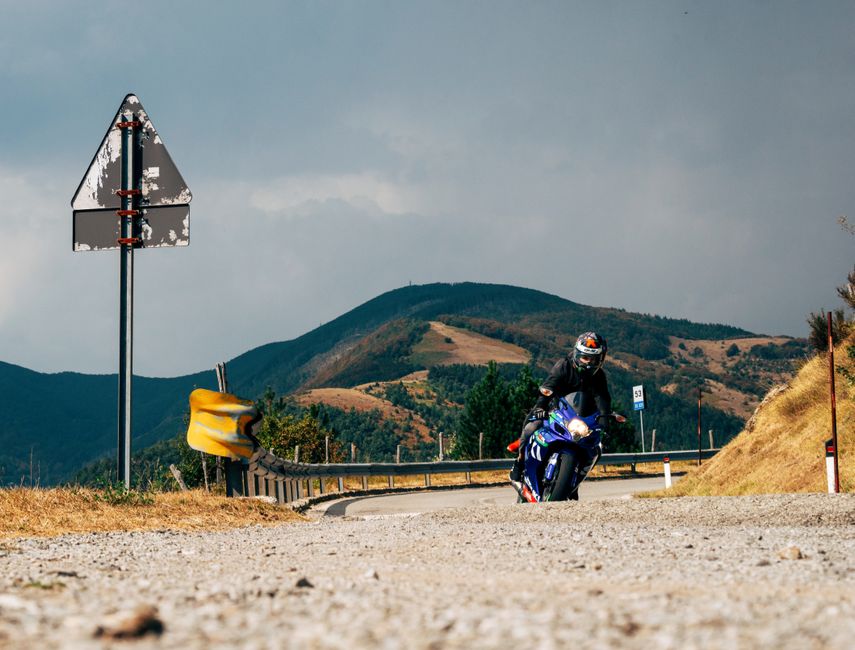
When riders think of Spain, they often picture the arid south. The Basque Country flips that script entirely. Here, the landscape is a lush patchwork of emerald hills, misty forests, and dramatic Atlantic cliffs. The roads are smooth, the food is world-class, and the riding feels distinctly different from anywhere else on the Iberian Peninsula. If you are hunting for some of the best motorcycle roads in Spain, this northern corner deserves a spot near the top of your list.
The climate is cooler and wetter than the south, so pack a waterproof layer even in summer. The payoff is a network of twisting secondary roads that snake through green valleys and along a coastline that feels raw and powerful. Traffic is generally light once you leave the main motorway, and the local drivers are used to two-wheeled traffic, especially on weekends when riding clubs from Bilbao and San Sebastián head for the hills.
Base yourself in Bilbao, San Sebastián, or the smaller town of Durango. Each offers easy access to the routes below, plus excellent pintxos bars for a post-ride refuel. The Basque Country is compact, so you can ride hard all day and still make it back in time for a long dinner.
One warning: the weather can change fast. Morning fog is common in the valleys, and rain can roll in off the Atlantic without much notice. Check the forecast for the specific mountain passes you plan to ride, not just the nearest city. The roads remain grippy in the wet, but visibility drops quickly on the higher sections.
The Flysch Route: N-634 and GI-3440
The Flysch Route is a coastal ride that feels like a secret. It runs between the towns of Zumaia and Deba, then continues toward Mutriku and Ondarroa. The name comes from the flysch rock formations, layered cliffs that rise straight out of the sea and look like pages in a stone book. Geologists come from all over the world to study them, but riders come for the road itself.
Start in Zumaia, where you can park briefly at the Ermita de San Telmo for a view over the famous flysch cliffs. From there, take the N-634 west. This section hugs the coast, rising and falling with the terrain. The road is narrow in places, with blind corners and sudden changes in camber. Ride with your head up and your pace measured. This is not a road for top-speed runs. It is a road for rhythm.
The real gem is the GI-3440, a small secondary road that peels off the N-634 and climbs into the hills above the sea. It is barely wide enough for two cars, and the surface is a patchwork of older asphalt and newer repairs. But the views are staggering. On a clear day, you can see the Bay of Biscay stretching to the horizon, with the green hills dropping sharply into the water.
Stop in Mutriku for a coffee. The old town is built into the hillside, and the harbor is one of the oldest in the Basque Country. From there, the road continues to Ondarroa, where tight switchbacks drop you back to sea level. The total distance is short, maybe forty kilometers, but you will want to ride it twice. The second pass always reveals something new.
Watch for cyclists on the GI-3440. It is a popular training climb, and they can appear suddenly around blind bends. Also be aware that the road surface can be damp even on sunny days, especially in the shaded sections near the cliffs. The combination of sea mist and cool air keeps the tarmac slick.
Urkiola and the Duranguesado Region
Inland from the coast, the Duranguesado region is a maze of mountain roads centered on the Urkiola Natural Park. The main draw is the BI-623, which climbs from Durango up to the Urkiola pass at over 700 meters. The road is smooth, wide enough for comfortable cornering, and offers a series of sweeping bends that build in intensity as you climb.
At the top, you will find the Sanctuary of Urkiola, a small church set against the rocky peaks of the Anboto and Mugarra mountains. It is a traditional stop for locals and a good place to stretch your legs. The views back down the valley toward Durango are excellent, and on clear days you can see as far as the coast.
From the pass, the road continues north toward Vitoria-Gasteiz or west toward the Arratia valley. Both directions are worth exploring. The BI-3513 toward Otxandio is particularly enjoyable, with fast sweepers and good sightlines. Traffic is minimal, and the road surface is well maintained.
For a more technical challenge, take the BI-633 toward Elgeta. This road is narrower and tighter, with a series of hairpins near the top. It is not long, but it demands full concentration. The village of Elgeta sits on a ridge with views over both the Deba and Ego valleys, making it a perfect turnaround point.
The whole Duranguesado area can be ridden in an afternoon, but it rewards a slower pace. Stop often, take in the green hillsides dotted with stone farmhouses, and enjoy the absence of heavy tourist traffic. This is a region made for motorcycling, and it quietly ranks among the best motorcycle roads in Spain for riders who prefer curves over crowds.
Final Thoughts: Your Spanish Motorcycle Adventure Awaits
Spain has always been a country made for two wheels. The sheer variety of landscapes, from the sun-baked curves of Andalusia to the misty green passes of the Basque Country, means you could spend a lifetime exploring and still find new roads. The routes covered in this guide are not just lines on a map. They are invitations to slow down, look around, and remember why you started riding in the first place.
What makes the best motorcycle roads in Spain so special is not just the tarmac. It is the way the country embraces riders. You will find biker-friendly hotels, restaurants that welcome dusty jackets and helmets, and local riders who will happily point you toward their favorite hidden stretch of asphalt. The culture around motorcycling here is warm and genuine, and that makes every trip feel personal.
Plan your days with flexibility. Spanish meal times are later than in many other countries, and mountain weather can shift quickly. Leave room in your schedule for an unplanned stop at a roadside venta, a detour up a promising-looking side road, or an extra hour nursing a coffee while you study the map. The best moments often happen when you are not rushing to the next checkpoint.
Whether you choose the dramatic heights of the Picos de Europa, the volcanic landscapes of the Canaries, or the green coastal folds of the north, you will find roads that test your skills and views that stay with you long after you park the bike. Spain does not demand that you ride fast. It simply asks that you show up, pay attention, and enjoy the journey.
Your next great ride is waiting. Pack your gear, check your tires, and point the front wheel toward Spain. The roads are ready, the food is unforgettable, and the adventure you have been dreaming about is closer than you think.
Gear for this trip
- Motorcycle Helmet
- Motorcycle Gloves
- Waterproof Motorcycle Jacket
- Motorcycle GPS Navigation
- Motorcycle Luggage
As an Amazon Associate I earn from qualifying purchases.


No comments:
Post a Comment