Photo by Mikhail Nilov via Pexels
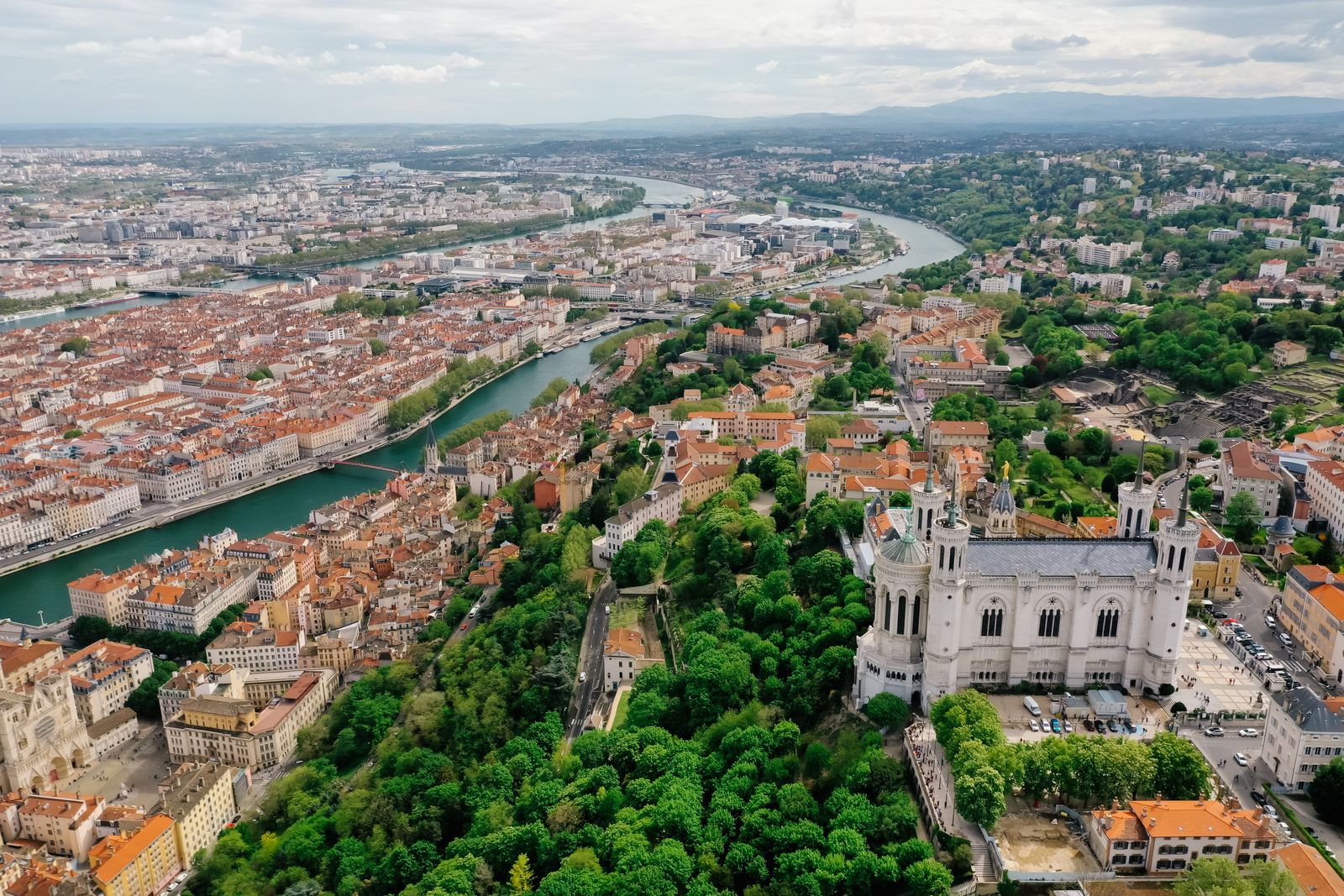
Lyon does not announce itself the way Paris or Nice does. There is no single postcard monument that sums up the city in one glance, and that is exactly why it rewards travelers who take the time to look closely. France's third-largest city sits at the confluence of two rivers, the Rhône and the Saône, and for two thousand years that position has made it a crossroads of trade, religion, industry, and ideas. The Romans built a capital here. Renaissance merchants built a banking hub here. Silk weavers built an entire hillside neighborhood here. And in a modest apartment building near the Presqu'île, the Lumière brothers invented cinema here. Lyon carries all of that history in its stone, and it wears it with unusual lightness.
What draws most visitors today is food. Lyon is widely considered the gastronomic capital of France, a claim backed by a dense concentration of Michelin-starred restaurants, a thriving tradition of bouchons lyonnais serving hearty, unpretentious classics, and covered markets where cheese, charcuterie, and produce are treated with genuine reverence. But Lyon is far more than a place to eat well, though you should absolutely plan to eat very well while you are here. The city's UNESCO World Heritage-listed historic center spans four distinct districts, each with its own character: the Renaissance lanes of Vieux Lyon, the grand 19th-century boulevards of the Presqu'île, the bohemian silk-weaving slopes of Croix-Rousse, and the Roman ruins crowning Fourvière hill.
Lyon also functions as one of the most convenient home bases in France. It sits roughly two hours from Paris by high-speed train, an hour or so from the Alps, and within easy striking distance of the Beaujolais and Rhône wine regions, the medieval village of Pérouges, and the Roman city of Vienne. The city's public transportation network, including a functicular railway up to Fourvière, makes getting around effortless even for a short visit. Add a pedestrian-friendly riverside setting, a lively arts and puppetry tradition, and one of the best light festivals in Europe each December, and you have a city that consistently surprises visitors who expected a quiet stopover and instead find themselves wanting to stay another week. This guide walks through everything worth knowing before you go: when to visit, what to see, where to eat, where to sleep, and how to structure your days so you leave having tasted, walked, and understood the city properly rather than just passed through it.
Quick Facts & Best Time to Visit
Lyon sits in east-central France, in the Auvergne-Rhône-Alpes region, roughly 470 kilometers southeast of Paris and 280 kilometers north of Marseille. The local currency is the euro, and the primary language is French; English is spoken at most hotels, major museums, and central restaurants, though a few polite French phrases go a long way, especially in traditional bouchons. Citizens of the United States, Canada, the United Kingdom, Australia, and most of the European Economic Area do not need a visa for stays under 90 days, but non-EU travelers should check current Schengen entry requirements before departure, including the ETIAS authorization that is being phased in for visa-exempt visitors to the Schengen Area.
Lyon has a semi-continental climate with four distinct seasons. Late spring, from May through June, brings mild temperatures, blooming parks, and fewer crowds than peak summer. Summer, particularly July and August, can be genuinely hot, with highs regularly above 30°C (86°F), and many small family-run bouchons close for a few weeks of vacation in August, so check opening hours if you are visiting a specific restaurant. Early autumn, September into October, is arguably the sweet spot: warm days, cool evenings, grape harvest season in nearby Beaujolais, and a return of restaurants to full operating hours. Winter is cold and often gray, with temperatures hovering near freezing, but early December brings the spectacular Fête des Lumières (Festival of Lights), when the entire city becomes an outdoor light-art installation and hotel rooms should be booked well in advance.
Getting to Lyon is straightforward. Lyon-Saint Exupéry Airport, about 25 minutes east of the city center, receives flights from major European hubs and a handful of long-haul routes, and connects to the city via the Rhônexpress tram. Many travelers instead arrive by TGV high-speed train into Gare de Lyon Part-Dieu or Gare de Lyon Perrache, with Paris just under two hours away and Marseille around 100 minutes. Once in the city, Lyon's public transit network, run by TCL, combines two metro lines relevant to visitors (A and D primarily), trams, buses, and the funicular railways that climb Fourvière hill. A multi-day Lyon City Card is worth considering if you plan to visit several museums, as it bundles transit with free entry to attractions like the Gallo-Roman museum and Lumière museum. The historic center is compact and highly walkable, and many visitors find they use transit mainly to cross the rivers or reach Croix-Rousse and Fourvière without climbing.
Top Things to Do in Lyon
1. Explore the Basilica of Notre-Dame de Fourvière
Perched on Fourvière hill above the Saône, this extravagant 19th-century basilica is Lyon's most recognizable landmark and the best place to begin any visit. Built between 1872 and 1884 in a deliberately eclectic style mixing Romanesque-Byzantine influences, the interior is a riot of mosaics, gilding, and stained glass that feels almost baroque in its density of decoration, a striking contrast to the relatively plain exterior. The basilica was constructed as a votive offering after Lyon was spared from a cholera epidemic and Prussian occupation, and it remains a major pilgrimage site, especially around the Feast of the Immaculate Conception on December 8, which kicks off the Fête des Lumières. Climb (or take the elevator) up the observation terrace for one of the best panoramic views in France, stretching across Lyon's rooftops to the Alps and Mont Blanc on a clear day. Entry to the main basilica is free; a small fee applies for the rooftop terraces and crypt museum. Visit early morning or late afternoon to avoid tour bus crowds, and allow at least 90 minutes including the funicular ride up from Vieux Lyon's Saint-Jean station.
2. Wander the Traboules of Vieux Lyon
Vieux Lyon, the Renaissance quarter tucked between the Saône River and Fourvière hill, is one of the largest and best-preserved Renaissance districts in Europe, and its defining feature is the traboules: hidden passageways that cut through buildings and courtyards, originally used by silk workers to move fabric between workshops without exposure to the weather, and later by resistance fighters during World War II. Many traboules remain open to the public during daylight hours (respect the residential nature of these buildings and keep voices down), and the tourist office publishes a self-guided map highlighting the most impressive ones, including those on Rue du Boeuf and Rue Saint-Jean. Look for spiral staircases, hidden courtyards, and Renaissance facades as you go. Combine a traboule walk with a stroll past the Cathédrale Saint-Jean-Baptiste, whose 14th-century astronomical clock still chimes several times daily, and the picturesque Place du Change. Wear comfortable shoes, as the district's cobblestones and stairs are uneven, and consider booking a guided traboule tour if you want the full historical context rather than just the photo opportunities.
3. Visit the Gallo-Roman Ruins and Museum on Fourvière Hill
Long before it became a Christian pilgrimage site, Fourvière hill was Lugdunum, the capital of Roman Gaul, founded in 43 BCE. The archaeological park here preserves two ancient theaters: the Grand Théâtre, built around 15 BCE and still used today for summer concerts and the Nuits de Fourvière festival, and the smaller Odeon, once used for music and poetry performances. Both are free to visit and remarkably intact, with tiered stone seating you can actually sit on. Adjacent to the ruins, the Musée Gallo-Romain de Fourvière, built partially underground to preserve the archaeological site above it, houses an outstanding collection including Roman mosaics, the Claudian Tables (bronze tablets recording a speech by Emperor Claudius, a native of Lugdunum), and everyday objects from Roman Lyon. The museum's architecture alone, a spiraling descent carved into the hillside, is worth the visit. Budget about two hours for the ruins and museum combined, and check the summer festival calendar if you want to catch a concert in a two-thousand-year-old amphitheater.
4. Stroll Place Bellecour and the Presqu'île
Place Bellecour is one of the largest pedestrian squares in Europe and the geographic and social heart of the Presqu'île, the narrow peninsula between the Rhône and Saône rivers. A large equestrian statue of Louis XIV anchors the square, and it serves as a natural orientation point and meeting spot, plus the starting point for many walking tours. From here, wander north along Rue de la République and Rue du Président Édouard Herriot, Lyon's main shopping arteries, lined with everything from international chains to local boutiques and chocolatiers. The Presqu'île also holds Place des Terreaux, home to the ornate Bartholdi Fountain (designed by the sculptor of the Statue of Liberty) and the Hôtel de Ville, Lyon's city hall. This entire district rewards aimless wandering; side streets reveal small squares, fountains, and Belle Époque architecture at every turn, and it connects easily on foot to nearly every other major sight in central Lyon.
5. Tour the Musée des Beaux-Arts de Lyon
Housed in a former Benedictine abbey on Place des Terreaux, the Musée des Beaux-Arts is one of the largest and most significant art museums in France outside the Louvre, with collections spanning ancient Egyptian artifacts through Impressionist and modern painting. Highlights include works by Monet, Gauguin, Picasso, Rodin sculptures displayed in a peaceful cloistered garden, and a strong collection of French painting from the 17th through 19th centuries. The building itself, a former convent with elegant stone courtyards, is worth the visit independent of the art. Plan for two to three hours if you want to see the collection properly, and note the museum is closed on Tuesdays. The peaceful interior garden courtyard is a lovely, often overlooked spot to rest between galleries, and the museum café makes a pleasant lunch stop overlooking Place des Terreaux.
6. Climb Through Croix-Rousse, the Silk Weavers' Hill
Croix-Rousse rises steeply north of the Presqu'île and was once home to thousands of canuts, the silk weavers whose labor made Lyon the silk-weaving capital of Europe in the 19th century. The neighborhood retains its own network of traboules, distinct from those in Vieux Lyon, along with tall workshop buildings built with unusually high ceilings to accommodate the Jacquard looms. The Maison des Canuts offers demonstrations of traditional weaving techniques and explains the 1831 and 1834 canut revolts, early and significant workers' uprisings. Beyond the history, Croix-Rousse today is one of Lyon's most desirable residential neighborhoods, with a bohemian, village-like feel, independent boutiques, and the boisterous outdoor market along Boulevard de la Croix-Rousse, held most mornings and especially lively on Sundays. Climb the Montée de la Grande Côte staircase-street for a workout and a slice of local life, and reward yourself with a coffee at one of the neighborhood's many small cafés at the top.
7. Discover Cinema History at the Institut Lumière
Film buffs should not skip this one: the Lumière brothers, Auguste and Louis, invented the cinematograph and screened the world's first projected motion picture, "La Sortie de l'Usine Lumière à Lyon," in 1895, right here in Lyon. The family's beautiful Art Nouveau villa in the Monplaisir district has been converted into a museum tracing the birth of cinema, displaying original cameras and projectors, and screening early films including that very first one. The adjacent Hangar du Premier-Film, the actual factory building shown in that inaugural film, now hosts a repertory cinema showing classic and arthouse films year-round. The institute also runs the Lumière Film Festival each October, a major event drawing international directors and actors to honor the medium's origins. It is a short metro or tram ride from central Lyon, and film lovers should allow at least two hours to do the museum justice.
8. Shop and Browse the Halles de Lyon Paul Bocuse
Named for Lyon's most famous chef, this covered food market on Cours Lafayette is a temple to Lyonnais gastronomy and one of the best places in France to understand why the city's food reputation is so fiercely defended. Dozens of stalls sell farmhouse cheeses, charcuterie including Lyon's famous rosette and saucisson, fresh seafood, pastries, chocolates, and regional wines, and several counters double as small restaurants where you can sit for oysters, a glass of Beaujolais, and a plate of charcuterie any time of day. It gets busy on Saturday mornings, when locals do their weekend shopping, but that liveliness is part of the appeal. Come hungry, graze from stall to stall rather than committing to one meal, and pick up a wedge of Saint-Marcellin cheese or a bar of chocolate to take home. The market is open every day except Monday, with most vendors closing by early evening.
9. Relax in Parc de la Tête d'Or
One of the largest urban parks in France, Parc de la Tête d'Or sprawls across more than 100 hectares along the Rhône in the 6th arrondissement, and it is entirely free to enter. The park includes a large artificial lake with rowboat rentals, an excellent free zoo (one of the few free zoos remaining in Europe, home to giraffes, elephants, and big cats in relatively spacious enclosures), and a serious botanical garden with greenhouses, a rose garden holding over 100,000 rose bushes, and rotating horticultural displays. It is a favorite spot for joggers, picnicking families, and anyone needing a break from cobblestones and museums. Rent a bike from a Vélo'v station and circle the park's perimeter, or simply find a bench by the lake. The park is easily reached by tram from the Presqu'île and makes an ideal late-afternoon counterpoint to a morning of sightseeing.
10. Learn Lyon's Story at Musée Gadagne
Set inside a magnificent Renaissance mansion in Vieux Lyon, Musée Gadagne actually houses two distinct museums under one roof: the Musée d'Histoire de Lyon, tracing the city's development from Roman Lugdunum through its silk-weaving golden age to the present day, and the Musée des Arts de la Marionnette, a delightful and surprisingly comprehensive collection tracing puppet theater history, including Guignol, the beloved Lyonnais puppet character created by Laurent Mourguet in the early 19th century. The building's courtyards and gardens are worth exploring on their own, and the rooftop terrace offers lovely views over Vieux Lyon's tiled roofs toward Fourvière. Families with children in particular should not skip the puppetry collection, and Lyon still hosts small Guignol puppet shows around the city, a charming and distinctly local tradition worth catching if your schedule allows.
11. Cross the Rivers and Explore the Confluence District
At the southern tip of the Presqu'île, where the Rhône and Saône rivers actually meet, Lyon has built one of its most ambitious modern urban renewal projects. The Confluence district transformed a former industrial and rail yard into a striking contemporary neighborhood of bold architecture, anchored by the Musée des Confluences, an extraordinary science and anthropology museum housed in a deconstructivist building of crystal and cloud-like steel forms that has become an architectural icon in its own right. Inside, the permanent exhibitions range from the origins of the universe to human societies and biodiversity, presented with genuine curatorial ambition rather than gimmicks. Beyond the museum, the district has a large shopping center, riverside promenades, and public art, offering a striking contrast to the historic core just a short walk or tram ride north. Plan two to three hours for the museum, more if visiting with curious children, and enjoy the riverside walk back toward the Presqu'île at sunset.
12. Take a Boat Trip on the Rhône or Saône
Seeing Lyon from the water offers a genuinely different perspective on a city defined by its two rivers. Several companies operate scenic cruises departing from quays near Bellecour and the Confluence district, ranging from one-hour panoramic tours to longer lunch or dinner cruises with regional menus. A cruise is a relaxed way to appreciate how thoroughly Lyon's architecture and history are tied to its waterways, passing beneath a dozen bridges and offering unusual sightlines up toward Fourvière and through the Presqu'île. It is particularly worthwhile in the late afternoon or early evening, when the light on the water and riverside buildings is at its best, and it pairs naturally with a stroll along the Berges du Rhône, the redeveloped riverside promenade with cafés, floating gardens, and exercise equipment that has become one of the most popular public spaces in the city.
13. Sample Bouchon Culture in the Presqu'île and Vieux Lyon
A bouchon lyonnais is a specific institution: a small, informal, family-run restaurant serving generous portions of traditional Lyonnais cuisine, typically featuring offal, charcuterie, and rich sauces, at communal or closely packed tables with an unpretentious, often boisterous atmosphere. Look for the official "Les Authentiques Bouchons Lyonnais" plaque, a designation given to around twenty establishments that meet strict criteria for tradition and quality, to avoid tourist-trap imitations. Classic dishes to try include quenelle de brochet (a delicate pike dumpling in creamy sauce), andouillette (a strong-flavored sausage not for everyone), salade lyonnaise (frisée lettuce with bacon lardons and a poached egg), and tablier de sapin (breaded and grilled pork tripe). This is not fine dining in the delicate sense, and portions are large; come hungry, and consider sharing a starter. Reservations are strongly recommended, particularly for dinner, as the best-known bouchons fill up quickly with both locals and visitors.
14. Visit the Musée d'Art Contemporain de Lyon
Adjacent to Parc de la Tête d'Or, the Musée d'Art Contemporain (MAC Lyon) focuses exclusively on art created after 1960, with rotating exhibitions that often bring internationally significant contemporary artists to Lyon rather than maintaining a large permanent collection on display. The building itself, designed by Renzo Piano as part of the Cité Internationale complex, is a striking work of modern architecture in its own right, all glass and terracotta-colored panels along the Rhône. This is the place to come if the Renaissance and Roman history elsewhere in the city has you craving something contemporary, and the museum's programming tends to be genuinely adventurous rather than crowd-pleasing. Check current exhibitions before visiting, as the collection rotates significantly, and combine your visit with a walk through the adjacent park.
15. Catch a Performance at the Opéra de Lyon or Théâtre des Célestins
Lyon takes its performing arts seriously. The Opéra de Lyon, housed in a striking building on Place de la Comédie that combines a 19th-century neoclassical facade with a dramatic modern glass dome added in the 1990s, hosts an ambitious season of opera and ballet that regularly draws critical acclaim well beyond regional expectations. The Théâtre des Célestins, an ornate 19th-century theater near Place Bellecour, stages a strong program of classic and contemporary French theater. Even if a full performance does not fit your itinerary or your French is not up to following dialogue, many venues offer guided architectural tours of the buildings themselves, and simply walking past the Opéra's illuminated dome in the evening is worthwhile. Check the schedule in advance, as popular productions, particularly during the autumn and winter season, sell out well ahead of performance dates.
Best Neighborhoods to Explore
Vieux Lyon is the city's Renaissance heart, a dense grid of cobbled lanes between the Saône River and Fourvière hill, packed with 15th and 16th-century merchant houses, hidden traboules, and the Cathédrale Saint-Jean-Baptiste. It is unapologetically touristy in patches, especially along Rue Saint-Jean, but wander even one street off the main drag and you find quiet courtyards and genuine architectural treasures. This is the best base for first-time visitors who want to walk everywhere, though its narrow streets and stairs mean less convenient luggage-hauling if your hotel is deep in the district.
The Presqu'île is Lyon's commercial and civic core, the narrow peninsula between the two rivers holding Place Bellecour, Place des Terreaux, the main shopping streets, and a concentration of restaurants, hotels, and museums. It is the most centrally convenient neighborhood for most travelers, well served by metro and tram, and walkable to Vieux Lyon, Croix-Rousse, and the Confluence district alike. Evenings here are lively without being rowdy, and the grand 19th-century architecture along Rue de la République gives the district a stately, prosperous feel.
Croix-Rousse, rising steeply above the Presqu'île's northern edge, retains a distinctly local, almost village atmosphere despite sitting minutes from the city center. Former silk-weaving workshops have become apartments and studios, and the neighborhood has a strong food and market culture, independent shops, and a younger, more bohemian population than the rest of central Lyon. Staying here means embracing hills and stairs, but the payoff is a genuinely lived-in slice of the city and some of the best casual dining outside the tourist core.
Fourvière itself is less a neighborhood to stay in than one to visit for its views, its basilica, and its Roman ruins, though a handful of hotels and guesthouses do sit on the hill and offer a quieter, more residential alternative with spectacular views in exchange for a funicular or taxi ride to reach street-level attractions each day. It suits travelers prioritizing tranquility and scenery over walkable convenience.
Confluence, at the southern tip of the Presqu'île, is Lyon's newest and most architecturally adventurous district, built largely over the past two decades on former industrial land. It offers a strikingly different, more modern atmosphere than the historic center, with the Musée des Confluences, a large shopping mall, riverside promenades, and a growing selection of contemporary restaurants and bars. It is a worthwhile half-day excursion from the older districts and, for travelers who prefer contemporary design and don't mind being a slightly longer walk or tram ride from the main historic sights, a viable base as well.
Where to Eat & Drink
Lyon's culinary reputation rests on a few pillars: bouchon tradition, an exceptional produce culture rooted in the surrounding Rhône-Alpes region, and a serious fine-dining scene descended directly from Paul Bocuse, the chef who did more than perhaps anyone to elevate French regional cooking onto the world stage. Bocuse's flagship restaurant, historically known as L'Auberge du Pont de Collonges just outside the city, was a Michelin three-star institution for over five decades, and his influence still shapes the city's food culture even after his passing in 2018; his name lives on at the Halles de Lyon Paul Bocuse market and several brasseries he founded around the city, including Brasserie Le Nord, Brasserie Sud, and Brasserie l'Est, each with a distinct regional theme.
For an essential bouchon experience, look for restaurants carrying the official Authentiques Bouchons Lyonnais designation, and expect classics like quenelle de brochet, gratin dauphinois, salade lyonnaise, and cervelle de canut, a tangy fresh cheese spread flavored with herbs, shallots, and vinegar, despite its unsettling literal translation ("canut's brain," a nod to the silk weavers, not an actual organ meat). Andouillette, a coarse sausage made from pork intestines, is a genuine local specialty that some visitors love and others find challenging; try a small portion before committing to a full plate. Tablier de sapin, breaded grilled tripe, and gras-double, another tripe preparation, round out the offal-heavy classics that define bouchon cooking, though nearly every bouchon also offers gentler options like roast chicken or steak frites for less adventurous eaters.
Beyond bouchons, Lyon has a genuinely excellent contemporary and fine-dining scene. The city holds one of the highest concentrations of Michelin-starred restaurants per capita in France, and reservations at the most acclaimed spots should be made weeks in advance. For a more accessible but still serious meal, look toward the Presqu'île and Croix-Rousse for modern bistros blending Lyonnais tradition with lighter, contemporary technique. Wine plays a central role in any Lyon meal; the city sits at the crossroads of Beaujolais to the north and the northern Rhône Valley (Côte-Rôtie, Condrieu, Saint-Joseph) to the south, and most bouchons and bistros carry strong regional lists, often available by the pot, a traditional 46-centiliter glass bottle unique to Lyon's dining culture.
For daytime eating and picking up picnic supplies, the Halles de Lyon Paul Bocuse remains the essential stop, alongside the Saturday and Sunday morning market along Boulevard de la Croix-Rousse. Praline-studded brioche and the pink praline tart, a Lyon specialty using candied almonds dyed a vivid red, are worth seeking out at any of the city's excellent bakeries, and a scoop of artisanal ice cream from one of the glaciers along Rue Saint-Jean makes a fine way to end an evening wander through Vieux Lyon. Coffee culture has also flourished in recent years, particularly in Croix-Rousse and around Rue Mercière, where a wave of specialty roasters has opened alongside the more traditional cafés.
Best Day Trips from Lyon
Beaujolais Wine Region: Just north of Lyon, the rolling hills of Beaujolais produce some of France's most approachable red wines, made primarily from the Gamay grape. Villages like Oingt, one of France's officially designated "most beautiful villages," and the wine capital of Villié-Morgon make for a scenic day of tasting and countryside driving. Several tour operators run half or full-day trips from Lyon including tastings at family-run domaines, or you can rent a car and follow the Beaujolais wine route independently, roughly 45 minutes to an hour from the city depending on your destination village.
Pérouges: This astonishingly well-preserved medieval walled village, about 35 kilometers northeast of Lyon, looks almost untouched since the Middle Ages, with cobbled streets, half-timbered houses, and a central square shaded by a centuries-old linden tree. It has been used as a filming location for numerous period movies precisely because so little needs to be altered to evoke medieval France. The local specialty, a sugar-and-butter galette called galette de Pérouges, is sold throughout the village and makes a perfect afternoon treat. It's reachable by regional train to Meximieux-Pérouges followed by a short taxi or a scenic uphill walk, or more easily by car in about 40 minutes.
Vienne: Roughly 30 minutes south of Lyon by train, Vienne was a major Roman city and retains an exceptionally well-preserved Roman temple, the Temple d'Auguste et de Livie, along with a large Roman theater still used for the acclaimed Jazz à Vienne festival each summer. The town's medieval old quarter and riverside setting on the Rhône make it a pleasant, low-key half-day or full-day excursion, easily combined with lunch at one of its respected restaurants, and it requires none of the logistical planning of a wine-country trip since it's a straightforward train ride from Lyon Part-Dieu or Perrache stations.
Where to Stay
Budget travelers will find good value in and around the Presqu'île and Part-Dieu business district, where a mix of chain hotels and small independent guesthouses offer straightforward, well-located rooms without the premium pricing of the most historic addresses; expect to pay roughly 70 to 110 euros per night for a clean, centrally located double room. Hostels near Perrache station and in the Guillotière district across the Rhône offer dorm beds and private rooms at lower price points and put you within easy walking distance of the Presqu'île's main sights.
Mid-range travelers are well served throughout the Presqu'île itself, where boutique hotels occupying converted 19th-century buildings offer comfortable, design-conscious rooms typically in the 120 to 200 euro range, walkable to nearly everything. Vieux Lyon also has a growing number of charming mid-range guesthouses inside historic Renaissance buildings, though street noise can be an issue on the busiest lanes, so ask for a room facing a courtyard if possible.
Travelers seeking a splurge should look toward the handful of luxury properties on Fourvière hill, which combine historic character with sweeping views over the city, or the grand hotels along the Presqu'île's main boulevards, several occupying beautifully restored 19th-century mansions with full spa facilities. Expect rates from around 250 euros per night upward at these top-tier properties, particularly during the Fête des Lumières in December, when the city's hotels fill quickly and prices rise accordingly, making advance booking essential for a winter visit.
Suggested 3-Day Itinerary
Day 1: Vieux Lyon and Fourvière
Start in Vieux Lyon with a coffee near Place du Change, then spend the morning weaving through the traboules and admiring the Renaissance facades along Rue du Boeuf and Rue Saint-Jean, stepping into the Cathédrale Saint-Jean-Baptiste to see the astronomical clock. Take the funicular up to Fourvière hill and spend an hour or two exploring the Basilica of Notre-Dame de Fourvière and its rooftop terrace for panoramic city views. Continue on foot to the Gallo-Roman ruins and museum, allowing another 90 minutes to two hours. Descend back into Vieux Lyon by early evening and settle into a traditional bouchon for a hearty, classic Lyonnais dinner, reserving ahead if possible.
Day 2: Presqu'île and Croix-Rousse
Begin at Place Bellecour and walk north through the shopping streets to Place des Terreaux, stopping at the Musée des Beaux-Arts for a couple of hours if art interests you. Have lunch at the Halles de Lyon Paul Bocuse, grazing between stalls, or grab a table at one of the market's small restaurant counters. In the afternoon, head up into Croix-Rousse to explore its traboules, visit the Maison des Canuts for a weaving demonstration, and wander the neighborhood's market streets and viewpoints back down over the city. In the evening, return to the Presqu'île for dinner and, if timing allows, catch a performance at the Opéra de Lyon or simply admire its illuminated glass dome from Place de la Comédie.
Day 3: Confluence, Parks, and a Day Trip Option
Spend the morning at the Musée des Confluences and explore the striking modern architecture of the Confluence district, then walk or tram back along the riverside Berges du Rhône promenade toward Parc de la Tête d'Or, where you can rent a rowboat, visit the free zoo, and relax in the rose garden. Alternatively, if you would rather use your third day for an excursion, swap this itinerary for a half-day trip to Pérouges or a Beaujolais wine tasting, returning to Lyon by early evening for a final dinner, ideally trying a restaurant style you haven't yet, whether that's a Bocuse brasserie, a contemporary bistro in Croix-Rousse, or dessert and a walk along the Saône at sunset.
Practical Travel Tips
Lyon's public transit system (TCL) is efficient and easy to navigate, combining metro, tram, funicular, and bus lines with a single ticket system; single tickets can be purchased at metro stations or via the TCL app, and multi-day passes offer better value for longer stays. The historic center is compact enough to explore mostly on foot, though the hills around Fourvière and Croix-Rousse mean comfortable walking shoes are essential, and the funiculars are a welcome shortcut rather than a tourist gimmick. Lyon is generally a safe city for travelers, with standard precautions around pickpocketing in crowded tourist areas and train stations sufficing for most visitors; the Guillotière neighborhood across the Rhône has a somewhat rougher reputation after dark in certain pockets, though it is also home to excellent, diverse and affordable food and is fine to visit during the day.
Budget roughly 100 to 180 euros per day per person for a comfortable mid-range trip covering accommodation, meals, and attractions, though careful travelers eating at bouchons and using museum passes can manage on considerably less, and those pursuing Michelin-starred dining will spend significantly more. Many museums offer reduced or free admission on the first Sunday of the month, and the Lyon City Card bundles transit with entry to major sights if you plan to visit several attractions over multiple days.
Pack layers regardless of season, as temperatures can swing significantly between morning and evening, and bring a light rain jacket since showers are common outside of peak summer. Dress is generally casual but neat; Lyon is not a particularly formal city, though the finer restaurants appreciate smart-casual attire. A basic grasp of French dining etiquette helps: it is customary to wait to be seated at restaurants, greet staff with "bonjour" upon entering shops, and understand that service is included in the bill (a small additional tip for excellent service is appreciated but not obligatory). Many smaller shops and some traditional bouchons close on Sundays and Mondays, and August sees reduced hours across the city as locals take their own summer holidays, so plan restaurant visits accordingly if traveling during that month.
Frequently Asked Questions
How many days do I need in Lyon?
Three full days is a comfortable minimum to see the major historic districts, take in a museum or two, and eat properly, including at least one bouchon meal. Travelers with a strong interest in food, wine, or day trips to Beaujolais and Pérouges should consider four to five days to explore at a more relaxed pace and add regional excursions without feeling rushed.
Is Lyon walkable, or do I need to rely on public transit?
Central Lyon, including Vieux Lyon and the Presqu'île, is highly walkable and largely flat, with most major sights within a 20 to 30 minute walk of one another. The exceptions are the hills of Fourvière and Croix-Rousse, where the funicular railway and buses are genuinely useful rather than optional, particularly if you plan to visit both in the same day or have mobility concerns.
Is Lyon expensive compared to other French cities?
Lyon is generally less expensive than Paris for accommodation and dining while offering a comparable, in some respects superior, food scene, making it good value for travelers prioritizing gastronomy. Fine dining at the top Michelin-starred establishments commands Paris-level prices, but a satisfying bouchon meal, market lunch, or mid-range hotel room typically costs noticeably less than equivalent options in the capital.
What is a bouchon, and is it suitable for vegetarians?
A bouchon is a traditional small Lyonnais restaurant serving hearty regional dishes, historically centered on offal, charcuterie, and rich sauces. Strict vegetarians will find the classic bouchon menu challenging, as most signature dishes involve meat or offal, though most bouchons do offer at least a salad or vegetable-forward starter, and Lyon's broader restaurant scene, including its markets and contemporary bistros, offers considerably more vegetarian-friendly options if bouchon cuisine doesn't suit your diet.
When is the Fête des Lumières, and is it worth planning a trip around?
The Fête des Lumières takes place each year around December 8, typically running for four nights, and transforms the entire city into an outdoor gallery of large-scale light installations projected onto major buildings and squares. It is genuinely spectacular and worth planning a trip around if you don't mind cold weather and large crowds, but book accommodation and, if possible, restaurant reservations several months in advance, as the event draws visitors from across Europe and hotel availability tightens considerably.
Can I visit Lyon as a day trip from Paris?
Technically yes, given the roughly two-hour TGV journey each way, but it would be a rushed and unsatisfying way to experience the city, allowing only a few hours on the ground after accounting for travel time. Lyon rewards a proper overnight stay or longer, both to see its major districts without rushing and to experience its food culture in the evening, when bouchons and bistros are at their liveliest.
Final Thoughts
Lyon rewards patience and appetite in equal measure. It lacks the singular, must-see monument that defines a whirlwind one-day visit elsewhere, and that is precisely its strength: the city asks you to slow down, wander its traboules, linger over a long lunch, and let its layered history, Roman, Renaissance, industrial, culinary, reveal itself gradually rather than all at once. Whether you come chiefly for the food, the architecture, the museums, or simply to use it as a comfortable base for exploring Beaujolais and the northern Rhône, Lyon consistently exceeds the expectations of travelers who arrive without a fixed idea of what the city should be. Give it the three or four days it deserves, eat more than you planned to, and you will likely leave already plotting your return.


No comments:
Post a Comment