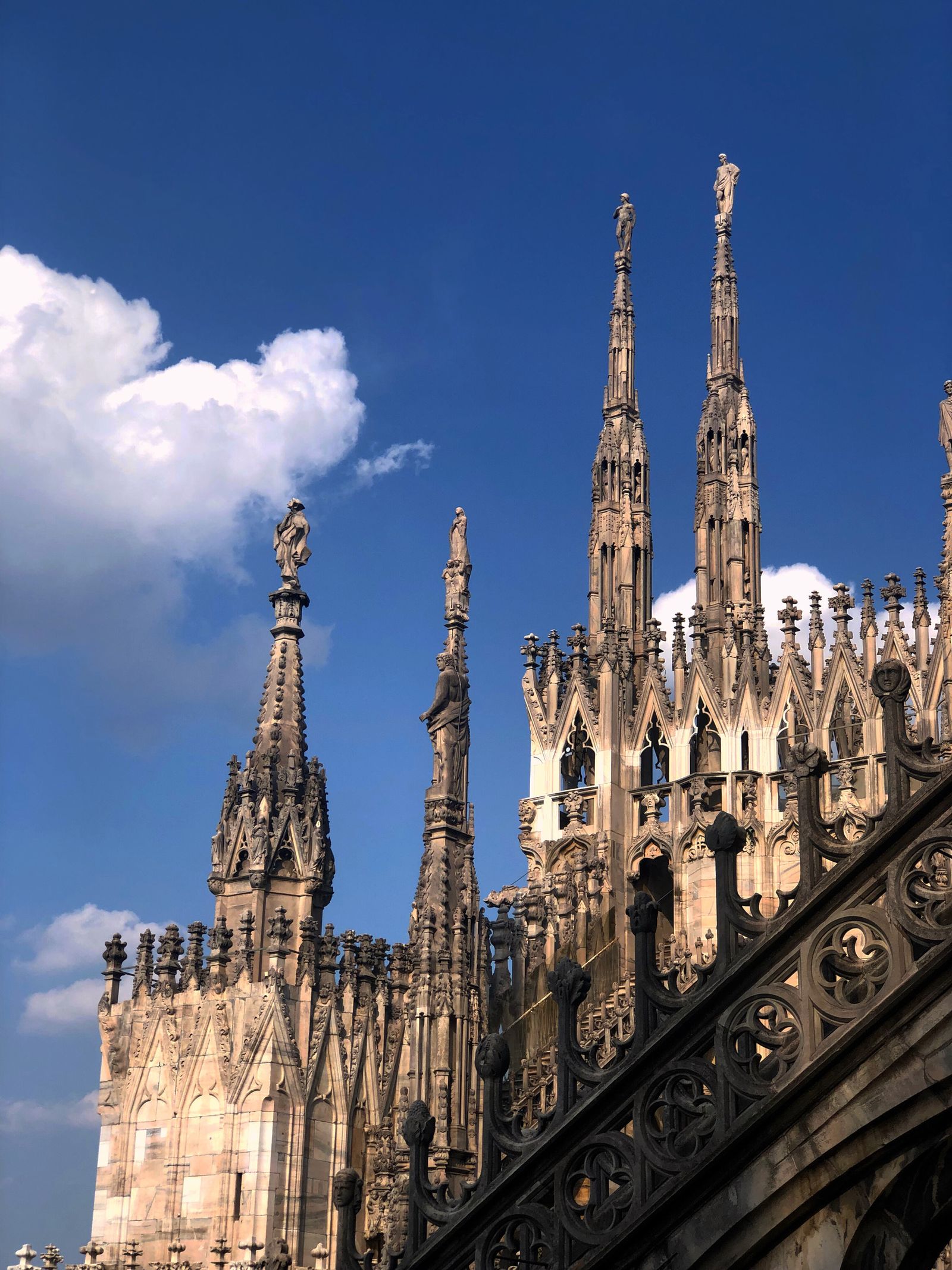
Photo by Ceren Ozdemir via Pexels
Milan rarely gets the same starry-eyed treatment as Rome, Florence, or Venice, and that is precisely what makes it such a rewarding place to visit. This is a city that works for a living, and that working energy runs straight through everything it offers a traveler: world-class fashion houses sit blocks from Roman-era ruins, a five-century-old cathedral shares a skyline with glass-and-steel towers, and some of Italy's best coffee bars serve office workers on their way to jobs at banks, ad agencies, and design studios. Milan is Italy's financial and creative capital, and it wears that identity with a confidence that feels different from the postcard version of Italy many visitors expect. If you come looking for a city frozen in the past, you will be pleasantly surprised to find one that is constantly building its future while still guarding an extraordinary artistic inheritance.
At the center of it all is the Duomo di Milano, one of the largest and most elaborate Gothic cathedrals on earth, its marble facade bristling with more than three thousand statues. A short walk away, Leonardo da Vinci's Last Supper still commands hushed reverence in a quiet refectory that has survived war, restoration, and the passage of five hundred years. Milan is also a city of quiet green courtyards, ancient canals, and neighborhoods that each feel like a different town stitched into the same metropolitan fabric. Wander from the polished boutiques of the Quadrilatero della Moda to the graffiti-lined bars of the Navigli, and you begin to understand why so many Italians consider Milan the country's most modern city, even as it holds onto Roman columns, Renaissance frescoes, and Baroque palaces at nearly every turn.
Milan is also wonderfully practical as a base. It has two major airports, a high-speed rail network that puts Turin, Venice, Bologna, and the Italian Lakes within easy day-trip range, and a compact, walkable center serviced by an efficient metro. Whether you are here for forty-eight hours between flights, using it as a launchpad for the Lakes region, or spending a full week exploring, Milan rewards travelers who slow down enough to notice its layers. This guide walks through everything worth knowing: the best time to visit, the unmissable sights, the neighborhoods that give the city its character, where to eat like a Milanese, day trips worth taking, and a realistic three-day itinerary to tie it all together. Whether your interest is art, architecture, food, fashion, or simply soaking up the rhythm of a great European city, Milan has far more to offer than it is usually given credit for.
Quick Facts & Best Time to Visit
Milan sits in the Lombardy region of northern Italy, in the Po Valley, which means its climate is more continental than the Mediterranean weather most people associate with Italy. Summers (June through August) are hot and often humid, with temperatures regularly climbing into the low 30s Celsius (high 80s to low 90s Fahrenheit); August in particular sees many locals leave the city on holiday, and some smaller restaurants close for a week or two around Ferragosto (August 15). Winters (December through February) are cold and grey, with fog a real possibility, and temperatures hovering around freezing at night. The most pleasant months to visit are April, May, September, and October, when daytime temperatures sit comfortably between 15-24°C (59-75°F), skies are clearer, and the city's parks and outdoor cafes are at their best. Milan Fashion Week (late February and late September) and the Salone del Mobile furniture fair (April) bring huge crowds and inflated hotel prices, so plan accordingly if you want to either catch or avoid the energy of these events.
Italy uses the euro (€), and while cards are widely accepted, it is worth carrying some cash for small bakeries, markets, and tips. Italian is the official language, but English is commonly spoken in hotels, major restaurants, and tourist sites, especially in the city center. Citizens of the EU, UK, US, Canada, Australia, and many other countries can enter Italy for short tourist stays without a visa under Schengen rules, though it is always worth checking current requirements before you travel, particularly with the EU's ETIAS travel authorization system now in effect for many non-EU visitors.
Milan is served by three airports: Malpensa (MXP), the main international hub about 50 minutes from the city center via the Malpensa Express train; Linate (LIN), a smaller airport closer to the center with a direct metro connection; and Bergamo Orio al Serio (BGY), used mainly by budget carriers, about an hour away by bus. Milano Centrale, one of Europe's grandest railway stations, connects the city to the rest of Italy and beyond via high-speed Frecciarossa and Italo trains, making Milan an ideal hub for a broader Italian trip. Within the city, the Metropolitana Milanese (metro) has five color-coded lines that cover the center efficiently, supplemented by trams, including some beautifully preserved vintage orange streetcars, and buses. A single ATM ticket covers 90 minutes across all forms of public transit, and multi-day passes are worth it if you plan to move around a lot. The historic center itself is highly walkable, and many of the top sights sit within a 20-30 minute walk of one another.
Top Things to Do in Milan
Duomo di Milano and Its Rooftop Terraces
No visit to Milan begins anywhere but Piazza del Duomo, where the city's cathedral rises in a forest of white marble spires, pinnacles, and statues. Construction began in 1386 and continued, off and on, for nearly six centuries, which explains the astonishing accumulation of Gothic, Renaissance, and Neoclassical detail across its facade. Inside, the nave is vast and dim, lit by enormous stained-glass windows depicting biblical scenes, and the crypt below holds the remains of Milan's early bishops. The real highlight, though, is the rooftop. Climbing (or taking the elevator) up onto the terraces puts you at eye level with the cathedral's spires and the golden Madonnina statue that crowns the tallest one, with the whole city and, on clear days, the Alps spread out beyond. Buy tickets online in advance through the official Duomo website to skip the worst of the queue, and choose the stairs-access ticket if you want a cheaper option and don't mind the climb. Arrive early morning or late afternoon for the best light and smallest crowds; the terraces are especially memorable near sunset.
Galleria Vittorio Emanuele II
Connected directly to Piazza del Duomo, this soaring 19th-century shopping arcade is often called the world's oldest shopping mall, and it remains one of Milan's most photographed interiors. A glass-and-iron barrel-vaulted roof arches over a cross-shaped arcade lined with mosaic floors, historic cafes, and flagship boutiques from Prada (whose original store still operates here) to Louis Vuitton. Find the mosaic of a bull at the center of the arcade and spin on its testicles with your heel, following local superstition said to bring good luck (look for the well-worn spot where thousands of visitors have done the same). Even if you are not shopping, the Galleria is worth a slow walk-through simply for the architecture, and it makes a natural connector between the Duomo and La Scala. Grab an aperitivo at the historic Camparino in Galleria, which has served drinks here since the 1860s, for a proper sense of occasion.
Teatro alla Scala
A short walk from the Galleria, La Scala is one of the most famous opera houses in the world, having hosted premieres by Verdi, Puccini, and countless other giants of Italian opera since it opened in 1778. If you can time your visit around a performance, seeing opera or ballet here is an unforgettable experience, though tickets for prestigious shows sell out well in advance. If not, the adjoining La Scala Museum lets you see the theater's opulent auditorium from a box (schedule permitting) along with an extensive collection of composer portraits, historic instruments, costumes, and Verdi memorabilia. The museum is compact enough to see in an hour and pairs naturally with a stroll through the surrounding Piazza della Scala, where a statue of Leonardo da Vinci watches over the square.
The Last Supper at Santa Maria delle Grazie
Leonardo da Vinci's Last Supper, painted directly onto the refectory wall of the Dominican convent at Santa Maria delle Grazie between 1495 and 1498, is one of the most significant artworks in Western history and one of the hardest tickets in Milan. Because Leonardo used an experimental technique rather than true fresco, the painting began deteriorating almost immediately, and it has undergone extensive restoration; visitors are admitted in small, timed groups of about 15-25 people for exactly 15 minutes to help preserve the climate-controlled room. Tickets must be booked well in advance, ideally two to three months ahead for popular dates, through the official Cenacolo Vinciano website, since they routinely sell out. If official tickets are unavailable, some licensed tour operators hold blocks of reserved slots. The church itself, a UNESCO World Heritage Site alongside the painting, has a beautiful Bramante-designed apse and is worth a few minutes of your visit as well.
Castello Sforzesco
This massive brick castle, originally built in the 15th century by Francesco Sforza on the site of an earlier fortification, anchors the northwest edge of the historic center and today houses several of Milan's civic museums. Inside its courtyards and towers you will find the Pinacoteca (a picture gallery with works by Bellini, Mantegna, and Tintoretto), an Egyptian museum, an armory, and a museum devoted to musical instruments. The undisputed highlight is Michelangelo's unfinished Rondanini Pietà, his final sculptural work, carved right up until days before his death in 1564; it occupies its own quiet room and is a genuinely moving thing to stand in front of. The castle grounds and surrounding Parco Sempione, Milan's largest central park, are free to wander and popular with joggers, picnickers, and families, making this an easy half-day combining art, history, and green space.
Pinacoteca di Brera
Housed in a grand 17th-century palazzo in the artsy Brera district, this is Milan's premier art museum and one of Italy's finest, with an outstanding collection of Italian Renaissance and Baroque painting. Highlights include Mantegna's dramatically foreshortened Lamentation over the Dead Christ, Raphael's The Marriage of the Virgin, Caravaggio's Supper at Emmaus, and important works by Bellini, Piero della Francesca, and Tintoretto. The museum is large but manageable in two to three hours, and its relatively modest visitor numbers compared to Florence's Uffizi make for a far less crowded experience of equally serious art. The building also houses the Accademia di Belle Arti, Milan's fine arts academy, and the surrounding Brera neighborhood, with its cobbled lanes, antique shops, and courtyard cafes, rewards lingering well after the museum closes.
Navigli District and Canal Walks
Milan once had an extensive network of canals, partly designed with input from Leonardo da Vinci, used to transport marble and goods into the city; most have since been covered over, but the Navigli district in the south of the city preserves two of the most picturesque, the Naviglio Grande and the Naviglio Pavese. By day the canalside is quiet and photogenic, lined with pastel buildings, artisan workshops, and vintage shops. By evening it transforms into one of Milan's liveliest aperitivo scenes, with bars setting out tables along the water and crowds spilling onto the banks. The last Sunday of every month brings the Mercatone dell'Antiquariato, a large antiques market along the Naviglio Grande, and the neighborhood's Vicolo dei Lavandai preserves a charming stretch of the old public washhouses. It's a fundamentally different Milan than the buttoned-up city center, more bohemian and relaxed, and worth an evening at minimum.
Sant'Ambrogio Basilica
One of the oldest churches in Milan, founded in the 4th century by Saint Ambrose himself, this basilica predates the Duomo by a millennium and gives a completely different sense of the city's deep Christian history. Its Romanesque brick facade, quiet colonnaded atrium, and golden altar (crafted in the 9th century) feel a world away from the Gothic drama of the cathedral. The crypt holds the remains of Saints Ambrose, Gervasius, and Protasius, visible through a glass case beneath the altar. The church sits at the edge of the Università Cattolica campus, and the surrounding streets have a scholarly, unhurried feel. It's an easy, uncrowded stop that offers real historical depth without the ticket lines of the city's bigger attractions.
Museo del Novecento
Set inside the Palazzo dell'Arengario at the edge of Piazza del Duomo, this museum traces Italian art of the 20th century through a spiraling ramp of galleries, with strong holdings in Futurism (including major works by Umberto Boccioni), Metaphysical painting, and postwar abstraction. The building's top floor has a glass-walled cafe with one of the best close-up views of the Duomo's spires anywhere in the city, arguably worth the museum admission on its own. Because it draws a fraction of the crowds of the cathedral itself, it's a good way to build in a quieter, more contemplative hour into a day that otherwise revolves around the piazza's chaos.
Quadrilatero della Moda (Fashion District)
Bordered roughly by Via Montenapoleone, Via della Spiga, Via Sant'Andrea, and Via Manzoni, this compact grid of streets is the beating heart of Milan's identity as a global fashion capital. Even if haute couture is well outside your budget, walking these streets is a form of sightseeing in its own right, since the window displays of Armani, Versace, Dolce & Gabbana, Gucci, and dozens of others are essentially rotating art installations. Via Montenapoleone in particular is regularly ranked among the most expensive shopping streets on earth. The district also holds smaller pleasures: elegant courtyard gardens tucked behind unmarked doors, the Bagatti Valsecchi Museum (a beautifully preserved 19th-century noble residence styled as a Renaissance palace), and quiet cafes where Milan's fashion and finance crowd take their espresso standing at the bar, exactly as tradition dictates.
Bosco Verticale and Porta Nuova
For a look at Milan's contemporary architectural ambitions, head to the Porta Nuova district, a striking cluster of modern skyscrapers built over the past fifteen years. Its centerpiece is the Bosco Verticale (Vertical Forest), a pair of residential towers designed by architect Stefano Boeri and covered in more than 900 trees and thousands of shrubs and plants, an internationally celebrated experiment in urban greening that has since inspired similar projects worldwide. The surrounding Piazza Gae Aulenti, a striking circular plaza raised above street level with fountains and ringed by glass towers, is popular with families and skateboarders alike, and the nearby Unicredit Tower is currently the tallest building in Italy. It's a genuinely different side of Milan from the historic core, useful for understanding how the city continues to reinvent its skyline.
San Siro Stadium (Stadio Giuseppe Meazza)
Shared by two of Europe's most storied football clubs, AC Milan and Inter Milan, San Siro is a pilgrimage site for football fans and an architecturally imposing structure even to those with no interest in the sport, its spiraling external ramps and towering stands visible from a distance. Attending a match here, particularly a Derby della Madonnina between the two rival clubs, is a genuinely electric experience and worth planning around the Serie A calendar if your visit coincides with a home fixture. On non-match days, the San Siro Museum and stadium tour let you walk through the locker rooms, players' tunnel, and pitch-side areas, along with an extensive collection of trophies and memorabilia from both clubs' histories. The stadium sits a bit outside the center, reachable by metro line 5, making it a reasonable half-day trip.
Cimitero Monumentale
This may sound like an unusual entry on a things-to-do list, but Milan's Monumental Cemetery, opened in 1866, is essentially an open-air sculpture museum, with elaborately carved tombs and mausoleums commissioned by the city's wealthiest families in styles ranging from Egyptian Revival to Art Nouveau to stark modernism. Free to enter, it is one of Milan's most surprising and least crowded attractions, popular with photographers and architecture enthusiasts. The Famedio, a grand memorial hall at the entrance, honors notable Milanese citizens, including the writer Alessandro Manzoni. Give yourself at least an hour to wander the avenues; the scale and craftsmanship of some of the monuments rival anything you will see in the city's churches.
Navigate the Brera and San Babila Boutique Streets
Beyond the big-name fashion houses of the Quadrilatero, Milan rewards travelers who like to shop (or window-shop) at a smaller scale. The Brera district mixes independent galleries, design showrooms, and small ateliers along streets like Via Fiori Chiari, while Corso Vittorio Emanuele II, a bustling pedestrian shopping street running from the Duomo toward San Babila, offers more accessible high-street brands. Milan is also the global capital of furniture and product design, and even outside of the annual Salone del Mobile fair, showrooms throughout the Brera and Isola districts display cutting-edge Italian design year-round, many open to browsers without appointment. This is a good half-day activity to pair with a coffee break at one of the area's many historic pasticcerie.
Museo Poldi Pezzoli
Tucked into a quiet street just steps from the Quadrilatero della Moda, this house museum is one of Milan's most delightful hidden gems, easy to miss and richly rewarding once found. The 19th-century nobleman Gian Giacomo Poldi Pezzoli left his lavishly decorated residence and personal art collection to the city, and it remains arranged much as he left it, with rooms dedicated to armor, clocks, tapestries, and jewelry alongside serious paintings by Botticelli, Piero della Francesca, and Mantegna. The undisputed star is Piero della Francesca's small but luminous Portrait of a Young Woman, often reproduced but far more striking in person. Because it draws only a fraction of the visitors that flock to the Duomo or the Last Supper, you can often have entire rooms to yourself, a rare experience in a city with Milan's overall tourist volume. Plan on an hour to ninety minutes, and note that the museum is closed on Tuesdays.
Basilica di San Lorenzo Maggiore and Colonne di San Lorenzo
Just south of the fashion and historic core, this ancient basilica traces its origins to the 4th century, making it one of the oldest religious buildings in Milan and a striking reminder that the city's history reaches back well before its Gothic cathedral. In front of the church stands a row of sixteen Roman marble columns, the Colonne di San Lorenzo, salvaged from a 2nd- or 3rd-century Roman building and re-erected here, now a favorite informal gathering spot for students and young Milanese who sit on the steps with drinks in hand, especially on warm evenings. Inside, the octagonal Chapel of Sant'Aquilino holds some of the city's finest surviving Roman and early Christian mosaics, accessible for a small additional fee. The combination of ancient columns, early Christian architecture, and a lively modern piazza atmosphere makes this an easy, worthwhile stop that most guidebooks underrate.
Best Neighborhoods to Explore
Centro Storico (Historic Center) is where most visitors spend their first hours, anchored by the Duomo, the Galleria, and La Scala. It's dense, monumental, and unapologetically touristy in spots, but it's also where you'll find the city's grandest architecture within a short walking radius. Side streets off the main piazza reveal quieter corners, including small churches and family-run trattorias that survive despite the tourist volume. Base yourself here if convenience and proximity to major sights matter most.
Brera is Milan's traditional artists' quarter, a warren of cobblestone streets just north of the Duomo, centered on the Pinacoteca di Brera. Its atmosphere is more intimate and romantic than the historic center, with ivy-draped courtyards, antique shops, and a concentration of good restaurants and wine bars. Evenings here have a relaxed, almost village-like energy despite sitting minutes from the city's busiest square, and it's an excellent neighborhood for an evening stroll after museum-going.
Navigli, in the south of the city, centers on the two remaining canals and has become Milan's nightlife and aperitivo hub, especially popular with younger locals and expats. By day it's a good spot for vintage shopping and canal-side lunches; by night the bars along both waterways fill with crowds well into the early hours. It's a bit removed from the historic center, connected by tram or a roughly 25-minute walk, but the atmosphere shift makes the trip worthwhile.
Porta Nuova and Isola represent Milan's futuristic face. Porta Nuova's skyscraper cluster, anchored by the Bosco Verticale and Piazza Gae Aulenti, sits directly beside Isola, a formerly working-class neighborhood that has become one of the city's trendiest, filled with design studios, craft cocktail bars, and street art. The contrast between the ultramodern towers and Isola's low-rise, artsy streets makes for an interesting contrast within a five-minute walk, and this area is well connected via the Garibaldi and Porta Garibaldi transit hubs.
Città Studi and the University Area, east of the center around the Politecnico di Milano and Università degli Studi, has a younger, more local feel with affordable trattorias, student bars, and few tourists. It won't top most sightseeing lists, but it's a good option for travelers who want to experience an authentically residential slice of Milan and often offers better value for food and accommodation than the center.
Where to Eat & Drink
Lombard cuisine is heartier and more butter-and-rice-based than the tomato-and-olive-oil cooking most people associate with southern Italy, reflecting the region's proximity to the Alps and its historically wealthier, more industrial economy. The defining local dish is risotto alla milanese, a saffron-infused risotto traditionally served alongside ossobuco (braised veal shank). Cotoletta alla milanese, a breaded and pan-fried veal cutlet, is another Milanese classic, often compared to (and possibly a historical relative of) Viennese schnitzel. Panettone, the tall, dome-shaped sweet bread studded with candied fruit and raisins, originated in Milan and is sold year-round here, though it's especially associated with Christmas. For something lighter, try a plate of pizzoccheri if you venture toward Valtellina-influenced menus, or simply graze on the excellent regional cured meats and cheeses available at any good salumeria.
No discussion of eating in Milan is complete without aperitivo, the pre-dinner ritual in which a drink purchase (often a Negroni, Spritz, or Campari-based cocktail) comes with access to a buffet of snacks, from simple olives and chips to substantial spreads of pasta, cured meats, and vegetables. It's practically a national institution here, particularly concentrated in the Navigli and Brera districts, typically running from around 6:30 to 9:30pm. For a historic, formal take on the tradition, Camparino in Galleria, inside the Galleria Vittorio Emanuele II, has been serving the Milanese since the Campari company's earliest days. For a more contemporary scene, the bars lining the Naviglio Grande offer generous spreads at a fraction of city-center prices.
For a sit-down meal, Ristorante Cracco, helmed by celebrity chef Carlo Cracco, sits right on Piazza del Duomo and offers a high-end, contemporary take on Italian cuisine within one of the city's most historic buildings. Trattoria Madonnina in the Navigli district has served unfussy, traditional Milanese dishes since 1962 and remains a beloved neighborhood institution. For cotoletta done properly, Ristorante Boeucc, one of Milan's oldest restaurants, dating to 1696, is a reliable classic choice in the fashion district. Luini, a tiny takeaway spot near the Duomo, has been frying panzerotti (a fried, pizza-dough pocket filled with tomato and mozzarella) since 1888 and remains a beloved quick-bite institution, usually with a line out the door.
Coffee culture in Milan follows the broader Italian pattern: espresso taken standing at the bar, often before 11am, rarely a cappuccino after breakfast hours. Pasticceria Marchesi, founded in 1824 and later acquired in part by the Prada family, is one of the city's most elegant historic pastry shops, with a stunning original location on Via Santa Maria alla Porta. For gelato, Gelato Giusto and Ciacco are well-regarded modern spots using high-quality, often seasonal ingredients, a step up from the tourist-trap gelaterias clustered immediately around the Duomo. If you want to drink like a local at the end of a long day, look for a bar with a crowded standing-room counter rather than empty outdoor seating; that's usually a reliable sign of quality and fair pricing.
Best Day Trips from Milan
The Italian Lakes are the single most popular day trip from Milan, and for good reason. Lake Como, about an hour away by train to Como San Giovanni station, offers dramatic mountain scenery, elegant lakeside towns like Bellagio and Varenna, and villa gardens open to visitors, such as the famous Villa del Balbianello. Lake Maggiore, reachable via Stresa (also about an hour by train), offers boat access to the ornate Borromean Islands, including Isola Bella with its Baroque palace and terraced gardens. Either lake makes for a full, satisfying day trip, though both deserve an overnight if your schedule allows, since the towns feel noticeably calmer once the day-trip crowds head back to Milan in the late afternoon.
Bergamo, about 50 minutes away by train, is a genuinely underrated destination split between a lively lower town (Bergamo Bassa) and a beautifully preserved walled medieval upper town (Bergamo Alta), connected by a funicular. The upper town's Piazza Vecchia, Colleoni Chapel, and intact Venetian-era fortifications make for excellent walking and photography, and the city sees far fewer tourists than Milan itself, giving it a more relaxed, authentically Italian atmosphere.
For those interested in Renaissance history, Verona and Mantua are both accessible via high-speed and regional trains (roughly 1.5 to 2 hours), offering Roman amphitheaters, Shakespeare-associated sites, and Gonzaga family palaces respectively. Turin, about an hour by high-speed train, offers grand Baroque boulevards, excellent Egyptian antiquities at the Museo Egizio (the largest collection outside Cairo), and its own distinctive coffee and chocolate culture, making for a rewarding, less crowded contrast to Milan's more polished pace.
Where to Stay
For first-time visitors prioritizing walkability to major sights, the Centro Storico and areas immediately around the Duomo offer the most convenience, though prices run high and the immediate vicinity of the cathedral can feel touristy. Slightly further out but still central, the streets around San Babila and the edge of the fashion district offer a similar level of access with a bit more breathing room.
Travelers who want a more atmospheric, boutique-hotel experience should look at Brera, where charming small hotels sit on quiet cobbled streets a short walk from both the Duomo and the Pinacoteca, with easy access to excellent restaurants and evening strolls. It's an excellent middle ground between convenience and character.
Budget-conscious travelers and those who prioritize nightlife should consider the Navigli or Porta Romana areas, which tend to offer better value and a lively evening scene, at the cost of a slightly longer walk or tram ride into the historic center. The area around Milano Centrale station offers practical convenience for travelers connecting onward by train, with a wide range of hotel price points, though the immediate station area is less charming than other parts of the city and best treated purely as a transit-convenient base.
For a genuinely local, less touristy stay, the Isola and Porta Nuova districts combine modern hotel options with proximity to the skyscraper district and good transit connections, appealing to design-minded travelers who want a taste of contemporary Milan alongside the historic sights. Wherever you choose, aim to stay near a metro stop, since it dramatically simplifies moving around this sprawling but well-connected city.
Suggested 3-Day Itinerary
Day 1: The Historic Core
Start early at the Duomo, ideally with a pre-booked rooftop terrace ticket to catch the morning light and smaller crowds, then explore the cathedral's interior and crypt. Walk through the Galleria Vittorio Emanuele II toward Piazza della Scala, stopping at the La Scala Museum if opera history interests you. Have lunch near San Babila or in the fashion district, then spend the afternoon browsing the Quadrilatero della Moda's window displays and boutique streets. In the late afternoon, head to the Museo del Novecento for its Duomo-facing views and strong 20th-century collection, then finish the day with an aperitivo at Camparino in Galleria before dinner somewhere in the historic center.
Day 2: Art, Castles, and Canals
Devote the morning to Leonardo's Last Supper (book this months ahead), followed by a visit to the nearby Santa Maria delle Grazie church itself. From there, walk or take transit to Castello Sforzesco, spending an hour or two with its museums and the Rondanini Pietà, then relax in the adjoining Parco Sempione. In the afternoon, head to Brera for the Pinacoteca's Renaissance masterpieces, then wander the neighborhood's quiet streets. As evening falls, make your way south to the Navigli district for canal-side aperitivo and dinner, taking in Milan's more relaxed, bohemian side after a day of heavier sightseeing.
Day 3: Modern Milan and a Local Pace
Spend the morning exploring Porta Nuova and Isola, admiring the Bosco Verticale and Piazza Gae Aulenti before wandering Isola's design shops and cafes. If football or architecture interests you, consider a detour to San Siro for a stadium tour. In the early afternoon, visit the Cimitero Monumentale for its remarkable sculptural mausoleums, a peaceful and surprising contrast to the modern towers of the morning. Spend your final hours revisiting a favorite neighborhood, picking up gifts along Corso Vittorio Emanuele II, or simply enjoying one last leisurely coffee and pastry at a historic pasticceria like Marchesi before your onward journey.
Practical Travel Tips
Milan's public transportation system is efficient and easy to navigate once you understand the zone system; download the ATM Milano app or pick up a paper map at any metro station. Taxis are metered and reliable but not usually hailed on the street; call one or use an app instead. Milan is generally a safe city for travelers, though standard precautions apply around Milano Centrale station, on crowded trams, and in tourist-dense areas like the Duomo, where pickpocketing is the primary concern rather than violent crime; keep bags zipped and valuables out of back pockets.
Budget-wise, Milan is one of Italy's more expensive cities, comparable to or slightly above Rome for dining and lodging, though the aperitivo tradition offers real value if you're willing to make a light dinner out of it. Museum admission fees add up quickly if you plan to see several major sights; the MilanoCard offers combined transit and museum discounts and may be worthwhile for a busy itinerary. Many major museums, including the Duomo and Last Supper, require or strongly reward advance online booking, so plan your must-see list before arrival rather than relying on walk-up availability.
Packing sensibly matters here: Milan is a fashion-conscious city, and while nobody expects tourists to dress like locals, modest, put-together clothing will help you feel more at ease in upscale restaurants and shops. Church visits, including the Duomo, require covered shoulders and knees for both men and women. Comfortable walking shoes are essential given the amount of ground you'll cover, and layers are wise given the city's changeable weather, particularly in shoulder seasons. On etiquette, greet shopkeepers and bar staff with a simple "buongiorno" or "buonasera," expect to pay a small cover charge (coperto) at sit-down restaurants, and note that cappuccino is considered a morning-only drink by most locals, a small cultural detail that nonetheless raises eyebrows if ignored after noon.
Connectivity is easy to sort out on arrival: most EU travelers can use their home mobile plans under roaming rules, while non-EU visitors will find SIM cards from carriers like TIM, Vodafone, and WindTre readily available at airport kiosks and city-center shops, generally at reasonable prices with generous data allowances. Free Wi-Fi is common in cafes and hotels but less reliable on the street, so a local SIM or eSIM is worth arranging if you plan to rely on maps and transit apps throughout the day. Tipping in Milan, as in most of Italy, is modest by American standards; rounding up or leaving a few euros for good service is appreciated but not obligatory, since a service charge or coperto is often already built into the bill.
Finally, keep an eye on the calendar before booking. Beyond Fashion Week and the Salone del Mobile, Milan hosts frequent trade fairs at the Fiera Milano exhibition center that can quietly fill hotels across the entire city, even when the event itself seems unrelated to tourism. If your travel dates are flexible, checking the fair calendar in advance can save you from paying inflated rates without realizing why.
Frequently Asked Questions
How many days do I need in Milan?
Two full days cover the essential sights, including the Duomo, the Last Supper, and a taste of the fashion district and Navigli, but three days allows a more comfortable pace and room for at least one museum-heavy afternoon without feeling rushed. If you're combining Milan with a Lakes day trip, budget four days total.
Do I need to book the Last Supper tickets in advance?
Yes, almost always. Tickets for Leonardo's Last Supper routinely sell out weeks or even months ahead, especially during peak season, because visitor groups are strictly capped at around 15-25 people for 15-minute viewing slots. Book directly through the official Cenacolo Vinciano website as early as your travel dates are confirmed.
Is Milan expensive compared to other Italian cities?
Generally, yes. As Italy's financial and fashion capital, Milan's hotel rates, restaurant prices, and shopping costs tend to run higher than in many other Italian cities outside Rome and Venice, especially during Fashion Week and the Salone del Mobile design fair. That said, the aperitivo tradition and plenty of excellent casual trattorias make it easy to eat well without overspending.
Is Milan worth visiting if I'm not interested in fashion?
Absolutely. While fashion is a major part of Milan's identity, the city's real draws for most visitors are its art (the Last Supper, the Pinacoteca di Brera, the Duomo's rooftop), its architecture spanning Roman to ultramodern, and its food and aperitivo culture. Fashion enthusiasts get an added layer, but it's far from the only reason to come.
What's the best way to get from Milan's airports into the city?
From Malpensa, the Malpensa Express train runs directly to Milano Centrale and Cadorna stations in about 50 minutes. From Linate, the metro's Line 4 connects directly to the city center in around 15 minutes. From Bergamo Orio al Serio, used mainly by budget airlines, a shuttle bus to Milano Centrale takes roughly an hour. All three options are more reliable and often cheaper than a taxi, especially during rush hour traffic.
Can I see Milan and Lake Como in the same trip without a car?
Yes, easily. Trains from Milano Centrale or Cadorna stations reach Como San Giovanni or Como Nord Lago in roughly 40-60 minutes, and from the town of Como, ferries connect to Bellagio, Varenna, and other lakeside towns. It's entirely feasible as a car-free day trip, though an overnight lets you enjoy the lake once the day-trippers depart.
Final Thoughts
Milan is a city best appreciated by travelers willing to look past first impressions. It doesn't offer the immediate, overwhelming beauty of a Venice or a Florence, but what it lacks in postcard perfection it makes up for with genuine depth: serious art history, architecture spanning two thousand years, a food and coffee culture that rewards curiosity, and a lived-in, working rhythm that gives even short visits a sense of authenticity. Spend a few days here, and you start to see why so many Milanese consider their city, quietly, the most sophisticated in Italy.
Whether you come for the Duomo's rooftop views, a fifteen-minute audience with Leonardo's masterpiece, an evening of canal-side aperitivo, or simply as a smart, well-connected base for exploring the Lakes and northern Italy, Milan delivers far more than its reputation as a mere business stopover suggests. Give it the time it deserves, and it will reward you accordingly.


No comments:
Post a Comment