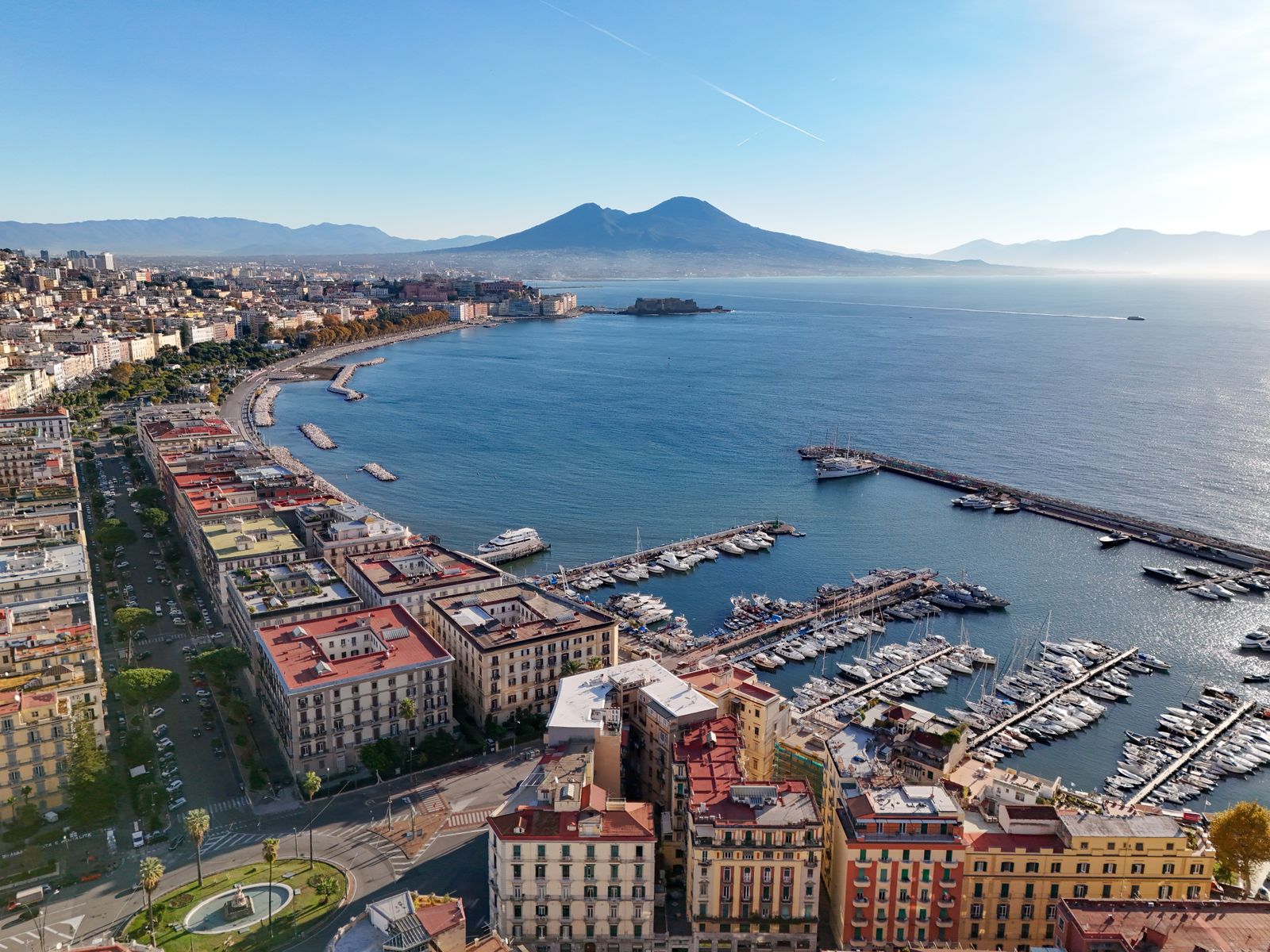
Photo by Luca Musella via Pexels
Naples is a city that overwhelms the senses before it wins over the heart. Scooters weave through impossibly narrow lanes strung with laundry lines, the smell of wood-fired pizza dough drifts out of doorways at all hours, and Mount Vesuvius looms on the horizon as a constant, quiet reminder of the volcanic forces that have shaped this coastline for millennia. It is loud, dense, chaotic in places, and utterly unlike anywhere else in Italy, which is exactly why travelers who give it a real chance tend to come away as devoted converts. Naples does not perform for tourists the way some Italian cities do; it simply is what it is, and that authenticity is its greatest asset.
Founded by Greek settlers around the 8th century BC as Neapolis, meaning "new city," Naples is in fact one of the oldest continuously inhabited urban centers in the Western world, and its historic center, the Centro Storico, is a UNESCO World Heritage Site precisely because so many layers of that history remain visible and lived-in rather than roped off in a museum. Beneath the modern streets lie Greek and Roman ruins, an extensive network of ancient aqueducts and tunnels, and ancient art. Above ground, Baroque churches, royal palaces, and some of the finest art collections in Italy sit alongside street food stalls and family-run pizzerias that have fed the same neighborhoods for generations. This is, after all, the birthplace of pizza itself, and eating a true Neapolitan margherita here, made according to rules so exacting they have earned UNESCO recognition, is one of travel's genuinely great, unpretentious pleasures.
Naples also serves as the gateway to some of Italy's most celebrated destinations. The ruins of Pompeii and Herculaneum, frozen in time by the catastrophic eruption of Vesuvius in AD 79, sit within easy day-trip distance, as does the entire glittering Amalfi Coast and the island of Capri. Many travelers use Naples purely as a jumping-off point for these places, and while that is a reasonable strategy given limited time, it sells the city itself dramatically short. Spend even two or three days actually exploring Naples, and you will find a place of extraordinary depth: world-class archaeology, a passionate and distinctive food culture, dramatic coastal views from Posillipo and the Lungomare, and a street life so vivid it borders on theatrical. This guide covers everything you need to plan a rewarding visit, from the best time to go and the top attractions to neighborhoods, food, day trips, and a realistic three-day itinerary that does justice to one of Europe's most underrated great cities.
Quick Facts & Best Time to Visit
Naples sits on the Tyrrhenian Sea in the Campania region of southern Italy, and it enjoys a Mediterranean climate that is considerably milder than Milan's or northern Italy's continental weather. Summers (June through August) are hot, humid, and crowded, with temperatures often reaching the low-to-mid 30s Celsius (high 80s to low 90s Fahrenheit); this is also peak season for the nearby Amalfi Coast and Capri, which drives up prices and crowd levels throughout the region. Winters (December through February) are mild by comparison, rarely dropping below 5°C (41°F), with occasional rain but few extremes. The best times to visit are April, May, late September, and October, when the weather is warm and pleasant without the peak-season crush, and the sea remains swimmable well into autumn. Easter week and August, when many Italians take their own holidays, can bring particularly heavy crowds and, in August, some smaller family-run restaurants close entirely.
Italy uses the euro (€), and while cards are increasingly accepted, Naples still runs more on cash than northern Italian cities, particularly at small food stalls, markets, and some older trattorias, so carry cash for daily spending. Italian is the primary language, with a distinct and proudly maintained Neapolitan dialect spoken widely among locals; English is common in tourist areas and hotels but less universal than in Milan or Rome, so a few basic Italian phrases go a long way. Visa requirements follow standard Schengen rules for EU, UK, US, Canadian, Australian, and many other passport holders for short tourist stays, though it is worth checking current requirements, including the EU's ETIAS system, before departure.
Naples International Airport (Capodichino, NAP) sits just a few kilometers from the city center, connected by bus and taxi in about 20-30 minutes. Naples is also a major rail hub, with Napoli Centrale station offering high-speed Frecciarossa and Italo connections to Rome (just over an hour), Florence, and Milan, as well as regional trains to Pompeii, Herculaneum, and Sorrento via the Circumvesuviana line. The city's public transit includes a metro system (Line 1 is notable for several stations doubling as contemporary art installations), buses, funiculars climbing the Vomero hill, and trams, though traffic congestion and narrow historic streets mean walking is often the fastest way to move through the Centro Storico itself. Naples's port also serves as the primary departure point for ferries to Capri, Ischia, Procida, and Sorrento, making it a genuinely central hub for exploring the entire Bay of Naples region.
One more practical note worth knowing before you arrive: Naples is built across a series of hills and terraces rising up from the bay, so many walks between neighborhoods involve genuine elevation change, from the flat streets of the Centro Storico up toward the heights of Vomero. Funiculars (there are four historic lines) make quick work of the steepest climbs and are included in standard public transit tickets, so don't hesitate to use them rather than trudging up a hillside in the midday heat. Between the funiculars, the metro, and simply walking the compact historic core, most visitors find they rarely need a taxi except late at night or when carrying luggage to and from the train station.
Top Things to Do in Naples
Centro Storico and Spaccanapoli
The historic heart of Naples is best explored on foot along Spaccanapoli, the famously straight, narrow street that literally "splits" the old city in two, following the exact grid laid down by Greek and Roman city planners more than two thousand years ago. Walking its length, along with the parallel Via San Biagio dei Librai, takes you past Baroque churches, artisan workshops, presepe (nativity scene) craftsmen on Via San Gregorio Armeno, and some of the densest concentrations of historic architecture anywhere in Italy. This entire district is a UNESCO World Heritage Site, and it rewards slow, unplanned wandering as much as any specific checklist of sights. Expect narrow alleys strung with laundry, small shrines tucked into building facades, and a genuine, unfiltered urban energy that captures Naples at its most characteristic. Go in the morning for a calmer pace, or in the early evening when the street food stalls and pizzerias come alive.
Naples Cathedral and the Chapel of San Gennaro
The Duomo di Napoli, dedicated to the city's patron saint, San Gennaro, is one of the most important religious sites in southern Italy, built atop earlier Greek and Christian foundations, some of which are still visible in the crypt and the adjoining Basilica di Santa Restituta, believed to be the city's oldest church. The cathedral's most sacred treasure is the reliquary containing what tradition holds to be the saint's blood, which is said to liquefy several times a year during public ceremonies, a phenomenon still deeply significant to many Neapolitans and central to the city's religious identity. The adjoining Museo del Tesoro di San Gennaro houses an extraordinary collection of jewels and reliquaries donated over centuries by popes, kings, and the devout, considered by some to rival the British Crown Jewels in value. The cathedral is free to enter, though the treasury museum carries a separate admission fee and is well worth the extra time.
Napoli Sotterranea (Underground Naples)
Beneath the bustling streets of the Centro Storico lies an entirely different city: a vast network of tunnels, cisterns, and chambers carved over more than two thousand years, beginning with Greek-era stone quarrying and later expanded by the Romans into an aqueduct system that supplied the city with water well into the 20th century. Guided tours, run by several operators including the well-established Napoli Sotterranea association, lead visitors through candlelit passages, Roman-era cisterns, and sections used as bomb shelters during World War II, with some tours including a memorable crawl through especially narrow original tunnels (not recommended for the claustrophobic). It's an atmospheric, genuinely eerie experience that reveals just how many historical layers this city holds beneath its surface, and booking a tour in advance during peak season is wise given the limited group sizes.
Museo Archeologico Nazionale di Napoli
Widely regarded as one of the finest archaeological museums in the world, the National Archaeological Museum holds the single greatest collection of artifacts recovered from Pompeii and Herculaneum, making it an essential complement to (or even substitute for, if time is short) an actual visit to the ruins. Highlights include the extraordinary Farnese Bull and Farnese Hercules, monumental Roman sculptures; a vast collection of mosaics, including the famous Alexander Mosaic depicting the Battle of Issus; and the frank, historically significant Gabinetto Segreto (Secret Cabinet), a collection of erotic Roman art recovered from Pompeii that was long kept from public view. Give yourself at least two to three hours here, ideally visited before heading to Pompeii itself, since seeing the finest artifacts here first adds enormous context to what you'll encounter among the ruins.
Castel dell'Ovo
Perched on a small island connected to the mainland by a causeway, Castel dell'Ovo (Egg Castle) is the oldest standing fortification in Naples, with origins tracing back to Norman times and, according to local legend, a magical egg supposedly hidden in its foundations by the poet Virgil to protect the city. Beyond the charming legend, the castle offers some of the best panoramic views in Naples, taking in the Bay of Naples, Vesuvius, and the colorful Borgo Marinari fishing harbor just below its walls, now lined with restaurants and cafes. Entry is free, and it's an easy, relatively short visit, best combined with a stroll along the adjoining seafront promenade, particularly beautiful at sunset when the castle and bay are bathed in golden light.
Palazzo Reale di Napoli (Royal Palace)
Facing the grand Piazza del Plebiscito, the Royal Palace was the residence of the Bourbon kings who ruled the Kingdom of Naples for centuries, and its opulent state rooms, royal apartments, and vast library are open to visitors today. The palace's facade features statues of eight kings who ruled Naples across different dynasties, a useful visual crash course in the city's complex political history. Inside, don't miss the grand staircase, the royal theater, and the sweeping views over the piazza and the Bay of Naples from several of the state rooms. The adjoining Piazza del Plebiscito itself, one of Italy's largest public squares, is anchored by the domed Basilica di San Francesco di Paola and makes a striking, monumental setting for photos, especially in the soft evening light.
Castel Sant'Elmo and Certosa di San Martino
Sitting atop the Vomero hill, this star-shaped medieval fortress offers arguably the single best panoramic view of the entire city, the Bay of Naples, and Vesuvius beyond, and it is significantly less crowded than many of the city's other viewpoints. Reachable by funicular from the city center (itself a fun, scenic ride), the fortress is directly adjacent to the Certosa di San Martino, a former Carthusian monastery turned museum, whose Baroque church interior is one of the most lavishly decorated in Naples and whose collection includes an extraordinary array of historic presepi (nativity scenes), a Neapolitan art form of remarkable intricacy. Plan for at least half a day to properly appreciate both sites together, and try to time your visit for late afternoon when the light over the bay is at its most dramatic.
Pizzeria Pilgrimage: Eating Real Neapolitan Pizza
This deserves to be treated as an attraction in its own right, since eating an authentic Neapolitan pizza in its birthplace is one of the defining experiences of visiting the city. Neapolitan pizza-making was inscribed on UNESCO's Intangible Cultural Heritage list in 2017, reflecting strict traditional methods: a soft, chewy, slightly charred crust cooked at extremely high heat in a wood-fired oven, topped simply, most classically as a Margherita (tomato, mozzarella, basil) or Marinara (tomato, garlic, oregano, no cheese). L'Antica Pizzeria da Michele, made internationally famous partly through the novel and film "Eat Pray Love," has served just two varieties since 1870 and remains a genuine pilgrimage site, often with long queues managed by a numbered ticket system. Sorbillo, Di Matteo, and Gino Sorbillo are other celebrated names worth seeking out, each with passionate local followings. Expect to eat standing or at simple communal tables; the focus here is entirely on the pizza, not the ambiance.
Cappella Sansevero and the Veiled Christ
Tucked into a quiet street in the Centro Storico, this small chapel houses one of the most breathtaking sculptures in all of Italy: the Veiled Christ, carved by Giuseppe Sanmartino in 1753, depicting the body of Christ under a thin marble veil so realistically rendered that visitors regularly assume actual fabric must be involved. The effect is genuinely astonishing and worth the visit on its own, but the chapel holds other remarkable works as well, including allegorical sculptures representing Disillusion and Modesty, and two mysterious "anatomical machines" in the crypt showing eerily preserved human circulatory systems, long the subject of local legend about the chapel's enigmatic patron, Prince Raimondo di Sangro. Because the chapel is small and visitor numbers are capped, advance online booking is strongly recommended, particularly for weekends and peak season.
Lungomare and Mergellina
Naples's seafront promenade, the Lungomare Caracciolo, stretches for several kilometers along the Bay of Naples, offering uninterrupted views of Vesuvius, Capri, and the Sorrentine Peninsula across the water. Closed to regular traffic on Sundays and evenings, it becomes a popular spot for locals to walk, jog, and cycle, and it's an essential, easy way to experience Naples's dramatic coastal setting without an agenda. At its western end, the Mergellina neighborhood offers a quieter, more residential seaside atmosphere with excellent gelato and seafood restaurants, along with a small marina full of fishing boats and yachts. Sunset along this stretch, with Vesuvius silhouetted across the bay, is one of the most memorable, low-effort experiences Naples has to offer.
Quartieri Spagnoli
The Spanish Quarter, established in the 16th century to house Spanish garrison troops, is one of the most visually and atmospherically intense neighborhoods in Naples, a dense grid of narrow streets where laundry lines crisscross overhead, shrines to San Gennaro and local saints adorn building corners, and daily life spills directly out into the street. In recent years, several buildings here have become canvases for large-scale street art, including a widely photographed mural of footballer Diego Maradona, who remains a nearly saint-like figure in Naples following Napoli's championship years under his leadership. It's a fantastic area for food, with excellent, unpretentious trattorias and street food stalls, and while it has a reputation (now considerably outdated) for being unsafe, daytime visits are entirely comfortable for travelers exercising normal city awareness. Go with a camera and an appetite.
Complesso Monumentale di Santa Chiara
This 14th-century Franciscan complex combines a soaring Gothic church, badly damaged by Allied bombing in 1943 and beautifully restored afterward, with one of the most unexpectedly serene spots in the entire Centro Storico: the majolica cloister. Added in the 18th century, the cloister's covered walkways and garden are lined with hand-painted ceramic tiles depicting rural scenes, mythological figures, and landscapes, wrapped around a peaceful garden of citrus trees, roses, and wisteria-draped pergolas. It offers a genuine moment of calm amid the intensity of the surrounding streets, and the adjoining small museum displays archaeological remains of a Roman bath complex discovered beneath the site. It's an easy, relatively quick visit that pairs naturally with a walk along nearby Spaccanapoli.
Museo di Capodimonte
Set within a grand 18th-century royal palace surrounded by an expansive park on a hill north of the city center, Capodimonte houses one of Italy's most important art collections, particularly strong in Neapolitan and Renaissance painting. Highlights include Titian's Danae, Caravaggio's Flagellation of Christ, and works by Raphael, Botticelli, and El Greco, along with the lavish royal apartments themselves, featuring an extraordinary porcelain parlor covered floor-to-ceiling in hand-crafted Capodimonte porcelain. Because it sits a bit outside the historic center, it draws far fewer crowds than the city's more central sights despite the quality of its collection, and the surrounding Real Bosco di Capodimonte park, once royal hunting grounds, offers a lovely, shaded escape from the city's intensity, with panoramic views back over Naples from its highest points.
Herculaneum (Ercolano)
While Pompeii usually gets top billing, many visitors and archaeologists consider the nearby ruins of Herculaneum, buried by the same AD 79 eruption of Vesuvius, to be even more remarkable in some respects. Because it was buried under pyroclastic material rather than the falling ash and pumice that hit Pompeii, Herculaneum's preservation is extraordinary: multi-story buildings retain upper floors, wooden beams, and even carbonized furniture, and the site is compact enough to see thoroughly in two to three hours, a fraction of the time Pompeii requires. Reachable via the Circumvesuviana train from Naples in about 20 minutes (get off at Ercolano Scavi), it makes an excellent, less crowded alternative or complement to a Pompeii visit, and the nearby Herculaneum boat houses, where victims sheltering from the eruption were discovered, are a haunting, unforgettable sight.
Galleria Umberto I
Facing the Teatro San Carlo and just steps from Piazza del Plebiscito, this soaring 19th-century glass-and-iron shopping arcade was built in the late 1880s as part of a broader effort to modernize Naples after a devastating cholera outbreak, and it remains one of the city's most elegant public spaces. Its cross-shaped layout, mosaic marble floors, and towering glass dome echo Milan's more famous Galleria Vittorio Emanuele II, though it draws a fraction of the crowds, giving visitors a much quieter, more contemplative experience of the architecture. Cafes and shops line the ground floor, and the building's upper floors have historically housed everything from private apartments to small theaters. It's a five-minute stop at most, but a worthwhile detour when moving between the Royal Palace and the Centro Storico, particularly for photographers drawn to the play of light through the dome.
Teatro San Carlo
Predating Milan's La Scala by several decades, the Teatro di San Carlo, inaugurated in 1737, is the oldest continuously active opera house in the world and one of the most acoustically celebrated. Its gilded, horseshoe-shaped auditorium, rebuilt after a fire in 1816, once set the architectural standard that opera houses across Europe sought to emulate. Attending a performance here is a genuine highlight for opera lovers, with a season running from roughly October through June, but even outside performance dates, guided tours let visitors see the ornate auditorium, royal box, and backstage areas up close. Tickets for both performances and daytime tours can be booked directly through the theater's official website, and the building's location, wedged between the Royal Palace and the Galleria Umberto I, makes it easy to combine with other central sights in a single outing.
Best Neighborhoods to Explore
Centro Storico is the ancient heart of Naples and the obvious base for first-time visitors, encompassing Spaccanapoli, the Duomo, and the majority of the city's must-see historic sights within easy walking distance of one another. It is dense, loud, and endlessly stimulating, with the city's history layered visibly at street level; expect narrow lanes, heavy foot traffic, and a genuinely immersive urban experience rather than a polished, tourist-optimized one.
Quartieri Spagnoli, adjoining the Centro Storico to the west, offers an even more intensely local atmosphere, known for its steep, narrow streets, vibrant street art, and excellent, affordable food. Once considered rough, it has become increasingly popular with travelers seeking an authentic, unvarnished slice of Neapolitan life, and daytime exploration here is a highlight for many visitors.
Chiaia, southwest of the historic center along the seafront, is Naples's most upscale, polished neighborhood, home to elegant boutiques, well-maintained parks like the Villa Comunale, and a lively aperitivo and nightlife scene along streets like Via Chiaia and the Riviera di Chiaia. It's a good choice for travelers who want a calmer, more refined base while remaining close to the city's major sights.
Vomero, perched on the hill above the historic center and reachable by funicular, offers a more residential, middle-class Neapolitan atmosphere along with some of the best panoramic views in the city from Castel Sant'Elmo and the surrounding streets. It's quieter and greener than the center, with good shopping along Via Scarlatti and Via Luca Giordano, and makes a pleasant half-day escape from the intensity below.
Mergellina and Posillipo, further west along the coast, offer Naples's most relaxed, seaside character, with marinas, seafood restaurants, and dramatic clifftop views over the bay toward Capri. This area feels considerably calmer than the historic center and is popular for evening strolls, sunset views, and a taste of the more leisurely pace found further down the Amalfi Coast.
Where to Eat & Drink
Naples is, without exaggeration, one of the great food cities of the world, and its culinary reputation rests on a foundation of simple, high-quality ingredients treated with real technique and pride. Pizza is the obvious headline act, with the true Neapolitan style, soft-crusted, wood-fired, and minimally topped, protected by UNESCO recognition and centuries of local tradition; beyond the famous names like L'Antica Pizzeria da Michele and Sorbillo, nearly any neighborhood pizzeria in Naples serves a genuinely excellent pie, since the standard here is simply higher than almost anywhere else on earth. Beyond pizza, don't miss a proper Neapolitan espresso, typically sweetened by default unless you ask otherwise, taken standing at the bar in the local tradition.
Street food is central to the Naples experience. Look for cuoppo, a paper cone of fried seafood, vegetables, or arancini (fried rice balls) sold at stalls throughout the Centro Storico and Quartieri Spagnoli; frittatina, a fried pasta and bechamel croquette; and sfogliatella, a shell-shaped pastry with either a crisp, layered crust (riccia) or a softer, shortcrust version (frolla), typically filled with sweetened ricotta and candied fruit, best eaten warm from a proper pasticceria like Sfogliatella Mary near the Galleria Umberto I or Attanasio near Napoli Centrale station. Babà, a rum-soaked sponge cake, is another beloved Neapolitan sweet worth seeking out, especially from a bakery rather than a supermarket version.
For a full sit-down meal, seafood is a highlight given the city's coastal location; look toward the Borgo Marinari harbor near Castel dell'Ovo or the Mergellina area for reliable, fresh options, and try classic dishes like spaghetti alle vongole (with clams) or impepata di cozze (peppered mussels). Trattoria da Nennella in the Quartieri Spagnoli is a boisterous, beloved institution known for generous portions, playful service, and honest home-style Neapolitan cooking at fair prices. Tandem, specializing in ragù, and Antica Osteria Pisano are also well regarded for traditional, unfussy Neapolitan dishes. For coffee culture at its most iconic, Gran Caffè Gambrinus, an ornate 19th-century cafe facing Piazza del Plebiscito and the Royal Palace, has served politicians, artists, and everyday Neapolitans since 1860 and remains a beautiful, if slightly touristy, spot for a coffee or aperitivo.
Markets are also worth building into your food itinerary. The Mercato di Porta Nolana, near Napoli Centrale, is a boisterous fish and produce market where vendors call out prices in thick Neapolitan dialect, offering an unfiltered slice of daily local life alongside excellent, cheap seafood snacks. Whatever you eat in Naples, expect generous portions, informal service, and a level of pride in the food that borders on the fierce; locals take their cuisine seriously, and visitors who show genuine curiosity and appetite tend to be rewarded with equally genuine warmth.
Best Day Trips from Naples
Pompeii is the single most essential day trip from Naples and arguably one of the most remarkable archaeological sites on the planet, an entire Roman city preserved in astonishing detail by the AD 79 eruption of Vesuvius, complete with intact streets, homes, bathhouses, an amphitheater, and the haunting plaster casts of victims caught in their final moments. Reachable via the Circumvesuviana train (Pompei Scavi-Villa dei Misteri stop) in about 35-40 minutes, the site is vast, so plan for at least three to four hours, wear sturdy shoes, and bring water and sun protection, since there is very little shade across the extensive ruins. Combining Pompeii with nearby Herculaneum in a single, longer day is possible for ambitious travelers, though each site genuinely deserves its own visit if time allows.
The Amalfi Coast, one of the most scenically spectacular stretches of coastline in the world, is reachable from Naples via a combination of train to Sorrento and onward bus or ferry, or via a direct hydrofoil. Towns like Positano, Amalfi, and Ravello offer dramatic cliffside architecture, lemon groves, and turquoise water, though the coastal road can mean very slow going in peak season traffic, so a ferry connection is often faster and more scenic than the bus. This is an ambitious single-day trip; an overnight stay is strongly recommended for travelers who want to properly experience the coast rather than rush through it.
The island of Capri, reachable by a roughly 50-minute ferry directly from the port of Naples (or a shorter hop from Sorrento), offers dramatic cliffs, the famous Blue Grotto sea cave, upscale boutiques in Capri Town, and sweeping views from Anacapri and Monte Solaro. It gets extremely crowded in peak summer season, so an early departure is essential to enjoy the island before the largest tour groups arrive. Ischia and Procida, both also reachable by ferry from Naples, offer a quieter, less polished alternative to Capri, with Procida in particular, the setting for several films and now increasingly popular, offering colorful fishing-village charm at a fraction of Capri's prices and crowds.
Where to Stay
The Centro Storico is the best base for travelers prioritizing proximity to major historic sights and an immersive, authentic atmosphere, with a wide range of small hotels and guesthouses tucked into historic buildings, though street noise and the district's intensity are worth factoring in for light sleepers.
For a calmer, more polished stay, Chiaia offers elegant hotels, tree-lined streets, and easy access to the seafront and Villa Comunale park, while remaining a comfortable walk or short taxi ride from the historic center. It's a strong choice for travelers who want Naples's energy without being at its absolute epicenter.
Travelers focused on sea views and a relaxed pace should consider Mergellina or Posillipo, where hotels often come with genuine bay and Vesuvius views, at the cost of a slightly longer commute into the historic center via bus, funicular, or taxi. The Vomero district offers a similar tradeoff, a quieter, more residential base with excellent views and easy funicular access down into the center, appealing to travelers who prefer a break from the city's busiest streets at the end of each day.
Budget travelers and those arriving or departing by train should look near Napoli Centrale station, which offers practical convenience and a wide range of price points, though, as with most major European train stations, the immediate surrounding area is less charming and best treated purely as a functional base rather than a destination in itself.
Suggested 3-Day Itinerary
Day 1: The Historic Center
Begin at Naples Cathedral and the Chapel of San Gennaro, then walk Spaccanapoli and Via San Gregorio Armeno, browsing the presepe workshops and stopping into the Complesso di Santa Chiara for its majolica cloister. Book a mid-morning or early-afternoon slot for the Cappella Sansevero to see the Veiled Christ, ideally reserved in advance. Have lunch at a classic pizzeria in the Centro Storico, then spend the afternoon exploring the Museo Archeologico Nazionale's extraordinary Pompeii and Herculaneum collections. In the evening, take a guided tour of Napoli Sotterranea before finishing with dinner and a stroll through the lively streets around Piazza Bellini.
Day 2: Pompeii and the Bay
Devote the morning and early afternoon to Pompeii, taking the Circumvesuviana train out and allowing at least three to four hours to properly explore the ruins. Return to Naples in the mid-afternoon and head to the Lungomare Caracciolo for a coastal walk toward Castel dell'Ovo, taking in views of Vesuvius across the bay. Explore the Borgo Marinari harbor beneath the castle, then head to Chiaia for an aperitivo and dinner, or continue toward Mergellina to watch the sunset over the water before a relaxed seafood dinner.
Day 3: Views, Art, and the Spanish Quarter
Start the morning with a funicular ride up to Vomero, visiting Castel Sant'Elmo and the Certosa di San Martino for the best panoramic views in the city. In the early afternoon, head back down into the Quartieri Spagnoli to wander its intense, atmospheric streets, seeking out its street art and grabbing street food from a local stall. If time allows, visit the Museo di Capodimonte for its exceptional art collection and peaceful surrounding park. Spend your final evening back in the historic center or Chiaia, closing out the trip with one more pizza at a beloved local spot before departure.
Practical Travel Tips
Naples has a reputation, not entirely undeserved historically but considerably outdated today, for being chaotic and occasionally unsafe; in practice, the vast majority of visitors experience nothing worse than heavy traffic, loud streets, and the ordinary pickpocketing risks that apply to any major tourist city. Standard precautions, keeping bags zipped, being alert around Napoli Centrale station and crowded buses, and avoiding flashing valuables, go a long way. Traffic and scooters move assertively through narrow streets, including some without clear pedestrian right-of-way, so stay alert when crossing, particularly in the Centro Storico and Spanish Quarter.
Naples is generally more affordable than Milan, Rome, Florence, or Venice, particularly for food, making it an excellent value base for exploring the wider Campania region. That said, popular day-trip destinations like Capri and the Amalfi Coast can be considerably pricier, especially in peak summer months, so budget accordingly if those excursions are on your itinerary. Advance booking is strongly recommended for the Cappella Sansevero and helpful, though less essential, for Pompeii and the major museums, particularly during peak season.
Pack comfortable, sturdy walking shoes given the amount of uneven cobblestone and hill-climbing involved, particularly around Vomero and the ruins at Pompeii and Herculaneum, where there is little shade. Modest dress (covered shoulders and knees) is expected for church visits, including the Duomo and Santa Chiara. On etiquette, a friendly, direct manner is appreciated in Naples more than excessive formality; Neapolitans are famously warm and expressive, and a genuine smile or a few words of Italian go a long way toward a good reception, particularly at family-run restaurants and market stalls where a bit of curiosity about the food is always welcomed.
Connectivity is straightforward to arrange: SIM cards from major Italian carriers such as TIM, Vodafone, and WindTre are readily available at the airport and at shops throughout the city center, generally at reasonable rates, and an eSIM arranged before departure is an easy alternative if you prefer to land already connected. Public Wi-Fi is common in cafes and hotels but less consistent on the street than in Milan or Rome, so having mobile data is genuinely useful for navigating the Centro Storico's maze of unmarked lanes. Tipping follows typical Italian norms: a service charge or coperto is frequently already included at restaurants, and rounding up or leaving a few euros for good service is appreciated but not expected.
Finally, be prepared for a livelier soundscape than in many other Italian cities. Naples is genuinely loud, between scooter traffic, street vendors, and animated conversation carrying between open windows, and this is simply part of the city's character rather than something to avoid. Travelers who arrive expecting hushed, postcard-perfect streets sometimes find the adjustment jarring at first; those who embrace the noise as part of the experience tend to have the better trip.
Frequently Asked Questions
Is Naples safe for tourists?
Naples is generally safe for tourists who take normal precautions, and its reputation for danger is significantly outdated compared to the reality most visitors experience today. The main practical concerns are pickpocketing in crowded areas and assertive scooter traffic, not violent crime, and millions of travelers visit without incident every year.
How many days should I spend in Naples?
Two to three days in the city itself allows time for the major historic sights, a proper archaeological museum visit, and real neighborhood exploration, while a Pompeii day trip is worth adding as at least a fourth day. Many travelers extend their stay further to include Capri, the Amalfi Coast, or Herculaneum.
Can I visit Pompeii and Naples in one day?
You can visit Pompeii as a day trip from Naples using the Circumvesuviana train, which takes roughly 35-40 minutes each way, but this uses up nearly a full day on its own given how large the site is. Combining Pompeii with substantial Naples sightseeing on the same day is not realistic if you want to properly experience either.
What is the best way to get from Naples to Capri or the Amalfi Coast?
Ferries and hydrofoils depart directly from the port of Naples to Capri, typically taking under an hour, and are generally the fastest, most scenic option. For the Amalfi Coast, a train to Sorrento followed by a ferry or bus is usually more efficient than driving, since the coastal road can be extremely congested, especially in summer.
Is Naples pizza really different from pizza elsewhere in Italy?
Yes, genuinely. True Neapolitan pizza follows specific traditional standards, UNESCO-recognized since 2017, involving a specific dough, wood-fired ovens reaching extremely high temperatures, and minimal, high-quality toppings, resulting in a distinctively soft, chewy, slightly charred crust that is difficult to replicate outside the city, even elsewhere in Italy.
Do I need to speak Italian to get by in Naples?
English is spoken at most hotels, major restaurants, and tourist sites, but it is less universally spoken than in Milan or Rome, particularly in local neighborhoods, markets, and family-run eateries. Learning a handful of basic Italian phrases will noticeably improve interactions and is generally appreciated by locals.
Final Thoughts
Naples asks a little more of its visitors than many other Italian cities, more patience with noise and disorder, more willingness to wander without a rigid plan, more openness to a place that does not soften itself for tourism. In return, it offers something increasingly rare in well-trodden Europe: a major historic city that still feels genuinely, unselfconsciously alive, where ancient ruins, Baroque art, and everyday street life exist in the same breath rather than being cordoned off from one another.
Whether your priority is world-class archaeology, the best pizza you will ever eat, dramatic views over the Bay of Naples, or simply a jumping-off point for Pompeii, Capri, and the Amalfi Coast, Naples rewards travelers who give it real time and an open mind. Come hungry, wear good shoes, and let the city's chaotic, generous energy carry you through one of the most unforgettable urban experiences in Italy.


No comments:
Post a Comment