
Athens: Where Gods Whisper and Marble Breathes
Introduction
The first time you see it, it hits you like a physical sensation. You emerge from the labyrinth of the Plaka, the old town's cobbled veins, and there it is, suspended against the impossibly blue Attic sky: the Parthenon. It's not a picture. It's not a postcard. It's a presence. The honeyed marble of the Acropolis doesn't just sit on its limestone pedestal; it glows, a crown of columns holding up the very weight of Western history. This is Athens, the capital of Greece, a city that demands you feel it with every sense. The air here smells of a thousand stories—hot stone, wild thyme carried on the dry breeze from the surrounding hills, the faint, sweet tang of orange blossoms from a hidden courtyard, and the ever-present aroma of strong coffee and grilling souvlaki from a nearby taverna.
Sound is a layered symphony. The distant, tinny melody of a *mousiká* shop's bouzouki mixes with the chatter from a packed kafeneio, the clatter of worry beads on marble tabletops, the impatient honk of a scooter weaving through Ermou Street. Then, a sudden pocket of silence on the Philopappos Hill, broken only by the cicadas' electric hum and the whisper of the wind through Aleppo pines. This is a city of profound contrasts, a cinematic experience where every corner offers a new scene. One moment you're tracing your fingers over the grooves of a 2,500-year-old stele in the shadow of a temple, the next you're sipping a craft cocktail on a minimalist rooftop bar, the illuminated Parthenon floating in the darkness just beyond your glass.
Athens is not a museum frozen in amber. It is a living, breathing, gloriously chaotic metropolis of nearly four million souls, built upon and around its ancient bones. Graffiti-streaked neoclassical buildings, their facades peeling in the sun, stand shoulder-to-shoulder with sleek modernist architecture. Philosophical debates that once echoed in the Agora now spill out from university cafes in Exarcheia. The spirit of the city—its *meráki*, that soulful, creative dedication—is palpable. It's in the old shopkeeper who polishes his copperware with a kind of reverence, in the grandmother hanging her laundry on a balcony with a direct view of the Temple of Hephaestus, in the passionate arguments about politics and football that animate every taverna. To visit Athens is to engage in a dialogue with time itself. You don't just see history here; you walk on it, you sit beside it, you have a frappé with it. It is overwhelming, intoxicating, and utterly, unforgettably alive.
Why Visit Athens?
You visit Paris for romance, Rome for grandeur, Tokyo for the future. You come to Athens for the source. This is the birthplace of democracy, of theater, of Western philosophy, of the Olympic Games. But to reduce it to a list of "firsts" is to miss the point entirely. You visit because here, the abstract concepts of your school textbooks become tangible. You stand in the Pnyx, the open-air meeting place where citizens gathered, and you can almost hear the echoes of Pericles' Funeral Oration on the wind. You sit on the worn marble steps of the Theatre of Dionysus and feel the collective anticipation of an audience waiting for the first words of a Sophocles tragedy. The city is an open-air classroom, but one without walls or lectures, where learning is experiential, written in stone and sunlight.
Beyond the profound historical pilgrimage, Athens offers a raw, urban energy that is uniquely its own. It's a city that has mastered the art of living well. The pace slows in the afternoon, respects the sacred siesta, and reignites with a vengeance as the sun sets. The concept of *kefi*—a spirit of joy, passion, and high emotion—governs the night. A simple dinner can spiral into a hours-long feast of shared plates, resinated wine, and spontaneous dancing. The contemporary cultural scene is a vibrant explosion, from the stunning architecture of the Stavros Niarchos Foundation Cultural Centre to the avant-garde galleries in the former industrial zone of Metaxourgeio. You come for the Acropolis, but you stay for the moments it creates: the quiet awe of seeing its columns framed by a full moon, the taste of a perfect tomato in a horiatiki salad eaten at a bustling market stall, the feeling of connection to a human story that stretches back millennia. Athens doesn't just show you where we came from; it reminds you of the enduring human capacity for beauty, debate, and celebration.
When to Visit
Choosing your season in Athens is like selecting the filter for your cinematic experience. Each offers a different mood, a distinct palette. Spring (April to early June) is the city's glorious awakening. The light is soft and golden, the hills around the city are carpeted in wildflowers, and the temperatures are ideal for hiking up to the Acropolis or exploring the ancient Agora. The crowds are manageable, and the outdoor tavernas begin to spill onto the sidewalks. It is, perhaps, Athens at its most poetic.
Autumn (September to October) is a close rival. The fierce heat of summer mellows into a pleasant warmth, the sea remains swimmable at nearby beaches, and the cultural calendar reignites after the August lull. The grape harvest in the surrounding countryside paints the landscape, and the city has a relaxed, productive energy. Summer (July-August) is a high-contrast drama. The sun is a blazing protagonist, the light is stark and brilliant, and the heat can be intense. This is the time for early morning explorations, long, lazy afternoons in shaded museums or your hotel pool, and vibrant, late-night street life that pulses until dawn. Be prepared for crowds and higher prices. Winter (November to March) reveals a different, more intimate Athens. The light is low and dramatic, perfect for photography. You might have the Sacred Rock almost to yourself in a moody drizzle. The city turns inward to its cozy cafes and bustling indoor markets, and the snow-capped mountains framing the urban sprawl create a stunning backdrop. While some island ferries stop, Athens itself is very much alive, offering a truly local experience without the tourist sheen.
How to Get There
Your journey to Athens, the capital of Greece, almost always begins at Eleftherios Venizelos International Airport (ATH), a modern hub about 20km east of the city center. The arrival is part of the narrative. As your plane descends, your window frames a breathtaking tableau: the deep blue of the Saronic Gulf, the rugged, brown-green lines of the mountains, and the vast, white urban sprawl of Athens itself, with the Acropolis a discernible speck at its heart. The airport is well-connected. The most cost-effective and efficient way to reach the city is via the Metro Line 3 (Blue Line). The ride takes about 40 minutes to Syntagma Square, plunging you directly into the city's rhythm. A taxi will cost a fixed fare (day/night rate) to the center, offering a door-to-door solution, especially useful if you have heavy luggage.
For those already in Europe, Athens is also accessible by rail and road, though journeys are long. The real magic of arrival, however, can be by sea. Sailing into the port of Piraeus, with the Athenian basin unfolding before you and the Acropolis standing sentinel, is an entrance fit for an epic. Piraeus is seamlessly connected to central Athens by the Metro Green Line. Once in the city, forget renting a car—traffic and parking are a Herculean labor. Athens is a city to be walked, with an excellent, inexpensive Metro system filling in the gaps. The key is to arrive with your senses ready. The transition from the sterile, air-conditioned plane to the warm, aromatic, noisy embrace of Athens is your first, unforgettable scene.
Accommodation
Where you lay your head in Athens is more than a place to sleep; it's your base camp for time travel. Your choice of neighborhood defines your daily narrative. For first-time visitors who want to be in the heart of the historical tapestry, Plaka and Monastiraki are unbeatable. Winding, pedestrianized streets lined with neoclassical houses and vibrant tavernas lead you right to the foot of the Acropolis. The sounds are of tourists and tradition, and you can wake up to a view of the Parthenon from your balcony. It's picturesque, central, and can be touristy. Koukaki and Makrygianni, just south of the Acropolis, offer a cooler, more local vibe. These are trendy, walkable districts brimming with chic cafes, design boutiques, and some of the city's best museums (like the Acropolis Museum). It's where stylish Athenians and in-the-know travelers mingle.
For a dose of gritty, authentic urban energy, Psiri is your stage. Once a leather-working district, its narrow streets are now a nightly carnival of mezedopoleia (small plates restaurants), rebetika clubs, and vibrant street art. It's loud, lively, and full of character. Kolonaki, at the base of Lycabettus Hill, is the upscale protagonist—elegant, polished, with high-end shopping, galleries, and sophisticated rooftop bars. For a more residential, village-like feel within the city, explore Petralona or Kato Patissia, where life unfolds in neighborhood squares under the shade of plane trees. From luxurious hotels with world-class Acropolis views to charming family-run *pensions* and modern Airbnb apartments in converted 1930s buildings, Athens offers a lodging experience for every character in your travel story.
Things to Do
Your Athenian odyssey must begin with the Acropolis. Go at opening time or just before closing to avoid the crushing midday crowds and heat. As you climb the sacred rock, pass through the Beulé Gate and the Propylaea, the monumental gateway. Let the magnitude of the Parthenon wash over you. Walk around it, see how its columns curve and lean subtly inward, an architectural sleight of hand to appear perfect to the human eye. Feel the texture of the marble, worn smooth by millennia of wind and footsteps. Then, turn to the Erechtheion, with its iconic Caryatids—the stone maidens holding up the porch with an eternal, graceful strength. The view from here is the city's defining panorama. Afterwards, descend to the Acropolis Museum, a modern masterpiece. Its glass floors reveal excavations below, and its top-floor Parthenon Gallery, oriented exactly as the temple above, holds the surviving marbles bathed in brilliant Athenian light.
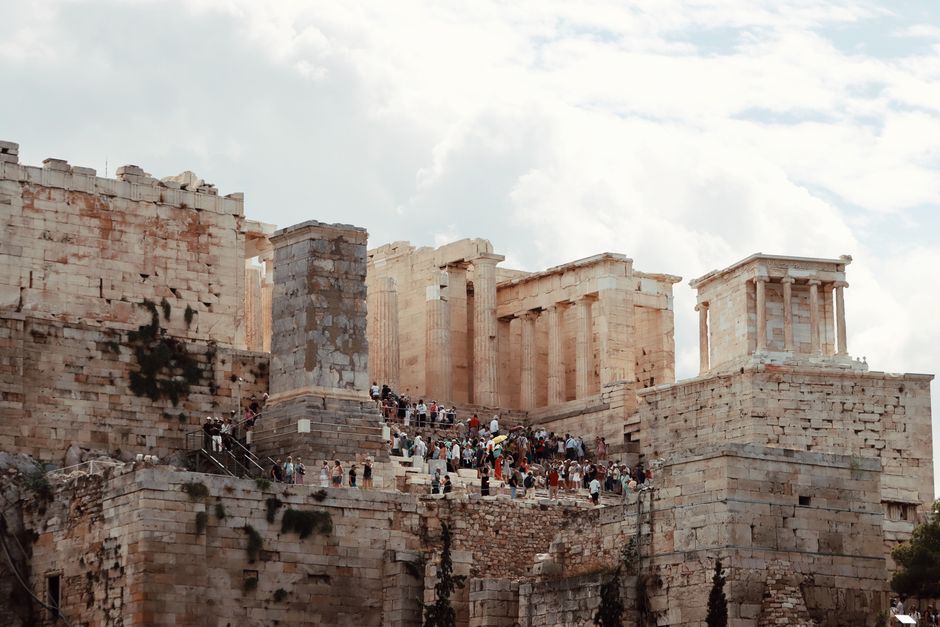
But Athens is far more than one hill. Spend a morning getting lost in the Ancient Agora, the true heart of classical civic life. Stand in the remarkably intact Temple of Hephaestus and wander the restored Stoa of Attalos, which houses a fascinating museum. For a different perspective, hike up the Philopappos Hill for a postcard-perfect view of the Acropolis, especially at sunset when the marble turns to fire. The National Archaeological Museum is a non-negotiable pilgrimage for any history lover, a treasure house holding the Mask of Agamemnon, the breathtaking Antikythera Mechanism, and countless sculptures that trace the evolution of Greek art.
To understand modern Athens, explore its vibrant neighborhoods. Hunt for vintage finds and watch the eclectic crowd in Monastiraki Flea Market. Witness the changing of the guard, with their pom-pom shoes and slow-motion high kicks, at the Tomb of the Unknown Soldier in Syntagma Square. Take the funicular up Lycabettus Hill for a 360-degree view that stretches to the sea. Escape the urban buzz in the National Garden, a lush oasis behind the Parliament. As evening falls, make your way to Psiri or Gazi for a taste of Athenian nightlife. Find a small, smoky rebetiko club where the music, born of hardship and love, will stir your soul. This is where the city's heartbeat is most audible.
Food and Drink
Athenian cuisine is a sun-drenched celebration of simplicity and quality. This is not fancy food; it's honest, flavorful, and meant to be shared. Your day should start with a Greek coffee, boiled in a *briki* and served with a glass of water, in a traditional *kafeneio*. Or, join the modern ritual of the frappé, the frothy iced coffee that fuels the city. For breakfast, grab a *koulouri*—a circular sesame bread—from a street vendor. Lunch is an opportunity for a quick, delicious *souvlaki* or *gyros* wrapped in pita, eaten standing up at a busy shop, the juices running down your hand.
But dinner is the main event. This is the realm of meze—small plates meant for sharing. Find a taverna with checkered tablecloths and order a spread: creamy, garlicky *tzatziki*, smoky *melitzanosalata* (eggplant dip), crispy *saganaki* (fried cheese), grilled octopus drizzled with olive oil and oregano, and the quintessential Greek salad, the *horiatiki*, where the tomatoes taste like sunlight and the feta is creamy and tangy. Pair it with a carafe of house wine, often resinated (*retsina*), an acquired taste that is the very flavor of ancient Greece. For dessert, don't miss *baklava* dripping with honey or *loukoumades*—hot, fluffy doughnuts drenched in syrup and cinnamon. Wash it down with a shot of *ouzo* or *tsipouro*, anise-flavored spirits that turn milky with water. The ritual of sharing food, of clinking glasses with a hearty "*Yia mas!*" (to our health), is the cornerstone of Athenian social life. It's where conversations flow, time stretches, and you truly connect with the city's *kefi*.
Practical Tips
To navigate Athens like a local, embrace a few key principles. Comfortable shoes are non-negotiable—the city is built on hills, and the marble paths of archaeological sites are uneven and slippery. The sun is fierce; a hat, sunglasses, and a reusable water bottle are your best allies. Tap water in Athens is safe to drink, and there are often public fountains. The Athens City Pass or combined tickets for major archaeological sites can save you money and time in lines. A small tip (5-10%) is appreciated in restaurants if service is good; round up taxi fares.
Learn a few Greek phrases: "*Yia sou*" (hello), "*Efharistó*" (thank you), and "*Parakaló*" (please/you're welcome) will earn you warm smiles. Be mindful of pickpockets in crowded tourist areas like the Metro and Monastiraki. Stores often close in the afternoon for a siesta (especially in summer) and reopen in the evening. Dinner is rarely before 9 pm. Embrace the late schedule. Finally, be patient. Service can be relaxed, bureaucracy Byzantine, and traffic chaotic. It's part of the city's character. Take a deep breath, order another coffee, and watch the world go by. You're on Greek time now.
Suggested Itinerary
Day 1: The Acropolis & The Ancient Heart. Start early at the Acropolis and Acropolis Museum. Wander through the Ancient Agora. Lunch in Monastiraki. Explore the Plaka's winding streets. Evening drinks on a rooftop bar with Acropolis views, followed by dinner in Psiri.
Day 2: Museums & Modernity. Morning at the National Archaeological Museum. Afternoon stroll through the National Garden and watch the changing of the guard at Syntagma. Explore the upscale Kolonaki district and take the funicular up Lycabettus Hill for sunset. Dinner in the trendy Koukaki neighborhood.
Day 3: Local Life & Alternative Vibes. Visit the Central Market (Varvakios Agora) for a sensory overload. Explore the street art and anarchist history of Exarcheia. Visit the Benaki Museum of Greek Culture. Late afternoon hike on Philopappos Hill. Experience a traditional rebetiko music club in the evening.
Day 4: Day Trip or Deep Dive. Option A: Take the Metro to the seaside suburb of Piraeus and a ferry to the island of Aegina (50 min) for a taste of the Saronic Gulf. Option B: Visit the Temple of Poseidon at Cape Sounion, a dramatic drive along the Athenian Riviera, perfect for a sunset finale. Option C: Explore lesser-known sites in Athens like the Kerameikos ancient cemetery or the Byzantine and Christian Museum.
Conclusion
Leaving Athens is a peculiar kind of parting. You carry with you more than souvenirs and photos. You carry a new sensory imprint—the feel of sun-warmed marble under your palm, the taste of oregano and salt, the sound of a thousand motorbikes buzzing like angry bees, the sight of ancient stone against a violet twilight. Athens, the capital of Greece, does not offer passive enjoyment. It challenges you, overwhelms you, and ultimately, transforms you. It shows you the sublime heights of human achievement and the beautiful, chaotic mess of daily life, all existing in the same breath. It teaches you that history is not a distant chapter but a living layer, constantly being written upon. You come as a visitor but leave feeling like a participant in an ongoing, epic story. The city's soul, its enduring, resilient spirit, gets under your skin. Long after you've left its sun-baked streets, you'll find yourself listening for the whisper of the gods in the wind, craving the clarity of its light, and hearing the echo of a bouzouki in your dreams. Athens is not just a destination; it's a revelation.
Frequently Asked Questions (FAQ)
Is Athens safe for tourists?
Athens is generally a very safe city for tourists. Violent crime is rare. The main concern is petty theft like pickpocketing, especially in crowded Metro cars, at the Monastiraki flea market, and around major sights. Exercise standard city precautions: be aware of your surroundings, don't flash expensive jewelry, and keep bags zipped and in front of you. Neighborhoods like Exarcheia have a strong anarchist presence and can feel gritty, but are not typically dangerous for visitors.
How many days do I need to see Athens properly?
A minimum of three full days is essential to experience the core historical sites and get a feel for the city's neighborhoods. With four to five days, you can explore at a more relaxed pace, visit more museums, take a day trip to a nearby island like Aegina or the Temple of Poseidon at Sounion, and truly immerse yourself in the local food and nightlife scene.
Is Athens expensive?
Athens is one of the more affordable European capitals. You can eat very well for reasonable prices at local tavernas, public transport is cheap and efficient, and many archaeological sites offer combined tickets. Luxury hotels and fine dining exist, but overall, it provides excellent value for money compared to other major southern European cities.
Can I drink the tap water in Athens?
Yes, the tap water in Athens is perfectly safe to drink. In fact, it's often quite good. Many locals and travelers still prefer bottled water out of habit, but carrying a refillable bottle and using tap water is a sustainable and cost-effective choice. You'll also find public water fountains in many parks and squares.
What is the best way to get around the city?
Walking is the best way to explore the compact historical center. For longer distances, the Athens Metro is clean, safe, efficient, and inexpensive. A single ticket is valid for 90 minutes on all forms of public transport (metro, buses, trams). Taxis are also relatively cheap, but ensure the meter is running. We do not recommend renting a car for exploring the city center due to traffic congestion and difficult parking.
What should I wear when visiting archaeological sites and churches?
Comfort is key, as you'll be doing a lot of walking on uneven surfaces. For churches and monasteries, modest dress is required: shoulders and knees should be covered for both men and women. This is less strictly enforced in major tourist churches but is a sign of respect. For sites like the Acropolis, wear a hat, sunglasses, and sturdy, closed-toe shoes for safety.
Do I need to tip in restaurants?
Tipping is appreciated but not as obligatory or as high as in countries like the US. A common practice is to round up the bill or leave 5-10% for good service. In tavernas, leaving your small change on the plate is typical. For taxi drivers, rounding up to the nearest euro is standard.


No comments:
Post a Comment