
Bogotá: A City of Echoes and Light
Introduction
The first thing you notice is the air. It's thin, cool, and carries a faint, damp-earth scent of the páramo, the high-altitude moorland that cradles this sprawling metropolis. At 2,640 meters above the sea, your breath arrives in soft, visible puffs in the early morning chill, a gentle reminder that you have ascended to a place where the sky feels intimately close. This is Bogotá, the capital of Colombia, a city of eight million souls stretched across a vast Andean plateau, a place of profound contrasts and relentless energy. It is not a city that whispers; it speaks in a cacophony of bus horns, in the rhythmic strum of a street musician's tiple, in the murmur of a thousand conversations in crowded plazas, and in the profound silence of a colonial church at noon.
Your journey begins not in the center, but on the eastern fringe, at the base of Monserrate. The mountain is a sentinel, its peak piercing the low-hanging clouds, a white church gleaming like a beacon. As the cable car ascends, the city unfurls beneath you—a vast, shimmering tapestry of terracotta roofs, gleaming glass towers, and the serpentine gray ribbons of highways. From this vantage, Bogotá's scale is humbling, its chaos rendered into a kind of order. But the true Bogotá is not seen from above; it is felt in the labyrinth of its streets. Descend into La Candelaria, the historic heart, where time seems to fold in on itself. Here, Baroque churches with heavy wooden doors stand beside buildings painted in sun-bleached pastels—ochre, cobalt blue, burnt sienna. Their facades are canvases for political graffiti and vibrant murals that tell stories of resistance, hope, and indigenous mythology. The cobblestones, worn smooth by centuries of footsteps, are slick with a fine mist, the ever-present chipi-chipi rain that gives the light a soft, diffused quality.
This is a city of layers. A layer of Spanish conquest sits atop pre-Columbian footpaths. A layer of 19th-century intellectual fervor—coffee and poetry in salons—overlays that. And today, a dynamic, pulsing layer of contemporary art, gastronomy, and urban grit vibrates across it all. You taste it in the rich, dark roast of locally grown coffee served from a tiny stall, smell it in the exhaust of the ubiquitous yellow taxis mixed with the aroma of arepas frying on a corner grill. You hear it in the blend of vallenato spilling from a shop doorway and the rapid-fire Spanish of a market vendor. Bogotá does not offer itself up easily. It demands your engagement, your curiosity. It asks you to look beyond the initial impression of traffic and noise, to step into its plazas, its museums, its crowded panaderías. To do so is to discover a city of immense warmth, profound creativity, and a resilient, beating heart that echoes the rhythm of the mountains themselves.
Why Visit Bogotá?
Why climb a mountain? Why navigate a bustling, complex metropolis when easier destinations exist? You visit Bogotá not for a passive holiday, but for a visceral experience. You come to feel the intellectual and cultural pulse of a nation. As the capital of Colombia, it is the country's brain and its archive, a place where the narrative of Colombia is being written, debated, painted, and danced every single day. This is where you come to understand the country's soul, from its painful conflicts to its exuberant renaissance.
You come for the art that saturates the city. Beyond the world-class Gold Museum, with its transcendent collection of pre-Hispanic metallurgy that seems to capture light itself, and the Botero Museum, where the voluptuous forms of the maestro's paintings and sculptures share space with his impeccable personal collection of Picassos and Renoirs, there is art in the streets. The open-air gallery of graffiti in the downtown district of San Felipe is as powerful as any indoor exhibition. Guided tours reveal the stories behind the massive, technicolor murals—tributes to lost activists, celebrations of indigenous wisdom, surreal dreamscapes that transform drab concrete into a forum for public dialogue. You come for the sheer, unadulterated energy of a Sunday morning on the Ciclovía, when over 120 kilometers of major avenues are closed to cars and claimed by a river of humanity on bicycles, rollerblades, and foot—a weekly celebration of community and movement that is uniquely Bogotano.
Most of all, you come for the people and their transformative spirit. There's a palpable sense of forward momentum here, a creative confidence that permeates everything from the innovative farm-to-table restaurants in Chapinero Alto to the cutting-edge fashion boutiques in Quinta Camacho. This is a city that has looked its past in the eye and is now crafting its future with audacious hope. To visit Bogotá is to witness this metamorphosis firsthand, to be invited into its lively rumbas, its earnest conversations, and to leave with the distinct feeling that you have not just seen a place, but have connected with its vital, unstoppable spirit.
When to Visit
Bogotá is often called the city of eternal spring, and for good reason. Its equatorial altitude moderates temperatures to a consistently cool range, with average highs around 19°C (66°F) and lows around 9°C (48°F) year-round. The seasons are defined not by temperature, but by rainfall. The dry seasons, from December to March and July to August, offer the most reliable sunshine. These are the months when the sky over the Sabana de Bogotá is a clear, brilliant blue, and the view from Monserrate is sharp and infinite. It's ideal for long days of walking through La Candelaria, hiking in the surrounding hills, and enjoying outdoor cafes without the sudden interruption of a downpour. These periods, especially December and January, are also the busiest, so expect more crowds.
The rainy seasons (April-May and September-November) paint the city in a different, equally compelling light. The rains usually arrive in the afternoon—dramatic, cleansing showers that drum on rooftops before giving way to spectacular, golden-hour sunsets that set the wet streets ablaze with reflection. The air is fresher, the parks a more vibrant green, and the cultural calendar indoors hums with activity. I have a particular fondness for these months; there's a cozy, introspective charm to ducking into a centuries-old bookstore or a buzzing coffee shop as the rain falls outside, sharing space with locals going about their day. Regardless of when you come, always pack layers. A typical Bogotá day can move from a chilly, misty morning to a warm, sunny afternoon, back to a cool, damp evening. A waterproof jacket and a warm sweater are non-negotiable companions in this city of shifting moods.
How to Get There
Your gateway is El Dorado International Airport (BOG), a modern, efficient hub located right in the city's western edge. The moment you step off the plane, the altitude is noticeable—a slight lightness in the head, a deeper breath required. Take it slow. The arrival process is generally smooth, and from the terminal, you have several options to reach the city. The most straightforward for a first-time visitor is a licensed taxi from the official taxi queue. Ensure you use the authorized service where your destination is registered and a fixed price is given before you depart—this avoids any negotiation. The ride into the heart of the city, say La Candelaria or Chapinero, takes 30 to 45 minutes depending on the infamous Bogotá traffic, a chaotic ballet of buses, cars, and motorcycles that you will quickly become familiar with.
For the budget-conscious and adventurous, the TransMilenio bus rapid transit system has a direct line from the airport. It's fast and incredibly cheap, but navigating it with luggage can be challenging during peak hours. For a seamless, stress-free arrival, especially after a long flight, I recommend pre-booking a private transfer through your hotel or a reputable service. The comfort is worth it. As you drive into the city, the urban landscape unfolds: first industrial zones, then dense neighborhoods clinging to hillsides, and finally, the dramatic skyline of the financial district, with Monserrate always watching over the scene. That first drive is an initiation, a sensory overload of new sights, sounds, and the thrilling realization that your adventure has truly begun.
Accommodation: Finding Your Barrio
Where you stay in Bogotá defines your experience. The city is a collection of distinct neighborhoods, each with its own personality. For first-timers and culture enthusiasts, La Candelaria is the historic core. Staying here means waking up amidst colonial architecture, being steps from the Gold Museum and Botero, and feeling the student energy from the nearby Universidad de los Andes. Options range from charming, converted colonial houses turned into boutique hotels with inner courtyards filled with birdsong, to vibrant hostels buzzing with travelers. The trade-off is that the area can be very quiet at night and requires more street-smart vigilance.
Chapinero and Zona G (Gourmet) offer a more upscale, contemporary base. This is the heart of Bogotá's culinary and nightlife scene. Tree-lined streets are home to stunning design hotels, chic apartments, and an endless array of world-class restaurants, cocktail bars, and cafes. It's safer for evening strolls and offers a more local, professional vibe. Further north, Parque 93 and Usaquén provide a polished, tranquil experience. Usaquén, in particular, with its charming colonial village feel now absorbed by the city, boasts beautiful boutique hotels, upscale shopping, and a legendary Sunday flea market. It feels removed from the chaos yet is well-connected by taxi. Wherever you choose, seek out a place with character. My most memorable stay was in a small hotel in La Candelaria where my window opened onto a terracotta-tiled roofscape, and I could hear the distant bells of a church marking the hours—a timeless, romantic immersion in the old city's heartbeat.
Things to Do
Begin with the ascent. Riding the funicular or cable car up Monserrate is a rite of passage. At the top, amidst pilgrims and tourists, the silence is profound, broken only by the wind. The panoramic view is the city's origin story laid bare. Descend back into the story itself in La Candelaria. Let yourself get lost in its narrow streets. Pop into the Museo del Oro and stand in the darkened central vault as thousands of ancient gold pieces glitter around you—it's a spiritual encounter with pre-Columbian cosmology. A few blocks away, the Museo Botero offers joyful, subversive art in a beautiful colonial mansion. Don't miss the Plaza de Bolívar, the vast, often-pigeon-filled main square flanked by the neoclassical Capitol, the towering Cathedral, and the hauntingly modern Palace of Justice, a tableau of Colombia's political and social history in one sweeping glance.
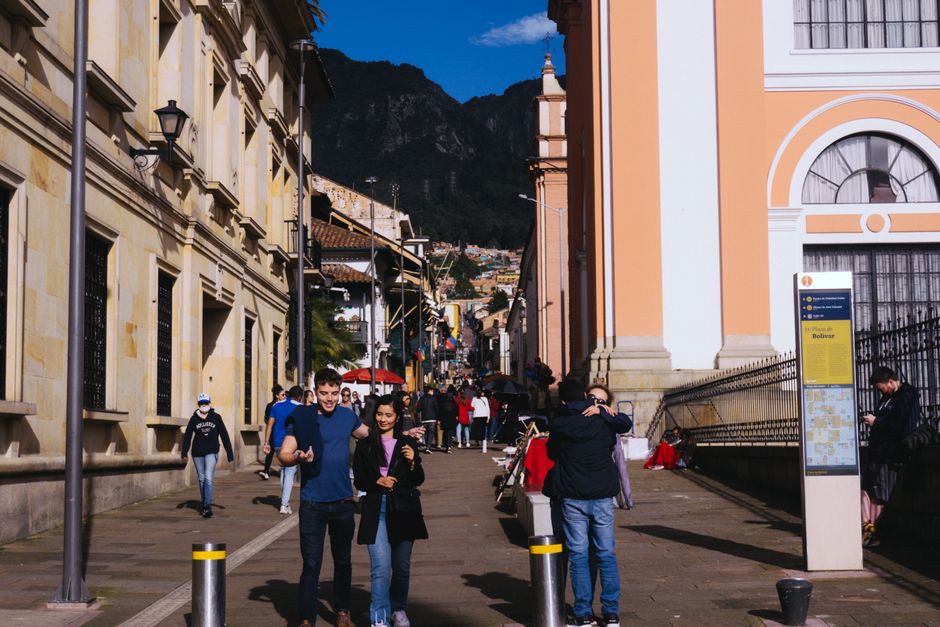
On a Sunday, rent a bike and join the Ciclovía. The feeling of pedaling down the car-free expanse of Séptima Avenue, surrounded by families, athletes, and street performers, is pure, unadulterated freedom. For a different cultural infusion, book a graffiti tour in the downtown area. Knowledgeable guides, often artists themselves, explain the context and meaning behind the stunning works, turning the city's walls into pages of a living history book. In the afternoon, take a taxi to Usaquén for its charming plaza and excellent shopping, or to the Quinta de Bolívar, the liberator's country home, a serene escape with beautiful gardens.
As evening falls, make your way to Zona G or Chapinero Alto for a taste of Bogotá's modern energy. The streets come alive with the clink of glasses and the murmur of conversation. For a spectacular nightcap, seek out a rooftop bar in the city center. Sitting with a aguardiente or a craft cocktail, looking out over the endless sea of lights with Monserrate illuminated in the distance, you'll feel the city's dual nature—ancient and hyper-modern, chaotic and serene—and you'll understand why it captivates so completely.
Food and Drink
Bogotá's culinary scene is a thrilling expedition from hearty, traditional comfort food to dizzying gastronomic innovation. Start with the classics. You must try ajiaco, the city's signature soup. This hearty concoction of three potatoes, chicken, corn, capers, and cream, served with avocado and rice on the side, is a meal in itself, perfect for a chilly Bogotá day. Find it in old-school fondas in La Candelaria. Then there's the tamal bogotano, a steamed bundle of corn masa, chicken, pork, vegetables, and spices wrapped in a plantain leaf—a weekend breakfast tradition. For a quick, delicious street bite, you can't beat an arepa with butter and salt, or a empanada with a squeeze of lime and fiery ají sauce.
But Bogotá's true culinary revelation is its new-wave dining. In neighborhoods like Chapinero Alto, young chefs are reimagining Colombian ingredients with global techniques. Think Amazonian fish with exotic fruit reductions, or slow-cooked pork belly with lulo glaze. Book a table at one of these establishments for an unforgettable experience. To drink, coffee is, of course, sacred. Skip the chains and find a specialty coffee shop where the brewing is a ceremony. At night, join the locals for a round of aguardiente, the anise-flavored national spirit, usually shared among friends from a bottle, chased with a slice of lime. The craft beer scene is also booming, with numerous cervecerías offering excellent local brews. Remember, meals here are social, lengthy affairs. Dinner often starts late, around 8 PM, and is an event to be savored, not rushed.
Practical Tips
Safety: Exercise the same caution you would in any major global city. Be aware of your surroundings, especially at night. Don't flash expensive jewelry or cameras. Use Uber or Cabify (which are reliable and cashless) or official taxis called from a restaurant. In La Candelaria, stick to main streets and be extra vigilant after dark. Money: While credit cards are widely accepted in established businesses, always carry some Colombian pesos in small denominations for markets, taxis, and small vendors. ATMs are plentiful. Language: Basic Spanish goes a very long way. While you'll find English spoken in hotels and trendy restaurants, learning key phrases (¡Hola!, Gracias, La cuenta por favor) is a sign of respect and will enrich your interactions. Transport: The TransMilenio is efficient for long north-south routes but can be overwhelmingly crowded. For most tourists, a combination of walking in defined areas and using Uber/Cabify is the most practical and comfortable way to get around. Altitude: Seriously, take it easy the first day. Stay hydrated, avoid heavy meals and alcohol initially, and let your body adjust. Packing: Layers, waterproof jacket, comfortable walking shoes (the cobblestones are unforgiving), and a daypack that zips securely are your essential kit.
Suggested Itinerary
Day 1: History & Altitude. Morning ascent of Monserrate. Afternoon exploring La Candelaria: Plaza de Bolívar, Museo del Oro (allow at least 2 hours), and a stroll down the charming Caljón del Embudo. Dinner at a traditional fonda for your first ajiaco.
Day 2: Art & Local Life. Morning at the Museo Botero and the adjacent Casa de la Moneda. Join a graffiti tour in the early afternoon. Later, experience the local vibe in the Macarena neighborhood for coffee and people-watching. Evening in Zona G for a sophisticated dinner.
Day 3: Modern Bogotá & Markets. If it's a Sunday, bike the Ciclovía and then head to the Usaquén flea market for crafts and lunch. If not, visit the modern art museum, MAMBO, in the city center. Afternoon exploring the boutiques and cafes of Chapinero Alto. Enjoy a craft cocktail at a rooftop bar as the sun sets.
Day 4: Choose Your Adventure. Option A: A food tour to sample everything from exotic fruits in Paloquemao market to gourmet bites. Option B: A day trip to the stunning Salt Cathedral of Zipaquirá, an hour north. Option C: A deeper dive into a specific interest: a coffee workshop, a salsa class, or hiking in the nearby Chicaque Natural Park. For your final night, splurge on a memorable dinner at one of the city's top-tier restaurants to reflect on your journey.
Conclusion
Leaving Bogotá, you don't just take home souvenirs; you take home a new rhythm in your pulse, a soundtrack of city sounds, and a palette of colors—the gold of the museum, the green of the mountains, the riotous hues of street art. It is a city that challenges and rewards in equal measure. It asks you to engage, to look closer, to taste bravely, and to walk its uneven streets with curiosity. Beyond the postcard views from Monserrate, the true essence of Bogotá is found in the warmth of its people, the creative fire that burns in its artists and chefs, and the resilient, forward-looking spirit that hums through its neighborhoods. It's not a sanitized tourist destination; it's a living, breathing, sometimes messy, always fascinating capital, utterly alive. You come as a visitor, but you leave feeling as if you've touched the nerve center of a nation in transformation. Bogotá stays with you, a cool mountain breeze in your memory, calling you back to explore the layers you missed, to hear the stories you have yet to be told.
Frequently Asked Questions
Is Bogotá safe for tourists?
Like any major metropolis, Bogotá has areas of concern, but by exercising common sense, it is absolutely visitable and safe for tourists. Stick to well-known neighborhoods, don't display valuables, use trusted ride-sharing apps, avoid deserted areas at night, and be aware of your surroundings. Most visitors have trouble-free experiences by following these basic guidelines.
What is the best way to deal with the high altitude?
Upon arrival, plan for a light first day. Drink plenty of water, avoid alcohol and heavy meals initially, and get plenty of rest. Some people find coca tea (an herbal infusion) helpful for mild symptoms. The body typically acclimatizes within 24-48 hours. If you have heart or lung conditions, consult your doctor before traveling.
How many days do I need to see Bogotá properly?
I recommend a minimum of three full days to scratch the surface. This allows one day for Monserrate and La Candelaria, one for museums and a graffiti tour, and one for exploring a modern neighborhood like Usaquén or Chapinero. Four to five days is ideal, giving you time for a day trip (like Zipaquirá) and to immerse yourself in the food and local culture at a more relaxed pace.
Can I get by with only English in Bogotá?
In upscale hotels, fine dining restaurants, and major tourist attractions like the Gold Museum, you will find English speakers. However, outside these bubbles, English is not widely spoken. Learning basic Spanish phrases is immensely helpful and appreciated. Using a translation app for more complex interactions is a practical tool for navigating markets and talking to taxi drivers.
What is a must-try food I shouldn't leave without tasting?
You cannot leave without trying Ajiaco Santafereño, the creamy potato and chicken soup that is the soul food of Bogotá. For a unique fruit experience, visit a market and sample exotic fruits like lulo, guanábana, or feijoa—often as a fresh juice. And of course, savoring a properly brewed cup of 100% Colombian coffee is a non-negotiable ritual.
Is Bogotá expensive for travelers?
Bogotá offers excellent value, especially compared to North American or European capitals. You can find fantastic budget meals, affordable public transport, and reasonably priced mid-range hotels. Fine dining and luxury accommodations are available at costs significantly lower than in many world cities. Overall, it's a destination where your money can go quite far.


No comments:
Post a Comment