
Shenzhen: The City of Tomorrow, Today
Introduction
The first thing you feel is the hum. It's not a sound, not quite, but a vibration in the air itself, a low-frequency pulse that thrums up through the soles of your shoes from the spotless pavement. You've stepped out of the Futian railway station, and before you, the skyline doesn't just rise—it erupts. Towers of glass and steel, twisted into impossible shapes, catch the subtropical sun and fracture it into a million blinding shards. This is Shenzhen. But to call it just a city is to call the ocean a puddle. It is a living experiment, a fever dream of the future rendered in concrete and LED light, a place where the word "impossible" was deleted from the dictionary the day the first pile was driven into the marshy coastline.
Forty years ago, this was a collection of sleepy fishing villages. Today, it is a megalopolis of over 17 million souls, a global epicenter of technology and innovation, and the most startling urban creation story of the modern era. That narrative of explosive growth is etched into its very DNA. You can smell it in the air—a crisp, ozone-clean scent cut with the distant aroma of street food from a hidden alley, a reminder of the human tapestry beneath the chrome. You can hear it in the polyglot symphony of Mandarin, Cantonese, and the clipped English of venture capitalists, all underscored by the whisper of the high-speed Maglev and the soft chime of a subway door.
Shenzhen is often described as China's Silicon Valley, a gateway adjacent to Hong Kong. But that feels too limiting, too borrowed. Shenzhen is its own unique organism. It is a city built not on history, but on ambition. There are no ancient temples at its core (though it cradles them in its outskirts), no imperial palaces. Its monuments are the Ping An Finance Center, piercing the clouds, and the sprawling tech campuses of Tencent and Huawei, cities within the city. It is a place of relentless forward motion, where the future is prototyped, manufactured, and shipped to the world before breakfast.
Yet, to walk its streets is to discover a profound, pulsing humanity. In the shadow of a billion-dollar skyscraper, elderly residents practice Tai Chi with serene slowness in a pocket park. In the labyrinthine stalls of the Huaqiangbei electronics market, a universe of capacitors and circuit boards, young entrepreneurs haggle for components to build the next big thing. At dusk, the neon of the Dongmen pedestrian street ignites, painting the crowds in hues of electric pink and cyan, while in the OCT-LOFT art district, creatives sip craft beer in repurposed factory buildings. Shenzhen is a dichotomy of scale and intimacy, of silicon and soul. It asks you to lean in, to listen to its hum, and to understand that you are not just visiting a place, but witnessing a state of becoming.
Why Visit Shenzhen?
Why climb a mountain? To see the view from the top. Why visit Shenzhen? To stand at the precipice of what comes next. This is not a city for those seeking a curated, historical past. It is for the curious, the futurists, the ones who want to feel the pulse of the 21st century hammering in their veins. You come here to experience the sheer, awe-inspiring velocity of human endeavor. Where else can you tour a factory where robots assemble other robots, then an hour later be lost in a surreal, candy-colored theme park dedicated to European towns? Shenzhen offers a kind of cultural whiplash that is endlessly exhilarating.
It is a city of breathtaking access. As the hardware capital of the world, it demystifies technology. In Huaqiangbei, you can hold the components of your smartphone in your hand, understand its cost, its modularity. It turns the abstract digital world into something tactile, something you can smell (the faint scent of solder) and touch (the cool plastic of a thousand phone cases). This tangible connection to the engine of our modern lives is profoundly unique.
Beyond the tech, Shenzhen is a surprisingly green and designed city. It is a UNESCO City of Design, and it shows. From the iconic, wave-like roof of the Shenzhen Bay Sports Center to the breathtaking, book-filled atrium of the Shenzhen Library, public architecture here is daring and democratic. Vast, lush parks like Lianhuashan and the mangrove forests of the Shenzhen Bay Park offer serene escapes, proving the city planned for lungs as well as for profit. And then there's its role as the gateway. That proximity to Hong Kong is not just logistical; it's cultural. It infuses Shenzhen with a distinct cosmopolitan energy, a blend of mainland dynamism and international savvy, visible in its world-class museums, its burgeoning art scene, and its surprisingly diverse culinary landscape. You visit Shenzhen to understand the shape of tomorrow, and to find, amidst the circuits and steel, a vibrant, creative, and unexpectedly human heart.
When to Visit
Timing your trip to Shenzhen is about negotiating with the subtropical sun and the rhythm of its endless summer. The city experiences a long, hot, and humid season from April through October. The peak of this, from July to September, can feel like walking through a warm, wet blanket. The air is thick, and afternoon thunderstorms erupt with dramatic, cinematic fury, flooding the streets momentarily before the sun returns, steaming the pavement. This is also typhoon season, which can bring disruptions, though the city's infrastructure handles them with remarkable efficiency.
The sweet spot, the golden window, is undoubtedly the autumn and early winter months, from late October to early January. The humidity recedes, the temperatures settle into a pleasant 20-25°C (68-77°F), and the sky often clears to a brilliant blue. This is perfect weather for walking the urban parks, exploring outdoor markets, and enjoying the city's skyline views without a haze of heat. Spring, from March to April, is also lovely, though it comes with more frequent drizzle and the lingering chance of humidity's return.
Avoid the major Chinese public holidays, especially the Lunar New Year (Spring Festival) and National Day Golden Week in early October. During these times, Shenzhen, a city of migrants, undergoes a transformation. It can empty out as workers return to their hometowns, leaving some businesses shuttered, or conversely, flood with domestic tourists, making transit and attractions overwhelmingly crowded. For a consistent experience of the city at its vibrant, working-best, aim for the shoulder seasons and regular weeks. Come in November, when the light is soft and the air is crisp, and you'll see Shenzhen not just functioning, but flourishing.
How to Get There
Arriving in Shenzhen feels like plugging into a global network. The city is seamlessly connected, a major node on the world's transit map. Most international travelers will fly into Shenzhen Bao'an International Airport (SZX), a sleek, modern hub with a growing number of direct flights from across Asia, Europe, and Australia. The airport itself is a testament to the city's efficiency, with a metro line whisking you from the terminal to downtown Futian in about 30 minutes.
But the most iconic entry point, especially if you're coming from Hong Kong, is by cross-border rail. Stepping onto the sleek, white MTR train at Hong Kong's East Rail Line, you glide northward, the urban density of the Special Administrative Region giving way to green hills. Then, you cross. The procedure at Lo Wu or Lok Ma Chau stations is a study in streamlined bureaucracy—exit Hong Kong, walk a bridge or corridor, and enter mainland China, where the Shenzhen Metro awaits, its maps and signs a promise of the vastness beyond. This 45-minute journey is more than a commute; it's a tangible transition between two worlds.
Within China, Shenzhen is a cornerstone of the high-speed rail (HSR) network. The cavernous Shenzhen North Station is a cathedral to velocity, with bullet trains departing like clockwork for Guangzhou (35 minutes), Changsha (3 hours), Wuhan (4.5 hours), and even Shanghai (7.5 hours). Booking tickets via apps like Trip.com or at the station is straightforward. Once in the city, your lifeline is the Shenzhen Metro. It's clean, safe, extensive, and signs in English make navigation intuitive. Taxis and ride-hailing apps like Didi are abundant and inexpensive. To move in Shenzhen is to experience the fluid, frictionless mobility that is the hallmark of a truly modern metropolis.
Accommodation
Where you lay your head in Shenzhen depends entirely on which version of the city you wish to wake up in. For the quintessential, dizzying experience of its ambition, anchor yourself in Futian Central Business District (CBD). Here, you'll find soaring five-star hotels like the Shangri-La or the Four Seasons, their lobbies buzzing with deal-makers, their upper-floor rooms offering heart-stopping views of the Ping An tower and the neon canyon of buildings below. You are at the epicenter of the hum here, immersed in the city's corporate heartbeat.
For a more balanced, vibrant stay, consider Nanshan District, particularly around the Shekou area or Shenzhen Bay. This is where the tech giants are based, and the atmosphere is slightly more relaxed, with easy access to the waterfront parks, the theme parks of OCT Harbour, and a thriving dining scene. Hotels here range from business-chic to boutique, many offering stunning bay views. Shekou, with its history as an industrial port, has a funky, international vibe, its streets lined with restaurants from every corner of the globe.
If your goal is shopping, street food, and an unvarnished, 24-hour urban buzz, then Luohu District is your base. Bordering Hong Kong, it's a chaotic, thrilling mess of markets, malls, and neon-lit alleys. Accommodations here are more varied, from value-for-money international chains to local hotels. You'll be steps away from the Dongmen shopping area and a short metro ride from everything else. For the creatively inclined, seek out a design hotel or a serviced apartment near the OCT-LOFT art district. Waking up surrounded by converted factories and graffiti art offers a completely different, grassroots perspective on Shenzhen's innovative spirit. No matter the district, you're never more than a few minutes from a metro station, tying you into the city's relentless flow.
Things to Do
To engage with Shenzhen is to choose your own adventure from a menu of the sublime, the surreal, and the silicon-based. Start with the visceral thrill of scale. Ascend to the observation deck of the Ping An Finance Center, known as Free Sky 116. The elevator rockets you up 116 floors in a breathless minute. As the doors open, the city unfurls beneath you like a living circuit board. On a clear day, you can see the green hills rolling toward Dongguan and the shimmering thread of the Pearl River delta. It's the ultimate orientation, a silent, majestic testament to what human will can build.
Then, dive into the chaotic, wonderful opposite. The Huaqiangbei electronics market is not a single building but a sprawling district, a multi-level universe dedicated to every gadget, component, and cable imaginable. The air buzzes with the sound of a thousand conversations and the beep of barcode scanners. Stall after stall is a kaleidoscope of wires, LEDs, and plastic. You can buy a single screw for a drone or ten thousand smartphone screens. It's overwhelming, exhilarating, and the absolute, unfiltered soul of Shenzhen's maker culture. Don't just look—talk to the vendors. Ask what a thing does. You'll be met with a mix of shy smiles and enthusiastic, broken-English explanations.
For a complete change of pace, surrender to the whimsical at the Shenzhen OCT East Resort. This is a vast, beautifully landscaped theme park complex where you can wander through replica Swiss towns, complete with functioning chocolate shops and alpine trains, and then get your adrenaline fix on rollercoasters that twist over mountain lakes. It's bizarre, beautiful, and impeccably maintained, showcasing the city's capacity for creating self-contained fantasy worlds.
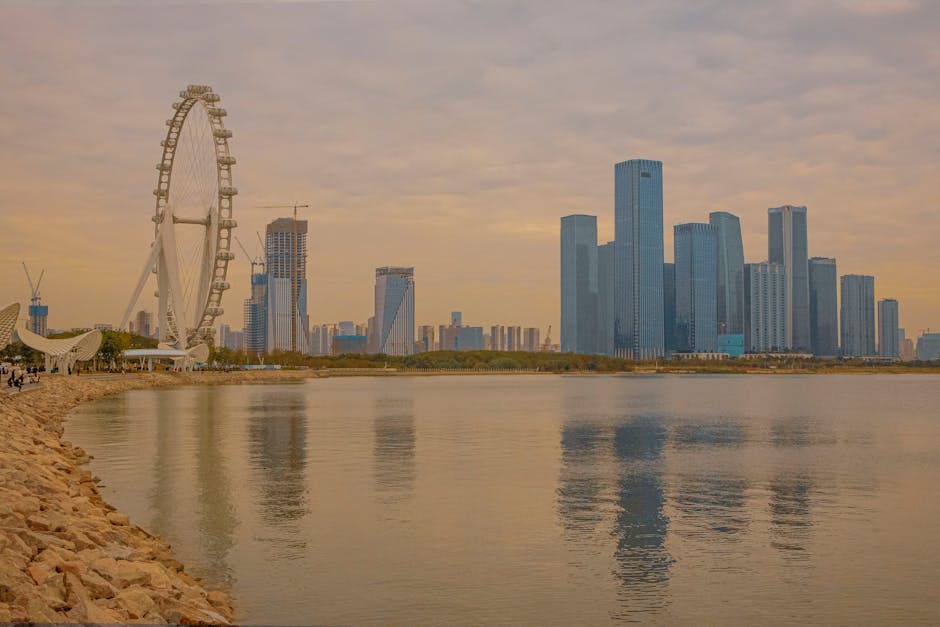
Seek out the city's cultural and green lungs. The Shenzhen Museum of Contemporary Art & Planning (MOCAP) in Futian is an architectural marvel of its own, with vast, soaring galleries that host cutting-edge exhibitions. The Dafen Oil Painting Village, once famous for mass-producing replica masterpieces, is now morphing into a legitimate artist colony, where you can watch painters at work and buy original art. And when you need a breath, the Shenzhen Bay Park stretches for miles along the coastline, with perfect paths for walking, cycling, and watching the sunset over the mangroves, with the Hong Kong skyline a faint silhouette in the distance. Here, the hum fades to a whisper, replaced by the rustle of leaves and the lap of water, reminding you that even the city of tomorrow needs its moments of quiet.
Food and Drink
Shenzhen's culinary scene is a delicious reflection of its identity: a fusion of deep-rooted Cantonese tradition and a fearless, innovative melting pot. As a city of migrants, it has absorbed the flavors of all of China. You must begin with its local Hakka heritage. Seek out a humble restaurant and order Poon Choi, the "big bowl dish." It's a communal feast, layer upon layer of braised meats, seafood, and vegetables stacked in a giant basin, each ingredient simmering in a rich, master stock. It's a taste of history, of communal celebration.
But Shenzhen truly shines in its street food and its embrace of other Chinese cuisines. In the neon-drenched alleys of Dongmen, follow your nose. Skewers of sizzling, spice-crusted lamb from Xinjiang rotate over coals. Steam billows from bamboo baskets holding delicate Har Gow (shrimp dumplings) and fluffy Char Siu Bao (barbecue pork buns) from classic Cantonese dim sum. The sweet, pungent smell of stinky tofu is an acquired scent, but a fried cube, doused in chili sauce, is a crispy, creamy revelation. For a sit-down experience, find a Chaoshan beef hotpot restaurant. You'll be given a clear, masterfully simple broth and plates of paper-thin, marbled beef slices. The ritual is swift: a dip in the bubbling liquid for mere seconds, then a dunk in your personal sauce of沙茶酱 (sha cha sauce), a nutty, savory paste. The flavor is pure, unadulterated beef essence.
To drink, join the locals in a passion for tea. Modern tea shops are on every corner, where skilled "teaists" craft beautiful cups of milk tea with cheese foam or fresh fruit infusions. For evening, the craft beer scene has exploded. Head to OCT-LOFT or Shekou, where breweries in converted industrial spaces serve IPAs and stouts with names as inventive as the city itself. And for the truly adventurous, end your night at a late-night dai pai dong (open-air food stall) for a bowl of congee with century egg and pork, a comforting, salty porridge that is the city's true soul food, enjoyed under the glow of a single bulb, amidst the quieting hum of the sleeping metropolis.
Practical Tips
Navigating Shenzhen is refreshingly straightforward with a little preparation. First, connectivity: purchase a local SIM card or arrange an e-SIM with data immediately upon arrival. While free WiFi is common in malls and cafes, having constant data for maps and translation is essential. Download WeChat—it's not just a messaging app; it's a digital Swiss Army knife for payments, ride-hailing, and more. While Alipay is also widely accepted, having both set up with your foreign card (often possible now) will make transactions seamless. Cash is still accepted in smaller, local eateries and markets, but digital is king.
Language can be a barrier, but not an insurmountable one. In business districts and major tourist spots, basic English is understood. Elsewhere, rely on translation apps like Google Translate (download the Chinese language pack offline) or Pleco. A smile and patience go a very long way. The Shenzhen Metro is your best friend—buy a rechargeable metro card or simply use the contactless payment function on your phone at the gates. It's clean, safe, and incredibly efficient. For etiquette, remember that Shenzhen is a modern, cosmopolitan city. Standard polite behavior applies. Queue for subways and taxis, and when presenting a business card or payment, use both hands as a sign of respect. Tipping is not expected anywhere. Finally, while the tap water is not potable, bottled water is cheap and available everywhere. Carry a refillable bottle; many hotels and malls have filtered water stations.
Suggested Itinerary
Day 1: The Vertical City & The Silicon Heart. Start at the top—literally. Visit the Ping An Finance Center's Free Sky 116 in the morning for that jaw-dropping orientation. Then, descend into the maze of Huaqiangbei. Spend a few hours getting lost, marveling at the sheer scale of commerce. For lunch, grab quick, delicious street food skewers from a vendor in the area. In the afternoon, visit the Shenzhen Museum to understand the city's meteoric rise from fishing village to megacity. Evening finds you in Futian CBD; dine at a refined Cantonese restaurant overlooking the glittering skyline.
Day 2: Whimsy, Waves & Wanderlust. Dedicate this day to the OCT East Resort. Ride the coasters, wander the picture-perfect Swiss-themed towns, and enjoy the stunning mountain and lake scenery. It's a full-day commitment of pure, curated fun. Return in the evening to the Shekou or OCT-LOFT area. Have dinner at an international restaurant in Sea World (centered around a giant, grounded ship), then explore the bars and craft breweries of the creative LOFT district.
Day 3: Culture, Coast & Commerce. Begin with art at the MOCAP museum in Futian. Then, take the metro to the Dafen Oil Painting Village to see art in production. For lunch, head to Luohu District for an authentic Hakka or Chaoshan meal. Spend the afternoon in a shopping frenzy at the Dongmen pedestrian area—a chaotic, thrilling experience. As the sun begins to lower, make your way to Shenzhen Bay Park. Rent a bicycle and ride along the waterfront promenade as the sky turns orange and purple, watching birds in the mangroves and the city lights begin their nightly performance. It's the perfect, peaceful counterpoint to your days of intensity.
Conclusion
Leaving Shenzhen, the hum stays with you. It's no longer an external vibration but an internal one, a resonant frequency tuned by the city's energy. You realize Shenzhen is not just a place you saw, but a sensation you felt. It is the vertigo of looking down from a cloud-piercing tower, the gritty thrill of a market stall piled high with the future's building blocks, the sweet-savory taste of a dumpling eaten on a crowded street, and the profound peace of a sunset over a tidal marsh with a skyline at your back.
It challenges the very definition of what a city can be. Without the weight of millennia, it is free to invent itself daily. It is unapologetically new, fiercely ambitious, and yet, in its parks, its art districts, and the warm smile of a tea vendor, deeply human. Shenzhen doesn't ask for your reverence for the past; it demands your engagement with the present and your imagination for the future. It is a living blueprint, constantly being revised. To visit is to have your perspective on progress permanently altered. You come away not with souvenirs of a bygone era, but with a sense of anticipation, a quiet buzz, as if you've just had a brief, electrifying glimpse of the world that is rushing to meet us all.
FAQ
Is Shenzhen just for business travelers and tech enthusiasts?
Absolutely not. While it's a paradise for tech lovers, Shenzhen offers immense diversity. With world-class theme parks, stunning contemporary architecture, beautiful coastal parks, a thriving art scene in OCT-LOFT, incredible shopping from luxury malls to chaotic markets, and a fantastically varied food scene, it has something for every type of traveler, from families to creatives to foodies.
How many days do I need to properly experience Shenzhen?
A minimum of three full days is recommended to scratch the surface. This allows one day for the futuristic cityscape and tech markets, one day for a theme park or cultural deep-dive, and one day for exploring neighborhoods, parks, and food. If you can spare four or five days, you'll be able to explore at a more relaxed pace and perhaps take a day trip to the nearby ancient forts of Dapeng Peninsula.
Is it easy to visit Hong Kong from Shenzhen for a day trip?
Yes, it's remarkably straightforward. The cross-border MTR rail connections at Lo Wu/Lok Ma Chau or the high-speed rail from Shenzhen North to Hong Kong's West Kowloon Station make it a quick journey (30-50 minutes). Just ensure you have the necessary multi-entry visa for China and your Hong Kong entry requirements sorted. It's a fantastic way to experience two vastly different worlds in one trip.
What is the best area to stay in for a first-time visitor?
Futian CBD is ideal for first-timers who want to be in the heart of the iconic skyline and have easy metro access to everywhere. It's central, modern, and full of dining options. For a slightly more laid-back vibe with great waterfront access and a mix of business and leisure, the Nanshan District (around Shekou or Shenzhen Bay) is an excellent alternative.
Is Shenzhen an expensive city to visit?
Shenzhen can cater to a wide range of budgets. Luxury hotels, fine dining, and high-end shopping are certainly present and can be expensive. However, it's very possible to travel economically. The metro is cheap and efficient, food from local eateries and street stalls is incredibly affordable and delicious, and there are many free or low-cost attractions like the city's parks, markets, and some museums.
Do I need to know Mandarin to get around Shenzhen?
While knowing basic Mandarin phrases is helpful and appreciated, it's not strictly necessary for the main tourist areas. Signs in the metro and major attractions have English. Translation apps work well for menus and conversations. In business districts and service industries, you'll often find people who speak some English. A little effort goes a long way, but you won't be stranded.


No comments:
Post a Comment