
Washington D.C.: Where History Whispers from Every Stone
Introduction
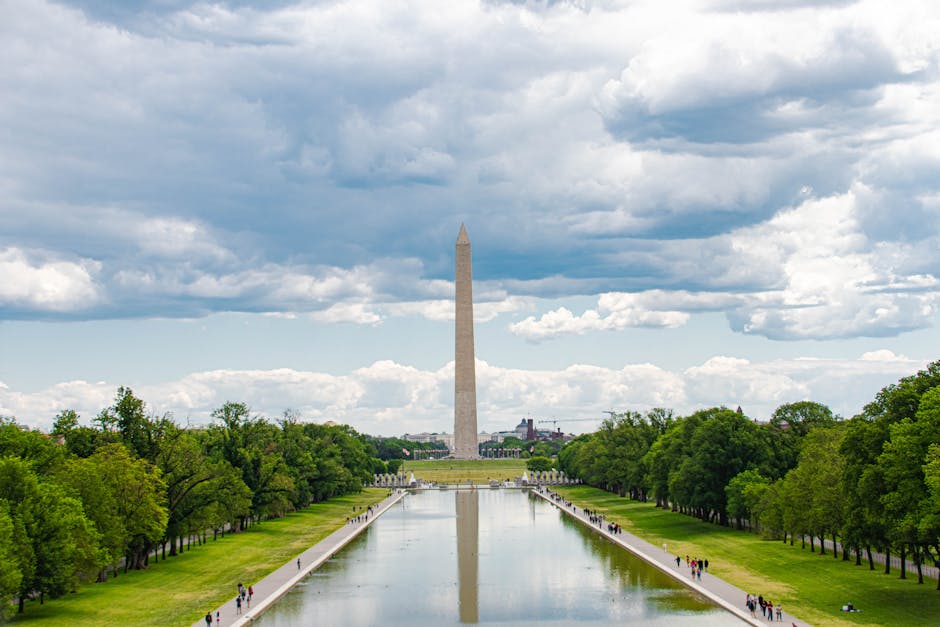
The first thing that strikes you is the light. It's a particular kind of light, sharp and golden, that seems to pour down the National Mall, gilding the white marble of the Lincoln Memorial and setting the Washington Monument ablaze like a solitary, silent rocket. The air hums, not just with the murmur of a thousand different languages from the crowds, but with a palpable, almost electric current of history and power. This is Washington D.C., the capital of the United States, and it is not a city you simply see; it is a city you feel in your bones.
You walk, and the ground beneath your feet feels consecrated. From the worn steps of the Lincoln Memorial, where Martin Luther King Jr.'s dream echoed, to the somber, polished black granite of the Vietnam Veterans Memorial, where a single rose leans against a name, the landscape is a living textbook. But to call it merely a museum of governance is to miss its soul. Washington D.C. is a city of profound contrasts. The austere, neoclassical facades of federal buildings give way to the vibrant, colorful row houses of neighborhoods like Shaw and Adams Morgan. The hushed, reverent silence inside the Capitol Rotunda is just miles away from the raucous, joyful noise of a go-go beat spilling from a U Street club. The scent of cherry blossoms in spring is as much a part of the city's identity as the smell of hot pretzels from a vendor cart or the rich, earthy aroma of coffee from a local roastery.
My most vivid memory is not from a monument, but from a quiet moment at dusk. I was standing on the Arlington Memorial Bridge, the Potomac River flowing dark and swift below. To one side, the Lincoln Memorial glowed, a beacon of democracy. To the other, the eternal flame at John F. Kennedy's grave flickered on the hillside of Arlington. Between them, the city lights began to twinkle, and a military jet, silent and swift, carved a path through the purple sky. In that single frame, the city captured its essence: a place of profound sacrifice, enduring ideals, and living, breathing power. It's a city that speaks in monuments and memorials, but listens in its vibrant neighborhoods, its world-class museums, and the determined stride of its diverse inhabitants. Washington D.C. doesn't just house the machinery of a nation; it embodies its messy, magnificent, and ongoing story.
Why Visit Washington D.C.?
You visit Washington D.C. to stand in the rooms where decisions ripple across the globe, to trace your finger over the names of heroes etched in stone, and to witness the stunning, free collection of human achievement housed in the Smithsonian museums. But beyond the postcard icons, you come to experience the thrilling friction between the symbolic and the real. This is where the abstract concept of "America" becomes tangible. You can sit in on a Supreme Court argument, watch a bill become a law from the Capitol gallery (with some planning), or simply watch a protest unfold peacefully on the Mall—a direct, visceral lesson in the First Amendment in action. The power here isn't hidden; it's performed on grand marble stages, and you have a front-row seat.
Yet, the deeper magic of D.C. reveals itself when you step off the ceremonial axis. You visit for the unexpected moments: stumbling upon a free jazz concert in the sculpture garden on a summer evening, the notes floating around Calder's mobiles. You come for the culinary journey, from half-smokes at Ben's Chili Bowl—a landmark of Black culture and resilience—to exquisite Ethiopian stews in the "Little Ethiopia" of 9th Street, a testament to the city's rich immigrant tapestry. You wander through Georgetown's cobblestone streets, past Federalist-era homes, and feel the weight of centuries. You bike along the C&O Canal, the city's skyline a dramatic backdrop to the tranquil, green path. Washington D.C. offers the unparalleled gravity of history, yes, but it counterbalances it with vibrant, diverse, and deeply creative urban energy. It's a city that challenges you to think, moves you to reflect, and surprises you with its warmth and vitality around every corner.
When to Visit
Washington D.C. wears the seasons like dramatic costumes, each offering a distinct cinematic backdrop for your visit. Spring (late March to early May) is the city's legendary season, a symphony in pink and white. The Tidal Basin's cherry blossoms peak in a breathtaking, fleeting cloud, framing the Jefferson Memorial in a picture of sublime beauty. The air is soft, the gardens explode with tulips and azaleas, and the entire city seems to exhale after winter. But be warned: this beauty draws crowds; it's a shared, celebratory, but busy spectacle.
Fall (September to November) is arguably the most perfect time. The suffocating humidity of summer lifts, replaced by crisp, apple-scented air and brilliant blue skies. The foliage in Rock Creek Park and along the National Mall turns to fire, casting a golden light on the monuments. The crowds thin, allowing for more contemplative moments at the memorials. Summer (June-August) is intense—heat and humidity rise from the pavement in visible waves. Yet, it's also alive with free outdoor festivals, movies on the Mall, and long, bright evenings. It's a time of buzzing energy, though you'll seek refuge in air-conditioned museums. Winter (December-February) is stark and powerful. Seeing the Lincoln Memorial dusted with snow, or the White House glowing on a silent, frosty night, is an experience of profound solitude and grandeur. Hotels are cheaper, lines are shorter, and the city feels more like a local's domain. Each season scripts a different D.C. story; choose your chapter.
How to Get There
Arriving in the nation's capital is a journey into a major transportation hub. Most visitors fly into one of three airports. Washington Dulles International Airport (IAD), with its soaring Eero Saarinen-designed terminal, is an architectural welcome mat, though it's about 45 minutes west of the city. The sleek Silver Line Metro extension now connects Dulles directly to downtown, a game-changer for accessibility. Ronald Reagan Washington National Airport (DCA) is the most convenient, sitting just across the Potomac in Virginia. The thrill of landing here is the unforgettable, low-flying approach that offers postcard views of the monuments before touchdown. A quick Metro ride on the Blue or Yellow line puts you in the city's heart in minutes. Baltimore/Washington International Thurgood Marshall Airport (BWI) is farther north but often offers competitive fares, with Amtrak or commuter rail links into D.C.'s Union Station.
And Union Station itself is a destination—a Beaux-Arts palace of travel. Arriving by Amtrak train, you disembark under its vast, barrel-vaulted ceiling, a grand entrance befitting the city. For those driving, be prepared for traffic and expensive parking; your car will likely be more burden than benefit once you're in the District. The true beauty of navigating Washington D.C. unfolds on foot and via its efficient, if sometimes quirky, Metro system. Descending into its vaulted, Brutalist stations feels like entering the inner workings of the city itself, a network of clean, cool tunnels that whisk you from neighborhood to monument with a satisfying whoosh.
Accommodation
Where you lay your head in D.C. shapes your experience of the city. For first-time visitors who want to be in the heart of the monumental core, the Penn Quarter/Chinatown area is ideal. Here, modern hotels look out onto historic theaters and are steps from the Smithsonian museums and the National Mall. You can roll out of bed and be at the Washington Monument in minutes. The energy is tourist-friendly and central, alive with sports fans heading to the Capital One Arena.
For a more residential, charming feel, consider the historic streets of Georgetown. While less accessible by Metro, its boutique hotels and inns are nestled among cobblestones, high-end shops, and waterfront dining. It's picturesque and feels separate from the federal bustle. Dupont Circle and Adams Morgan offer a vibrant, eclectic stay. These neighborhoods are hubs of nightlife, international dining, and embassies (Dupont's "Embassy Row" is a stunning stroll). Accommodations range from stylish hotels to charming bed-and-breakfasts in Victorian townhouses. You'll trade immediate monument views for an immersion in D.C.'s lively social and cultural scene. For a more up-and-coming, artistic vibe, look across the river to Alexandria, Virginia (Old Town), with its beautifully preserved 18th-century streetscape and easy Metro access, or the trendy Navy Yard neighborhood in D.C., home to the baseball stadium and sleek new hotels along the revitalized Anacostia Riverfront.
Things to Do
Your first act must be a pilgrimage to the National Mall. Don't just see it; experience it at different hours. At dawn, joggers have it nearly to themselves, the monuments stark against a pinkening sky. By midday, it's a global parade. Walk its two-mile length from the steps of the U.S. Capitol to the Lincoln Memorial. Feel the scale of the nation's ambition. Inside the Capitol, your neck will crane to take in Constantino Brumidi's fresco, "The Apotheosis of Washington," inside the dizzying Rotunda—a testament to grand, sometimes audacious, idealism.
The Smithsonian Institution is not a single museum but a constellation of free wonders. You could spend a week lost in them. In the National Air and Space Museum, feel the chill of the Space Age touching the actual Apollo 11 command module. At the National Museum of African American History and Culture, descend through its bronze-colored corona into the deep, painful history below, before rising through floors of triumph and culture—an architectural and emotional journey unlike any other. The quieter National Portrait Gallery, where you can stand eye-to-eye with the presidents, offers a more intimate reflection.
But D.C.'s soul is also in its neighborhoods. Spend an afternoon in U Street, once known as "Black Broadway," where the legacy of Duke Ellington is palpable. Visit the vibrant Eastern Market on Capitol Hill on a weekend, where the air smells of fresh peaches, sizzling sausages, and the tangy scent of oil paint from local artists. Escape to the National Arboretum, a hidden gem where the haunting, classical columns that once stood on the Capitol grounds now rise from an open field, a surreal and beautiful sight. Take a twilight cruise on the Potomac, watching the city's marble face light up, reflection shimmering on the dark water. End a day in the cozy, book-lined silence of the Library of Congress reading room, a temple to human knowledge, feeling the weight of all those stories under one magnificent dome.
Food and Drink
Washington D.C.'s culinary scene is a powerful diplomacy of its own, a delicious reflection of its status as an international capital and a city with a deeply rooted local culture. The city has moved far beyond stuffy power lunches. Yes, you can find those in hushed, wood-paneled dining rooms in the West End, but the real thrill is in the diversity. Start with the iconic local bite: the half-smoke. This spicy, smoked sausage, often chili-topped, finds its temple at Ben's Chili Bowl on U Street, a place that has fed everyone from Duke Ellington to Barack Obama, surviving riots and renewal—a taste of history that's both gritty and glorious.
Then, embark on a global tour. The Ethiopian cuisine in the Shaw/9th Street corridor is some of the best outside of Addis Ababa. You'll eat with your hands, tearing off pieces of spongy injera bread to scoop up rich, complex stews like doro wat and misir wot, a communal and deeply satisfying experience. For fine dining, the city now boasts a constellation of Michelin stars, with chefs focusing on Mid-Atlantic ingredients—Chesapeake Bay oysters, Virginia ham, Maryland blue crab. Seek out a chef's tasting menu for a modern, ambitious take on the region's bounty. Don't miss the thriving craft cocktail scene in speakeasies hidden behind unmarked doors in neighborhoods like Logan Circle, or the vibrant, noisy joy of a bottomless brunch in Adams Morgan. From a food truck serving Salvadoran pupusas to a waterfront restaurant serving just-shucked oysters, eating in D.C. is an exploration of the world and the Chesapeake watershed, one plate at a time.
Practical Tips
To navigate Washington D.C. like a local, embrace the Metro. Purchase a rechargeable SmarTrip card; it's your key to the city. Remember: escalator etiquette is sacred—stand on the right, walk on the left. For the monuments, think counter-intuitively. The Lincoln Memorial is arguably most powerful late at night, bathed in light and often less crowded, offering a moment of solitary awe. Many Smithsonian museums are open until 5:30 or 7 p.m., providing a great afternoon refuge or activity. While the museums are free, some—like the African American History and Culture museum—require timed-entry passes, which you must reserve online in advance.
Comfort is non-negotiable. You will walk miles on marble and concrete. Invest in excellent walking shoes. Dress in layers, as museum temperatures can vary wildly from the summer heat outside. Carry a refillable water bottle; there are water fountains throughout the Mall. When interacting with the many security checkpoints (a fact of life here), have patience and a smile—it's part of the D.C. experience. Finally, look beyond the Mall grid. The city is laid out in quadrants (NW, NE, SW, SE), with the Capitol at the center. Addresses matter; 500 Independence Ave SW is a world away from 500 Independence Ave SE. A good map app is essential, but allow yourself to get pleasantly lost in a neighborhood. You'll discover the city's true character.
Suggested Itinerary
Day 1: The Monuments & The Mall. Start early at the U.S. Capitol (book a tour online). Walk down the Mall to the Washington Monument (tickets advised). Continue to the World War II Memorial, then reflect at the solemn, powerful Vietnam and Korean War Veterans Memorials. End at the Lincoln Memorial, then walk the Tidal Basin path to the Martin Luther King, Jr. and Jefferson Memorials. Have dinner in the bustling Penn Quarter.
Day 2: Museums & Local Life. Choose two Smithsonian museums that speak to you—perhaps the Air and Space and the American History museums. In the afternoon, escape the federal core. Explore the U Street corridor, visiting the African American Civil War Memorial and stopping for a half-smoke at Ben's Chili Bowl. In the evening, experience the dining and nightlife of Dupont Circle or Adams Morgan.
Day 3: Neighborhoods & Hidden Gems. Wander the cobblestone streets and waterfront of Georgetown, visiting Dumbarton Oaks Gardens. After lunch, head to the National Arboretum to see the Capitol Columns. Alternatively, explore the vibrant Eastern Market on Capitol Hill and the surrounding residential streets. For your final evening, consider a twilight monument tour or a performance at the Kennedy Center, enjoying the free rooftop terrace views.
Day 4 (If You Have It): Depth & Departure. Dedicate the morning to one immersive experience: the National Museum of African American History and Culture (requires advance pass) OR a tour of the Library of Congress and the Supreme Court. Have a farewell lunch in the historic Union Station before departing, feeling the layers of history, power, and vibrant city life you've absorbed.
Conclusion
Washington D.C. leaves an imprint not just on your camera, but on your consciousness. It is a city of staggering scale and intimate moments. You depart with the images: the endless green carpet of the Mall, the severe gaze of Lincoln in his chair, the endless names on a black wall. But you also carry the sounds—the clang of a streetcar in Georgetown, the quiet rustle of pages in the Library of Congress, the joyful cacophony of a weekend market. You carry the tastes of chili, injera, and half-sour beers from a local brewery. More than anything, you carry a feeling—a complex mixture of awe at the ideals striven for, humility in the face of sacrifice memorialized, and inspiration from the vibrant, messy, forward-moving life of the city itself. Washington D.C. doesn't give you easy answers. It presents you with contradictions, grandeur, and grit, and asks you to ponder the ongoing story. It is, ultimately, a profound and unforgettable encounter with the American experiment in real-time.
Frequently Asked Questions (FAQ)
What is the single best view of the city?
For the classic, panoramic postcard view, the top of the Washington Monument is unbeatable. However, for a more unique and equally stunning perspective, head to the observation deck of the Old Post Office Tower (now part of the Waldorf Astoria hotel). It's free, often less crowded, and offers a breathtaking 360-degree view that includes the Monument itself in your frame.
Is Washington D.C. safe for tourists?
The main tourist areas around the National Mall, monuments, and major museums are heavily patrolled and very safe day and night. As with any major city, it's important to exercise standard urban awareness, especially after dark in less-frequented areas. Stick to well-lit, populated streets and be mindful of your belongings in crowded places.
How many days do I need to see Washington D.C. properly?
To avoid feeling completely rushed, a minimum of three full days is recommended. This allows one day for the monuments and memorials, one day for exploring a selection of Smithsonian museums, and one day to experience a neighborhood or two beyond the Mall. Four or five days is ideal for a more relaxed and comprehensive exploration.
Can I visit the White House?
Public tours of the White House interior are extremely limited and must be requested through your member of Congress's office well in advance—often months ahead. For most visitors, the excellent White House Visitor Center (nearby) provides a detailed look, and viewing the iconic exterior from Pennsylvania Avenue or Lafayette Square is the standard and still impressive experience.
What is a must-try food that's unique to D.C.?
Beyond the famous half-smoke, you should seek out a "mumbo sauce." This is a sweet, tangy, and slightly spicy condiment that is a staple of D.C.'s carry-out culture, particularly with fried chicken wings. It's a distinct local flavor you won't find quite the same anywhere else. Also, enjoying Chesapeake Bay blue crabs, especially during the summer season, is a quintessential regional experience.
Are the Smithsonian museums really free?
Yes, every museum within the Smithsonian Institution network offers free admission. This includes massive museums like the National Air and Space Museum, the National Museum of Natural History, and the National Museum of African American History and Culture. This is one of the most incredible values in global travel, allowing you to explore world-class collections without any entry fee.


No comments:
Post a Comment