
Countersteering Explained: How Your Bike Really Turns
Introduction
Remember that first moment? The mix of excitement and pure, unadulterated anxiety as you swung a leg over a motorcycle for the first time. The engine felt alive beneath you, a promise of freedom and adventure, yet your mind was a whirlwind of "what-ifs." What if I tip over? What if I can't make it turn? What if I just... can't do this? If you're reading this, those feelings are likely still fresh. Let me tell you something crucial: every single rider, from the weekend cruiser to the MotoGP champion, started exactly there. That cocktail of thrill and fear isn't a sign you're wrong for riding; it's a sign you're a responsible human being about to engage with a powerful and rewarding skill.
This article is here to demystify the single most important skill for turning a motorcycle at anything above walking speed: countersteering. But more than that, it's a guide to transforming from a nervous novice into a competent, confident rider. We're going to break down the physics in plain language, connect it to the feel in your hands, and build a complete foundation of safety and skill around it. You'll gain practical skills, build genuine confidence rooted in ability, and develop the safety knowledge to make smart decisions. The journey from clutching the bars in a parking lot to leaning smoothly through a sweeping curve is one of the most empowering transformations you can experience. It's not magic; it's learnable physics and practiced technique. And you can learn it.
The Reality Check
Before we dive into the mechanics of turning, let's have an honest conversation about what learning to ride actually involves. Popular media often sells motorcycling as pure, effortless freedom—just twist and go. The reality is more nuanced and, ultimately, more rewarding. It's a physical and mental skill that demands respect and dedicated practice. You will need balance, coordination, and a moderate degree of strength (especially in your core and hands). Mentally, it requires intense focus, constant risk assessment, and split-second decision-making. The learning curve isn't a straight line; it's a series of plateaus and breakthroughs.
Financially, the bike is just the start. Quality safety gear, insurance, maintenance, and training are significant, non-negotiable investments. A common misconception is that you should start on a small, cheap bike you won't mind dropping. While the sentiment has merit, "cheap" should never mean "unsafe." A mechanically sound first bike is essential. If you're wrestling with self-doubt, asking "Is riding right for me?"—that's smart. The answer lies in your willingness to embrace the process, to prioritize safety over ego, and to commit to being a perpetual student of the road. If that sounds challenging but exciting, you're on the right path.
Safety First: Non-Negotiable Basics
Your gear is not an accessory; it is your primary safety system. Studies consistently show that proper gear dramatically reduces the severity of injuries in a crash. This isn't about fear; it's about empowering yourself with the best possible protection so you can focus on learning. Start with the helmet. Look for current certification from DOT, ECE, or SNELL. Fit is paramount: it should be snug without pressure points, and the cheek pads should grip your face firmly. A full-face helmet provides the best protection for your jaw and chin—over 35% of impacts occur in the chin bar area.
Next, invest in a protective jacket and pants made of abrasion-resistant materials like leather or textile with CE-rated armor at the shoulders, elbows, knees, and back. Gloves are essential; your instinct in a fall is to put your hands down. Boots should cover your ankles and provide support and protection. Visibility is your other shield. Incorporate high-visibility colors and reflective elements into your gear. Position yourself in the lane where you are most visible to other drivers, and always use your lights.
A realistic budget for quality starter gear is $800 to $1,500. Beginners often cut corners on gloves, boots, and pants, opting for streetwear. This is a critical mistake. Road rash at 30 mph is a life-altering injury. Think of gear not as a cost, but as an investment in your ability to walk away from an incident and ride another day.
The Learning Process Explained
Skill acquisition on a motorcycle follows a natural, phased progression. Understanding this roadmap can ease frustration and help you measure real progress. Phase 1 (Hours 0-5) is about raw familiarity: finding the friction zone of the clutch, managing throttle control at idle, and simply walking the bike to feel its balance. The goal is to make the controls an extension of your body.
Phase 2 (Hours 5-15) introduces low-speed maneuvers: tight turns, figure-eights, and controlled braking. You'll learn the fundamental—but limited—"counterweight" steering used at very slow speeds. This is where you build the coordination for the clutch, throttle, rear brake, and vision to work together.
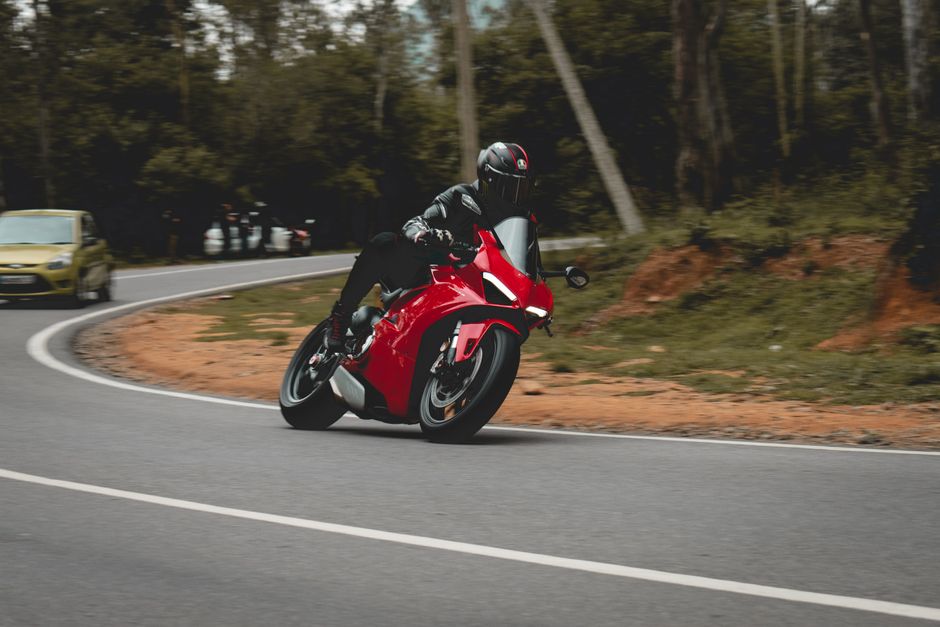
Phase 3 (Hours 15-30) is where countersteering becomes your primary turning tool. As speeds increase above roughly 10-15 mph, the bike's geometry wants to stay upright. To make it lean and turn, you must consciously push on the handlebar in the direction you want to go. Push left, lean left, go left. This phase is about building cornering confidence and integrating basic hazard perception.
Phase 4 (Hours 30+) focuses on highway readiness, advanced braking (using both brakes effectively), and emergency swerving. Muscle memory solidifies. You will hit plateaus—periods where progress feels slow. This is completely normal. Professional instruction (like the MSF Basic RiderCourse) is invaluable, especially in Phases 1-3. Self-practice is for reinforcing lessons, not for guessing at fundamentals.
Practical Skill Building
Knowledge is useless without practice. Here are specific drills to build your skills safely in an empty parking lot. Start with the Figure-Eight: practice tight, slow turns using your friction zone, rear brake, and looking where you want to go. Move to Straight-Line Weaves: ride in a straight line at walking speed, focusing on smooth balance without putting your feet down.
For countersteering, try the Progressive Lean Drill: In a safe, open area at about 20 mph, gently push forward on the right handlebar. Feel the bike lean right and initiate a turn. Then push left to straighten up. Repeat, increasing the pressure slightly each time to feel how the lean angle and turn rate respond. Body positioning follows your vision: look through the turn, keep your knees against the tank, and relax your arms. Throttle control is about smoothness: practice rolling on and off steadily while maintaining a set speed.
Braking is critical: practice progressive squeezing of the front brake, not grabbing. Start from 15 mph, using both brakes, and aim for smooth, controlled stops. Your visual scanning should always be active: aim for a 12-second lead time, constantly scanning for escape paths.
Practice Routines:
15-minute: 5 min slow-speed figure-eights, 5 min braking from 15 mph, 5 min countersteering pushes.
30-minute: 10 min slow-speed control, 10 min emergency stops & swerves, 10 min cornering with vision practice.
60-minute: Combine all drills, add in some real-road practice on quiet streets, focusing on intersection scanning and lane positioning.
Common Beginner Challenges & Solutions
Challenge 1: Stalling at stops. This is almost always a clutch control issue. Solution: Practice finding the friction zone repeatedly with the bike stopped (in neutral). Add a tiny bit of throttle as you release the clutch to start moving.
Mindset Reframe: Stalling is a communication error between your hand and foot. It's a data point, not a failure.
Challenge 2: Wobbly slow-speed riding. This stems from tense arms and fixating on the ground right in front of the wheel. Solution: Look up and where you want to go, use the rear brake to stabilize, and keep a slight amount of throttle on.
Mindset Reframe: The bike wants to balance. Your job is to guide it, not muscle it.
Challenge 3: Fear of leaning. It feels unnatural. Solution: Start with the Progressive Lean Drill. Trust that the tires are designed to grip at angles that feel extreme.
Mindset Reframe: Leaning is the motorcycle's way of turning. You're not falling; you're cooperating with physics.
Challenge 4: Panic braking. The instinct is to grab or stomp. Solution: Drill, drill, drill. Practice progressive braking until smooth, hard stops become muscle memory.
Mindset Reframe: Your brakes are your most powerful control. Knowing how to use them effectively is a supreme confidence builder.
Challenge 5: Highway anxiety. The speed and wind are intimidating. Solution: Gradual exposure. First, ride on fast multi-lane roads (45-50 mph). Then, enter the highway at a non-peak time, take the first exit, and get off. Gradually increase time and distance.
Mindset Reframe: Highway riding is often statistically safer than city streets—fewer intersections. It's a skill of focus and positioning.
Challenge 6: Group riding pressure. Feeling pushed to ride beyond your skill. Solution: Have a graceful exit script: "Thanks, but I'm going to ride my own ride today. I'll meet you there."
Mindset Reframe: The most respected riders are those who know and honor their limits.
Challenge 7: Dropping the bike. It happens to almost everyone. Solution: Learn the proper lift technique (back to the bike, legs bent, lift with your legs). Use frame sliders for protection.
Mindset Reframe: A drop is a lesson, often about slow-speed control or footing. Analyze it, learn, and move on.
Decision-Making Framework
As a beginner, every choice matters. Use this framework to guide your decisions. For bike selection, prioritize manageability: 300-500cc is the sweet spot for most adults. Consider weight (under 400 lbs wet is ideal), seat height (you should be able to flat-foot or nearly flat-foot), and a neutral riding position. New vs. used? A used, popular beginner bike from a reputable brand is often the smartest financial and practical choice.
For training, a formal course like the MSF is the single best investment you can make. Friend mentorship carries significant risk if your friend isn't a trained instructor. Choose practice locations that match your phase: empty parking lots, then quiet residential streets, then busier secondary roads. Ride solo until you are fully comfortable with basic controls; riding with others too soon divides your attention.
Recognize red flags that indicate "not ready yet": consistent trouble with basic clutch/throttle coordination, inability to perform an emergency stop in a controlled environment, or panic freezing in unexpected situations. Contrast this with normal nervousness, which is a background hum that fades as you practice. If in doubt, take a step back to a simpler skill and master it.
Timeline & Milestones
Setting realistic expectations prevents discouragement. Progress varies, but here's a general guide. Week 1: Goal is parking lot competence—consistent starts, stops, and slow turns. Weeks 2-3: Local street confidence, navigating stop signs, gentle curves, and light traffic. Month 1: Able to take solo short trips for errands, adapting to different weather and light conditions.
Months 2-3: Highway introduction feels manageable. You can plan and execute a 1-2 hour pleasure ride. Month 6: Comfortable with commuting and can consider a small, structured group ride. Year 1: Ready to consider advanced skill training (like the MSF Advanced RiderCourse) and perhaps light touring.
Variables that accelerate progression: frequent, deliberate practice (3+ times a week); prior bicycle or manual transmission experience; a calm, analytical mindset. Variables that slow progression: infrequent practice; high, unmanaged anxiety; trying to skip phases. Rushing is marked by constantly adding new challenges before mastering current ones. A healthy challenge is feeling slightly stretched but in control.
The Mental Game
Riding is as much a mental discipline as a physical one. Managing fear is about acknowledging it without letting it dictate your actions. Use fear as a signal to assess risk, then use your training to manage that risk. Build situational awareness into a habit: constantly scan, identify potential hazards (driveways, intersections, parked cars), and plan your escape path. Develop "what-if" scenario planning: "What if that car pulls out? My escape path is the left lane."
Balance confidence and complacency carefully. Confidence comes from practiced skill; complacency is assuming nothing will go wrong. Use visualization: mentally rehearse a perfect corner entry or emergency stop. When a close call happens, process it emotionally off the bike. Analyze what happened, what you did well, and what you'd improve. Building a rider identity is powerful—connect with other riders who prioritize safety and continuous learning. The "click" moment, when the controls fade into the background and you feel in harmony with the machine, is a real and incredible tipping point.
Insider Tips From Experienced Riders
We asked veterans what they wish they'd known. The consensus? "Invest in professional training from day one, not after developing bad habits." The most underrated skill? Smoothness—in throttle, brakes, and steering inputs. Smooth is fast, safe, and easy on the machine.
Common early regrets: buying a bike that was too heavy or powerful for the sake of ego; skimping on gear (especially boots); and not practicing emergency braking enough. Maintenance habits to start immediately: check tire pressure and tread depth before every ride, learn to lubricate and adjust your chain, and do a basic "T-CLOCS" inspection (Tires, Controls, Lights, Oil, Chassis, Stands).
The relationship between attitude and safety is direct. Humility and a willingness to learn are your best protective gear. Around the 10,000-mile mark, many riders experience a perspective shift: they realize how much there is to learn, which makes them more cautious and skilled. The encouragement for your early phase is this: the difficulty is the point. Overcoming it builds not just skill, but profound self-trust.
FAQ for Beginners
How do I overcome the fear of dropping my bike?
First, accept that it's a possibility for every rider and is not a catastrophe. Mitigate the risk by practicing slow-speed control drills religiously. Physically protect the bike with engine guards or frame sliders. Mentally, reframe a drop as a learning opportunity about balance, footing, or clutch control, rather than a mark of failure. The confidence gained from mastering slow speeds will do more to prevent drops than any amount of worry.
What's the minimum gear I need to start practicing?
Absolute minimum: A DOT or ECE-certified full-face helmet, motorcycle-specific gloves with palm sliders, a sturdy jacket (leather or armored textile), over-the-ankle boots (motorcycle-specific are best), and durable pants (jeans are the bare minimum, but dedicated riding pants are far safer). Do not practice in sneakers, t-shirts, or shorts. Your first practice session is when you are most vulnerable to a tip-over; gear is essential from minute one.
How do I know when I'm ready for the highway?
You are likely ready when you can consistently and smoothly execute the following on surface streets: shift through all gears without looking, perform controlled emergency stops without skidding, maintain lane position comfortably at 45-50 mph, shoulder-check and merge smoothly, and manage intersections without hesitation. Start with a short, planned highway stint at low-traffic times to build confidence gradually.
Is it normal to feel overwhelmed at first?
Completely normal. You are processing a massive amount of new sensory information and physical coordination. The controls, the balance, the traffic—it's a lot. This feeling typically peaks in the first few hours and gradually subsides as muscle memory develops. Break learning into tiny, manageable pieces. Celebrate small victories like a smooth start from a stop sign. Overwhelm is a sign you're challenging yourself, not that you're incapable.
How much should I spend on my first motorcycle?
For the motorcycle itself, a budget of $3,000 to $5,000 is realistic for a good-quality, used beginner bike from a major manufacturer (like a Honda CB300R, Kawasaki Z400, or Yamaha MT-03). This should get you a reliable, mechanically sound machine with perhaps a few years of use. Factor in another $1,000-$1,500 for gear, taxes, registration, and insurance. Avoid stretching your budget to buy new; depreciation on beginner bikes is high, and a used one holds its value if you decide to upgrade.
Can I learn to ride if I'm not mechanically inclined?
Absolutely. You do not need to be a mechanic to be a safe rider. However, you do need to develop a basic understanding of your machine's condition. This means learning to perform a pre-ride safety check (T-CLOCS), checking tire pressure, recognizing unusual noises or handling, and understanding when to take it to a professional mechanic. Mechanical aptitude is a helpful bonus, but rider safety is 90% decision-making and skill, not wrench-turning.
What if I have a close call or minor drop—should I quit?
No. A close call or drop is critical feedback, not a verdict on your future as a rider. The most important thing is to analyze it calmly afterward. What was the cause? What could you have done differently? Was there a skill you need to practice? Often, these incidents highlight a specific gap in training (like swerving or braking) that you can now address deliberately. Quitting after a scare means you miss the opportunity to learn the lesson that will make you a safer rider for decades to come.
Conclusion
The journey from your first wobbly parking lot circle to leaning confidently into a curve is one of the most tangible growth experiences you can have. It's a path that builds skill, awareness, and a unique kind of self-reliance. The physics of countersteering, and all the safety knowledge around it, are simply tools. Your commitment to learning them is what will transform you.
Your next step is specific and actionable: If you haven't already, sign up for a Motorcycle Safety Foundation Basic RiderCourse today. If you've taken the course, plan your next 30-minute practice session in a parking lot, focusing on one specific drill from this article. Embrace the process with patience. There will be frustrating days and glorious breakthroughs. Every expert rider you see on the road started exactly where you are now—filled with doubt, excitement, and the desire to get it right. You can do this. The road awaits.


No comments:
Post a Comment